I’m taking a break from the garden and from the news cycle and indulging in a different form of work: “Making Poems, Making Books,” a 4-day workshop with poets Anita Skeen and Cindy Hunter Morgan at Ghost Ranch in Abiquiu, NM. Yes, I’ll be making my own book–a small accordion book. There are about a dozen of us in the workshop, which is centered around the idea of color. Autumn in northern New Mexico offers a range of hues somewhat different from the post-equinox colors of eastern Pennsylvania. Perhaps that will inspire me. The last time I took a workshop here was in 1993, and I learned how to draw/paint in chalk pastels. A long time ago–and yet, walking around the dusty alfalfa field in the center of the Ranch’s office and dorm buildings, I felt completely at home. As if I’d been here just last year.
This week differs from the artist residency I attended at Joya-AiR in May because I’m part of a class getting instruction in how to make a hand-made book and also participating in feedback on our writing. Nonetheless, every afternoon there’s a nice stretch of time to work on solo projects, hike, drive to some nearby sites of interest, or nap. I will admit I have been doing more napping than I had hoped. The high altitude, dry air, walking more than usual (on rocky trails) and the emotional energy it takes to learn a new skill and meet new people have conspired to creep up on me some afternoons.
That’s fine with me, though, because I’m banking many images, quotes, anecdotes, ideas, prompts–all the things memory can do.
And I am drafting some new work, so there’s that as well.
~
Enjoying the session and the people, third best thing about this trip. Being back at Ghost Ranch, second best thing, though it is perfectly wonderful. Best thing? Getting some time in the Albuquerque area to visit with my daughter and her partner. And their dog. And their cat, guinea pigs, and beehives. According to her, bees kept in hives (apiculture) are considered considered agricultural animals.
Who knew?
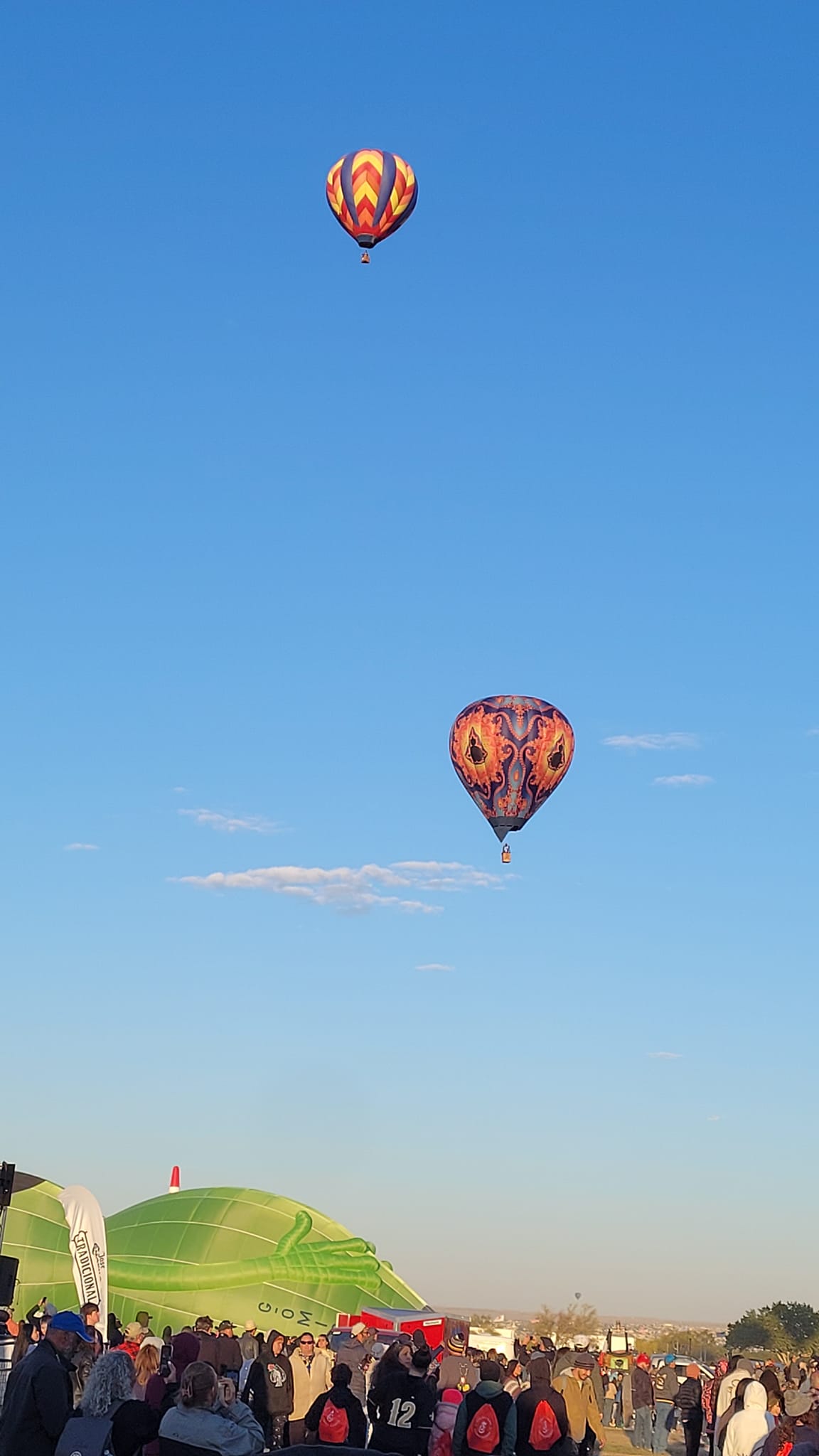
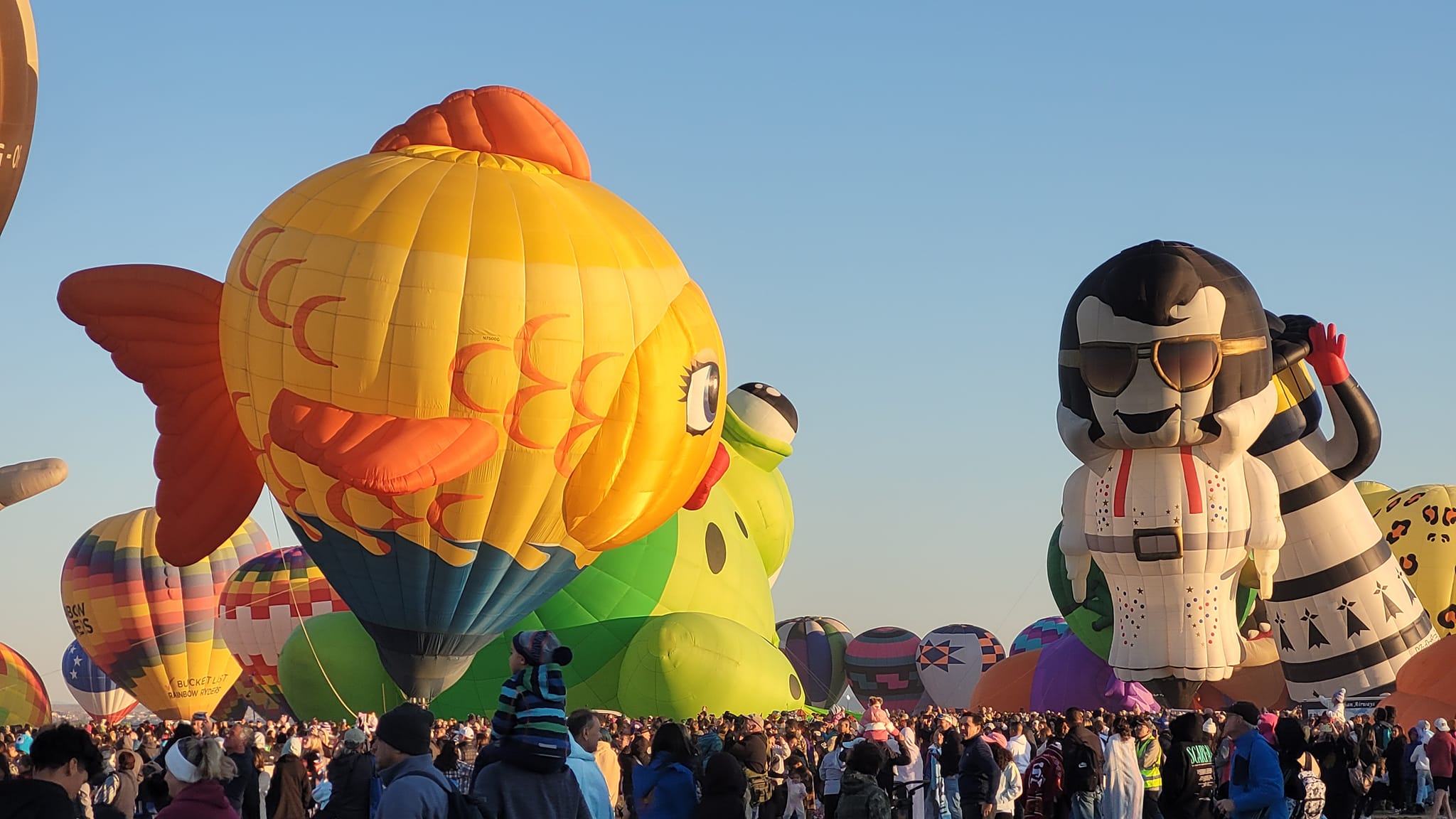
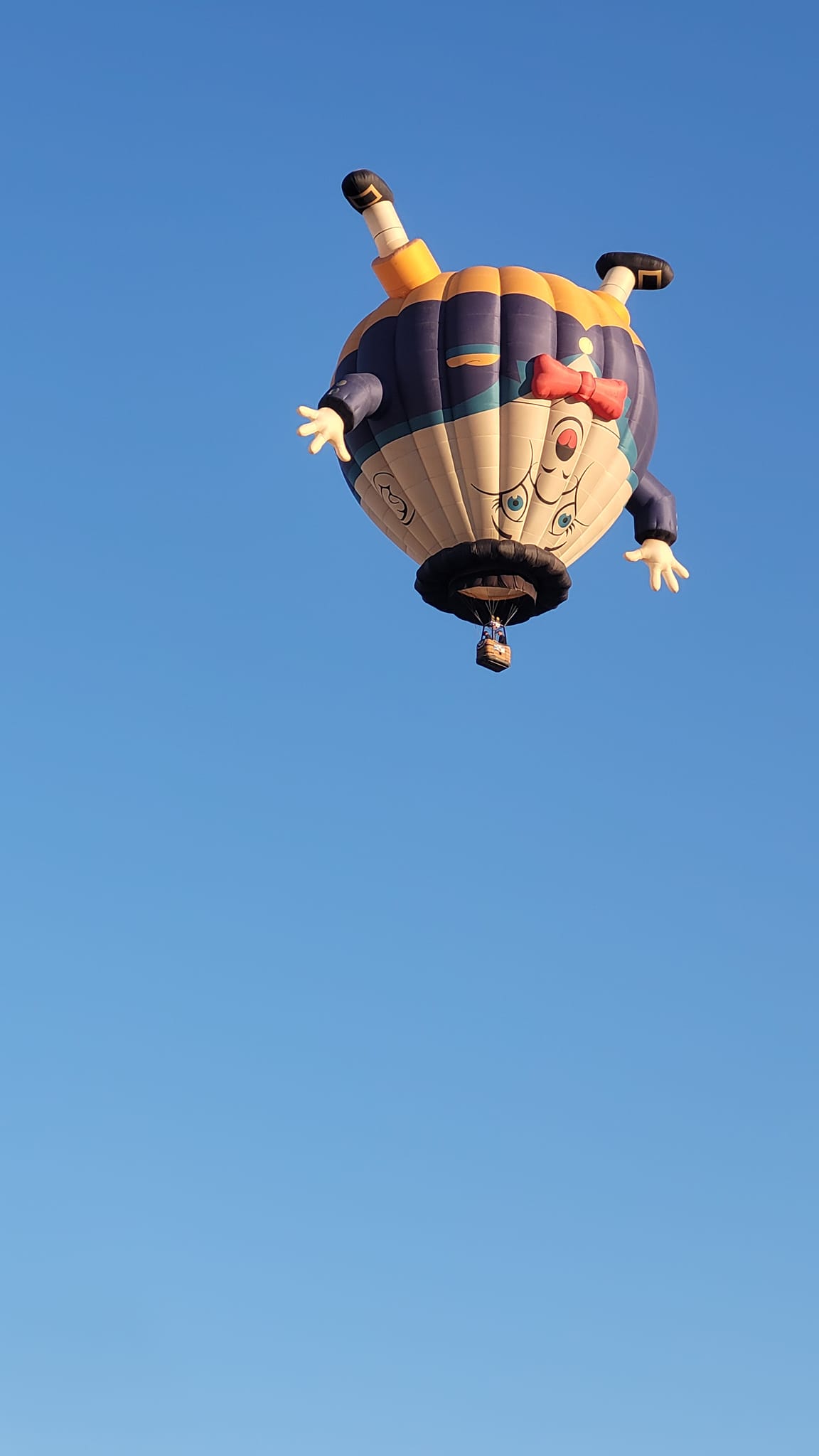
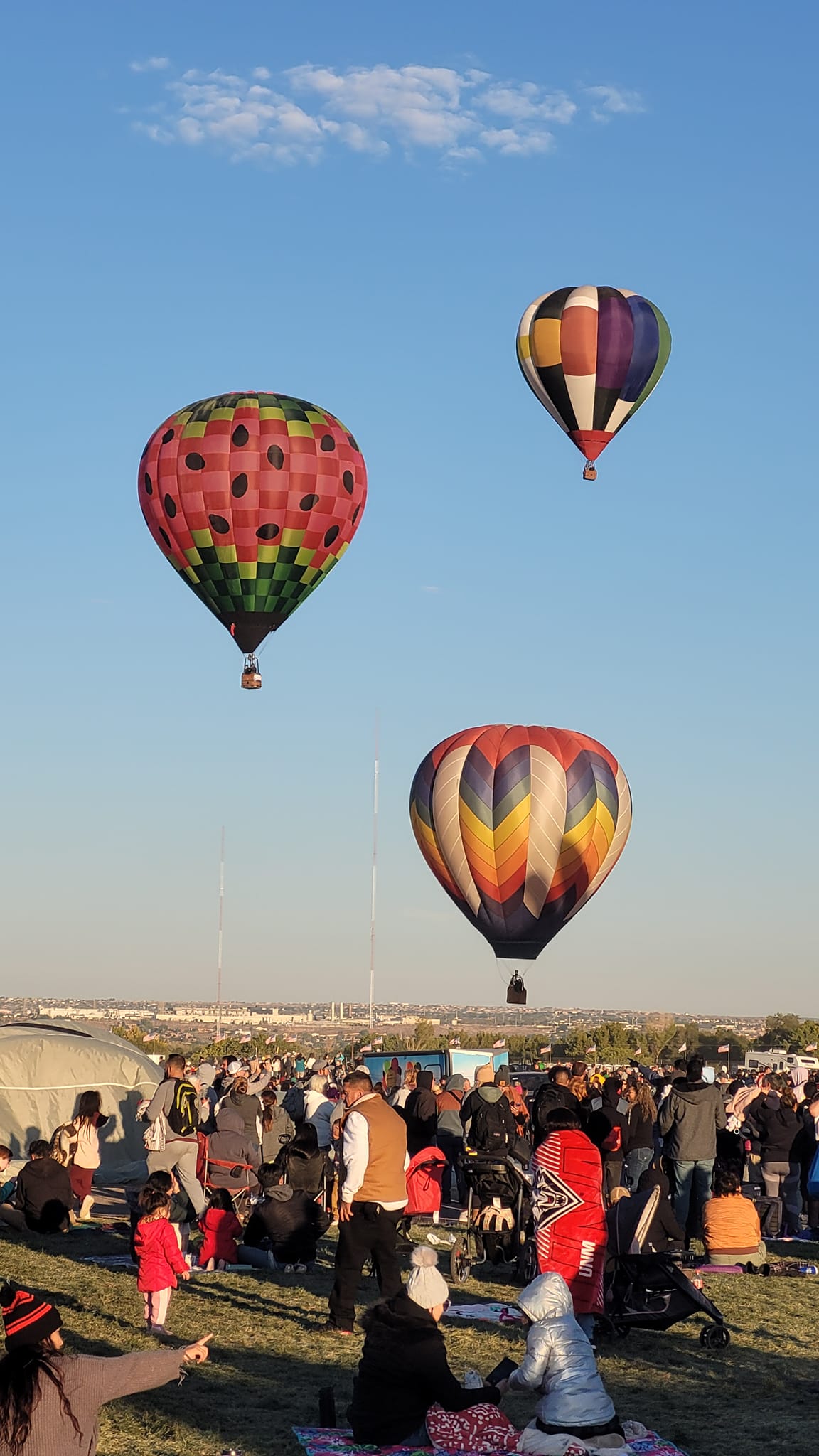
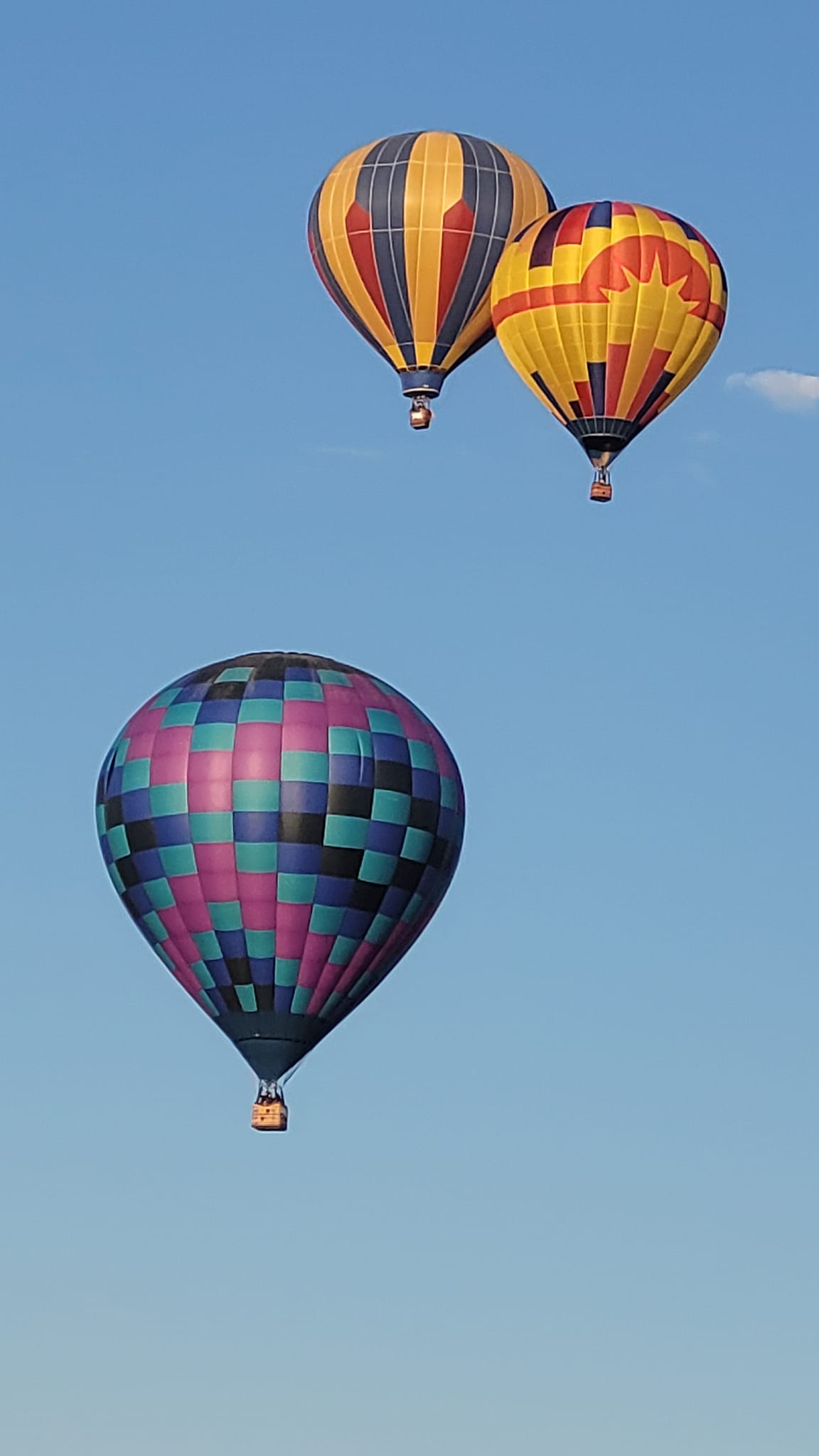
It’s time for my nap, I think. But I have wanted to post about this workshop/retreat before I get home again, just to remind myself of how grateful I am to be here, to be writing, to be seeing my child, to be–yes–escaping from the media frenzy as the presidential election looms. If that seems like something you need, as well, all I can do is send a few cheerful photos I took at the Albuquerque Balloon Fiesta.
Sunday evening, my weeding stirred up so much dust and chaff that I needed to wear a bandanna around my nose and mouth. A continuous late-summer drought. There are still tomatoes and basil, sunflowers and zinnias, but the avian migration has been going on for some weeks and the days are getting shorter. Just after equinox, three weeks without rain; at last the sky clouds over and drops a little moisture on the parched soil. Yellow leaves sift onto the lawn. Small flocks of robins rejoice in the softer top layer of dirt, pull at grubs and worms, then fly off.
~
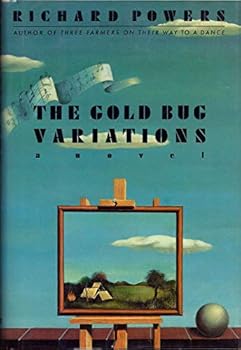
The rain’s necessary, and I’m grateful. Rainy days, however, take issue with my body–or, probably, the other way around. The need to take NSAIDs and rest offers the opportunity for just reading. This isn’t a bad thing, especially as I had Richard Powers’ novel The Gold Bug Variations to hand. It’s a tour de force of pattern, structure, code-breaking, DNA-building, relationships, love, chemistry, music, art, literature, and much more. I love the references (the narrator is a reference librarian), the minutia, history, alliteration, lists, compilations*, the whole thread of the novel’s dramatic arc, its relationship (mathematically, metaphorically, structurally) to music and the work of the gene-sequencing science. The book tells the parallel stories of couples who fall in love 25 years apart, the coincidences and randomness, the patterns that may not be patterns. I’m thoroughly wowed by an author who puts so much research into his writing and makes everything fit somehow.
Powers must have been about 33 when he completed this novel. I can’t imagine being so wise about human behavior and so informed about the sciences and music theory at that young age. Well, for one, I’m not as brilliant as he is; and two, I was raising toddlers when I was 33, which is a science unto itself and as revelatory as any book I could have been reading or writing in early mid-life.
But I digress. This book interests me on so many levels that I’ll be thinking about it for weeks. I may have to re-read it, take notes next time. I kept wanting to underline passages–it’s a library book, and marginalia is a no-no. I can imagine reading it again to the strains of the Goldberg Variations–indeed, I read a few chapters to said accompaniment this time. This is not a swift and easy read: it took me awhile to feel warmed up about the narrator, though she’s funny and smart. By the end, I loved her like a friend.
Honestly, novels seldom get me this excited or inspired. I’m glad I had a crappy day so I could justify lying around and “just reading.” As if “just reading” is not a worthwhile endeavor. The weeds can wait.
~
* re compilations: a word Powers employs often in this novel is the neologism/computer programming term “kludge.” I wasn’t familiar with it. But it’s a terrific word! https://www.etymonline.com/search?q=kludge
白露 báilù is the section of the lunisolar calendar that refers to the two weeks before the autumnal equinox; the translation is “white dew.” Misty mornings here and there, damp grass, dew spangling the tent spider webs in the meadow, draping the grasses and goldenrod with white gauze. Brown crickets sing, but the cicadas have left off. Nuthatches return. Squirrels knock walnuts off the branches daily, so there’s a regular thump-thump sound along the treeline. My summer-loving acquaintances bemoan the cooler days and insist summer’s not over until the 21st. My fall-loving acquaintances are picking apples and celebrating the return of pumpkin-spice flavoring to their favorite beverages.
I like the in-between times, the verging of seasons, aspects of change. Change means life, even though the onset of autumn traditionally signals the dying of the year. On my walk this morning, I took photos and made a mental list of changes that are flags of the coming season: acorns on the bough; morning glory still open at noon (in Japanese literature, the morning glory is a signal of autumn’s approach); burning bush shrub going pink; pennants of yellow walnut leaves; ripe wild grapes–deep navy blue, quite sour, and full of seeds; sweet autumn clematis (terniflora) in its whirly seed state, swarming over the hedges; oak leaves, five-leaf vines, and sassafras starting to color; winterberries already red; acorn detritus on the tractor path; pin oak galls (probably thanks to the wasp Callirhytis furva) on a leaf. All of these are mid-September features in eastern PA.
If I were feeling more poetically creative, I might try writing haiku using each of these as the image word. But my current state is fretful. Pulling weeds and taking walks ease my mind a bit. Sitting down to write, not so much. However, reader, I encourage you to try the exercise.
I don’t really feel ready to write what’s on my mind today. I do appreciate the cooler weather that means I can mindlessly pull weeds from the perennial beds and the vegetable garden without sweating or sunburn. Here’s a spur-of-moment poem-ish thing to mark, for myself, the place I’m at.
~
All morning, redtails shriek overhead
pleas or threats
or just announcing their presence
they don't much care
how I interpret them.
I don't interpret them.
Listen only for brown crickets,
whirring cicadas that have begun
to wind down late in August.
My father died in an election year
77 days before he could have
cast his vote. I'm reminded of that now,
how distracted I was and how,
though the election mattered,
my father mattered more.
For most of us, what's near the heart
obscures other concerns. Look:
there is dew on the grass,
barn swallows have
already left the garden.
~
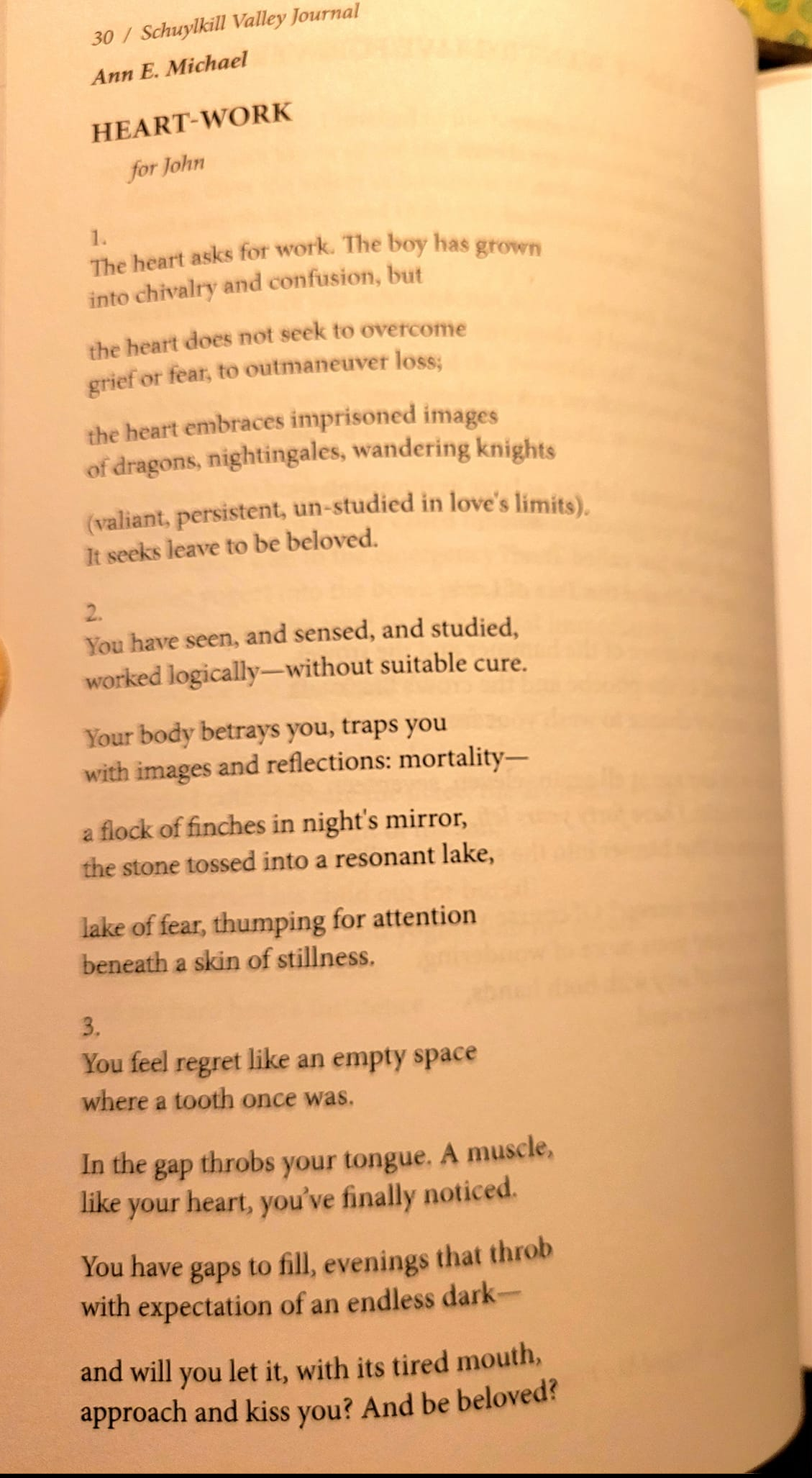
I wrote a poem for my brother 25 years ago or more, when he was in his early 30s and having mysterious and frightening cardiac issues. He was working on geological and wetlands surveys for the county and feeling fairly uncertain about his career, as often occurs when one is in early mid-life. My initial drafts included a quote from a Rilke poem and some geological terminology. That poem draft, as a whole, didn’t quite “work,” however. I gnawed on it for well over a year, tweaking and revising. I showed it to Ariel Dawson, a friend (alas, now gone) whose critique and suggestions I respected. She gave me some ideas for revision and told me she thought this was a poem with real possibility. I just hadn’t quite gotten to the final possibility yet. She told me it was a poem I should believe in, keep working on.
Some years later, after a major reworking, I sent it out. Several times. No one accepted it; a couple of years later, I realized where it was in need of a change. Tried that. It felt better to me. But no one accepted it for publication. Fast-forward about 18 years, and I made yet another change in the poem. I thought maybe it was still worth submitting to journals. Nope. But, last year, reassessing some older work, I came across this poem and thought it was actually a pretty good poem, worth sending out a few more times. One might say I believed in the poem.
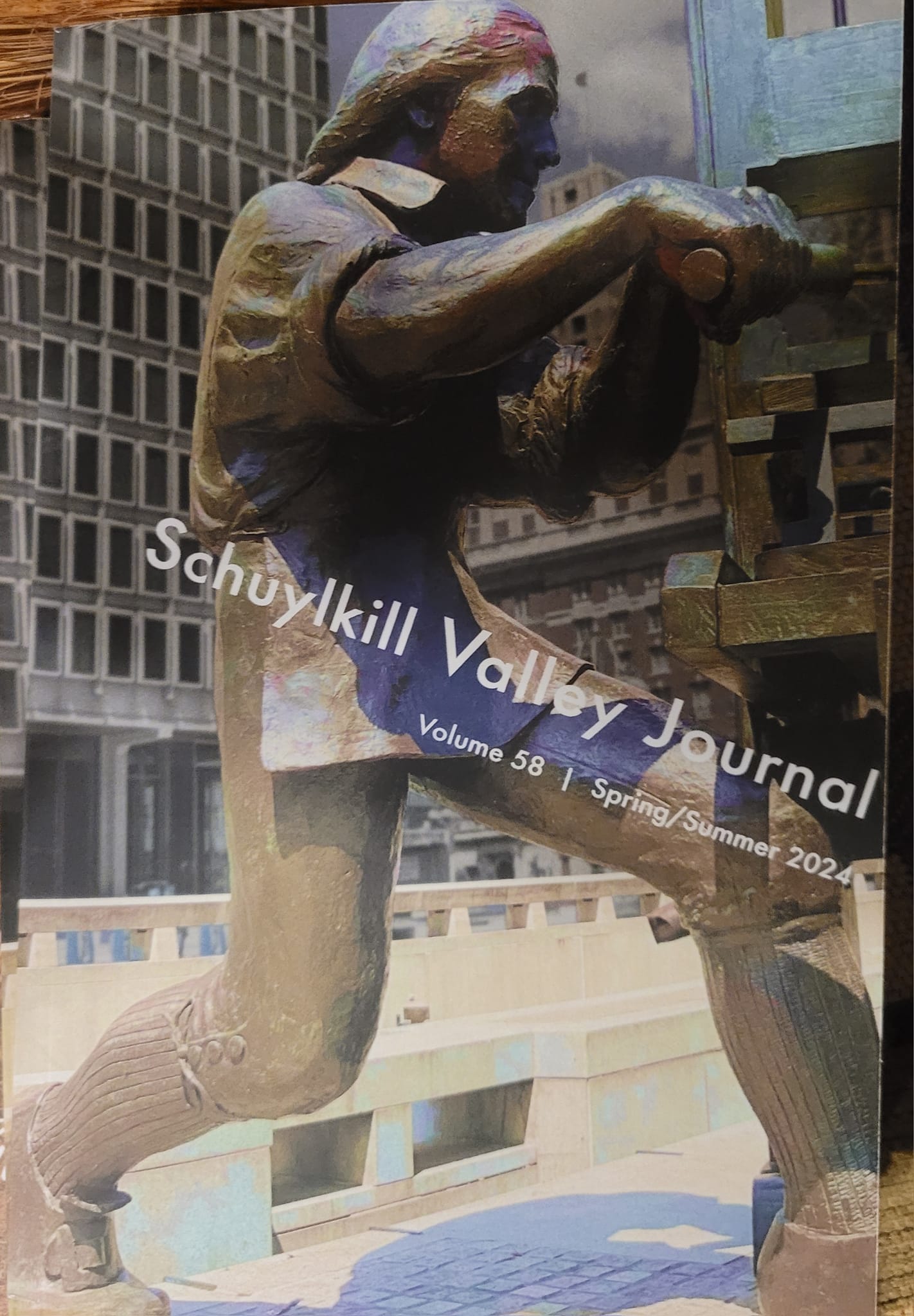
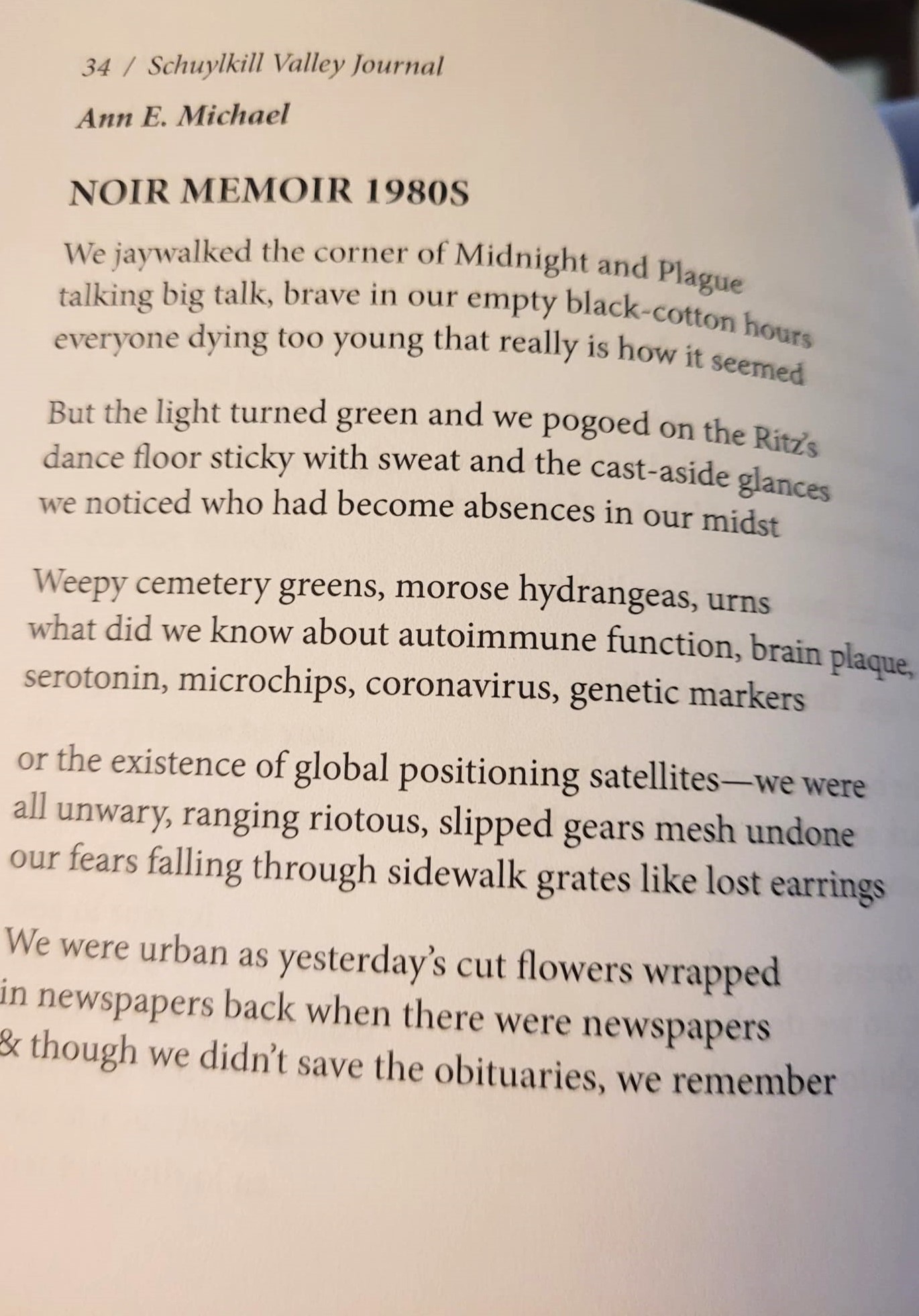
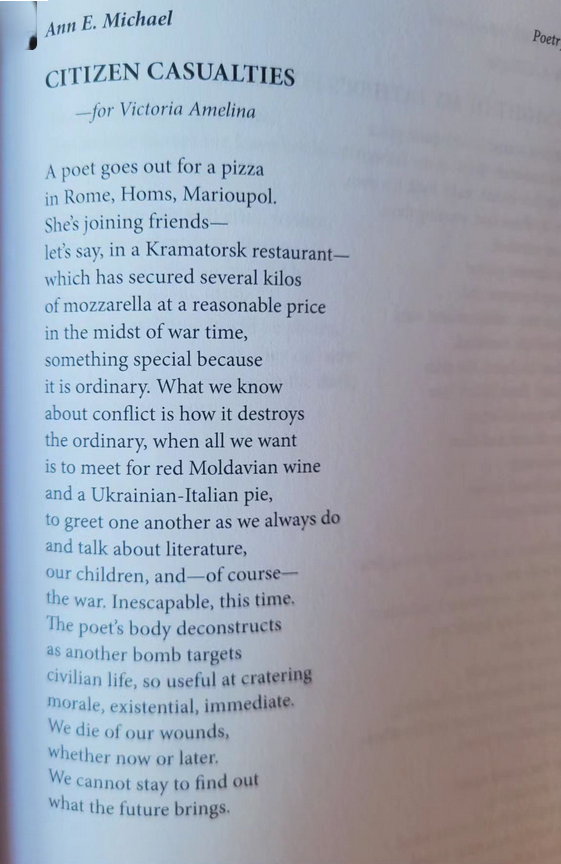
This post is to say: Be persistent, writers, and do believe in your work! Because Jane Edna Mohler at Schuylkill Valley Journal chose “Heart-Work” and two of my other poems for the issue that just came out in print (and I do love print journals!). [Purchase the issue by clicking here]
That poem found its way into print 25 years after I first drafted it.
Something equally as nice occurred when I received the print copy in my mailbox. Peter Krok, the long-time editor in chief at SVJ (since 1990) and a long-time colleague-in-poetry, sent along a lovely note in which he praised Jane Edna’s editorial sensibilities and then kindly said he felt that my poem “Heart-Work” was exceptional. How frequently does that happen? Not often, I can promise you–although I suspect such comments are more likely from small independent journal editors and presses. Those lovely people are involved in the arts for the love of poetry and the humanities. When they find time, they can be marvelously encouraging. Let us thank them personally and to the world!
Trapped inside with the air conditioner on for over a week, I sat by my bookshelves going through the poetry books in my library. I’m re-reading, assessing which books I truly want to keep because I turn to them often or learn something each time I read them, which books I keep for sentimental reasons (maybe I know the author personally), which ones to keep because they are signed copies, which ones are long out of print and I would never be able to replace them. Some of them remind me strongly of places or eras in my life: I bought this one in a small bookshop in Grand Rapids MI, or this one at Barnes & Noble when it was just one store on a NYC street corner, or these at the storied and much-mourned Gotham Book Mart or St. Mark’s Bookshop. What are good reasons to keep books when I really have to downsize? It’s not an easy task, and the first of many in the process of getting rid of stuff so my kids won’t be stuck doing it. Besides, I enjoy re-reading these books. My children are not as enthusiastic about poetry as I am, so it makes sense that someone who loves the works on the shelves be the one who makes such decisions. It feels good to be surrounded by the words of wonderful writers when the outdoors is brutally hot and humid, and every joint in my body aches.
Surrounding myself with other people’s books also acted as one more way of avoiding my own creative work. Sometimes, though, waiting around and doing nothing on a project ends up bringing clarification or new ideas. It can prove useful. I have been stalled on my in-progress manuscript, so a month or so back I asked someone to take a look at it–and then I got caught up in doing other things. Like getting cataract surgery and having covid, and then it was gardening in full swing under sweltering weather, and then the bookshelves… I wasn’t exactly procrastinating, but neither was I actively working on, or even thinking about, the collection.
Acquired when I was much younger, and cool bookshops abounded.
And one night recently–during a much-needed rainstorm–I got a brainstorm! I realized I was trying to pack too many topics into what really should be a manuscript more closely focused on how people who love one another vary in their relationships to old age and death, and on how the contemporary social and medical aspects of the aging process pull us in uncomfortable directions, often distancing us from those relationships. So yes, there should be family poems, hospice poems, biblically-influenced poems, and dealing-with-everyday observation poems. Also some poems of hope and love, poems reminding me (and readers) of the need for compassion in all dealings. But the draft had 92 poems in it, far too many; and some were there just because I like them or they’d been published in a good journal. Which are actually not good enough reasons to include a poem in a collection, according to most of the editors I know.
I am back to thinking about the manuscript and digging up potatoes–a nice crop this year–instead of culling the poetry books because, thank goodness, the heat wave’s subsided a bit. But in the process of this non-routine summer I have allowed numerous weeds to flourish and set seed; all the more work for NEXT year’s gardening, but it’s been too hot to deal with said interlopers. I like to believe the weeds and I are reaching a sort of understanding, but it is not really a compromise. All the concessions have been on my part. [Note: weeding a personal library is less physically taxing but not really any easier.]
When my children were learning to talk, I remember finding the process of language acquisition so amazing that I briefly considered going back to college to study it. I have two children about 18 months apart in age; many of my friends had babies the same time I did, so I had a range of small children to listen to and be amazed by. Each child seemed to develop their own method of learning to talk, beyond the general similarities among human beings that many scientists and linguists have studied. I wondered what made those small differences–the way parents spoke to the child or to one another? The temperaments of the children? Exposure to music or grandparents, older siblings, the radio??
I can admit that I was an exhausted young(-ish) mother, but also so intrigued. I wanted to learn as my children were learning. There was such excitement and joy–it seemed as though every new day brought further leaps in communication as my kids discovered pronunciation, verbs, adjectives, vocal stresses, and body language to convey what they were noticing, experiencing, needing, complaining about. As a lifelong learner, autodidact, and amateur researcher, I found myself reading up on language and its acquisition and history.
A few moments stay vividly in my memory. One summer day when we had a sun shower, my barely two-year-old son pointed up to the sky and announced, “Sun out. Rain coming down.”
I think of that with joy every time we get a sun shower. Over 30 years later.
~
Now, I’m trying to find the same fascination, the same learning-endeavor, with my mother’s loss of speech. I want there to be some joy or benefit in this reversal of language, something I can take away from it other than a deep sense of losing the person she was. This has meant reading books about dementia, aphasia, aging, and all the rest. It’s meant trying ways to get her attention and jog her memories when visiting her; talking with her caregivers; and reminiscing with my siblings, as well as conferring with them about her current situation as it evolves.
It’s meant finding some humor in the inevitable mix-ups that happen when communication gets woefully impaired. It has also meant finding peace, or comfort, in just sitting beside my mother in silence, holding her hand in her quiet room. She was always a fairly reflective person–capable of hilarity and chattiness, but more often keeping things to herself. Maybe revealing her thoughts some time later. Now? Who can tell. I find that I return from my visits with her feeling increasingly reflective myself, wondering where she “goes” when her attention seems to wander, wondering what she would say, if she could. I find myself wanting to research, even more than I have, information on neurology and cognition and what happens when the neural synapses that lead us to language begin to get trimmed away.
Not everyone who gets past 90 experiences such neural shut-downs in the language-generating parts of the brain; I know several folks who were, and are, quite fine with speech and thinking into their late 90s! Alas that my mom isn’t one of them. My task is to find joy in whatever her moments of being are at present while she is still physically among us. Not always an easy task, it sometimes saddens me. But joy tempers sorrow, just as sorrow so often tempers joy.
Momma. If you could only read this, or understand me when I say it: I love you.
I do not much care for air conditioning, and I believe it is bad for the environment; yet I admit I’m grateful for it lately, as I reside in one of the many regions of the USA that’s been enduring dangerously high temperatures for more than a week straight. I feel lucky that we’re not struggling with the heat wave–that we can shut up the windows and turn on the AC. We’re also in an earlier-than-usual drought situation though the air feels muggy and humidity has been as high as 98%.
My garden needs water every day; I generally water in the evenings because that is when the garden is in shade. The barn swallows swoop around me as I make sure the tomato and cucumber plants’ roots are getting a deep soaking. While I water, I watch for insects–fireflies, moths, dragonflies. And for bats, which have returned but aren’t as numerous as they once were. It’s pleasant for me that there are fewer mosquitoes and gnats, but I’m concerned about a drop in the number of junebugs and moths, and even (yes) mosquitoes. The heat and drought have taken a toll on all kinds of wildlife.
This morning, a pair of finches dive-bombed a squirrel that was up in the pear tree, chasing it far into the hedgerow. It may have been after the unripe pears, but squirrels also sometimes eat songbird eggs or chicks, especially when the squirrels are nursing kits or when there’s a lack of other food. The deer are so thirsty and desperate for greens that they’ve eaten every last hosta in my landscape, including the ones right up at the house foundation. They are consuming plants they have overlooked before, but I can’t blame them. Since it has been so miserable outside, I haven’t picked black raspberries this year; I’m sure the deer are happy about that. But I do wish they’d eat the poison ivy, wintercreeper, oriental bittersweet, and honeysuckle vines…that would make my landscaping tasks easier!
I’ve kept a garden journal for 30 years. If you have a garden, you don’t need to be an environmental scientist to recognize that the climate is undergoing changes. This is not a political statement but a fact. Everything right now is stressed–including the gardener! The stress enters into my consciousness and, I suppose, into my creative life. My poem drafts of the past week have been a bit on the bleak side.
Here’s a draft of one of the 7-line poems I was working on last week. Suits the weather, I guess.
~
Sweltering
A description accurate for the days past solstice when even the wind lies sweating in a hammock unable to rise for a brief turn around the block. Blackbirds slow their trills, robins shelter in shade, all the tasks we should tend to we leave undone. Hours of lethargy seep into skin and set up house, keeping us damp, achy, sunburned with the blues.
I’ve been challenging myself to write 7-line poems lately. Half-sonnets? Not necessarily. Just an exercise in writing a poem in brief. I have used haiku and tanka as brevity/image exercises in the past, and that work has been helpful. While I seldom write poems that are longer than, say, 30-35 lines, practice with conciseness never hurts, especially when my inclination is to go narrative.
I’m not knocking narrative poetry: I love it. Love reading it, love writing it–especially the lyrical narrative. In addition, I’m a big fan of the discursive and tangential in poems and essays (looking at you, Ross Gay). But one does tend to fall into familiar territory, and it’s useful to push away at what’s easy. That means, every now and again, trying something unusual: persona poem, aphorism poem, Spencerian sonnet, cadralor, surrealism, slant rhyme, golden shovel, or an invention of one’s own…something to freshen up the craft.
Many writers I know rely on prompts for imagery, language use, theme, or topic. For some reason, that sort of prompt seldom gets me really working in a new vein, though I can get a poem draft or two that way. Using a form, trying something new with how the words land on the page, is much harder to do (for me)–and therefore, more useful. I honestly want to feel as though I am working at poetry, doing the good and rewarding sort of work during which I learn new techniques and rediscover how craft can deepen meaning.
Real work takes practice. And real practice doesn’t actually lead to perfection. It leads to new explorations and revelations. There’s my wisdom-for-the-day to poets who are just starting out.
Probably because I have been stalled on my manuscript (see previous post), I’ve been reading blogs and speaking with friends about the whole “project” of publishing poetry books. People sure have widely varying opinions. It had occurred to me there would likely be some controversy over this even in a world as small as poetry; but I am surprised at how heated poets, and publishers, can get concerning the whys, whens, and hows of poetry collections. Whether a poet’s work is ready, for example, or–as some folks might put it–worthy of a book or chapbook, and when in one’s “career” is the time to put a book out into the world…and whether the time it takes and the costs of submitting and contest fees are worth the effort or act as a barrier to the underfunded, the less-known, and the uninitiated (or to people who just are not very good poets).
Where a writer is in her poetry (career, journey, artistic path, life, whatever) surely makes a difference in whether or when she pursues manuscript-making. Some folks suggest getting a chapbook out as soon as one has enough good poems because a chapbook looks good on a poet’s CV. Others insist it is better to wait and get work published poem-by-poem in journals and literary sites.
Some poetry publishers are more selective than others, so writers new to the process are likely to feel discouraged when they keep getting rejections from these “top tier” places. There are publishers who are less selective, but sometimes writers get warned away from having their manuscripts produced by a so-called poetry mill. “Get your books accepted and published by the best-regarded publishers,” they’re advised; a chapbook-mill press will not look as good on the CV.
But getting that manuscript accepted by the best-regarded place can take a long, long time. (Speaking from experience!!) What to do?
I’d advise poets who want to compile a manuscript to think about what the purpose of doing so is. There are more reasons than you might realize. Are you trying to get a job in a creative writing program? Are you trying to stand out in the crowd? Do you want to publish mostly for your friends and relatives? Or for yourself? Do you need publication in order to stay on the tenure track? Does your manuscript represent the creative output of a difficult time that you want to make art from and share with others? Are your poems gathered together in order to inform, to argue/convince, to entertain, to be relevant in the moment? Is your manuscript a kind of personal document, a memoir in verse and, if so, do you view it as important for other people who may relate to your experiences? How crucial is is to have the book published soon? Do you think it is important to have the book be a prizewinner?
These are just a few things to consider. Other reasons abound. And at any rate, thinking about what you want your book to be or do or accomplish should help you to decide the where and how of getting it into print. Or if that is even necessary. These days, poets can garner quite a few readers by having poems that get posted online in literary blogs, journals, social media platforms, and other sites. Do you really need, or care about, having a book? What makes the process “worth it”?
Then there’s self-publishing–which, thanks to Lulu, Amazon, Blurb, BookBaby, and similar businesses is not that hard to do–and which no longer carries quite the stigma of “vanity presses” (though if you are trying to get tenure, I’d advise against this choice). Not all of us feel up to learning the ins and outs of templates and design limits that these businesses offer. Some presses began their lives as ways to self-publish or to publish the work of a poet whose work wasn’t getting much attention; Lamont Steptoe started Whirlwind Press (now defunct) to publish Dennis Brutus‘ poetry, then started publishing his own work, then morphed the press into Whirlwind Magazine for several years. Of course, there is no promotion at all; poets have to do their own PR even with some very good presses, and self-publishing requires even more.
Then there are the “mills” I mentioned earlier. These would be poetry publishers that, critics note, are less “discerning” than the hard-to-crack literary presses. The ones I know of are not as predatory as vanity presses and are easier to work with than the Amazon-style self-publishing route. Some of them offer promotional advice or social media activity, and some may invite their authors to participate in regional group readings. And in fact, I have had one book and a chapbook or two published by presses I’ve heard referred to as mills. I suppose the publishers might object to the characterization, but it doesn’t bother me.
My feelings on getting my books in print have evolved over the years, and I think that they should. I am no longer a young poet new to the challenge of getting my poems into magazines (they were all print when I was starting out) and thinking about whether I wanted to work in the creative writing field or not. As it turns out, while I did earn an MFA, I never really used it in the academic area where I ended up. But I attend writing conferences, engage in critique, send my work out for publication–singly and in manuscript form–which are all parts of the poet’s career (if you can call it a career).
At this point in my life, I want to make books! I love books, and I love reading poems in books and not on a screen of any kind. It doesn’t matter to me if my books win prizes (though one did!) or are published by top-tier literary presses (er, no…), or if they ever result in my earning anything from my writing (not yet…). Yes, I want my manuscripts to be worthy–by which I mean that a few readers find something of value and enjoyment in them. On balance, that seems good enough for me.











 ann e michael