Back in time

At Şanlıurfa in the Urfa region, a Kurdish area in eastern Turkey, we stayed two nights after our visit to two amazing, ancient monuments that are really out in the middle of nowhere: Mt Nemrut Dağ (the tomb of Antiochus I) and Göbekli Tepe, a Neolithic site of the Stone Mound Culture, both Unesco World Heritage sites. I remember reading about the discovery of Göbekli Tepe in the early 1990s, when German archaeologist Klaus Schmidt began excavations there; the “buzz” at the time was that these megaliths mark the earliest temple or place of community worship ever recorded [ca. 9000 BC]. Since then, new discoveries unearthed at Göbekli Tepe, as well as discoveries of similar sites (such as Karahan Tepe, which we later visited) in the region, have somewhat altered Schmidt’s original speculations.

It appears now that people lived here at least part of the time, though until these discoveries, historians assumed humans in the pre-pottery Neolithic Era were hunter-gatherer nomads who did not build permanent structures. Our guide told us the current thinking is that the buildings here played some sort of role in preparing young men for adulthood–almost all of the reliefs and statuary portray male figures and male animals. But it is early yet to guess, and besides, we can never know for certain.

But there are cisterns, a system that distributed water through tunnels, containers that have traces of grains and, yes, beer. Back to the argument of which came first to humans: Bread or beer. My money is on beer. *

But to back up a few hours–first, we rose at 5 am so that we could take the circuitous drive up the mountainside to Nemrut Dağ, a relatively youthful site built around 60 BC, presumably by Antiochus I, who was connecting a slew of peoples and cultures together in a kind of Iranian-Hellenic-Armenian-etc. aggregation in a move toward empire at a time of Roman ascendancy. Commagene is the Romanized name used for this ancient region, which was a merger of Persian and Hellenic areas once Alexander the Great’s empire had disintegrated. Antiochus married a Cappadocian princess and had big plans, but his empire did not last long after his death; by 29 BC, his sons had died or been executed.

The path we walked up to get to the tumulus, 6:45am; my photo

And then over time, this huge tomb monument was forgotten until its rediscovery in the 1880s. The region feels deserted and surreal, and the climb up to the tumulus–though there is now a partially paved path–is long, the wind swirling around, full of dust. My sunhat blew off my head even though I had a neck strap. I guess that was my offering to the ancient king.

What an astonishing place it is, especially at dawn, and despite a fair but not overwhelming number of tourists.

~

Monuments are a step toward writing: they tell stories, written in stone with picture images, because the stories we tell or sing with our human voices don’t leave much of a record for cultures other than our own. I found myself wondering what the poets of these ancient places said or sang, and how their language sounded, and whether I would feel exhilarated or moved by those lays had I been there.

And at Göbekli Tepe, when I learned about the cisterns that contained beer, I thought of a poem I’d written some years ago after visiting a Mesopotamian exhibit at the Penn Museum in Philadelphia. So with a bit of awe and a bit of tongue in cheek, I’ll post it here. [It initially appeared in Mezzo Cammin.]

~

*Porter, Stout, & Mesopotamian Deity

Sisters, let us raise a glass
to agriculture, to dark brew
made possible by wooden hoes,
by seed-gatherers: me and you,
our aunts, foremothers, those
who stayed, patient, and grew
grains, diverted rain, winnowed,
boiled, fermented mash, who
certainly invented ale. For we
descend from goddess Ninkasi
who nourished babies through
breast milk fortified by beer
and whose forgotten virtue
we revive, consuming her.

~~

Thanks to copyright-free photos from Pexels since my own photos are snapshots taken with an out of date cell phone.

Adventure and ibises

At my daughter’s suggestion, we ended up in Mesopotamia: central to eastern Turkey, fertile crescent, Euphrates and Tigris, vaguely following the borders of Syria, Iran, and Armenia up toward the Caucasus to Kars. It was, indeed, quite an adventure. We were booked on a tour following a section of the storied Silk Road through Wild Frontiers, a British company, and spent 11 days in Turkey. It was informative, beautiful, marvelous–a fabulous way to spend over a week with someone I love who lives about 2,000 miles away from me. Our expert tour leader Timuçin Şahin (Tim) is a history enthusiast and sustainable-agriculture proponent who loves his native land and–despite its current repressive government–is not shy about noting its failings, complexities, and fraught past; he says a truthful narrative is the sanest way to accept the past and learn from it rather than repeat it. Though Türkiye doesn’t seem to be heading that way at the moment, and if anything, some of the processes that have led to Erdoğan’s consolidation of governmental power sound frighteningly familiar to this US citizen.

Which brings up another point about our trip: we were the only two Americans. The other ten tour participants were British, mostly pensioners. After a few days, when we felt comfortable with one another, one person admitted that “we were all a bit apprehensive about having Americans on the tour.” Apparently the perception is that more of us in the US support the current administration than is actually the case. So it was up to me and my daughter to correct some stereotypes and present as informed, kind, curious, reasonably well-educated world citizens. I hope we succeeded.

A larger-than-life bald ibis statue and yours truly at the bird sanctuary.

As I’ve no desire to chronologically report the entire trip, and honestly cannot do it justice, I am using my back-at-home time to reflect not on “highlights” (though there definitely were some) or inspiration–though there was that, too–but on some of the quieter surprises that enrich an experience like this one. For example, the Bald Iris enthusiast and savior we met in Birecik along the banks of the Euphrates. This man, whose name I didn’t write down, alas, has been operating a sanctuary for these birds for almost 40 years. The migratory kelaynak was once seen in huge flocks throughout Egypt and much of the Middle East and was considered sacred in some cultures. They went extinct in Egypt quite long ago and have been declining rapidly in the 20th century due to pesticides, climate change, environmental habitat destruction, sport hunting, etc. There are a few non-migrating colonies of Northern bald ibis in Morocco. Yes, it’s a funny-looking bird, but beautiful in its way. The ones we saw in Birecik are theoretically migratory but mostly reside in the colony, because whenever they are let out to migrate, they end up dead (found through tracking devices). The cheerful, enthusiastically hopeful ibis savior who photographs, tags, puts up nest boxes, and corrals the birds so they don’t fly off in winter is a veritable encyclopedia about these avians. He has put together a small museum, informational pamphlets, gift shop, and fund-raising platform in Birecik. There are decent human beings in the world who recognize the value of non-human creatures. This guy is an inspiration.

My readers may wonder whether I found poetry inspiration on this trip; the answer is, dunno yet. Probably, once I settle down and reflect, mull stuff over, consolidate my notes and my photos, and get over my intense jet lag. There was certainly no time for writing during the tour, as the itinerary was packed with cool things to learn, see, do, visit, hike up, float on (there were boat rides), and eat. I’d never been on a tour before. I liked this one, and because I had no knowledge of Turkey’s culture, language, economic situation, transportation options, etc, I was truly grateful for our tour guide’s expertise and enthusiasm.

Adventuring

The weather here has been hot and somewhat humid, though it continues to be dry–much drier than autumns used to be. Drought extending past August into October is becoming a more usual thing, according to my garden journal. One plant that thrives this time of year is tithonia (Mexican sunflower), and it attracts monarch butterflies like crazy. These are the monarchs that go adventuring: the super-generation of these insects that makes the 3,000-mile trip to Mexico. Here’s a brief blog from the Xerxes Society that has some quick facts. The monarchs I see in my garden may, if they are lucky enough to survive the trip, live up to 9 months, which is well past the life span of spring and early summer generations.

They are not even returning to a place they know or have ever been. Human science has never yet determined how monarch butterflies of the last summer generation find their way to Mexico. They just go adventuring, floating on air currents, supping on flowers as they travel.

I’m about to go adventuring, as well, traveling further east than I’ve ever been, in the company of one of my favorite persons in the world–my daughter. She and I had long talked about taking a mother-daughter trip together once I retired, and sooner is better than later! She found an environmentally-conscious adventure tour business that offers some really intriguing historical/archeological/environmental hike-and-bus options. We’ll find out whether the company is worth recommending & I’ll report back here, meanwhile keeping our destination unrevealed for now. A little mystery is fun.

While I am taking this trip for reasons beyond writing inspiration, I can’t help hoping it will act as a prompt and opportunity for drafting new poems. I’ve been working on new drafts, and revising older ones; but I have to admit that for awhile my creative mojo has been a bit off. Yes, this happens to any so-called “creative” occasionally, but it never feels terrific. One prefers the juicy, challenging urgency of creative flow. Wish me luck (and traveling mercies).

Points of view

I ran across something online that made me shudder–and it wasn’t politics or global tragedies but something sillier and more personal. Apparently there was a trend a decade ago of adults reading their adolescent diaries, aloud, in public (see “Mortified”). Ugh. The few times I have been tempted to read any of my old diaries or journals, I’ve stopped after a few sentences. Shuddering. This is less likely to happen with journal entries I wrote in my 30s or later; at least I hear my younger adult self in those words. But hearing the adolescent me, or the young woman of college age? No, thank you. I embarrass too easily.

Yet I found I was thinking today of this passage of Proust’s, which he gives to the character of the artist Elstir:

“There is no man,” he began, “however wise, who has not at some period of his youth said things, or lived a life, the memory of which is so unpleasant to him that he would gladly expunge it. And yet he ought not entirely to regret it, because he cannot be certain that he has indeed become a wise man–so far as it is possible for any of us to be wise–unless he has passed through all the fatuous and unwholesome incarnations by which that ultimate stage must be preceded…We do not receive wisdom, we discover it for ourselves, after a journey through a wilderness no one else can make for us, which no one can spare us, for our wisdom is the point of view from which we come at last to regard the world.”

There’s some comfort in that. I would not call myself wise, but I’m definitely wiser than I was at 15 or 21. I suppose I’m still sometimes “fatuous and unwholesome” (whatever Elstir meant by that), awkward in society, and mistaken in some of my intuitions. But I have discovered myself for myself, with all the pain, sorrow, embarrassment, and joys that such discovery requires, and have developed my own point of view. In addition, I’ve learned that each person holds their own point of view. We don’t all think alike or in concert and may never fully understand one another. That makes the world contentious, yes. And interesting.

Reading Old Diaries

When I wrote about the city
it was as though I knew
I didn’t belong there,
would not thrive—as though
I wouldn’t stay long
and so pressed each line
on page urgently, camera
shutter clicks, each image
framed in fractioned seconds
as people jaywalked and
side-walked, as pigeons
or sparrows alighted to peck
at civilization’s least crumbs,
as young men lovely and
unattainable grew ill, as city
failed to succor any of us,
as my ambition floundered.
Years back. So that what
I recall is what I photographed
or wrote, however inconsistent.
Naively urbane, the city
my youth inhabits lies brittle
in the pages. The past undoes
itself at last. Or I do.

~~
I'm embarrassed to note that I've forgotten where this poem was published. My files are elsewhere at the moment. I'll update if I remember... *It appeared in Loch Raven Review!

Illusions, connections

Reading Proust again returned me to some of my own past reflections on memory and self, the capital-S Self. A decade or so ago I spent considerable time reading in philosophy, physics, and neuroscience in an endeavor to get a grip on human consciousness and, perhaps, behavior. I posted about some of these texts on this here blog, in between writing about poetry, the garden, and my teaching job. Recent coincidences of reading returned me to this topic, “the hard problem of consciousness,” and made me consider how our embodied selves/minds/awareness: use shortcuts to manage the overwhelming inputs of our environments; define who we are using subjective if physically-based perceptions; and fail to see the obvious because of habituation and the apparent need to confirm what we believe we know. Illusions! The Vedic concept of Māyā, Plato’s Theory of Forms…propaganda, Penn & Teller, quantum physics, complexity theory, Marcel Proust, complementarity. I have a lot on my mind.

If it IS on (or in) “my” “mind.” For there’s even some question about that, as proposed by Neil Theise in his book Notes on Complexity. Just as light can be a wave or a particle, depending upon perspective and viewer (see: complementarity), it’s possible that our minds or selves can be individual and separate but also connected and boundary-less. The subtitle of this text is what appealed to me: “A Scientific Theory of Connection, Consciousness, and Being;” so far, I’m enjoying it and finding inspiration.

It’s needed, inspiration. Despite a few plunges into new drafts (see here), I have not been writing much for at least two months, and I miss it. The ideas from physics and neuroscience that intrigue me include potential metaphors and terms such as quenched disorder, endosymbiosis theory, and holarchy. These–along with the hard problem of consciousness–all have some relationship to complexity theory, and Theise does an elegant job of writing about complicated science concepts for the non-expert.

I ran across Notes on Complexity right after finishing Sleights of Mind, a book about the neuroscience behind the sort of illusion we call entertainment magic: sleight of hand, sawing people in two, mentalist “mind-reading,” and other performances; the authors, Susana Martinez-Conde, Stephen Macknik, and Sandra Blakeslee, are trying to discover more about how brains work (or filter, and sometimes don’t work so well) by studying how we get fooled by illusionists. This is a fun book, even more fun for me because one of my Best Beloveds has long been an enthusiast of magic shows and magicians. Martinez-Conde and Macknik are neurologists, so–unlike Theise’s text–this book is very body-mechanics in its basis. Their work reminded me of how amazing the human physiological system is. And it’s entertaining.

Before these non-fiction reads, I was finishing up with Proust who, in his own creative way, was exploring the interiority of the human self and carefully observing human interactions, behaviors, assumptions, prejudices, and aesthetics. Not neuroscience, because there is no science to it, but definitely related to how our brains and bodies process experience. My sense is that poetry works that that way for me: it’s not an abstract stream of thought but something inextricable from bodily experience, maybe even, through the environment in which we exist, something deeply connected to everything, a global being-there.

The way we process experience (and is this consciousness?) is largely what leads us to the arts, to make art or to appreciate it, and to decide what feels compelling, important, beautiful. And it’s not all in our heads.

Writing act

Lately, I’ve been experimenting again with prose poems and with very short poems that are not quite tanka or haiku, but not much longer. Six to ten lines. Short lines. Then, the online journal Six Sentences got me intrigued about experimenting with that idea as a prompt–long sentences, short sentences, a mix of both–but only six sentences. I like playing around with words. I enjoy writing almost as much as I enjoy reading, and it’s fun to enjoy what I am doing these days, when so much else seems unenjoyable, sad, fraught, scary (another mass shooting, of children, today).

The garden offers comforts, too. Now we are in the harvest-and-rip-up phase as August nears its close. Lots of tomatoes, still a few green beans, plenty of butternut squash and sweet peppers and basil. It looks as though I will harvest a lot of hot peppers, too; although I only have one plant, it is robust and full of spicy peppers that will get hotter as they ripen. And the summer flowers, those glorious annuals, are lovely this year. We even have more butterflies than usual!

So many people have written about gardens, I sometimes find myself wondering what value there is in it, what could be political or artistic in a garden poem, what could make such a poem dangerous or antisocial. Why it is deemed necessary to yank NEA grants from poets, for example. What is it about the act of writing that makes us outliers? Can it be because any description or observation takes a perspective, possibly personal, possibly outside the norm, potentially widening another person’s viewpoint? And is that dangerous? (Perhaps.) Because a plant or animal or place name might evoke an event or person or symbolize something that might rock the boat–a sunflower for Ukraine, a bald eagle for the USA? Could that be risky? And might the interpretation be incorrect, but the writer assumed guilty of…whatever? (There is nothing new in any of this.)

Here’s a draft of a prose poem that came of my reflecting on such questions.

~~

The Act of Writing

only occurs when pen in hand meets paper, or the act is mere mechanics, pressing typewriter keys and imprinting page, or is virtual, encoded onto disk, on cloud encrypted, ephemeral, the act one of persona, a mood or dream, some moment observed, imagined, a recollection, a heart-stab, a shattered vase, anchors dragged along ocean floor, a plea, promise, letters never sent, a life of pain, a sworn compassion, or love that cannot otherwise be expressed, an argument for understanding. The act of writing rallies, rages, sets forth accusation or denial, sues for mercy, brays at nothing, pointlessly puts forth what’s known but long ignored, unacknowledged, unaccepted, an act political by proxy, being the kind of behavior those in power seek to suppress, who make the act of writing into reams of tedious fine print outlawing every fervent danger that clings to the very act of writing which is the practice of free and conflicted expression even when the reader sees only a description of deep scarlet bougainvillea arching over a poet’s unmarked grave in a landscape of olives and oleander.

~

As you wish

Photo by Ahmed u061c on Pexels.com

Discouragement, a regular visitor to this writer (and many other writers), has settled into the house with me. Summer is often, for me, a time of writing less and doing outdoor and social things more; this year, though spring was lovely despite torrents of rain, summer commenced with the deaths of two long-time friends, and I haven’t been able to shake my low mood. Now the rejection slips are arriving thick and fast, and I’m questioning the value of my work in particular and of creative writing in general. Like, why bother? What am I doing this for? For whom? What’s my purpose? And under what circumstances? Why?

Brooding certainly offers no help, nor does it change “declined” to “accepted.” Creative persons often find themselves questioning their pursuits, so I have good company. (Having just about completed the last book of Remembrance of Things Past, I can report that Proust’s narrator–largely a stand-in for Proust himself–wanders in the dark through wartime Paris pondering his own decision to try being a novelist and feels discouragement and doubts aplenty.)

Somewhere on a social media platform, I encountered these words by Virginia Woolf (from “A Room of One’s Own”): “So long as you write what you wish to write, that is all that matters, and whether it matters for ages or only for hours, nobody can say.” Good perspective, that, to stop being concerned for how long your writing matters, or to whom, as long as what you write is what you wish to write. And then if you don’t submit your work for publication? Maybe that is something you can live with. Rather, something I can live with; at this point in my life, I have had hundreds of poems and essays published, six chapbooks, and three poetry collections…maybe from now on, I should write (as I always have) for myself. Even if my work is not in fashion, or considered irrelevant, or judged as potentially lasting, it is still what I wish to write, what I find necessary to express.

Though one does write to express things, and expression seeks audience. That’s a perspective for another day, perhaps. Meanwhile, back to weeding the garden and picking cucumbers, beans, tomatoes, zinnias, and sunflowers.

Heaven, hell, & halos

After 30 years, my husband and I still take part in the Goschenhoppen Festival each August. You will find I have mentioned it in many an August blog.

The photo at left is from 2010 or thereabouts, when the festival had newly moved to the park in Perkiomenville, PA, which is where the beautiful Antes House (ca. 1736) is located. My daughter and I were enjoying funnel cake. The park’s trees have grown considerably since then, and there’s more shade for demonstrators (and visitors). We were grateful this past weekend that the sunny days were not as humid as some years and that there haven’t been downpours to churn the parking areas into mud. And though neither of my own offspring could participate this year, it was lovely to see their festival-friends now grown, married–some having kids of their own–and still showing up to volunteer at the two-day reenactment of Pennsylvania German folk life of the 18th & 19th centuries.

My demonstration is in the 19th-c household and foods area, and each year I am assigned a couple of young “apprentices,” girls ages from 12-17 in gingham work-dresses. This year a friend’s daughter was thrilled to be old enough to officially participate. She is full of wondering about life and is the sort of child who poses her questions and speculations aloud. She’s also at the age when she’s taking church classes for confirmation, and she’s interesting to talk with when she wades into her thoughts about Big Subjects. I often find myself telling her that the things she wonders about are puzzling even to grownups. Because it’s true.

Yesterday she asked about someone we knew who had died: “Do you suppose they went to heaven?” Yikes. While it might have been a good opportunity to throw a wrench into religious indoctrination, I felt her parents might not appreciate that. I merely responded that I didn’t see why not. But this little exchange reminded me of my own wrestling with the idea of heaven and hell when I was her age. From fairly early on, I just couldn’t imagine that the cartoonish heaven of winged souls wearing halos was in any way real; and though hell was also mentioned frequently in church liturgy, prayers, and hymns, my dad’s belief in a god who was forgiving made hell seem unlikely. So the information I took in was confusing.

It is no less confusing to me now, but I no longer sweat over it the way I did as a child. Anyway, the conversation with my little friend called to mind a poem I’d drafted after returning from a visit to the Metropolitan Museum of Art’s exhibit “Siena: The Rise of Painting, 1300-1350” which reminded me of how I loved Medieval and early Renaissance art when I was a youngster. All those saints and crucifixions. All that gold and iconography. I must have had a gothic tendency!

This draft may be more about art than about heaven, and more about envisioning than about anything else. It's not a finished poem, but who cares on this bright, late-summer morning?
~


Halos

What interested me most about
paintings of Jesus was
the glow around his head
because I saw such auras everywhere
when sun silhouetted our cat
in the dining room window
or lit up dew on tall grasses.

In later years I studied art
and learned the problem of cheating
light from solid pigments
the paradox of density layered
so some artists applied gold dust
to depict the nimbus gleam.

Yet even my little sister’s
fine blonde curls or the hairs
on my own skin could shine
that way illuminated like crowns
of hickory trees some autumn
morning long in brightness
no art to it at all.

Reading Proust again

I’m embarrassed to note that the name of Proust evokes hilarity in my two (adult) children, since they immediately think of the Monty Python skit (see it here). Needless to say, neither of them has read Proust; but at least they have some familiarity with the famous writer, so I’m not a total failure as an educational model for my kids.

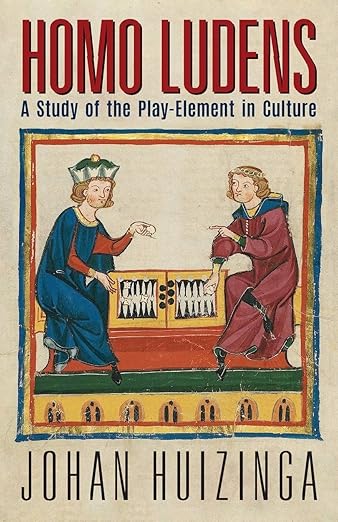
I read the novel(s) at age 19 or 20 and was entranced. Probably that indicates a kind of romantic nerdiness on my part as well as a love of words, of art and music, evocative sentences, descriptive prose, complex emotional situations, history, and confusion about the world of adults I was at that time entering. That I stuck it out through all seven volumes of the Scott Moncrieff translation says something about my persistence with literature and the beauty of that translation. [The Public Domain Review has a nice overview essay on Moncrieff here.] In the decades that followed, I kept meaning to re-read In Search of Lost Time; but it’s quite a commitment and, let’s face it, that is the sort of plan one tends to postpone.

But I began the task this summer with the Lydia Davis translation of Swann’s Way, though I may move on with the Moncrieff editions if that’s what I can find at the library. (Somewhere in my attic is the three-volume Mitchell edition, but I started that years ago and found I didn’t like his approach.) I suppose a first-time reader might want to experience the books all through the same translator, but even the Moncrieff doesn’t succeed in that since he died before he got to Time Regained. The new Penguin series, for example, has a different translator for each book.

Ah, the difficulties of translation. If only I could read French!

During the past decade, I have done a smattering of re-reading novels (and poetry collections) that I first read in my late teens or very early 20s: Tolstoy, Woolf, Dostoevsky, Dickens, Blake, Atwood, LeGuin, among others. It’s always interesting to re-read a book that I haven’t read in decades because, although the book has not changed, this reader has, to some extent at least. Fewer allusions and implications go over my head, for one thing. The motivations of mature characters make more sense now, and the yearnings and errors of youthful characters, while sentimental and familiar, seem distant; also, I have a better sense of the historical eras in which these novels were set or written. As a teenage girl in the USA in the late 1970s I had very little background in the social strata of fin de siècle France or of Russia during the Napoleonic Wars, or even of Victorian Britain, yet the authors swept me up in the petty striving and the political aspects of their worlds…and the difficulties involved in surmounting them, achieving them, or living outside of society’s expectations.

Photo, 1971 Opel Kadett: Rudolf Stricker, https://commons.wikimedia.org/w/index.php?curid=16078675

For all that I may be the wiser now, and can pick up more of the irony and humor, and more of the ‘adult themes’ (for example, until I was 17 or so I knew absolutely nothing about homosexuality), it is still the beauty of the prose and the rhythmic sweep of sentences and paragraphs that get me wrapped up in a book like this one. Besides, I love art and artists, architecture and music, and evocative descriptions of landscapes and gardens just as much now as I did then–possibly even more. Proust introduced me to so much when I was first reading these novels. Because of him, I read Racine, and Zola, and art criticism of the early 19th century, and looked at Impressionist painting in a new way, and recalled to mind the one trip I have ever taken to France (three years earlier, at age 16) as his novels described the Champs-Elysées, the Louvre, Versailles, the streets and parks of Paris’ arrondissements, and the villages in the countryside through which we had driven in a rented Opel.

Now, those recollections of France are dim. And the world has changed in 50 years. Proust knew: if I were to return, I would not be likely to reclaim my past–possibly not even remember it. France would be new to me, which is an idea I rather like. Possibly I’ll go back; in the meantime, I will relish the remembrance of reading what I have read in the past.

Reading in shade

It’s the time of year when, according to the lunisolar calendar, we move from 小暑 xiǎoshǔ–when the heat begins to get unbearable–to 大暑 dàshǔ, the hottest time of the year. It may also be the greenest time: my garden suddenly plumps out huge squash leaves, giant sunflowers, masses of beans, zinnias, basil. The tomatoes are finally burgeoning after a late start. It’s too hot to spend much time weeding and pruning: I harvest what I can and retreat to the shade as soon as possible, where I can read.

A friend recently lent me a book of short stories, Human Sacrifices, by María Fernando Ampuero, an Ecuadoran writer. It’s been ably translated by Frances Riddle, and the stories are startling and harrowing. Not something to check out for a light summer read on the beach, but memorable and thought-provoking. One critic says Ampuero’s work is South American gothic. I don’t agree–and I think it’s kind of a cheesy shortcut in a review–but perhaps that phrase does convey the flavor of some of her stories. Anyway, it’s always a treat to find a writer whose work I’m unfamiliar with and whose work is admirable.

I’ve been taking a break from reading poetry, though that wasn’t planned on my part. July brought a wedding, a death, and some travel; and now, in the intense summer doldrums, I prefer to read for entertainment or information, or just to pass the time. Poetry takes more brain and heart space for me, more “intentionality” or concentration, than most non-fiction books or novels do. This is not to say any other genre is less demanding in and of itself. It’s a personal quirk: I am more attentive when reading poetry than I am when I read other forms of literature, probably because I’m unconsciously (or consciously) endeavoring to learn something of the craft and style and context of poems by other poets. It’s a method of processing how to write poems. But as I have no plans to write fiction or non-fiction, I read such genres for entirely different reasons.

Usually I try to read outside on the porch, in the hammock, on the garden swing. Some days it is just too damned hot and humid, though, and I resort to the air-conditioning indoors. The indoor climate has no flies or gnats but also no bird songs, cicada hums, cricket calls, breezes, scents of summer. Indoors is less than ideal (except in the teeth of winter!).

Recently I’ve added a shade garden where the chicken run was in decades past, under the umbrella of our largest white oak. I haven’t yet added a bench, but a lawn chair suffices for now. Alas, it is a bit buggy, but so is the hammock. The pleasure of summer reading in shade outweighs the inconvenience of the minor fauna…most of the time.