Speaking joy

When my children were learning to talk, I remember finding the process of language acquisition so amazing that I briefly considered going back to college to study it. I have two children about 18 months apart in age; many of my friends had babies the same time I did, so I had a range of small children to listen to and be amazed by. Each child seemed to develop their own method of learning to talk, beyond the general similarities among human beings that many scientists and linguists have studied. I wondered what made those small differences–the way parents spoke to the child or to one another? The temperaments of the children? Exposure to music or grandparents, older siblings, the radio??

I can admit that I was an exhausted young(-ish) mother, but also so intrigued. I wanted to learn as my children were learning. There was such excitement and joy–it seemed as though every new day brought further leaps in communication as my kids discovered pronunciation, verbs, adjectives, vocal stresses, and body language to convey what they were noticing, experiencing, needing, complaining about. As a lifelong learner, autodidact, and amateur researcher, I found myself reading up on language and its acquisition and history.

A few moments stay vividly in my memory. One summer day when we had a sun shower, my barely two-year-old son pointed up to the sky and announced, “Sun out. Rain coming down.”

I think of that with joy every time we get a sun shower. Over 30 years later.

~

Now, I’m trying to find the same fascination, the same learning-endeavor, with my mother’s loss of speech. I want there to be some joy or benefit in this reversal of language, something I can take away from it other than a deep sense of losing the person she was. This has meant reading books about dementia, aphasia, aging, and all the rest. It’s meant trying ways to get her attention and jog her memories when visiting her; talking with her caregivers; and reminiscing with my siblings, as well as conferring with them about her current situation as it evolves.

It’s meant finding some humor in the inevitable mix-ups that happen when communication gets woefully impaired. It has also meant finding peace, or comfort, in just sitting beside my mother in silence, holding her hand in her quiet room. She was always a fairly reflective person–capable of hilarity and chattiness, but more often keeping things to herself. Maybe revealing her thoughts some time later. Now? Who can tell. I find that I return from my visits with her feeling increasingly reflective myself, wondering where she “goes” when her attention seems to wander, wondering what she would say, if she could. I find myself wanting to research, even more than I have, information on neurology and cognition and what happens when the neural synapses that lead us to language begin to get trimmed away.

Not everyone who gets past 90 experiences such neural shut-downs in the language-generating parts of the brain; I know several folks who were, and are, quite fine with speech and thinking into their late 90s! Alas that my mom isn’t one of them. My task is to find joy in whatever her moments of being are at present while she is still physically among us. Not always an easy task, it sometimes saddens me. But joy tempers sorrow, just as sorrow so often tempers joy.

Momma. If you could only read this, or understand me when I say it: I love you.

Vacuum of meaning

Seven months ago, my mother’s handwriting was decipherable–to a degree:

Her script now resembles nothing so much as asemic “cursive”:

Asemic writing is a wordless open semantic form of writing. The word asemic means “having no specific semantic content”, or “without the smallest unit of meaning”. With the non-specificity of asemic writing there comes a vacuum of meaning, which is left for the reader to fill in and interpret. Wikipedia

Her words likewise sound as though they possess no semantic content, but her body language, facial expression, and intonation when she speaks make it clear that there is a unit of meaning in whatever she tries to convey verbally. It amazes me that she doesn’t seem particularly frustrated by her aphasia. Although I can’t know what my response to aphasia would be, I doubt I would be as accepting and unflustered as my mother is.

I think of how Eloise Klein Healey wrote her book of poems Another Phase while experiencing Wernicke’s aphasia after a bout of meningitis. I gave my mom this collection a few years back; she marveled at these short poems, when she was still able to read, deeply impressed that Klein Healey persisted in using words–creating poetry, no less–despite aphasia. Eloise has regained some of her fluency, while my mother can only get worse (her aphasia is due to vascular dementia, from which there is no possible return).

Yet my mother continues to write–to take notes? jot down ideas?–it’s not possible to know, but I find her cribbed, indecipherable cursive here and there on pieces of paper on her desk, and in a notebook in her dresser drawer. It resembles asemic writing now. That habit of recording some aspect of one’s life, or of making lists…it appears that muscle memory can include the small-motor habit of handwriting. I wonder if she is making meaning in some way that I cannot possibly discern, something interior but necessary to her. As a writer, the idea appeals to me. But I also wonder what the point of writing is when there is no audience, so that the act is no longer an act of communication. Does it then become a “vacuum of meaning”?

~

In happier (meaningful?) news, January’s surprisingly full of poetry this year, and I have had time to attend, participate, listen in. Plus it finally feels wintry here. Snow’s coming down, herbal tea warms me in the afternoon, and we’ve lit the fire in our fireplace more than a few times, burning up the dead-fall ash trees that have been coming down around the property the past three or four years. I’m staying inside more than usual, “yin energy” restfulness. And withholding some lovely news for now, awaiting confirmation, enjoying the possibilities ahead.

Untethering

I’ve read many memoirs and non-fiction books about cognitive decline and living with a beloved person who has a neurodegenerative condition; from Oliver Sacks to the recent biography of Terry Pratchett and many of the books we’ve read in my “morbid book group,” information in these texts connects with the personal emotions involved in deeply complicated human ways. There are also quite a few poetry collections themed around this type of loss, and I ought to compile a list one of these days, because poetry has been helpful to me as my family and I contend with elders dealing with forms of dementia (and there are many forms). That fact has led me to wonder whether readers even need another poetry collection centered around cognitive loss. Since so many of my poems during the past four or five years intersect with or explore that topic, I have considered making a manuscript of them. I hesitate. Too much sadness?

Yet while the circumstances that evoke such poems are usually sad, the disease progression differs, as do the personalities of the persons with cognition loss and the personalities of their loved ones. Perspectives on the persons and the diseases also vary a great deal. Similarities exist–enough to make a reader feel recognized–but situations and value systems mean there are as many ways to write about dementia as there are to write about anything else. My mother-in-law and my mother both were diagnosed with the same thing, vascular dementia, but their living situations, support, and the ways they responded to the aphasia and the cognitive effects create two different stories about the disease.

These days, my mother sometimes seems unmoored from the present moment, but not absorbed in memory either–just kind of lost in the ozone. Self, language, memory…sometimes they slip away from her physical body. In this process, though, she has things to teach me. Just as my hospice patients do, and as their families do, by helping me to widen my understanding of human beings and how we get by in the world. Or how we flounder differently from one another. Or how we rescue one another.

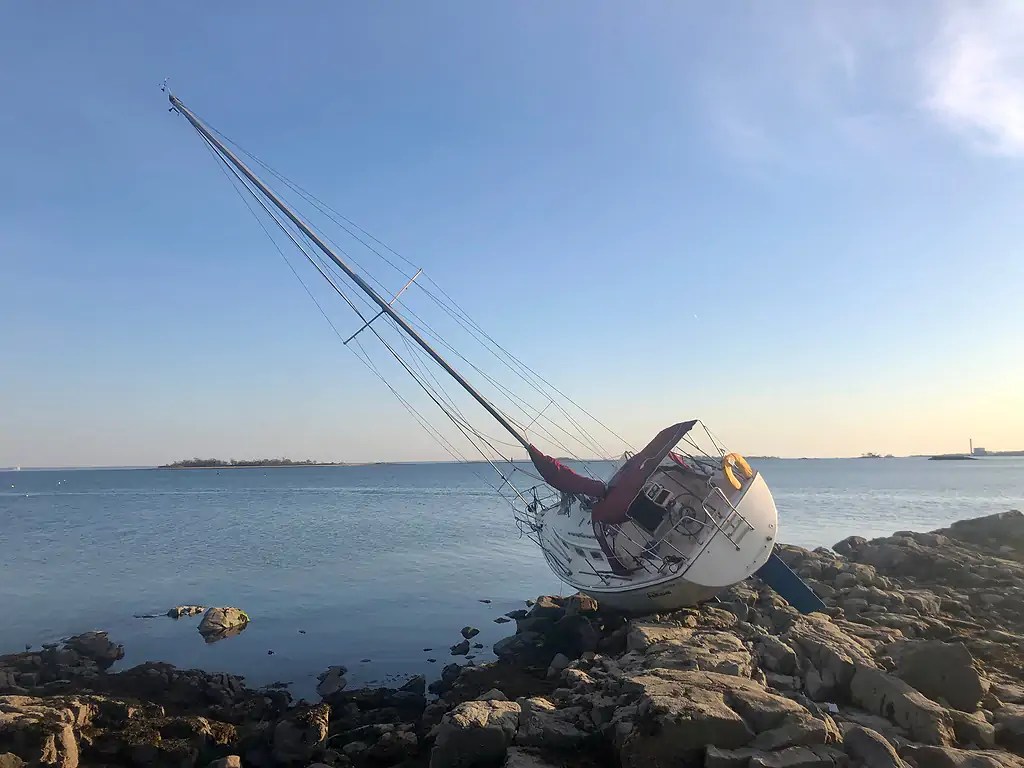
Adiamo unmoored photo: Thane Grauel, 2023

I take this gradual loss into myself–that’s what most of us do–and it’s hard, it’s painful to keep myself open to learning and love when what I first notice is untethering and loss. But yesterday when visiting my mother I noticed she has a cobbled-together notebook in which she sometimes writes (in tiny, indecipherable script). Some pages she had divided into three columns, some have scraps of letters or newspaper clippings stapled to them. Are her pages a record, or a practice? She cannot tell me. Yet it was kind of amazing to realize she does this with apparent intent. She has her reasons, if not her reason in the classic sense.

For all that visiting with her generally means a slow amble down the hall or sitting beside her while she sighs, eyes closed, drifting–despite the emptying hours–she is a Self, and she interests me. So I grieve the loss of who-she-has-been and anticipate the sorrow I’ll feel when she dies, but not everything either of us experiences is sadness. Of the poems I have read about losing a beloved person to neurodegenerative conditions, the range in scope covers a vast continuum of human existence, from misery and resentment and sorrow to revelation and even joy. Why would I avoid the full experience life offers?

Script, postscript

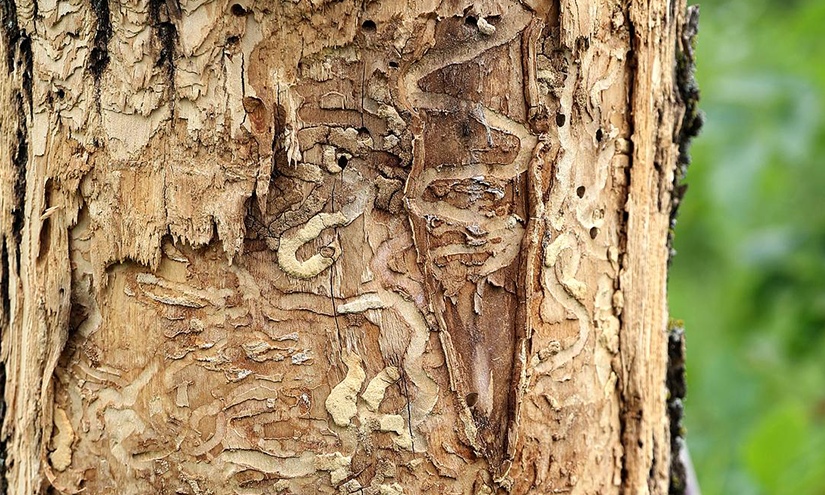
The weather has been glorious lately, which has the downside of getting rather droughty. No rain in the forecast, either, so it is time for supplemental watering if I want to keep harvesting from the vegetable garden. There’s not much left there, though; I may just wait things out and save the water. Meanwhile, some of our days have recently been punctuated by the sound of green ash limbs crashing in the nearby woods. When I investigate the trees, there are the telltale scribbles of ash borer on the trunks. The marks look like script.

I learned, while teaching college freshmen the past few years, that many younger adults do not know how to write or even to read script. Many children never get the lessons in handwriting in the second through fourth grades the way I did. Instead, they learn keyboarding–a skill I got to in my junior year of high school but never really have mastered (yes, even now I use a self-developed version that’s sort of an advanced hunt-and-peck method). It’s hard to believe that reading script is a task that will be relegated to specialists in years to come, but I shouldn’t be surprised if that’s what happens. To many of my college age students, handwritten script in English is almost indistinguishable from the marks of ash borers. They don’t see the need for that particular skill. Handwriting is going the way of letter-writing.

Perhaps we live in a post-script world?

I have been thinking about the handwritten word recently because of a recent incident while visiting my mother. She received a small refund check from an insurer, and though she understood what it was and that she no longer uses her checking account–we siblings take care of that through power of attorney–she was confused about what to do with it. “Sign it, Mom,” I told her, offering her a pen. “We’ll deposit it for you.” I turned the check over and pointed to the line for signature on the back.

She wavered, pen in the air. “I don’t…I don’t,” she said (her aphasia has advanced past the point of expressing full sentences). It took me a moment to realize that she could not recall how to sign her name. I placed my hand around hers and helped her start with the capital B.

I didn’t cry, but the experience hasn’t left me alone. I suppose there may be a poem in this incident, but if so, it’s a sorrowful one.

Life-shifts

This week marks one of those “big birthdays”–my mother turns 90. The birthday feels bittersweet; for, in many ways, I have been in the process of “losing” my mother since her diagnosis of vascular dementia in 2017.

Or is it that she is losing? Losing cognition, a sense of time, the words to say…anything at all. She has not yet lost a sense of emotional self, though I know that if her body doesn’t give out first, that will eventually occur. I’ve been through this before, with my mother-in-law. Helping people navigate dementia is a challenging task.

Therefore, as I celebrate her birthday, I also celebrate the goodness of the people (nurses, CNAs) who assist her daily at her skilled-nursing apartment, the social worker who visits with her and brings her mail, the acquaintances who smile and greet her even though they know there cannot be conversation (of any meaningful sort). The doctors and nurse practitioners who find ways to communicate with her about how she feels physically. It cannot be easy, even with someone as even-tempered and pleasant as my mother continues to be.

A funny thing about my mom. When she was my age, we used to tease her and my dad about “getting old.” She’d toss our teasing aside by insisting, “You’re not old ’til you’re 90!” Even with a few health issues, she and my father continued to be curious about the world and the people in it, traveling, going to parties, trying new things (cross-country skiing, Thai cuisine, activities with grandchildren). About 8 years ago, when my dad was ill with cancer and meningitis and going in and out of the ICU, Mom said she felt old. We retorted, “But Mom! You’re not old ’til you’re 90!”

Now she really is 90. Bless her good kind heart. ❤

~

February 26th is just another day, another year–and at this point, my mother has very little sense of time. It is likely that my mother’s life-shifts are in the past, and the next shift (there’s no escaping it) will be death; but who can tell? My mother’s ninetieth feels like a huge shift in my life as her daughter, as an adult, as a mother to grown people, and as a writer in the world. Why this is so, I can’t say. It’s certainly something I’ll be reflecting on often in the coming years, and the reflections emerge in my writing. As I work on revising the poems I’ve drafted in the past 5 years, the topics of aging, mortality, aphasia, and memory keep showing up. Things I can consider myself fortunate, perhaps, to be preoccupied with, rather than being forced into confronting a natural disaster (Pakistan, Turkey, Syria, and others) or war (Ukraine, Syria, and other regions).

Here’s part of a poem I’ve been wrestling with lately.

                       ... --I would untangle
my mother's mind if I could be let access to its
recesses, but those stay hidden like the life in hedge
and meadow, in the woody undergrowth,
unknowns twisted together, impenetrable.
...

How fortunate for me that my mother is not far away, is well-housed and safely cared-for, and has had a long, creative, fruitful life to celebrate this weekend. Nonetheless, the grief inheres. The hardest shift? I miss the person she has been all my life until recently. And yet: here she is. Herself, more impenetrable than ever. And loved.

~

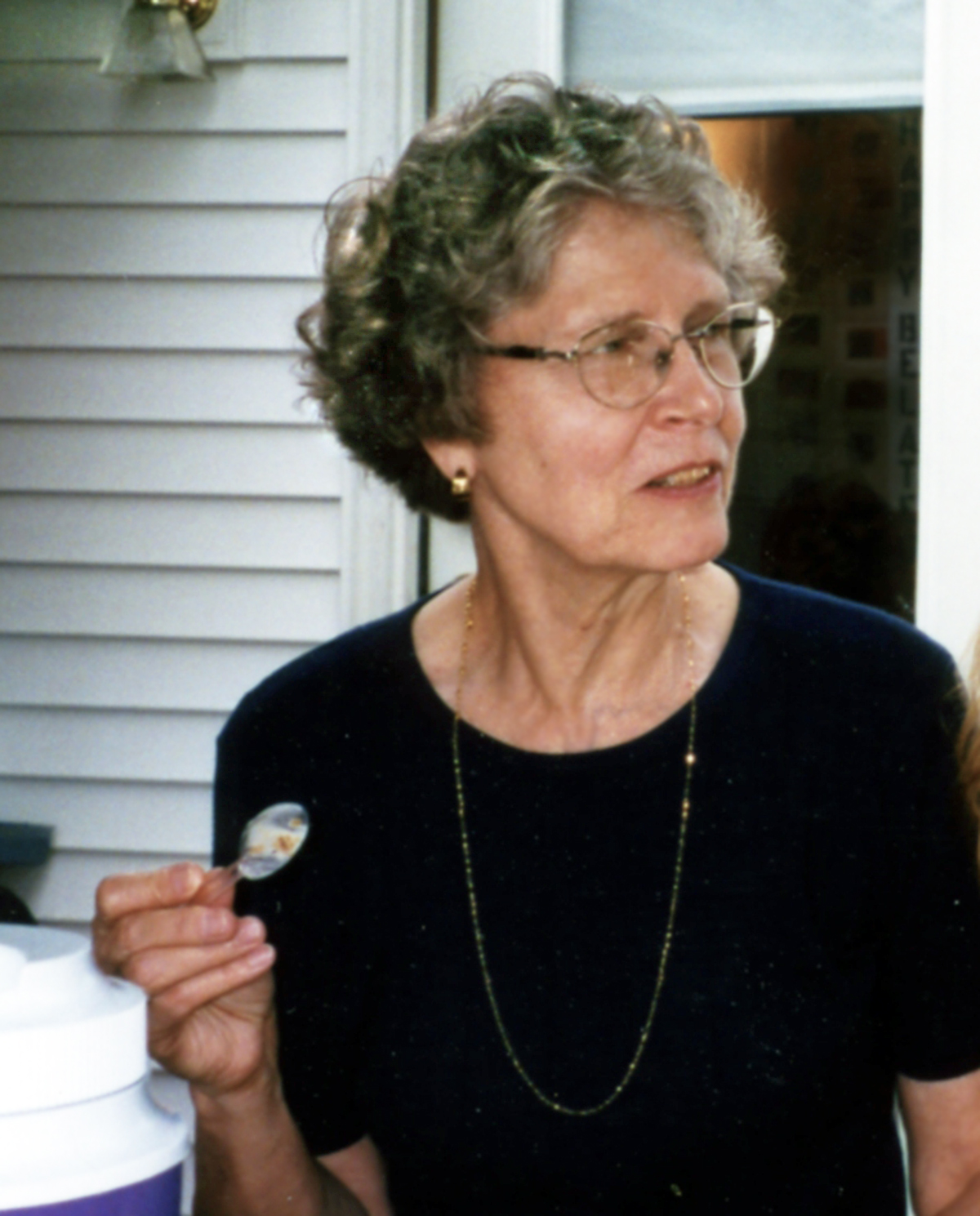
Mom at about my current age–ca. 1998 or ’99.

Getting through somehow

My mother has vascular dementia, which renders her more and more aphasic, though in her case–so far–her “emotional tone” (as philosopher Arne Naess calls it) has remained intact. I visited my mother on a recent occasion when I wasn’t feeling my best and had had a week of less-than-good health. It was not a matter of duty. The time I spend with my mother is beautiful. But it had been a tough week. Let’s leave it at that.

We sat in her apartment in the assisted-living wing and arranged the flowers I’d brought. Then we spent 20 minutes in a kind of conversation, to which I’ve become accustomed, during which she tries to convey information about something she needs to have done. In this case, after much of the usual (really, rather humorous at times) confusion, I deciphered that she wanted some sweaters taken to the dry cleaner.

Such minutia. And yet, so difficult to get across, across that divide of language and cognition. The incredible concentration and effort it takes her just to dial a phone number to call her ailing sister. To tell the nurse aide that she needs more yogurt. Anything.

Then she surprised me. She pointed to my forehead and then to her own. “This,” she said. “Is wrong. For you. What?”

Was she reading a crease in my brow? I told her I had not been feeling great. She wanted to know, so I told her details, the way one tells one’s mother. Even though I am never sure quite how much gets through.

“Lie down. Take off the peaks.” By which she meant shoes. Why not comply? We both took off our shoes and spent the visit relaxing. We even indulged in a glass of wine because she loves to offer wine to her guests. Never mind it was 11 am. My mother has lost that rigid cognitive sense of time that the rest of us spend our lives obsessing over. There’s something valuable in that loss, though it is a loss.

She’s still teaching me things. Other ways to live with loss (my dad, her “normal” brain, mobility, words…).

~~

The next evening, she called me. She wanted to know how I was feeling. I’m 63 years old and my mother is 88, and she’s still worried about me.

I’m feeling loved.


Love is all you need

The right words

Due to mini-strokes and constriction of the blood flow in her brain, my mother has developed the same form of cognitive decline that my mother-in-law had: vascular dementia. In both cases, aphasia ravaged their speech as their conditions worsened. My partner’s stepmother also had aphasia due to stroke, so I have now witnessed the condition up close among three women who had very different backgrounds and personalities. As aphasia presents most noticeably as a loss of verbal expression (talk about being at a loss for words!), the condition fascinates me (a person who loves words).

And devastates me. My mother had never been “good at words” the way my father was, but she was a compassionate listener and often could find the right things to say when my glib and witty friends and family members could not. I recall many times when she would ask to talk to me alone and express something she’d been keeping to herself and reflecting upon, waiting until she could “say it the right way.” Now, she can say almost nothing “the right way.” Rain becomes snow; snow becomes green; hat becomes clark; tomato becomes red; table becomes place…and even these are unreliable substitutes, likely to change from one conversation to the next. The pronoun she has vanished from her lexicon. Her vocabulary is little better than a five-year-old’s, and she inadvertently invents words that are essentially meaningless while trying to convey meaning.

She can still read, a little, and slowly. A few months ago, I gave her a book by Eloise Klein Healy, Another Phase. Healy, a well-known poet, was stricken with Wernicke’s aphasia and–with a devoted speech therapist’s help–regained the ability to compose poetry again, though the work she now produces reflects her profoundly-changed expressive abilities. My mother was pleased that she could read the book and that Healy could make poems even with aphasia. And Mom understood the poems–had memorized a few image-lines that she liked. This stunned me–memory’s often wrecked by vascular dementia, or so we are led to believe. But my mother has a good memory. She merely has extremely limited verbal expressiveness–an inability to locate the right word, and a loss of numeracy and literacy. Alas, the result means she cannot make her ideas and thoughts known to others. Isolating.

The pandemic lockdowns at her assisted living campus, my father’s death after 62 years of marriage, her gradual hearing loss, her inability to drive or go shopping–all of these led to further isolation. And isolation, of course, worsens the dementia.

Now that the lockdowns have been lifted, my family members are spending as much time as we can visiting her. One Best Beloved drove her to the church she has been attending by Zoom, now that in-person services have resumed. This past holiday weekend, I picked her up at her apartment and drove her back to my house. Due to my dad’s ill health and the pandemic, it has been over two years since she was here; but for 25 years, she and my father drove here many, many times. It was heartwarming to watch her as she relished returning to a familiar and much-loved place, which also happen to be my house and yard.

She kept saying, “This is so good. This is so, so good!” We’d arranged a mini-gathering for lunch, and there was tasty food and lively conversation all around her. She doesn’t seem to feel frustrated at not being able to join in the dinner chat; I think she was glad just to listen. After awhile, her vocabulary even expanded a bit. She said, “This is fun!” and “This is so great!” in addition to repeating how the day was so good. The joy was palpable.

(I am reading about joy just now, as it happens–a book by Douglas Abrams, Archbishop Desmond Tutu, and the Dalai Lama called The Book of Joy. More on that another time, perhaps.)

After lunch, some dessert, and a brief nap, my beloved mom admitted it was probably time for her to return to her apartment. I drove her home, and the ride back was full of comfort and ease and quiet companionship such as I haven’t felt with my mother during the past couple of difficult years, though it’s been there my whole life. I was helping her out of the car when she said, “That was wonderful. Let’s do that again!” Two sentences in perfect grammar, and a boost in vocabulary from good to wonderful.

“Only connect.” I don’t think E.M. Forster was referring to aphasia or to isolation in Howard’s End, but the phrase suits today’s post. Human connection matters. Indeed, it’s wonderful.

How can it be

Another book about how to die, or how to think about dying: Roshi Joan Halifax’s Being with Dying–the subtitle includes compassion and fearlessness, two qualities Halifax explores using Buddhist approaches, such as meditations. While I like to read about meditations, meditation itself eludes me; I am “bad” at practicing, but authors like Halifax and Kabat-Zinn give me hope that even poor attempts at meditation can be useful in dealing with grief, stress, and anxiety. Death is the most normal thing in the world. How odd that we must teach ourselves how to “be with” it. How to keep from worrying ourselves to death about the most normal thing in the world. Worrying accomplishes so little.

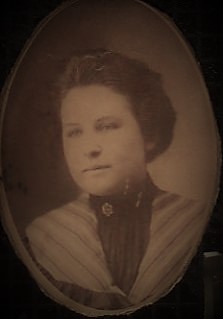
When I was a college freshman, I interviewed my great-grandmother (born in 1884) for a cultural anthropology project. She talked about living on a small farm, nursing her 12-year-old son through the Spanish flu, baking and slaughtering and canning and drawing water–life before rural electrification. She said:

Times was hard, but times is always hard, and our lives were no harder than anybody else’s.

Orpha Ann Parrish Smith

Good to keep that in mind at present.

My temperament has always tended more melancholic than anxious; but in these days of covid, flu, and concerns about my bereaved and elderly mother, worried thoughts arrive, especially in the wee hours, especially as cases climb upward in my region and my mother’s assisted living center starts yet another lockdown. I try to imagine the changes the extreme elderly experience…I imagine her being ‘assisted’ by caring, gentle people she does not really know and with whom she can barely communicate due to anomia and aphasia, which makes her grief for my father truly inexpressible.

“I can’t say anymore what I say,” she tells me by phone. “On the wall, it says, what is it? Now?”

“The calendar? It’s Tuesday, Mom.”

“No, the other. The…weather. Season.”

“Oh. October. It’s October.”

“How is it? And I am trying…when was it? That he died?”

“August, Mom. August 25th.”

“Has it been since August? Was it August? Already? So many now. Many…pills. No, ice. Ices gone by. I don’t mean that. I said–“

“Many days, I know. Can it really be October already? And he’s been gone since the end of August. Summer.”

“25. 25 days, August, October. How can it be?” she asks; and I can tell, over the phone, that she is shaking her head slowly the way she does, wondering, surprised, how can it be…

There are times she says exactly the right thing.

How can it be? Something I might want to meditate upon.

Unsettled sentences

One of those unsettled-weather days…rain all night, cloudy mild morning. I weeded the vegetable patch and made note of bean sprouts and zucchini sprouts, pea blossoms and strawberry blossoms.

Then, more rain, so I worked on some housekeeping and writing tasks indoors. I wrote sentences and thought about the loss of syntax and vocabulary.

~

Eastern Bluebird-4299_Laurie Lawler_Texas_2013_GBBC_KKThe day warmed and brightened. I harvested spinach, found more weeding to do (it never ends), watched a pair of bluebirds perch like sentries and swoop toward their nest in the magnolia tree. Fast-moving clouds morphed and swashed overhead. We had a sunshower, and I had a flashback to one of our son’s earliest sentences.

We were indoors on a day very like this one–he was not yet two years old. I was nursing his infant sister while he perched on a chair and peered out the window.

“Sun out, rain coming down!” he said. Observant, expressive (communicative), and properly syntactical (though missing the to-be verbs). A moment of major language development!

Also, cute.

~

I cannot visit my mother, whose aphasia worsens by the week. It hurts me to listen as she struggles to get her point across, endeavors to employ expression which used to come so naturally. Loss of vocabulary and syntax: unsettled sentences.

~

A funnier anecdote about sentences: our daughter’s first full sentence likewise made an observation about the environment around her. She pointed to a corner of the rug and said, “Look–cat barf, Mama!”

We rarely lose that urge to get our point across. Let us be listeners.