Transformation & intention

During the past few weeks, I have been reading–one at a time, with pauses–the essays in Ross Gay’s book Inciting Joy. His earlier book (The Book of Delights) was easier, a bit less complicated. About, you know, gratitude–even though he describes his father’s death in the first essay of that one. He gets to something about grieving in the 13th “Incitement” of this book, however, that made me put the text down and say to myself: This is what I have been trying to get my poems to do for some time now.

(I did pick it up again and finish reading it, by the way.)

He insists that we remember how transforming grief is. Not can be, but is. Always: “When that one thing [that we grieve] changed, everything changed. Light through the trees in October now different. The sound of the playground…cooking a meal. The future. The past. All of it changed. That is what the griever is metabolizing.” He points out this metabolizing can’t be timed, that grieving pays no attention to whether it has been a day or a year or decades: “It seems to me that grief is not gotten over, it is gotten into. And the griever teaches us, or reminds us, there is no pulling it apart. Because grieving, alert to connection, is never only one person’s experience.”

Maybe we grieve for one person, or one beloved companion animal. Maybe we grieve that our youth is over, that our children are grown, that our favorite mom & pop store has been razed to make way for a Starbucks. Or perhaps we grieve for our planet, as Greta Thunberg does: “You have stolen my dreams and my childhood with your empty words…People are suffering. People are dying. Entire ecosystems are collapsing.” There are so many reasons why we feel loss. Loss is what life offers us, loss but also transformation. I think what Gay tries to say in his recent essays is that because there is something to sorrow that we all can connect with, our grief itself can connect us, give us understanding–maybe even joy.

A complicated kind of joy. A joy that acknowledges that life can be tough and sad. And instead of reeling away from people who are clearly–and sometimes not so clearly–suffering, we could connect instead, even though we are also terrified of suffering. Maybe that is another reason I became a hospice volunteer years ago, after my dad had been in and out of the ICU frequently, even though I had spent my childhood and many of my adult years being frightened of death and dying.

Good poems offer readers that sense of connection, which Gay and others sometimes refer to as mycelial (Lesley Wheeler in her poems, Robin Wall Kimmerer in her books and Merlin Sheldrake in his, the movie “Fantastic Fungi”…among others). My favorite poems by my favorite poets, now that I think about it, have always had that effect on my heart: recognition of connectedness with other humans or with other beings, with the environment, with the past-and-future, with (thank you, Walt Whitman) the Kosmos. The recent interactions I had and connections I found at the Joya residency cemented this fundamental awareness, that all of us are part of our huge, interconnected experiences in life.

Of course, writing strong work isn’t easy, doesn’t often happen; but here’s the place in our mutual social connectivity where intentions really do matter–because the intention impels us to work, practice, and dream. The intention is to create and, through whatever we create, to extend our human network. NOT our much-ballyhooed “social networks.” Those can go to hell (and we can’t take ’em with us).

Anyway, such are my intentions for working in the world of words, of poetry. And that’s also the reason I read so much poetry, in case you were wondering.

~

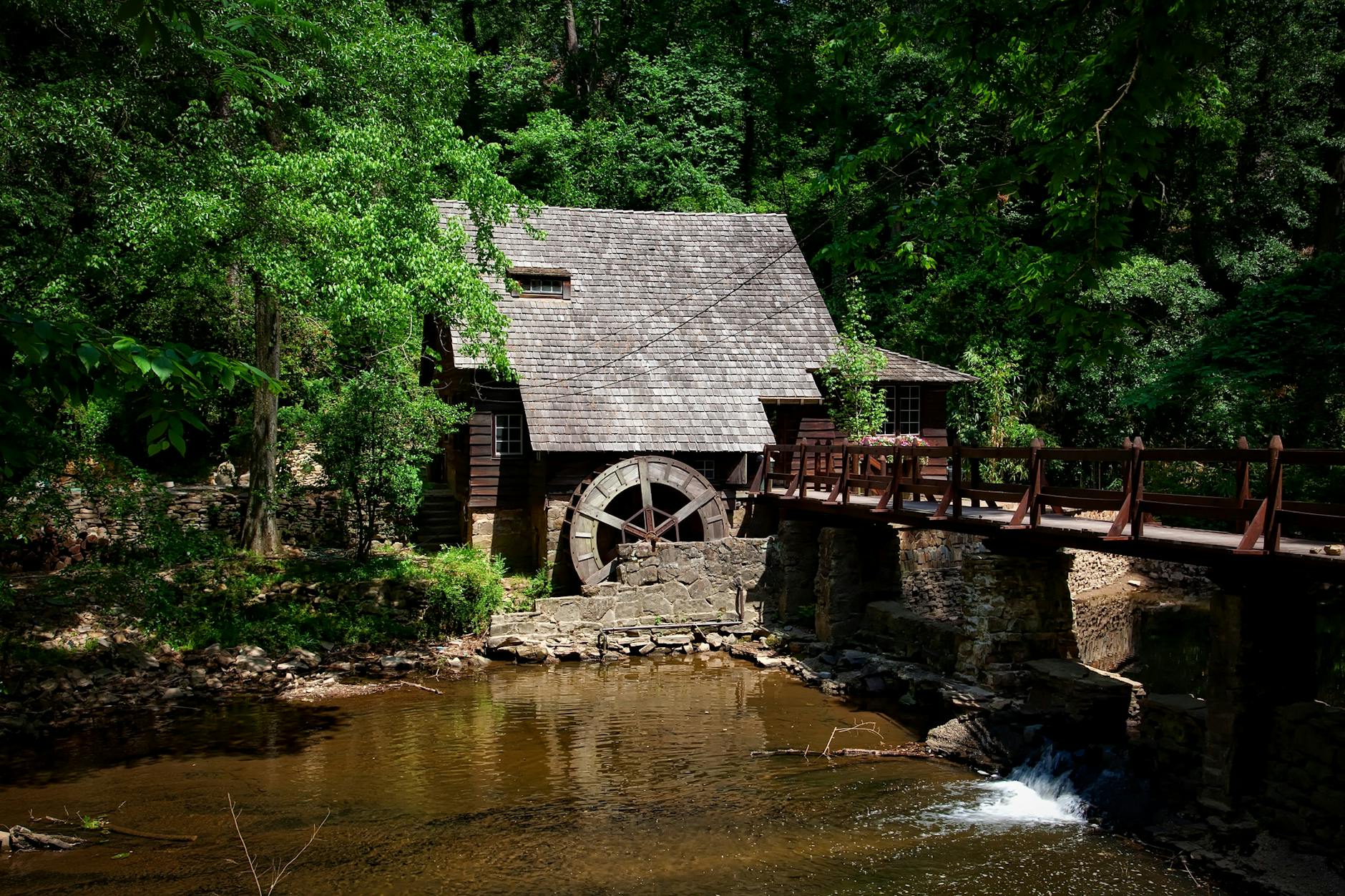
https://www.smallwoodlandthings.com/ Heather Brooks, artist

Milling & worthiness

Probably because I have been stalled on my manuscript (see previous post), I’ve been reading blogs and speaking with friends about the whole “project” of publishing poetry books. People sure have widely varying opinions. It had occurred to me there would likely be some controversy over this even in a world as small as poetry; but I am surprised at how heated poets, and publishers, can get concerning the whys, whens, and hows of poetry collections. Whether a poet’s work is ready, for example, or–as some folks might put it–worthy of a book or chapbook, and when in one’s “career” is the time to put a book out into the world…and whether the time it takes and the costs of submitting and contest fees are worth the effort or act as a barrier to the underfunded, the less-known, and the uninitiated (or to people who just are not very good poets).

Where a writer is in her poetry (career, journey, artistic path, life, whatever) surely makes a difference in whether or when she pursues manuscript-making. Some folks suggest getting a chapbook out as soon as one has enough good poems because a chapbook looks good on a poet’s CV. Others insist it is better to wait and get work published poem-by-poem in journals and literary sites.

Some poetry publishers are more selective than others, so writers new to the process are likely to feel discouraged when they keep getting rejections from these “top tier” places. There are publishers who are less selective, but sometimes writers get warned away from having their manuscripts produced by a so-called poetry mill. “Get your books accepted and published by the best-regarded publishers,” they’re advised; a chapbook-mill press will not look as good on the CV.

But getting that manuscript accepted by the best-regarded place can take a long, long time. (Speaking from experience!!) What to do?

I’d advise poets who want to compile a manuscript to think about what the purpose of doing so is. There are more reasons than you might realize. Are you trying to get a job in a creative writing program? Are you trying to stand out in the crowd? Do you want to publish mostly for your friends and relatives? Or for yourself? Do you need publication in order to stay on the tenure track? Does your manuscript represent the creative output of a difficult time that you want to make art from and share with others? Are your poems gathered together in order to inform, to argue/convince, to entertain, to be relevant in the moment? Is your manuscript a kind of personal document, a memoir in verse and, if so, do you view it as important for other people who may relate to your experiences? How crucial is is to have the book published soon? Do you think it is important to have the book be a prizewinner?

These are just a few things to consider. Other reasons abound. And at any rate, thinking about what you want your book to be or do or accomplish should help you to decide the where and how of getting it into print. Or if that is even necessary. These days, poets can garner quite a few readers by having poems that get posted online in literary blogs, journals, social media platforms, and other sites. Do you really need, or care about, having a book? What makes the process “worth it”?

Then there’s self-publishing–which, thanks to Lulu, Amazon, Blurb, BookBaby, and similar businesses is not that hard to do–and which no longer carries quite the stigma of “vanity presses” (though if you are trying to get tenure, I’d advise against this choice). Not all of us feel up to learning the ins and outs of templates and design limits that these businesses offer. Some presses began their lives as ways to self-publish or to publish the work of a poet whose work wasn’t getting much attention; Lamont Steptoe started Whirlwind Press (now defunct) to publish Dennis Brutus‘ poetry, then started publishing his own work, then morphed the press into Whirlwind Magazine for several years. Of course, there is no promotion at all; poets have to do their own PR even with some very good presses, and self-publishing requires even more.

Photo by Pixabay on Pexels.com

Then there are the “mills” I mentioned earlier. These would be poetry publishers that, critics note, are less “discerning” than the hard-to-crack literary presses. The ones I know of are not as predatory as vanity presses and are easier to work with than the Amazon-style self-publishing route. Some of them offer promotional advice or social media activity, and some may invite their authors to participate in regional group readings. And in fact, I have had one book and a chapbook or two published by presses I’ve heard referred to as mills. I suppose the publishers might object to the characterization, but it doesn’t bother me.

My feelings on getting my books in print have evolved over the years, and I think that they should. I am no longer a young poet new to the challenge of getting my poems into magazines (they were all print when I was starting out) and thinking about whether I wanted to work in the creative writing field or not. As it turns out, while I did earn an MFA, I never really used it in the academic area where I ended up. But I attend writing conferences, engage in critique, send my work out for publication–singly and in manuscript form–which are all parts of the poet’s career (if you can call it a career).

At this point in my life, I want to make books! I love books, and I love reading poems in books and not on a screen of any kind. It doesn’t matter to me if my books win prizes (though one did!) or are published by top-tier literary presses (er, no…), or if they ever result in my earning anything from my writing (not yet…). Yes, I want my manuscripts to be worthy–by which I mean that a few readers find something of value and enjoyment in them. On balance, that seems good enough for me.

~

Depth perception

In second grade, I could not see the blackboard from my desk. My teacher noticed; I went to the optometrist, and thereafter began my worsening nearsightedness. New specs annually for many years, broken frames, ugly frames, though–unlike many of my friends–I never lost my glasses because I could not see at all without them. Somewhere along the way, astigmatism kicked in. In high school, I blamed my ineptness at any sport involving a ball on my astigmatism (contact lenses corrected my nearsightedness but weren’t as effective on the misshapen cornea). But my ineptness was largely due to lack of interest in sports.

And now, encroaching cataract formations mean that I’m getting surgical procedures for the removal of those thickened “cascades” that make it hard to drive at night, read street signs, or discern a cat from a fox in the back meadow. I had my left eye operated on this past week, with the insertion of a medium-length lens that gives me 20/40 vision in that eye: a miracle to me after so many years of blur. I have to wait two weeks before the surgeon does the right eye, and in the meantime I’m discovering the true challenges of poor depth perception. My brain hasn’t adjusted to the changes in my eye, and simple things like walking downstairs or pouring tea into a cup pose unexpected difficulties.

Topping things off, I’ve contracted covid for the first time ever. So I am being extra careful as I walk through my house and into my yard–taking a fall due to bad depth perception would be one more problem I just don’t need.

So I have been considering vision lately, and what it means to perceive, to have differences in perspective, focus, framing. Or different cultural and social “lenses,” as we refer to them when we are teaching students to write compositions in college. It is as easy to trip oneself up metaphorically as physically if one pays no attention to such perceptions.

Today, I feel to ill to spend much time pondering. But I have enjoyed looking at the photos–taken from different vantage points and times of day–of the lovely tree on the other side of the riverbed from Joya. Very healing, as trees can be.

Toad night

Because April is National Poetry Month, here’s an April poem from my latest book:

~

Toad Night

Soft rain, or
humid fog—mild
and after sundown

when the driveway’s
puddled or
the blacktop’s slick
they emerge.

It must be warm
enough to stir
their dormant
blood, speed
the small hearts &
waken senses in
the porous skin.
In the headlights

they can be
mistaken for
last year’s leaves

tumbling over road
but there is
no breeze.
Their eyes gleam.

Give them time.

You do not need
to rush tonight

with the small
beings of the world
awakening
around you.


Wet lion weather

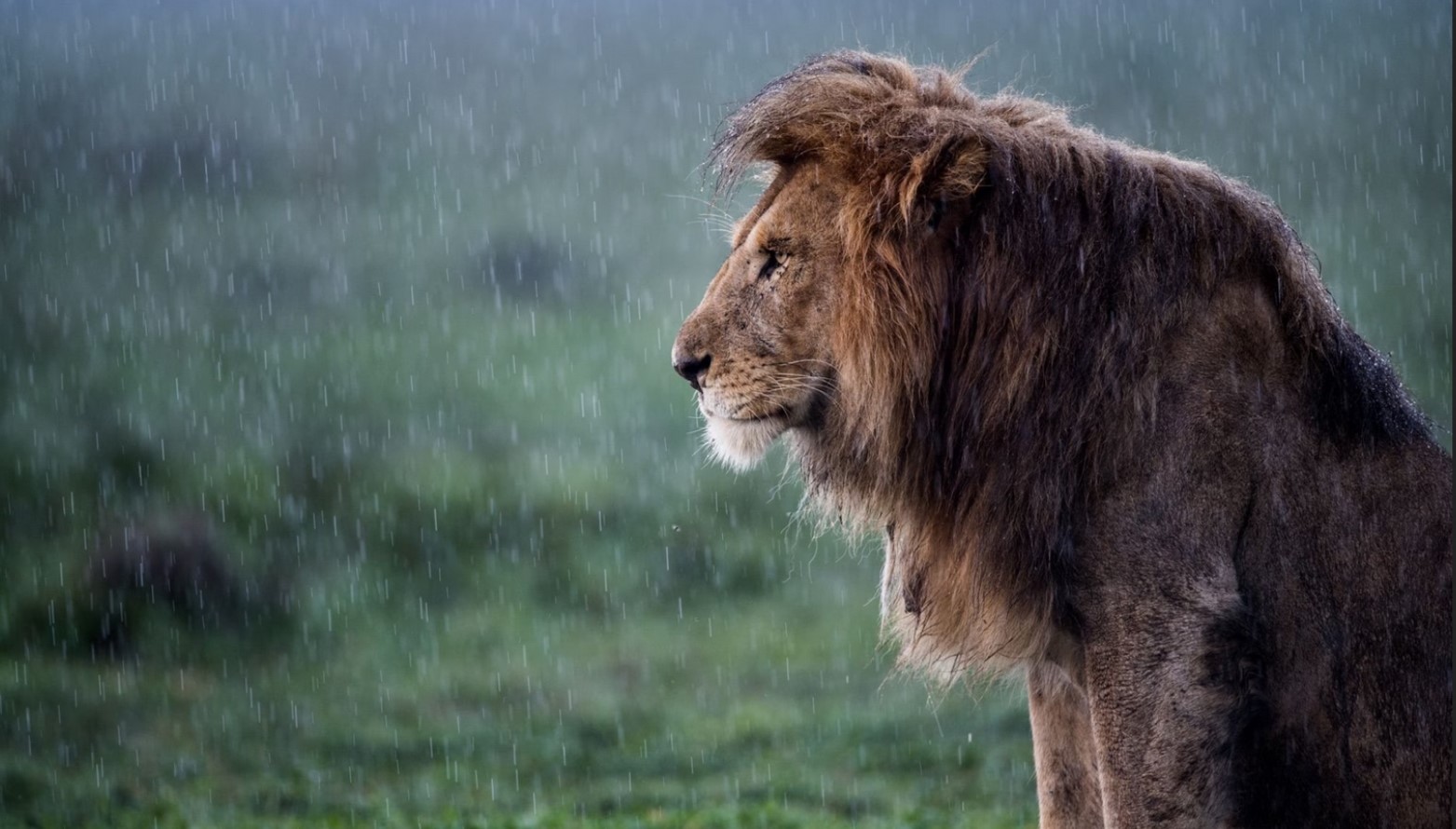
Early March, but February’s doldrums appear to be hanging on with clouds and heavy rain in our weather (though it has been fairly mild) and my mood as well. If March comes in like a lion, it is this year a very damp panthera leo. Crocuses, yes; iris reticulata, yes; winter jasmine, yes; hellbore, yes. And the robins are chirping like mad every evening as dusk arrives–and it does arrive later each day.

I should feel merrier. There are some poetry-related things coming up this month, an informal reading at our friends’ house, a bit of recognition perhaps, a visit from a beloved before the month closes, and maybe even the new book. In addition, I have managed to collect and organize the first draft of yet another collection. (Don’t hold your breath–this one will be a long time coming.) My physiology has been annoyed by the rain and humidity, however, which keeps me out of the perennial beds where the winter weeds are having a party in the chilly mud. There’ll be hell to pay for this later if I can’t get out there pretty soon. But it would not be the first time–which is why I know there will be hell to pay!

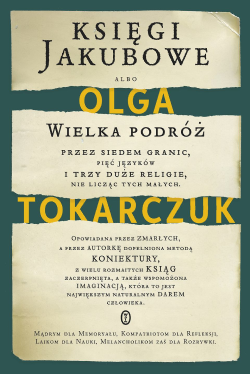
I did take advantage of the many rainy, achy days by reading an amazing novel by (Nobel Prize winner) Olga Tokarczuk, The Books of Jacob. Dare I call something a masterwork? This marvelous historical novel is over 900 pages long, beautifully rendered in English by Jennifer Croft, and based upon 18th-c Polish history and the idiosyncratic Frankist religious movement. I’ve been thinking about it for days–reflecting on words, names, letters, philosophy, and even metaphysics. Several times I found myself setting the book down in admiration, wondering how on earth Tokarczuk manages to keep the thread of her numerous narratives together so beautifully.

When a book gives me that kind of joy and evokes so much wonder, I feel that being a writer might actually be a worthwhile occupation. And if the rain keeps up, I’ll be at the library looking for her other books soon.

Patterns

I recently finished reading Meander, Spiral, Explode: Design and Pattern in Narrative by Jane Alison, a series of essays that considers the structure of written narratives in fiction, mostly in novels. Alison’s background context is the Western-developed Aristotelian dramatic arc, that “exposition/rising action/climax/falling action/denouement” plot that generally follows chronologically. She then examines several novels, modern and contemporary ones mostly, that don’t adhere to the classic structure.

I’ve read some of the books she looks at, and have decided to put others she mentions on my to-read list, but mostly what I took away from her text is my own recognition that poets have been varying structures for a very long time. I don’t mean just the patterning difference between, say, a sonnet and a pantoum or free verse but a poem’s narrative structure, its approach to chronology, imagery, argument, world-building, and more. When I was reading, I thought of examples of poems that spiral, meander, make wavelets, are fractal in nature, or explode (to use some of Alison’s terminology).

In particular, the cellular or networked ‘form’ of storytelling seems basic to poetry–each cell a room or stanza, interlocking or sitting nearby with space around each one. The space connects as well as makes gaps, leaves room for reflection and recombined connections and new patterns; sometimes the stanzas float like little blocks on the page (or screen)…interrupting the narrative and enhancing it as well. Poetry’s narrative is often collage-like, and I notice this aspect in some newer novels as well–but I read much more poetry than fiction these days. Maybe it’s time to plunge into more novels again? At any rate, Alison’s book has made me reflect on narratives, lyrical narratives, literary structure. Maybe even the structure of a new manuscript? (I ought to get to work on that.)

If you want a taste of this book, you can read part of her opening chapter, which appeared as an essay in The Paris Review, here. I don’t teach in a classroom anymore, but if I were instructing a creative writing class I might put this book on the reading list.

Cover reveal

Earlier this week, I went to a neighboring city–Reading–to record a TV segment for the local station, BCTV, that hosts a program about poetry! The host and interviewer is poet Marilyn Klimcho of Berks Bards (a non-profit poetry group in Berks Co, PA). It was truly pleasant to read a few of my poems in a professional setting (studio), but the best part of the day was just chatting with Marilyn about poems, poets, and poetry. We began our conversation half an hour before the cameras rolled and continued it afterward, so the 25 minutes that were recorded seemed just to be part of a longer, casual discussion.

I appreciated that. I’m part of a long-running critique group, but it’s seldom that I get the opportunity to pick someone’s brain and share ideas, influences, and general enthusiasm about the art of poetry the way I did in grad school. Probably could work on getting more such discussion into my life.

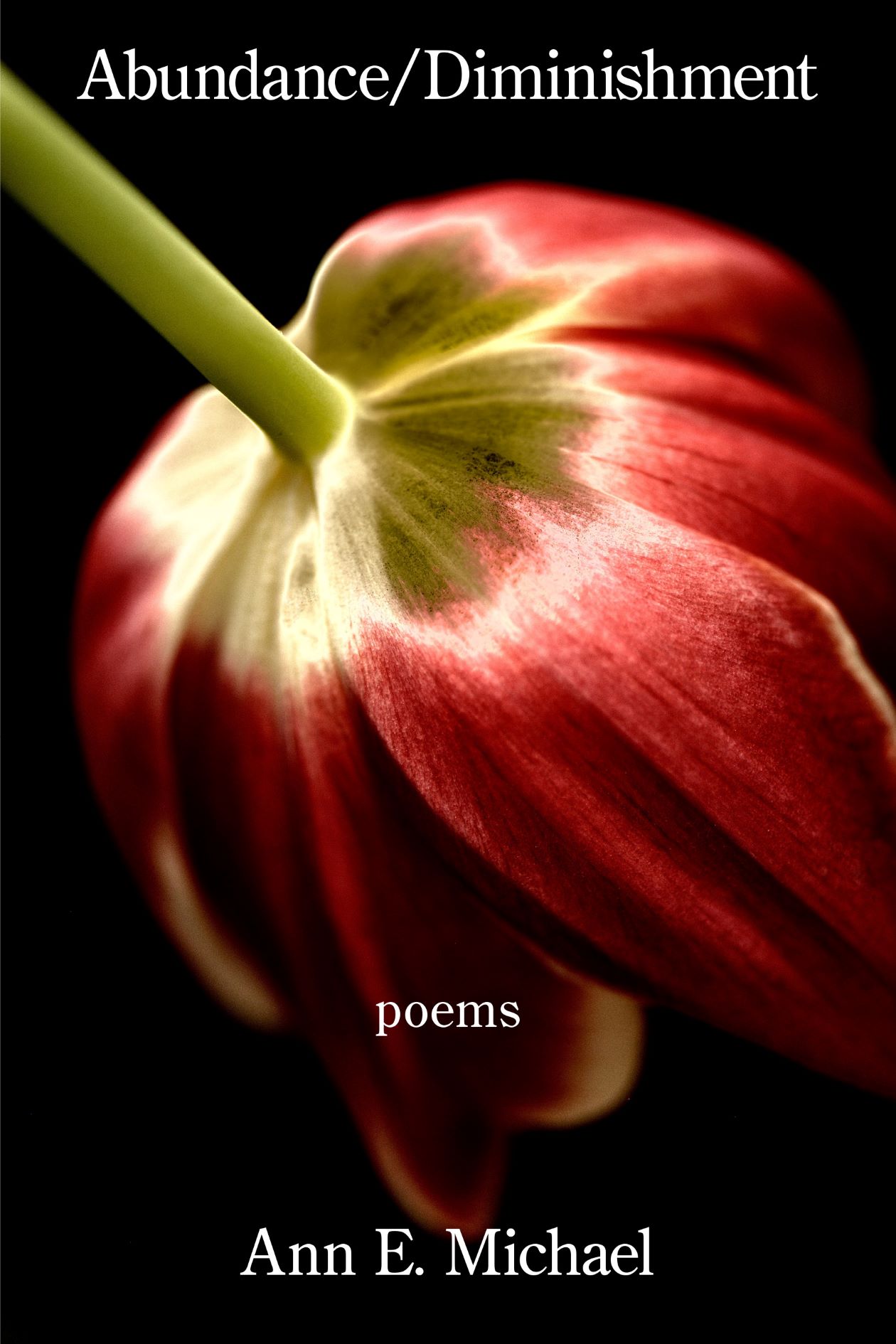
The “Poets Pause” segment will air in March and then reside on YouTube, so I will post that link at some point. It was kind of Marilyn to highlight The Red Queen Hypothesis and to give me a chance to mention my next collection, forthcoming from Kelsay Books later this year. Speaking of which, I do now have a photograph of its cover:

The photo is by Don Schroder, a friend who’s got a website full of lovely images from his numerous travels to the African continent as well as good shots of festivals of many kinds and floral beauties from arboretums and gardens. Go check it out!

The cernuous tulip seems appropriate to several themes I evoke in these poems–elegies and the sense of impending losses but also appreciation of beauty and brevity and life’s many colorations. Initially, I thought that I was using fewer of the animals, plants, weather and the “nature stuff” I tend to populate my poems with, because so many of the poems in Abundance/Diminishment are for or about humans. But…nope, just took another look through the manuscript in the final approval/editing process and realized that I cannot seem to leave the planet’s environment out of my work. I probably should have been a biologist, ecologist, or a science teacher instead of an instructor of English, but oh well.

Frankly, I love the simplicity of this cover, and I’m excited to have the book in print later this year…especially since it took me a decade to get The Red Queen Hypothesis into the world.

Work

Ending the year reading new-to-me poetry collections was my plan, though of course family life and all that distracted me quite a bit, in a pleasant way. Maybe I will reframe that as starting the new year with poetry collections. Which is to preface the following, an excerpt from “The Work,” a poem that contains a lovely reflection on what it means to leave one’s job and find one’s work–eg, retirement–in David Mason’s latest (2022) collection, Pacific Light:

~

Once, work was the thing one rose to by the clock,
the place one drove to, the faces one met getting coffee.
Now there are stones to be moved, but will they be moved?

...We are doing the work no other demands in the light
we are given, forgetting what day of the week it is,
the work all other work was a way of putting off.

That’s a useful way of thinking about post-job life, the work that everything else was a way to put off. So now we are poets or writers, artists, gardeners, people who spend time fishing, walking in the woods, hanging around in libraries, caring for grandchildren or pets. In his poem “One Day,” Mason writes “I was always too slow/and now my deadline/nobody knows,//not even the moon…” That concept of a deadline, so ubiquitous in all industries (and academia), churns workers into all kinds of stress. Needless to say, the term has a violent origin–“time limit,” 1920, American English newspaper jargon, from dead (adj.) + line (n.). Perhaps influenced by earlier use (1864) to mean the “do-not-cross” line in Civil War prisons.” [Thank you Etymology Online.] I am happy not to have so many deadlines now. Whatever work I do now, moving stones or writing poems, no other person demands it of me or sets the timing. “Not even the moon.”

Or maybe I’m mistaken, just a bit, because: gardening. I do have to follow the environment’s requirements and timing when it comes to that work. Nature can be a demanding “boss,” but the work rewards me. As does the work of reading and writing poetry. Pacific Light, by the way, is one of those rewarding books.

Nourishing

A few decades ago, at a time I knew very few infants, I made the acquaintance of a baby. This person stayed in my life for 20 years or so, but since then we haven’t had much contact–life happens, distances increase, friends of parents…etc. However, during their mid-adolescence they developed quite an interest in poetry, so we spoke a bit about that; I cannot say I was a mentor, but I may have been an inspiration of sorts. I had no doubt of their talent in the writing direction–at 14, they were composing better poems and essays than some adults I knew.

But again: life intervenes. Their life went in other directions than poetry. At least for awhile. Not long ago, though, when I was working with Moonstone Press on my chapbook Strange Ladies, I noticed the name Emma Wynn as author of Help Me to Fall, a recent chapbook from the press. Yes, the same person I knew when she was a child. I ordered the book, of course, and later attended a Zoom event that Moonstone hosted, in which Emma was reading. We said hello across the virtual divide. And now, Wynn has a full-length book out that I’m pleased to say is well worth reading. It is full of little marvels and careful observation, noticing the pain in love as well as the joys. Wynn writes, “Every day I turn over the stone of the world/ready to be surprised,” and I believe it. The section titled “Interlude” takes on such surprises with intimate words from letters written by historically-important people, crafted into poignant epistles of affection and potential regret and bitterness. To recognize that human beings are emotionally complicated seems to be one of Wynn’s impulses as a poet.

To be emptied is to be full.
To be battered without bitterness
is to bloom spacious
at one's heart
and nourish, unknowing,
the lives of others.
(--from "Kernel")

As it is gift-giving “season,” I remind my readers that books make good, modestly-priced gifts and that purchasing from a business other than Amazon when possible helps out independent small presses and independent booksellers (some small press publishers, however, use Amazon as their selling platform, as do two of my publishers; so does FutureCycle, which published Wynn’s book).

See the links to my books on the “My Books” tab above or the links on the right of this page. Sorry for the self-promotion, and if you aren’t inclined to get my books–buy books by another poet! There are many I’ve mini-reviewed here in past posts. Americans, especially, should spend more time reading poems and less time watching crappy TV shows or obsessing over unreliable news media sites. Of course, this is my personal (read: biased) opinion, but I believe poetry can help people gain a more well-rounded understanding of others and the state of the world. If we were to read and reflect on poems now and then, we would find the process nourishing.

Promotional

I keep forgetting to mention a few nice happenings regarding my recent book, so I may as well stuff them all into one post here in case anyone is interested. Have I mentioned how much I hate doing promotion for my poetry? Why yes, I believe I have. And since these days I feel no career ambitions related to my work anymore, why does it even matter?

I think there is an answer to why it matters. Sort of an answer, anyway–that without some form of prompting to the World at Large, my poems will be reader-less. A sad fate for a poem or book, and a common one. I don’t write just for myself: I keep a journal for that. I write as a form of communication, a way to connect with a reader I may or may not know.

Sometimes no one connects because the poems don’t work for them. Sometimes no one connects because no one knows the poems exist. The first lack is unavoidable–there is no kind of artistic creation that works for everyone. The second lack I cannot do much about, but I can do a little. Hence, this post.

Some months ago, a current student at one of the colleges I attended called to ask a few questions about my new collection. I did not expect it to be more than one of those “here’s-a-thing-an-alumna-did” paragraphs, and no one got back to me to make sure the piece is accurate (and, yes, a fact or two are incorrect and no, I didn’t say I believe “anyone can write poetry because anything can be poetry; people just have to look for it,”); but it’s a nice little promo bit all the same. Link here.

Then, Michael Escoubas of Quill & Parchment reviewed The Red Queen Hypothesis. Somewhat to my surprise (I don’t think of myself as very “edgy”), he writes, “Michael’s latest collection is edgy; chock full of poems that challenge everyday assumptions about life.” He does recognize that often what I try to do in poetry is exactly that: confront assumptions, observe from different angles. Less surprisingly, he adds that my poems are “sensitive to analogies between the natural world and human experience.” Um, that would be me. That review can be found here.

I know that in a previous post I mentioned Lesley Wheeler’s generous mini-review of the book, which can be found here; she’s an especially insightful reader. I’m thrilled that she writes: “Michael’s second full-length collection is meditative, witty, and smart, with a scientific and sometimes philosophical bent. Also like her blog, it’s closely observant of the more-than-human world in flux…The Red Queen Hypothesis suggests the advantage of sexual reproduction, and there are plenty of seductively “soft persuasions” in this collection. Like the “Stew Cook” speaking to her beloved, this is a book to “fill nooks with aromatic hours.” Shout-out to all the tasty slant-rhymes amid a profusion of traditional forms.” Thank you again, Lesley!

Another little thing to celebrate is Highland Park Poetry’s nominating my poem “Game” for a Pushcart Prize. By the way, that poem appears in The Red Queen Hypothesis!

Finally–or maybe, down the road, there’ll be more to add to promotional posts–I have been getting out and around to readings a bit, in person and virtually. The latter is easier, since many readings are in the evening; these days, I am not too terrific most evenings thanks (ha! as if!) to fibromyalgia fatigue and symptoms. But I do enjoy in-person events and have been glad to read at the Easton Book Festival, at Nowhere Coffee in Allentown PA, and at Bethlehem’s Sun Inn, to mention a few. I was featured in a Mad Poets “OK Zoomers” online reading (love the pun) virtually and will be participating in a group launch of Inlandia‘s most recent issue online on November 19th (info below).

That’s about all the energy I can spare right now for self-promotion. And no, I don’t use Instagram or Tik Tok or Substack or YouTube, at least not yet, so this is all I got, folks. Thank you for bearing with me. Less promotion and more poetry and philosophizing and nature/gardening next time.

If you join the Inlandia event–make sure you account for the time zone! That’s 1-3 pm PACIFIC time.