Play’s the thing

My freshman humanities professor, the brilliant, late Larry Fuchsberg, assigned Johan Huizinga‘s The Waning of the Middle Ages as one of the texts for our course…an unusual choice for American teens in 1975, as was another of our books, Burckhardt’s The Civilization of the Renaissance in Italy. At 17, I found Burckhardt rather slow going stylistically (it was published in 1860, after all); by comparison, Huizinga (circa 1919) was refreshingly clear. I really enjoyed it and learned a great deal. I kept meaning to read his 1938 book Homo Ludens, but for awhile it was difficult to find in libraries or bookstores. Also, I lacked the time to track it down or read it. The premise interested me, though–that we humans evolved our culture from the “pointless, imaginative” urge to play, and that play is fundamental to our learning and our social structures. Also, we are not mechanical beings–the messy frolicsome-ness of people is as necessary for our survival as food, water, and shelter.

“Animals play, so they must be more than merely mechanical things. We play and know that we play, so we must be more than merely rational beings, for play is irrational.” 
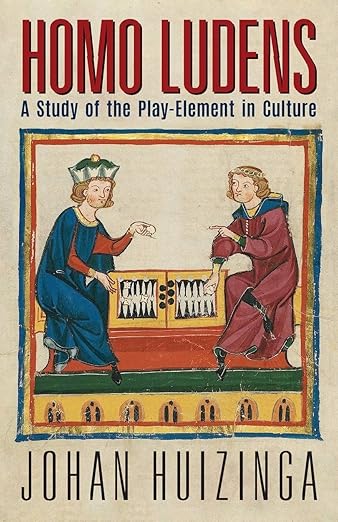
Finally, I’ve begun to read Homo Ludens, and it’s even on Amazon now; also I discovered that it exists online here thanks to Yale University. Fifty years after my initial encounter with the author, I find his thinking just as interesting as I did in college, and just as difficult. As in his other books, Huizinga uses etymology as one of his methods of examining the meaning and culture of play. He was writing for an audience that he assumed was well-educated in the classics, so there are passages in Greek, Latin, and French that neither he nor the English translator bothers to translate for less linguistically-adept readers like me. Fortunately, such passages are brief and are used as sources for his argument, and I’m not reading to find fault with his material. I’m interested in his argument and insights as a whole, and intrigued by his thinking. He apologizes for his lack of sources (ha! There are hundreds of them) because he was “working in haste.” He composed this book in the Netherlands as Germany began to be a serious threat to Europe, and he wanted to get his ideas in print before he was silenced. In fact, his last few years were difficult. He had used his standing as a well-known cultural historian to criticize the Nazis and was arrested in 1942, basically house arrest; he died in 1945 just before the war was over.

I’m only on Chapter 4 but am finding, in the etymological tracings of the words that intersect in meaning(s) for play–game, contest, gambol, gamble, dallying, tournament, match, riddle, performance, frolic, pretending, folly, fun, sport, etc.–fruitful stuff for poetry, for thinking about poems and about how poems work as craft, as poems, and as works of art and imagination. And also, what roles poems may play in culture today, and whether that differs at all from the role poetry played in ancient times. Huizinga writes:

“In the making of speech and language the spirit is continually ‘sparking’ between matter and mind, as it were, playing with this wondrous nominative faculty. Behind every abstract expression there lie the boldest of metaphors, and every metaphor is a play upon words. Thus in giving expression to life man creates second, poetic world alongside the world of nature.”

Language may not be necessary for play but can easily be incorporated into it, and language can become play. Or playful. I don’t know much about Wittgenstein, but I find myself thinking of his theory about words having “family resemblances” that often connect, overlap, shade meanings. So we get jokes, puns, flirting, mocking, and new “rules” for our language use that culture constantly shifts in all kinds of directions. Language is a game-changer, and poets make use of that.

I thank Larry Fuchsberg, musicologist, book-lover, and educator, for introducing me to Johan H. Teachers, you never know how much you may have influenced a student’s life, even decades later.

Magnificent

Qesra Îshaq Paşa or Ishak Pasha Palace, Ağrı Province, Turkey, Ottoman Empire, 17th c.

For a recent poem draft, I looked up the etymology of the word “magnificent” even though I was fairly sure I knew it. Like many words, its meaning has altered a bit over the centuries, but in this case less so than most: from the old French, from Latin, the root words for “great” and “make,” it formerly referred to great-mindedness, courage, nobility [per the Online Etymology Dictionary] and later gained the additional meaning of splendor or costliness; “Meaning ‘greatness of appearance or character, grandeur, glory’ in English is from late 14c.,” whereas later uses of the word carry connotations of architecture, expensive taste, grand works of a more human variety.

The draft I was working on was about Melville and whales, but of course thanks to stopping to look something up, I went down a research rabbit hole and ended up deciding that the magnificence whales possess would be more of the greatness of appearance sort and perhaps was not quite the way I want to describe whales. But the word did put me in mind of some of the monumental temples, mosaics, palaces, castles, and sculptures I saw in Turkey last month. Many of those are “magnificent,” but they act as reminders of how fleeting human magnificence is, in comparison to whales. Whales evolved into their modern form about 4 million years ago, long before humans were modern humans, let alone building palaces or temples to please the gods, intimidate their enemies or their subjects, or glorify and deify their kings.

The photo below is of the temple and perhaps the tomb of Antiochus I of Commagene (because archaeologists have so far discovered no actual tomb, the existence of said tomb is speculative, though the site is considered to be a hierothesion). The top of the hill is not natural but is a gravel tumulus. Human-made. Gravel hauled up the mountain to increase the size of the mountain and deter potential grave-robbers. Who else would do that work but slaves?

I know the theme’s been written into poetry before, but in these times it seems to bear repeating. Here’s an early draft I’ve been working on, in loose blank verse, in which I invoke a famous poet whose poem on the theme has lasted a mere two centuries. But that’s longer than many an empire has endured.

~

Hierothesion (Nemrut Dağ)

Tomb or temple, likely both, one king’s
angling for a pantheon he’d crafted
on his own, as kings will do when empire
hardens in their veins. They turn to stone.
Minions, memorize my name! (like
Ozymandias, as Shelley can attest).

Tourists scale the tumulus and find,
at sunrise, eagles, lions, and Apollo,
gods of brokenness, unhumbled despite
centuries of disregard. Extinct.

We know him not. And what has made us pause
speaks not of his glory but of our dismay:
how much purely human work, slaves’ toil and toll,
it took, interring him this way, high up
and rubble-laid, to raise him above all.

Where are those workers’ bones? We walk on them.
This we know without a temple or a tomb.


Zeugma

Zeugma, an ancient city in what is now Türkiye’s Gaziantep Province, is near where we began our tour of a 2000-km section of the Silk Road trade route. The city’s name comes from the ancient Greek word for “bridge,” (it means to join or yoke together); the city was located on the Euphrates, where there was likely a floating bridge, like a barge or pontoon bridge, that enabled people, largely traders, to cross. Most of the ancient city is now left to underwater archeologists to examine, alas, since it lies beneath the new Biricek Dam.

Photo [Euphrates] by Fu0131rat Gedikou011flu on Pexels.com

Turkey itself is, and has ever been, a bridge–for trade, cultures, conquests, languages, religions: a place of shifting allegiances and changing empires. Arab traders brought Islam from the south, while Seljuk Turks brought their version of Islam from the northeast (Kyrgyzstan and the Turkic Khaganate, a region of Medieval-era Muslim nomadic groups with substantial dynasties and a loose empire that spanned into what is now China, hence the Uyghurs of today’s China). Earlier, the Christian gospel had arrived along the Mediterranean shores from Jerusalem and then probably through Syria to Ephesus, a Hellenic city south of Istanbul. St. Jude the Apostle/St. Thaddeus supposedly got as far as Şanlıurfa, then known as Edessa, where an early Armenian king converted to Christianity before 100 AD. So they say.

~~~

Our tour guide was excited when I told him that the word zeugma is used in poetry terminology. It’s a figure of speech in which words or images in a phrase are connected, often for humorous or ironic effect, as in a sentence such as: He lost his heart and his wallet at the stage door cafe. The word “lost” joins both heart and wallet. It acts as the bridge. It’s an intriguing little literary device that’s seldom the first thing I notice in a poem, but when I do identify it, I appreciate it. I like knowing the etymology, and I like knowing that I’ve been where the city was.

Joining and breaking apart and rejoining in new ways, Turkey spans cities, rivers, and eons.

August

August is the month of the Sealey Challenge, which basically urges those who like/love poetry to read a book of poetry each day of the month. I haven’t given myself the challenge this year, but I am posting individual poetry books on my Instagram account daily–books from my personal library, mostly–and that means that I read a few of the poems, too. Sometimes I get carried away and re-read the entire book. [@aemichaelpoet]

This is not a bad thing.

Meanwhile, August this year behaves as it usually does, weather-wise: blisteringly hot and wiltingly humid. That would be okay except that June was so hot and dry and now an early hurricane has begun its climb up the coast; for now, we are stalled in a heat dome, and by Friday we may be inundated with rain. All of this means that my tomatoes are likely to split just as they all get plump and ripe. It also means that our annual folk life festival (Goschenhoppen) is likely to be a muddy, damp affair with fewer attendees than usual. These things happen, and they happen more frequently when the planet undergoes climate change.

~

August, as most of us learned back in grade school, is named after the emperor Augustus, whose name means “venerable, noble, majestic.” [Source: my favorite, Etymology Online]. The online source notes that “In England, the name replaced native Weodmonað ‘weed month’.” Weed month is a perfect name for August, and I think I will adopt it from now on. It certainly fits the current state of my vegetable patch as the dog days keep the outdoors too miserable for heavy labor in the dirt.

At least for me, however, the laboring can be optional as long as I don’t object too strenuously to a haggard-looking garden. The people who are truly hard workers this time of year are construction and road crews, landscaping crews, farm workers, roofers, line workers, and others who have to brave the heat and humidity to make a living. Also the janitorial staff crews at schools and dorms and other older buildings that don’t have reliable–or any–air conditioning. When we are outdoors working at the festival in August, we get a taste of how challenging it is to do physical work in the heat. This is actually an educational aspect of the festival for those who participate, especially for younger people who are new to the festival. We remind them that people worked like this all the time, in summer and during snowy winters and in the rain and without electricity…with no escaping it, since they needed to work hard just to stay alive.

Perhaps unfortunately, our forebears’ grinding efforts may have led to the idea that only hard work will save us and make us morally upright human beings. Few of the early Germanic settlers here had much time to read or compose poetry, to savor novels, to learn to play an instrument. Art was acceptable to a degree, so long as it decorated otherwise-useful objects. The poetry of the Bible was acceptable, but it wasn’t studied for its beauty. A person with my sensibilities and temperament would probably have been an outlier in Goschenhoppen’s historic community. If I’d lived to be 66 in the early 1800s, I’d be considered “an old cripple,” mostly blind and bent over with arthritis and stenosis. But maybe I’d be the kind of old woman who tells stories.

On the other hand, maybe I’d be considered a witch! I guess it depends on what sort of stories one decides to tell.

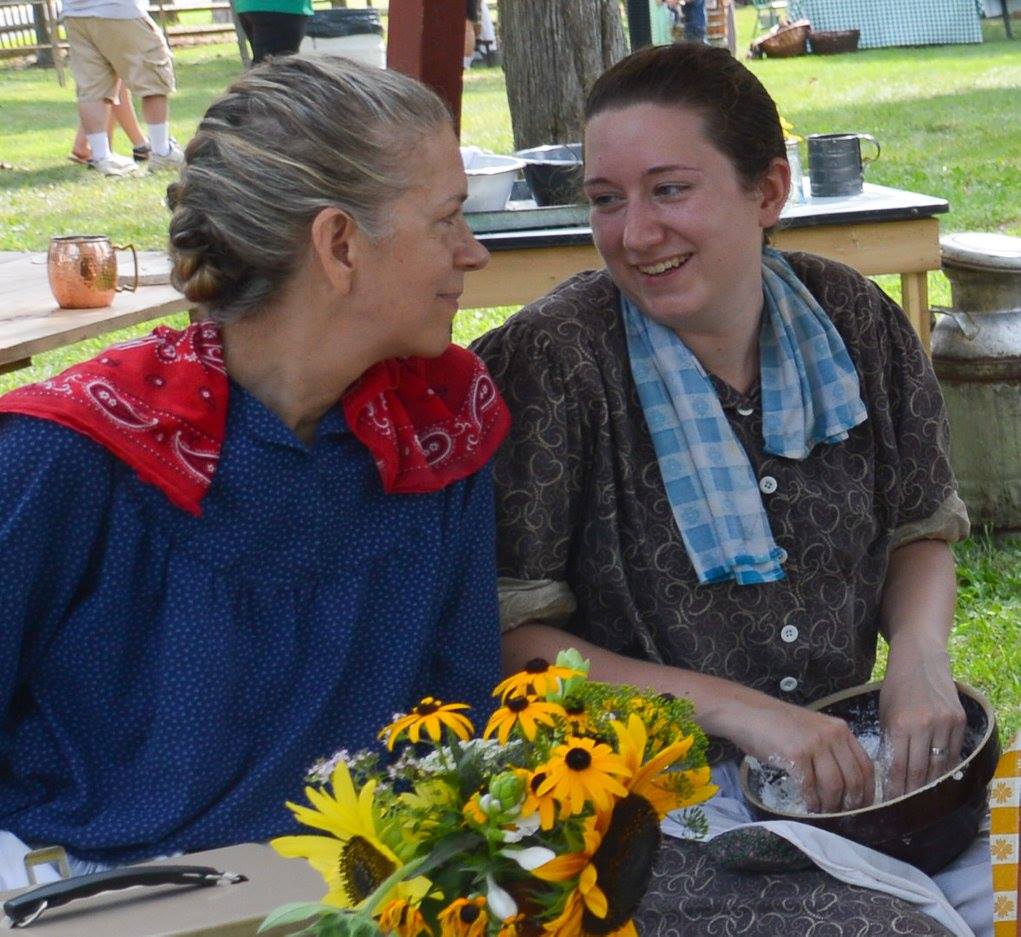
At a previous year’s festival, with my daughter. Bewitching the local kids with potato candy!

Jewel

Joya’s curator/founder Simon Beckman requests an artist’s statement from the residents, and mine is below. Compared to many of the resident artist statements, mine seems quite brief–artists often have complex conceptual ideas to describe and rely more on images, so their statements (words!) are often lengthier. I’m a writer, but I’m a poet; concise use of words ought to be my metier.

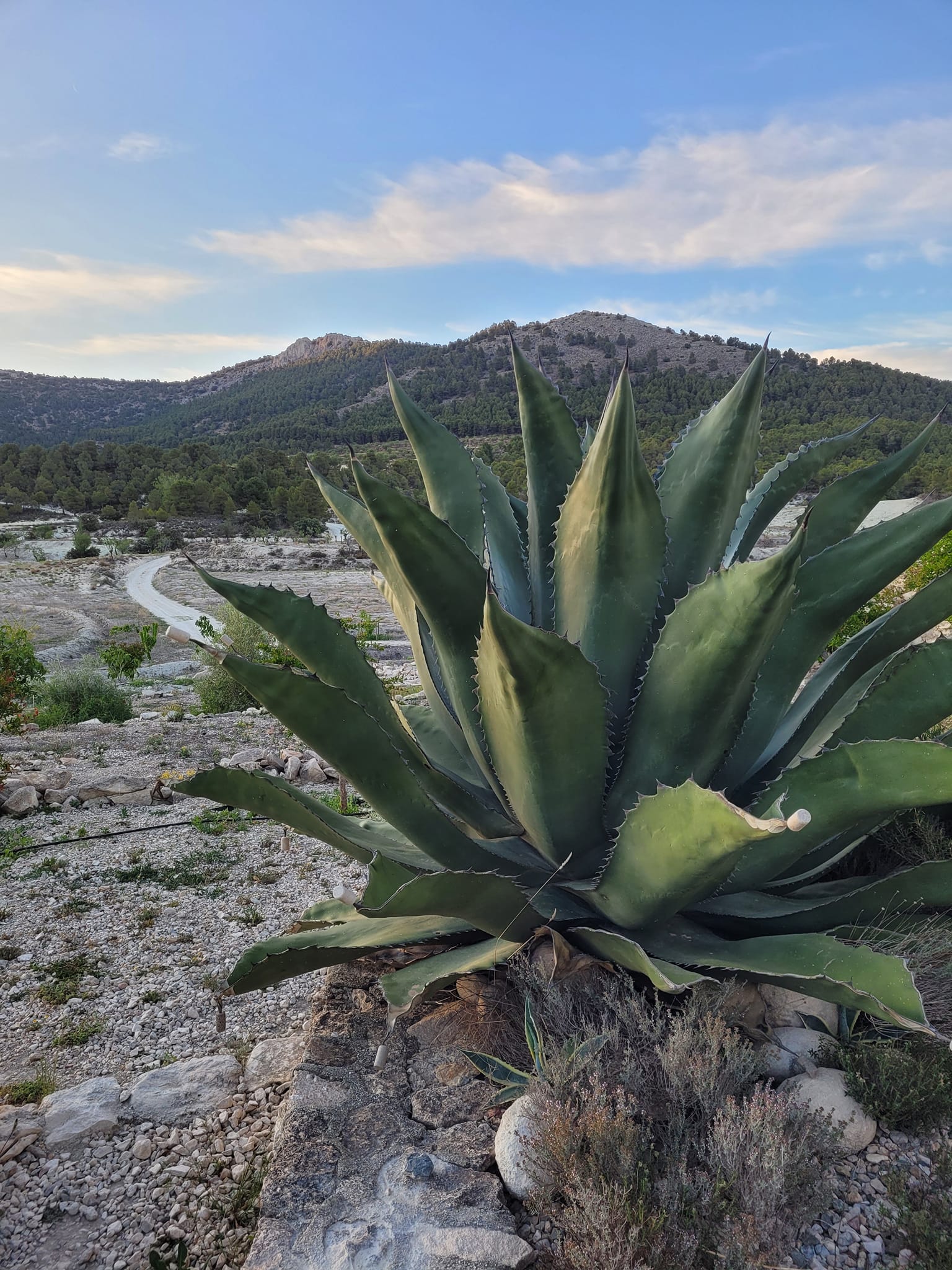
La jolla, and la joya, mean “the jewel” but also–especially the latter spelling–refer (geologically) to a bowl-like valley. The description is both physically and metaphorically apt, and provides context for the poem below my statement.

~~

In wild places, some part of me that’s not domestic surfaces. I experience a rise in my level of awareness regarding my surroundings, an apprehension in the etymological sense of “a seizing upon, laying hold of; understanding” (Etymology Online). In canyons, caverns, riverbeds, forests—yes, in the desert, too—I respond wholly differently from the way I encounter unfamiliar human-made spaces. While at Joya-AiR, I encountered both: new environments that I’m integrating into my inner ecology. New forms of art. That process of integration, an exciting one, will continue long after my residency here has ended.

It has been such a pleasure to interact with artists whose mediums vary from my own. I was the only poet in this group, and the opportunities I’ve had to learn more about the visual arts have been amazing and useful. My first loves were sketching and painting, and although my longtime practice has been writing, imagery has ever been vital to my creative work. I thank them for their generosity of spirit. What artists can offer to one another is an aspect of themselves through their perspectives as well as their mediums and works. This kind of giving and exchange strikes me as quite personal and enriching. It is something we can do for the world, too.

The extensive work that Simon and Donna have been doing here to make the place both welcoming and ecologically sustainable impresses me and confirms my conviction that with creativity, open minds, and persistence, humans can manage to live more cooperatively with the planet and damage it less—even, perhaps, help it to heal itself.

I will keep the images of Cortijada Los Gázquez with me for a long time.

~~

Jewel

…implies what is small, exquisite, bright.
At even higher altitudes, glassy glacial pools
shine at the caldera’s ridges.
Here, the hills’ aridity offers nothing
but shallow canyons where once
a river coursed, twisting around a cavity
anchored by holm oak and Aleppo pines.
The pinsapos sway in late afternoon,
their cones studded with hardy seeds.

Almond and olive trees dot pale clay soil.
No desert is ever gentle—what survives
must be temperamentally suited to the climate—
but what’s cradled in these ancient mountains
seems gentler than most. Night’s stars,
exquisite. Evenings of ruby, amber, amethyst.
Days that define bright. And when rain descends,
however briefly: everything gleams.


[Cortijada Los Gázquez, Vélez Blanco, Spain]


Vision/revision

Although the word “vision” derives from the Latin visionem, it first appeared in English with the definition of things seen in the mind or via the supernatural. Vision as simply the sense of sight is a later meaning (late 15th c.), and vision referring to foresight dates only to 100 years ago [see https://www.etymonline.com/word/vision#etymonline_v_7835]. The cliché “a vision of loveliness” provides an example of the early, 13th century meaning, as does the phrase “visions of sugarplums.” Poets have long been known for writing about, or being under the influence of, such vision.

When the first flush of poetic vision inspires work that later needs some adjustment, writers turn to revision. According to Etymology Online, revision’s history in English first showed up as a noun in the 1610s: “act of looking over again, re-examination and correction,” from French révision, from Late Latin revisionem (nominative revisio) “a seeing again” … the meaning “that which is revised, a product of revision” is from 1845.” This noun, and its verb form (the act/work/verb-sense of revising), keep me occupied a good bit of the time, especially lately while I’m trying to catch up with a large backlog–20 years of poetry drafts.

And then there’s this: https://www.hopkinsmedicine.org/health/conditions-and-diseases/cataracts#vm_A_20f6f6e1… blurred vision, leading to eye strain, drier eyes, halos around lights at night, trouble reading street signs. Yes, time to get a cataract evaluation, suggests my optometrist. “It’s our legacy,” my brother says, because our dad and most of his siblings got cataracts before age 70; Dad was only 48.

Efforts to correct cataracts apparently date as far back as 600 BCE in India, reports the American Academy of Ophthalmology, but the “father of modern cataract extraction surgery” was Jacques Daviel in 1747; since then, the surgery’s come a long way. I’m not worried about having it done and actually rather eager to see better and not need glasses all the time, though it could be over a year before that happens. In the meantime, the symptoms are irritating but not too significant. I can read books (and drafts of poems) just fine. I just might want to avoid driving in the dark, rainy nights of midwinter.

Johns Hopkins Medicine

Anticipating removal of the thickening, cloudy lens that blurs my visual outlook offers a metaphor for the revision process in my writing. Observation, reflection, critical analysis, problem-solving, intervention, re-envisioning, repair. And perhaps: clarity, if I’m lucky.

Work

Ending the year reading new-to-me poetry collections was my plan, though of course family life and all that distracted me quite a bit, in a pleasant way. Maybe I will reframe that as starting the new year with poetry collections. Which is to preface the following, an excerpt from “The Work,” a poem that contains a lovely reflection on what it means to leave one’s job and find one’s work–eg, retirement–in David Mason’s latest (2022) collection, Pacific Light:

~

Once, work was the thing one rose to by the clock,
the place one drove to, the faces one met getting coffee.
Now there are stones to be moved, but will they be moved?

...We are doing the work no other demands in the light
we are given, forgetting what day of the week it is,
the work all other work was a way of putting off.

That’s a useful way of thinking about post-job life, the work that everything else was a way to put off. So now we are poets or writers, artists, gardeners, people who spend time fishing, walking in the woods, hanging around in libraries, caring for grandchildren or pets. In his poem “One Day,” Mason writes “I was always too slow/and now my deadline/nobody knows,//not even the moon…” That concept of a deadline, so ubiquitous in all industries (and academia), churns workers into all kinds of stress. Needless to say, the term has a violent origin–“time limit,” 1920, American English newspaper jargon, from dead (adj.) + line (n.). Perhaps influenced by earlier use (1864) to mean the “do-not-cross” line in Civil War prisons.” [Thank you Etymology Online.] I am happy not to have so many deadlines now. Whatever work I do now, moving stones or writing poems, no other person demands it of me or sets the timing. “Not even the moon.”

Or maybe I’m mistaken, just a bit, because: gardening. I do have to follow the environment’s requirements and timing when it comes to that work. Nature can be a demanding “boss,” but the work rewards me. As does the work of reading and writing poetry. Pacific Light, by the way, is one of those rewarding books.

Goals, sort of

Our regional drought continues. I sometimes entertain the idea that the universe is telling me I might as well consider moving to the Southwest–where my children now reside–since the Mid-Atlantic area currently has less rainfall, higher temperatures, and lower humidity than where they are. Granted, this is likely to be a temporary situation; but for the present, I get the chance to walk on crunchy grass and hard soil daily and see how I like it. And to see blue skies for days on end, and see how I like that. What next?

Speculating on “what next” comes rather naturally to me, a reflective sort of human being; but making goals and ambitions toward accomplishment–not so much. Lately, though, the years-ahead thinking has been moved the forefront of my thoughts. It’s all those dang Medicare and Social Security and AARP mailings, in part, and my peers and I heading into the so-called retirement years. Inescapable: the conversations crop up around the dinner party table, while having coffee with a pal, or on a phone call with siblings. People keep asking me what my new goals are. I suppose, having reached the age Social Security (used to) kick in, I was expected to come up with new goals? Must have missed that memo.

Goal: the word is of uncertain origin, says Etymology Online, but appears in the 14th c “with an apparent sense of ‘boundary, limit.’ Perhaps from Old English *gal ‘obstacle, barrier,’ a word implied by gælan ‘to hinder’ and also found in compounds (singal, widgal). That would make it a variant or figurative use of Middle English gale ‘a way, course’…” And there’s the further meaning of a stake that signals the end point of a game. Interesting that goal can be an obstacle, a limitation, an end-point, or a pathway.

If I think of it as a pathway, the question is, what do I want to do? After many years as an educator…do I throw all that experience away and take up something else? My guess is that I’ll find myself imparting information of some kind, one way or another, regardless of employment status. So no major change of course, just a change of scenery, situation, or audience. After all, I will still be writing.

Or are we talking aspirations? What is it I would like to plan for…self care? travel? conferences and retreats? Time to do–what, exactly, and with whom? Here there are perhaps barriers and limitations: can we ever stop worrying about how much will it cost and how much time it will take to achieve the specified goals? And obstacles–you cannot plan for them. Maybe I go blind or get cancer or get hit by a bus. Maybe the apocalypse occurs in my lifetime. That would certainly be the stake that signifies “game over!”

Then again, what if my plans are to get into the woods more, sit under trees more, take more walks, read more books, tend to plants and animals, hang out with my beloveds, write poems? Those things, I want to do in future. But it isn’t as though I am not already doing them now.

Photo by Michael Heinrich on Pexels.com

Shy

When I was in elementary school, my teachers described me as “shy.” A few of them commented that I was “creative” and “smart.” It’s strange how these adjectives for character traits came to shape how I perceived and pegged myself, and I suppose I’m not alone in this. I considered creativity to be something positive and smartness a little daunting, but I felt ambivalence around the term shy. In the 1960s, shyness could be an admired trait among girls because it meant we were not disruptive. But I didn’t think that was all so wonderful, when the children I admired were often loud and funny. While teachers might have appreciated shyness in a pupil, children tended to think me nerdy or, worse, standoffish and snobby. Shy was not much of a compliment.

shy (adj.) late Old English sceoh “timid, easily startled, shrinking from contact with others,” from Proto-Germanic *skeukh(w)az “afraid” (source also of Middle Low German schüwe, Dutch schuw, German scheu “shy;” Old High German sciuhen, German scheuchen “to scare away”).

Online Etymology Dictionary

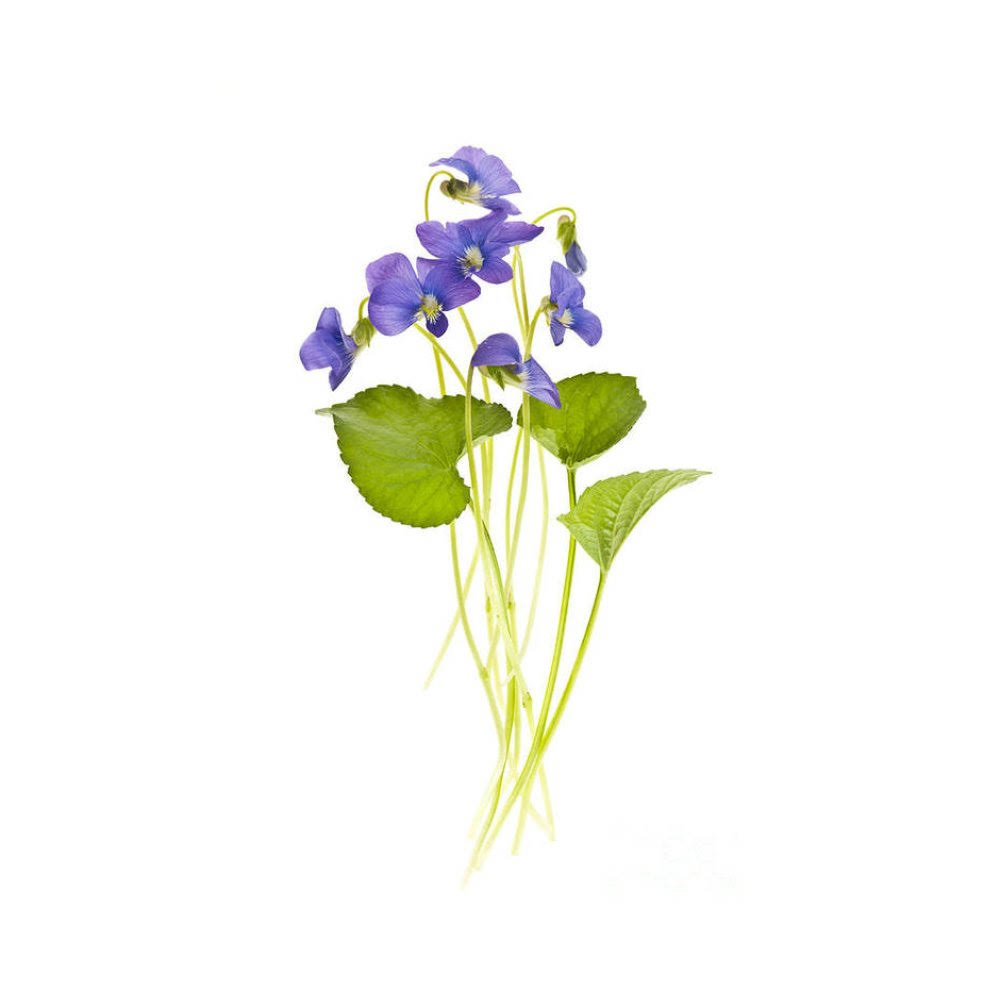
Hence the metaphor of the shrinking violet, the wallflower. I was fond of plants, but I did not necessarily want to be one. The introverted, reflective young person is seldom socially popular in the USA, and my budding self-confidence took a hit in the public school environment. Was I really timid and easily frightened–or was I just dreamy, bookish, unconventionally funny, skinny, tall, bespectacled, and not particularly socially adept?

Elena Elisseeva, Spring Violets @ fineartamerica.com

One trait I developed as a shy child was a capacity to listen to others. I wanted to hear their stories, their points of view, their silly songs, their big ideas. What I regret is that later on, when I gained some self-confidence and began telling my own tales or dispersing acquired knowledge and advice, I lost some of my listening ability. It took hard work and practice on my part to feel secure when speaking to groups, and I started with the hardest practice: reading my own poetry aloud to other people. Eventually the shyness wore off, for the most part.

Then I had to get the listening back. Raising children was a tough balance between saying and listening. I fault myself for not listening quite enough. As an instructor, I found it difficult to listen to a group of students: too much cacophony, too many distractions, hard to gauge where the conversation was headed. I’ve always felt more comfortable with one-to-one tutoring, which makes listening so much easier. As this semester has wrapped, I find I am already dwelling on the fall. What did covid-protocol instruction teach me? Mostly that the listening is even more important than I thought. The students still feel freaked out; overwhelmed by, more than excited about, their futures. I can’t blame them and want to make room for their stories…not to shy away from them, especially if any of them are feeling “timid, easily startled, shrinking from contact with others.”

Squalls

It’s still March; and yes, a few daffodils had begun to bloom–and yesterday the weather was raw and today it is frigid, and both afternoons I got stuck in snow squalls while driving. Squall: a good word, apparently Old Norse in origin and related to squeal. My students were cursing the return to cold air. I put my mittens on and endeavored to teach myself patience. We do need the cooler currents, but the worst things about overall global warming are the meteorological extremes, the cold that is so cold and the snow that is oddly early or late and deep, the hurricanes, the hailstorms and tornadoes, the flooding.

Tree frogs know how to take care of themselves. They leave the trees and go back into amphibian dormancy until the weather breaks again. The shallow burrow where a tree frog waits out a spring freeze is called a hibernaculum. Days like this one, when the winter smacks back the warmth again, a hibernaculum appeals to me.

Having just returned from three days at a writers conference [the AWP], the concept of a solo burrow to recoup my energy fits the bill. The conference–largely due to covid 19– was not as well attended as those I have been to before (& required masks and a vaccine certificate); also, the Philadelphia Convention Center is vast, so I did not feel overly worried about the virus. The event felt as overwhelming as ever, though, and hard on an introvert. I did attend with writerly buddies, and met nice folks and learned new things. I remembered the lessons of past conferences in terms of pacing myself, purchasing books in a manageable fashion, and not lugging too much stuff around: general attending-a-conference navigation. One thing I will grouse about was my own inability to use a phone app to figure out what was going on where. My phone is small, and I am inept at its tech capacities. I prefer a paper guidebook, though I suppose that’s not as environmentally friendly.

Re-entry into my routine was bumpier than it used to be. I had post-conference physical aches and fatigue, and I felt oddly rattled intellectually, as if all those marvelous and interesting poems, concepts, people, theories, books, journals, programs, and voices had jumbled themselves into my brain and not finished synthesizing. I suppose that about describes it, too…it is a LOT to try to connect and to sort through. Worth it, however.

The upshot? I need my hibernaculum to screen me from the squall. But spring will come.

Photo by Eva Elijas on Pexels.com