Transformation & intention

During the past few weeks, I have been reading–one at a time, with pauses–the essays in Ross Gay’s book Inciting Joy. His earlier book (The Book of Delights) was easier, a bit less complicated. About, you know, gratitude–even though he describes his father’s death in the first essay of that one. He gets to something about grieving in the 13th “Incitement” of this book, however, that made me put the text down and say to myself: This is what I have been trying to get my poems to do for some time now.

(I did pick it up again and finish reading it, by the way.)

He insists that we remember how transforming grief is. Not can be, but is. Always: “When that one thing [that we grieve] changed, everything changed. Light through the trees in October now different. The sound of the playground…cooking a meal. The future. The past. All of it changed. That is what the griever is metabolizing.” He points out this metabolizing can’t be timed, that grieving pays no attention to whether it has been a day or a year or decades: “It seems to me that grief is not gotten over, it is gotten into. And the griever teaches us, or reminds us, there is no pulling it apart. Because grieving, alert to connection, is never only one person’s experience.”

Maybe we grieve for one person, or one beloved companion animal. Maybe we grieve that our youth is over, that our children are grown, that our favorite mom & pop store has been razed to make way for a Starbucks. Or perhaps we grieve for our planet, as Greta Thunberg does: “You have stolen my dreams and my childhood with your empty words…People are suffering. People are dying. Entire ecosystems are collapsing.” There are so many reasons why we feel loss. Loss is what life offers us, loss but also transformation. I think what Gay tries to say in his recent essays is that because there is something to sorrow that we all can connect with, our grief itself can connect us, give us understanding–maybe even joy.

A complicated kind of joy. A joy that acknowledges that life can be tough and sad. And instead of reeling away from people who are clearly–and sometimes not so clearly–suffering, we could connect instead, even though we are also terrified of suffering. Maybe that is another reason I became a hospice volunteer years ago, after my dad had been in and out of the ICU frequently, even though I had spent my childhood and many of my adult years being frightened of death and dying.

Good poems offer readers that sense of connection, which Gay and others sometimes refer to as mycelial (Lesley Wheeler in her poems, Robin Wall Kimmerer in her books and Merlin Sheldrake in his, the movie “Fantastic Fungi”…among others). My favorite poems by my favorite poets, now that I think about it, have always had that effect on my heart: recognition of connectedness with other humans or with other beings, with the environment, with the past-and-future, with (thank you, Walt Whitman) the Kosmos. The recent interactions I had and connections I found at the Joya residency cemented this fundamental awareness, that all of us are part of our huge, interconnected experiences in life.

Of course, writing strong work isn’t easy, doesn’t often happen; but here’s the place in our mutual social connectivity where intentions really do matter–because the intention impels us to work, practice, and dream. The intention is to create and, through whatever we create, to extend our human network. NOT our much-ballyhooed “social networks.” Those can go to hell (and we can’t take ’em with us).

Anyway, such are my intentions for working in the world of words, of poetry. And that’s also the reason I read so much poetry, in case you were wondering.

~

https://www.smallwoodlandthings.com/ Heather Brooks, artist

Many amazements

Subscribe to continue reading

Subscribe to get access to the rest of this post and other subscriber-only content.

Grieving

I composed this poem during the pandemic not too long after my father died. It’s interesting how one responds to grief. The grieving man in this poem is not my dad; he died, I think, without too much weighing him down. He may have intended to live longer, but he was ready enough. I don’t think he had many regrets, and I know he felt loved.

And the grieving man is not my brother, though it could have been–he had a dog that was a great comfort to him while he mourned our dad, but I don’t think he was as gobsmacked with sorrow the way the person in this poem is; Dad’s death was not a surprise to us. The man in this poem isn’t symbolic, however, much as he may be a creature of my imagination. As the writer of this poem, I sense him as someone quite specific, whose loss was deep and perhaps unexpected–maybe a person whose loved one died from covid-19. A person who, like all of us, needs comfort and compassion; and I suppose this poem implies that the grieving man has someone, perhaps an adult child, who willingly extends that compassion in return: “lean your head/against his shoulder as you used to do/when you were small and aggrieved by/the world’s unfairness, and he sheltered you.”

A year or so later, I returned to the poem to do some revisions. Sheila-Na-Gig published it online and, much to my surprise, nominated it for a 2023 Pushcart Prize (a long shot, but an honor to be nominated). It’s my intention to include it in my next manuscript–the one I am working on now. I’m not holding my breath about when the next collection gets published; could be years. But I decided that this would be the poem to read for the Berks Bards 2024 poem-a-day project on BCTV this April. The link to my reading of this poem is here.

~

Grieving Man

Let him into your house, the grieving man,
blind, nearly, and so frail with sorrows
he cannot hear your comforting words
or move himself from room to room
without assistance. Give him
a careful bed, a friendly dog, a view
of mountains. Let yourselves open yourselves
to what he can give, hampered by limitations:
yours and his.

In a time of no touching, take his hand
in yours. In a time of isolation, lean your head
against his shoulder as you used to do
when you were small and aggrieved by
the world’s unfairness, and he sheltered you.
We turn about and find the unfamiliar.
When did he become the grieving man
and you sorrowful, in pain yourself, aghast
at the supermarket, the oil bill,
the nation?

He savors the soup you’ve made
and strokes the dog’s snow-dampened fur.
He asks whether the juncos still hop
on frost’s thin crust or if winter has
moved on north, a swath of crocuses
blooming in its wake. You rally your resources,
endeavor to describe the current moment
blind as you are and sorrowful, spreading seed
for the sparrows.

~


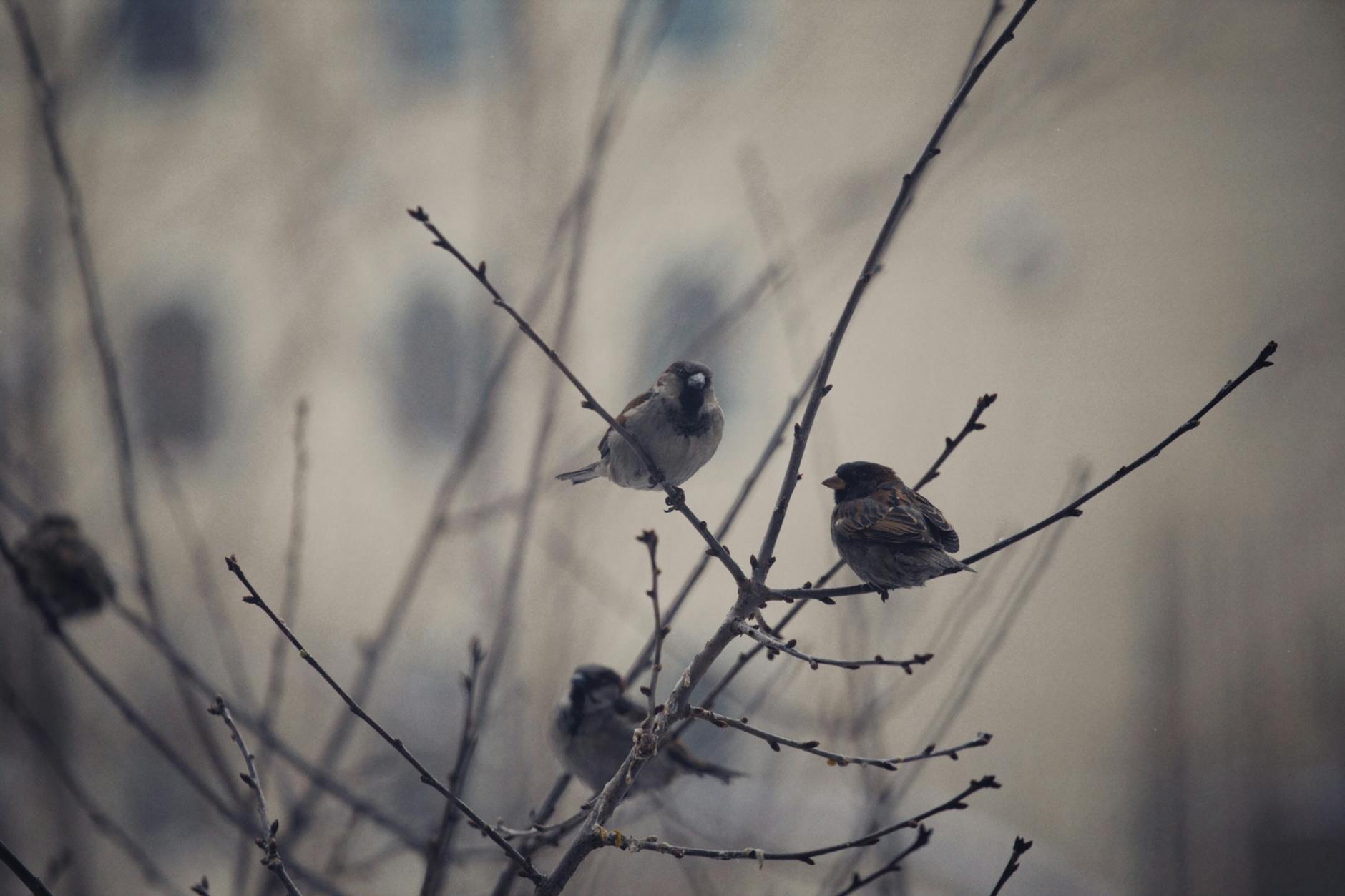
Photo by Alexey Demidov on Pexels.com

In which my dad appears

When does bereavement permit the writer to get back to the writing process? I have had quite a few conversations about this topic in the past few decades, and the answer’s pretty obviously “It depends.” I think of Donald Hall writing during Jane Kenyon’s illness and death and afterward–the stunning poems of Without. When my friend David Dunn died, I wrote immediately and often, sorrow emerging through elegies and remembrance. But I was younger then, and less experienced in the arena of bereavement.

During my mother-in-law’s two-year decline toward dying, I found myself writing about the challenges we faced–physical, emotional, communicational (that’s not a word, but I’m leaving it here all the same). Afterward, I could not/did not write. What interferes?

Why my thoughts turn this way: because, lately, my dad keeps turning up in my poem drafts.

I did not write much last year and did not submit any work.* For some reason, though I blogged and wrote long emails to friends and read many inspiring books, I did not feel particularly creative. But I wouldn’t have associated that semi-arid year with my father’s death; I figured my creative void was more about covid and an increase in chronic fatigue symptoms.

To jump start myself this year, I signed up for an online workshop (see this post). It has helped–I’ve drafted more poems in five weeks than I wrote in five months last year. But there’s been a peculiar outcome to these poems: despite widely differing prompts, source poems, and initial processes, my dad or something I connect with him appears in almost a third of the new drafts. I wonder what my subconscious is doing behind my day to day routine. Is this a response to bereavement, or a sign that I’ve accepted his death, or a reminder to self of what a huge loss it has been to me?

Not that I have a definitive answer to any of those questions. I do feel grateful for his appearance, though. He had a good sense of humor and loved to sing–nice things to have in a poem.

~

Thanks, Dad.

~

*Well, almost no work. Thanks to Marilyn Hazelton, editor of red lights tanka journal, I did submit tanka poems in 2021; and she accepted a few for this season’s edition (print only).

Constricted

I am forcing myself to write despite my sense that the flow, such as it is, has narrowed. I’m keenly aware that there’s a lot of material beyond the blockage and opening the floodgates may be as unmanageable as the “dry period” is unrewarding. Funny thing about balance. Keeping the seesaw level–no easy task. And as my peers and I progress toward aging, the constriction metaphor applies all too well. Many people I know now walk around with plastic or metal tubes inserted in their interiors to keep vital organs ‘flowing.’ My mother’s brain operates through constricted blood vessels, and now she can barely produce an understandable sentence. My lower back’s accumulating calcium deposits that have narrowed the path my spinal cord takes as it does its daily, necessary work.

Sometimes the flow of anything gets constricted. In our bodies. In the earth’s rivers. In our cities and houses: clogging and backups, plumbing and traffic. We implant stents, dig culverts, widen highways, remove the blockage–once we have determined where it is. There’s the challenge. Where is the rub that keeps us from our dreams? (Hamlet couldn’t figure it out, either).

Normally, I read at least a book a week; lately, just magazine articles, or no reading at all. Very strange for me–and I wonder whether my lack of motivation for reading and my current “dry spell” hinge on sorrow. My workplace has been busy lately, lots of scheduling, many meetings and decisions, not much time for personal reflection. It becomes natural, easy, to do the work of routine and ignore the kind of creative effort that grief requires. In my case, there’s also speculative grief: I know my mother’s dying little by little. We who love her spend as much time as we can with her, lifting our own spirits whenever our visits or gifts of chocolate and flowers and dinners out make her happy. What does she love? Fresh strawberries, for example. I bring them from my garden. She savors them. My day is made.

But I come home sad.

vessels, unconstricted

~

I wrote to a friend recently:

My writing practice has suffered a bit during pandemic but feels also as though underlying changes are in process. Just not much by way of results yet.
Somewhat surprised that my father’s death has affected my practice. Or perhaps it is my mother’s aphasia, frailty, and impending death that’s at work here. Or maybe just the stress of trying to maintain my job and relationships with colleagues and students under pandemic protocols, which has not been easy.
My brain’s been stuffed with things like learning new technology and teaching practices, and that leaves less room for wandering and interconnections and daydreaming. And then I have less energy for the creative work, as well. The garden’s been good, though. I’m not discontented, just feeling the currents of interweaving changes.

~
I suppose those interweaving changes may be a bit knotted, if they are threads, or partially dammed, if they are streams. Maybe why that’s the case does not matter much. What matters more is how to proceed when it seems nothing’s forthcoming–patience, force, ritual, practice, or…change.

You can judge your age by the amount of pain you feel when you come in contact with a new idea.

Pearl S. Buck

Wry words from Ms. Buck. Meanwhile, where are those new ideas? Maybe I just don’t feel up to unblocking the flow just yet. A little apprehensive about the pain.

Complicated distress

My recent reading list borders on the bizarrely unrelated: Helen Macdonald’s essays in Vesper Flights, Malcolm Lowry’s descriptive pastiche of a novel Under the Volcano, and Daniel Defoe’s wandering and curiously relevant A Journal of the Plague Year.

"The best thing for being sad," replied Merlin
..."is to learn something."
                               --T. H. White

Lowry’s book offers a strange escape for those of us preparing for yet another few months of pandemic quarantining. The escape is Mexico, its mountains and villages, its expatriates, world-travelers, drunkards, outsiders. But the characters cannot escape. The Consul cannot be saved from himself, from his tragic upbringing and his betrayals and his alcoholism. The novel’s so sensual and the descriptions so loving that I feel a sense of personal exile everywhere in the text. And I’m learning about Mexican-British politics in the pre-WWII years. It is a sad novel, but a different variety of sadness than the one I carry with me currently.

~

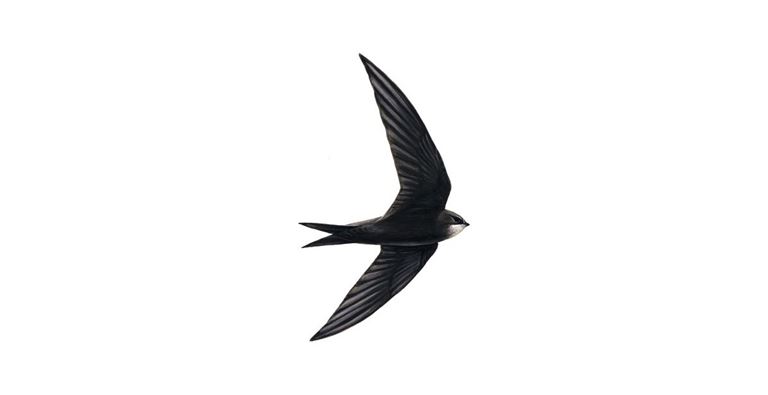
Most birds possess the power of flight, something humans have longed for and envied forever, inventing angels and airplanes to mimic birds. Macdonald’s essay on swifts’ vesper flights describes how the birds rise in flocks up to the top of the convective boundary layer, where the wind flow’s determined not by the landscape but by “the movements of large-scale weather systems.” The Cornell Laboratory of Ornithology (one of my favorite informational sites!) suggests the swifts–not intellectually, but somehow as a group–orient themselves using the many-wrongs principle:

That is, they’re averaging all their individual assessments in order to reach the best navigational decision. If you ‘re in a flock, decisions about what to do next are improved if you exchange information with those around you…Swifts have no voices, but…they can pay attention to what other swifts are doing.”

Helen Macdonald, Vesper Flights

We have voices; and yet we are not, in general, so good as the swifts at paying attention. Perhaps because there are too many voices shouting so loudly that the information gets confused. The sheep-following fashion of thinking goes with whoever’s most noisy, we follow; that way lies error. Paying attention and using a many-wrongs principle means we have to be willing to change course when new information arrives. It requires a certain humility that, let’s face it, most of us lack.

~

While reading Defoe, I am struck by parallels with today’s pandemic. But of course–times change, people don’t. His narrator feels torn–do I leave for the country, or stay in London? Is it wrong to shut people up in plague-touched houses, or safer for the greater number of the population? Is the Mayor making the best choices for the city? When new information about contamination arises, how are the people–as a community–to respond? And what do we do about those people who show total disregard for others? When there are so many responses, for good and ill, to a pandemic of such scope–what choice is best?

What can be said to represent the Misery of these Times, more lively to the Reader, or to give him a more perfect Idea of a complicated Distress?

Defoe, A Journal of the Plague Year

Complicated Distress: a phrase, composed in 1722, relevant today.

No better place

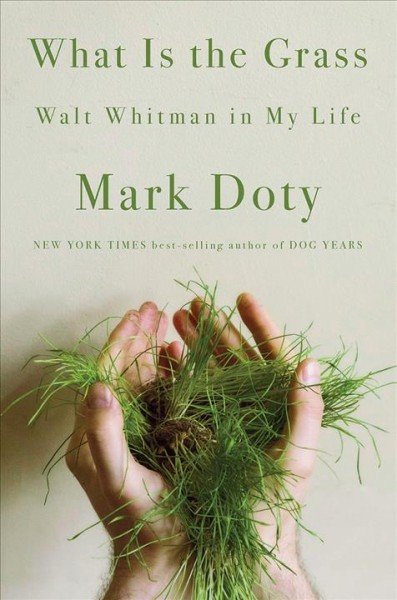
In a time of grief and gravity and gratitude for some wonderfully-lived lives, I happen to find myself reading Mark Doty’s book What Is the Grass? Walt Whitman in My Life.

And I find this paragraph; and for now, I need add nothing more.

The dead are not lost, but in circulation; they are involved in the present, in active participation. Bits of them are streaming through your hand and mine, just as language is circulating through us. Lexicon and materiality forever move onward and outward in the continuous wheeling expansion this world is. This is no mere philosophical proposition on Whitman’s part, not an intellectual understanding but a felt actuality. We are alive forever in the endless circulation of matter. Nothing luckier, stranger, or more beautiful could ever happen. There is no better place.

Practice & Muse

For people active in the arts, “creators,” the concept of the Muse is familiar–we read or hear about her often, sometimes in laments bemoaning her abandonment of the artist. May Sarton mentions needing a Muse to write poetry; in Sarton’s case, the Muse had to be an actual person, someone intellectually and sensually stimulating. For other creative types, the Muse is metaphorical, or acts as an aspect of a ritual to invoke inspiration, or as a method of removing writer’s block.

I rather like the idea of the Muse, as myth and metaphor; sorry to report, though, that I cannot recall a time when I felt I actually had a Muse. For writer’s block, I might have turned to Lord Ganesha, Remover of All Obstacles–but as I age into confidence as a writer, I find more patience with myself when the words don’t flow as rapidly.

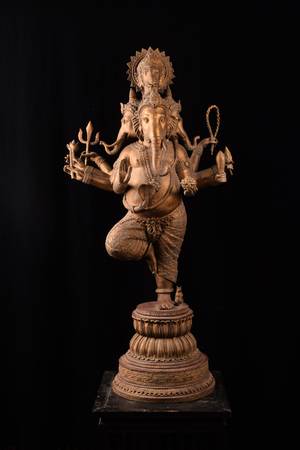
dancing god ganesha

Dancing Ganesha. [wikimedia/creative commons: 123rf.com]

I seldom think of myself as “blocked” anymore. During the times I compose less poetry, I can revise and rework older poems. I can gather completed poems together and puzzle over making the next manuscript. Or I might be busy writing various genres of prose, such as this blog or work-related articles and proposals.

Writing, for me, requires constant practice. It has little foundation in inspired revelation or appearances of the Muse. I do like prompts and challenges, though, for motivation and to pique my curiosity. My latest challenge-to-self is to write a screenplay. It’s a new form for me and I have to learn how to write dialogue and setting and to think in scenes. The only past experience at all similar has been my work on opera libretti, fascinating and, for this particular writer, extremely hard to do at all–let alone to do well.

Colin Pope writes, in a recent essay on Nimrod‘s blog, that he believes “poets are the types of people who feel most comfortable examining themselves on paper, tallying up inner thoughts and realizations…”

In my case, muse is a verb:

muse (v.)

“to reflect, ponder, meditate; to be absorbed in thought,” mid-14c., from Old French muser (12c.) “to ponder, dream, wonder; loiter, waste time,” which is of uncertain origin; the explanation in Diez and Skeat is literally “to stand with one’s nose in the air” (or, possibly, “to sniff about” like a dog who has lost the scent), from muse “muzzle,” from Gallo-Roman *musa “snout,” itself a word of unknown origin.


Thanks again, Online Etymology Dictionary!

~

Worth reading for the consideration of grief as a kind of inspiration: Colin Pope on Nimrod’s blog– “Every Poem Is a Poem about Loss.”


Fully human

A student who grew up in Viet Nam and arrived in the USA just two years ago scheduled an appointment with me for assistance in revising her final paper for Philosophy.

My job is to help her with her articles, subject-verb agreement, verb tense, and plural forms and uses, and when to use a capital letter for proper nouns. I also assist students like her with claims, thesis statements, and rhetorical structure–but I am not a “content tutor.” Of course, I often understand the content and find it interesting to observe how young people interpret, say, literature or philosophy.

In this case, Western philosophy, in English, as interpreted by a person raised in a culture quite different from the Western university system norm.

Philosophy 109 challenges many native-born and US-educated freshman students; taking this course as an English-learner with very little “Western” experience must be ridiculously difficult. So I first assessed how the course had been going for her, and she said, “So-so.” What had been most difficult? Note-taking, she said. With the texts she could take her time, translate, and eventually tease out the ideas; but class lectures were really hard. In addition, she struggled with the concept of opposition and rebuttal as structured in the philosophical argument.


Her assigned argument for the term paper was: “The arts, sciences, and philosophy are valuable because they help us to become fully human.”

The paper began with her assertion that the arts make us more fully human because they are beautiful to behold and inspire in us joy and appreciation.

“Is the best art beautiful?” I asked. She said yes, and I asked her, “Is it only art’s beauty that makes us human and good?”

“Not only,” she said, after a moment of hesitation. “Sometimes–sad is beauty. Sad is not good, but sad also makes us human.” She hesitated again and then went on: “I think good art, and good science, has both sides. I think this but it isn’t in my paper. Should I put it in my argument?” We agreed to work on a sentence or two that might express her interpretation more completely while heeding the general conventions of Introduction to Western Philosophy.

Sometimes, syntax is content.*

Without exception (well, almost), I learn so much from student interpretations of ancient concepts. Rather than rolling my eyes and scoffing at how little they know, I’m searching their perspectives for what it is I ought to know about them and their experiences. The stance of most older authorities is that young people must integrate themselves into our norms and conventions; but we will age out of our power base, at which point we’d be better off recognizing their norms and points of view and exercising our neurons by learning how to adapt to the next set of conventions.

Philosophy and the arts will stay around. I have no doubts about that. The ways in which human beings interpret them may change; all to the good–stasis would destroy philosophy and art, thus keeping us from our potential to be fully human.

~


*[You might want to read Sister Miriam Joseph’s classic text, The Trivium, for a deeper explanation of how to approach ‘mastery’ of the liberal arts and learning.]


Lament

Today, another draft of another poem, also recent. Next, I think I’ll move to older work…material that I haven’t submitted for publication (or that I have submitted but has not been accepted). For now, though–this recent, perhaps too-fresh, lament.

~ ~ ~

The Work of the Body as It Ceases

Before we know ourselves
the body exerts itself, pulses,
lungs open into breath
blood sings with that air.

Unless there is ache
or ecstasy, the body labors
unnoticed while we tend
to other forms of work.

Look, now, at the last days
when the reliable diligence
of heart, lungs, kidneys halts
under strain the body can’t abide.

The throat cannot do its job
though body needs sustenance
and consciousness yearns
to say something unconveyable.

There is work always.
The long labor of maintenance
which, being humble, produces
no outcome except living.

The body’s nothing if not persistent
even as it dies, as vision narrows
and breathing weakens.
Those lively nerves? They settle.

Slowing is also work, as is
decay: work of a new sort
to which the workhorse body
can adapt in the quiet room

where those who loved the body
during its years of industry
do the work of mourning
which does not ever cease.

~

sunset1