Local libraries

There are two local libraries near my house, and the campus library at the college where I used to work. And yet, until just a couple of months ago, they were rather underutilized by yours truly. I had developed into a bit of a book hoarder. I had enough disposable income to purchase books, and as a writer myself I felt an obligation to buy books–from the authors or their publishers when possible (some books are out of print and then…Amazon or ThriftBooks). Buying books helps to keep authors and publishers afloat. Win-win.

I’m now on a fixed income, however, and also have much more ‘free time’ because I have stopped working 40 hours a week. I can get to the libraries at ten a.m. and browse the stacks and ask for interlibrary loans. The first time I borrowed from the library in town, I received a receipt that said: “You checked out the following items,” followed by the due dates of each item, and then this cheerful little notice: “You saved $65.96 by using your public library!” Look at me, the savvy saver.

Maybe libraries have been doing this for awhile and I never noticed because I haven’t been using them. But I thought it was an amusing reminder. I guess it also serves to let people know they ought to donate money and books since, after all, they are saving so much by opting for the library. And so, while I slowly cull my own shelves for –er– “downsizing” purposes, I’ve been borrowing weekly from my free public libraries, one of so-called civilization’s greatest boons. I am sorry it took me so long to return to the safe and welcoming space of a public library.

ann e michael
The South Whitley Library as it was in 1967, with my grandmother in her Story Lady attire.

~

In most public libraries, the hardest books to locate are small-press poetry titles; but the campus library has a good selection of those and, as a former employee, I can drive over there when searching out poetry collections. This means that I will still purchase the occasional new or hard-to-locate poetry books by writers whose work I feel I simply must possess. It’s a big challenge to get over that hurdle of needing to own books, though. A series of full bookshelves feels somehow comforting to me. I’d much rather divest myself of clothing, shoes, jewelry, electronic devices, furniture, craft supplies, maybe even artwork or gardening tools, than part with my books…especially the poetry collections and the philosophy texts.

I’ll keep those for now. But I will also return this $65.96-worth of books to my local library and borrow another $66-worth of books in their place.

~ And in the happy news department, P.S. see below! The issue should be live soon. Amazingly, this is my third Pushcart nomination this year. The last time I was nominated for this annual prize was 1997. So, kinda gobsmacked…and grateful.

Poets, horses

My local public library’s poetry section is on the sparse side. However, after renewing my card today, I felt determined to borrow a poetry book. I considered taking out one of Louise Glück’s collections, but I already own copies of the two on the library’s shelves (Wild Iris and Meadowlands). I chose Maxine Kumin’s 1992 book Looking for Luck instead. When I returned home, I learned that Glück has died (age 80). There will be time to return to her books and to seek out her most recent collection, which I have not read; but hers is a voice readers of poetry will miss.

One thing that her poems do is to face, without shying away from, sorrow or grief. They seldom offer sociably-conventional consolations. The consolation is in the spare beauty of her observation, her control of language. That is difficult to do. When I write from despair or deep grief, I find I want to bring some kind of–call it hope?–into the last few lines. I wonder whether I’ve a tendency to want to comfort; maybe my readers, maybe myself.

I haven’t gotten very far into the Kumin book yet, but it’s clear that this collection includes numerous poems featuring horses, one of Kumin’s lifelong joys (she and her husband raised quarterhorses in New Hampshire). Her poems have taken me back in time, so to speak, to when my daughter was learning to ride. I have had a sensible regard for horses’ size, prey instincts, teeth, and hooves from early childhood–not quite a fear of horses, but pretty close–so when my then-tiny nine-year-old expressed an unwavering and stubborn interest in riding lessons, I held off until persuaded to let her “just try it.” Of course she knew what she was interested in, and of course she loved riding, despite frustrations and beasts who didn’t want to cooperate and being pitched off and stepped on while I watched and encouraged and soothed, swallowing my fears for her safety.

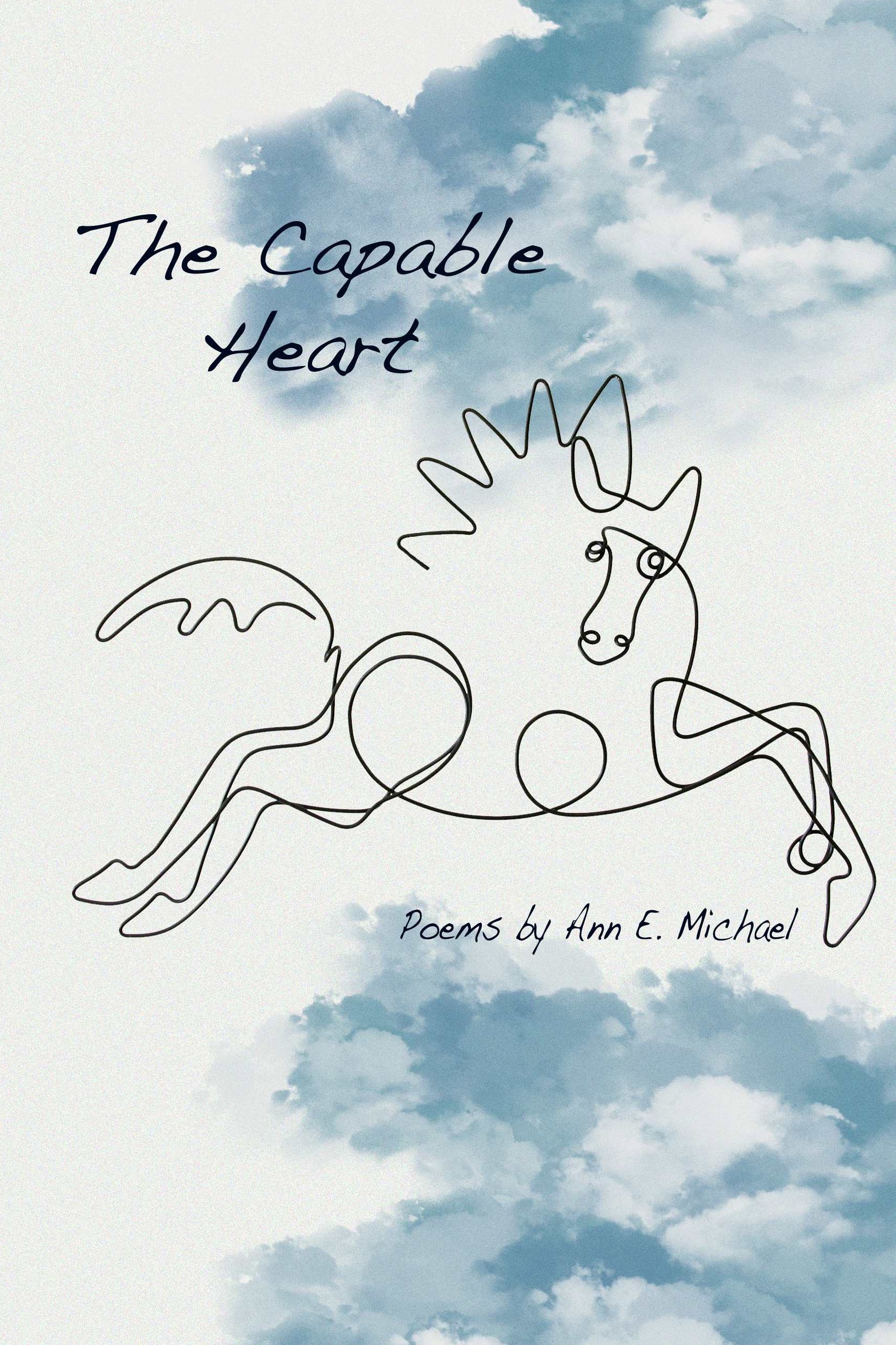
Equine grace, strength, personality did not quite win me over; I’ll never be much of a rider myself. But contending with horses and learning to love and commune with them was good for my child, and reading Kumin’s poems brings back how human animals can have relationships with other animals. I never quite got over horses being an “Other” for me, but observing how my daughter loved being with them inspired me to write quite a few poems of my own [see my chapbook The Capable Heart]. Reading Kumin’s work takes me to a familiar and important place in my own life.

Novels & words

When I was about seven years old, I discovered books offered me a way to immerse myself in adventure and temporarily escape life’s discomforts. Novels, and later, poetry, were the genres I turned to most often. Though I also liked history, science, biographies, and art, there was something about a piece of sustained fiction that enthralled me so deeply I could easily ignore anything around me: the television, my siblings’ bickering, the vacuum cleaner, my parents’ calling me to dinner. In later years, immersed in a book, I risked going late to class or missing my stop on the F train. The only area of my life where I understand what is meant by hyperfocus has been reading.

Then I had children, which changed everything. I remained an inveterate reader, but I found it far easier to get through non-fiction, poetry, essay or short story collections, and literary memoirs than to devote myself to novels. It was simply too easy to get lost in a book of fiction, to wrap myself in those worlds to the detriment of my own. Too easy to become irresponsible to life’s requirements, which were suddenly so many and so urgent. If my situation had been different–let’s say, commuting by train for half an hour or more daily–I might have continued reading a hundred or more novels a year. But I was home in the rur-burbs with two young kids, and I could read only in short spurts throughout the day. Granted, I read a lot of books to my son and daughter, some of which were new to me and most of which were fictional…but a bit below my grade level.

Those children are in their 30s now, but I became so accustomed to the non-fiction genre that only recently have I begun to turn back to my first love, the novel. Granted, I did my reading-all-of-Dickens stint during covid, and I never completely abandoned reading novels; but I got out of the habit. Because my workplace office is now in the library, however, I have been picking up the occasional, usually contemporary, novel that appears on the library’s New Acquisitions display. This is where I found R.F. Kuang’s book Babel, or The Necessity of Violence: An Arcane History of the Oxford Translator’s Revolution. Imagine an alternative Dickensian-era Britain, with the underlying power struggles between education and political power as per Pullman’s His Dark Materials series, and the almost-believable otherworldliness (and creative footnotes) of Susanna Clarke’s fiction…with the late-adolescent outsiders who bond over knowledge that cements the Harry Potter books…and add some genuinely academic background on linguistics and etymology.

That’s about as close as I can describe Babel by means of other books, but what I really enjoyed about the novel is the way it got me thinking about how dismayingly interconnected education and scholarly pursuits are with power structures such as governments, politics, wealth, and colonialism. Kuang deftly shows her readers how the focus on knowledge that her characters love and possess talent for inevitably leads to a narrowness in their perspectives that differs almost dangerously from an uneducated ignorance. They are good young people, but they operate as elites in a fundamentally callous system. The system either corrupts or smothers. The “fun” part of her world construct is that power operates on the use of words: on languages and their etymologies, which are magical enhancements.

But of course, power does hinge on the use of words, doesn’t it?

The question this poses in my mind has something to do with poetry, with the writing of it, the speaking of it, its use of words that are not magic but can carry with them a power to evoke that seems pretty magical at times. Reading this novel was not only entertaining (sad, thrilling, surprising)–it got me, after I’d completed hyperfocusing, to reflect on ideas that twine with the roots of poetry. To me, that’s the best takeaway from any reading experience.

Bookish decisions

In the past two weeks, I’ve read two contemporary poetry collections that I didn’t, er…love…or perhaps what I mean is I did not respond to them the way I enjoy responding to poems (and no, I will not be naming titles, though I will be giving these books away). While that is a let-down of sorts, I also started reading naturalist Marcia Bonta‘s Appalachian Autumn–which I do love. The book takes an environmental-diary approach that I have enjoyed in other naturalist writers’ work and which, no doubt, I relate to partly because I am also a near-daily diarist of my own backyard; Bonta has much to teach me, because she has a naturalist’s education and long experience. This is one of four Appalachian Seasons books she’s authored, and maybe I should have started with Spring, since that equinox has just passed. I found myself interested in the story this book tells of her family’s legal struggles with local lumbermen and absentee landlords, however. It’s an experience with which, sadly, my beloveds and I are familiar.

And I also began reading a book of poetry I have found exceptionally compelling–Rebecca Elson’s A Responsibility to Awe. Perhaps more on that in a future post. So books continue to enrich my life. I hope that is always the case, but I’ve seen how changes in human neuroplasticity can affect even the most bookish among us. More reason never to take the joys of reading for granted–and to keep my library card current.

~

In future, I plan to use the library card more than the credit card when it comes to books; but I know I’m weak. Besides, many of the small or indie press poetry books I relish are not easy to find in public library collections. One of my priorities this year is to winnow the home bookshelf stacks, to keep only what I really cannot bear to part with or am sure I will read or refer to again. But how can I be sure? The book lover’s dilemma, isn’t it? Nonetheless, there are definitely texts I can part with if I just take the necessary time to go through the collection. I can donate them to a public library, and even though many of them won’t get curated onto those shelves, at least I will be supporting an institution I value. I have been referring to this process of lightening my bookshelf loads as “culling,” but that word tends to have a negative connotation. I’d like to remind myself of the positive aspects of giving some of my books away: good for me, good for other readers, good for the authors of these books whose work may be discovered by other readers. Less to pack if we ever move, less for my children to deal with when that time comes. Yeah, I’m thinking ahead.

Thysanura

The bristletails (order thysanura) are a group of wingless insects that includes Lepisma saccharina, the silverfish–one of the most common “bookworms,” although they are not worms! They nestle between pages, covers, and bindings of books, though books are certainly not all they eat. I must confess they are not among my favorite arthropods. Nonetheless, I class myself as a bookworm, though I’m far less voracious than some folks I know.

Therefore, I ought to note that my office on campus has been moved to my favorite place: the library! As I noted in some long-ago posts, libraries have been among my comfortable places ever since I was almost too young to read, and my maternal grandmother volunteered at her local library (notably as “The Story Lady.”) I still recall the jingle–from the 1960s–that accompanied a PSA for the library I loved as a 5-to-7-year-old.

~

ann e michael
The South Whitley Library as it was in 1967, with my grandmother in her Story Lady attire.

Anyway, it has longed seemed logical that the campus writing center be located where research takes place; we just had to find room. The library staff generously donated one quite spacious office room for the college writing center, and I couldn’t be more pleased!

My colleagues in academic support–my university department–are still housed in the basement of the main classroom building. I miss them, and they envy the fact that I now have a window (and that it’s not freezing up here). But while I would never knock the value of a window after 15 years under the frost line, I’m happiest about having my work office located in my favorite building on campus: the library. Books make me comfortable. When I need a break from my computer screen or from meetings, I can take a deep breath and walk around the stacks in silence. It’s perfectly acceptable to be rather introverted in a library. And the people who surround me are as enthusiastic about books as I am.

I plan to take a short breather from blogging and work-related stuff to visit a far-away Best Beloved and am already plotting which paperbacks to pack for the tedious flights. I hope to avoid silverfish and viral stowaways. Wish me luck.

Meanwhile, embrace your inner bookworm!

I searched for the most attractive photo of a silverfish I could find, and this one came from Encyclopaedia Britannica. Sorry, it was the best I could do. I’m sure another silverfish would find this one quite handsome. To the human bookworms I know: this is not meant to deride those of us who digest books with a healthy appetite. Just a metaphor!

Home is where?

Yesterday morning, I went to a local library to attend a writing workshop on the theme of ‘home.’ In my own work, when I stop to consider themes that recur, some form of dwelling appears in image and topic. Frequently. Nests, burrows, houses, cities, places. Love, death, kinship, the natural environment, and home. My first book* used the process of housebuilding as its motivating metaphor for perfectly natural reasons (we were indeed building a house), but both before and after that group of poems, the theme of home has been a common one I have felt drawn to describe.

Even, now I think of it, the body as home: this structure of flesh and bones and blood and synapses that houses my consciousness.

My parents left their homes and families, and when I was a child we moved three or four times–not enough to feel any loss of stability but enough not to feel particularly rooted to any one place. I suppose I can say that I carry home with me, in my sense of being a conscious body in a space surrounded by an environment about which I am curious. I do not, however, feel rooted to a culture, community, or extended family who live in one region; I have no region, city, state, place, house that I claim as mine and refer to when I refer to myself. Among the ten people in the workshop yesterday, I was a bit of an outlier in that respect. Some of the participants felt split between two homes/places, others felt rooted, and still others had felt rooted but were feeling the connections break.

I found it hard to say where my home is. Maybe it’s imaginary? Portable? I used to daydream about living in an Airstream trailer. Though I’d need a second one just for books…

Airstream Corp.

~

Which brings to mind something one of the workshop attendees said about feeling at home in a library. Several of us nodded in agreement, and he added that the library–the public library–functions as a kind of matrix. I would add that’s true for one’s private library, as well, books providing a kind of collage of interests and influences and teachings that can be seen as a kind of matrix to the book-collector’s consciousness, loves, and interests. Speaking strictly for me, in this case.

The house I have inhabited for nearly 25 years now, the house my Beloved and I designed, helped to build, inhabited, raised our children in: this is as close to a ‘true home’ as I have ever had. And yet: is it my home, my rooted place, my last place, the dwelling-in I must have to feel stable and secure and surrounded by love and nature? I’m not so certain about that.

It’s beautiful here, especially in springtime. Yet as I consider friends and students and strangers who have had to pick up and leave on short notice, possibly never to return–it would be hard, but I could leave home. And, for now at least, I still have a choice to go or stay.

~~

*If you are interested in reading that first poetry collection, it is called More Than Shelter. It’s out of print, but you can contact me and I’ll send you one for $8.00 including postage. Many thanks.

Curation

Recently, I spent awhile browsing the Walter Kerr collection of books in the library of the college that employs me. Kerr and his wife Jean were writers in New York in the 1950s, 60s, and 70s; he was best known as a theater critic and she as a playwright and essayist. His family donated his books to the school, and it occurred to me during my perusal that this section of the stacks seems more personal than the collection as a whole. Here are Kerr’s quirky book choices, his favored influences, his academic interests with a place among the trendier tomes on movies and Broadway.

A personal library acts as a unit, books that are kept together rather than disbursed upon the death (or before-death donation) of the book collector. It therefore parallels–and predates, of course–the social media concept of the curated self:

Through the ongoing process of organizing content and media elements which create personal profiles for specific audiences, social media users inadvertently curate versions of themselves. Social media turns users into curators as they create distinct incarnations that are separate, yet become the objectified digital presentation of one’s physical self. [definition from socialcurators at weebly]

“Curating” seems to be a trending concept these days, so I naturally checked the etymology:

derives from cure: c. 1300, “care, heed,” from Latin cura “care, concern, trouble,” with many figurative extensions, such as “study; administration; a mistress,” and also “means of healing, remedy,” from Old Latin coira, a noun of unknown origin. Meaning “medical care” is late 14c. (https://www.etymonline.com)

Among those “many figurative extensions” is the curator in the sense of library science or museum administration. Now we can add social media users to the extension metaphors.

Perhaps curating oneself is more natural than I initially thought. My library probably offers a means of knowing who I am, or at any rate what I choose to value given what I have learned in my past; what we leave behind–as in Mr. Kerr’s library collection–becomes who we may be to others.

If they study, if they speculate, if they care.

While I was at the library, I borrowed a few books (of course). I will write about Arthur Frank’s classic book The Wounded Storyteller soon, I hope, in conjunction with some poems I’ve been working on. I also borrowed poetry collections by Matthea Harvey, Rachel Hadas, and Larry Levis.

Am I curating my life?

~~

~~


Support for poetry

It is April, and April is National Poetry Month, among many other things that April is.

2017npm-poster_0People have told me that poetry has helped them through times of fear and times of grief. That’s a familiar response when, on rare occasion, I happen to tell someone I am a poet. The thing is–I am not sure poems do that for me. Maybe writing poems helps, but reading them sometimes hurts even more.

Not that hurt is such a bad thing when one is grieving; there is the comforting recognition that sorrow is a shared experience, that others have been through and survived pain and sadness, that there is a community of Others who feel compassion and who can express it well and honestly. Too, there are poets I find myself reading when I just need to hear a familiar voice in my head. That familiarity in itself offers a kind of comfort to this reader.

This week, I am turning to familiar poetry voices although I am reading collections I have not read before. Jane Hirshfield, Mary Oliver, Wendell Berry. “Old friends” of mine.

I am not contributing to National Poetry Month much this year: I am giving no readings and attending only a few. My contribution this year is to book-buying: I have made several purchases of books by poets I do not know well or who are completely new to me.

Book-purchasing from small independent presses and through the poets themselves–not through Amazon, not second-hand–supports poets and poetry publishers. Another way to support poets is to borrow poetry books from your public library, so that the books are noted as “circulating” and thus are less likely to be culled when the library updates its collection.

Love can be expressed and shared in many forms. I ❤ poetry!

Revisiting

Read more poems, I advised myself. At first, I thought I might scout around for some writers whose work I am unfamiliar with–writers new (say, Ocean Vuong) and less new (say, Alberta Turner). I have the week off from university work, however, and am lazing about at home…no trips to the library.

I do have my own library, though, much of which consists of poetry collections and much of which I have not read in some time. I chose Audre Lorde off the shelf–her 1986 book Our Dead behind Us. Lorde’s work was pivotal to my early interest in writing poems; I encountered her in a Women’s Literature Studies class in 1978 and was deeply moved by her poems of rage and political awareness, the sensuousness of her imagery.

I chose to re-read some late Plath and one of Adam Zagajewski‘s books, Canvas. What I’m hoping is that some of these re-reads will connect me to areas in poetry I have not explored much recently. Also, I will expand into the works of writers whose poetry I’m less familiar with.

Not to mention the recent work of friends-in-poetry, whom I have let down by not buying their books (yet…I will get to it). So many excellent and thought-provoking writers out there, many of whom I know personally or have at very least met in person and connected via social media platforms. I hope to purchase some of those books at this year’s AWP Conference in Washington, D.C., and thus to keep to my commitment to read more poetry.

Meanwhile, I turn the pages and rediscover “old friends” and their voices, stories, moods. That is a pleasant task, and a fruitful and useful one.

~

brad-hammonds-flikr-books

Libraries & sanctuaries

I have an article about libraries in the current (online) issue of The Chronicle of Higher Education:

http://www.chronicle.com/article/Its-Not-Too-Late-to-Save-the/238106

brad-hammonds-flikr-books

Remind me not to read the comments…


😀