Curriculum vitae

My year has begun with half a dozen literary journals declining my poems, but it has also begun with a proliferation of new poems–which makes me happy. There are several reasons for a prolific spurt, some of which involve sad events that have turned me toward reflection. While sorrow isn’t a reliable prod for writing in my case, reflection almost always is. Also, attending a workshop is generative for me.

In last week’s session, we read Lisel Mueller’s “Curriculum Vitae,” and Anita asked us to emulate the poem for our own life story. I encourage you to read Mueller’s poem if you are not familiar with it; it’s full of lovely imagery and is so concise and evocative that it stands as autobiography–quite an amazing piece. Also daunting: how to use that poem as a writing prompt? I needed a strategy, so to keep myself as brief and non-narrative as possible, I limited my version to 15 points instead of 20. Then I edited it down several times, taking out as much as possible while leaving things that feel “true.”

What I realized after this practice in form, and after revising it and tightening it up, is that if I were to start again rather than revise–and were to focus on different aspects of my life experience–I could write a completely different, but still true, poem. I could write a dozen completely true and completely different CV poems! I could have used national events that occurred during my life and had greater or lesser impact on me–the Kennedy assassination, the March on Montgomery, Viet Nam War on television, etc. all the way to 9/11 and since then; or I could have focused on friends and family, their appearances and disappearances from my life; or places I lived or traveled…easily a dozen CVs, curated to present a lifetime.

So while the piece I wrote isn’t a “keeper,” not something I would send out to literary journals, the practice of writing and revising it has been remarkably useful (thank you, Anita Skeen!); I’m more aware than ever of how perspective, focus, and image affect narrative. And of how many ways there are to “tell” an experience, which of course is something poets often do: revisit, re-frame, re-imagine an experience, loss/trauma, or relationship using numerous forms, images, perspectives, speakers, and so on.

Which is certainly one reason Anita asked us to try this exercise.

I did not manage to be as lyrical and concise as Mueller, but then I didn’t expect to; she was an amazing poet. From her poem cited above, I especially relate to the line: “At home the bookshelves connected heaven and earth.” It felt like that at my parents’ house, too.

I’ll be brave and post the practice poem, one of many versions of my autobiography.

~

CV, after Lisel Mueller

1. Three weeks before summer solstice, I enter the world. My father considers me the first perfect thing in his life.
2. Underfoot, meadow grass and church aisles.
3. We move from the manse to the city, where my sister goes twice to the hospital and I walk two blocks to school.
4. Suburban house, square and white as a die. We learn to ride bicycles in the street.
5. Bussing and gas shortage, algebra, barefoot girls in summer. My embarrassment at growing too tall, too thin, too bookish, too moody.
6. Early entry into college. When the only thing I wanted was to get away.
7. In Michigan, snow like I had never seen before.
8. Some years of misery, tedious, purposely omitted. But I meet the people who most encourage me to write.
9. Back to my parents’ kind embrace. Celibacy, recalibration, writing.
10. We meet one summer. I write you so many letters. It might be love.
11. Two children 18 months apart, vegetables in the backyard: it is love.
12. Autodidact in the garden, in the world of literature, in child-rearing. There are cats, chickens, guinea pigs, a beloved dog, but I need to return to study and poems.
13. Loss and joy keep me writing, teaching keeps me busy, children grow and travel far. My books see print.
14. Pandemic.
15. My father dies, my mother loses her power of speech, friends start failing, there are dark weeks. Many hours in the garden, growing and grieving. We hold on, uncertain, but whole.

~
Revising for the personal

I’ve been working on the poem below for 11 months now, and the process has made me think about the purpose(s) of revision, the why of why artists and writers do it. In the case of this poem, I’m revising for entirely personal reasons. My revisions have little to do with creating a stand-out poem that strangers will read and appreciate; I want to tell a particular story about someone I love in a way that might demonstrate, to that person, compassion and some understanding of his feelings. I believe this is a valid purpose for making art, even if it is subjectively personal–ie, not “universal,” not groundbreaking, not timeless.

Certainly, the classic lyric poem, and many narrative lyrical poems, often are addressed to a particular someone. It seems to me that the classic lyrical poem is less based in context, however, and can therefore be read, aesthetically, as more universal. The narrative poem by nature relates its story in a time or place, using contextual descriptions that can become obscure in different eras or locations.

Such is the poem below; it may benefit from some backstory, which I will supply afterward. But read the poem first and maybe let me know if I’m correct. Maybe it will “work” for other readers, maybe not; but it is something I have been wanting to write for my son for awhile now. And he “gets it,” so my purpose has been achieved. 🙂

~

In the Warship’s Belly

How you hated those five days in harbor,
amid steel and cable, fearful each minute but
constrained from showing it.

You prefer to see shoreline and sky.
Discomfort pervaded every hour you spent
on board, walking through hazards,

noting construction, rewiring, repairs;
how you hated the low-ceilinged passages
through which you half-crawled,

wearing neoprene-soled boots and a hard
hat, as anxiety, hyper-alert, worked its
wormy way through your body.

There were power outages that canceled
light completely for unexpected
seconds deep below decks,

then generators’ earthquake roars would
rumble and shake so every wall threatened,
sparks lit up and light returned—

your breath rapid and near wheezing,
tremulous, you inhaled the stale, acrid
diesel-fumed air pushed by industrial fans

through that beast’s belly, that machine
of men’s work, war’s work. Built to threaten
and combat, it felt nothing like a boat, nothing

like the small wooden dinghy of your heart
that sailed the cove, with your little sister,
one summer years ago.
~

Context: When my son was employed doing navigational software de-bugging for a US Navy contractor, the job required a week on board a military ship that was being retrofitted and overhauled in drydock. The assignment took place during covid. He hated almost every minute of the experience and left the job soon after the on-board stint. Due to non-disclosure agreements and national security stuff, he couldn’t really tell us much about why he was so miserable; but he described the circumstances and gave us some idea of how anxiety-producing the tasks were, given the environment and his temperament (which does lean toward the anxious). He was a grown man and quite responsible for himself, so this poem is really about my feelings for him. When those we love are going through unpleasant things, we feel for them.

And here is the dinghy, though it is technically a pram–poetic license.

Practice makes poetry

I’ve been challenging myself to write 7-line poems lately. Half-sonnets? Not necessarily. Just an exercise in writing a poem in brief. I have used haiku and tanka as brevity/image exercises in the past, and that work has been helpful. While I seldom write poems that are longer than, say, 30-35 lines, practice with conciseness never hurts, especially when my inclination is to go narrative.

I’m not knocking narrative poetry: I love it. Love reading it, love writing it–especially the lyrical narrative. In addition, I’m a big fan of the discursive and tangential in poems and essays (looking at you, Ross Gay). But one does tend to fall into familiar territory, and it’s useful to push away at what’s easy. That means, every now and again, trying something unusual: persona poem, aphorism poem, Spencerian sonnet, cadralor, surrealism, slant rhyme, golden shovel, or an invention of one’s own…something to freshen up the craft.

Many writers I know rely on prompts for imagery, language use, theme, or topic. For some reason, that sort of prompt seldom gets me really working in a new vein, though I can get a poem draft or two that way. Using a form, trying something new with how the words land on the page, is much harder to do (for me)–and therefore, more useful. I honestly want to feel as though I am working at poetry, doing the good and rewarding sort of work during which I learn new techniques and rediscover how craft can deepen meaning.

Real work takes practice. And real practice doesn’t actually lead to perfection. It leads to new explorations and revelations. There’s my wisdom-for-the-day to poets who are just starting out.

practice doesn’t make perfect…

Prose starts

In a recent post, I mentioned that one of the challenges of writing a speaker in lyric or lyric narrative poetry is that readers assume the voice, experience, or perspective of the speaker completely aligns with that of the poet. It’s especially confusing if the writer reveals that one poem does arise from or act as memoir/lived experience when other poems by the same author–that seem like memoir–are fictions.

I admit to being among said poets: my collection Barefoot Girls contains poems based on memories of my teen years in the 1970s, yet the stories therein are invented. Sometimes a poem starts as something that “really happened” but does not work well as a poem when I stick to the truth as I recall it. Journalism is not poetry (usually). Thus, in the revision process, the so-called truth gets reimagined…in order to craft lines that are better as poetry. I know that people who don’t write poems find this fact difficult to grasp.

I keep a journal–have done so for decades–and I tend to start poems one of two ways, either from image-based phrases I jot down or from prose entries. The latter approach, from prose, may indeed have a basis in lived experience. Here, I offer a concrete example.

The draft below started as prose but may evolve into a prose poem, may evolve into free verse, or may end up as metrical or formal, blank verse or pantoum. Or it may end up in the “Dead Poems” folder of forgotten drafts. Right now it consists mostly of lived experience, though I’ve already begun to fictionalize a few moments, blur a few lines about the ride in the car (there was another passenger), what he may really have said (heck, my memory’s not that accurate) and where my thought process went. I’ve also played around with line breaks and indents to help me visualize phrasing and rhythm. This is the way I often work.

I believe models and examples of creative working methods help to clarify what artists do. Yet some of it–especially among geniuses–is inspired, mysterious, and cannot be described. I wish I felt that inspiration more often. But I do not mind doing the work of rethinking, reimagining, revising.

~

My Son Drives Me from West LA to Pasadena
 
…talking the whole way about the job he loves,
new friends, old friends, how he spends
            his leisure time; where we can eat,
what he thinks about social movements and
government policies, whether it’s worth buying
            patio furniture, what we should do
next time I visit
 
and I’m listening, honest I am, but I’m also observing—
I can’t call it a landscape, really, as the view’s
            a swath of highway many lanes wide and
city blocks for untold acres dotted by walls of vivid
bougainvillea, beige buildings, tall palms under a sky
            perfectly cloudless, flat.
 
Then, a shift of geographic formation leads into
scrub brush, spotty suburbs, highway narrowing to
            a mere six lanes, and he says I’ll notice
real change once we get into the hills; the weather’s
usually predictable here, it’ll be a fine day. I’m listening,
 
but I’m also recalling times—many times—I sat
behind the wheel when he was far too young to drive,
            watching the road through the windshield
of the family car and listened to him tell me the thoughts
that flashed through his mind like a summer field of fireflies.
            Those trips I was privy to a newly-forming
perspective on the world, it was as though I listened to his
young mind crackling with ideas,
listened, and listening, with a joy I’ve never abandoned.
 
~


Photo by Anthony Celenie on Pexels.com

Memoir-ish

While we are self-isolating, how about reading books? As it happens, I have a short chapbook of poems that’s being released just in time for National Poetry Month. Here are some thoughts.

~

I enjoy reading memoirs–a well-written memoir reads like fiction or poetry, with interesting perspective and description revolving around not an entire life but one event or series of events that has a dramatic arc the way fiction does–and, often, some of the same ambiguities. Now that my chapbook on adolescent New Jersey girls in the 1970s is coming out (March 26, Prolific Press), however, I realize that readers are likely to interpret these poems as memoir. After all, I was indeed a teenager in south Jersey in the 1970s. That being the case, I might go only so far as to call these lyrical narrative poems memoir-ish.

barefoot girls cover

What people who read poems often forget is that the poem does not necessarily reflect the poet’s experience, only her interpretation, only the potential or the possible–the imagined. Poets choose personas as narrators when we endeavor to imagine other people’s insights, points of view, or experiences. Or even other beings’ or objects’ “points of view.” But of course, we can only imagine–we cannot really know anyone else’s lived experience. That gives poets and fiction writers and dramatists room to speculate, pretend, imagine: “What must it be like?”

This booklet tries to evoke various voices from a collective past but, I hope, will feel familiar to anyone who has ever been an adolescent. These poems emerged from Bruce Springsteen songs, from memories, from rumors, from attending a class reunion,  from experiences my 21st-c students had, and from my imagination. I filled in some gaps and created perspectives that would certainly not have been my own when I was a teen. And yet, any writer’s disingenuous if she claims her characters or narrators have nothing to do with her own perspective, that everything she writes is completely made up; if that were true, readers would feel left out. There would be nothing in the poem to relate to, nothing from which to derive personal meaning or insights. No “Aha!”

Any poem that can be called lyrical takes up the close point of view. Any narrative poem tells a story of some kind. An example is Patricia Smith’s book Blood Dazzler. Readers find it easy to believe that Smith resided in New Orleans, was there when Hurricane Katrina hit, because the poems are so authentic and personal–fierce, believable voices describing the devastation and its particular toll  on elderly and non-white citizens. But Smith did not live in New Orleans, and it doesn’t matter. It is an excellent and shattering work all the same.

Here’s one of Ren Powell’s posts on the unreliable narrator of our own lives. What we writers work with, often, is evoking the emotional memory, which isn’t the same as other ways humans recall events.

Yet it often fells more “true.”

~

Lyric, narrative

I love hearing stories. Telling stories. Inventing stories. Often I choose to create a story using the first person perspective, whether the story is my own, someone else’s, or totally invented. In poetry this gets called the lyrical narrative.

~

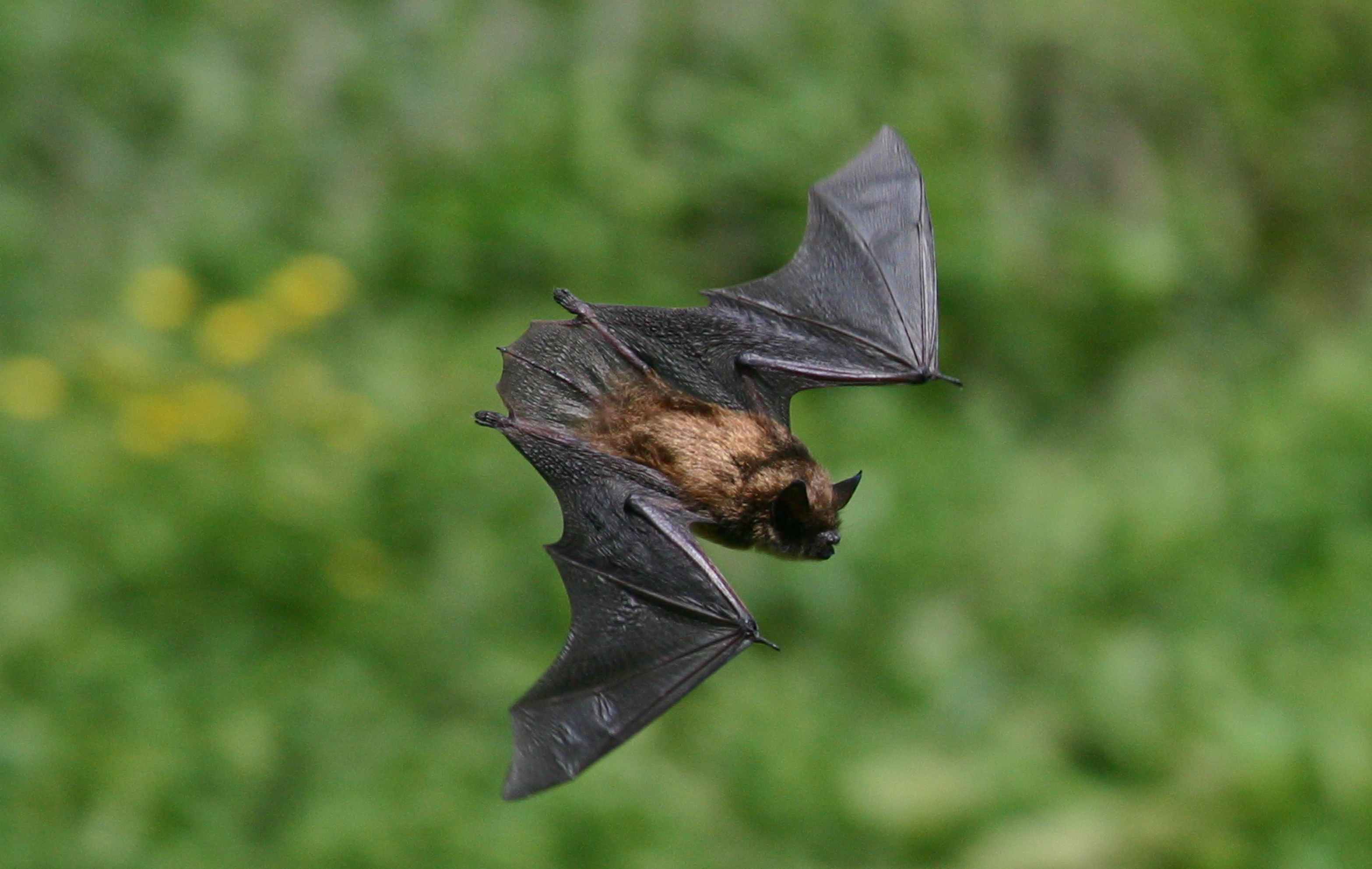
A Toast to the Brown Bat

We are on the porch, drinking wine
late in the long summer day, dusk hovering
the way small storms of insects do
the day after a hard rain, and we’re talking
about something not especially dear to us,
no deep discourse, past that, watching
candles glow and the first wink of fireflies
when a brown bat flutters over like
an autumn leaf and my friend asks, “what
is it like to be a bat?” And as I’m somewhat
versed in philosophy I mention Thomas
Nagel, whose essay with that title is
justly famous but who does not really answer
the question; and she responds, “it must be
alternately stifling and soaring.” I think she
means that every flight’s like Christmas—
freedom and feasting—and every day an
imprisonment in the tightly-packed dark.
“But what if colony life is cozy?” I ask, imagining
small bodies light as sparrows breathing
together softly, fur-lined and snuggled,
fingers folded over the bellies, a generous
communion of sleep. “I can’t quite get over,
though,” she says, “that they sleep upside-
down.” “It might cure your migraines,” I say,
and we devote our next toast to the bat.

~

Biodiversity & storytelling

As I have mentioned before in many previous posts, telling stories matters to humans. It’s the best way to get a person’s attention: if a writer wants to bring a fact, claim, event, person, or history to light, the best way to reach a wide audience requires spinning a good story about it. I recently finished reading a book about so-called living fossils, including bacteria and worms (not my favorite subjects), because the author’s enthusiasm for his subject was scaffolded onto a story of world-travel and time-travel. In the process of learning about coelacanths, horseshoe crabs, and echidnas, Richard Fortey also makes an impassioned plea for biodiversity–and storytelling.

“…I am not in sympathy with the idea that what matters about a species is how we humans react to it, which seems allied to a view that nature is only validated by observation from this particular hominid…We don’t reckon the worth of a species by the “damage” its extinction would do to other ecosystems. We cannot rank the products of more than 3 billion years of evolution in utilitarian lists. The richness of the biological world is the most wonderful feature of the biosphere, and every story is worth telling no matter how humble, or indeed insular, is the the organism concerned.” [my italics]

–Richard Fortey, paleontologist and expert on trilobites, in his book Horseshoe Crabs and Velvet Worms: The Story of the Animals and Plants that Time Has Left Behind. https://www.penguinrandomhouse.com/books/54786/horseshoe-crabs-and-velvet-worms-by-richard-fortey/9780307275530/

The lyric, the epic, the myth, the story written in the genome or the geology or the great vast cosmos–all of the things we know contain mysteries–intrigue us when we hear a narrative. Who knew that microbes and bacteria and alga have stories? They cannot tell their own unless “the storytelling animal” interprets them, raising their stature and importance in the eyes of “particular hominids.” In 1971, Dr. Seuss invented The Lorax for such a purpose.

It takes all kinds of people to tell good stories. Keep reading!

In defense of “is”

Contemporary poetry favors compression–perhaps all poetry employs that approach, condensing out of prose whatever has most vitality in terms of imagery, metaphor, emotion. Symbols, metaphors, actions, neologisms, wordplay, rhythm, whatever gets us to the kernel of the poem. My cultural inspiration began among biblical and metaphysical poems, however, and popular song lyrics (the lyrical narrative). Only later did I stumble upon the influences of Eastern poetic strategies, haiku and tanka, the Imagists, and the vividly imposing demand that writers of all kind, but especially poets, should avoid the “to be” verbs.

How would philosophy–or Hamlet–manage without to be? How shall a writer whose work often deals with the quandaries and paradoxes of being (namely: life, death) compose avoiding those verbs, verbs of existence? Existence has active components to it, to my way of thinking; and some of us need the to-be verbs, with all their various conjugations, to express the more inexpressible activity of being-ness.

During my long years of writing and of having my writing critiqued, I’ve been advised more than once to watch my verbs. I recognize the stylistic impulse and agree that too much to be, too much is, was, or has been, can slow or decompress a poem.

Sometimes, exactly what the poet intends to do.

Other times, exactly what the colloquially convincing narrator or character would say.

A time and a place for every verb.

~

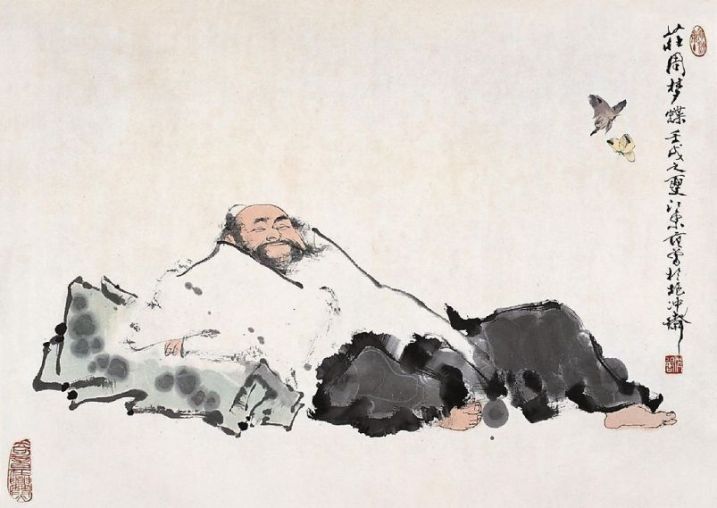
Zhuangzi:zhuangzi

“There is a beginning. There is a not yet beginning to be a beginning. There is a not yet beginning to be a not yet beginning to be a beginning. There is being. There is nonbeing. There is a not yet beginning to be nonbeing. Suddenly there is being and nonbeing. But between this being and nonbeing, I don’t really know which is being and which is nonbeing. Now I have just said something. But I don’t know whether what I have said has really said something or whether it hasn’t said something.” (Watson, trans.)

~

I wrote this post not as an encomium for the to-be verbs but as a suggestion that they exist for good reason and possess action in their compressed sayability, that to be does not sidestep to mean. I defend “is” and its siblings. The important thing? Use them well.

8ec3e3e95af7bcd79ca688e7e26076e7--lines-quotes-william-shakespeare