The takeaway

ampersand

so, I did what I set out to do: I exercised the necessary discipline to draft a poem a day during National Poetry Month, and I pushed against my “comfort zone” by publicly posting those drafts as they came to me. Usually I do not share my initial drafts with anyone other than fellow writers in my writer’s group or a few poets with whom I correspond. This was an interesting experiment on the personal level, therefore, a sort of forced extroversion as well as effort in productivity. I now have 30 new drafts to reflect upon, revise, or ignore.

It has been years since I came up with that much work in four weeks’ time. For the last decade or so, my average has been closer to six or seven poems a month. And I would not have posted any of them as they “hatched.” I would have waited until I spent some time with them and figured out how best to say what they seemed to want to say.

That’s not an unwise approach in general; I see nothing wrong with letting poems stew awhile. And quite a few would have ended up in the “dead poems” folder. Nevertheless, trying something innovative tends to prove valuable. The takeaway is that I am glad I finally managed the NaPoWriMo challenge. A few of the poem drafts you may have read here stand a chance of evolving into better poems. Maybe some will end up in a collection (years down the road). That result feels good.

The takeaway is also the realization that I no longer worry about how others judge my poems, the way I did when I was starting out and discouraged about having my stuff rejected by magazines. Not because there’s less at stake–indeed, I feel as invested in my writing as I ever was. The difference comes with the kind of investment, the ambition to write something meaningful or beautiful, and not viewing the poems as results waiting to be determined as valuable by someone more authoritative.

I’m 60 years old and well-educated in poetic craft, style, purpose, analysis. I’ve been writing poetry for over four decades. At this point in my life, that’s authority enough.

~

Self in the World

Goose stands sentry in the dew-strewn meadow.
Blackbird browses dry grasses woven along embankment,
emerges, slim stems clenched in its beak.

Under the footbridge, polliwogs gather,
backing into its shade–hawk overhead,
bluejay screaming territory! the crows respond–

Sun halos the water-strider’s shadow,
making a cluster of coronas on submerged stone
where wood frogs squeak and leap into stream current

surrounded by bedstraw, henbit, dandelion,
Amur honeysuckle, garlic mustard, stiltgrass,
invaders all. Except the frogs, who found the stream–

itself new to the landscape, gouged here in the 70s.
What do I notice, then? That some of the living adapt?
What do I make of myself in this world?

~
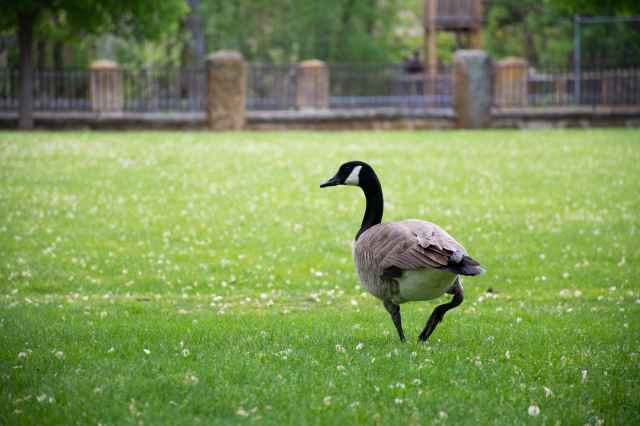
canadian goose on grass field

Photo by Brett Sayles on Pexels.com

~

Finally, to close the month of April, here is a lovely tribute to Mary Oliver by her friend and fellow poet, Lisa Starr.

Thank you for reading, and for the support of readers and poets this month.

How-to

What prompts a poem, really? Probably differs from writer to writer to such a degree that discussing inspiration can be an intriguing discourse among fellow poets but not a method to instruct anyone “how to.” A poem, or any work of art, can be interpreted or reconstructed through analysis, but simply following someone else’s instructions is unlikely to lead to meaningful results.

Among my Best Beloveds are a few people who are excellent how-to writers. They can write about how to build a boat, debug a software program, light a face for photographic portraits, construct a Windsor chair, use a beading pattern to make a bracelet. This sort of work is surprisingly challenging to write well–think of how many times you’ve been frustrated by a poorly-written manual for one of your digital or mechanical devices. Good, clear, concise how-to writing requires intelligence, accuracy, awareness of the reader’s skill level, critical analysis, and a clarity of style the unpracticed writer lacks. And by unpracticed writer, I mean most of us!

After 25 days of writing poetry drafts, I cannot suggest to anyone how to write a poem. Perhaps someone with more experience in the process (such as Luisa Igloria) can weigh in on how to write a poem (she teaches creative writing, after all, at Old Dominion). At the end of this month, I will resort back to my usual process of intermittent drafts; though it’s possible that this month of discipline will stick–maybe I will be more productive for awhile. Mostly what I will need to do is to REVISE! Because with 30 drafts to work on, I can stay busy tweaking and reworking (and giving up, occasionally) on poems for months to come.

~
Lilacs

Because I had early morning errands,
because I had to change my route,
because creek’s tributaries are still swollen,
the brief commute
took an ambit unexpected
through small towns, over the rutted bridge,
delayed by schoolbus signal flashers, waiting
for foot-dragging kids.
Pollen drifted on the windshield
because it’s that time of year,
because two days of rain and spells of warmth
have settled here.
Because I decided not to worry,
because no one would mind if I were late,
because I opened the car window, I saw lilacs blooming
beside the cemetery gate.
~


lilac


Three days

I took a short journey north, during which there was a great deal of rain; and when I returned, the redbud trees had bloomed and the goldfinches had molted into their bright yellow plumage.

So I have three days of poem drafts to post.

~

Passover

The first holiday without,
grief burns like anger.
Irritant. Tough fibers
scraping at skin raise a rash,
sore during celebration.
Empty ritual this year.
Empty place at the table–
bitter, bitter herbs.

~
~springblooms
Visual Trick

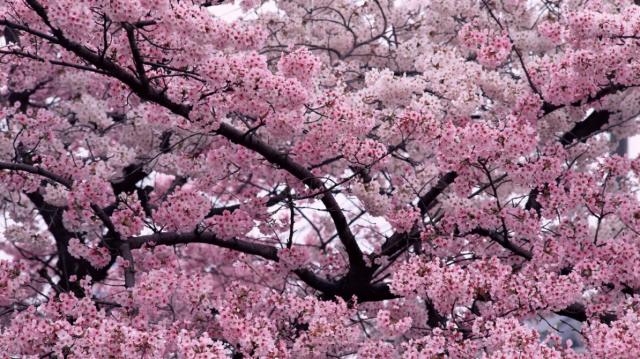
Along tree line’s haze
of new growth, the blur–
lichen-covered boughs,
white-flowering branches.
Sky’s cloudy, grass strewn
with petals might almost
be snow, but goldfinch
perches yellow on beech’s
recalcitrant twigs.
Not snow but Spring.

~
~

photo of windshield during rainy weather

**

The drive isn’t always pleasant:
too much traffic, too much rain,
too many miles between friends,
but I will accompany you.

Mutual miles, mutual acquaintances–
though much impedes marriage,
true minds admit true friends into
the equation, complex and contradictory,

at which we work consistently;
they are our common denominators.
~


Tending, clearing

According to the Chinese lunisolar calendar, between now and the late April rains one should tend to the graves of one’s ancestors. This period goes by the name 清明, or qīngmíng, and the weeks are designated “clear and bright.”

In my part of the world, we experience a mix of rainy and clear; but the days are warming and the grass greener. The annual winter weeds pull up easily, and the tough perennial weeds emerge before the grasses. The moist, newly-thawed soil makes levering those weeds less difficult now than later in the year.

I, however, do not live anywhere near my ancestors’ graves.

~

Clearing

Clear the patch that yields
to memory
clutch the hand hoe
and the trowel
disturbing early spring’s
small bees and gnats
beneath the plum’s
blossoming branches

Weeds encroach here
grasses grown too high
a nearby stone
toppled and broken
tells us about
forgetfulness

Insects surround
the quiet morning
active each year as warmth
moves into earth
the newt that curls
under last year’s leaf
finds sustenance

As do we
in our earnest effort
clearing as skies clear
each handful of chickweed
representing thanks
to those whose efforts
and accidents
brought us into
the world

~

getPart-1

photo by David Sloan

Lyric, narrative

I love hearing stories. Telling stories. Inventing stories. Often I choose to create a story using the first person perspective, whether the story is my own, someone else’s, or totally invented. In poetry this gets called the lyrical narrative.

~

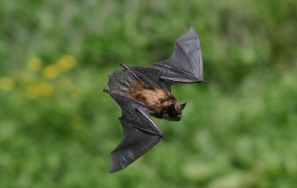
A Toast to the Brown Bat

We are on the porch, drinking wine
late in the long summer day, dusk hovering
the way small storms of insects do
the day after a hard rain, and we’re talking
about something not especially dear to us,
no deep discourse, past that, watching
candles glow and the first wink of fireflies
when a brown bat flutters over like
an autumn leaf and my friend asks, “what
is it like to be a bat?” And as I’m somewhat
versed in philosophy I mention Thomas
Nagel, whose essay with that title is
justly famous but who does not really answer
the question; and she responds, “it must be
alternately stifling and soaring.” I think she
means that every flight’s like Christmas—
freedom and feasting—and every day an
imprisonment in the tightly-packed dark.
“But what if colony life is cozy?” I ask, imagining
small bodies light as sparrows breathing
together softly, fur-lined and snuggled,
fingers folded over the bellies, a generous
communion of sleep. “I can’t quite get over,
though,” she says, “that they sleep upside-
down.” “It might cure your migraines,” I say,
and we devote our next toast to the bat.

~

Patience

Okay, day … six? Thanks to Marilyn Hazelton, my tanka expert and today’s muse, for engaging with the idea of patience and suggesting a book that gave me this quote by Rodin (long a favorite sculptor of mine):

~

“Patience is also a form of action” –-Auguste Rodin

Clay. Thumb and fingers pressed.
Coolness and warmth awaiting form
or formulation–chemistry binding
components under heat’s influence.
Here, the potter attends the kiln,
biding her time. Or the craftsmen
check and check again as barley
ferments, as bronze hardens, careful.
The woman holds inside herself
for nine months the evolving child
and every moment is one of multiplying,
expending energy during the wait
which may result in either life
or death. Even the Zen place of repose
requires breath: action, inhalation,
oxygenation, illumination. Notice:
this morning, the plum trees blossomed.

~

DSC100109879


On revision (again)

iceimageI am going to go out on  a limb here and make a blanket statement: Revision should be every writer’s middle name.

I tell this to my Comp-Rhet introduction to academic writing students all the time, but they have difficulty figuring out how to revise effectively. There are good tactics out there, but they do not work for everyone; how a person thinks and learns and processes information varies considerably. Lately, I have been using a strategy I teach to students writing essays to revise my poems. I ask myself: how is this poem organized? Is the structure working with or against the poem? Too predictable, or not predictable enough?

Just as in a well-wrought prose piece, a poem’s obvious and underlying structures matter a great deal in how well it “works” for a reader. It’s also an aspect of writing that people tend to overlook, so analysis of structure in the revision stage can be useful.

Another revision strategy I have been mulling over recently coincides closely with what Grant Clauser describes in this post, The Poem Is the Question. He writes:

I’ll scrounge around in the poem to try to find what it’s asking. If I figure out the question or the motivation in the poem, then I’m better equipped to solve its problems… Sometimes it helps to actually put a question in the poem–either as a crutch that you’ll eventually remove–or as a permanent part of the poem. A question is a pretty interesting part of speech in that it’s one of the few that almost always demands a response from the reader.

I have found myself going back to a draft and asking, “What got me going on this poem? Do I even recall? Is the impetus an interesting one? If not, can I change it?” Clauser suggests a more specific kind of investigation, and it’s one I have been employing today (snow and ice out there and the roads are lousy, so the campus is closed–hooray for a half day of unexpected free time).

Lesley Wheeler has also recently blogged about revising. She observes that the word revision, which places “emphasis on ‘looking anew’ doesn’t entirely capture” the process of late-project revision. She’s listening to her own words aloud as she revises…another approach that has worked for me.

Maybe the month of February calls to us as a quiet time of yin creativity, which is a way of looking at revision as an inwardly-focused energy–as opposed to marvelous bursts of creativity from inspiration or the much-vaunted Muse. The lunisolar calendar used for centuries in Asia calls February the first month of spring (立春  lìchūn)! I had better keep at the revising, therefore. Before I know it, yan energy will return with the start of the gardening season in eastern Pennsylvania.


Discomfort

It’s important, I think, to experience discomfort–it means I am facing a new task, a new perspective–that I’m learning something. I tell my students that if they are totally comfortable with the concepts in their coursework they are not learning anything yet. Education does not come without risk, whether the risks be physical, social, emotional, or intellectual. When we feel uneasy, it may mean we sense danger or sense the presence of someone manipulative, dishonest, or unkind. It may, however, mean we are simply “outside of our comfort zone.”

Tony Hoagland‘s poems offer examples of how we learn through leaving our familiar attitudes. Daisy Fried’s insightful 2011 commentary on his poem “The Change” notes the need for such uncomfortable moments. Poems Hoagland wrote as he headed toward his death from cancer at age 64 do not shy away from making the reader feel awkward, unhappy, or–in some cases–relieved, even glad. It can feel wrong to acknowledge relief as part of death. That recognition tends not to follow U.S. culture’s social norms.

I’m not claiming all good poems rile up discomfort; some poems offer joy or embrace a comforting openness; and, as readers bring their own differing experiences to the reading of a poem, the same poem that discomfits one person may appeal beautifully to another reader.

This post came about because I feel I have come to a period of discomfort in my work, and it troubles me but in a good way. I would rather feel discomfort with my writing than disengagement with it. Disengagement is writer’s block, which does not describe where I am at the moment. Instead, I feel rather as I did when I began to write and revise using formal patterns. My written expression up to that point had all been in free verse or prose, so adapting to villanelle or sonnet structure or sapphic meter seemed risky, difficult, “wrong.” Wrong for me, for the writer I believed I was, for the writing voice I had developed for 20 years.

And I was wrong about that, too! My initial discomfort aside, I learned so  much about poetry, including about my own style, through the practice of formal verse. The wonderful online journal Mezzo Cammin (formalist poetry by women writers, edited by the amazing Kim Bridgford) has published several of my poems in the past. Now, two more of them! Please click here.

~

9780399590344


Sarah Sentilles’ book Draw Your Weapons elicited discomfort in me but also marvelous connections (she and I have read many of the same authors). Her observations about art, violence, pain, and language weave in and through stories of a soldier-turned-artist and a WWII conscientious objector.

Between the development of these men’s stories, Sentilles cites research, philosophers, artists, and personal experiences and forces her reader to recognize how even the language we speak is complicit in accepting violence as a given rather than as something that human intention and action can change, if slowly.

I finished reading this book two weeks ago and am still mulling it over, returning to passages, marking some of her sources as “to-read” for myself.

It’s possible that Sentilles’ text in some way stirred up my discomfort with my own work.

And that would not be a bad thing. Getting out of the familiar is not only how learning happens; it’s how creativity happens.


Hear me out

It’s not a social norm–real listening. Despite the recognition that human beings are social animals that require communication, despite the recognition that “talk therapy” (which at its foundation employs active listening) and writing therapy can heal broken psyches,  even though many studies over decades have demonstrated how relationships rely upon partners’ openness to listening–listening stays a bit unconventional.

So many people think listening is passive. No, it is an active verb. Bombarded with information from numerous sources, the processes of discerning what one should listen to get tattered and confused. Our brains want to chunk information, to ignore, to elide, to suppress and glean and separate the various threads so the mind can prioritize.

Listening is difficult.

~

solomonseal

Not asphodel but Solomon’s seal, also a greeny flower

William Carlos Williams famously claims it’s difficult to get the news from poetry–and, in the same poem, he asks us (by way of Flossie, his wife) to listen:

…Hear me out.
Do not turn away.
I have learned much in my life
from books
and out of them
about love.
Death
is not the end of it.
There is a hierarchy
which can be attained,
I think,
in its service.

the mind
that must be cured
short of death’s
intervention,
and the will becomes again
a garden. The poem
is complex and the place made
in our lives
for the poem.

[I am not html-savvy enough to code the spacing of this poem on my blog, but you can find it here (p. 20) or here; the excerpts are from “Asphodel, That Greeny Flower.”]

~

Poetry :  “A way of happening, a mouth.” It survives, says Auden, in his poem on the death of Yeats.

The mouth expresses the mind and also what we call the heart, the soul. To make a poem is an intentional act.

Is listening a subversive act? is compassion?

Manuscripting redux

I have read reams of advice and guidance on how to choose poems for a collection, how to order them, whether to construct an arc in a poetry collection, and so on. I have also had the excellent personal input of good poets and mentors in the process, all of which leaves me deeply grateful and still stumbling when I once again begin the process.

One challenge is excess. I have put off revising for collection for a few too many years, and now I need serious critique and culling; thus, I didn’t know where to begin (as I mentioned in an earlier post). Given a problem, however, creative people tend to develop a method. I chose the simplest one I could come up with: start by pulling all the published work that is not in my previous collections, and see what happens.

What I will discover–in fact, in the early process, already have noticed–is that not all work accepted for publication in a poetry journal reflects my judgment of my strongest poems. Then, too, down the road I will pull some good poems from the evolving manuscript because they do not play well with the others…that is, in terms of tone or subject. As I add things up, I’ll begin to see what might be missing or needed, or I’ll be reminded of an unpublished piece that ought to be included.

This work is exciting. And it takes weeks or months. It will change; my feelings about what I want the collection to say will change.

And then the reading will begin. I will read and re-read the book-as-it-exists and ask generous friends to read and critique the whole.

If I were a more ambitious and organized person, I might approach the manuscript process differently–certainly sooner, and possibly with more of a projected arc in mind from the start. I know that putting together another manuscript will be yet another learning experience, different from chapbook-writing, different from the past books I have composed. The poems differ, too–of course! My perspective, my physiology, my experiences, even my environment, though I have lived in the same house for 20 years.

At this stage, a month or so into the process, a coherence begins to occur. Yes, a book exists in the piles of poems. Probably two books, in fact–but let me begin with abundance (or perhaps, with diminishment) and proceed from there.


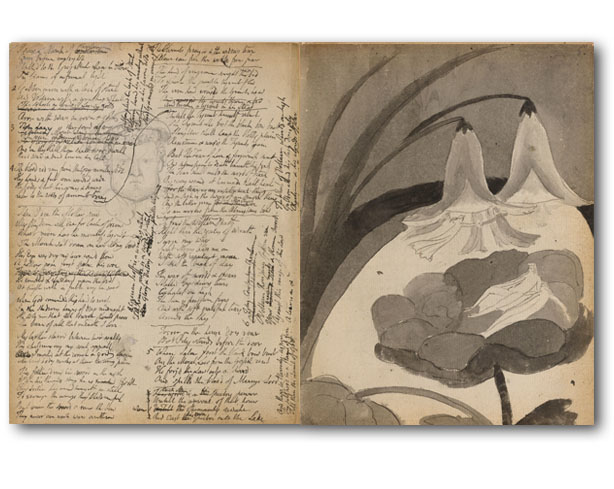
http://www.ebooktreasures.org/william-blakes-notebook/
[Not my manuscript…William Blake’s]