Prompted

I have been composing new poems, a welcome development spurred in part by my participation in a poetry workshop (see my last post here). Meanwhile, the college semester has resumed, and my colleagues who teach poetry have been discussing and sharing writing prompts.

For those readers who are not poets: A writing prompt is a sort of assignment in associative thinking or use of a craft strategy that the instructor offers as a form of inspiration or motivation to get creative writing started. There are entire books on this topic. Most writers go through dry spells or low motivation, and teachers need new ideas to keep their students doing the actual practice of writing even when bolts from the blue do not arrive to shake the creative spirit into gear.

I will admit to mixed feelings about prompts. Prompts can act as shortcuts to the process of composing, but I am the kind of writer who prefers the long haul; for some reason, the struggle of finding something to say, and an interesting way to say it, assists me in writing poems. I’m not in a hurry. I revise frequently. If it takes a long time to get to the finished poem, so be it. Sometimes I’ve followed a prompt and produced quite a nice poem, but maybe the voice or style or approach does not feel like my own. That’s a potential downside to prompt use. I have read poems by other writers that sound like prompt-produced poems. Some of them are fine work and yet…

This isn’t to suggest prompts lead to inauthentic or cookie-cutter poems (though that can happen, especially with inexperienced poets new to the task). I think it depends on how the prompt is presented or written and, in addition, the environment surrounding the process of thinking about writing. What works best for me is a prompt that makes suggestions I have to complete or devise for myself. Ambiguity with specifics, if that makes any sense–or specifics with ambiguity.

The environment in which I’m currently working includes a group of seven people, with whom I had not previously been acquainted, meeting online, and a moderator/leader who makes observations non-judgmentally and asks questions concerning where this poem draft could go next. And yes, there are also prompts. What I like about Elena Georgiou’s prompts is their open-endedness. Because none of us are beginning writers, we feel free to disregard any part of the prompt that doesn’t appeal to us–or to follow it closely to force us out of well-worn poetry habits–depending on our internal environment on the day we happen to be tuning in or trying the prompts. We are a group of independent people who are collectively thinking about writing. That’s something of value.

Slowing time

I cannot recall where I learned of Byung-chul Han, but I’ve had the pleasure of reading one of his books of philosophical essays (The Scent of Time) recently, and seldom has a philosophy text resonated so immediately with my circumstances. In this book, Han argues for contemplative time. He says it is essential for humans and human society and claims the “acceleration” of everyday life robs us of the value of reflective thought and “slow time.”

Raised and educated in Germany, where he now teaches, Han invokes the works of several German philosophers to provide a starting-point regarding the acceleration of time. He draws on Nietzsche, Arendt, Husserl and, to a larger extent, Heidegger…but Derrida, Aquinas, Aristotle, and others as well. He also quotes from quite a few poets, such as Celan, Hölderlin, Büchner, Handke, Ch’iao Chi, and spends two chapters on Proust (but of course…).

Han posits that the point-like, algorithmic availability of information runs counter to knowledge and wisdom, which require experience, which in turn requires duration and connection rather than arbitrary retrieval: “Promising, commitment and fidelity, for instance, are genuinely temporal practices. They bind the future by continuing the present into the future…creating a temporal continuity.” He criticizes the very technology that permits a person like me to learn about his work (I am certain I heard of him online somewhere). That criticism says the faster we go, the further we are from our earthiness–the airplane removes us from earth’s gravitational field as well as from the soil, “estranging the human being from it.” He adds, “The internet and electronic mail let geography, even the earth itself, disappear…Modern technology de-terrestrializes human life.”

Strong opinions, large claims. But oh, I thought at once of Whitman and his long expansive drawling poems when I read, “Instead of leisurely strolling around, one rushes from one event to another. This haste and restlessness characterize neither the flâneur nor the vagabond.” The whizzing about leads to anxiety and a lack of durable relationships. People hover instead of connect, swiping left or doomscrolling, feeling bored–which is a kind of empty-mindedness. I observe this trend of rushing and hovering in my students and among my colleagues. I have not found much Whitman-like lounging in current poetry publications, but a great deal of anxiety appears in contemporary poems. Writers reflect the times. Context shapes us.

But of course, our culture urges us to keep active, as though activity of any kind is valuable and can somehow stave off boredom, loneliness, or death. “Addiction to distractions” and the via activa are the sort of socio-cultural pyschological behaviors Han would like us to slough off. He wants us to leave behind the “Calvinist” (as he terms it) belief that “Wasting time is the worst of all sins.”

“In the consumer society, one forgets how to linger,” he notes, correctly. While we may browse the sale rack at a store for many minutes, the pressure is to buy the next new, better, faster, brighter object before we leave. What about sitting quietly, noticing the scent of flowers or incense, taking in the sounds of the world each of us experiences differently, or walking for half an hour as aimlessly as possible–without a phone, or money, without pop music or podcasts, alone or with a companionable fellow stroller? The very thought makes some people uncomfortable; they aren’t at ease with their reflective selves in the world, with human experience. Why is this so? Has it always been so? These questions Han touches on.

I have felt the pressure of filling up my time with lists of things to do, people to see, things to purchase, jobs to fulfill, projects to complete. It’s been hard to make space for dawdling, daydreaming, drafting poems. I haven’t submitted work since July, and so few poems have come to mind lately that this begins to feel like writer’s block. The Scent of Time has reminded me to open up more space in my life for simple experience on the level of daily phenomena, which is the stuff out of which I write poetry.

Fallow me

Blogger/poet/bookmaker Ren Powell recently suggested going fallow for awhile “to see what comes of it.” I tend to go through fallow periods quite accidentally. Used to call them writer’s block, but I don’t view them like that anymore. Fallow strikes me as a more accurate term for a number of reasons, some of them etymological. In current agriculture, a fallow field remains uncultivated purposely, to rest and improve the soil’s fertility. That seems more accurate to my current state of mind than “dry” or “blocked.”

Consider the field left fallow: plenty goes on there. Weed seeds germinate and sprout, annelids and arthropods, insects, and beetles, in their various life stages, multiply and move about. Voles, mice, toads go a-hunting. Bacteria do their thing. It’s not a lifeless place, the fallow plot.

But I haven’t been writing.

The publisher of my next book (The Red Queen Hypothesis) says yes, it’s still on her docket and will see the light of day–and print–next year, but that heartening news has not kicked me into gear on the writing front. And yet, by the time that collection comes out, the newest poem in it will be 6 years old. Some of the poems are almost 20 years old; it will not feel like a “new book” to me! Where, then, to put the newer work? What to do with the two half-completed, partially-revised collections of newer compositions that lie next to my desk and languish on my computer’s hard drive? Where is the motivation to finish the work or to start fresh?

I don’t know the answer to that just yet. But here’s an off-the-cuff haiku I dreamed up this morning that reminds me a bit of Issa’s poems.

~

fallow field
even a bird's dropping 
contains a seed 
painting by Jack FIsher

Flurries

Every 20 years or so, my region gets a truly late freeze.

This is one of those years. It seems strange when snow flurries alight upon dogwood blossoms, but this period has been strange in many respects. What’s one more weirdness? We can adapt. It just requires employing strategies we haven’t used before.

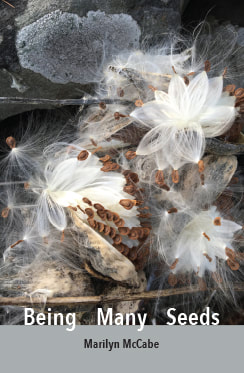
Which brings me, today, to Marilyn McCabe’s chapbook Being Many Seeds, just released by Grayson Books…like my own chapbook, a publication somewhat muted by the coronavirus. Make note, though, that you and I can still purchase books online. It just may take a little longer to receive the text. And isn’t anticipation fun?

Her chapbook has a lovely cover. [Readers may know I’m a fan of milkweed.] And the poems fascinate as they unravel–almost literally–on the page, in a form of erasure poetry followed by brief prose that is not so much interpretation as deepening. McCabe tries strategies with her poems as words and also as meanings. If that makes any sense. Want to know more? McCabe posted about the evolution of this collection on her own blog (which I suggest you follow) here.

beingmanyseeds-graysonsite_orig

~

I walked out into the meadow and scouted the broken stems and perennials emerging, on the lookout for seed-silk. I found several varieties, mostly dandelion, milkweed, coltsfoot, and eupatorium. Translucent puffs that evolved to disperse lightweight seeds through the use of breeze. Or breath.

Effective, and also quite beautiful. When the seed is stripped from the silk, the puff drifts away. The seed, however, now has the opportunity to sprout and grow. Even when the air is full of flurries.


~

More reading, more poems

Here’s my second post on what new or new-ish or new-to-me books of poetry I am reading during 2020 National Poetry Month. This time, newly-released from Tinderbox Editions, Lesley Wheeler‘s collection The State She’s In.

wheeler-state

First, a little background about Wheeler, a poet, novelist, and educator who has been extremely supportive of contemporary poets and poetry in her classes at Washington & Lee University, in her administrative positions and presentations at AWP, and on her blog and other social media platforms. The state she’s in is metaphorical, but it is also Virginia, with its fraught history, and it’s also the body: female, white, mid-life.

What I want to write are responses to, not reviews of, the books I have been enjoying. And there is much here to enjoy! Each of the book’s sections carries the same title: “Ambitions;” and after I read these poems (almost in one go, the way I’d read a novel), I returned to the table of contents and considered how each set of poems made a list of ambitions, and also, what it means to have ambitions. Particularly for a woman in a 21st-c Western capitalist society, sometimes ambitions read like anger. Are met with anger. Require rage to confront, even though rage alone will not solve the problem. (Appropriate to insert here how I love her poem “Spring Rage”? Yes, appropriate.)

Wheeler’s use of haibun forms to explore state’s-rights racism or workplace harassment is something I found startling. I keep returning to these and other poems to appreciate, on each subsequent reading, the surprises in the craft as well as the barely-contained frenzy expressed, and also the keen observations of the world that act to calm the speaker down. A tough balance, that.

On the whole, The State She’s In feels like a fierce call to pay attention, not just to the reader but to the speaker in these poems–she’s finding her route toward sagacity but kicking away at what we take for granted, not wanting to find personal equanimity if it means hiding what she knows to be true. These poems oppose ignorance in all its forms, including the privilege of choosing not to learn (or not to act, or not to act fairly and justly) that gets practiced at the highest levels of the academy, the government, and in any form of society. Wow!

If enough of us could get together and recite Lesley Wheeler’s “All-Purpose Spell for Banishment” (p. 57), maybe we could make “The Nasties” vanish.

Something like a poem

I am writing. Honest, I am! –This is what I tell myself. I have dribs and dots and bits of ideas, crumbs, atoms, iotas, shards and dabs of images and sentence-starters and such. The writer feels stuffed full of goodies; but the work schedule has “het up” (as my great-grandmother used to say), and the weather shows hints of warming (so there is seed starting I must set up).

~

Perhaps 150 steps too many
or too steep a descent or the sun too hot,
not enough water to sip maybe just too old now
for such exertion viewing the falls of Rio Olo
Fisgas de Ermelo where the chestnut leaves
provide a bit of shade

~

interstices. pine’s seeds.
its imbricate bracts, reptilian.
interlaced. at each base
the offer of replication.

~

…fat possum eating our birdseed two hours past dusk
in the faint light–what’s left of the moon’s crescent
and what the neighbors’ lamps cast up the hill
dimming everyone’s view of the stars. One dry oak leaf
skims the slate. Tumbles onto the lawn. Not unlike
the gray and white omnivore whose naked tail, sinuous,
wraps the step after the rest of it has slipped
away from the sunflower seed, into the dark.

~

Not anywhere near to poetry, yet bookmarks for what I may yet compose.

~

Meanwhile, I have been reading William Gass and thinking about the roles of listing (ah, specifics and details!) in prose, poetry, and in fiction, and the uses and limits of wordplay (which can be off-putting to some readers) and allusions and dialect or arcane or jargon words. Seamus Heaney–so good with the occasional archaic Irish term! Robert Macfarlane, giving me the beautiful word “clarty” which, during the muddy months of 2018, so often applied. Can I keep them in my vocabulary? Dare I use them in poems?

~

Found poem, from a dictionary of geological terms:

Lateral Moraine

Ridge-like moraine carried on and
deposited at the side margin
of a valley glacier.

Composed chiefly of rock fragments
derived from valley walls
by glacial abrasion and plucking,

or colluvial accumulation
from adjacent slopes.

~
Well, it’s something like a poem.

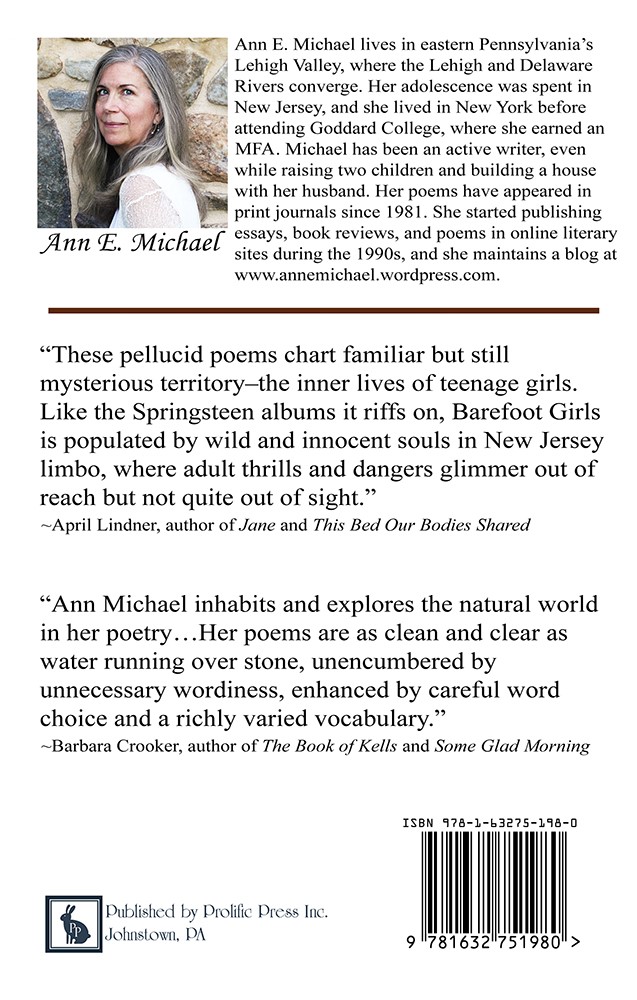
Cover reveal


barefoot girls cover

Coming this spring from Prolific Press.

~ ~ ~

Barefoot-Girls-Cover-Back-MD-1

Journals

While re-reading May Sarton’s At Seventy: A Journal, I recalled reading this essay about the book, by Jeffrey Levine, in June. I first read At Seventy when I was, I think, 40 years old…I recommended it to my mother-in-law, who–like Sarton–lived alone and loved to garden. I now recognize in Sarton’s journal aspects of life and aging and creativity that I had not thought much of when I was younger–at 40, I felt envious of her freedom as a single woman. I was raising young teens, managing a busy household, working on a master’s degree, feeling I had no time to myself.

One thing that interests me about Sarton is her decision to keep journals intended for publication, beginning I think with her journal about recovering from cancer, though she had written at least one memoir before that journal.

Another poet who wrote journals intended for publication was the Japanese writer Masaoka Shiki. Perhaps his most famous diary (in the West, at least) is “The Verse Record of My Peonies,” thanks to a translation by Earl Miner. Shiki kept writing haiku and haibun, as well as reviews, for the newspaper even as he was slowly dying of tuberculosis. His journal entries (there are others) were intended for readers.

My journals (and I have kept one ever since I was ten and read Harriet the Spy), however, would not make good reading; I would be embarrassed if they were published, especially unedited and unrevised, and no one would feel inspired, delighted, or edified by them. The concept of writing a daily journal intended to be read seems either brave or a bit dishonest, like a persona. Then again–many early weblogs were exactly that: daily public journals read by whatever online audience stumbled upon them. And perhaps this blog acts as my public journal, mostly about what I read, what’s in the garden, and what I’m teaching. Those pursuits, made public, do not mask who I am. They are the things I choose to reveal.

I don’t know if that’s different from a social media persona. But here’s a sleeping cat to look at while I ponder.

IMG_6587

Comfort zones redux

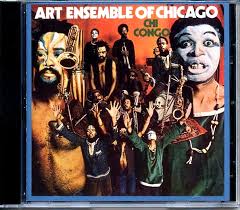
What do we mean by “comfort zone”? People use it frequently, especially in self-improvement and creativity-related writing. Has it become an empty phrase? It’s so subjective–which is entirely the point, I suppose. If we can manage to agree on what the idea means, we still must confront the continuum of such a zone. I reflect on my tolerance for aesthetic discomfort often, especially when I am reading or observing creative work. For example, I like listening to jazz; some jazz soothes, some excites, and some takes effort to hear–I have to be in the mood for confrontational experiments with sound such as performances by The Art Ensemble of Chicago.imagesAEC

Similarly, while I love art, I cannot imagine living with “Guernica” on the wall…or Goya’s “The Third of May.” Or anything by Francis Bacon. Some creative works are meant to push viewers out of their comfort zones; some are no doubt as uncomfortable to create as they are to view. A work of art that takes emotional and craft risks puts the artist not only at risk of critical rage or misinterpretation of intentions, but also at the very personal risk of failure.

And that effort is important, that willingness to fail. Without it, nothing invented or imagined can be achieved.

I am not a good painter, and trying to paint clouds or winter trees or landscapes means I am going to paint bad pictures. I have better gardening skills than painting skills, but I love trying a new seed or plant or cultivation method, even though the results often don’t succeed. Pushing the comfort zone has mixed but invaluable rewards.

Poems practically cry out to enter such territory. Often I find that even poems that contain in their lines and imagery moments of hope or great love and comfort simultaneously discomfit me. It fascinates me; how does the poet first compose, then revisit and revise, the poem that must surely be even more uncomfortable to write–to confront? (Search for any anthology on a difficult topic and therein will be many such poems.) Most of us prefer to avoid pain zones, so we stay within our comfort zones.

~

In Zechariah 12:2, the Lord promises terrible punishments for the enemies of Judah. Elaine Scarry approaches the conundrum of pain’s subjectivity (among other things) in The Body in Pain. I find wonder and ideas in the continuum of pain zones, in the concept of pain as punishment versus the concept that life is dukkha and inevitably contains suffering, and many other perspectives that people take concerning anything from mild emotional stress to mental illness, age-related physical problems, various forms of “disability,” and the Wong-Baker FACES pain rating scale.

Here, from WORDPEACE online, a poem of my own that I found uncomfortable to write, and which some readers have told me is uncomfortable to read. Taking the risk:

A Cup of Reeling [for the sufferers]

“Pain is…language-destroying.” Elaine Scarry

It is I am told all in my head but the body how the body loves the head
where language resides in the soft and voluble brain
and hurt undoes every synapse until sweat and stress the bullet
between clenched teeth [as if to aid?] good god deliver me
groan swear-word ululation weep and reeling, eloquence undone.
The crucible my own right leg: fire pulley strain does not allow
gravity or, god, motion, my evidence convincing to me only to me
unavailable to others [no one privy to, spare me, my—agony—
no object but destruction of objects no intention but self-obliteration]
Pain’s constructed in waiting rooms, waiting for morphine
or anything anything; I am animal in pain and sentient in my pain.
Good god who dares believe in me now that I believe in nothing?

~

depositphotos_55589581-stock-illustration-danger-crocodiles-no-swimming-sign

Bittersweet

IMG_6549.JPG

These berry-laden vines are called oriental bittersweet–aptly named for this aggressive plant. Sweet because indeed, they are beautiful; but their introduction to the Americas has nearly wiped out American bittersweet and threatens trees because the vines are adept girdlers. They squeeze trunks as trees grow, sometimes killing the tree.

I should remove them from my hedgerows, but I haven’t the energy. Look at this link for the challenges involved. My lack of intervention probably falls under the category of deferred maintenance, and has led to a sense of plaintiveness, perhaps, and to these drafts of tanka poems on this late November day.

~

the leafless hedgerow
studded with red berries
each wintry morning
my walk’s accompanied
by bittersweet

~
how dull gold husks
open to red fruit
how such slender vines
grow to strangle trees
–bittersweet

~

an old cliché
take the bitter with the sweet
older now myself
I try balancing
life’s flavors