Lists

There can be beauty in a list: its specificity, also the rhythm and sound–which order does the poet choose for each word? That matters. Chronology perhaps; category, like the scientist; or else sound, such as alliteration; or possibly by the thread of some concatenation that gradually creates associations. The logic of a list poem differs from other forms of lists.

I always think of Whitman as an early and consummate “list poet,” though a great many of his poems do not rely on the strategy. There are list poems that employ anaphora and those that build through phrases. Others rely on modifiers that escalate or change tone to surprise the reader. In my own process it has been useful to begin drafting poems through listing, though often I abandon the list when I revise.

Also, I teach myself about the world and its people, environs, and ideas through lists.

For example, having strayed temporarily from my home region, I’m getting acquainted with a “new” place by making lists of birds, trees, flowers–yeah, the naming-things approach so basic to human beings, like when my children were just learning to talk and conversation with them consisted largely of naming objects or actions.

This is not a poem:

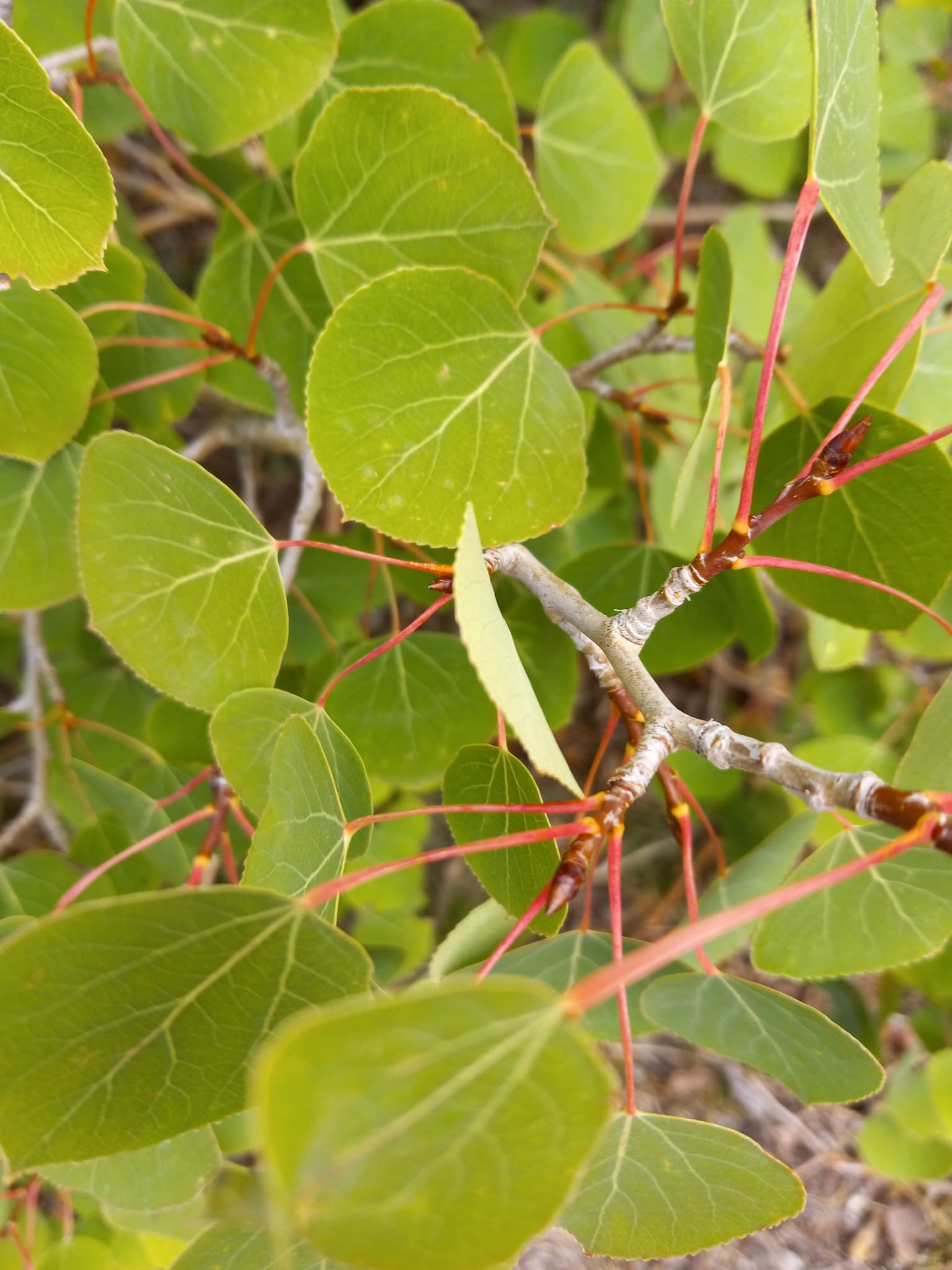
Pygmy nuthatch, juniper titmouse, pinyon jay. Gambel oak, Abert’s squirrel, pinacate stink beetle, skink. Quaking aspen, limber pine. Common raven, Woodhouse’s scrub-jay, fireweed, globemallow, bear corn, oak gall, crow. Pinyon, cholla, Ponderosa pine, alligator juniper, Apache plume, sandwort, groundsel. Gneiss, granite, gray oak, spotted towhee, rabbitbrush, bajada, arroyo, muttongrass, mesa, schist.

~

However, these words now evoke images, sounds, memories, senses that–who knows?–may end up in poems eventually. Because poetry is about and in the world.

Aft a-gley

Today marked the first day of the Fall semester at the college, but I had no reason to be there. Instead, I enjoyed the surprisingly fine August weather, harvested tomatoes and basil, and began the much-delayed task of weeding our numerous perennial beds. At 4 pm, I rested in the hammock after a walk and spent a few minutes reveling in retirement; though generally I’ve been too busy to find myself in reflective or relaxation mode, it was nice to pretend for awhile.

Yes–I wanted to read books in that hammock, and get to the community pool, and hang out with friends on the patio until the bats came out and the last fireflies gleamed over the meadow. Ah, but Robert Burns nailed it: “The best laid schemes o’ mice an’ men / Gang aft a-gley.” There were so many other things to do.

That said, while I did not do the Sealey Challenge this August, I managed to read several really terrific poetry books–and the month’s not over yet! To keep this post brief, I’ll just mention the book I’m reading now, Jennifer Franklin’s stellar new collection If Some God Shakes Your House. Lots of (mostly) non-rhyming sonnets, a series of memento mori poems, and lyrically linked poems titled “As Antigone–” connect anger, grief, and suggest that anti-authoritarian acts are often more about love than bravery. The speaker keeps denying that bravery’s behind her disobedience, but these poems are brave. I found many of them utterly heart-breaking, so it may not be an “easy read” if you want something cheerful to uplift a low mood. Nonetheless, Franklin’s poems secure hope to love so intensely I could not look away and keep returning to them even before I have finished the book.

I grew up confusing opinion
with oracle. She reminded me
all men are dangerous, each time
I left the house alone….

Jennifer Franklin

It can be difficult to avoid comparing such strong poetry with…well, with what I write. I think that most writers do this occasionally, some more than others. If one is a competitive or ambitious person, analysis and comparisons may be second nature; I have known poets who feel dismayed by their own inadequacy compared to the “greats,” and poets who felt bitterly overlooked because they didn’t get the attention or lauding other writers garnered. Either way is a trap, though. In general, I look to admirable literature as something to enjoy, learn from, admire, and to analyze to figure out how it can be done. If I have ambition, it is the ambition to learn. Oh yeah, the autodidact in me again!

And speaking of ambition, or lack thereof, I am far behind in promoting my book. Next post should contain details of the book launch in the Chicago area (September 9), and perhaps other writing-related newsiness.

Goals, sort of

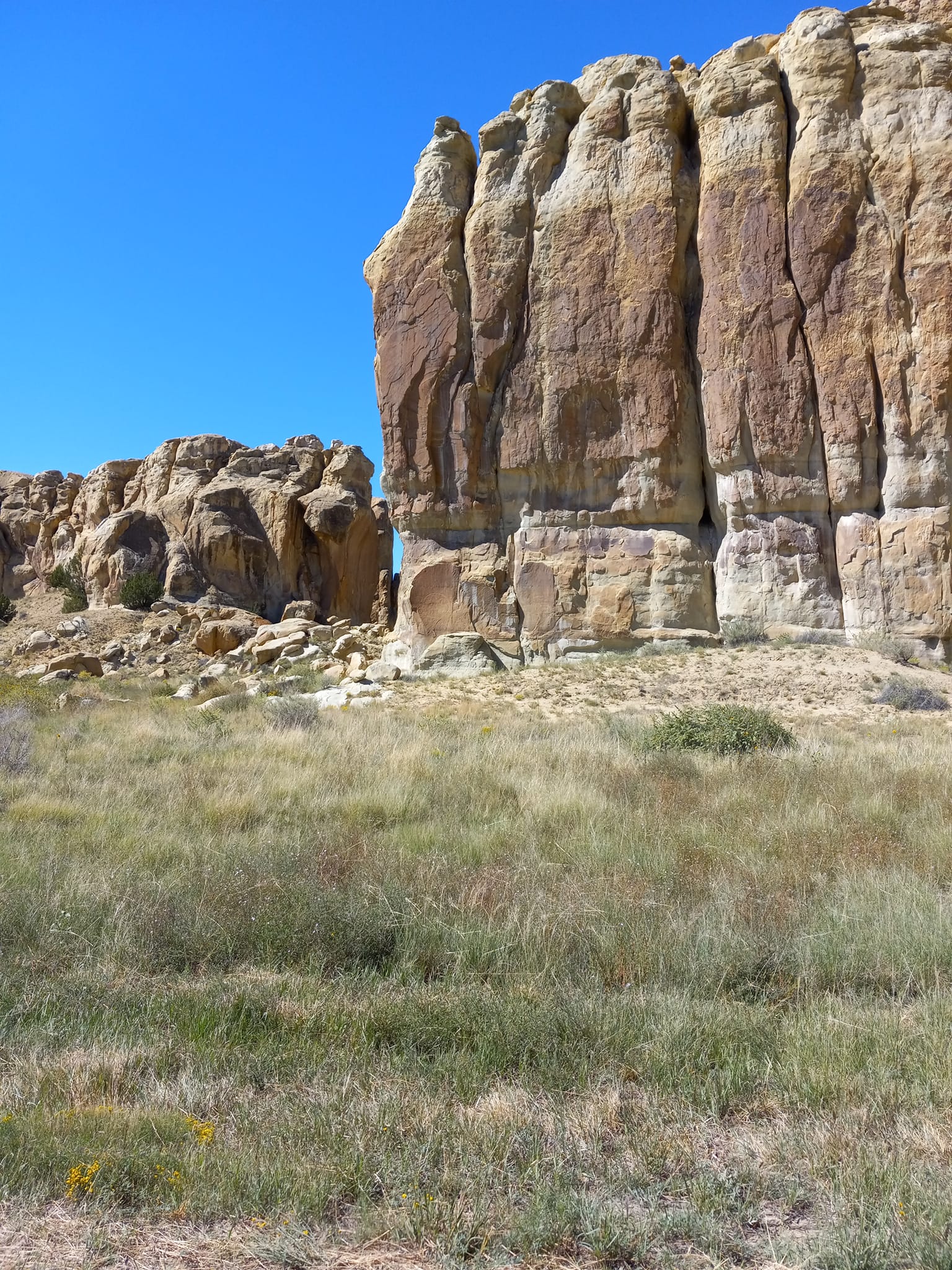
Our regional drought continues. I sometimes entertain the idea that the universe is telling me I might as well consider moving to the Southwest–where my children now reside–since the Mid-Atlantic area currently has less rainfall, higher temperatures, and lower humidity than where they are. Granted, this is likely to be a temporary situation; but for the present, I get the chance to walk on crunchy grass and hard soil daily and see how I like it. And to see blue skies for days on end, and see how I like that. What next?

Speculating on “what next” comes rather naturally to me, a reflective sort of human being; but making goals and ambitions toward accomplishment–not so much. Lately, though, the years-ahead thinking has been moved the forefront of my thoughts. It’s all those dang Medicare and Social Security and AARP mailings, in part, and my peers and I heading into the so-called retirement years. Inescapable: the conversations crop up around the dinner party table, while having coffee with a pal, or on a phone call with siblings. People keep asking me what my new goals are. I suppose, having reached the age Social Security (used to) kick in, I was expected to come up with new goals? Must have missed that memo.

Goal: the word is of uncertain origin, says Etymology Online, but appears in the 14th c “with an apparent sense of ‘boundary, limit.’ Perhaps from Old English *gal ‘obstacle, barrier,’ a word implied by gælan ‘to hinder’ and also found in compounds (singal, widgal). That would make it a variant or figurative use of Middle English gale ‘a way, course’…” And there’s the further meaning of a stake that signals the end point of a game. Interesting that goal can be an obstacle, a limitation, an end-point, or a pathway.

If I think of it as a pathway, the question is, what do I want to do? After many years as an educator…do I throw all that experience away and take up something else? My guess is that I’ll find myself imparting information of some kind, one way or another, regardless of employment status. So no major change of course, just a change of scenery, situation, or audience. After all, I will still be writing.

Or are we talking aspirations? What is it I would like to plan for…self care? travel? conferences and retreats? Time to do–what, exactly, and with whom? Here there are perhaps barriers and limitations: can we ever stop worrying about how much will it cost and how much time it will take to achieve the specified goals? And obstacles–you cannot plan for them. Maybe I go blind or get cancer or get hit by a bus. Maybe the apocalypse occurs in my lifetime. That would certainly be the stake that signifies “game over!”

Then again, what if my plans are to get into the woods more, sit under trees more, take more walks, read more books, tend to plants and animals, hang out with my beloveds, write poems? Those things, I want to do in future. But it isn’t as though I am not already doing them now.

Photo by Michael Heinrich on Pexels.com

Life-shifts

This week marks one of those “big birthdays”–my mother turns 90. The birthday feels bittersweet; for, in many ways, I have been in the process of “losing” my mother since her diagnosis of vascular dementia in 2017.

Or is it that she is losing? Losing cognition, a sense of time, the words to say…anything at all. She has not yet lost a sense of emotional self, though I know that if her body doesn’t give out first, that will eventually occur. I’ve been through this before, with my mother-in-law. Helping people navigate dementia is a challenging task.

Therefore, as I celebrate her birthday, I also celebrate the goodness of the people (nurses, CNAs) who assist her daily at her skilled-nursing apartment, the social worker who visits with her and brings her mail, the acquaintances who smile and greet her even though they know there cannot be conversation (of any meaningful sort). The doctors and nurse practitioners who find ways to communicate with her about how she feels physically. It cannot be easy, even with someone as even-tempered and pleasant as my mother continues to be.

A funny thing about my mom. When she was my age, we used to tease her and my dad about “getting old.” She’d toss our teasing aside by insisting, “You’re not old ’til you’re 90!” Even with a few health issues, she and my father continued to be curious about the world and the people in it, traveling, going to parties, trying new things (cross-country skiing, Thai cuisine, activities with grandchildren). About 8 years ago, when my dad was ill with cancer and meningitis and going in and out of the ICU, Mom said she felt old. We retorted, “But Mom! You’re not old ’til you’re 90!”

Now she really is 90. Bless her good kind heart. <3

~

February 26th is just another day, another year–and at this point, my mother has very little sense of time. It is likely that my mother’s life-shifts are in the past, and the next shift (there’s no escaping it) will be death; but who can tell? My mother’s ninetieth feels like a huge shift in my life as her daughter, as an adult, as a mother to grown people, and as a writer in the world. Why this is so, I can’t say. It’s certainly something I’ll be reflecting on often in the coming years, and the reflections emerge in my writing. As I work on revising the poems I’ve drafted in the past 5 years, the topics of aging, mortality, aphasia, and memory keep showing up. Things I can consider myself fortunate, perhaps, to be preoccupied with, rather than being forced into confronting a natural disaster (Pakistan, Turkey, Syria, and others) or war (Ukraine, Syria, and other regions).

Here’s part of a poem I’ve been wrestling with lately.

                       ... --I would untangle
my mother's mind if I could be let access to its
recesses, but those stay hidden like the life in hedge
and meadow, in the woody undergrowth,
unknowns twisted together, impenetrable.
...

How fortunate for me that my mother is not far away, is well-housed and safely cared-for, and has had a long, creative, fruitful life to celebrate this weekend. Nonetheless, the grief inheres. The hardest shift? I miss the person she has been all my life until recently. And yet: here she is. Herself, more impenetrable than ever. And loved.

~

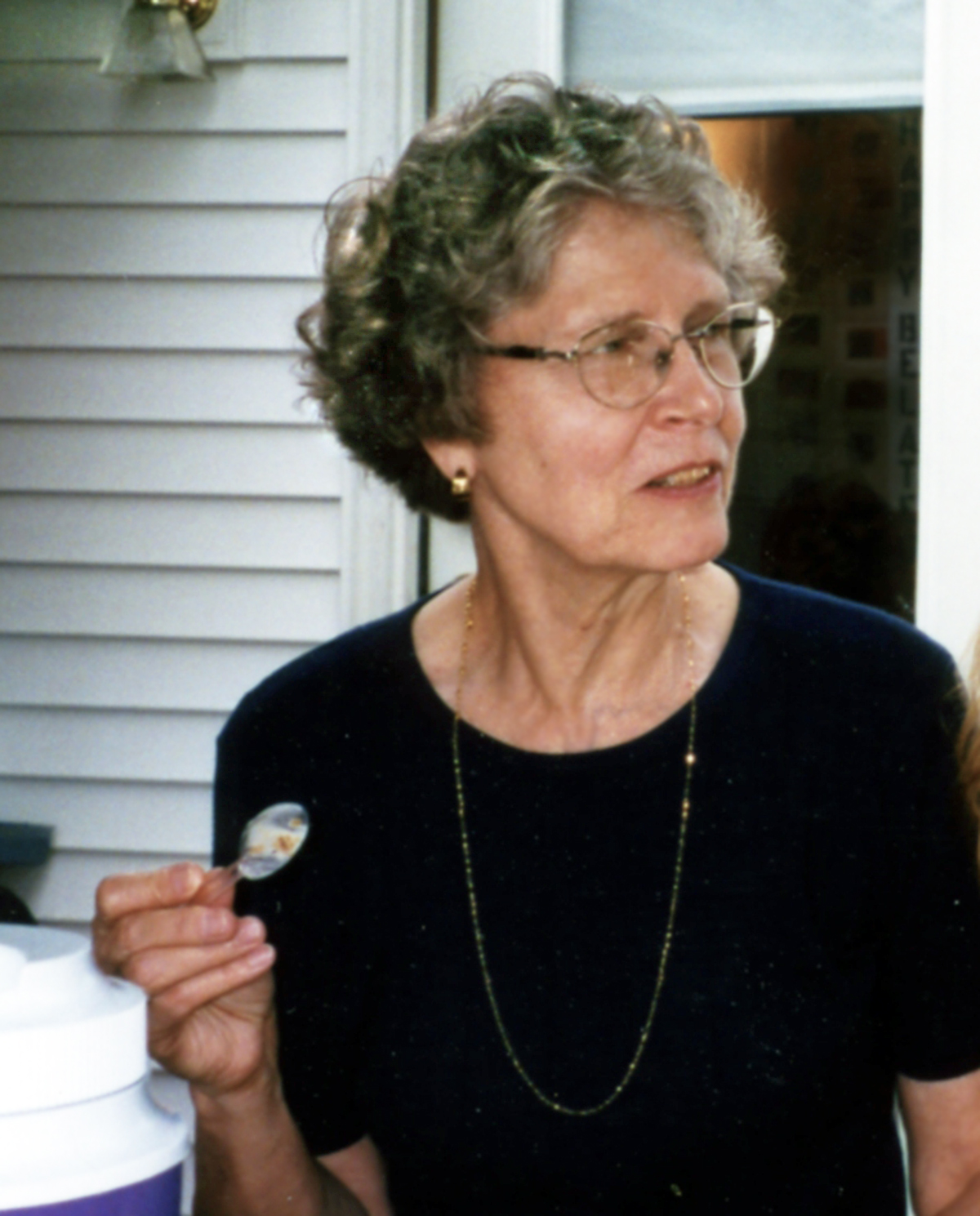
Mom at about my current age–ca. 1998 or ’99.

Break-taking

It is a particularly lovely autumn in the region, colorful, clear, dry and mild. This evening at 5 pm: 70 degrees F, crickets and frogs singing. My mood has, however, been unsettled–and I have not been writing much. Indeed, this feels like a good time for a hiatus on a number of fronts and in a number of ways. I recently read Katherine May’s Wintering, which was not terribly memorable but which offers the reader support for, well, resting. Resting one’s bones, mind, endeavors…seasonally apropos.

Mostly I’ve been on a Murakami kick, reading three books that a recently-departed friend had with him in his hospice room. Novels take the place of doing my own creative thinking. I get wrapped up in their worlds and can rest from my own. Thus reading is a form of wintering. (May agrees.)

My poetry output has been minimal recently, and I have hardly sent out any work; mostly, I feel tired and eager for the semester to come to a close (one month or so hence). There are reasons for this it is not necessary to go into. But I miss the writing.

I will return to the “best words in the best order” in my own time. So if you follow this blog, don’t think that I have fallen off a cliff–I have merely oriented differently, for a time.

Meanwhile, please remember that there are books for sale you can find on my ‘My Books’ tab. Support the small-business publishers of poetry now, for poetry is as necessary as ever, and not a luxury.

Important

In his recent book Singer Come from Afar, Kim Stafford suggests the difference between great poems and important poems has something to to with the occasion of their relevance. He says important poems “are utterances written as a local act of friendship or devotion, and given to a person, shared at an occasion, or performed in support of a cause.” Such a poem may later be considered a great poem, though more often would be relegated to the status of “an expendable artifact of the moment.” Framing poems as expendable artifacts does seem accurate in many regards. A page, that can be burned or shredded; an oral performance, uttered into time and lost thereafter; a digital event, that can be corrupted or invisibly archived in the “cloud”–those fragments and unfinished pieces we let languish and eventually discard. Perhaps important to us once, these poems are ephemera.

Stafford’s recent collection celebrates the local and the relevant, even the immediate, at the risk of not being lasting, whatever that may mean. Published in 2021, the book includes a selection of pandemic-related poems, many of which appeared on his Instagram feed @kimstaffordpoetry. Few of these poems are “great” in the literary sense, in my opinion, but that doesn’t mean they are not worthy of publication; this reader appreciates the urgency in the pandemic poems, the need to connect with others sharing the predicament of “social distancing.” We should not ignore the value of local, person-centered poems, narratives of the everyday. Not every human interaction requires epics, and really–the majority of contemporary poems address the small important events and metaphors that sometimes resonate with larger aims. My own work tends that way, so I’m not one to talk about greatness.

Besides, there are a couple of poems in Stafford’s book that will hold up well to literary explication, poems I have already enjoyed re-reading, such as “Chores of Inspiration” and “Do You Need Anything from the Mountain” with its lines “Bring me that skein of fire/that hangs in intimate eternity, after//the dark but before the thunder, when/the bounty of yearning in one cloud/reaches for another…”

I guess each of us has the capacity to evaluate what it is we consider important and what we consider great. I happen to like the bounty of yearning in Kim Stafford’s clouds.

~

Process parallels

The weather warmed and got windy, and that bodes reasonably well for garden prepping even if the last frost date is still almost a month away. I got digging, sowed more spinach and carrots, cheered on the lettuce sprouts, and–with some help from Best Beloved–pried most of the winter weeds out of the veg patch and set up a raised bed or two.

While I was out there pulling creeping charlie and clover and reviewing my garden plan for this year, it occurred to me that my process in gardening parallels my process in writing. My approach to each has similarities, probably due to my temperament though perhaps due to the way I go about problem solving. The process is part habituation or practice and part experiment, with failure posing challenges I investigate with inquiry, curiosity–rather than ongoing frustration. And sometimes, I just give up and move on without a need to succeed for the sake of winning.

I have no need to develop a new variety of green bean nor to nurture the prize-winning cucumber or dahlia. My yard looks more lived-in than landscaped; on occasion, we’ve managed to really spruce the place up, but it never stays that way for long. I admire gorgeous, showy gardens but am just as happy to have to crawl under a tree to find spring beauties, mayapples, efts, rabbit nests, mushrooms. My perennials and my veg patch grow from years of experimentation: half-price columbines that looked as though they might never recover, clumps of irises from friends’ gardens, heirloom varieties I start from seed. The failures are many, but I learn from them. Mostly I learn what won’t grow here without special tending I haven’t energy to expend, or I learn which things deer, rabbits, groundhogs, and squirrels eat and decide how or whether to balance my yearning for food or flora with the creatures that live here and the weather I can’t control. There are a few things I’ve learned to grow reliably and with confidence–ah, the standbys! But the others are so interesting, I keep trying.

Writing poems? Kind of similar. After so many years of working on free-verse lyrical narrative, I feel confident in my control of those poems and can usually tell when they’re not operating the way I want them to. Then I wait and revise and rethink, but there’s a familiarity to the process. Whereas I am far less confident with sonnets–nonetheless, sometimes a poem really works best in a form like that. So I know I have to expend more energy on it. Other times I find myself needing to experiment. I try mimicking another poem, tearing apart my line breaks, or revising in a form I barely know. I play with puns or alliteration, alter punctuation to stir up the rhythm or surprise the reader (or myself). Breaking my habitual approach to starting or revising a poem leads to curious results, sometimes intriguing ones.

But, like my garden ambitions, my writing ambitions exist more as a means to learn and experiment. I do not set out to produce the decade’s best poem or to develop a unique style or form that academics will admire and study. (I just made myself chuckle.) Heck, most of my work has not yet seen print–and with good reason. Not every rose is an RHS Garden Merit award winner.

For now, here’s a poem I wrote over a decade ago, one that will be appearing in a forthcoming chapbook. More on that when I know more myself.

~

STILL LIFE WITH WOMAN

Loose sleeve envelopes her brown hand
which rests upon an apple or a secret 
cupped beneath; only the stem shows,
fruit’s oblate body intimated by
the solidity of her skin against
the table’s plane.
This is a moment undiscovered,
a painting by Vermeer—
blue, white, quince-yellow, poised—
her palpably-dimpled wrist sloping
toward the precise, thumbnail shadows of
her relaxed fingers. We know
blood imperceptibly alters the shape of her veins
every second her heart beats, we know her womb
continues its cyclical pulse, that she inhales
and exhales, a living form, yet—
still: an inclination of the white, loose sleeve,
half an eye open, she covers some promise.
This is only one second before
surprise or boredom, a miniature:
one of those moments we find ourselves
in parity with every other thing,
equal in being to quince, fan, mirror,
that pitcher of water on the sideboard,
that window, full of light.

~

Revision practice

It is National Poetry Month again, and this year, in recognition of the celebration, I have started a practice to experiment with, just out of curiosity and to give myself a nudge. Many of my poetry colleagues invest a month in writing a poem a day or reading a poetry book each week or posting a poem daily on their social media platforms. It’s important to remind ourselves why we treasure and delight in poetry.

I chose a simple project that requires frequent re-imagining/re-imaging. For my starting point, I picked a poem at random from a collection of Fernando Pessoa’s work. I copied the poem, by hand, into my journal and re-read it a few times. Then I turned the page and rewrote it, “revising” it in the way I might revise a poem of my own. My plan is to repeat this process after a day or so, each time revising from the most recent version. In a short time, the poem will have moved away from being Pessoa’s piece–perhaps bearing little to no resemblance to the original…a sort of whisper-down-the-lane approach. The intention is to consciously alter image and voice in each re-imagining of the draft, though I’m not sure how well I can hew to my intentions. We shall see.

from City Lights Books.

Why I decided on Pessoa for this project, I don’t really know; but I think there’s something perfect about using one of his pieces as springboard. Because Pessoa was kind of a springboard for himself–he created several writer-selves who wrote poems and critical prose: heteronyms, he termed them. The poem I used was “by” his persona named Ricardo Reis. Adam Kirsch wrote a good introduction to Pessoa’s peculiar obsession with being a non-person in a 2017 New Yorker article. By revising something by Pessoa in my own voice and through my own images, perhaps I nurture his pursuit of dissolving the self.

It occurs to me now that the poems of several contemporary writers may have induced me to try this writing prompt, most recently Daisy Fried in The Year the City Emptied (which I highly recommend). Her collection consists of “loose translations” of Baudelaire, reimagined in Philadelphia during the covid outbreak while her husband was dying. It’s not a cheerful read–but then, neither is Baudelaire–nevertheless, the resulting poems are powerful and vividly interesting.

So, back to my little project for April: I figure this need not be a daily practice, though I have managed to get to revision three by now–so it is moving apace. The deepest challenge is not the revision, as I enjoy revising and wish I had more time and energy for it. The challenge is just that: time and energy! As the semester sidles past mid-terms into the final stretch, I get busier at work; in addition, my chronic health conditions have moved into a frustrating flare lately, leaving me fatigued and feeling as though my brain were swaddled in cottonwool and embroidery floss. The news from Ukraine drags on sadly in the background of my day-to-day. My mother’s aphasia worsens. I am dealing by plodding away, sometimes without much brilliance, at the revision challenge. Also by watching the goldfinches as they molt into their yellow plumage… and urging my tomato seedlings to flourish in their little indoor pots.

Then I pluck daffodils and set them in vases. There’s nothing like fresh flowers on the dining table to cheer a low mood. Onward to revision four…

~

daffodil photo Ann E. Michael

That need to publish? –eh…

The hazel’s buds are about to open, first yellow of the season; red-winged blackbirds have returned; this morning, several flocks of snow geese in Vs high above me. Then, a brief but crazy-wild snow squall. Yes, it is February.

What I find myself assessing lately is “the need to publish” thing. I feel a reckoning coming on, personally, in which societal changes are implicated–and my age, as well.

Let me backtrack.

When I first started writing poetry seriously (reading, studying, crafting, workshopping), publishing was a paper-only endeavor that involved typing and retyping poems, sending them with SASE (self-addressed, stamped envelope) to various literary magazines and journals both Major and minor, and waiting for up to a year for rejection or acceptance. The acceptances were necessary if I wanted a book publisher to take my work seriously, or to have an academic institution consider me as worthy of hire, or to apply for higher-stakes literary grants and opportunities. The game, as it were, operated on those hierarchies: journal publications, chapbooks, solo collections, college stints.

I did a bit of that, though not enough, I suppose. I got my chapbooks and solo collections (see books here) and a fair number of poems in actual (and, now, virtual) print. But ambition ain’t exactly my middle name; my college work has not been tenured and doesn’t fall under the creative writing category–I run the writing center at my university, where it’s all about grammar, spelling, documentation, essay structure. I enjoy the work, but it is not poetry.

Back to poetry publication: the new assessment is about whether I care anymore.

I’m theoretically close to retirement, though academia lets us continue to our dotage if we wish. [See The Chair.] Will further publications, or higher-status publications, enhance my position at the university? No. That ship, as the saying goes, has sailed. Anyway, it was more of a daysailer than a cruise liner. And will further publications, online or in print, keep me in royalties in my retirement years? You jest, my friend! Poetry adds little to the income balance sheet.

Furthermore, the current state of literacy requires social media presence; virtual journals abound, and many of them are fantastic (seek them out! read them!). Their editors respond slightly more rapidly than lit mag editors did in the 1980s, and though there’s sometimes a submission fee, the price has not escalated much more than postage has (and is in some cases lower). But submitting to journals even online nonetheless consumes a sort of energy and time commitment that not all of us have. Or are willing to make to keep ambition going.

So. My current assessment suggests I’m past the point where it matters much where the poems appear, although I personally love poetry BOOKS and will continue to get my books in print if I can. This assessment allows me to say, “I hereby forego Submittable, etc., for the most part and will send out poems to journals if asked, and otherwise…” Hmmm. Otherwise, what?

Maybe post them here? As I did two years ago during National Poetry Month. I could do that again. Something to consider. Since I no longer have much to gain, I could at least continue my audience here.

photo: Hernán Gonzalo Pereira Palomo

Readers, if you want to weigh in on this concept, I’m all ears.

Prompted

I have been composing new poems, a welcome development spurred in part by my participation in a poetry workshop (see my last post here). Meanwhile, the college semester has resumed, and my colleagues who teach poetry have been discussing and sharing writing prompts.

For those readers who are not poets: A writing prompt is a sort of assignment in associative thinking or use of a craft strategy that the instructor offers as a form of inspiration or motivation to get creative writing started. There are entire books on this topic. Most writers go through dry spells or low motivation, and teachers need new ideas to keep their students doing the actual practice of writing even when bolts from the blue do not arrive to shake the creative spirit into gear.

I will admit to mixed feelings about prompts. Prompts can act as shortcuts to the process of composing, but I am the kind of writer who prefers the long haul; for some reason, the struggle of finding something to say, and an interesting way to say it, assists me in writing poems. I’m not in a hurry. I revise frequently. If it takes a long time to get to the finished poem, so be it. Sometimes I’ve followed a prompt and produced quite a nice poem, but maybe the voice or style or approach does not feel like my own. That’s a potential downside to prompt use. I have read poems by other writers that sound like prompt-produced poems. Some of them are fine work and yet…

This isn’t to suggest prompts lead to inauthentic or cookie-cutter poems (though that can happen, especially with inexperienced poets new to the task). I think it depends on how the prompt is presented or written and, in addition, the environment surrounding the process of thinking about writing. What works best for me is a prompt that makes suggestions I have to complete or devise for myself. Ambiguity with specifics, if that makes any sense–or specifics with ambiguity.

The environment in which I’m currently working includes a group of seven people, with whom I had not previously been acquainted, meeting online, and a moderator/leader who makes observations non-judgmentally and asks questions concerning where this poem draft could go next. And yes, there are also prompts. What I like about Elena Georgiou’s prompts is their open-endedness. Because none of us are beginning writers, we feel free to disregard any part of the prompt that doesn’t appeal to us–or to follow it closely to force us out of well-worn poetry habits–depending on our internal environment on the day we happen to be tuning in or trying the prompts. We are a group of independent people who are collectively thinking about writing. That’s something of value.