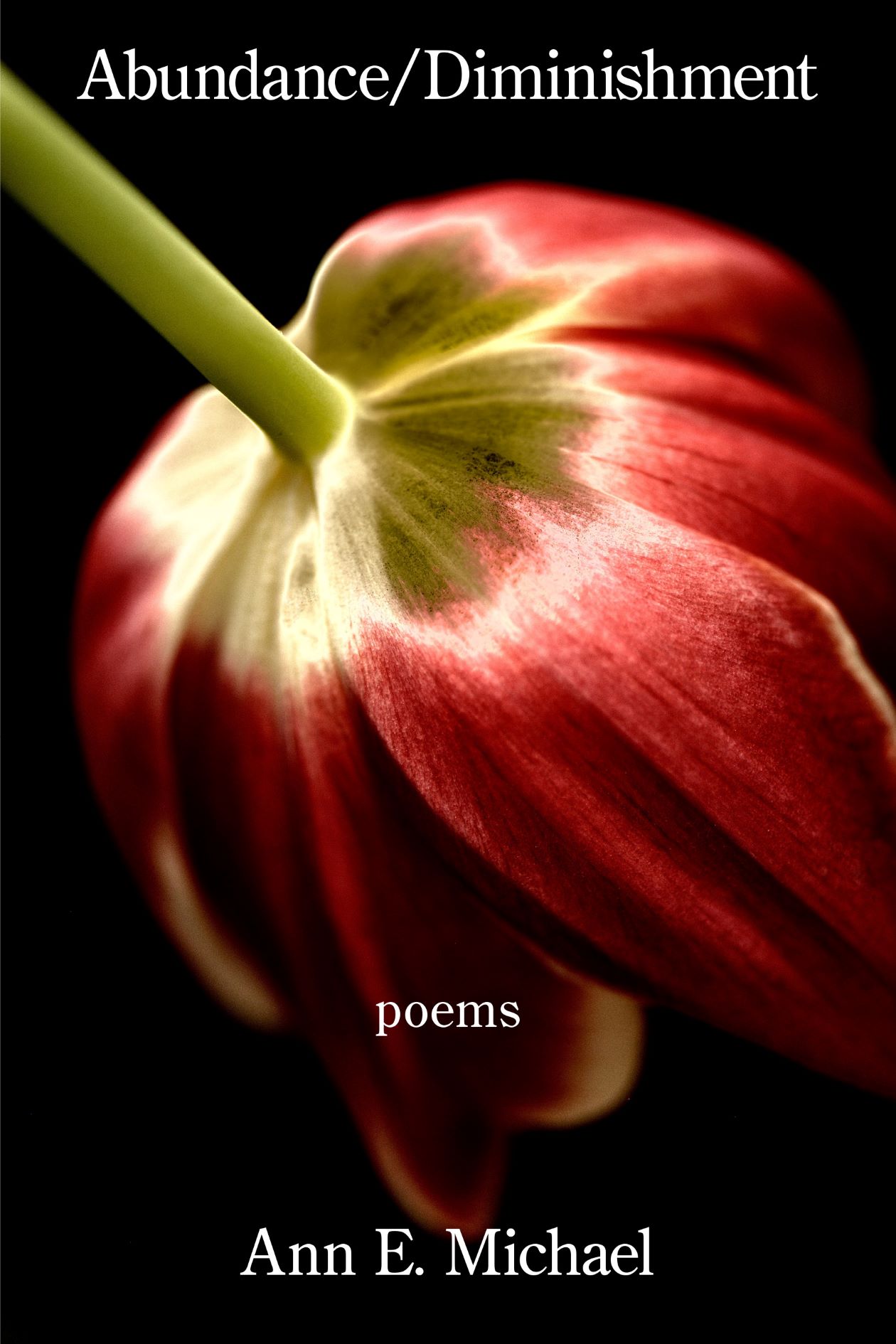
Headlines. They make us so worried, so anxious, so scared. That was true when I was a child, in 1968; it’s true today. The poem below, which appears in Abundance/Diminishment, is one I wrote eight years ago. It remains relevant. And it is an April poem.
~
At a Birdfeeder
Woodpecker works at sunflower seeds intent on his hunger deaf to blackbirds’ territorial ambitions, wooing robins, chickadee’s agitated perch & dip at feeder’s edge. Woodpecker makes of his head a bright gimlet, his claws anchored on an eyebolt.
I watch a redwing drift on the last morning breeze of April, a spider’s line trimming the porch rail. Woodpecker revels in the easy meal we’ve provided, doesn’t know about the sack of seed in our garage, the price of bulk feed, acres of sunflowers blooming in Iowa, Kansas, Mexico chaff at the processing plants allusions to van Gogh, pollen-packed bees in their yellow jodhpurs.
That’s human knowledge: mine, yet I’d rather dwell on turkey calls vibrating the nearby woods, the labor of wild cherry petals landing on dew, grass, and feeder where the woodpecker— still famished—writes the morning news in bold headlines amid hickories, that being all the news that matters in this moment.
This TV interview was interesting to participate in, and I loved chatting with Marilyn Klimcho! She put me at ease, which is hard to do in front of cameras. I have watched the whole 20 minutes without hating myself or feeling too embarrassed. (Hooray?)
Is the show entertaining? Well…you have to be interested in poetry and poets, I suppose. Feel free to check it out. The link above should take you to the YouTube video.
~
National Poetry Month does, it turns out, raise the public’s awareness of poetry at least a little. Recently, I was invited to be a guest at a weekly online discussion of poetry and spirituality. The participants had been reading and discussing my poem “Deity’s Diary” and asked me whether I’d be available to read the poem and then discuss it with the group members at one of their meetings. They even sent me recordings of previous meetings’ discussions. I find it fascinating to learn how readers interpret my poems, what they get out of the work; so of course I obliged.
The group members asked intriguing, intelligent questions–clearly, they are accustomed to talking about poetry. That was refreshing, and it kept me on my toes. I learned that my poem (which is in four parts, so maybe it is poems) is doing the work I hoped it would do, at least with this group of careful and reflective readers. “Deity’s Diary” is intentionally paradoxical and questions many of western culture’s received ideas about god. It’s also pretty presumptuous, since I chose to write it in the persona of a deity…but, like all poems, it is decidedly a work of the imagination. (No, I do not consider myself a god!)
The discussion ranged from philosophical, scientific, and theological concerns to the nuts and bolts of writing and revising a poem, where I get my ideas, what the major influences on my work have been, and lots of other topics. Seldom do we lesser-known writers get to hear back from readers, especially in such detail–so this event felt like a real treat to me.
One participant said that reading these poems was like walking through an unfamiliar forest, not on a straight path, with possibilities of obstacles and turns in the track and the surprise of wildflowers, mosses, or lovely birds along the way.
It was not a huge surprise–the proverbial writing has been on the metaphorical wall for some time–but the college I attended for graduate studies has announced that it is folding.
In January 2001, shortly after I won a grant in poetry from the PA Council on the Arts, I rallied myself and my work, packed a bag, and took the family car by myself to Vermont for two weeks. In a burst of confidence and enthusiasm post-grant, I’d applied to creative writing graduate programs. There were none nearby enough to commute to, and Goddard’s low-residency model seemed my only choice. Well, I could have abandoned my husband and young children and moved to another area, but that seemed untenable and unkind.
But Goddard was perfect. I met new people and made (so far) lifelong friends-in-writing and friends-in-feeling. The work challenged me; the reading was intense! When I look at the bibliography at the back of my thesis, I admit I wonder how I managed. Hard work, intellectually demanding work, constant revision. Well, I needed less sleep in those days. Many times I read and annotated while waiting for my kids while they took piano lessons or riding lessons or whatever they were doing in middle school.
Sometimes my parents or spouse spent a Saturday or Sunday with the children so Mama could study and write. It is kind of a blur, but the community of fellow students seemed so supportive at the time. It’s not that I was without supportive people in my life–but the folks at Goddard, students and faculty, deeply understood my passion for writing. I found I could spend hours talking about things that matter to writers (which is kind of everything, but also, WRITING), which wasn’t easy to do in other areas of my middle-aged, middle-class, mom-life existence.
The iconic Goddard College Clocktower
Goddard often has been termed an “experimental” college. That term covers a whole host of meanings in the world of education. No point in trying to define it, since one thing that experimental institutions tend to do is change and evolve. The program I attended in 2000-2003 differed from the programs of 1985 or 2015. Which is as it should be–education should not be a static set of activities even when some exploration of canonical texts is necessary. One reason I chose to pursue my education at experimental colleges (The New School, Thomas Jefferson College, Goddard) is that I am a slightly odd bird, an autodidact who did well enough in standard subjects but who got the most benefit from deep study of things I felt passionate about–literature, history, botany, poems, dance, philosophy, feminism, visual art. Experimental colleges offered mentors who could guide me in self-directed learning, recommend books and authors, feed my often-changing interests, offer personal, one-to-one advising and critique. I am 100% sure I would not have excelled in universities that followed more standard educational subjects and protocols, and I’m glad I received good guidance (usually) and a well-rounded, if eclectic, education.
Many of the poems in my book Water-Rites are from my time at Goddard, since Water-Ritesin an earlier form was part of my graduate thesis. And a fair number of the poems in The Red Queen Hypothesiswere first drafted during my years there, when I was experimenting with forms. So, having just learned for certain that Goddard will cease to function as an offbeat, transformative, self-directed institution of higher education–thus joining my undergraduate school, Thomas Jefferson College of Michigan, as defunct institutions–I will post a poem that I know for certain I drafted just before I graduated. It’s a response to the events of 9/11 and was not quite ready, nor suited, for inclusion in my first collection; it appears in The Red Queen Hypothesis and Other Poems.
~
Shreds for Judith
We ran, leaves before a bitter wind, & some ran headlong & some in circles, we did not know what to do with ourselves,
& watched, pressed to our windows & could do nothing: streets erupted with people like clustered beetles wakened from dormancy.
We walked, in all directions but mostly north, & we were silent and our mouths were dry. Things like shoes and hats made us human.
We wept and it was not sufficient, & swept, then, for months & recalled mostly paper, the ways we occupy ourselves, the mild wind carrying what lingered. Scraps.
In all my born days, I’ve never had a Poetry Month start off with such an abundance of publications–and, as it will probably never happen again, I’m going to post the links here.
“Siren for Somebody Else” offers a mother’s perspective on waiting, unable to get to sleep, for a child who is out late on his own. It appears in RockPaperPoem.
“Interpreting the Conversation from Another Room” shows up in Stick Figure Poetry #13. The poem originated during the years our son lived with us and played online multiplayer games in his room, but it morphed into something a little more sinister.
“Fevered” came almost out of nowhere but resonated with some early readers who contend with mental and emotional challenges. It’s also a poem about love and compassion, I suppose. The journal Philadelphia Stories published it in the latest issue.
Gyroscope Review is a print journal that also offers a Kindle and a PDF version, the last of which is free to download, though the paper book is lovely and only $12 on Amazon. My poem “Bach and Birdsong” starts the issue off…a meditation on springtime.
Whew! This post goes with my “Gratitude” post of last week!
Ah, the manuscript process! It interests me even when I’m not in the midst of putting a collection together, because it seems there is no consistently efficient way to go about it–no matter what people claim. It’s fascinating to read, in interviews, articles, and blogs, how poets decide on the poems to gather into a book; I have put together three full-length collections, and yet I can’t say that I have developed a method I can rely on. Each volume seems to have had different inceptions and different means of getting to an end.
My first approach is to choose several dozen poems, about a third of which have been published in literary journals. After that, no system: I ponder possibilities. My last two books had titles early on, which helped a little, and my chapbooks have had themes that guided me about what to include or exclude. Not so this time. The process this time reminds me of how I put together Water-Rites, which evolved from my MFA thesis in 2003. In other words, I don’t really know what I’m doing! Which feels edgy and uncomfortable, and is probably therefore a good thing. I don’t want to get too confident or at ease with writing. Creativity sometimes thrives on obstacles, or on the prompting to do more, to try new things, to solve problems.
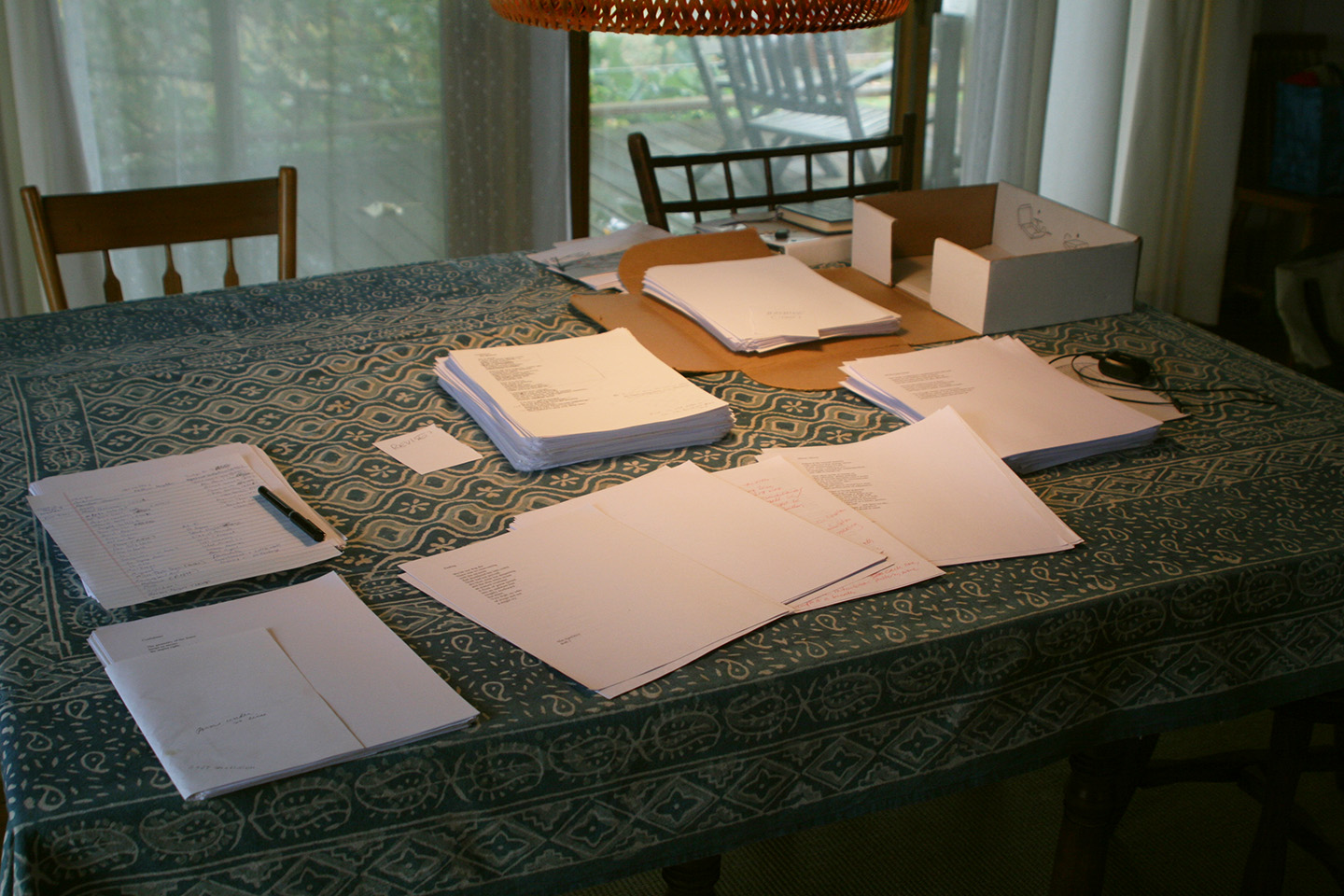
Putting Abundance/Diminishment together at the “lighthouse” in 2019
This past weekend, I started curating in earnest, laying out poems and reading them to find out whether there are resonances and “conversations” between them. One method is to try grouping the pieces by theme or style. The overall book may then be divided into sections, which is a not-common approach in contemporary poetry books. But my first attempt arrived at seven sections, which strikes me as maybe two or three too many divisions for a manuscript. Also, the sections were wildly divergent in tone and context. Some divergence keeps a book from being tonally monochrome, but I don’t want my text to throw my readers from port to starboard willy-nilly, either. As a reader, I like poetry collections that have chapters/sections. How necessary are they, though? Maybe I don’t need them.
I was thinking about Louise Glück’s book Wild Iris, which is not divided into sections and which even has many poems with the same title (seven called “Matins,” for example). But the poems appear naturally, with a sense of flow–and there are not a lot of twists from poem to poem, though there are twists within the poems.
Billy Collins’ books are not separated into sections, either. He has said he doesn’t work towards a theme or arc, just chooses poems that he thinks are good enough; and yet his latest collection, Musical Tables, is full of short poems (um, a style or theme? Possibly). I have been doing a bit of research on this through my bookshelves and online, seeking further direction. Clearly, there’s work ahead, and even though I’m in my 60s I’m still a novice when it comes to manuscript-making.
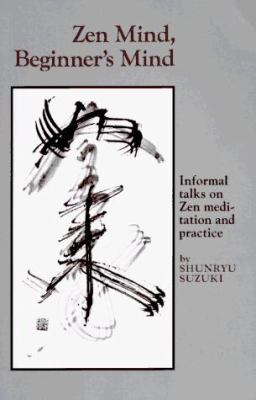
Shosin: 初心 , or “beginner’s mind,” may serve me well here. (See Suzuki’s classic book). Wish me luck? I think I’ll need it. And if you have some advice, let me know.
Trying new things, slowly. I made a profile on Chill Subs, even though I am about to take an extended break from submitting poems to journals. The task I have recently set for myself is to curate (?) collect (?) another set of my poems to make into a new manuscript. Generally, I start with a selection of about 100 poems and winnow, revise, and substitute from that initial batch. It takes time. Eventually, though, I will get around to exploring the Chill Subs platform to see whether it makes sending out poems any easier. My guess is that it won’t help all that much, since my real problem with submitting work is a lack of motivation and uncertainty about whether a poem suits the editorial tastes of the journal–or whether the poem is even a good poem. I have trouble judging my own poems, though I feel I am fairly adept at critiquing the work other people compose. It’s that log in my own eye, perhaps (Matthew 7:3-5).
The days are lengthening, but February remains a long month, typically a time of year I feel achy and low in mood even as the woodpeckers “laugh” their noisy calls high up in the trees and sun shines brightly on the not-melting-much snow. But the snow feels right; last year we had an “open” winter, and that lack of natural snow-mulch takes a toll on the kinds of plants and animals that reside here. In another week or two, the urge to put a few seeds in seed trays will likely take hold of me. For now, however, the seeds stay nestled in their unopened packets under the desk in my kitchen.
Waiting.
This superbly handsome pileated woodpecker photo was taken by my friend Fred Zahradnik at nearby Hawk Mountain Sanctuary.
Ending the year reading new-to-me poetry collections was my plan, though of course family life and all that distracted me quite a bit, in a pleasant way. Maybe I will reframe that as starting the new year with poetry collections. Which is to preface the following, an excerpt from “The Work,” a poem that contains a lovely reflection on what it means to leave one’s job and find one’s work–eg, retirement–in David Mason’s latest (2022) collection, Pacific Light:
~
Once, work was the thing one rose to by the clock,
the place one drove to, the faces one met getting coffee.
Now there are stones to be moved, but will they be moved?

...We are doing the work no other demands in the light
we are given, forgetting what day of the week it is,
the work all other work was a way of putting off.
That’s a useful way of thinking about post-job life, the work that everything else was a way to put off. So now we are poets or writers, artists, gardeners, people who spend time fishing, walking in the woods, hanging around in libraries, caring for grandchildren or pets. In his poem “One Day,” Mason writes “I was always too slow/and now my deadline/nobody knows,//not even the moon…” That concept of a deadline, so ubiquitous in all industries (and academia), churns workers into all kinds of stress. Needless to say, the term has a violent origin–“time limit,” 1920, American English newspaper jargon, from dead (adj.) + line (n.). Perhaps influenced by earlier use (1864) to mean the “do-not-cross” line in Civil War prisons.” [Thank you Etymology Online.] I am happy not to have so many deadlines now. Whatever work I do now, moving stones or writing poems, no other person demands it of me or sets the timing. “Not even the moon.”
Or maybe I’m mistaken, just a bit, because: gardening. I do have to follow the environment’s requirements and timing when it comes to that work. Nature can be a demanding “boss,” but the work rewards me. As does the work of reading and writing poetry. Pacific Light, by the way, is one of those rewarding books.
A few decades ago, at a time I knew very few infants, I made the acquaintance of a baby. This person stayed in my life for 20 years or so, but since then we haven’t had much contact–life happens, distances increase, friends of parents…etc. However, during their mid-adolescence they developed quite an interest in poetry, so we spoke a bit about that; I cannot say I was a mentor, but I may have been an inspiration of sorts. I had no doubt of their talent in the writing direction–at 14, they were composing better poems and essays than some adults I knew.
But again: life intervenes. Their life went in other directions than poetry. At least for awhile. Not long ago, though, when I was working with Moonstone Press on my chapbook Strange Ladies, I noticed the name Emma Wynn as author ofHelp Me to Fall, a recent chapbook from the press. Yes, the same person I knew when she was a child. I ordered the book, of course, and later attended a Zoom event that Moonstone hosted, in which Emma was reading. We said hello across the virtual divide. And now, Wynn has a full-length book out that I’m pleased to say is well worth reading. It is full of little marvels and careful observation, noticing the pain in love as well as the joys. Wynn writes, “Every day I turn over the stone of the world/ready to be surprised,” and I believe it. The section titled “Interlude” takes on such surprises with intimate words from letters written by historically-important people, crafted into poignant epistles of affection and potential regret and bitterness. To recognize that human beings are emotionally complicated seems to be one of Wynn’s impulses as a poet.
To be emptied is to be full.
To be battered without bitterness
is to bloom spacious
at one's heart
and nourish, unknowing,
the lives of others.
(--from "Kernel")
As it is gift-giving “season,” I remind my readers that books make good, modestly-priced gifts and that purchasing from a business other than Amazon when possible helps out independent small presses and independent booksellers (some small press publishers, however, use Amazon as their selling platform, as do two of my publishers; so does FutureCycle, which published Wynn’s book).
See the links to my books on the “My Books” tab above or the links on the right of this page. Sorry for the self-promotion, and if you aren’t inclined to get my books–buy books by another poet! There are many I’ve mini-reviewed here in past posts. Americans, especially, should spend more time reading poems and less time watching crappy TV shows or obsessing over unreliable news media sites. Of course, this is my personal (read: biased) opinion, but I believe poetry can help people gain a more well-rounded understanding of others and the state of the world. If we were to read and reflect on poems now and then, we would find the process nourishing.
Of the many tasks that lie before me as I work toward restructuring my routine, the past drafts pile must be the most engaging long-term project. Other kinds of odd jobs can be done in brief segments; it doesn’t take more than half an hour to clean out a drawer or closet, throw laundry in the washing machine, or cut back the ornamental grass for the season. Even a big job, like uncluttering the attic, can be done bit by bit once we get the motivation. Those tasks don’t require much critical thinking, no analysis beyond “Do I need this anymore? Can I get rid of it? Can I consolidate it with other items of its kind? What will take this stain off?”
While I can’t say I love organizing and clearing out stuff, it is not really taxing work. Just tedious.
Sorting through the drafts pile isn’t tedious, but it’s monumental and a bit intimidating. The pile of poems dates back as far as 2001 and is made up of probably two reams of paper. It includes hundreds of fairly terrible poems and, if I am lucky, maybe 80-100 poems that have the potential to be meaningful, beautiful, or at least not embarrassingly bad. This pile’s the result of 20 years of procrastination, lack of time, lack of motivation, and generalized disorganization. I admit it! Now I must roll up the proverbial shirtsleeves and get to work: work which requires analysis, criticism, revision, sorting, culling, and–that precious commodity–time. I find I’m unable to accomplish much if I attempt the work in small bits, (though I do break it up into sections, more or less). If I don’t spend at least two hours at a go, I get distracted and indecisive. I read each draft carefully, several times, to assess.
So we’re looking at weeks and weeks here. Maybe months and months, though I hope not.
The way I choose to understand the process is as a type of gleaning and sifting. I’ve got the harvest in–a big pile of poem drafts, maybe ur-poems, maybe seeds of poems, maybe crap. My efforts help me to decide which ideas are interesting, even if the poems themselves are not pulling the weight of an intriguing possibility; which lines and images are worthwhile, even if they don’t operate too well in their current context; which pieces suffer from thoughtless lineation, weird syntax, clunky form, form that doesn’t suit the content, and the like; which poems are far too wordy or else missing vital words for clarity; and which poems are basically not worth putting any effort into because: Boring! Obscure! Derivative! Sentimental! Awkward! Meh! What was I thinking?!
And then, every once in awhile, I find a poem I like and had forgotten about, one that only needs a bit of appropriate tweaking. Eureka moments while wading through my own creative work.
Yes, I should have been doing this sort of gleaning and sifting all along, the way I did when I was first starting out as a poet, 45 years ago. It probably would have made things easier. I notice myself noticing myself, though…noticing my changes as a writer, my little obsessions and my past enthusiasms glimmering in the work, noticing the different ways I have approached Big Themes and smaller ones. There may be something useful in that offshoot of my major poetry drafts excavation. Who can tell?
~
The Gleaners, Jean-François Millet, 1857; image, Los Angeles County Museum of Art
I’ve read many memoirs and non-fiction books about cognitive decline and living with a beloved person who has a neurodegenerative condition; from Oliver Sacks to the recent biography of Terry Pratchett and many of the books we’ve read in my “morbid book group,” information in these texts connects with the personal emotions involved in deeply complicated human ways. There are also quite a few poetry collections themed around this type of loss, and I ought to compile a list one of these days, because poetry has been helpful to me as my family and I contend with elders dealing with forms of dementia (and there are many forms). That fact has led me to wonder whether readers even need another poetry collection centered around cognitive loss. Since so many of my poems during the past four or five years intersect with or explore that topic, I have considered making a manuscript of them. I hesitate. Too much sadness?
Yet while the circumstances that evoke such poems are usually sad, the disease progression differs, as do the personalities of the persons with cognition loss and the personalities of their loved ones. Perspectives on the persons and the diseases also vary a great deal. Similarities exist–enough to make a reader feel recognized–but situations and value systems mean there are as many ways to write about dementia as there are to write about anything else. My mother-in-law and my mother both were diagnosed with the same thing, vascular dementia, but their living situations, support, and the ways they responded to the aphasia and the cognitive effects create two different stories about the disease.
These days, my mother sometimes seems unmoored from the present moment, but not absorbed in memory either–just kind of lost in the ozone. Self, language, memory…sometimes they slip away from her physical body. In this process, though, she has things to teach me. Just as my hospice patients do, and as their families do, by helping me to widen my understanding of human beings and how we get by in the world. Or how we flounder differently from one another. Or how we rescue one another.
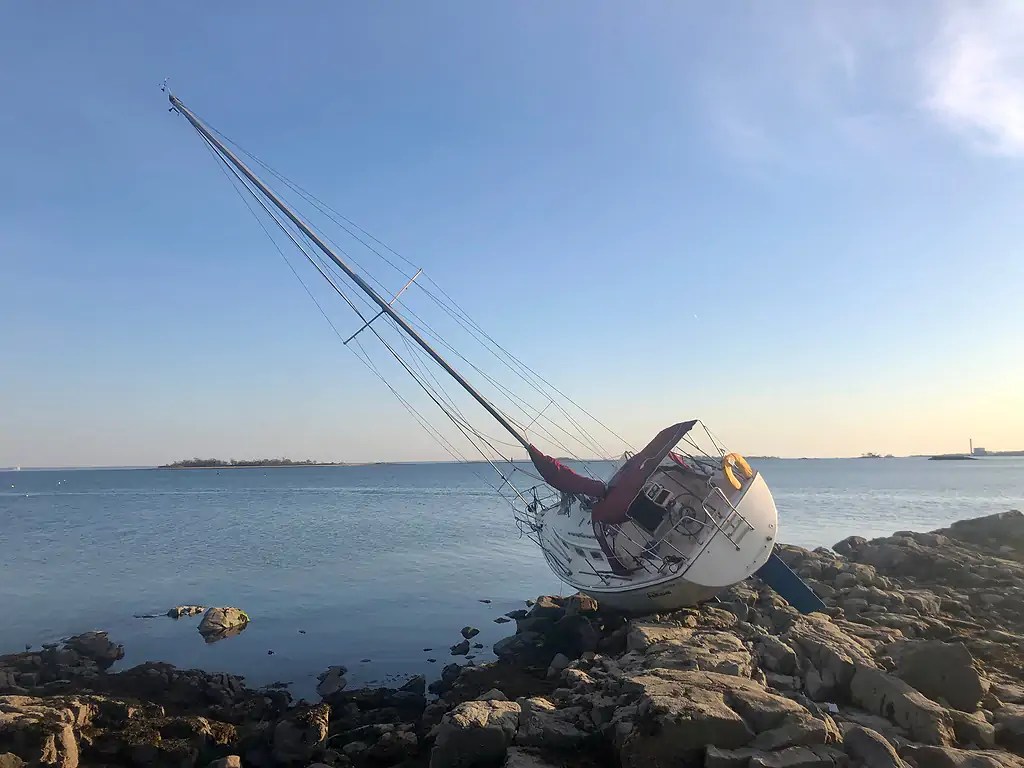
Adiamo unmoored photo: Thane Grauel, 2023
I take this gradual loss into myself–that’s what most of us do–and it’s hard, it’s painful to keep myself open to learning and love when what I first notice is untethering and loss. But yesterday when visiting my mother I noticed she has a cobbled-together notebook in which she sometimes writes (in tiny, indecipherable script). Some pages she had divided into three columns, some have scraps of letters or newspaper clippings stapled to them. Are her pages a record, or a practice? She cannot tell me. Yet it was kind of amazing to realize she does this with apparent intent. She has her reasons, if not her reason in the classic sense.
For all that visiting with her generally means a slow amble down the hall or sitting beside her while she sighs, eyes closed, drifting–despite the emptying hours–she is a Self, and she interests me. So I grieve the loss of who-she-has-been and anticipate the sorrow I’ll feel when she dies, but not everything either of us experiences is sadness. Of the poems I have read about losing a beloved person to neurodegenerative conditions, the range in scope covers a vast continuum of human existence, from misery and resentment and sorrow to revelation and even joy. Why would I avoid the full experience life offers?