Silence & solitude

Sara Maitland’s A Book of Silence. James Ragan’s Too Long a Solitude. Jane Brox’s Silence: A Social History. Thomas Merton’s Thoughts in Solitude

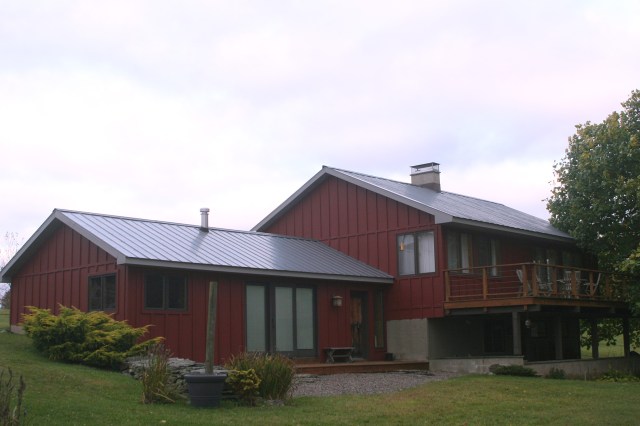
Is it just a coincidence, or did I subconsciously start reading books dealing with silence and solitude in the weeks before I planned to spend a few days alone in a friend’s rural cabin? And will the relative silence make my somewhat maladaptiveness to busy environs even worse? For I freely admit that living for thirty years in an area that borders on the rural, and spending so much of my time in the garden, has made me less inured to excess, human-made noise.

Sara Maitland writes, after spending some years outside of London ensconced in a quiet town, that “going to cities, to large parties, or to any place where there are a significant number of loud, overlapping but different sounds remains stressful and tiring at best.” This reaction is not mere “introversion”–indeed, for most of her life, Maitland appears to have been an exceedingly social and sociable person, quick with a retort, response, or witty reply and often in the company of boisterous, talkative people. She definitely cares deeply about relationships and communication, both between close friends or family members and between reader and writer/author. Like her, though more of a shy person in my younger years than she was, I value communicative aspects of conversation and togetherness while finding it harder than ever to live in the midst of noise pollution.

IMG_1997a

Near Windemere, where Wordsworth trod…

Of course, writing is a communicative act, a form of creating relationships between reader and writer, and therefore may not always or necessarily thrive amid silence, or in solitude, though that Romantic notion remains intact in most people’s minds. When I consider my own work, I recognize the lyric “you” (implying an Other), the narrative action (requiring the behavior of living beings dwelling in the world with Others), and various interactions among the lines that set up relationships that are not only abstract or metaphorical but concrete and physical, even when the poem skates along the reflective mode (how can there be a consideration of  a Myself without an Other?).

So although part of my brief upcoming “retreat” is, in fact, for solitude’s sake–a few days to be alone with my own writing process and make some creative decisions–the solitude’s less urgent than the silence. I’m not an ascetic nor a spiritual seeker, just a writer who wants a few days unplugged (and not entirely so) to mull through ideas and revise some poems. This process seems easier to me when I do not have to deal with anyone’s society, even the companionship of those I love. It’s been quite awhile since I last made this kind of silent time for myself, and I’m curious as to what will result.

Maybe just some naps and daydreaming, which might not be an entirely fruitless harvest.


IMG_6423.jpg


Prose poem, memoir

The prose poem seems a fraught and contradictory thing to its critics, a formless form, different in some way from flash fiction–more lyrical? More imageric? Lacking plot? Years ago, I went through a period of writing them, usually taking on a persona. Lately I find I am writing them again. Sometimes I think I’m writing a haibun, yet there’s no accompanying haiku. But mine do tend toward the lyric impulse.

And here’s a prelude to a prose poem draft, which follows (if you can be patient).

~

Perhaps it was not the most sensible thing to do, given my sore foot, but I had planned a trip to Poets House for a Finishing Line Press-sponsored reading by James Ragan and did not want to forego my visit. Ragan’s poems are lovely and often deep, and he offers a reading in the spirit of a raconteur. All the places I needed to stop were within three blocks of the A train, and therefore the main concern was going up and down subway stairs. It seemed do-able, and it was; though I am physically “paying” for my journey today, it was worth it.

The bus ride to New York and back takes about two hours, during which I read, nap, or daydream. We take the Lincoln Tunnel into town, a route familiar to me for decades, this time evoking memories that have been tucked away for ages.

Of course, some of this draft is invented–when I start writing, I often have no idea where I will end up. This one surprised me.

~

We were children in the years of Sunday drives, burning fossil fuels to tour the countryside and leave the city’s skyline, obscured in puce-yellow, lead-bearing smog, for tree-lined back roads and a picnic lunch. Sometimes over bridge, sometimes under the Hudson. Each crossing tested our bravery: fear of heights, of darkness. We had a song for the bridge which we sang while watching cables’ span. We were too small to see out the windows down to sailboats and barge traffic. The tunnel had no song. We hunched in the back seat, held hands, squeezed shut our eyes, expecting to drown. On the curved ascent in New Jersey my sister chose the house she wanted to live in—many-dormered, stone, with a round tower, it jutted over Weehawken. Once we’d learned to read, we realized it was the town library, which suited her imagined lifestyle. She would choose that even today, retire to live in a library and work part-time in a bookshop. She imagines I will join her there, perhaps I might.

~

Memory to prose memoir to prose poem. Founded on rocky physicality.


weehawkenlib

The Weehawken Free Public Library

Anticipation

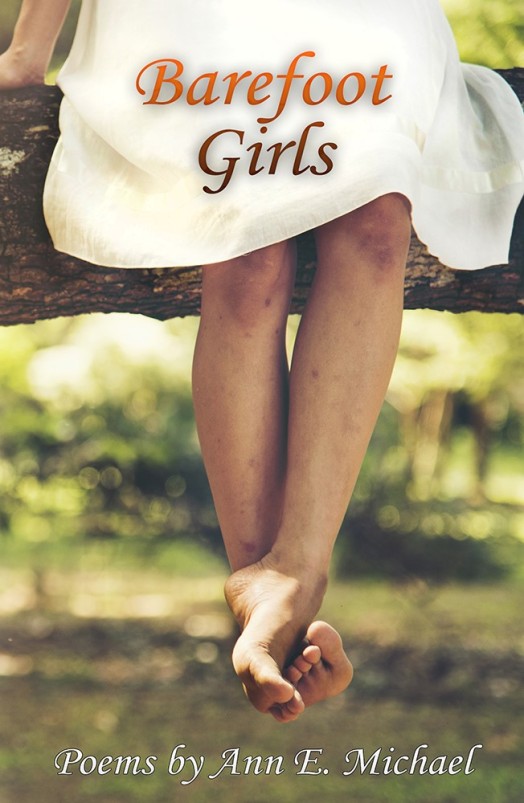
Public relations and poetry are quite separate pursuits, in my mind, yet how else will readers learn that I have another chapbook nearing publication? Yes! Barefoot Girls, a series of 24 poems winnowed from a much longer set, will be appearing in print from Prolific Press later this year.

2021 still seems quite a way off, but perhaps it isn’t too early to mention that my full-length poetry collection The Red Queen Hypothesis will see publication then from  Salmon Poetry, an independent publisher in County Clare, Ireland.

Anticipation! I’m eager to see what the books will look like, eager to know whether anyone will read them, and experiencing that little frisson that comes with waiting for potential delight.

I cannot express how grateful I am to the folks behind small independent literary presses for all they do to keep poems circulating, to publish lesser-known writers, and to promote the literary arts generally. They are not making money from the process; they do it for love. Society benefits. Bless them all and donate to them if you can. But the best way to help small independent presses and publishers is to purchase books from them. Browse Prolific Press’ bookstore here, Salmon Poetry’s poetry book catalog here, and Brick Road Poetry’s books here (scroll down far enough & you’ll see my book Water-Rites, still available). Another small-press venture that has been plugging along for years is Michael Czarnecki’s FootHills Publishing. Two of my chapbooks are available from its website.

Dear Readers, purchase a few books from these stalwart independents, even when there’s a lower price used on Amazon. I’ll be thrilled if you buy one of my books but gladder still if you take a chance on an author you don’t know and discover some terrific poems and poets in the process.

Of course, when anticipation becomes realization and my new book becomes available, I will try to don my PR hat and let you know it’s in print. Thank you!!

bfg

Barefoot Girl ca. 1974 or 75

Waves & relationships

I had planned to take a little “vacation” from difficult books this summer and read a bit of fiction, go to the movies, work in the garden. And while Maryanne Wolf’s Proust and the Squid covered the challenging topic of reading and delved into some neurological explanations for the process of how we read and how literacy changes our brains, Wolf writes in layperson’s terms and divides her text into easily understandable chunks. It was a relatively easy read on a complex topic and reminded me that I need to re-read Proust’s famous essay “On Reading Ruskin.”

Then my dad said I should read Reflection in the Waves by Pablo Bandera. Here’s a physicist with a philosophical bent who tries “reconciling the realism of Aquinas with the empirical evidence of quantum mechanics.” I like Bandera’s interdisciplinary approach, a blend of physics–his main area of expertise, a “true” science–and philosophy, anthropology, evolution, even theology. Does Bandera entirely succeed in persuading me that the observer effect of quantum physics is a human-based, perspective conundrum that may not be a problem at all? Not completely, but it is an intriguing theory about which I remain open-minded. The recognition that being human alters the observing mechanism seems sensible to me.

I would never suggest that Reflection in the Waves is an easy read for the average informed person. It contains a few fascinating observations and summaries, however, that relate to human relationships (our need to connect), to communication, literature, and art. He writes:

What distinguishes us humans from other objects around us, including other measurement devices, is not that our reality is not somehow irrelevant for the physical world, but that our relationship to this world is such that it transcends the mere subject-object relationship currently envisioned by the physicist.

Reality=relationship to others and the world. That’s a contemporary way of interpreting Aquinas. I’ve never before thought of myself as a Thomist, and the very idea makes me giggle. But as a writer, especially as a poet, the relationships and connections in the physical world are the stuff of metaphors that engage the conscious mind of abstract thought and help to put the poem across to other readers’ minds (thank you, Maryanne Wolf). Perhaps not so far from philosophy, or physics, or neurology, after all.

Collection

As I’ve previously mentioned–I have been putting together another manuscript of my poems–a collection. I had a few ideas on how to make the poems work as groups, but it turns out they are not happy together. I don’t think a poetry collection needs an “arc,” but I like to have the poems converse with one another in some way. Resonate with or inform one another. That’s what I am enjoying in Louis Simpson’s 1980 collection Caviare at the Funeral. I realized my aim in collecting my work was off when reading his book just recently…and now, I am reconsidering my manuscript approach. Again.

This may be one reason why, despite being a fairly prolific and reasonably well-published poet (in journals, etc.), I am so pokey at getting books into the world.

But I am considering what it means to be a collector, which is not the same as a curator. There is a difference between collecting one’s work and curating it into an experience for a reader (including oneself). Curating has never been my strength: I was the kind of child who collected things randomly, attempted to organize a doll or rock collection, but mostly just had little piles of stuff that interested me.

That’s poetry, too…little piles of stuff that interest me.


Etc. & refrains

Some years, I have devoted my National Poetry Month energies to attending readings, getting out in the world to listen to writers; some years, I’ve tried hard to submit at least 30 poems to magazines and journals; some years, I have read two poetry books a week for the month of April. This year, I wrote a poem draft a day. OK, now what?

When you love poetry, you do all of these things anyway. Having a month to celebrate the art merely acts as a public awareness campaign, though it has reminded me, year after year, to aim for a bit more discipline in my creative life.

~

I have also been reading, of course, bookish person that I am; this past month, a real standout–and a difficult book in a few ways–was An Orchestra of Minorities by Chigozie Obioma. The novel offers a way in to the cosmology of the Igbo people (Nigerian, mostly) while wrenchingly capturing the anxieties of modern life and the timeless agonies of lovers separated by class, race, status, religion (whatever gets in the way of lovers). Obioma successfully interchanges voices, languages, creoles, narrating from the point of view of a guiding spirit. Spoiler alert, the book ends with tragedy, and there are tragedies large and small throughout. The tension of human anxiety works really well, and all of our fears.

The guiding spirit, who has accompanied centuries of human hosts through their lives, has a refrain: “I have seen it many times.” I thought of Vonnegut’s “So it goes.”

Trying to imagine my own refrain…it might be something on the lines of: Life’s difficult, so we have art and poetry and love and one another to get us through.

alice-heart1 copy

art by my daughter at age 8


The takeaway

ampersand

so, I did what I set out to do: I exercised the necessary discipline to draft a poem a day during National Poetry Month, and I pushed against my “comfort zone” by publicly posting those drafts as they came to me. Usually I do not share my initial drafts with anyone other than fellow writers in my writer’s group or a few poets with whom I correspond. This was an interesting experiment on the personal level, therefore, a sort of forced extroversion as well as effort in productivity. I now have 30 new drafts to reflect upon, revise, or ignore.

It has been years since I came up with that much work in four weeks’ time. For the last decade or so, my average has been closer to six or seven poems a month. And I would not have posted any of them as they “hatched.” I would have waited until I spent some time with them and figured out how best to say what they seemed to want to say.

That’s not an unwise approach in general; I see nothing wrong with letting poems stew awhile. And quite a few would have ended up in the “dead poems” folder. Nevertheless, trying something innovative tends to prove valuable. The takeaway is that I am glad I finally managed the NaPoWriMo challenge. A few of the poem drafts you may have read here stand a chance of evolving into better poems. Maybe some will end up in a collection (years down the road). That result feels good.

The takeaway is also the realization that I no longer worry about how others judge my poems, the way I did when I was starting out and discouraged about having my stuff rejected by magazines. Not because there’s less at stake–indeed, I feel as invested in my writing as I ever was. The difference comes with the kind of investment, the ambition to write something meaningful or beautiful, and not viewing the poems as results waiting to be determined as valuable by someone more authoritative.

I’m 60 years old and well-educated in poetic craft, style, purpose, analysis. I’ve been writing poetry for over four decades. At this point in my life, that’s authority enough.

~

Self in the World

Goose stands sentry in the dew-strewn meadow.
Blackbird browses dry grasses woven along embankment,
emerges, slim stems clenched in its beak.

Under the footbridge, polliwogs gather,
backing into its shade–hawk overhead,
bluejay screaming territory! the crows respond–

Sun halos the water-strider’s shadow,
making a cluster of coronas on submerged stone
where wood frogs squeak and leap into stream current

surrounded by bedstraw, henbit, dandelion,
Amur honeysuckle, garlic mustard, stiltgrass,
invaders all. Except the frogs, who found the stream–

itself new to the landscape, gouged here in the 70s.
What do I notice, then? That some of the living adapt?
What do I make of myself in this world?

~

canadian goose on grass field

Photo by Brett Sayles on Pexels.com

~

Finally, to close the month of April, here is a lovely tribute to Mary Oliver by her friend and fellow poet, Lisa Starr.

Thank you for reading, and for the support of readers and poets this month.

Tanka

The second day of my daily poem challenge won’t give me much time to compose. A tanka poem may be in order.

These 5-line poems pose considerable constraints on the writer and, in my experience trying to write them, require frequent revision to get the moment vivid enough. So this one will be a rough draft. An experienced tanka poet may be able to compose tanka rapidly; my attempts usually need eight or ten revisions…well, here goes.

~
Past midnight, silence
4 am, flying squirrels chirp–
maple buds redden at dawn

how sleep eludes
those who mourn

~


Other poets working on daily-writing include Michael Czarnecki of FootHills Publishing, who posts a daily poem (usually haiku) on his Facebook page here.

paintdaub copy


Deer metaphor

I think the best poem about a car-struck deer is Stafford’s “Traveling through the Dark.

Like Hayden Carruth’s “Mother,” (see my last post) Stafford’s poem is, for me, a kind of zenith–something to which I might aspire, but look, it’s already been done. So why pen my versions of the experience? Especially when I am not the writer Stafford was.

And might a reader accuse me of hijacking Stafford’s imagery when I write about similar incidents? I suppose I do run that risk. Nonetheless, the whitetails occur often in my poems from the past 20 years because I live in eastern Pennsylvania. Pennsylvania has an estimated 1.5 million deer—about 30 deer per square mile–and I suspect that in the suburban-rural zones such as the region where I reside, the number is higher. ann e michael

As a writer, my inclination has pretty much ever been to write about environment and place and to supply anecdote or lyrical narrative. Deer abound in my environment and in my work; and deer get killed on the roads here. The imagery lodges in my consciousness. After so many years observing them, deer have become both subject and metaphor. I may swerve, but I cannot always avoid them.

The following poem is from my collection Water-Rites, and here it is the speaker’s husband who pushes the doe’s body off to the side of the road. The presence of children changes the perspective considerably, despite other similarities to the Stafford poem. Maybe that is all I can offer: a slightly changed perspective, a different closure. I cannot un-moor myself from the images and places that inhabit me.

~

Yellow Forsythia

We glimpsed the doe
trying to rise, and failing,
in the roadside darkness.

“Stay here,” my husband said—
and a moment later,
“She’s hit.” I nodded. I’d seen
skidmarks on macadam.

The doe lay on her side and thrashed
while our engine idled,
thrashed, shuddered;
my husband placed his hand
on her neck.

In the car, our son stared
at the darkness. Our daughter wept:
“He’s frightened the deer.
She’s kicking to get away.”

The doe jerked, paused. “No,”
I said, “Your father is touching it.
Soothing it, so it will not die alone.”

He knelt by the quieting body.
Blood ran from the muzzle.
One ear twitched, I could see it
in the headlights. Death
closed in, a gentle exhalation.

My husband eased the carcass
off the road shoulder. He said,
“She must have suffered awhile.”

“Stupid cars,” my daughter muttered.
Her outrage engulfed our station wagon.

My son watched the white-
throated body, the yellow
forsythia lit by car lights.
He said, “Close the windows, please.”

~~

Poet and blogger Molly Spencer recently posted a lively consideration about recurring and repeating images here: https://mollyspencer.wordpress.com/2019/03/07/the-spider-why-the-spider-or-a-defense-of-recurring-images/

Worth a read, and worth discussion, too.

On revision (again)

iceimageI am going to go out on  a limb here and make a blanket statement: Revision should be every writer’s middle name.

I tell this to my Comp-Rhet introduction to academic writing students all the time, but they have difficulty figuring out how to revise effectively. There are good tactics out there, but they do not work for everyone; how a person thinks and learns and processes information varies considerably. Lately, I have been using a strategy I teach to students writing essays to revise my poems. I ask myself: how is this poem organized? Is the structure working with or against the poem? Too predictable, or not predictable enough?

Just as in a well-wrought prose piece, a poem’s obvious and underlying structures matter a great deal in how well it “works” for a reader. It’s also an aspect of writing that people tend to overlook, so analysis of structure in the revision stage can be useful.

Another revision strategy I have been mulling over recently coincides closely with what Grant Clauser describes in this post, The Poem Is the Question. He writes:

I’ll scrounge around in the poem to try to find what it’s asking. If I figure out the question or the motivation in the poem, then I’m better equipped to solve its problems… Sometimes it helps to actually put a question in the poem–either as a crutch that you’ll eventually remove–or as a permanent part of the poem. A question is a pretty interesting part of speech in that it’s one of the few that almost always demands a response from the reader.

I have found myself going back to a draft and asking, “What got me going on this poem? Do I even recall? Is the impetus an interesting one? If not, can I change it?” Clauser suggests a more specific kind of investigation, and it’s one I have been employing today (snow and ice out there and the roads are lousy, so the campus is closed–hooray for a half day of unexpected free time).

Lesley Wheeler has also recently blogged about revising. She observes that the word revision, which places “emphasis on ‘looking anew’ doesn’t entirely capture” the process of late-project revision. She’s listening to her own words aloud as she revises…another approach that has worked for me.

Maybe the month of February calls to us as a quiet time of yin creativity, which is a way of looking at revision as an inwardly-focused energy–as opposed to marvelous bursts of creativity from inspiration or the much-vaunted Muse. The lunisolar calendar used for centuries in Asia calls February the first month of spring (立春  lìchūn)! I had better keep at the revising, therefore. Before I know it, yan energy will return with the start of the gardening season in eastern Pennsylvania.