This weekend, I am trying to concentrate on poetry-wrestling, herding poems, culling and grooming and all that. So–less time to reflect on writing my own blog posts.
However! I follow many poets and writers, and one or two philosophy and science blogs, would like to direct my readers to two writers who responded to Mary Oliver’s recent death--both of these poets commented on Oliver’s reputation as a nature writer and a poet of “joy.” Reputation isn’t the same as analysis.
Here is Grant Clauser, wondering whether it will be possible for him to write gladness into his observations (which are quite keen and worth reading).
And here is Catherine Pierce, a poet much younger than I who admits to her own prejudices when deciding which poets to read–which poets are “worth the effort” of reading (ie, which writers teach us most about life and about poetry-writing).
The death of a beloved animal companion some years ago took me to Oliver then. And in the sorrow, I recalled the gladness of having that dog in my life.
“Nature poets” can be fierce, asserting the need for stewardship of our blue planet; poets who write happiness well understand–and convey–that pain and sorrow remain our companions in life. That does not mean a focus-on-the-positive Pollyanna attitude. No–to compose poems that show us we have every reason to love what we encounter takes bravery, because we so often fear what the world offers. To do so takes deep acknowledgment of suffering, not just a glancing nod, but compassion. The poet may not “behave well” in his or her own life but has the practiced gift of observation and enough craft to show the reader difficult perspectives.
Sometimes, gladness and optimism and beauty get obscured by experience and griefs. Next time that happens, maybe turn to poems?
My brother, whose avocation is science historian and whose papers I often proofread, has acquainted me with the 18th-c. comparative anatomist Johann Friedrich Blumenbach. As often occurs when one becomes attuned to new knowledge or focus, I suddenly seem to find Blumenbach’s name or theories “everywhere.” Mostly in books, of course, but also in a natural history museum where I came face to face with a trilobite that bore his name. I have also been reading Andrea Wulf’s book on Alexander Humboldt, The Invention of Nature; Blumenbach was one of Humboldt’s professors and influencers.
calymene blumenbachii
Wulf’s book begins as a biography of Humboldt but closes with several chapters on others who were inspired by his work; she makes the claim that Humboldt’s ideas about the deep connectedness of everything on earth laid groundwork for environmentalists and the discipline of ecology. Indeed, Darwin, Thoreau, Marsh, Muir, and many others found his texts revelatory and transformative. His writing is supposedly poetic and emotional–he did not think the earth and its denizens deserved less than awe and appreciation. Even though his books are packed with measurements, comparisons, careful botanical descriptions, and minute observations of practically everything he encountered, he allows space for admiring the view. Or, so Wulf’s book says. Now, I suppose I shall have to do a bit of reading Humboldt!
~
Along these lines, the lines of the natural world’s connectedness and relationships–ourselves among these, despite our frequent destruction of them–I find myself thinking of the recent death of poet Mary Oliver. I so admire the work and the woman, or what little I knew of her from a few appearances and through friends who studied with her. My social media feed has been alive with tributes, postings of her poems, and some critique about her standing as an American poet, as if that would matter to her (I doubt it would).
I can just make note that her poems have encouraged me to continue to write about nature, even when I’ve been told nature poets are unfashionable, uninteresting, or unnecessary. Her work taught me how to observe closely, like Aristotle at the tidal pools or Haeckel peering at radiolaria. First notice, listen; then describe, then try to obtain more information, and all the while percolate what experience has created within the observer herself. Maybe nothing earth-shattering comes of the process, but sometimes there’s a poem…
Here’s one of Oliver’s early poems (from Twelve Moons, 1979), one readers are less likely to find in all of the tributes to her but which offers a sense of how well-observed–for all their ‘simplicity’–her poems are.
Buck Moon–from the Field Guide to Insects
Eighty-eight thousand six-hundred different species
in North America. In the trees, the grasses
around us. Maybe more, maybe
several million on each acre of earth. This one
as well as any other. Where you are standing
at dusk. Where the moon
appears to be climbing the eastern sky. Where the wind
seems to be traveling through the trees, and the frogs
are content in their black ponds or else
why do they sing? Where you feel
a power that is not yours but flows
into you like a river. Where you lie down and breathe
the sweet honey of the grass and count
the stars; where you fall asleep listening
to the simple chords repeated, repeated.
Where, resting, you feel
the perfection, the rising, the happiness
of their dark wings.
Her poems are not metaphysical by any means, but Oliver is avowedly spiritual, which is not a fashionable thing. I am not spiritual, but I have always respected that in her. May she rest in the perfection and the happiness of those dark wings.
Poetry and publishing: two topics that seem diametrically opposed, if you look at them under the perspective that’s the norm in the USA—that of business, capitalism, popular culture. Shake off that norm, however, and publishing can be re-imagined as aural/oral, visual, textual, cinematic, digital, interactive…who knows?
When a reader begins to deepen her understanding of creative literature, she will also find it necessary to widen the concept of publishing. Some folks say this is a new world. Or they’ll claim things were better in the old days. Curmudgeons and prejudices abound.
In my lifetime, I have observed and been part of significant and constant changes in what constitutes publishing, from Linotype to Huffpost. Recently, I participated on a panel of poets talking to students who have just begun an MFA program. The panel was a discussion, but it jogged reflections on the process of getting poetry to an audience. So here’s a compressed version of getting poems published, as I experienced it.
~~
I began to submit my work in the very early 1980s to the indie-publishing journals which were extant at the time: photocopied, stapled zines with print runs of 300, or maybe just 150. I was new at writing and aware that my work wasn’t ready for Ploughshares or Poetry and the so-called top-tier journals I purchased and read carefully and tried to learn from.
As a 20-year-old woman, I was not exactly full of self-esteem. Why did I submit at all, when I knew my poems were juvenilia? Well, I know that now…at the time, let’s say I knew they weren’t up to the work of Elizabeth Bishop or Audre Lorde. The reason was mentorship. I had two good friends who encouraged me to send work out but to be realistic. To read the journal first and analyze my work in comparison to what appeared in the magazine. Good advice—and let me tell you how much harder that was in the years before the internet! As I lived in New York and Brooklyn and Philadelphia, however, and it was the 80s, there were good independent bookstores to browse, and good libraries. And there was Dustbooks.
So analysis was crucial, not just for deciding where to submit but to learn how to be a better writer. It was important to compare, to take apart, to hear meter, to recognize rhythm and consonance and the fabulous image and the fresh metaphor, to say how does that writer achieve what she does and can I learn it? Without slavish copying?
Damned difficult. But thanks to publishers, at least the materials were available. If we hadn’t had poetry publishers, it would have been even harder to learn the craft; and I’m not the sort of sui generis writer who just creates out of genius. I had to study, practice, revise, and learn the hard way. Alas.
In the later 80s, I started doing some editing and publishing of other people’s work. My dear friend, David Dunn, and I had a small press that put out two broadsides and four chapbooks. Taught me a great deal. I helped to edit a Xerox-zine in Philadelphia in the 80s. Meanwhile, I kept getting work into small press journals nationwide, mostly these photocopied deals with tiny readerships; but the minor successes kept me going. After awhile I had enough hubris to try the better-recognized journals, with some success. This is how it works: persistence, but not bull-headed, blind persistence. One persists through the learning process; revises, practices, finds trustworthy people for feedback.
My sister, my spouse, and I all have worked in the publishing business-as-business, in how-to and B2B magazines; I was a typographer, proofreader, copyeditor, writer, indexer. All of that background was valuable in its way and never kept me from pursuing creative work. So I did eventually go for my MFA, in my 40s, and I got chapbooks and a collection published at long last in spite of—oh, you know—life.
Because I feel that poetry needs audience, I was early to jump on the online publishing wagon, despite colleagues who warned that it wasn’t really as acceptable a venue as academically-affiliated print journals. Nonetheless I’ve found myself enthralled by online journals, by audio-poems, moving-poems (video), podcasts, blogs. I’ve watched well-respected magazines migrate to the internet. And there are problems with online publishing. I know about them, wrestle with them, yeah—keeps life interesting.
My route has not been the academic route, although I work at a college today; I am more of an outlier. Poets and writers can be nurses, doctors, mechanics, or landscapers, grandparents, people with disabilities, insurance industry managers, post office workers, tutors. Each of us discovers her own process for writing and for getting the poems into the world. Mine is pokey and slow and frequently interrupted, and my next long collection won’t appear until 2021, nine years after Water-Rites, my first. But I feel satisfied with my publishing record, such as it is. People do read my work, which is kind of the entire point of writing, no?
When everything is easy and there’s no chance of failure, life is boring. Writing creatively means taking risks, creating tension. Publishing creatively requires the same things. Risks, imagination, persistence, curiosity, analysis and a willingness to be open-minded. Fun pursuits, but not always easy ones.
I have read reams of advice and guidance on how to choose poems for a collection, how to order them, whether to construct an arc in a poetry collection, and so on. I have also had the excellent personal input of good poets and mentors in the process, all of which leaves me deeply grateful and still stumbling when I once again begin the process.
One challenge is excess. I have put off revising for collection for a few too many years, and now I need serious critique and culling; thus, I didn’t know where to begin (as I mentioned in an earlier post). Given a problem, however, creative people tend to develop a method. I chose the simplest one I could come up with: start by pulling all the published work that is not in my previous collections, and see what happens.
What I will discover–in fact, in the early process, already have noticed–is that not all work accepted for publication in a poetry journal reflects my judgment of my strongest poems. Then, too, down the road I will pull some good poems from the evolving manuscript because they do not play well with the others…that is, in terms of tone or subject. As I add things up, I’ll begin to see what might be missing or needed, or I’ll be reminded of an unpublished piece that ought to be included.
This work is exciting. And it takes weeks or months. It will change; my feelings about what I want the collection to say will change.
And then the reading will begin. I will read and re-read the book-as-it-exists and ask generous friends to read and critique the whole.
If I were a more ambitious and organized person, I might approach the manuscript process differently–certainly sooner, and possibly with more of a projected arc in mind from the start. I know that putting together another manuscript will be yet another learning experience, different from chapbook-writing, different from the past books I have composed. The poems differ, too–of course! My perspective, my physiology, my experiences, even my environment, though I have lived in the same house for 20 years.
At this stage, a month or so into the process, a coherence begins to occur. Yes, a book exists in the piles of poems. Probably two books, in fact–but let me begin with abundance (or perhaps, with diminishment) and proceed from there.
When a friend who grew up in Central America visited the USA for the first time, she arrived in New York City in January. She encountered the airport, security, passport service, crowds, parking lot, the traffic en route to Central Park, shivering a bit as she went in and out of heated places to the cold weather and back. But when she finally found herself walking the city streets with her host, at 3 o’clock in the afternoon amid the many noises of downtown, she stopped and stood still a moment–listening intently.
“But–where are the insects?” she asked.
~ ~
“We notice the losses,” says David Wagner, an entomologist at the University of Connecticut. “It’s the diminishment that we don’t see.”
Because insects are legion, inconspicuous and hard to meaningfully track, the fear that there might be far fewer than before was more felt than documented. People noticed it by canals or in backyards or under streetlights at night — familiar places that had become unfamiliarly empty. The feeling was so common that entomologists developed a shorthand for it, named for the way many people first began to notice that they weren’t seeing as many bugs. They called it the windshield phenomenon.
While I do not expect to hear insects in New York in the dead of winter, the “windshield phenomenon” is something I noticed here in the USA during the 1980s. I recalled long cross-country trips in the car with my parents and the constant need to clean smashed bugs from the window and front bumpers or grilles, back when I was a child. And somehow, once I was driving, that task became less necessary. I decided that pesticides such as DDT were responsible for fewer bug-splats, but I did not consider the long-term ramifications that Jarvis describes:
Insects are the vital pollinators and recyclers of ecosystems and the base of food webs everywhere… In the United States, scientists recently found the population of monarch butterflies fell by 90 percent in the last 20 years, a loss of 900 million individuals; the rusty-patched bumblebee, which once lived in 28 states, dropped by 87 percent over the same period.
~~
Right. And a loss of bees leads to a loss of any plant requiring bees for pollination. A loss of beetles and dragonflies and mayflies and even the much-maligned mosquito leads to birds that starve, not to mention amphibians, reptiles, and some omnivorous or insectivorous mammals–particularly vulnerable bat and marsupial populations. The bottom of the food chain matters more than most human beings ever stop to consider.
One part of this article mentions the important, even crucial, role of people who study nature without having gotten degrees…the so-called amateur botanists, lepidopterists, and hemiptera observers. Another reason I find this article so interesting has to do with how Jarvis employs thoughtful, reflective moments in the piece, while maintaining a journalistic stance:
We’ve begun to talk about living in the Anthropocene, a world shaped by humans. But E.O. Wilson, the naturalist and prophet of environmental degradation, has suggested another name: the Eremocine, the age of loneliness.
Wilson began his career as a taxonomic entomologist, studying ants. Insects — about as far as you can get from charismatic megafauna — are not what we’re usually imagining when we talk about biodiversity. Yet they are, in Wilson’s words, “the little things that run the natural world.” He means it literally. Insects are a case study in the invisible importance of the common.
Maybe it’s my personal inclination towards the natural observation, but I find some resonance here. It’s what I tend to do when I write poems–to celebrate the common, or at any rate to notice it. I notice, too, the diminishment.
Some readers have told me my poems feel sorrowful, and maybe that sense of diminishment hunkers behind even the more celebratory poems I write. That’s an idea worth my consideration as I revise my work. Maybe Diminishment should be the title of my next collection.
Anyway–read Jarvis’ article. You will learn much. Even if you’re one of those folks who “hates bugs.”
Wow. I found this post by Lesley Wheeler worth re-blogging. It hurts my heart that she found so many of her students had experienced this kind of fear and violence in their schools. But it makes me pleased to be a writer if I can be in the company of people like Lesley and her students, facing what is horrible and difficult and discussing and writing about it. And reading, too–reading poems that face the “dark” in human beings can be as liberating and enlightening as reading poems that offer “hope” or balance. The heart does need rest now and then; thoughtful reflection offers more rest than many folks realize. Thank you, Lesley, for being a teacher.
For a workshop on Tuesday, Election Day, one of my undergraduates submitted a poem based on the day he hid in a closet during a middle school shooting. A different student said there had been a shooting in her school, too; another described an active shooter just last week in the high school her sister attended; a fourth said a friend had died in the Parkland massacre. Stunned, I responded with something like, “Are you telling me that four out of the fifteen of you have had a near miss with a school shooting?” Then two more raised their hands. Six.
Gun violence in the US is insanely, horrifyingly prevalent; every new mass shooting refreshes the horror and also increases the number of Americans directly affected. A good friend’s father’s retirement center was recently in lockdown because of an active shooter. And when I described the workshop discussion to a…
Something I’ve been thinking about lately: how to organize a collection of poems into a manuscript? I have done it before; after all, I have managed to get several chapbooks and a long collection into the world already.
This slideshow requires JavaScript.
And yet. The difficulty never departs, so I have once again been seeking inspiration and practical advice. The interwebs disclose a bounty of information from experts. There are hundreds of articles and blogs concerning this particular challenge, a challenge that seems unique to poets, though I suppose short story writers may encounter similar concerns when choosing how to organize and what to include in a book. If you find yourself wrestling with this task, encouragement and guidance abound. Here are a few articles to check out:
~
Chicago Review of Booksposted this article, asking four poets how they went about the task (and by the way, all four of these books contain wonderful work–definitely worth reading).
Poet & publisher Diane Lockward’s book The Practicing Poet includes not only prompts and craft suggestions but chapters on manuscript organization and getting published.
~
Now I need to take these generous people’s advice.
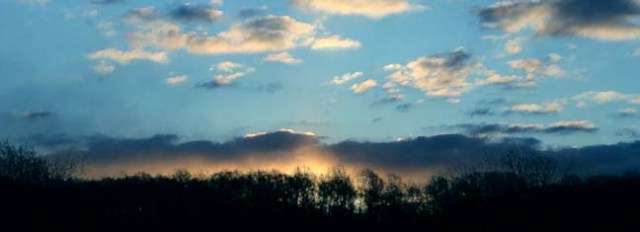
Forgive me, readers–whoever you are–this weekend I am composing poems instead of a blog post, revising the work (see this post) and creating new stuff from dribs, drabs, sketches, notes, and the windy day outside with its sky full of variable, intermittent, strangely-colored clouds.
I have been lucky in print this year. Two literary journals that I’ve long admired, Bellevue Literary Review and Prairie Schooner, published my poems, and so did the newer journal Naugatuck River Review. This is “a big deal” to me, because it is always exciting to be admitted into the pages of a magazine I like and because, despite the advantages of online/cloud-based literary journals, I love print!
There’s something inexpressibly marvelous about holding a book in my hands, turning the pages, and having a physical object–paper, binding, print–to carry with me.
Online magazines, theoretically at least, have a longer reach and can capture more readers (“hits”) than print. Literature requires audience, and the interwebs offer potentially millions of visitors to the poem online; but the operating word here is potential. What’s possible isn’t what generally happens. The readers of online literature, those people who stay on the poem long enough to read it–and then read the next poem, and the next, on-site–are not as legion as we poets might wish.
Through moderate use of social media, I do publicize my own work when it appears online (see links to the right on this page!). I welcomed the appearance of literature on the internet because one of my purposes for writing is to communicate with people. Readers matter to me. Getting my words into the public domain is the only way to begin that process of communication, and though online journals seem like the most ephemeral form of ephemera, they do make it easier for me to “share” (thanks to Facebook, I am beginning to despise that word) the poems or essays I’ve crafted.
Print journals, like books, lack the immediacy of the online publication. They are not interactive in the way some online journals can be (see my recent audiofile and poem in The Maynardas an example), although some print journals are pretty experimental and interactive in quite innovative ways, such as Ninth Letter.
I encourage anyone who reads my blog to check out other bloggers on literature and poetry, and a good place to start is with Dave Bonta’s Poet Bloggers Digest. Searching the internet will open up a world of excellent poetry in carefully edited and curated literary journals.
The internet platform permits poets to read their own work, in podcasts and on YouTube, and to launch videopoems into the world. It has been a boon for poets to find audiences of all kinds, not just people who read poetry journals.
However, my cat will never circle and then settle on an online literary journal. So there’s that…
~
[I tried to snap his photo when he sat on Prairie Schooner, but he jumped up and moved on.]
Somewhere recently–was it the Sunday New York Times?–I read an opinion essay about how recent surveys of US citizens indicate that we have fewer hobbies than we have had in years past. The columnist wondered whether that lack is due to a zeal to be the best at whatever we engage in–the best jogger we can be, the most avid cyclist, the best collector, knitter, paper-crafter, woodworker, violinist, what-have-you. She suggested we’ve somehow lost the joys of being hobbyists: amateurs who do or create something because it is fun or relaxing, or because trying to learn a new skill makes us feel good. A true hobby is something we don’t have to be perfect at, because that is not the point.
As my students wrestle with the tasks of college and their concerns about their futures, the concept of vocation arises often. What to do with a life? Earn enough money to live reasonably comfortably, even if the job is not a passion? What if it’s not even satisfying? Should people choose a bearable career and find enjoyment in avocations? Or persist at what they love even if society doesn’t always reward the path they’ve chosen? Or–the options are legion.
~
I believe in vocation as passion, and I also practice hobbies. My career is in higher education, and I enjoy and learn from my job. My vocation is writing, particularly writing poetry; my passion lies in that direction more than any other, but poetry has not been a career path in my case.
~
My hobbies have evolved over the years. For decades, gardening has kept me happily occupied out of doors–but I have no need to become a Master Gardener, and my gardens are often minor failures in one respect or another. The garden, however, soothes me, distracts me from anxieties, helps me to become a better observer, teaches me much. When learning about plants, I got interested in botany and wild flower identification, so I am a more informed hiker and nature-saunterer than I used to be.
Photography’s also a hobby I pursue, an interest of mine since my late teen years (back before digital). The view through the frame has always intrigued me, as well as the opportunities that different lens lengths offer the photographer as to framing and focus. I especially enjoy macro lenses. It’s fun to zoom in closely on insects, flowers, and small areas of everyday objects. Photography encourages different types of observation.
The earliest interest I can recall having is art: painting and drawing in particular. From the time I was tiny, even before I entered kindergarten, I loved to draw and paint and to look at art in books and museums. During my teen years, I studied art at Fleisher Art Memorial in Philadelphia and headed to college thinking I would minor in the fine arts. My talent did not match my aspirations, and a thorough self-analysis at around age 20 led me to recognize I could be creative more successfully in other ways…by that time, I was writing more seriously than I was painting.
But now? I have taken up painting in acrylics. Mostly sketches of clouds. There’s no pressure on me to do well; I can paint many mediocre pictures of clouds and feel relaxed in the process, meditative, observant, a casual learner.
mediocre acrylic sketch of clouds, by Ann E. Michael
~
As I wrap up this post, I realize that my career and my hobbies have encouraged observation from multiple and new perspectives. And my vocation? Poetry practically relies upon the writer’s ability to switch into creative and imagined points of view, as well as to have the opportunity for closely-observed objects and experiences.
Vocation, avocation, passion, career. I count myself lucky.