Transcendence & education

I am in the thick of midterm madness and have temporarily abandoned my post as speculative philosophical muser, gardening enthusiast and poet.

However, I maintain my efforts to stay in mindfulness whenever I can. In the car, on my way to work. In the phlebotomist’s chair, waiting for a blood test. At a staff meeting, or with a student–trying to be aware of what I say, and who the person in front of me is, rather than zone out and get anxious about the next thing I have to accomplish before bedtime. The practice, however badly I manage it, rewards me with moments of clarity and observation that help get me through a day and complement the practice of writing poetry.
waterfall

Mindfulness does not come naturally to me; I am a daydreamer by temperament, a tuner-outer. It is far too easy for me to get carried out of the now by thoughts of “what if” or “what’s next,” and if I function in that way, I am not living my life in the present moment. Poets may start out as daydreamers, but if imagining never turns to the practice of writing and revising and reading the work–the daydreamer stays a dreamer, and does not mature into poetry-writing.

~

Among many other things, I am a teacher. I tell my students that English and Philosophy are “friends,” that they share many concepts, and that philosophy and English classes should educate people about The Big Picture. About life. I did not come to mindfulness or a consciousness of the value of the present moment in church or in school or on my own, though. People taught me. I came upon these concepts through philosophy–first, Western philosophy and later, Eastern philosophy.

Here are professors John Kaag and Clancy Martin presenting some of philosophy’s timeless questions (under the lens of Faust, for starters):

Faust knows everything worth knowing. And still, after all his careful bookwork, he arrives at the unsettling realization that none of it has really mattered. His scholarship has done pitifully little to unlock the mystery of human life.

Are we and our students in that same situation? Are we teaching them everything without teaching them anything regarding the big questions that matter most? Is there a curriculum that addresses why we are here? And why we live only to suffer and die?

Good questions.

In their article, Kaag and Martin take the question of life in the present, with its present meaning–if there is one–and propose an even deeper inquiry, one that I sometimes discuss with my colleagues in The Morbid Book Group. The authors write that

[w]hen dying finally delivers us to our inevitable end, we would like to think that we’ve endured this arduous trial for a reason. But that reason cannot, unfortunately, be articulated by many of the academic disciplines that have gained ascendance in our modern colleges. Why not? Why shouldn’t an undergraduate education prepare students not only for a rich life but for a meaningful death?

Then they compose a nice thumbnail sketch outlining some major definitions and explorations in Western thought and then suggest that higher education’s typical intellectual approach to The Big Questions has, to our students’ loss, lacked fullness of the lived experience as a part of its inquiries.

The need to have authentically lived and also to know what to do about dying are knotted together in a way that none of our usual intellectual approaches can adequately untangle. It is related to the strange way that experience is both wholly one’s own and never fully in one’s possession. Experience is, by its very nature, transcendent — it points beyond itself, and it is had and undergone with others.

The authors write, “Who needs transcendence? We suspect that human beings do.” I am certainly in agreement there; exactly how to convey transcendence to students is probably beyond the scope of most college professors, but we can encourage them toward inquisitiveness. We can be mindful about where they are now, and where we are now:

The meaning of life and death is not something we will ever know. They are rather places we are willing or unwilling to go. To feel them, moment by moment, to the end, authentically, thoughtfully, passionately — that is an answer in itself. And for us as educators, to show our students the importance of trying to go to those places — that may be one of the best things we can teach them.

What are we teaching our students about experience and the fullness of the present moment?

“…he not busy being born is busy dying” (“It’s Alright, Ma” Bob Dylan).

~

And even those being born are already dying. What have we got but the moment? I try to be mindful of that.

~

Read the article here.

& more difficult books…

Difficult books” ends up being one of my most-blogged-about topics. I like to challenge my brain with concepts that rattle the typical, with texts that force me to slow down and puzzle through my tangled thoughts. Right now, I am slowly reading two difficult but extremely rewarding books: Ann Lauterbach‘s The Night Sky: Writings on the Poetics of Experience and Elaine Scarry‘s The Body in Pain.

Both of these writers use plenty of source material that synthesizes (or sometimes argues with) their concepts and explorations. In many cases, these are books new to me, but Lauterbach also quotes from and is inspired by some of my own favorites: Whitman, Emerson, Dickinson, William James. Lauterbach combines what my students would call a geeky interest in theory (literary and social) with anecdote, musings, and a collaged or transgressive approach to the argument or critique. This is to say I admit I do not always know where she is going with her essays, even at the close of them. And yet–her interweavings fascinate, her choices surprise. She’s a master of the pithy definition (“Poetry is…”), but she allows for many perspectives, many definitions.

brad-hammonds-flikr-books

Brad Hammonds/Flickr Creative Commons

Scarry’s text covers a different domain, though theory certainly has a place in her book. The Body in Pain examines what pain is–semiotically, physically, its interiority, its defining characteristics, the portrayal of pain in art and literature and what that tells us about the body, the Self, and the shared understanding but individual experience of pain. I have not gotten much beyond the second chapter of her book, but I already feel myself inquisitive about aspects of human pain that I had never even considered before; who thinks about pain except when feeling, or anticipating feeling, pain? Of course we know what pain is–until we try to describe our experience of it to another person.

I’ve had that frustrating experience numerous times (here’s Ally Brosch of Hyperbole & a Half with the best solution to pain charts), but I have not devoted much time to exploring why pain is so individual despite our universal recognition of its existence; also, it had not occurred to me why we so often doubt others’ pain. Scarry says we have developed no particular understanding of the phenomenon, one reason she undertook the writing of this book.

Meanwhile, the semester continues apace and my students are interested in argument after all, it appears; and the bounty of late tomatoes has arrived with much processing to do before they all rot. My time spent blogging will be brief in the coming weeks. 🙂


Surely compelled

Ann Lauterbach from her book The Night Sky: Writings on the Poetic Experience

We make music, painting, sculpture, films, novels in order to mediate our mortal visiting rights: a specifically human wish to intercede, to punctuate the ongoingness of time and the seemingly random distributions of nature. This punctuation is called history or, more precisely, culture, or, more precisely still, history of culture…

The phrase “to mediate our mortal visiting rights” feels particularly resonant these days, as some of my elderly best-beloveds appear to be navigating that region–mediating it–at present; [to mediate: “divide in two equal parts,” probably a back-formation from mediation or mediator, or else from Latin mediatus, past participle of mediare “to halve,” later, “be in the middle,” from Latin medius “middle”).  –thank you Online Etymology Dictionary]. The two halves, between one world of what we call the living and another which is the end of life, there is really more of a continuum, however. The “gray area” can be quite enriching and lively. Or not. These are ways we create, or punctuate, our personal histories: the year grandmother broke her hip, the year Susan entered school, the year the Twin Towers were destroyed. These, among other “random distributions of nature.”

I think it is true that the arts help us with the wish to intercede somehow, and also–a different sort of wish, it seems to me–the wish to mediate. Lauterbach seems to conflate these wishes. I see her point, but I am not sure I agree wholly.

~~~

Intercession. Isn’t that also a form of prayer?

[“intercessory prayer, a pleading on behalf of oneself or another,” from Latin intercessionem (nominative intercessio) “a going between, coming between, mediation,” noun of action from past participle stem of intercedere “intervene, come between, be between” (in Medieval Latin “to interpose on someone’s behalf;”]

~~~

…the way words make sentences and sentences paragraphs is also a kind of constellating, where imagined structures are drawn from an apparently infinite fund: words, stars….these acts of narrative and imagistic invention were surely compelled by the inexhaustible human desire to transfigure the incomprehensible into intelligible form.

Lovely–and here, I agree completely: “surely compelled.”

~~~

Writing for me is associative, meditative, and digressive.  ~ Ann Lauterbach

images                                        pompeiian woman-writer


Thanks to art critic and blogger Sigrun of sub rosa for alerting me to the existence of this book.

Insomnia

Screech owls. Yipping foxes. Howling eastern coyotes. Tree frogs. Flying squirrels. The brown crickets, slowing their chirps as the temperature falls. Night sounds that I notice when I have episodes of insomnia.

night

eerie night

All my life, I have experienced insomnia–sometimes to a distracting degree. Now that I have a chronic condition that induces fatigue, insomnia plagues me less frequently; but something about the change of season from summer to autumn tends to arouse the sleepless demon. A colleague speculates that this seasonal insomnia occurs because for most of my life I have had to operate on the school-year’s calendar, September to June instead of January to December. Annually, this has been my transition time. I think she may be correct.

~

One of the most frustrating aspects of insomnia has been my sense that lying in bed unable to sleep is time wasted. We have only so many breaths to take in our lives. Stewing in anxiety, listening to thoughts run heedlessly through my consciousness–such fruitless minutes! I know I should be giving my body complete rest, nestling into proper circadian rhythms, instead of restlessly tossing. Or I should just get up and do something useful (but I’m too sleepy to do anything useful).

I am not a Buddhist; but learning about the practice of tonglen has provided me with a method for insomnia that does not feel wasteful. When I cannot fall asleep, or when I waken in the darkness and cannot get back to sleep again, the mindful breathing and the focus on compassion that tonglen prescribes are enormously helpful. I slow my breath and think about breath; I think about life, and about all sentient beings. In my awareness on the brink of sleep, I send compassion outward with my breaths–outward to all other beings in the cosmos. I repeat in my mind, “May they be free from suffering and the causes of suffering. May they be released from pain and the causes of pain. May they find peace. I send compassion to all sentient beings.”

The practice is akin to prayer, which I learned very young (my father is a “man of the cloth”) in church and at home. From early in my life, however, I encountered problems with prayer because I had problems with the Omnipotent Other Being to whom I was  directing my prayers. In the abbreviated tonglen practice as I practice it, I do not need to direct my thoughts to any one being but toward all beings. [I should note that in actual Buddhist practice, there is considerably more contemplative work in tonglen; a good reference is The Tibetan Book of Living and Dying by Sogyal Rinpoche.]

3792_1148123227559_731121_n

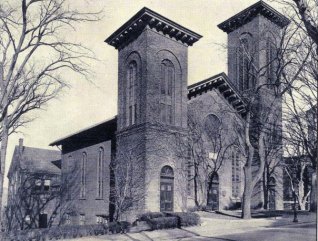
First Presbyterian Church of Yonkers NY, 1964

The benefits are several. Maybe my consciousness does not affect the consciousness of other beings, or in any way affect the suffering they experience. I certainly allow that may be the case. Nonetheless, the practice of thinking kindly toward all other beings works to make me feel happier and kinder; it reminds me of my own and others’ generous spirits. In addition, the practice soothes me both bodily and in my mind. Slow breathing is comforting and relaxing. All kinds of studies show that slow, thoughtful breaths relieve physical stress and mental stress while allowing oxygen to flow freely through the blood. All of that is helpful to the body–and the slow breaths are relaxing enough to get me back to sleep. Which is also, as studies show, quite essential for good health.

~

The night sounds and the changing seasons kindle me to write poems, as well. Sometimes those middle-of-the-night awakenings are charged with inspirations, or snippets of imagery from life or dream.The urge to write differs from the urge to share compassion, but they feel like kinfolk to me. Poetry springs, often, from the feeling of shared struggle.

~

May we make good use of insomnia. May we be free from suffering.

The Protestant in my upbringing says, Amen.


Here we are

I frequently tell my composition students to break the task of academic essay writing into steps that work for them–very Aristotelian of me. Many educated persons were “taught to think” using this method, basically by bundling concepts together into categories. I tell my students that each person may develop a different approach. Sometimes traditional categories don’t work for a particular kind of thoughtful mind.

My own, for example. I have had to study to get to the “rational,” and it intrigues me (science mind! philosophy mind!). But the mythic and the discombobulated and the circuitous: my default consciousness heads into those places when left to wander without a focused task.

A student in my class asked me why I decided to teach college. The funny thing is that it did not feel as though it were a decision on my part. It was a series of steps that seemed unrelated at the time.

One perspective–I graduated with a Philosophy and English bachelor’s degree at the moment of the worst economic period since the Great Depression (the late 1970s). I was a good speller. I got a job proofreading. From there, a series of jobs, and periods without jobs, and marriage and children and a graduate degree and wanting to do a little part time work and teaching poetry workshops in schools…

grassesA

Another perspective–I became entranced with poetry as a young adult. I read and read, and I also wrote; joined a writing critique group when David Dunn shyly invited me to the informal weekly sessions in Brooklyn. Brooklyn was not fashionable then. I had a job that paid my rent, barely. I wrote constantly, and David encouraged me to read aloud. Ariel Dawson encouraged me to submit my work to magazines. Ploddingly, and without much confidence, I followed my friends’ advice. I learned to speak in public, to groups of people who might not always be open to what I had to say. Later, I raised two children. How like teaching these things are…

I was invited to teach. I tried it. There are tasks at which I am more competent, but I get by. Some of my students thank me.

I still prefer tutoring and coaching, working one-to-one with a student, side by side in the task of urging thoughts into clarity in the form of written text. Here I am. The semester has started. Wrench those random ideas into curriculum, work on word order and concise expression. Be with the student where he or she is. Start there. Be confident. The next step will evolve.

A series of seemingly unrelated events, careers, moves, ideas, loves–those are our human foundations.

And here we are.

Untitled-writer

Negative space

A recent visit from a poet friend has me thinking I need to change my perspective again–always an important thing for an writer to do. If we don’t shuffle things up once in awhile, we get mired in swamps of the too-familiar and keep resuscitating what we have done before.

Sometimes, that is what needs to be done. But sometimes we need to move on.

~

Years ago. when I took visual art classes, my instructors taught me about how to see negative space as a method of considering the subject not as my brain wanted to see it but as it existed in relation to other objects in the visual plane. Those gaps between what we see as objects we automatically assume are “empty” spaces; but once we learn to perceive them, we recognize how vital they are to the composition. I learned that an arrangement–say, a still life–might contain more interesting negative spaces than positive ones. One moment of noticing, and the idea of what I could “see” would be transformed.

IMG_1845

Most people learn about negative space through the Gestalt concept of figure-ground organization principle. I found out about it through teachers who had me draw the spaces between subjects.

What does this have to do with writing or poetry? Here’s a spot I could easily allude to Keats’ famous coinage of the phrase negative capability. But that’s not what I mean.

~

Change the viewpoint: new images arise; the shadows differ; the light’s at a different angle. What was ground becomes, perhaps, foregrounded.

Writers need to make these shifts, too. I have spent considerable time learning forms and meters, experimenting with styles and stanzas, working with phrasing and syntax, pushing at fears and feelings, playing with images. That has been all to the good, but maybe I ought to approach the task and process of poetry-writing with an eye to what’s been in the background. Some of it hidden in plain sight, like those negative spaces, some of it skirting behind the plane of the subject, genuinely hidden until the perspective shift occurs.

leaves

~

Maybe what I need is, simply, space.


On absence

I have experienced a felt absence lately, a sense of missing.

Maybe the world is too much with me. I have responses to the Stanford rape case, responses to the Syrian refugee crisis, to the US presidential campaign, to the mass murder at a gay nightclub in Orlando; responses to some personal challenges, as well–health: my own and loved ones’, among other concerns.

Responding represents the equal and opposite reaction to any action, in a Newtonian metaphor. And what my body and my mind these days are saying to me is “step back, reflect.”

Humans love immediacy–the rapid Twitter argument, the comments on opinion posts, the punch in the gut. Animals need rapid responses in order to negotiate a world of predator and prey; humans, however, (and, more than most of us realize, many other animals) also possess the ability to reflect on what the feelings are. What they may mean. How that meaning may alter our responding mechanisms. We can–if we pause to do so–put ourselves in the place of the Other, imagine different perspectives that may color our responses.

Sometimes, we may need to absent ourselves awhile. To put some distance between our feelings and the conflicts we engage in. We need feelings and we need thoughts, we need responses and we need observation from other viewpoints.

~

It occurs to me that poetry is the conversation between the rational, languaged mind and the mind of feeling and imagery. This effort involves the same mind at work on two or more fronts, the human brain constructed as it is to handle multiple levels of feedback, feedforward, and association.

Poetry isn’t “about emotions.” It’s an art that employs language to represent the tension between the rational and the feeling, the mind’s mighty efforts to engage with the difficult and the heart-stirring.

This is how reading about neuroscience enhances my interpretation and understanding of what poets do. I read difficult books and eschew spending time on the internet. I sit on my back porch and ponder. A buzzard swings to and fro above, gliding on the updrafts. I try to heal myself. I cannot heal the world.


IMG_2288


Reflection

~

“I have known in my life a number of young poets with immense talent who gave up poetry even after being told they were geniuses. No one ever made that mistake with me, and yet I kept going.” –Charles Simic, “Why I Write Poetry” (2012).

~

puddle.JPG

No one ever made that mistake with me, either; and, like Simic (though less illustriously, and less successfully) I keep at it. Lately I have been thinking that perhaps it’s for the same reason that, when I was a teenager, I kept sketching self-portraits. I was practicing observation and trying to capture something: a kind of self-reflection that is not entirely in the mind but can be shared–if done skillfully and with intention. And at the end of the task, there was an object. The picture. The poem.


At sundown

The disintegrating physical and mental situation of an elderly best-beloved recently has led me back (after a brief pause) to readings in neurology and consciousness. It has also led me to reflect on the tasks memory accomplishes for us and how the need to tell a story seems to reside deep in whatever “makes us human.” Many poems, perhaps most of them, are “inspired” by memories and a need to tell. So I will indulge myself by giving a narration here, and perhaps poems will follow later.

paintdaub copy

The best-beloved has been in and out of hospitals, rehabilitation centers, and so-called independent living placement and appears to have developed a very common but not-commonly-talked-about cognitive disarray, or hospital-induced delirium, that medical personnel call “sundowning” when it occurs in Alzheimer’s patients. But my patient does not have Alzheimer’s disease. Her meshing of realities must have been triggered by something else, but the possible factors are many. We may never figure out what it was that pitched her into delusion and lack of compassion, turning her into a person we barely know.

She took good care of her body. At 90, her physical self is in better shape than many people 20 years her junior. Her brain–and hence, her mind–has not stayed as healthy as the rest of her. Several small strokes deep in her brain began to alter not just her gait but her personal focus. Long years of hearing loss no doubt altered how her brain processes input. The reading I have been doing (most recently Carr’s The Shallows, Sacks’ On the Move, and Damasio’s Looking for Spinoza) indicates that the human brain is “plastic” but not necessarily “elastic.” It can modify in response to damage or training, but that does not mean it will spring back to the way it was before. In extreme old age, the process of adaptation slows. The brain becomes less resilient. For reasons no one really understands–a host of possible culprits includes hormones, glutamates, serotonin production, medicines, genetic predispositions, and environmental factors among others (a perfect storm…)–persons who have been sharp and cogent may suddenly experience delusions, often leading to paranoia, confusion, loss of affect, lack of social filters, violent and contrary behavior.

And we ask, “What happened to the soul I love?”

alice-heart1 copy

If we believe in souls, we have faith that somewhere under the changeling is the best-beloved. In flashes, she may return to us. If we believe that the brain is the person, the transition from best-beloved to aggressive complainer is harder to accept. Damasio seems to believe the brain is the person. I find it hard to agree with him fully, though I have been learning a lot about neurology in the process.

Metaphors or analogies for the situation seldom seem, to me, quite to capture the wrenching feeling I have when encountering sundowning. The idea of disintegration seems inappropriate in this case, because she recalls who we are and her mind is not collapsing so much as morphing in unaccountable ways. Threads unraveling? No, not really; the metaphor of a quilt coming undone, maybe, or an intricately-woven tapestry shredded apart–but that’s far too simplistic.

Think of the mind: it encompasses the brain with its regions for motor, somatosensory, auditory, and visual processing; the body, which takes in those physically-produced inputs; memories; thoughts; feelings, which are thoughts spurred by emotions; and a host of complex inter-relationships we cannot even begin to map. Somewhere in all of this is the person, the “self.” At least, as far as we have so far been able to speculate (though not everyone agrees; see my post on Hofstadter & Parfit. Parfit suggests personal identity is an invalid construct).

Perhaps an environmental analogy would suffice, being complex enough for comparison. She is the planet Earth, aging and adaptable, but not endlessly adaptable; her healthy balance has been thrown off by things she may not have had any control over. In whole regions, she becomes inhospitable. Poisoned. Dry. Hot. Overrun with invasives. She seems not to like us anymore, but that is not what’s going on at all. In fact, she’s dying.

Maybe that’s taking the metaphor too far. But in difficult times, one reaches far. There is hope she may recover at least some of her Self, and in the meantime, we have stories in which she plays a role. Mnemosyne–awaken in the consciousness of those who know her. Telling the stories is a step toward letting go.


Diversity of form

“Diversity” is a buzz word among educational institutions these days, and I sometimes get a bit tired of hearing it. Diversity as a buzz word becomes like a dead metaphor; we stop thinking about what it means.

Yet when I am reading about biology or evolution, “diversity” flowers into meaning again.253142_2101392498695_2412222_n

Also, after the reading I recently gave, a thoughtful member of the audience remarked upon how literal and concrete the poems in my first book are–especially compared with some of the more speculative and abstract poems I read in response to the “questioning” theme.

Has my writing become less concrete over the years, I wondered. The response is yes and no. In some respects, my poems convey specific and concrete images and actually-possible events, but a mixing tends to occur between & among the lines. Even in that first book: it is, in fact, about building a house. (Concrete was involved!) As I composed the poems that make up the book, however, I realized how metaphorical the whole idea of house, home, hearth, shelter is. Think of the imagery of a house and ingrained, almost mythical connotations arise. The window. The door. The key. The roof. The rooms (stanza means “room” –even the poem offers shelter).

So back to diversity–there is, in the world of poetry and poetics, diversity of form, just as in biology. There are “set forms” such as the sonnet, which turns out not to be quite as “set” as might be expected (see this entry at The Academy of American Poets and this one by Rachel Richardson at the Poetry Foundation). I love diversity of form and have experimented throughout my life with different strategies of written expression, sometimes sound-based or rhythm-based or image-based or codified by the “rules.” I have also broken the rules just for fun, often to good effect. Free verse, metrical verse, alliteration, allusions, puns…I love them all.

The downside of such play, if this can be considered a downside, is that winging it the way I do–as to formal approaches–means that my collected work does not fit a style. I wonder if that is why my second full-length collection languishes unpublished. It’s entirely possible that the poems in The Red Queen Hypothesis are not very good poems. Critical feedback has suggested that isn’t the problem, though (whew!). The problem may be diversity! Publishers, like most human beings, love to categorize. What does not nestle into categories becomes the odd duck.

http://asymptotia.com/wp-images/2009/10/odd_duck.jpg

odd duck

The reason I chose these poems for this collection, however, has much to do with varieties. The poems deal with the abstract and the biological, the cosmological and the everyday. They stem from a notion that life evolves continuously, making each object and being individual as part of an ever-changing, meshing, chaotic and– paradoxically, but of course!–unified universe. Uni (one). Verse (a pun). The underpinning of The Red Queen Hypothesis is diversity, though that may not be its theme.

So I am not planning to revise the already-much-revised collection; I’ll just persist in sending it out to publishers while hope springs eternal. In the meantime, I have been pondering where the next set of poems is headed. Possibly along the edges. It will be interesting to find out.