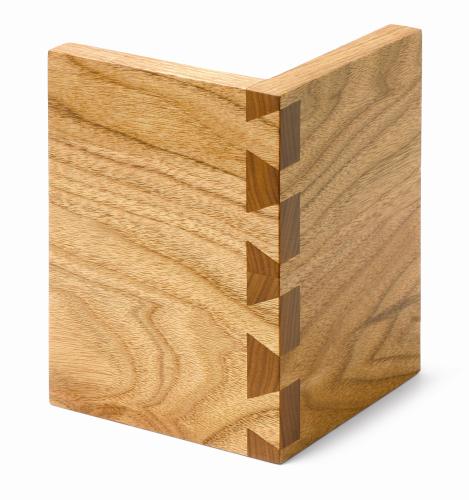
Hinges, Hopkins, “Buckle! AND…”

Thinking about poetry again, at long last. A colleague directed me to a lovely little online post in which poet Catherine Barnett describes her attempts to create a physical analogy of poetry as hinge: here on the University of Arizona site.

Barnett writes:

As a poet, what interests me about a hinge is its two defining qualities: a hinge—like other devices—connects objects; it serves as a point of connection, a joining, a joint. But so is glue, a screw, a nail, a hasp, a clasp, a knot, a lock. What distinguishes a hinge from most other forms of connecting is the fact that it allows relative movement between two (or more) solid objects that share an axis.

In a poem, a hinge word or moment or gesture allows you to have both continuity and gap; unity and difference; such “hinges” keep the parts of the poem in some working relationship to one another and at the same time allow the poem to retain some of what Aristotle calls the unities of time and place.

How radically or loosely you want the hinge to open is a matter of temperament.

I love that idea of temperament juxtaposed with relative movement, continuity and gap. I’ve long mulled over the concept of joinery as a metaphor for some of the things that happen in poetry (even if “poetry makes nothing happen,” I do wish people would remember Auden’s next phrase that “it survives/In the valley of its making”). The hinge offers another analogy that Barnett hints at though doesn’t fully develop in her brief piece. I felt inspired to explore a poem that I think demonstrates the concept of the hinge.

The Windhover

To Christ our Lord

I caught this morning morning’s minion, king-
dom of daylight’s dauphin, dapple-dawn-drawn Falcon, in his riding
Of the rolling level underneath him steady air, and striding
High there, how he rung upon the rein of a wimpling wing
In his ecstasy! then off, off forth on swing,
As a skate’s heel sweeps smooth on a bow-bend: the hurl and gliding
Rebuffed the big wind. My heart in hiding
Stirred for a bird,—the achieve of; the mastery of the thing!

Brute beauty and valour and act, oh, air, pride, plume, here
Buckle! AND the fire that breaks from thee then, a billion
Times told lovelier, more dangerous, O my chevalier!

No wonder of it: shéer plód makes plough down sillion
Shine, and blue-bleak embers, ah my dear,
Fall, gall themselves, and gash gold-vermillion.

Aside from the fabulous alliterative sound-joy and astonishing rhythms of this poem, it offers powerful, realistic description of a bird that manages to operate symbolically if the reader chooses to interpret it that way (as Hopkins surely meant his readers to do). I propose that there are several hinges in this poem, most spectacularly the center line in the center stanza, exclamation and capitalization marking the spot. It is at this point in the poet’s observation that pride, plume, brute beauty suddenly buckle: the falcon wings fold, plunge, AND…the bird breaks into the dangerous shine that makes the viewer’s heart leap at the sight.

Perhaps there is a moment when the bird’s shape resembles a cross in the sky. Perhaps the sun behind the gleaming feathers sends out shimmers like flames, the glory of God illuminated. Or it’s just a falcon, handsome and gliding on the big wind, but that hinge in the poem’s line serves to alert us to the gap (the hinge-like action of wings an unintended simile) and the continuity of the poet’s observation.

There are other hinges that work in the piece, such as the hyphen in its odd place at the end of the first line, promising “king” but leading instead to the string of D sounds that drum through the second line; the closed hinge of “Stirred for a bird” opening wide into the surprising exclamation that hangs of the axis of a long dash “–the achieve of; the mastery of the thing!”

I’m not sure I’m going to attempt Barnett’s original idea of making a poem physically into a hinge (though I have some tantalizing thoughts about ways one could accomplish that); I hope eventually to write about the joinery analogy. Meanwhile, however, I’m spending the evening with Hopkins’ “Windhover” in my mind. A pleasant way to open, or to close, a mild day late in autumn.

~

Still more difficult books

I am perpetually out to confound myself.

After reading Larson’s odd but lucid koan-like “biography” of John Cage’s creative interpenetrations with Buddhism, I have begun Maurice Merleau-Ponty’s 1961 text The Phenomenology of Perception. Already I have encountered some thoughts in Merleau-Ponty that relate to the indeterminate, a concept that excited Cage and that Larson demonstrates shares a great deal with Zen. But reading Merleau-Ponty is more challenging than reading Larson’s book, as I have less background in early 20th-century philosophy than I do in Zen studies. I enjoyed reading Bachelard’s imaginative, image-based take on phenomenology because I could relate to it on a poetry level even when I missed some of the philosophical antecedents (or contemporaries) he references. That possibility isn’t available to me with Merleau-Ponty.

I do appreciate that his writings were formulated before technologies that made neurological processes visible and while psychology was still bickering with the “hard sciences” about empirical measurements. (Actually, that bickering continues in some areas of study.) I do not think Merleau-Ponty would agree with, say, E. O. Wilson’s rather reductionist idea of consilience. Yet clearly, the philosopher was willing not to discount the sciences or empirical study–he just felt those areas were not of particular use to a philosopher, particularly a phenomenologist.

The body is what we have with which to experience the world, Merleau-Ponty tells us. But the human body is limited by its perceptual experiences. Structures–and that includes abstract structures such as thought–appear to have recognizable patterns, and the perceiver may posit cause and effect as a result. But another body may perceive differently, due to a different biological process or a different time or any number of physical or environmental variables. We perceive yellow with the cones and rods of our human eyes; the dog or the bee, the spider or the hippopotamus, may have eyes that do not see yellow as we do. Is yellow a quality or a perception? Merleau-Ponty seems to be saying (I am not very far into the book, so I  may be in error) that science cannot be objective, even though it is science that made us question our senses: “We believed we knew what feeling, seeing, and hearing were, and now these words raise problems.”

And how does this all relate to consciousness? Maybe I’ll figure that out as I go along.

ann e. michael poet

~

Here’s a sentence I love because it speaks to me of poetry and the arts on the level of ambiguity: “[Science, with its categorization] requires that two perceived lines, like two real lines, be equal or unequal, that a perceived crystal should have a definite number of sides, without realizing that the perceived, by its nature, admits of the ambiguous, the shifting, and is shaped by its context.”

Or perhaps by observation? A little Uncertainty Principle going on there. I feel that good poems change when observed, and change in the context of the reader’s time, place, experience; that they possess ambiguity not in the sense of rhetorical wishy-washiness but in the rich sense of complex possibilities, indeterminacy, transformation.

~

I’m especially pleased to have found Bernard Flynn’s article in The Stanford Encyclopedia of Philosophy (the link to the entire article is above), which ends with the following reflections on Merleau-Ponty:

If we think how the thought of Merleau-Ponty might prolong itself into the 21st century, or as it portends a future, then we cannot not be struck by the fact that his philosophy does not entertain any conception whatsoever of an ‘apocalyptic end of philosophy’ followed by the emergence of some essentially different mode of thought. Unlike Heidegger, there is no anticipation of an ‘other beginning’, also there is nothing like Derrida’s ‘Theory’ which is waiting in the wings to displace philosophy, and unlike Wittgenstein, Merleau-Ponty’s thought does not await the disappearance of philosophy. In the academic year 1958–1959, Merleau-Ponty gave a course at the Collège de France entitled “Our State of Non-Philosophy.” He began by saying that ‘for the moment’ philosophy is in a crisis, but he continued, “My thesis: this decadence is inessential; it is that of a certain type of philosopher…. Philosophy will find help in poetry, art, etc., in a closer relationship with them, it will be reborn and will re-interprete its own past of metaphysics—which is not past” (Notes de cours, 1959–60, p. 39, my translation). After writing this he turns to literature, painting, music, and psychoanalysis for philosophical inspiration.

The theme of the indeterminate frequently recurs in the thought of Merleau-Ponty. Philosophy is enrooted in the soil of our culture and its possibilities are not infinite, but neither are they exhausted. In an essay entitled “Everywhere and Nowhere, ” Merleau-Ponty explicitly reflects on the future of philosophy, he writes that philosophy “will never regain the conviction of holding the keys to nature or history in its concepts, and it will not renounce its radicalism, that search for presuppositions and foundations which has produced the great philosophies” (Signs, 157). In his Inaugural Address to the Collège de France, he claimed that “philosophy limps” and further on that “this limping of philosophy is its virtue” (In Praise of Philosophy, 61).

What will philosophy do in the 21st century? It will limp along.

Apparently, I shall be limping along with it.

Energy & stamina

I have been thinking about energy and stamina, and the difference between the two, and how they relate to creative practice. The word “energy” conjures up, for me, vigor and forcefulness, vitality, strength–a sort of bustling intensity, the kind my son exhibited when he was five years old, for example. I have never considered myself a particularly high-energy person.

Think of the cat. A cat is capable of intense bursts of energy but will also husband that energy until the moment it’s needed. The cat will also sleep most of the day, storing up energy for the necessary predatory expenditures of strength. The feline form of energy use does not suit me very well, though I am partial to naps.

Stamina, however–stamina I have possessed. Stamina is also strength, also energy, but it is of a different nature. Plodding sometimes, headlong other times, but steady in the main. The sort of focus and determination a person needs to get through the long haul strikes me as stamina. Stamina is the energy to endure.

free kewlwallpaperWe have the mayfly and the bee, always buzzing actively, bursting with lively energy. Or the cat, conserving and then pulsing with strength and force. And we have the snail, constant and enduring, slowly edging its way toward its object.

My writing practice requires endurance, because I only occasionally get flashes of inspiration or insight and rarely feel surges of creative energy. Nonetheless, I have been told I am a “prolific” writer (by whose standards, I always wonder; compared to Georges Simenon and Alexandre Dumas, I am a piker). I think the reason is that I keep on. Everyone experiences setbacks, rejection, dry spells, discouragement, dull days. How we choose to deal with those situations becomes part of our practice of the discipline of art, and many approaches “work.” Whenever I read biographies of artists of any kind, or interviews with poets and writers and choreographers and composers, I recognize that (despite post-modernist critique) the life, in terms of personality and approach, does to some degree influence the art.

But the results are impossible to stereotype. A talkative, energetic artist may produce quiescent, meditative art. A dour personality can produce hopeful poetry, a still and soft-spoken person may create fierce, kinetic work.

A highly energetic person like Rimbaud can “burn out” on a major art form rapidly (though his busily-spinning, adventurous life kept going). And then there are the energetic sorts who just keep making work with boundless, apparently inexhaustible fire (see Simenon). One method or personality is not better nor more suited to art than another.

~

This is my minuscule revelation for the day: The one time I visited a shaman, I was told that my totem animal is the snail. The idea gave me a moment’s pause, but then seemed somehow very apt.

Except I was a little queasy about the slime trail.

~

I decided I can reframe the fact of slime once I recognize its purpose. It is not merely a lubricant, helping the gastropod to glide along, but also a glue that enables the creature to climb difficult surfaces, walls, and even ceilings. The layer of mucous also acts to protect the snail from dehydrating.

There must be a metaphor there somewhere. Poetry as…snail slime?

~

Time to keep plugging away, I  think.

Another Reading reading

On All Saints’ Day, November 1st, I’ll be reading poetry in Reading Pennsylvania–again! And this time, I’ll be accompanied by my fellow Goddard alumna, the dynamic and talented Barbara DeCesare, author of Jigsaw Eyesore and Silent Type.

Reading, PA is home to GoggleWorks, a former goggle-making factory that now serves as studio, theater, and gallery space for Berks County area artists and craftspeople of all kinds. Small, struggling cities like Reading are turning to the arts as a means to fill abandoned factory space and create an economic and cultural reason to keep downtown areas alive. Sometimes these efforts succeed, sometimes they don’t. GoggleWorks opened in its current incarnation in 2005. So far, that’s a 7-year run, supported through grants and donations and rent. I am optimistic about GoggleWorks and about other such endeavors, including Bethlehem PA’s Banana Factory, which is a little closer to my neighborhood. I strongly believe the arts belong in our neighborhoods, in our school curricula, and in our lives.

I’m thrilled, therefore, to be reading from my book, Water-Rites, at 6 pm November 1st at GoggleWorks’ Cucina Cafe.

And I’m thrilled to be reading with Barbara, whose work is funny, poignant, imaginative, fierce, and charming by turns.

November 1st is the Day of the Dead in Mexico, a good day for elegies and to celebrate the lives of those we’ve loved and lost. I will be thinking of David Dunn, among other dear ones. And in honor of All Saints’ Day, I may also read a poem or two about saints; recently, I’ve composed a few imaginary lives of saints poems.

I have no idea what Barbara DeCesare has up her sleeve for this event, but it is certain to be delightful. If you are in the region, stop by at 6 pm. I believe an open mic follows the reading.

water-rites by Ann E Michael

Not a dry spell

October arrived in a remarkably ordinary way, considering how inconsistent the weather in my valley has been during the past year. There were a few clear days of brilliant sky, some heavy breezes with leaves beginning to drift into the lawn, a couple of glorious autumn days–mild and crisp–followed by a spate of rain and humid air (and toadstools and mushrooms cropping up everywhere), a further yellowing and reddening of foliage, and then, chilly rain.

This is “normal” weather for our area in early- to mid-October. Although the heavy skies and damp chill are not always welcomed by residents, including me, the gardener in me feels relieved. We need the rain and the coming dormancy. The birds relish the late, large insects that frequent gutters and fields, ponds and puddles, providing proteins for a trip south or for winter ahead. Seeds need the watering-in and the cooling-down. Trees need reminders to store their nutrients deep inside when the cold air really sets in.

And pretty soon, I will have bulbs to plant. I want the soil to be moist enough to dig up and the ground temperature cool enough to keep the daffodils still and quiet for several months.

Some years, I write prolifically in autumn; it’s as though the change in season effects a kind of transition within me, and creativity abounds. Other years, not so much. I do notice that when I spend a good deal of time out in the garden, I write more. This fall has not been that kind of season. I have been busy with writing tasks that do not exercise the philosophical or metaphysical side of myself–though I have been writing, most of the work has been reviews, proposals, pedagogy.  I will be posting links to the reviews and essays on the sidebar to the right, adding to the list…

Should fortune–and the Muse–smile upon me, there may be a few new links to poems, as well, in the coming weeks. In November, I’ll be giving a few readings locally. In January, I’ll be teaching Introduction to Poetry again, and I’m eager to try new texts for my students.

Perhaps the post-equinox period will have a creative harvest after all.

Poetry, art, & a little bit more about libraries

After writing about some memorable libraries lately, I realize that I have been able to pursue my passions–indeed, discover my passions–largely through the help of these marvelous civic institutions. It is time I brought my posts back to those passions, however, particularly to my love of poetry.

My family introduced me to poetry through nursery rhymes and hymns and taught me to love narratives through story-telling of several kinds, so the foundation for my lifelong love of stories and poems existed before I ever set foot in a library; but books solidified and focused my various enthusiasms, and libraries offered more books than I could hope to read (though I tried!). Libraries led me not only to novels and poems but to books on visual art, art museums, artists, art history, and art criticism. If I couldn’t get to the Louvre or Rijksmuseum, to Venice or to Rome, I could borrow an art book from the library and be on my way via imagination.

When I got to college, I spent many hours in the library on campus borrowing books I couldn’t afford to buy. Few of those books were required for my academic studies; in fact, I don’t recall doing much research for term papers. I was reading up on and diversifying my own interests, often unrelated to coursework. A look back at my undergraduate transcripts reveals only two classes specifically devoted to poetry, but I recall reading many poetry collections in the campus library. As a junior, I had a work-study job in an office in the library basement. When my hours were up, I’d walk upstairs to the stacks.

I was finding my own way to what I loved.

~

Needless to say, once I had children of my own, we visited the library often. Years ago, I wrote to the poet Richard Wilbur to tell him about my 2nd-grade daughter’s encounter with Digging for China and how, nearly 30 years earlier, I had been fascinated by the book too. He replied with this modest note. June 2009, I saw Wilbur at the West Chester Poetry Conference. What a talented writer, and what a sweet man.

~

Richard Wilbur

Short books and re-reading

~

clockWhen life gets busy and over-scheduled, even an inveterate reader may find she has to give up some of her precious book time to life’s other adventures and responsibilities. Philosophy and meditation require enough time for reflective, slow thinking; a hectic week precludes such activities. Creative thinking gets funneled into problem solving of a more mundane and practical variety. Creative writing? It may have to move, temporarily one hopes, to a back burner.

Last week was one of those over-scheduled periods when I take advantage of brief, unscheduled minutes to read short books. The beauty of reading short books is that the best short books reveal depths upon re-reading–one of the beauties of poetry as well. And if those short books happen to be books of poetry? “More’s the better,” as my great-aunt used to say.

During my crazy week, I managed to read three short collections of contemporary poetry, all by poets with whom I am personally (if marginally) acquainted. All three books are wonderful: layered, varied, well-crafted, interesting, moving, refreshing, surprising reflections on and of modern life with enough empathy and reach toward the “universal” to keep the poems valuable beyond today’s context. All three books are going on my re-read list so I can study and savor them again later, yet each collection is vivid and entertaining enough to read when crunched for time.

~

Will Greenway’s 1999 collection Simmer Dim was published by University of Akron Press and offers the reader a travelogue to many places in the world without as well as the more interior worlds of memory, relationships, and reflection. Greenway writes in both free verse and in rhyme, which he employs so well it seems natural even in the informal diction his work often takes.

April Lindner’s 2012 collection This Bed Our Bodies Shaped was published by Able Muse this summer. The poems offer the sense of a personal speaker, suggesting intimacy that is revealed subtly through well-crafted lines and images of flowers, scene-settings, and  allusions from the classic to the modern (rock n roll). Lindner presents the woman’s perspective as individual, surprising, and non-stereotypical; when she writes about jobs, a lover, motherhood, or menopause, her observations are often quirky but wonderfully observed.

Elaine Terranova’s 2012 collection Dames Rocket was published by Penstroke Press. I love Elaine’s work, steeped as it is in the natural world, plausible and tactile, yet positively ascendant in tone. Her memoir-type poems evoke the kind of childhood that is fast becoming historical, and her awareness of that fact–the fact of aging–gives these pieces poignancy and occasional irony.

~

All three books are also available on Amazon.com. Or ask your librarian to locate a copy for you.

Amazon…

The second week of August is always a busy one for me. There’s little time for reflection–or writing.

I do have some news to impart, however: Water-Rites is now available on Amazon.com at this link. In the best interests of my publisher, Brick Road Press, I’m going to request that you order from the press itself if you can.

Thanks!

Ambition & failure

Some of my non-writer friends are surprised to learn that I am in the process of trying to get a new book into print. After all, Water-Rites just came out! So shouldn’t I be concentrating on selling that book and resting on my laurels awhile? To be sure this collection is a “success” before continuing on?

Those who write poetry or literary fiction, however, recognize that by the time a book finally gets published, the work in it is “old.” We are already well into new projects, working on new ideas, using new styles to express ourselves, addressing different topics. If I were to wait to write new poetry until after my book got into print, I’d probably never write another collection. The economics of the poetry world are too close to what Lewis Hyde calls the “gift economy” to imagine we can stop writing, sell a book, live off of the income and then write another one. Even many best-selling authors cannot do that. Poets are lucky to sell 500 copies of a book. We write for other reasons. Need. Love. Ambitions of a non-monetary kind.

Like all artists, poets take risks. Sometimes the changes we make in our work are not well-received. Sometimes they aren’t any good. Failure, however, can be a most excellent instructor. Sometimes, to shake myself up when the writing seems stuck, I attempt a completely different activity. Gardening clears my mind, and gardening offers many chances to fail at what I do. I’ve also tried watercolor painting, sumi ink calligraphy, modeling clay, embroidery, dancing, piano, and many other endeavors. I cannot claim to be remotely good at any of them yet each of these pursuits has taught me much…often through my lousiness.

janis ian

Janis Ian, 2012. Photo by David Sloan.

Recently, Janis Ian–singer, songwriter, science fiction author, and philanthropist–offered the commencement address at Warren Wilson College in Asheville, NC. In her speech, Ian talked about being self-taught; being a self-taught success. And she had important things to say about failing, as well. She said, “We are rarely asked what success really represents to us, or why failure is so demeaning.” Then, she admitted that she herself had always avoided failure but that at a point in her life when she felt unhappy with everything she was producing, “I had to learn to fail before I could find my way again.”

Her approach was to take ballet lessons! At age 33. And she was awful at it, but she enjoyed doing it. Then she attempted other things at which she was terrible, and she learned to overcome some of her fear of failing.

An autodidact myself, even though I do have academic degrees, I found I could easily relate to Ian’s experiences. The part of her speech that spoke to me most was this section:

“You see, I am an artist. I believe that art saves. I believe it is often the only thing that stands between us and chaos. I have faith that while the world is crumbling, art survives. So to feel like my work was a mockery of what I could do, that I was not living up to my talent…well, it was killing me.”

Art requires us to do our best, to be ambitious and strong, to take risks and –occasionally– to fail. To fail spectacularly perhaps, or just to produce a bunch of small, humiliating, stupid failures…like dancing badly in your own room where no one can see you.

But dancing can feel so wonderful, so freeing, so different from writing! It’s worth doing badly. Sometimes when we have less at stake, we find new methods of expression and new ways to keep our fears, including the fear of failure, at bay.

~~

The full speech is available on Warren Wilson’s site here.

Flame and ash

I have often imagined what it feels like to lose everything in a fire. Particularly if you are a writer or painter, and you work with easily consumable tools–paper, for example. Maxine Hong Kingston has been articulate and interesting on this situation; perhaps it was her well-reported experience that first got me thinking about how terribly affecting such a loss would be. In 1999, a friend of ours whose business is woodworking lost his shop, tools, work, and wood in a workshop fire. The shock was the worst part–like Hong Kingston, our friends had been away from home and returned to find cinders where their livelihood had been.

Last week, Michael Czarnecki, publisher and sole proprietor of FootHills Publishing, was vacationing in Maine when he learned his house and business had burned to the ground. I have heard that phrase before–but it was literally the case: to the ground. With the loss of clothing, memorabilia, musical instruments, furniture, etc. came the loss of livelihood and the loss of FootHills’ archive of 20+ years of small-press publishing. Many, many books went up in flames, a life’s work.

Paul Martin's chapbook

Paul Martin’s lovely chapbook Morning on Canal Street, FootHills Publishing.

Michael has been documenting the remains and posting images on his Facebook Page. Pictured here, what’s left of a copy of Paul Martin’s chapbook, one of the few that were still recognizable after the tragedy. Paul is a colleague of mine, and this photo makes me sad.

I am sure Michael has not yet done a full accounting of his destroyed inventory. The two books of mine he published are certainly among the casualties, and I feel a selfish pang over that. If he gets the press up and running again–and he plans to (he is an optimist and a hard worker)–he’ll probably try to reprint at least some of the 300 or so books FootHills has produced over the years. The more recent books will be easier to reprint, as he had his computer with him and it was not lost in the fire…pdf files of some of the books are intact. But the “history” of the press…its archival, early chapbooks, may be gone for good.

Once again, I reflect on ephemera. One of the most moving photos Michael took is one of his sons’ birth certificates, charred, the edges the same color as the tiny footprints that are still visible. We are so vulnerable.

And we endure, too. Our art helps us to manage these difficult passages. Love helps us navigate the ashes.

If you are interested in and financially able to help FootHills Publishing recover and rise, phoenix-like, from the ashes, you can go to the FootHills website and donate through PayPal or send a check to

FootHills Publishing
PO Box 68
Kanona, NY 14856

Thanks very much. As Michael Czarnecki says, “Never stop asking for poems.”