Poems that help us to endure

I’ve recently completed reading Eugenia Semyonovna Ginzburg’s memoir Journey into the Whirlwind. What has struck me about the memoir is, in particular, Ginzburg’s reliance on poetry as a means to enduring prison, deprivation, oppression.

In several selections, she reiterates how reciting or recalling poetry–Pushkin, Pasternak, Blok, Mandelstam, and lesser-known (to us Westerners) poets such as Tyutchev, Chorny & Nekrasov–gave her hope or encouraged her to keep on in the face of awful situations, or just to remind her that others have endured harsh and terrible conditions and found the means to express themselves despite it all.

I believe poems–and art of all varieties–help us to endure. Some poets who have helped me to endure include Anna Akhmatova, Mark Doty, Mary Oliver, Gregory Orr, John Donne, Yehudi Amichai, Stanley Kunitz, Donald Hall, Emily Dickinson, Adrienne Rich, Marie Ponsot, and others. Too many to name.

Who has helped you to endure? Whose art, whose poetry, whose stories, whose music?

When we reflect on these creations, perhaps we can learn more about ourselves.

Love is all you need?

My daughter made this collage when she was nine years old. This is a poorly PhotoShopped version (the original has faded pretty badly):

~

Love is all you need

I was listening to The Beatles recently, music that takes me pretty far back into my childhood. I’ve been thinking about musical cues to memory for another poetic project on which I am currently working, so the concept of music evoking imagery, subjects, memoir has been uppermost in my mind. More on that project perhaps later, when I have arranged my thoughts more cogently. Meanwhile, some thoughts on “All You Need is Love.” Or more correctly, some musings that begin with “All You Need Is Love.”

When I was an adolescent, that Beatles’ song seemed to signify on several levels. One level was the universal: Love as the root of human sharing, as the means to peace and understanding, as the solution to the Big Problems. Another level was the romantic: Love as the way to solve personal loneliness, finding the partner with whom I could mesh, forge a permanent and personal understanding.

Love as solution. I view that ‘philosophy’ as a non-philosophy now; it is simplistic and impossible. Love is not a solution; it is a verb, active and engaging. Love certainly does not fix things. Its necessity, however, I do not question. Not for those who wish to be fully human.

Wait, you’re going to object–love is a noun, too. In most dictionaries, love as a noun is the entry before love as a verb. Arbitrary on my part to assert precedence for the verb, but I am cautious of abstractions even though I relish philosophy. Love as noun is abstract.

Merriam-Webster: “strong affection for another arising out of kinship or personal ties.” My OED (compact, print edition) contains 9 columns defining Love as a noun and two defining Love in the verb sense.

When I say love is a verb, I mean that in definition 3b in the OED: “to entertain a strong affection; in the reciprocal sense” and 4c: “to take pleasure in the existence of (a virtue, a practice, a state of things) in oneself, in others, or in the world generally.” Love need not be reciprocal, though that feels best to us–hypersocial beings that we are (see my post on Brian Boyd). Love is the greater part of compassion, in which case love is something we do.

I know people who have chosen to take their own lives. A few felt the sense of despair that comes from feeling there is no love (and therefore, no hope). But that is not always the case; some who took their lives did feel love, knew love deeply, knew that others loved them and would miss their physical presence. Love was not all these people needed.

And love was not the solution.

I think we damage ourselves when we believe that love is the solution to our problems. We need other strategies, other fullness in our lives, the tools to overcome or bear with many obstacles; we need perspective and humor and grace. Love alone, in and of itself, doesn’t make peace break out. It does not solve all the issues in a truly profound and sharing relationship–not on its own. Love needs other actions, and other abstractions (trust, communication, compassion, patience, for example) to do its work. It does not solo well–that is not what love needs. Altruism cannot exist in a vacuum, nor can romance, nor compassion.

It takes some effort not to become sentimental here (but Bachelard defends a certain amount of sentiment…)

This is not my definitive post on the subject of love! I need to read more philosophers on love, and to consider love’s evolutionary role, and its spiritual role, in human existence. I’ve done reading on t his in the past, but it was all very long ago. Now might be a good time to begin anew (since “I was so much older then, I’m younger than that now”).

Berries

My region, like many others, has been sweltering through a heat wave lately. The mild winter pushed bloom times and fruiting times a bit earlier than usual; blackberries started ripening ten days ago, and now we have blueberries before July.

But not much before July. In celebration of blueberries and other joys of summertime, here’s a poem from my collection Small Things Rise & Go.

The Blue of July

We pick the first blueberries
while lilies gape at us,
peering over their green fans.
Birds’ tirades scatter over wind
and into our ears,
buffeting us with scold and caw and
something not melody but song:

a song of fruit, of seeds and
mealybugs and inchworms,
the wild clack of bamboo
or maple branches.

Summer’s like a mulberry,
a blueberry, dark and vivid.
It stains the day sweaty,
leaves bright pollen on our noses
as we inhale the sun

on lilies, as white clover gathers
like clouds upon the grass
and, sweet in our mouths,
the day explodes—blue.

~

A note to anyone who has ordered or wishes to order Water-Rites: The order has gone to the printer. Possibly 2-3 weeks before my book is in your hands. Many thanks.

Control

middle island ~

Human beings crave control. We want to be the masters of our own fate or to believe that there is a master of our fates who can be entreated or persuaded, propitiated or cajoled into helping us to gain control of our lives or the lives of others. We want to change the weather so that the rain falls when the soil needs rain, wetting the seeds we’ve sown, and so that the warmth comes when our plants need warmth. We want the sea to be calm and the fog to lift when we are ready to set sail. We want fine, sunny days when we visit the beach to swim or head out for a picnic. We want just enough snow so that school’s canceled, but not so much that our power goes out. We pray. We dance. We chant. We invent little private rituals and participate in community rituals.

We want to control our health. It does not seem to be an unreasonable aim. We want to control our relationships–just enough to keep ourselves happy. We want control over our careers and  our income–not so much to ask. We want to be able to make our own decisions. We want choices so that we feel we have control over our lives.

My gardens are my analogy today. I’m still endeavoring to exert some control over my vegetable garden, but I kept my purposes modest this year; I planted fewer beans, fewer tomatoes, fewer peppers, fewer potatoes, no onions, no peas, no edamame, no radishes…the walk-through rows are wider so it is easier to weed. Beginning with the dry warm winter and some assemblies of challenges that do not pertain to the garden, the season looked “iffy.” Then came lashings of showers in May. A challenging season, but not insurmountable. I have been gardening a long time, and I have methods of adapting to things I cannot control. It comes with the territory.

The ornamental beds have presented the most difficult struggle with my need to control the space I (somewhat ridiculously) consider my own. When the beds get overgrown–as they are now–I know that I can accept their exuberant rioting with the successful weeds. I can say, “This is what nature intends. There is beauty here.”

overgrown

I do know that. But the controlling mind–the monkey mind–says, “Too much penstemon; it’s gotten aggressive. Deadhead the peonies. Pull up the plantian, the wild asters, fleabane, wild garlic, crabgrass, bermuda grass, creeping charlie, five-leaf vine. Get the seedlings out of there (mulberry, redbud, oak). Mulch. Keep the rabbits off the hostas. Move the marybells. Get the weeds out of the alchemilla…”

My head clouds with fog. The seas get rough and I despair, because I cannot control things. Not even a small garden.

Instead, I could be meditating on green. On the amazing variety of leaf-shapes, on dappledness (like G. M. Hopkins):

Pied Beauty

Glory be to God for dappled things—
For skies of couple-colour as a brinded cow;
For rose-moles all in stipple upon trout that swim;
Fresh-firecoal chestnut-falls; finches’ wings;
Landscape plotted and pieced—fold, fallow, and plough;
And áll trades, their gear and tackle and trim.

All things counter, original, spáre, strange;
Whatever is fickle, frecklèd (who knows how?)
With swíft, slów; sweet, sóur; adázzle, dím;
He fathers-forth whose beauty is pást change:

Práise hím.

~

Here is one aspect of my ornamental garden. Overgrown, yes. Lush, diverse, lovely in its unrefined way. Until I have the wherewithal to tear through and divide and move and mulch, this is not a bad view, the definition of … lack of restraint, ornamentals gone wild. Freedom, I suppose.

A little too much of some good things.

As we grow, we learn to let go. So I am told. Garden, you have a chance to go wild!

And I guess I have the opportunity to learn to live with that.

A Poet’s Craft

I am enjoying a text by Annie Finch, a fine poet–but this is not a book of her poems. Finch is the director of the MFA program at Stonecoast (Univ. of Maine); and her new book, A Poet’s Craft, draws on her experience teaching people to write poetry. She begins in the best possible way: teaching people how to read poetry.

It’s a gentle, encouraging book but passionate. The examples she gives are excellent, varied, and surprising, spanning centuries and continents. Even if you have no  intention of ever writing a poem but would like to learn how to read and appreciate the art and craft of poetry, you should consider getting this book.

Meanwhile, a thunderstorm approaches. Time to close up shop at the computer and get back to reading!

Empty nest

robin nest empty nest Ann E. Michael

“The Atlantic”

 Atlantic by John Sevcik

A few years back, I was privileged to join John Sevcik, his wife Lynne Campbell–who is also a marvelous painter–and a few art students and friends for three lovely days of art talk and plein air painting sessions and terrific food at a beach house in NJ. This painting, by John Sevcik, inspired the following poem, which appears in Water-Rites.

The Atlantic

She and her mother
are knee-deep in water
their backs to the shore

What they discuss
as they look eastward
you cannot hear–

breakers, the wind,
the natter of laughing gulls
cover their conversation

Besides, you are busy
fathoming the sea’s tones
and mixing the sky–

Trying to stake claim
to the reflective shallows
between you and them

At this hour
they are your subjects
as the sea is

and what they say
she will share with you
later. Or she won’t.

It doesn’t matter, you
have set down on canvas
their communion

And your own conversation–
the one between mind’s eye
and artist’s hand.

~~~

Many thanks to John Sevcik for allowing me to post his painting here on my blog. To see John’s other works and find out about gallery showings, visit him at his web page. He is also a teacher, poet, playwright and actor.

Generous community of writers

Lately, my days have been busy with gardening and household chores and efforts to promote my book Water-Rites. I find I can jot ideas into my notebooks but that more sustained creative writing efforts are not possible at this time. That’s okay. Writing, for me, often comes cyclically, with the slow periods acting as collecting points and reflective opportunities that may result in poetry later on. Also, when I am not writing much, I have time to read.

On this blog, I have a page devoted to ART which featured links to work by painters, sculptors, and other artists of my acquaintance. Today, I’m posting links to websites of and books by friends. One thing about the solitary life of writers is that we still require community of some kind: readership, first and foremost; but also reviewers, friendly but useful critique, emotional and career support, and misery-loves-company ranting and hilarity. This community develops many ways–face-to-face, mentorship, virtual collegiality, networking, even postal mail–and sustains the generous community of writers over years and miles.

The event that precipitated my desire to post these links was reconnection with poet Alfred Encarnacion, whose first chapbook, At Winter’s End, David Dunn and I published in the early 1980s when we were running LiMbo bar&grill books. You can find Alfred’s 2012 collection The Outskirts of Karma here.

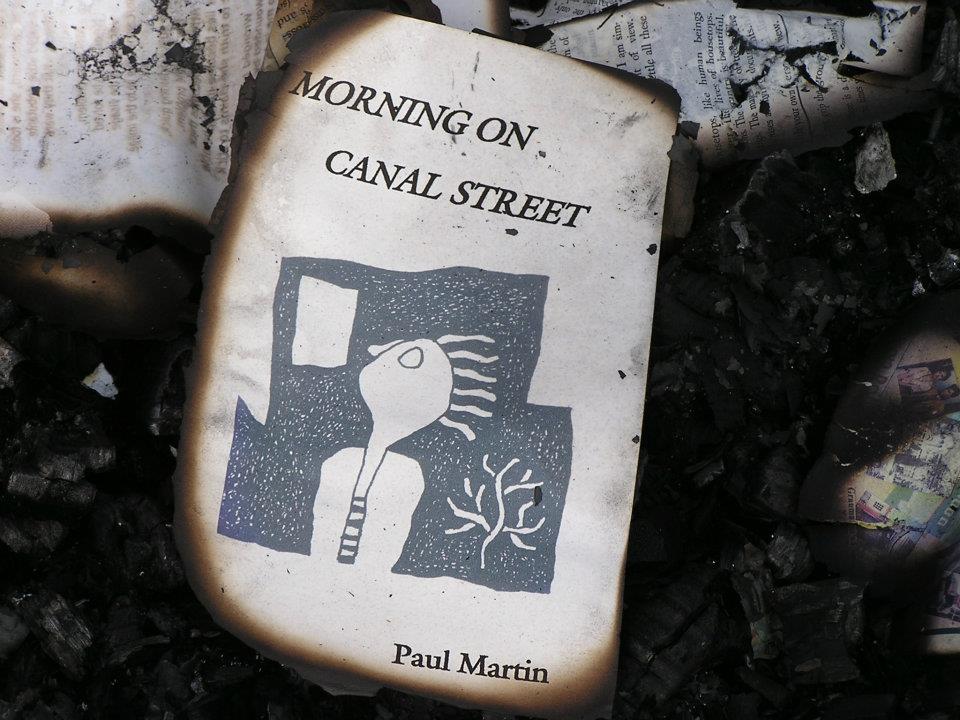
One poet who has quietly been disseminating poetry for 25 years from his tiny press in Kanona, NY is Michael Czarnecki of FootHills Publishing. From his website, you can order books by many of the people in my writing community: Michael himself, and also Craig Czury, Heather Thomas, Karen Bashkirew, Paul Martin (whose beautiful 2009 full-length collection is available here), Steve Myers, Kelley Jean White, Elizabeth Bodein and many others…including two of my own chapbooks.

Finishing Line Press, which sells through Amazon as well as its own site, has published many of my colleagues in the poetry community and particularly supports female writers; I urge you to purchase books by Celia Lisset Alvarez, Kelley Jean White, Nancy Scott, Elizabeth Bodein. Finishing Line also sells my book The Minor Fauna.

Through Dave Bonta, I met the folks behind Phoenicia Publishing and, through Dave and through the Women’s Poetry Listserv, met Ren Powell. Dave’s book and Ren’s book are available through Phoenicia, and so are print issues of Dave’s online blog literary journal, qarrtsiluni. Also through Dave, my literary community grew through meeting Luisa Igloria, whose books you should definitely check out. Another connection with the inimitable Dave Bonta? That would be Ron Mohring of Seven Kitchens Press, which will be publishing Dave’s next collection and which advocates for the work of Pennsylvania-based poets such as the late Lou McKee and another of my colleagues-in-writing, Harry Humes. August Evening with Trumpet is a particularly lovely book, and Harry is a master. Other Pennsylvania poets to whose tribe I am happy to belong include my much-lauded friend Barbara Crooker, the unpredictable and enthusiastic Barbara DeCesare, Patricia Goodrich (sculptor and poet), and that magnificent woman of letters, Elaine Terranova.

Attending an MFA program at Goddard College granted me an immediate community for which I continue to be grateful many years later. Books by my fellow students and by my mentors include but are not limited to the following (really, there are too many to recall!):

Alan Smerdjian, Jessamyn Johnston-Smyth, Elena Georgiou, Christian Peet, Bea Gates, Ian Haight, Barbara DeCesare, Jan Clausen, Janice Goveas, Bill Moser, Jen McConnell, and forgive me for running short on time or forgetting others…and from my long-ago days at The New School, the amazing Maurice Eidelsberg, whose poems in Shit, Sex, Love, Palsy will have you viewing life from a perspective you may never have imagined.

Through the Women’s Poetry Listserv I mentioned earlier and through conferences and festivals, the generous community of writers has led me to Diane Lockward, Pat Valdata, Elizabeth Raby, Rosemary Starace, Julie Kane, Elaine Heveron, Lori May, Juilene Osborne-McKnight and Steven Allen May of Plan B Press; Ned Balbo, Jane Satterfield, April Lindner among many others. Wendy Ellsworth has written a book on beading and spirituality; my cousin Scott entered the world of book writing with a children’s book you can find here. And my brother, a true Renaissance man, has published a novel and is working away at a non-fiction Rip Van Winkle-type story of archeology, empiricism, Stephen Jay Gould and Samuel Morton.

So  you see, the life of a writer need not be–and seldom is–solitary. Writers love to read, and they therefore support one another inadvertently. My community also includes Shakespeare, Mark Twain, Charles Dickens, Emily Dickinson, Jane Austen, Vladimir Nabokov, Elizabeth Bishop, Robinson Jeffers, Dante, and Dostoevsky. To name a few.

Fruition

In 1999, my beloved friend and fellow poet David Dunn died of a diabetes-related embolism. A few years later, some of the poems I had written as I worked my way through my grief made their way into my graduate school (MFA) thesis. After more years of writing and revision, that manuscript became Water-Rites

which is now a book. Many thanks to Keith Badowski and Ron Self of Brick Road Poetry Press and to the friends and colleagues who helped me to work on these poems and who encouraged me to persist in finding a publisher for the book. Link to purchase is here: Water-Rites.

water-rites by Ann E Michael

Thanks also to sculptor Steve Tobin, whose sculpture “Retretti River” as photographed by George Erml gives Water-Rites a striking cover image.

Thanks to my writing group for almost 20 years of critique and support, and to my mentors and instructors at Goddard College, and to colleagues who have written kind words about the poems. Here’s a quote from Barbara Crooker (whose poetry & website can be found here):

Ann Michael says, “There is nothing wonderful here,” but clearly, she’s wrong, as Water-Rites contains many wonders:  goldfinches, “lovely in the lost way of beautiful things,” the richness of beans that “lie warm / one inch below the earth; uncounted yet,” an ordinary robin’s egg, a yellow-shafted flicker in black and gold tail feathers. This is the natural world Ann Michael inhabits and explores: her home, her garden, the landscape of eastern Pennsylvania that surrounds it. Michael takes us on a journey through the woods of loss and grief in poems that are as clean and clear as water running over stone. “And what is as beautiful as water?” she writes.  These poems are unencumbered by unnecessary wordiness, enhanced by careful word choice and a richly varied vocabulary. “I know what I daily know,” says Ann Michael, and now we, her readers, know these things, too.

     ~Barbara Crooker, author of Radiance, Line Dance, and More

More thanks to my non-writing friends who have enriched my life in so many ways, and to my wonderful and supportive family members.

And to David Dunn, who is with me still wherever he is.

Reveries toward childhood

My childhood was happy and full of isolation—bored, lonely, occasionally melancholy daydreams and reflections. Some readers will find contradiction in that opening sentence, but Gaston Bachelard would have understood. His chapter (in The Poetics of Reverie) on Childhood and Reverie resonates deeply with me.

The claims Bachelard makes for the crucial importance of childhood reverie are that the child, solitary, daydreaming, finds happiness as the “master” of his or her reveries and that poetry is the way adults can return to the deep daydreams of childhood in which humans are—briefly—free beings and fully receptive: “Poets convince us that all our childhood reveries are worth starting over again.”

He further claims that images “reveal the intimacy of the world” and that all poetic images are a kind of remembering. I suppose this particular claim for poetry puts Bachelard in the “deep image” arena of poetry—Rilke, for example, as filtered through the concepts of Carl Jung, whose influence appears everywhere in The Poetics of Reverie. I waver in my complete acceptance of this claim, though I can’t yet articulate why—because I do agree image can evoke, or even be part and parcel of, intimacy. It may not be the sole method of achieving the shock of recognition or the tug of familiarity among readers, however. I’d assert that Ammons, Menashe, even Ponsot (in her tiny poems in Springing) get there by other means.

What I love about Bachelard’s philosophy on childhood reveries is the idea of “reveries toward childhood.” Interesting phrase, and I wonder if the translator (Daniel Russell) struggled with it. To dream toward childhood denotes an intentional action, a moving forward in order to reach back, a paradox. He claims we can almost reach (regain) the child’s “astonishment of being,” our “world of the first time,” through reading poems. We daydream with the poem itself…not with the poet, who remains a distinct individual with his or her own being and past.

I’ve experienced this feeling, and now Bachelard has described it for me.

The philosopher was late in his life when he composed these reflections; this is his last book. As he explores the “uselessness” of childhood memories, the flashes of recall through sensory stimuli, he posits that reveries toward childhood nourish the person who is in “the second half of life.” Combining memory and reverie can restore us, he says; and to do so, we first beautify our pasts—even our tragic episodes are reconsidered, reconstructed, through the lens of distant memory. (Hence the opportunity for sentiment). I think he means that once we have dealt with vivid past traumas earlier in adulthood, older people are able to recall the amazement of having once been new to the world. Perhaps this is merely sentiment, but it is certainly a phenomenon that appears in many works of drama, fiction, even memoir.

Bachelard describes such experiences as “the strange synthesis of regret and consolation” and adds that “a beautiful poem makes us pardon a very ancient grief.” (I love that sentence.)

In this way—among other ways, I might add—poetry’s images help us believe in the world, revive “abolished” reveries in a fresh light; the poet’s images may not be our images at all, yet they work to move the reader toward childhood, by which I mean toward a seeing-afresh of human experience. I may be parting ways with Msr. Bachelard here, for he classifies these images as almost wholly archetypal, and I do not; nonetheless, I don’t think our differences negate his claims nor hurt my general agreement with his insights. The amazement that took off the top of Emily Dickinson’s head when she read a great poem, the astonishment of being that arrives via the poem, strikes me (and the pun is intended) as exactly like the Zen whisk: “Wake up!”

And what is a child but a being who is wholly awake to the world?

“When we are children, people show us so many things that we lose the profound sense of seeing, Bachelard says. Yes, like Whitman when he “heard the learnéd astronomer”… Whitman’s speaker—the child in him—ventures outside to see the stars. He does not need to be shown.

This is a long blog entry, I know. But if you’ve gotten this far, I hope you are eager to go read some poems now.

Wake up and dream!

Still daydreaming in adolescence…(Switzerland, 1974)