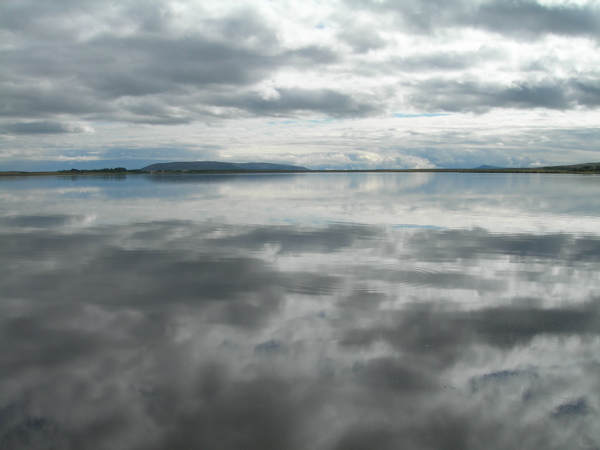
Reverie

“The image can only be studied through the image, by dreaming images as they gather in reverie.” ~Gaston Bachelard

I’m immersed in Bachelard’s The Poetics of Reverie, which has a subtitle I adore:  “Childhood, Language, and the Cosmos.” In the book’s first section, however, I felt myself a bit bogged down because the reverie of words (language) he describes deals with word gender. That works for French, and for most languages [or so I understand], but not for English.

Initially, then, I found myself wondering why I was reading the text. But I like Bachelard’s style, enthusiastic and looping and always replete with inquiry upon inquiry; and I love his dedication to and defense of poetry. Not all philosophers have been so kind to poetry.

As I was driving to work one morning, however, I found myself dwelling upon the above chapter about the reveries words can inspire. I fell into a recollection of myself as a very young child, the way I loved to peruse the dictionary. Even before I could read, the heavy tome with its onion-skin pages and glossy color plates of the flags of the world or of gemstones appealed to me as a room in which to become lost, a forest of leaves in which to cover myself or to lie upon, a river of language in which to be immersed. When I was older and a more capable reader, I browsed the examples, the multiple meanings and uses, the parts of speech and the etymologies of the words.

Ann E. Michael

Bachelard, I realized, is correct. The contemplation of words themselves leads to reverie, to thinking about thinking, to making dreamlike concatenations that chug through the consciousness and lead to imagination. His example involves contemplations and imaginings about the genders of words and how they suggest all kinds of interweavings and reactions, but noun gender need not be the motivating inspiration. For me, etymology accomplishes the same ends.

Contemporary adult life offers few chances for reverie. My commute to work is often the only time during the week when I can daydream a bit. My best opportunities for reverie are during a walk outside or while gardening, but I don’t get to do those things every day. I agree that reverie or daydream leads, very often, to poetry or to philosophical innovation or understanding; and Bachelard’s initial chapter on the rambling, amusing, aimless process of reverie makes me wish to go back to my childhood days of less responsibility and more imagination. Of course, that is impossible, but of course, that is part of what the philosopher intends (there is a later chapter on childhood reverie…I will be reading that pretty soon).

Boredom invites reverie. Who, in these busy times, with the many entertainments we carry in our pockets, is ever bored? So many of us, when bored, simply turn off the iPhone or the TV and sleep.

“It is a poor reverie which invites a nap.” ~Gaston Bachelard

My upcoming musings on this book will probably include garden reveries. Or memoir. Or etymology. Who can tell?
Haiku impressions

The reading Friday at Blind Willow Bookshop, a lovely used bookstore specializing in literature and unusual or rare books, combined the voices and perspectives of three poets who are exploring Japanese poetic forms.

Here’s a summation of my own remarks, though Marilyn Hazelton and Ann Burke had much to share. I’m not including the poems we read, either–Ann Burke’s haiga-like tanka poems coupled with art work or photos were lovely, though, and I wish I had files to post. Marilyn included work from the tanka journal she edits, red lights.

~

I learned about the haiku form long ago, but I can’t remember exactly when. I think it may have been during my junior high school years, though I certainly didn’t learn it in school—there was no poetry taught at my schools. I was exposed to poetry through other means: church, nursery rhymes, my own reading, relatives, song lyrics.

Initially I learned the syllabic approach, 5-7-5 syllables in English. That is the way the form was taught in the USA the 1970s. And it was clear to me early on that haiku is visual or physically-based; the imagery is sensual and real—in other words, what is in the world is in haiku, and vice versa. So it is not imaginative in the sense of fiction or dream. It engages the imagination in other ways, which means the poet has to corral quite a bit of compressed and specific imagination into a few words. The intense compression of these brief forms requires the poet to work hard at expression through the tightest possible means in language without employing what we in the Western traditions term symbolism. Classic Chinese poems often used symbolism, but Japanese poems relied more on allusions of several types (historical, poetic, seasonal). We tend to term these “symbols” (ie, cherry blossom equals spring romance) but that is not actually an accurate way to define the way concrete imagery is used in Japanese poems.

Later, after more study, I learned some details and contexts for the seasonal allusion, the references to previous poets or poems, the cutting word, the reasons haiku in English may need to be briefer than 17 syllables for maximum effect; and I found out about related forms of Japanese poetry such as haibun, renga, tanka. I met Marilyn Hazelton and learned through her, as she studied and taught the forms, in English, to other aspiring writers. Japanese poetry forms may seem to follow arbitrary rules, but that is no more true than asserting that western sonnet forms follow arbitrary rules.

My study of this poetry brought me a better understanding of the Imagist poets of the early 20th century in the sense of how they were influenced by, and how they misinterpreted, the haiku poem, crafting in the process some critically important poems for western readers. Poetry is a marvelously flexible art, elastic and willing to morph as its authors are willing to experiment. I think of much of my work as based in a ‘haiku moment’ for inspiration or image.

I will be the first to assert that haiku is not my métier, nor is tanka form. My poetry—and I’ve written a great deal of it—is generally more Western in style and tone, no surprise given my cultural and educational background. Yet haiku appealed to me immediately because, I think, of my interest in visual art and in the natural world.

~

My attraction to haiku is therefore image-based. My interest in Japanese poetry also increased after I studied Zen. The two are inter-related, also no surprise. In my notebooks, and on random pieces of paper I use to jot down ideas for poems, nine times out of ten the phrases I want to capture are physical images. Later, I may try to craft these jottings into a haiku. More often, they get employed as lines in other types of poems.

Sometimes, a poem I attempt to write as haiku becomes a tanka…or a longer poem in some other form (free verse, blank verse, etc.); in any case, the sensual first impression is usually what I first observe and note. My own interest in nature and my physical environment make haiku-type poetry sort of an inclination. So the inspirations and influences for me include Zen, visual art, physical or concrete imagery, nature and season, brief observation, compressed or concise language use, and a quality of universality in the poem.

~

For writers who have done Westerners the service of exploring, interpreting, and explicating haiku and the Zen practice that leads to the haiku moment, I suggest Jane Hirshfield, Robert Aitken, William Higginson, Penny Harter, Hasegawa Kai, Earl Miner, Richard Wright, Gary Snyder.

Another poetry event

To anyone living in the Lehigh Valley area of Pennsylvania, a reminder about my two upcoming readings–one this Friday (April 20, free, at Blind Willow Bookshop) and one on Sunday the 29th. The event on the 29th is a fundraiser for the Lehigh Valley Arts Council, so there is a $10 fee.

Details are on my Events page.

This weekend, after the bookshop event, I plan to post a recap here. Meanwhile, enjoy the blossoms of springtime.

azaleas by Ann E. Michael

redbud

photo: Ann E. Michael

Chapbook review

I was away for a few days…and while I was in North Carolina’s Blue Ridge Mountains, Dave Bonta posted a nice review of my last chapbook, The Capable Heart, at his site vianegativa.

Thanks, Dave!

A longer posting of my own should appear here in a few days, after I have readjusted to the lower altitude of my Pennsylvania valley.

Water thoughts

This weekend brought some rain to our valley. Gratitude! The rain softened the soil and the air, bringing haze and drizzle and greening up the parched grasses. Nonetheless, a little searching of weather-history sites revealed that this March was the fourth-driest on record, with only .92 inches of precipitation; the average precipitation is 3.4 inches. The region is also 6″ below average for the first quarter of 2012. As a gardener, I take my “stewardship” of the earth and its resources seriously; and water is one of the most valuable resources that we take for granted here in the United States. I can conserve water at home through many means–and I have established fairly resilient plants in my ornamental gardens (if it survives drought and flood and the deer don’t eat it, I find a way to make it look pretty in the yard). There isn’t anything I can do to change the weather patterns, though.

Given my deep concerns about cyclical drought, long-term equitable distribution of water, potable water and clean waterways, I thought I would use this post to share the title poem of my upcoming collection, Water-Rites. The publishers at Brick Road Poetry Press will be bringing the book out this spring. If the year continues to be a dry one, then it’s strangely suitable for this particular collection: I wrote many of these poems during a serious drought cycle. Some of the poems deal with the loss of a close friend, too. For me, drought and grief are metaphorically closer than “floods of tears.” Loss felt more like the numb, dry absence of drought than like the gift of rain.

For some soothing photos of running natural waters, I recommend Don Schroder’s series taken at Rickett’s Glen. Meanwhile, I’m grateful for the rain.

Water-Rites

I.

I take my shower
lean into water’s hot stream
too many minutes
lathered in steam, guilty skin,
greedy pores

knowing the well empties
and the earth’s in drought.
II.

Off Nova Scotia’s south coast,
small islands spring fresh water
surrounded by sea. We hauled
the pine-brown but potable
stuff from the well in buckets,
heated it on the woodstove,
dabbed at our bodies, and dried
in the sea wind. We drank it:
pine-water coffee—water
sprung from nowhere, gift of rocks,
glaciers, lost to eons.
III.

The Mideast erupts again.
Retribution. Religion. Water-rights.

Oil will get you water;
water will buy you oil.
Barrels and tanks,
tanks and barrels—

each has a meaning
for water and warfare.

I reach for soap.
IV.

On the Caribbean volcanic island,
rain’s the only source. Rock
carved into cisterns. Water
hauled in like gasoline, by truck.
V.

We do not need to be so clean.
The industry of soap cajoles us—
promoting glycerin, methyl paraben
and the lauryl sulfates—
exposes our filth and offers
deliverance from evil.
Lye and tallow. Better to wallow.
The cost is less. Think:
Were we not formed of clay?
VI.

Tap
like sap
provides
sustenance.

Water
up root and
down:
taproot.
Soil            unsoiled
needs rain

silt       sand       loess—
water-loss

water’s
lost,
VII.

runs down my body,
thirsty skin, down drain
into pipes, tanks, drainage field
where ryegrass covers meadow,
percolates through sand, loam; disperses—

if it should rain
I will run out, arms wide,
mea culpa, mea culpa,
so many parched human beings
desiccating earth and I—
I thought to wash
my trespasses away
in something other
than rain.

© 2012 Ann E. Michael

Adrienne Rich

Adrienne Rich has died at 82, a long life for a person who dealt with a chronic and often debilitating condition (rheumatoid arthritis). Physically small and often frail-looking–almost elfin–her appearance and her personal modesty belied her strength, influence, assertiveness. She influenced poets and feminists, women and men, and challenged the social norms in many ways. I discovered her work in the 1970s in a women’s literature class at college, and her thinking as well as her writing enriched my view of the world.

Rather than try to collect my own thoughts about this poet, essayist, and influential human being, I’m going to post some links to others who have done so. I’ll update as the week goes on.

Here’s a videopoem of “Diving Into the Wreck.” Thanks to Dave Bonta for pointing me to this film.

http://reveriesunderthesignofausten.wordpress.com/2012/03/29/foremother-poet-adrienne-rich-1929-2012/

http://www.midwayjournal.com/May09_Interview.html

http://omstreifer.wordpress.com/2012/03/29/adrienne-rich-may-16-1929-march-27-2012/

http://coldfrontmag.com/features/essentials-adrienne-richs-the-dream-of-a-common-language

A wonderful interview from 1999 by Michael Klein, who was a good friend of Rich’s, is available here–and is a must-read.

Kenny Fries just published this tribute, too.

And this from the Nation, which includes some new poems!

Now, a website of reminiscences and memorial tributes…

…and a radio commentary on Rich by Jan Clausen.

Best of all, this recent essay by Michael Klein, on Ploughshares’ blog.

Ambitious poetry

Recent discussions with a few colleagues brought up the question of what poetry “should” do. This question is seldom considered philosophical–it generally occurs among inquiries more aesthetic or educational in nature. Any time we have a “should,” though, we may be more clearly looking at an “ought.” Which brings us to philosophy. Or to poetics.

A friend stated that poetry should have aims, aims that relate to society. She prefers the poem that speaks to “all” to the poem that speaks to (or of) the individual. This is a rather grand and ambitious “ought” for poetry, but it strikes me as valid.

Another colleague defends what she calls the “quiet” poem, the one that circles in on itself with some kind of reminder that interior reflection is occurring in the poem. This sort of poem also has, it seems to me, an ambitious project (I hate that term, but I’ll go with it for now): getting the unknown reader to feel he or she is authentically inside that poem’s quiet, particular, individual world. Have you ever tried to convince another person to understand your perspective on anything? It is never an easy project. It can be accomplished sometimes. To accomplish it through a poem is, frankly, marvelous. So this poem is as ambitious as the poem that endeavors to speak to all.

Donald Hall has a significant essay on this topic, ambition and poetry, and edited an anthology of essays on various views of what poetry’s ambitions might be. I turned to it again last night when mulling over the topic of what poetry “ought” to be, or to do, or to say.

Hall begins, “I see no reason to spend your life writing poems unless your goal is to write great poems.” And that is certainly ambitious.  I do feel that is my goal; I don’t expect to attain it. Heck, if I produce even one poem that is great, I will be happy. Hall also writes, “We develop the notion of art from our reading.” Those texts are our models of what great, ambitious, lasting art (poetry) is.

So we develop the idea or aesthetics of what great art is through our enjoyment, study, acculturation, through the models we choose–or reject–ourselves.

Hall wanders into the controversy over writing workshops (the essay is from 1983). I’m not interested in that discussion for this post. But I constantly remind myself of this section from his essay:

Of most help is to remember that it is possible for people take hold of themselves and become better by thinking. It is also necessary, alas, to continue to take hold of ourselves—if we are to pursue the true ambition of poetry. Our disinterest must discover that last week’s nobility was really covert rottenness, etcetera. One is never free and clear; one must work continually to sustain, to recover. . . .

I’m prepared, on my best days, anyway, to accept that I will never be free and clear, that as a poet and as an amateur philosophe (is there any other kind?) I will always be working, continually taking hold of myself, trying again and again to become better by thinking. For me, this is what poetry ought to do.

Non-sense

Let me pick up from my brief post of yesterday, which concerned in part the value of asking the nonsensical rather than (or in addition to) the rational question. What led me to that topic is the recent death, at age 101, of artist Dorothea Tanning, whose work–both visual and textual–is often considered surrealistic.

Surrealism goes in and out of fashion, and I am not planning to comment critically on its aesthetic value; but I will say that I have admired and been influenced by artists working in the surrealist oeuvre and that I enjoy the way “nonsense” and  “non-sense” can lead to juxtapositions of ideas and images that have proven fruitful for my own creative work process.

The nonsensical question may follow along the lines of:

How does the sunflower feel when a bird feeds on it?

Non-rational, because the sunflower does not–as far as we know, in the rational/sentient way–feel anything emotionally; the jury may be out on whether there are tactile receptors in a sunflower that can feel anything physically. To answer the nonsensical question in this case requires a kind of metaphor or animation of the inanimate. (We could also argue the inanimate status of a sunflower seed-head.)

Further nonsensical inquiry could lead us to “What does the goldfinch say to the sunflower?” or, more nonsensical still, “What would a sunflower say to an electric guitar?”

Non-rational prompts can provoke interesting results in the process of creative thinking.

Back to Tanning. Her life itself was a creative process. Check out the biographies of her that are popping up online in response to her death. While I am not a fan of all of her work in her various media, I love her vivid and exciting explorations. Here’s one of her early, less-experimental works that appeals to me because of its imagery. I identify with this painting.

“What would it feel like to wear a nest on one’s head?”
As a poet, she was strongest in the area of visual figures (no surprise there). I’m running out of time now, so I will close with an excerpt from one of Tanning’s poems:
There was a time
of middle distance, unforgettable,
a sort of lace-cut
flame-green filament
to ravish my
skin-tight eyes.
I take that back—
it was forgettable but not
entirely if you
consider my
heavenly bodies . . .
I loved them so.
Heaven’s motes sift
to salt-white—paint is ground
to silence; and I,
I am bound, unquiet,
a shade of blue
in the studio.
(The entire poem, “Sequestrienne,” is here.)
For another surrealist whose poetry is not always classically surreal, see my posts on Eluard .

Defending the poetry major

Photo by Annie Abdalla

~

Pity the poor poetry major, long treated with snotty sarcasm as a head-in-the-clouds idealist. “What will you do with that degree?” people ask, shaking their heads at the scholar’s naivete.

Okay, few people dispute that the economy is tough right now. Tough for experienced employees, tough for many small business owners, tough for newly-minted college graduates. I know this first-hand, and I deal most often with the youngest age group I’ve mentioned—undergraduates.

There are hundreds of articles, blogs, and opinion pieces offering tips to students or bemoaning the price of a college degree (and I grant you, the cost is appalling) or telling undergraduates that they need to specialize in certain career areas. The New York Times, for example, ran this article, which warns students away from majoring in such coursework as history, philosophy, and poetry.

Another pop-journalism site suggests that graduates learn “to put your useless degree to use.” Although there are some reasonable, general ideas here, these brief tip-sheets operate under the unlikely premise that we can tell today’s 18-year-old what he or she will need to know in order to be securely employed in, say, 2045.

Mild contrarian that I am, I defend the poetry major. Students have to be diligent to achieve good grades in the poetry track, diligence being just as necessary there as in the so-called hard sciences, which also require analysis (they use more math but require similarly solid logic chops). Poetry is difficult to study; the subject requires keen reading comprehension skills, a good foundation in rhetoric, the ability to analyze, to communicate, and to connect diverse disciplines, cultures, and texts. The same goes for history and philosophy: these are truly challenging areas of study, not good choices for the slacker or the faint of heart.

The people who choose the humanities majors are often accused of living in ivory towers, but that’s a stereotype. Most of them don’t end up in academia. Some of them are entrepreneurs, some are lawyers, some are doctors. Poetry major Ross Martin became a Viacom executive; though that is probably not a terribly common career outcome for poetry folk, humanities majors in general end up in some form of management position 20% of the time, according to research by Georgetown University’s Center on Education and the Workforce.

For a look at the career outcomes, percent employed full-time or part-time, and job earnings for humanities majors, see:

(Link to GU’s CEW on Humanities degree earners)

Yes, it is true that in terms of earnings, the poetry major or history major is unlikely to outperform the person who has a Petroleum Engineering degree. I have to ask, however, given the limited supply of petroleum we’re told exists on earth, where those petroleum engineers will find work in 2045. And job satisfaction—earning enough to get by and feeling satisfied with one’s work and contributions to society—is, while less easily measurable, a byproduct of an excellent education that keeps minds sharp, hearts engaged, and communities intact over the long haul—including during tough times.

The world and technology move rapidly. I typed my undergraduate papers on a manual typewriter and, graduating during the hideous recession of 1979, got jobs that paid like menial labor but allowed me to sit at desks and utilize my spelling, vocabulary, and arts analysis skills, which led to jobs in typesetting that taught me computer skills back in…well, let’s just say “8-inch floppy disk” and leave it at that. Did I have any idea I would be blogging on the cloud using a PC in 2012? No. Have I been able to learn new things by using logic, persistence, research, and creative thinking? Why, yes. Thank you, humanities coursework.

Critics of many stripes claim colleges need to focus more on career development through the creation of specialist tracks. Careerism is a fine concept for a capitalist society, and I have no problem with offering better certification programs for specialists of all kinds; but careerism per se is not what a college education is “for.” A college education serves, when it is effective, to broaden a person’s experiences, deepen a person’s thoughts, and to develop in that person a versatile range of essential critical-thinking and problem-solving skills. Those skills are applicable to many jobs. An excellent gaming programmer I’m acquainted with says his two years of intensive philosophy and literature study helped him enormously when he switched to the technology track: it’s all logic and analysis, and creative thinking is what allows a programmer to excel beyond data-managing. Here’s an article that explains a bit more about the usefulness of the liberal arts education as it pertains to business.

When the job market is tight, we need problem solvers and creative, critical thinkers. It will not matter what these people majored in as undergraduates; what will matter is how flexible they are at responding to the changes around them…or at instituting changes themselves.

Poetry majors can do that for us.

Really.

On Tolerance

Tolerance, as defined in the OED, means endurance, as of pain or treatments; it is also the tiny allowance of imperfection in coining or machinery, the acceptable out-of-round. But the term has become popular recently under its third definition, “freedom of bigotry or undue judgment upon the actions or behaviors of others.” It has indirectly become the target of people who complain about over-use of “politically-correct language.”

Tolerance is not one of the Virtues, but it tends to have a slightly virtuous connotation, sometimes with an irritating hint of self-righteousness. An acquaintance of mine said once, “Quakers! They’re so damned tolerant,” as if it were an attribute to be avoided by sparkling, sexy people who are analytical and quick to judge. I have known some mightily opinionated Quakers in my time and will attest that tolerant folks can hold strong opinions. The connotation of tolerance to mean somehow wishy-washy or evasive is an unfortunate one. And it’s wrong.

My parents taught tolerance. This was a necessary trait in a family full of passionate, witty, highly-opinionated and creative people. I learned that I could disagree with my sister completely and still love her and accept her point of view, even if I could never in a million years adopt her perspective. My father marched on Birmingham and Washington in the 1960s, and we learned that people who do not look like us are no less like us than our neighbors—and we learned to be polite to our neighbors, some of whose values and opinions we didn’t particularly care for, but whom we tolerated as members of the community. Tolerance is a component of empathy in two directions: empathy inspires in us the ability to practice tolerance of others, and the practice of tolerance itself enables us to feel empathy with others.

Without empathy, no altruism; without altruism, no society. Tolerance has an important place in human nature. The simplistic slogan “Teach tolerance” has value only if we can remove the negative slap-dash judgment of tolerance as some sort of liberal-PC value rather than as what it is, a practical behavior necessary for social interaction. Good manners, for one thing. And yes, that means that sometimes we must endure the psychic pain of listening to a person we desperately want to judge negatively, or bear with the person who is slightly “out of round.”

Practicing tolerance doesn’t mean giving up our own values, it merely forces us to withhold judgment a little longer than usual and to endeavor to discern, and acknowledge, another person’s perspective. Can we argue? Can we disagree? Certainly. Will we respect that perspective? Maybe not. But we can learn a great deal from the exercise.

Here is a poem from my collection The Capable Heart. Tolerance and an attempt to understand another perspective are not just for human beings. This poem looks at my daughter’s point of view, my own, and the horse’s. More broadly, the piece is about all of the things I’ve mentioned in this post—if that’s how my reader would like to interpret it. (Of course, I am ready to acknowledge other interpretations and perspectives!)

WAYS WE ARE ALIKE

I wanted a way to embrace
my daughter’s fascination.

To overcome my own fear, with carrots,
with a lead rope and a soft brush.

I touched the withers and the
warm, broad chest;

I held the lead. Let pulsing lips
explore my hands, my jacket.

The narrow nose stretched
under my fingers and

I rubbed the strong, shallow bone
above curious, sensing nostrils.

My daughter tells me the many ways
horses and I are alike.

They are beautiful, and
they understand fear.

Orri. Photo by Ann E. Michael