Not a brisk pace

Recently, a physician I see (for fibromyalgia and related conditions) suggested that I need to walk more often because “walking is the best exercise for you and will give you more energy in the long run.” The advice surprised me a little; I love to walk and, except when the weather is very cold or super wet, I walk most days. It turns out that what she meant is that I should be walking for 40 minutes or so “at a brisk pace.” When I asked her to define what she considered a brisk pace, she said two or three miles an hour.

This poses a slight problem for me because while I am happy to walk around my yard, woods, and neighborhood for 30-40 minutes almost daily, I can’t say I do it at a brisk pace. I get distracted and stop to look at things. Bugs. Worms. Toads. Birds. Flowers. New leaves. Nests. Spiderwebs…I loaf along, as Whitman claimed to do. Some days I start out with good intentions to keep up a lively pace, maybe even to the point where I can feel my heart rate going up. And then–was that a redtail hawk overhead? Did I hear an ovenbird? Oooh, the Solomon’s-seal is in bloom!

Today–the walk was very wet, as we’ve just had about 3″ of rain–musing on my not-exactly-exercise ambulations, I thought of this Mary Oliver poem.

Walking to Oak-Head Pond and Thinking of the Ponds I Will Visit in the Next Days and Weeks

by Mary Oliver

What is so utterly invisible
as tomorrow?
Not love,
not the wind,
not the inside of a stone.
Not anything.
And yet, how often I’m fooled–
I’m wading along
in the sunlight–
and I’m sure I can see the fields and the ponds shining
days ahead–
I can see the light spilling
like a shower of meteors
into next week’s trees,
and I plan to be there soon–
and, so far, I am
just that lucky,
my legs splashing
over the edge of darkness,
my heart on fire.
I don’t know where
such certainty comes from–
the brave flesh
or the theater of the mind–
but if I had to guess
I would say that only
what the soul is supposed to be
could send us forth
with such cheer
as even the leaf must wear
as it unfurls
its fragrant body, and shines
against the hard possibility of stoppage–
which, day after day,
before such brisk, corpuscular belief,
shudders, and gives way.

~

At my place, it’s feeder creeks I hear and think I may visit, not ponds, but I identify with the mood of this poem. Walks offer me that joy, that unfurling of leaves, ferns, everything…time to reflect and feel gratitude. If I don’t do quite as well by my heart and muscles as I ought to, maybe my psyche or soul will compensate. If I loaf, it’s a purposeful, sweet loafing, the kind of activity that poets tend to do; it gives me energy of a non-physical sort. (And I think Mr. Whitman would concur.)

Walt Whitman in mid-life, probably a bit younger than I am now.

Transformation & intention

During the past few weeks, I have been reading–one at a time, with pauses–the essays in Ross Gay’s book Inciting Joy. His earlier book (The Book of Delights) was easier, a bit less complicated. About, you know, gratitude–even though he describes his father’s death in the first essay of that one. He gets to something about grieving in the 13th “Incitement” of this book, however, that made me put the text down and say to myself: This is what I have been trying to get my poems to do for some time now.

(I did pick it up again and finish reading it, by the way.)

He insists that we remember how transforming grief is. Not can be, but is. Always: “When that one thing [that we grieve] changed, everything changed. Light through the trees in October now different. The sound of the playground…cooking a meal. The future. The past. All of it changed. That is what the griever is metabolizing.” He points out this metabolizing can’t be timed, that grieving pays no attention to whether it has been a day or a year or decades: “It seems to me that grief is not gotten over, it is gotten into. And the griever teaches us, or reminds us, there is no pulling it apart. Because grieving, alert to connection, is never only one person’s experience.”

Maybe we grieve for one person, or one beloved companion animal. Maybe we grieve that our youth is over, that our children are grown, that our favorite mom & pop store has been razed to make way for a Starbucks. Or perhaps we grieve for our planet, as Greta Thunberg does: “You have stolen my dreams and my childhood with your empty words…People are suffering. People are dying. Entire ecosystems are collapsing.” There are so many reasons why we feel loss. Loss is what life offers us, loss but also transformation. I think what Gay tries to say in his recent essays is that because there is something to sorrow that we all can connect with, our grief itself can connect us, give us understanding–maybe even joy.

A complicated kind of joy. A joy that acknowledges that life can be tough and sad. And instead of reeling away from people who are clearly–and sometimes not so clearly–suffering, we could connect instead, even though we are also terrified of suffering. Maybe that is another reason I became a hospice volunteer years ago, after my dad had been in and out of the ICU frequently, even though I had spent my childhood and many of my adult years being frightened of death and dying.

Good poems offer readers that sense of connection, which Gay and others sometimes refer to as mycelial (Lesley Wheeler in her poems, Robin Wall Kimmerer in her books and Merlin Sheldrake in his, the movie “Fantastic Fungi”…among others). My favorite poems by my favorite poets, now that I think about it, have always had that effect on my heart: recognition of connectedness with other humans or with other beings, with the environment, with the past-and-future, with (thank you, Walt Whitman) the Kosmos. The recent interactions I had and connections I found at the Joya residency cemented this fundamental awareness, that all of us are part of our huge, interconnected experiences in life.

Of course, writing strong work isn’t easy, doesn’t often happen; but here’s the place in our mutual social connectivity where intentions really do matter–because the intention impels us to work, practice, and dream. The intention is to create and, through whatever we create, to extend our human network. NOT our much-ballyhooed “social networks.” Those can go to hell (and we can’t take ’em with us).

Anyway, such are my intentions for working in the world of words, of poetry. And that’s also the reason I read so much poetry, in case you were wondering.

~

https://www.smallwoodlandthings.com/ Heather Brooks, artist

Lists

There can be beauty in a list: its specificity, also the rhythm and sound–which order does the poet choose for each word? That matters. Chronology perhaps; category, like the scientist; or else sound, such as alliteration; or possibly by the thread of some concatenation that gradually creates associations. The logic of a list poem differs from other forms of lists.

I always think of Whitman as an early and consummate “list poet,” though a great many of his poems do not rely on the strategy. There are list poems that employ anaphora and those that build through phrases. Others rely on modifiers that escalate or change tone to surprise the reader. In my own process it has been useful to begin drafting poems through listing, though often I abandon the list when I revise.

Also, I teach myself about the world and its people, environs, and ideas through lists.

For example, having strayed temporarily from my home region, I’m getting acquainted with a “new” place by making lists of birds, trees, flowers–yeah, the naming-things approach so basic to human beings, like when my children were just learning to talk and conversation with them consisted largely of naming objects or actions.

This is not a poem:

Pygmy nuthatch, juniper titmouse, pinyon jay. Gambel oak, Abert’s squirrel, pinacate stink beetle, skink. Quaking aspen, limber pine. Common raven, Woodhouse’s scrub-jay, fireweed, globemallow, bear corn, oak gall, crow. Pinyon, cholla, Ponderosa pine, alligator juniper, Apache plume, sandwort, groundsel. Gneiss, granite, gray oak, spotted towhee, rabbitbrush, bajada, arroyo, muttongrass, mesa, schist.

~

However, these words now evoke images, sounds, memories, senses that–who knows?–may end up in poems eventually. Because poetry is about and in the world.

Wandering

My mind’s been wandering a great deal lately. This at a time when focus would be quite useful, and yet–I don’t mind a little mental meandering. I think that, akin to daydreaming, a lack of focus can lead to creative thinking. Of course, the downside is that it may also lead to lollygagging and a lack of ambition.

I’ve been thinking about the way contemporary Americans use the word “engagement.” Not as in marriage proposals–that definition hasn’t changed–but in statistics, marketing, self-help, and education. My department at the university has been directed to “foster student engagement.” Our administration wants us to find ways to engage students, but it seems what’s meant by that is simply to attract their attention amid the myriad distractions and attractions of modern life. In my area of the college, where students go to get a little extra assistance in their coursework or their educational plans, we have long been aware that we can’t reach everyone who needs help and that we cannot create enthusiasm or involvement. Apparently, engagement is supposed to lead to motivation. That would be a miracle. Like many young people when I was a young person, today’s young people are often rather undirected. Wandering.

I wonder whether gap years or a required year of community or civil service would benefit people before they march off to college to “become a physical therapist” or whatever it is they think of as a career. Many of them would save on tuition fees, because maybe they are not that keen on academic coursework after all, or because they can go to college with a better idea of what they want to learn (rather than end up attending for 6 years because they changed majors). US society has evolved to push its citizens through large, unwieldy systems that supposedly create clear-thinking individualists who can fit into whatever job market the nation happens to foresee itself needing in future, but there is so much wrong both with that methodology and with that picture in the first place.

I’m with Walt Whitman and the loafing approach to observation and creative thinking, but that probably won’t be sufficient for a nation with a population of 336 million people.

This is not my problem to solve, and I would not be the person elected to solve it. But I ponder this sort of thing.

~

This poem appeared in Schuylkill Valley Journal Online. It’s a persona poem in which I imagine being Walt Whitman as a young child. May we encourage our young people to wonder and wander (and, yes, loaf a little).

Little Walt

When Mother sends me with a bucket to the pump
and it is a rainy day, droplets landing on my face, I open my eyes
trying to see where the rain starts but cannot
because I blink—and why is it that I blink without ever
meaning to?

My Baby Brother wails so loud
I hear him out of doors although the rain is also noisy
splashing the leaves. I can tell the wagons’ wheels are spewing mud
as they clobber past hitched to wet horses who snort at the weather.
The pump handle feels slick and water spurts into my
bucket so that I think of a waterfall in a gully or tumblers
at the sea’s shore where the little fishes get caught in the seining nets.

When the bucket’s full I set it down beside me
and watch water’s surface going plip plip and my own face
under the rain and how it is that I can keep my eyes open looking
into the bucket: behind me in the reflection is the cloud
that is raining all upon the Town.

Mother calls me to the house, You have been loafing.
The bucket, full now and heavy, becomes my chief burden
although a hen scurries beside me, and the ice man hollers
at his little brown donkey and the world around me
is so full of everything!
~
Walt Whitman in mid-life

Slowing time

I cannot recall where I learned of Byung-chul Han, but I’ve had the pleasure of reading one of his books of philosophical essays (The Scent of Time) recently, and seldom has a philosophy text resonated so immediately with my circumstances. In this book, Han argues for contemplative time. He says it is essential for humans and human society and claims the “acceleration” of everyday life robs us of the value of reflective thought and “slow time.”

Raised and educated in Germany, where he now teaches, Han invokes the works of several German philosophers to provide a starting-point regarding the acceleration of time. He draws on Nietzsche, Arendt, Husserl and, to a larger extent, Heidegger…but Derrida, Aquinas, Aristotle, and others as well. He also quotes from quite a few poets, such as Celan, Hölderlin, Büchner, Handke, Ch’iao Chi, and spends two chapters on Proust (but of course…).

Han posits that the point-like, algorithmic availability of information runs counter to knowledge and wisdom, which require experience, which in turn requires duration and connection rather than arbitrary retrieval: “Promising, commitment and fidelity, for instance, are genuinely temporal practices. They bind the future by continuing the present into the future…creating a temporal continuity.” He criticizes the very technology that permits a person like me to learn about his work (I am certain I heard of him online somewhere). That criticism says the faster we go, the further we are from our earthiness–the airplane removes us from earth’s gravitational field as well as from the soil, “estranging the human being from it.” He adds, “The internet and electronic mail let geography, even the earth itself, disappear…Modern technology de-terrestrializes human life.”

Strong opinions, large claims. But oh, I thought at once of Whitman and his long expansive drawling poems when I read, “Instead of leisurely strolling around, one rushes from one event to another. This haste and restlessness characterize neither the flâneur nor the vagabond.” The whizzing about leads to anxiety and a lack of durable relationships. People hover instead of connect, swiping left or doomscrolling, feeling bored–which is a kind of empty-mindedness. I observe this trend of rushing and hovering in my students and among my colleagues. I have not found much Whitman-like lounging in current poetry publications, but a great deal of anxiety appears in contemporary poems. Writers reflect the times. Context shapes us.

But of course, our culture urges us to keep active, as though activity of any kind is valuable and can somehow stave off boredom, loneliness, or death. “Addiction to distractions” and the via activa are the sort of socio-cultural pyschological behaviors Han would like us to slough off. He wants us to leave behind the “Calvinist” (as he terms it) belief that “Wasting time is the worst of all sins.”

“In the consumer society, one forgets how to linger,” he notes, correctly. While we may browse the sale rack at a store for many minutes, the pressure is to buy the next new, better, faster, brighter object before we leave. What about sitting quietly, noticing the scent of flowers or incense, taking in the sounds of the world each of us experiences differently, or walking for half an hour as aimlessly as possible–without a phone, or money, without pop music or podcasts, alone or with a companionable fellow stroller? The very thought makes some people uncomfortable; they aren’t at ease with their reflective selves in the world, with human experience. Why is this so? Has it always been so? These questions Han touches on.

I have felt the pressure of filling up my time with lists of things to do, people to see, things to purchase, jobs to fulfill, projects to complete. It’s been hard to make space for dawdling, daydreaming, drafting poems. I haven’t submitted work since July, and so few poems have come to mind lately that this begins to feel like writer’s block. The Scent of Time has reminded me to open up more space in my life for simple experience on the level of daily phenomena, which is the stuff out of which I write poetry.

Wary of unity

It’s true that I appreciate a somewhat calmer political/media cycle, in part because I sense slightly lower levels of anxiety from my friends. I love my friends and feel sad when they express fear and exhaustion. The social and environmental messes we humans have made continue, however, as the pandemic stretches on (my region is still in “extremely high risk” covid territory, though most of the people I know personally have been vaccinated). Many of us continue to endure losses of all sorts. Even if the losses are small ones, cumulatively they aggregate, intensified by the spectre of climate change and virus spread and whatever local bogeymen trawl through people’s lives.

In response to the current difficulties, we keep hearing calls for “unity.” One way politicians and community advocates of all stripes and ideologies endeavor to “make nice” is through the concept of unifying people. It sounds like a good thing, to invoke our similarities and our common human bond in order to achieve…[insert goal here].

I’m wary of calls for unity. It’s not that I’m cynical (maybe a little), and I’ve certainly been idealistic in my time; but long experience and lots of stories and histories and my father’s background in how people behave in groups have led to feeling circumspect about unity. It works with people, yes, but it also leads to the worst aspects of tribalism. To the fostering of rigid ideologies. To acts against outliers, to the construct of evil Others. I’ve recently re-read Reinhold Niebuhr’s prescient and insightful Moral Man and Immoral Society, and his analysis of how humans behave individually versus in groups strikes me as relevant today as it was in 1932. My dad studied with Niebuhr during the latter’s last years at Union Theological Seminary and, reading this book, I find I’m reflecting on the ways this philosopher/theologian influenced my then-young father’s views on humanity.

My dad was an optimist, a Pollyanna, a great believer that God loved each human equally and that there exists in each person the promise of Good (because his God is Good). As my dad matured and experienced more of life and a lot of death, injury, backbiting, illness, pain, misery, in-fighting, and scapegoating–even in the Church–he examined more closely the dynamics of people in groups. Here’s where Niebuhr gets it right, as far as I can tell: people in groups suck.

No, he never says that, and perhaps I overstate. People in groups tend toward tribalism, shunning those who differ in opinion, perspective, or other ways. People in groups lean inexorably toward immoral behavior, even when the group is made up of individually moral people. Again and again, under differing social perspectives, Niebuhr demonstrates that unity thwarts diversity even when group intentions are moral. And, all too often, with immoral results.

My dad never really gave up on the idea that people could successfully deal with different perspectives and goals even in the same group, that there were approaches to group dynamics that would produce win-win outcomes or compromises without sore feelings. In this respect, he was an Enlightenment thinker like Locke. Optimistic, as I’ve said, though I suppose there were times he despaired; indeed, I know there were. Perhaps he recited the Serenity Prayer* to himself when he felt powerless to make a difference. Perhaps the way people in groups behave is one of those things we cannot change and must somehow accept.

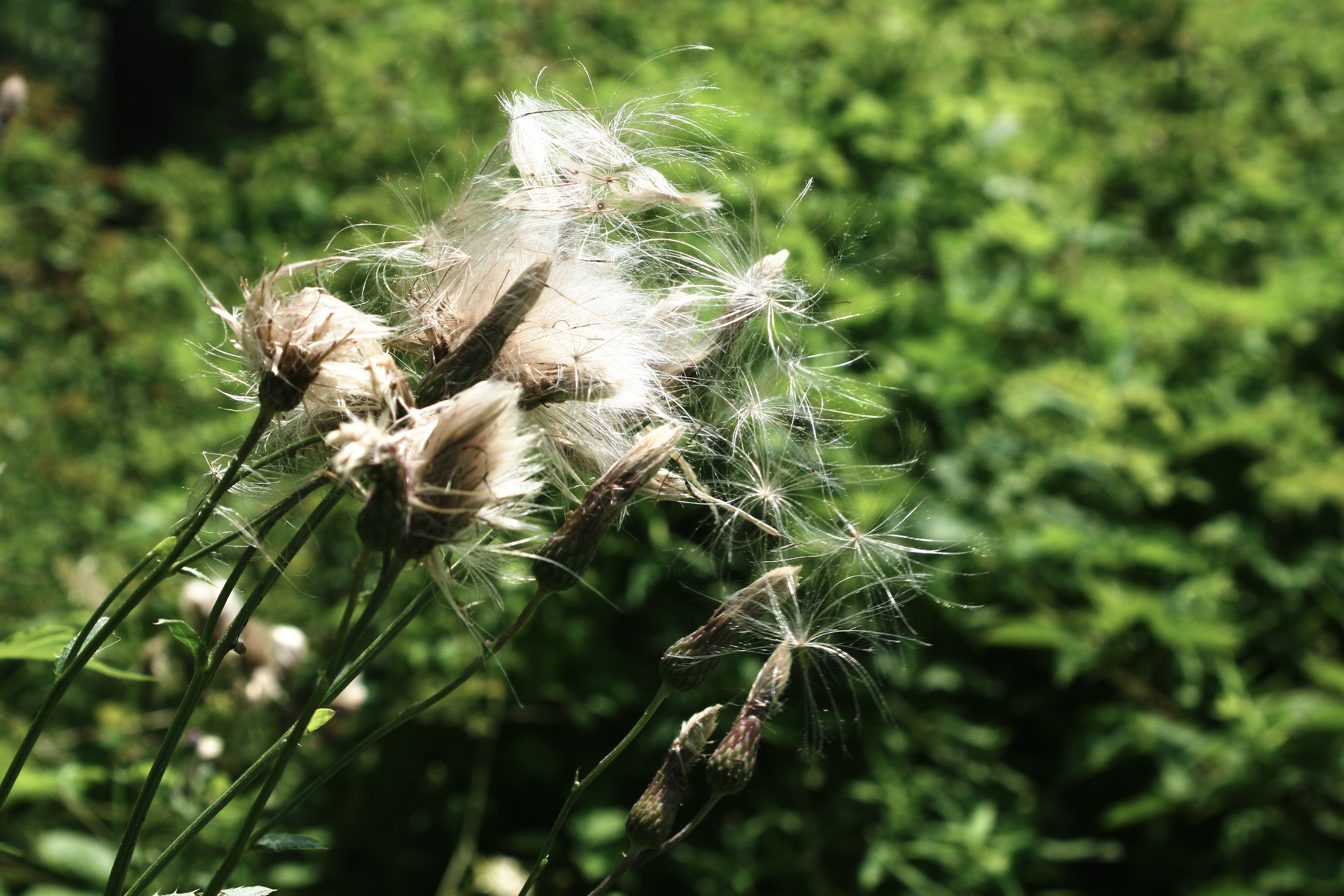
For myself, I choose diversity. The earth manages its diversity wonderfully, even when human beings thwart it. Milkweed seeds and thistle find their ways into monoculture cornfields. Plants and insects gradually populate the rubble we make.

When circumstances keep me in a tribe-like bubble, I read books and poems that show me other perspectives, other climes, other social cultures, cities, classes, geographies–other histories than my own. I find ways to explore, in person or virtually, artwork and film work, drama, music, and dances from places I may never visit but without which I would be less attuned to the World. To its wonders, which are many. Insert here, instead of a unified goal all people “should” achieve, Whitman’s “Kosmos” or Hopkins’ “Pied Beauty” with its line “All things counter, original, spare, strange;” or, more contemporary, Vievee Francis’ glorious “Another Antipastoral” that states:

Don’t you see? I am shedding my skins. I am a paper hive, a wolf spider,
the creeping ivy, the ache of a birch, a heifer, a doc.

~

The World, that great unity. That global balancing act. That paradox: Outliers and Others being necessary, and Beloved.

Happy Earth Day, a day late.

~~~

* You may be familiar with the Serenity Prayer, which Niebuhr composed.

No better place

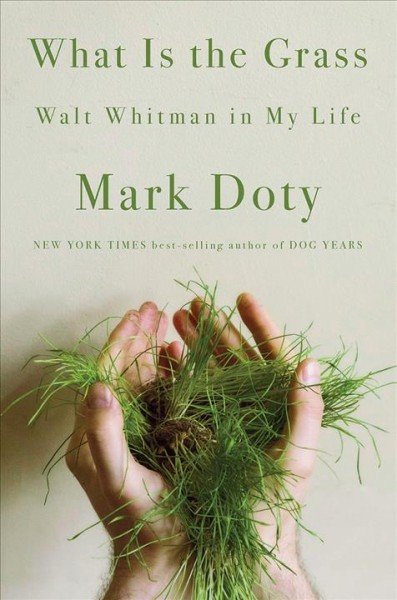
In a time of grief and gravity and gratitude for some wonderfully-lived lives, I happen to find myself reading Mark Doty’s book What Is the Grass? Walt Whitman in My Life.

And I find this paragraph; and for now, I need add nothing more.

The dead are not lost, but in circulation; they are involved in the present, in active participation. Bits of them are streaming through your hand and mine, just as language is circulating through us. Lexicon and materiality forever move onward and outward in the continuous wheeling expansion this world is. This is no mere philosophical proposition on Whitman’s part, not an intellectual understanding but a felt actuality. We are alive forever in the endless circulation of matter. Nothing luckier, stranger, or more beautiful could ever happen. There is no better place.

Cartography

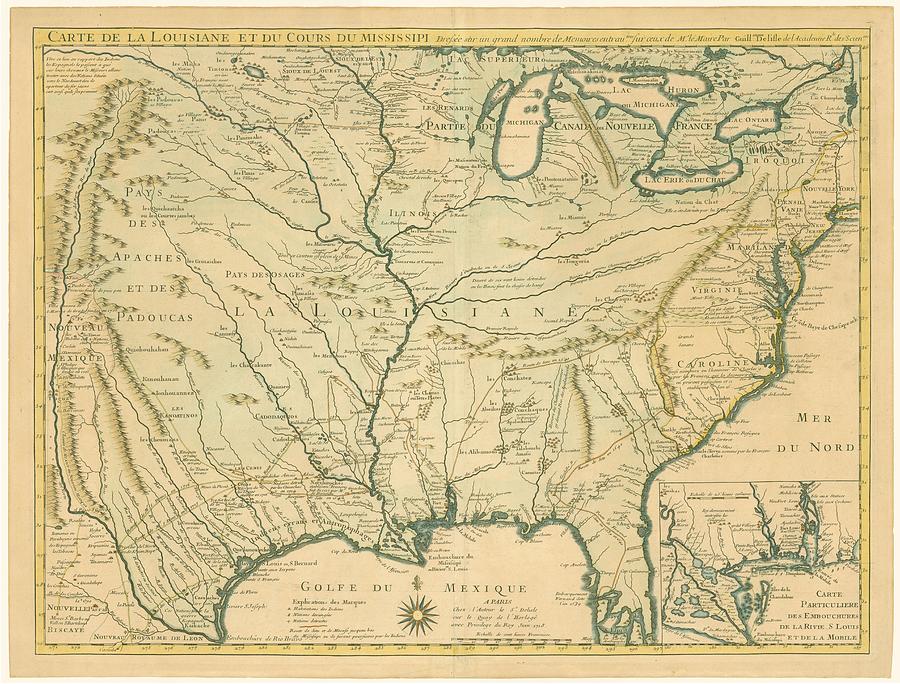
Reading Mark Monmonier’s 1995 book Drawing the Lines: Tales of Maps and Cartocontroversy got me thinking about names and boundaries.

Human beings name things so we can communicate with one another, and then we tell stories to remember the names, encoding them in the language of later generations. New occupants–and colonizers or conquerors–claim and rename to communicate to their followers.

This mountain is Mount McKinley (or is it Denali?), this one is Sagarmatha (or is it Everest?). Keep it in view to your left side and you will be progressing northward.

Big objects accrue many names. When you come to the river called Misi-Ziibi (or Yununu’a, or Báhat Sássin, or…), you must ferry across at the place just south of X. Furthermore, the big river moves, as Mark Twain* knew (see Life on the Mississippi); and as it moves it affects human-made boundary lines that we use to determine tax-base and property ownership and state borders.

Not to mention nationhood.

Monmonier rightly observes that most people assume that maps are factual representations of the physical and legal/abstract/imagined aspects of the “real” –and that assumption is incorrect. Maps can be manipulated. They can be propaganda. They can be drawn to reflect anything the people hiring the cartographer want to emphasize, or erase.

My husband has a German map from 1941. There is no Poland on it, no Austria, no Lithuania, no Ukraine…

~

When we built our house, I wanted to come up with a good name for it. Then I realized that the housing developments in our region all seemed to be named after things that weren’t there any more: Field Crest, Orchard Acres, Stony Meadows, Fox Stream…and the urge to name my house began to quiet down. Besides, all along I have recognized that the area around boundaries is more interesting to me than what is in the middle. Edges–the fringes, the spaces along and between–

And yet I’m trying to create boundaries around my garden to keep out the field voles, stands of cleome to discourage the deer, as another rainy spring keeps my shoes and gloves muddy and the weeds vigorous and tall. Paradoxes.

Reminds me that my favorite Whitman** quote when I was a teenager was: “Do I contradict myself? / Very well then I contradict myself.” At 16, however, I never thought to include his marvelous parenthetical line “(I am large, I contain multitudes.)”

(I am large, I am boundaryless).

~~


*Another example of name-changing that humans are so fond of.

** The 31st of this month is his bicentennial! I’m participating in a reading–see my Readings & Events page.

Muses & musings

Muse, verb–from Merriam Webster online

intransitive verb
1:  to become absorbed in thought; especially :  to think about something carefully and thoroughly

2:  archaic :  wonder, marvel

transitive verb
:  to think or say (something) in a thoughtful way

lesssaturated.jpg

Muse, noun–from American Heritage Dictionary online

1. Greek Mythology Any of the nine daughters of Mnemosyne and Zeus, each of whom presided over a different art or science.

2. muse 

a. A guiding spirit.

b. A source of inspiration: the lover who was the painter’s muse.
3. muse Archaic A poet.

[Middle English, from Old French, from Latin Mūsa, from Greek Mousa; see men-1 in the Appendix of Indo-European roots.] (It’s worth going to this link to the Appendix if you are a word geek.)
 ~

Musing, on a hot summer day, evokes Whitman’s lines:

I loaf and invite my soul,
I lean and loaf at my ease observing a spear of summer grass.

I observe a spear of summer grass, a meadow of milkweed, a small bee but a loud one buzzing about the hole where last year the grass wasp nested. Because it is a national holiday, the road construction crew next door has been absent, allowing me to hear the bees and the wind chimes and the bluejays screaming at the redtail hawks.

My poetry Muse, assuming I have one, has also taken a vacation.

In the meantime, there is summer novel-reading to do (Elena Ferrante‘s Neapolitan quartet, Margaret Atwood’s Hag-seed, and others). I do have my day job, but I have scheduled a travel vacation and am musing on what to pack, wondering what it will be like to be in a new place…wondering if my Muse will follow me as inspiration or will guide me in some new direction. Even at my age.

It’s always possible.

~

Invoking Whitman again:

There was never any more inception than there is now,
Nor any more youth or age than there is now,
And will never be any more perfection than there is now,
Nor any more heaven or hell than there is now.

You will find me outside, in the shade, musing on perfection.

seedfluff


Written by a human

Here’s a controversy for National Poetry Month–there are an amazing number of controversies surrounding poetry–which takes up the idea of whether a “machine” can write poetry. A good introduction is this CCR interview with Oscar Schwartz, who developed Botpoet as an experiment that is not so much about artificial intelligence as it is about what humans consider to be poetry. And perhaps about what language really is. If you follow the link to the site, you can participate in his research by playing “Bot or Not,” a game in which the player reads a series of poetic lines and then chooses between written by a human or not written by a human.

If you’ve read a great deal of classic and contemporary poetry, you may recognize some of the poems (I did); I suppose that is a way to cheat the system, since I have insider information. Nevertheless, I was wrong embarrassingly often. What, exactly, was I looking for in those words?

I think Schwartz is correct in his assessment of the more general population (though literary types may disagree with general assessments) when he says:

People generally seem to associate rhyming, “Romantic” poetry as being human. And they consider highly abstract, non-traditional poems to be of human provenance. Investigating as to why this might be the case is the project of my PhD.

He points out that written language is arbitrary and abstract, “an artificial medium” to begin with, and may have less to do with being human than we might like to think. Maybe the qualities that make a poem a poem are qualities that reside in the reader/interpreter rather than in the poet, another individual’s aesthetics or sense of what seems “creative.” That might be an unsettling thought for many writers, though it rather appeals to me.

Schwartz continues,

“So the results of Bot or Not, rather than telling us what human really is, is actually telling us that the category of the ‘human’ is an ideological, political space…The Bot or Not project works not because it tells us about computer software, but because it reveals things about what we assume to be human. It destabilizes the category of the human.”

As it turns out, the study of consciousness also tends that way–destabilizing our long-held category of what-a-human-is or what, if anything, differentiates us from other animals. Some interpreters of Zen philosophy suggest that Zen consists in finding balance within the inherent instability of the corporeal world. Or, perhaps, acceptance that humanness may be something we cannot categorize; the challenge then is to learn to flourish in a state of destabilization.

Let me sing the body electric…and the mind (possibly) electronic.

Walt Whitman in mid-life

Walt Whitman in mid-life