Reading my contemporaries

The poetry collections I’ve been reading during much of the past year have largely been works of contemporary writers–books that were published during the past two decades, some during the past two years. My focus on such current work was not intentional. After all, there is still so much poetry from the past three or four thousand years that I haven’t yet explored! Grad school, however, was decades ago; that’s when I last studied both contemporary and classic/canonical/influential poems with a specific eye to learning from them. I continue to learn from the poems I read, though. I just don’t take as many notes or write any papers about them these days.

Three collections I read recently have got me thinking about the grittier sonic elements in poetry; the use of scientific, foreign, antiquated, and invented words; wordplay in general as a poetry component; and how sound can push both experiment and meaning in a poem. I’ve been mulling about the task of writing anything that feels “new,” to me or to my readers, and about the challenges more sonic wordplay would mean for me as a writer. I’m saying here I think it would be difficult to do, because it differs from my long-accustomed voice and style. I’m also saying I like a challenge in creative work, and that my style(s) go though changes always, so why not? In creative art of any kind, the passing of years makes a difference in many things. Content (because: experience). Situation (because: life happens). Methods (because: technology and materials). And influence–what I was reading in high school vs. grad school vs. today–though some favorites will always hold a place in my creative mind.

My poems tend to be plain-spoken, although I’ve never been shy about going beyond the standard vernacular to employ a geological term, a botanical name, or a somewhat archaic noun or adjective when it suits the feel and sound of the poem. Most of my poems don’t fall under the description of experimental or edgy. I’m not making waves with language, but some poets are. And my recent reading has me wanting to experiment more. It will mean failing a lot, because I’m working against my habitual methods of composition. I won’t be as good at it as these poets (below) are. What I’m hoping, though, is that the practice of trying more sonic wordplay in my work implants a tracery of that practice onto my poetic voice.

~

So which contemporaries do I mean? More than the three I’ll briefly mention here, for sure (and it is not as if the only poets playing with words and sound are my contemporaries–far from it). However, here’s a start with some examples that I particularly love.

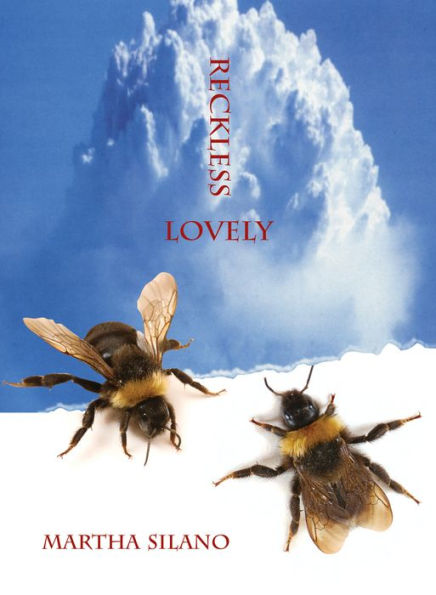
I mentioned Silano’s poetry in a recent post when I appreciated her scientific ideas that meld with an “everyday” life. Reckless Lovely contains many long-lined couplet verses that name objects such as a 64-ounce Big Gulp, Wells-Fargo, Italian Renaissance paintings, or the red spot on Jupiter as the poet observes and speculates on the cosmos that surrounds her. And she invents or alters words that suit her for rhythm, alliteration, sound: “the sfumato is sfumato-ing, the lute-r is lute-ing;” “when most of all that creep-eth/breath-eth buzz-eth/galump-eth sex-eth spar-eth/went AWOL/paving the avenue of asp/the boulevard of bee…” or the totally wild mashup Silano composes in “Summons and Petition for Name Change”:

Dim sum-my dilberry. Down there Daquiri.
Ear of Eden. Eminently Earthy. Empress Gensho.
Fandango-ing funnel. Fox foot. Flamingo.
Geranium in the Gate of the Gourd. Gentian's grin.

~

I find much to admire in Martha Silano’s work even though I often have to look up words (physics and geology nomenclature, usually).

Lesley Wheeler’s most recent book demonstrates her ability with form and sound in a different way, though in “Gran Torino Gigan” the alliteration is as snazzy as Silano’s abecedarian poem above: “Buzzes fade up front,/where beltless adults murmur and smoke//after unfurling musty sleeping bags…in rhizomatic zigzags, with a sharp zipper.” Contemporary technology gets into the poems and, with it, the sounds of our infrastructure, as in “I believe in utility poles, transformers,/lightning arrestors. Subtransmission lines/and static lines. The dead southern yellow pine…” and the theme of fungal connectivity means that we learn some useful and often beautiful mycology terms. Yet Wheeler often relies on shorter words when they suit the tone of the narrative. In a poem dealing with the aftermath of her mother’s death, she writes “No one’s grimmer inside/than me. My bully of a heart wears cheap/scuffed pumps and cusses like a mobster.” The repetition of the word “snow” in “Minus Time” establishes the poem’s pace. So many poems in the collection offer experiments in form!

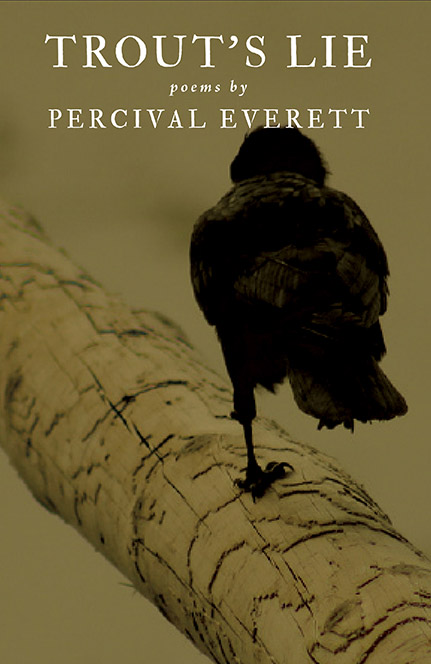
Percival Everett has gained an even stronger following thanks to his novel James, but he’s been writing poetry for years (Trout’s Lie is from 2015). This collection is deceptively simple in language and vernacular: there are surprises. Several poems make allusions to “great poetry of the past” by name or phrase; short lines build and build, twisting the lyric where we don’t think it would go. There are several examples I’d like to give, but this post is getting pretty long. I think I will close with an excerpt from Everett’s “Maybe Even Clouds,” the first section, which begins “Count the marines..”

They look like nice
Boys and bad boys,
From Vermont-and-Montana-
Following-orders-dumbshit-
Non-blinking-soon-
to-kill-soon-to-die boys,
Who might or might
Not, should or should
Not, but never would
Not and never can
not.
Not sure doesn't matter.
Doubt is a penniless
Customer, conscience
Waits for the weather
To change.


National Poetry Month may be almost over, but I’ll keep reading poems. And posting about them. And writing them. I encourage you to do the same, because there is no time in the history of the world when human beings haven’t benefited from poems.

Something like hope

Wintry weeks grind along like the noisy snowplows tearing through sheets of ice this morning. At least we are having a winter, unlike some years. I may not love winter–especially the short, grey days–yet I live in a region that needs it. Indeed, it is February (alas); but in a few weeks I’m liable to notice snowdrops emerging from the dirt. Anticipation stirs my heart. It feels something like hope, although hope is something I feel less inclined to believe in every year. I guess my problem with hope is that it feels like there is human agency invested in the concept, and as I age I recognize how little effect our wishes, hopes, and prayers have upon anything.

Photo from Feb. 9th of last year; as of now, no blossoms yet!

The snowdrops emerge all the same, until such time as they can no longer withstand changes in their environment. There is some comfort in that, for me.

~

Dave Bonta recently reposted (on his Substack and Bluesky accounts) a post by Guy LeCharles Gonzalez called “Why Keep Blogging in 2025?” It’s a lengthy piece (for a post) but brings up some worthy points. He closes with this paragraph, one that I find I heartily agree with–it is why I do what I do:

“Before they became walled gardens, social networks were great places for discovery, and although posts with links don’t get the visibility they used to on the bigger platforms, you shouldn’t be blogging or socializing for scale anyway. Defy Big Social and share those links to your own posts, and to posts you’ve enjoyed. Blogs only die when they’re abandoned by their owners.”

~

Not all of us need to be blogging for scale. That’s a capitalist, celebrity- and status-focused thing that sucks the love and beauty out of poetry, prose, and the arts. We shouldn’t be creating for Big Bucks or Pulitzers but because writing/art is what we love and what we do.

~

Speaking of art…here are three ekphrastic poems of mine, just published in Unleash Lit, which is an online journal that uses a Substack platform.

https://www.unleashlit.com/p/ekphrastic-poems-by-ann-e-michael

Promptings

I have mixed feelings about poetry prompts. There have been times when using prompts has really got me writing and feeling inventive about poetry. I’ve had instructors (and read books) whose prompts seemed terrific for me; but maybe I felt already ‘primed’ for writing, anyway, and it was not so much the prompt itself but the circumstances that led to fruitful drafts. At other times, prompts appear useless, or even–dare I say–insipid. My current belief is that, for me, circumstances and instructor matter more than the cleverness of the prompt. Any prompt can be delightful if only I find myself situated in the mood or feel an urgency to write.

The virtual workshop I’m taking with Anita Skeen opened with a discussion of poems (by Roethke, initially) and then moved to some list-making and prompts. This is not unusual for workshops, and lists are a fine way to begin thinking about poems. The prompts we were assigned employed both lists and a method for drafting a poem. So far, I’ve drafted four or five poems in a week: therefore, success (!) even though only one of the drafts seems to have legs.

I think what happens is that after many, many years of writing poetry (or making any kind of art) one begins to feel a rhythm that is almost circadian–as analogy–that informs a person about flow. I ask myself, “Am I ready to write today?” The answer may not be yes. But if it is yes, then I can just write. No expectations, and it’s okay to use a prompt, or re-write an older poem, or just free-write about whatever moment I happen to be in. Usually, in this frame of mind, I don’t get concerned about writing well. I just start on in.

If the am-I-ready answer isn’t a definite yes, then I may procrastinate or distract myself by cleaning the house or reading a book. I can overcome the “maybe” by turning to work by a poet whose work I find interesting or by experimenting with a prompt. Sometimes, it helps to give myself a deadline of some kind–this is why workshops are often useful!

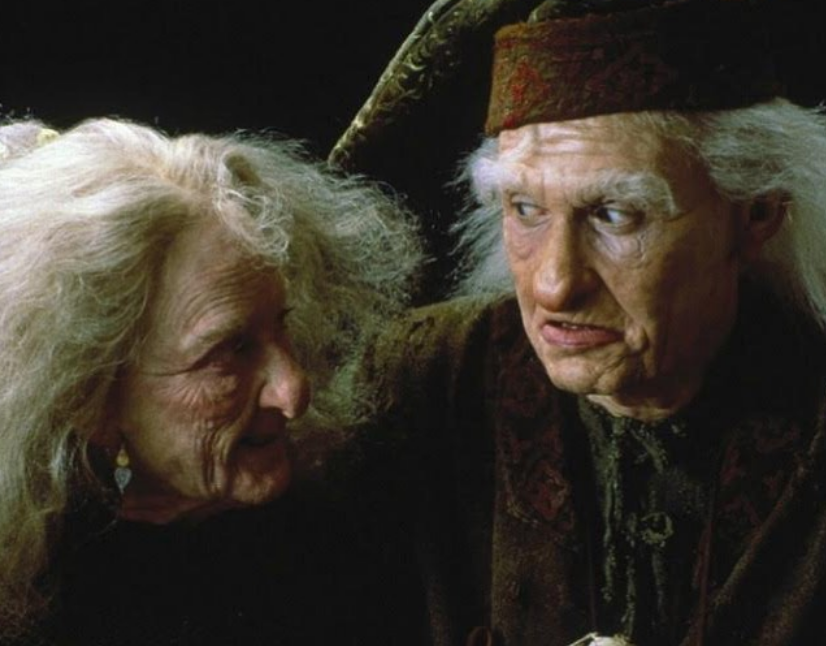
But the answer may simply be, “No, not today.” Sometimes we have those non-creative days. It is alright to have them. Art shouldn’t be about pushing out ideas to get to a “product.” I’m suddenly laughing to myself, thinking of Billy Crystal as Miracle Max in the movie The Princess Bride: “You rush a miracle man, you get rotten miracles.”

At least with writing, one gets a chance to revise.

Carol Kaine & Billy Crystal in The Princess Bride (20th Century Fox, 1987)

If you are a writer, what do you think about the use of prompts?

Breathe

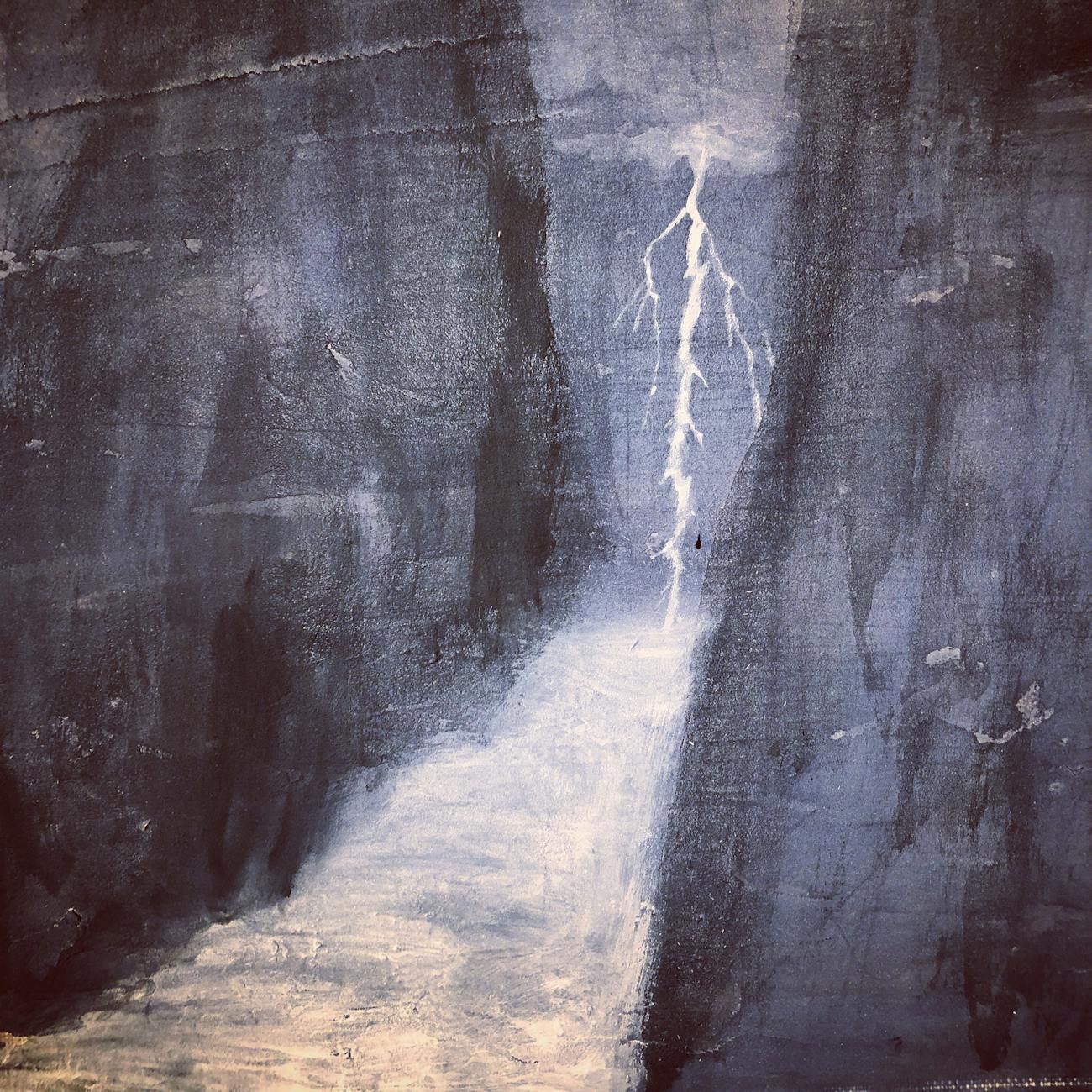
2024 closed with “thundersnow” in my neck of the woods, a weather phenomenon that I find rather thrilling in its strangeness. And the year commenced with the conflagrations in California, not to mention everything else that goes on daily in the cosmos. Oh, the difficulties of life in interesting times.

Photo by Sabian Symbols on Pexels.com

It so happens that I had made plans, and purchased plane tickets, to visit my son in Los Angeles during the week that AWP is holding its annual conference there, in March–that is, assuming the situation in Los Angeles County doesn’t get even worse and assuming his apartment building survives the fires; it hasn’t been easy to keep myself from doom-scrolling and watching updated fire maps. I remind myself that there is not a thing I can do beyond sending money to charities and such, perhaps, and waiting for the winds to change, and that making myself stressed will actually do harm. But I am not one of those Pollyanna types (now termed a “toxic positivity” person, I have recently learned). I’m aware that the world can be hard, and that we may suffer. So, as my yoga and tai chi instructors would tell me:

Breathe.

There’s no point in trying to decide whether this start to the year is auspicious or inauspicious, though if I’m going to go with signs and auguries, I might choose to follow the Chinese year and move my year’s start to January 29, Year of the Wood Snake–and get all this awful stuff (including January 20th) packed into LAST year.

As I noted in my year-end post, a year’s end–or beginning–is arbitrary.

~

As for writing-related resolutions, I make them all the time, not just at the beginning of the year. But in that one respect, the first dozen days of January are going surprisingly well. I’ve been spending more time on revising older–sometimes much older–work, and I have been drafting some new poems. I even submitted just a few things to lit journals and have been making minor progress in the monumental task of culling and organizing my writing files.

Best of all, I enrolled in an online poetry workshop with Anita Skeen through the Friends of Theodore Roethke Foundation, which starts this week. And I registered for an art class in February, so my plans to focus more on my creative work post-retirement are proceeding more or less apace. We balance fear and misery with art.

~

Cloud sketch in acrylics

Whatever works

My last post (here) generated some intriguing feedback and was cause for further reflection about revisions, at least on my part. Because I was writing a poem for a specific person–my son–I got useful information from his response, as well as responses from other readers; so I had the chance to hear back from my audience, however small, and to compare reactions. My son, the “you” in the poem, told me he liked the descriptions and that the piece did a good job evoking the atmosphere of the experience he’d had. He liked the closing lines, too. However, he said that while he had some moments of anxiety during his stint on the military ship, his overwhelming feelings cantered more toward frustration and an almost-constant irritation. He thought I had focused over-much on the anxiety aspect. “Though a person certainly could be feeling exactly that way in those conditions,” he added.

And that’s fascinating, because in earlier drafts I did not work toward evoking anxiety; I was trying to get the details right and to create a sense of annoyance, even anger, at the situation. (Apparently, that is closer to how he responded.) Here’s the “BUT”–but those revisions weren’t making the poem work any better. This is a challenge for many of us writers: when the impetus for writing the poem, and the initial intentions of the writer, don’t resolve into a good poem…and then some alterations–some “fictionalization”–make a better poem, but maybe not the poem the poet set out to write. Do we stay with our initial idea and keep whaling away to make it work as we initially imagined, or do we let the poem move into new territory somewhat removed from initial inspiration if the resultant revisions are more powerful, more believable?

I’m inclined to go with whatever works to make a stronger poem, most of the time. There are other options, though. Sometimes I end up with two or more poems stemming from the same initial idea. A bonus! One prompt I have occasionally used for myself is to re-write an earlier, less-satisfactory poem from a different viewpoint or to focus on a different aspect of the experience. This practice has been awfully helpful, and it keeps me from getting over-invested in the more obscure, personal components of a writing piece.

Photo by Leon Ardho on Pexels.com

Strengthening one’s work takes practice, and possibly a kind of discipline–not to suggest that I am a very disciplined poet, although I wish I were. I do take my practice seriously, though, and revision is a major aspect of my practice, always has been, even when I was a “baby poet” starting out. I never could quite agree with Ginsberg’s famous “first thought best thought,” since my first thoughts are seldom deep, reflective, or in any way excellent; and my first words set on paper are generally equally weak. For me, writing is thinking, in the way of E. M. Forster’s famous quote “How do I know what I think until I see what I say?” Thinking is often flawed, so analysis and critique and revision? They’re required.

Finally, whatever makes the poem better as a poem is worth doing. That’s my opinion: whatever works.

báilù

白露 báilù is the section of the lunisolar calendar that refers to the two weeks before the autumnal equinox; the translation is “white dew.” Misty mornings here and there, damp grass, dew spangling the tent spider webs in the meadow, draping the grasses and goldenrod with white gauze. Brown crickets sing, but the cicadas have left off. Nuthatches return. Squirrels knock walnuts off the branches daily, so there’s a regular thump-thump sound along the treeline. My summer-loving acquaintances bemoan the cooler days and insist summer’s not over until the 21st. My fall-loving acquaintances are picking apples and celebrating the return of pumpkin-spice flavoring to their favorite beverages.

I like the in-between times, the verging of seasons, aspects of change. Change means life, even though the onset of autumn traditionally signals the dying of the year. On my walk this morning, I took photos and made a mental list of changes that are flags of the coming season: acorns on the bough; morning glory still open at noon (in Japanese literature, the morning glory is a signal of autumn’s approach); burning bush shrub going pink; pennants of yellow walnut leaves; ripe wild grapes–deep navy blue, quite sour, and full of seeds; sweet autumn clematis (terniflora) in its whirly seed state, swarming over the hedges; oak leaves, five-leaf vines, and sassafras starting to color; winterberries already red; acorn detritus on the tractor path; pin oak galls (probably thanks to the wasp Callirhytis furva) on a leaf. All of these are mid-September features in eastern PA.

If I were feeling more poetically creative, I might try writing haiku using each of these as the image word. But my current state is fretful. Pulling weeds and taking walks ease my mind a bit. Sitting down to write, not so much. However, reader, I encourage you to try the exercise.

~

Considering the collection

Recently, reading through Dave Bonta’s Poetry Blog Digest, I noticed a few posts on stalling with a manuscript and subsequently clicked on those links and read what other poets have to say about it. Mmm, yeah. I understand the challenges. I have kind of stalled on my next book, too. Or shall I say, neglected my work on it. In fact, today–when I finally thought I had some time to review the draft ms–I could not find it. I had forgotten where I put the printout.

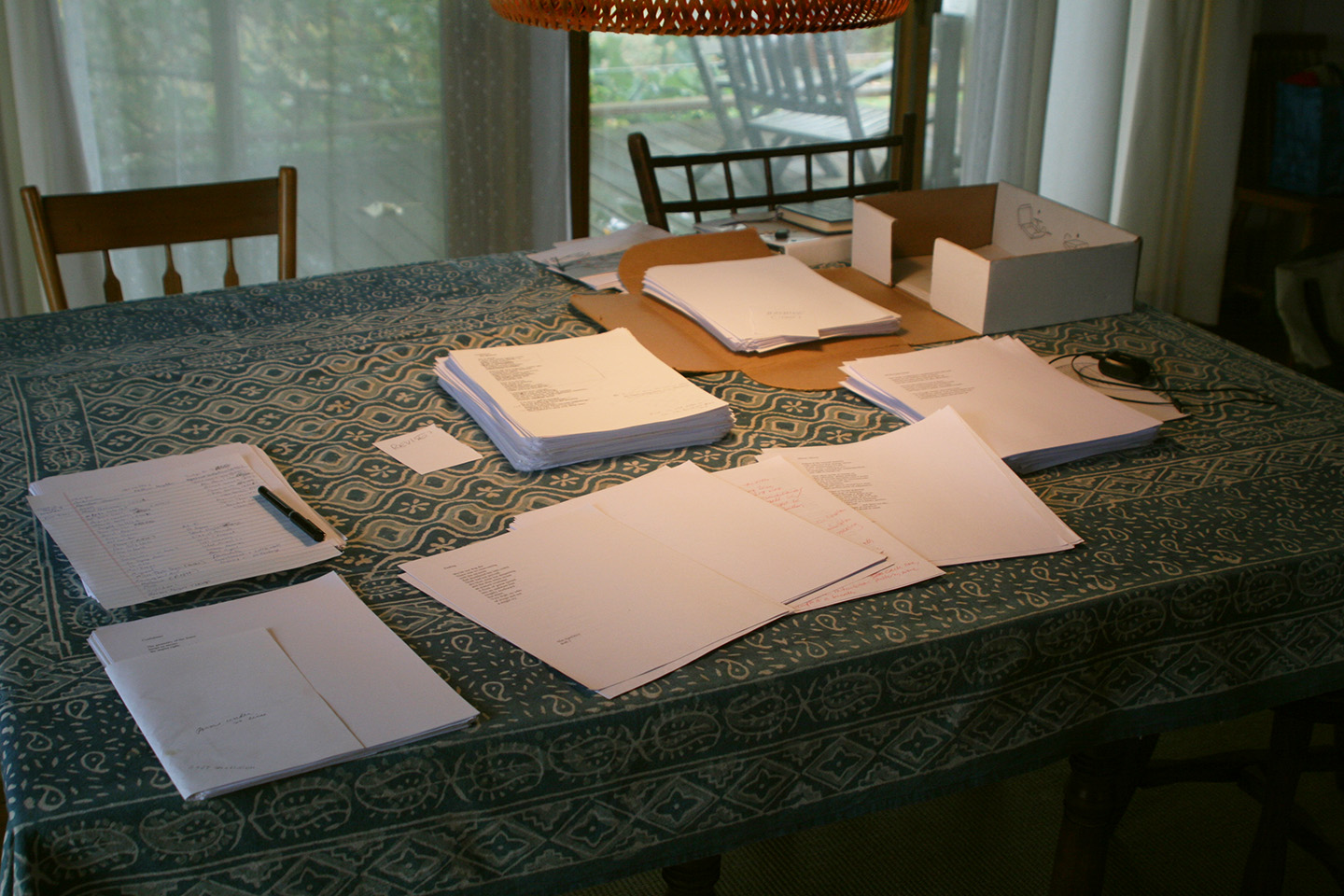
Yes, it resides on my computer. But I prefer to work with hard copy when structuring a collection. And where was the hard copy? I wasted a good half an hour seeking it but finally noticed it peeking from under a pile of other papers. This is not a sign of determined intent.

Why do I allow it to languish? There are so many possible answers to that. The poets who posted (see above) had structural concerns, other things going on in their lives, also a bit of second-guessing and self-doubting. I had eye surgery and covid, but those circumstances did not keep me from drafting new work, only kept me from putting the book together. I recognize now that these tasks involve, for me at least, very different processes, and maybe that is why I’m stalled but not “blocked.” I mean, hooray, I’m writing poems! Which is a process I enjoy, along with revising. But drafting and revising revolve around the process of an interior reflection and creative surge. I wish I could feel that way about putting this collection together, but I don’t. The manuscript-making process is lengthier, broader in scope, requires more critical analysis and a consideration (to a degree) of audience/readership that an individual poem does not. It asks questions of chronology, topic, and forms in aggregate that matter much less when working on one poem at a time.

Perhaps that means I’m not ready to put this collection together yet. Or that I have chosen the wrong theme or mix of poems, and I should reconsider the entire project.

*le sigh*

Maybe I need to take another amble around the garden to clear my head. It’s nice to have that option. It feels more like rejuvenation and less like…procrastination.

~

Depth perception

In second grade, I could not see the blackboard from my desk. My teacher noticed; I went to the optometrist, and thereafter began my worsening nearsightedness. New specs annually for many years, broken frames, ugly frames, though–unlike many of my friends–I never lost my glasses because I could not see at all without them. Somewhere along the way, astigmatism kicked in. In high school, I blamed my ineptness at any sport involving a ball on my astigmatism (contact lenses corrected my nearsightedness but weren’t as effective on the misshapen cornea). But my ineptness was largely due to lack of interest in sports.

And now, encroaching cataract formations mean that I’m getting surgical procedures for the removal of those thickened “cascades” that make it hard to drive at night, read street signs, or discern a cat from a fox in the back meadow. I had my left eye operated on this past week, with the insertion of a medium-length lens that gives me 20/40 vision in that eye: a miracle to me after so many years of blur. I have to wait two weeks before the surgeon does the right eye, and in the meantime I’m discovering the true challenges of poor depth perception. My brain hasn’t adjusted to the changes in my eye, and simple things like walking downstairs or pouring tea into a cup pose unexpected difficulties.

Topping things off, I’ve contracted covid for the first time ever. So I am being extra careful as I walk through my house and into my yard–taking a fall due to bad depth perception would be one more problem I just don’t need.

So I have been considering vision lately, and what it means to perceive, to have differences in perspective, focus, framing. Or different cultural and social “lenses,” as we refer to them when we are teaching students to write compositions in college. It is as easy to trip oneself up metaphorically as physically if one pays no attention to such perceptions.

Today, I feel to ill to spend much time pondering. But I have enjoyed looking at the photos–taken from different vantage points and times of day–of the lovely tree on the other side of the riverbed from Joya. Very healing, as trees can be.

Good w/words

I hear it often from people: “You’re a writer, you’re good with words.”

What I’m reflecting on while in a space where I have the time to reflect is that maybe, some writers are those folks who are not by nature “good with words.” Words, we may have, yes! We love words, love to read, love books, love poetry, love language. But that doesn’t mean that words come easily. We may have to work for and with them, rearrange and revise, check meanings and spellings, consider etymology and new ways of using words.

It may be we wrestle with them and, like Jacob with the Angel, find the process causes injury as well as revelation.

A study by Marc Chagall for his Jacob Wrestling with the Angel, ca, 1963

Writing may be a cat that follows us home when we really have nothing to feed it and our apartment building doesn’t allow cats, but there it is: needy and appealing, sitting on our doorstep.

For many writers, words are hard. As Virginia Woolf wrote, “Oh to be silent! Oh, to be a painter!” Some writers might prefer to be making a non-wordy art. Less energy to expend on how to say.

I know I can speak for a few writers when I state that, at least sometimes, words can be easier to write than to speak. If I’m chatting to somebody about my family or the garden or my opinions about online learning management systems (LMSs), I don’t usually have trouble with words. Those concepts stay within the familiar and the easy-to-express, even among people I barely know. In such conversations, I can be lively, make jokes, have opinions, and tell stories. This is social speech of a casual sort, even when the subjects are often close to my heart (well, not LMSs…).

But many things that are either more philosophical or more deeply reflective, even intimate, evade me when I try to say them in conversation. Questions I have, I may fear to ask. Describing a feeling, sensation, or emergent idea can be so difficult I decide just to stay quiet, listen to what I can glean from others. If my fellow conversationalists are patient and sympathetic and stay with me through more abstract, emotional, or artistic/philosophical topics, I will still find myself losing the thread of my sentences and tapering off into gesture. Gesture covers (badly) what I can’t seem to put into words. Even though I am supposedly good with words.

Later, I may endeavor to express in writing what I wanted to say when I resorted to silence. Writing is not the heat of the moment–there can be revisions, honing of concepts, maybe some research to cover the various vague lacunae during which I’d previously resorted to shrugging. Shall we say: clarification of thought through better words in a better order.* I may never learn to be adept at succinct intellectual conversation, but I can eventually get to compression of language for effect in a written text.

That would be enough. Or maybe it’s as David Kirby writes in his poem “The Wreck of the Edmund Fitzgerald”— “Writing isn’t hard./You just have to be patient. You just have to get/everything right.”

~

*Samuel Taylor Coleridge‘s definition of poetry: best words in the best order.

What are we doing here?

What is a self-directed, multi-disciplinary, eco/environmental artists’ residency? Why are we here? Or, since I can only truly speak for myself, why did I choose to participate in this experience, off the grid in the only true desert in Europe, with people I had never met? Several of my friends have been asking me these questions. I couldn’t really answer in advance because I had no data! I chose to come here partly to get some time alone, partly to visit the land where Lorca lived, and partly because everything would seem new to me.

Not everything seems new to me, as it turns out. Which is also something I expected. For example, my college experiences, both undergrad and graduate, were largely self-directed and multi-disciplinary; what’s changed is that now art disciplines include things like 3-D imaging, computer videos, podcasts, software-as-medium, and the like. Even blogging (here I am, composing creative work for humans to read through a computer screen). For example number two, the artists here are not so different from artists I have met in many circumstances and places over the years: they are curious, intelligent, creative, willing to take risks, and often quite mindful. Another example of things not so new is that, having spent a bit of time in the Albuquerque NM region recently, the lay of the land here and its exceptional flora, fauna, and aridity are not completely alien to my sensibilities.

I’m seeing a number of ideas about xeriscaping, creating fire-breaks, and about stopping erosion and saving water–such as environmental water systems that include basins, ponds, and plants as filters–in process or already in use here at the cortijo. We watered seedlings using water from an in-progress swimming pool near a small natural pond (one of only a very few up in this region) where the natterjack toads were croaking contentedly. The orchard is not producing much, as the trees are still small; but in a few years the farm should be able to get much of its fruit on site.

I’ve learned about the environmental history of this region, too, and how it has changed as the ecological ravages of humans have both worsened it and tried to revive it over centuries. In the Neolithic era, there was more rain. Bison roamed here, and people set up hunting camps in caves. Millenniums later, the Moors settled in the 11th c, built fortresses and small castles up in the hills. The close of the 15th century signaled the rise of noblemen, haciendas, bustling towns and small farms (cortijos)…and major deforestation. During the 19th c, the imperial government instituted a plan to reforest areas of what is now the park, and the economy grew, with more small farmholders; then the economy and population shrank in the 1950s and 60s when the climate became harder to deal with and infrastructure available elsewhere (electricity, paved roads, etc.) hadn’t gotten up to the mountains. People left for the cities. There are many abandoned houses/farm structures here.

Joya-Air explores and promotes sustainability, through mindful conservation and technology that uses fewer resources, along with creativity: art and ecology. The organization is “an advocacy association for ecosystem restoration / rural culture and residency for international contemporary artists and writers.” Simon Beckman is the curator/founder.

People volunteer at and attend or participate in these sorts of residencies and experiences for a host of reasons. For me, it’s a chance to switch perspective, view things from a place far from home, compose poems in a quiet space meant for just that–creative thinking and reflection. To inhabit, however briefly, a place intended to coexist with the flora and fauna, to find out what “off the grid” is like. And to learn new things, all of which contribute to the art of poetry.