Hominid animals

Reading Frans de Waal’s books always gets me thinking about the use of anthropomorphism/personification in poems. When I was studying and first learning about poems, the general thinking from critics seemed to be to treat anthropomorphism, and even personification, as a “no-no” in contemporary poetry. We were not to make trees or grasses or wolves “humanized”–which does make a kind of sense; instead, we were told to observe and describe what we saw with less of a reflection on whether the non-human thing bore resemblance to human things.

For example, the bee was not to love the flower or the hive, nor the ostrich to love a fellow ostrich. A willow shouldn’t sway like a dancer. It should sway like a willow in the wind. There was science behind all this, maybe Skinner’s science but still; and there is Nagel’s bat: how can a person imagine being a bat the way a bat experiences being a bat? I’m not going into reductive materialism here, don’t worry. Just trying to provide some context outside of poetry to suggest there may be forces behind the trend away from anthropomorphism, some of which are valid.

I have always been tempted to title a book The Personification of Everything.

Now science is fairly certain that emotions preceded “rational intelligence” as life evolved and that animals possess traits and behaviors that aren’t so fundamentally different from ours; we are hominid animals. I would add that, as reflective hominids who employ language for reasons beyond basic information, human beings make connections (metaphor, simile, parallelism…) and can observe the “others” in our environs as not always so unlike ourselves. Or dream of inhabiting the lives of those others, or imagine telling stories from those vastly strange (to us) points of view.

So I’m coming around to appreciating anthropomorphism and personification as dwelling in the realm of the imagination that is not the domain of philosopher or scientist. After all, writers have been taking other perspectives on stories for quite some time, especially during the past century. Ophelia’s perspective (Hamlet), Persephone’s (The Odyssey)…Kazim Ali re-writing Icarus’ story (Sky Ward, 2013). Why not, then, write poems using the perspective of the spotted lanternfly, as Robin Gow has done?

One of my favorite short stories by Ursula Le Guin, “Direction of the Road,” takes the perspective of an oak tree. It is about the relativity of time and motion, but one thing the piece brings home–without any preaching–is that human lives are comparatively brief and, dare I add, not as important in the scheme of things as we may believe. Once we can accept that possibility, maybe we can more gently embrace the world and the things of the world.

Vacuum of meaning

Seven months ago, my mother’s handwriting was decipherable–to a degree:

Her script now resembles nothing so much as asemic “cursive”:

Asemic writing is a wordless open semantic form of writing. The word asemic means “having no specific semantic content”, or “without the smallest unit of meaning”. With the non-specificity of asemic writing there comes a vacuum of meaning, which is left for the reader to fill in and interpret. Wikipedia

Her words likewise sound as though they possess no semantic content, but her body language, facial expression, and intonation when she speaks make it clear that there is a unit of meaning in whatever she tries to convey verbally. It amazes me that she doesn’t seem particularly frustrated by her aphasia. Although I can’t know what my response to aphasia would be, I doubt I would be as accepting and unflustered as my mother is.

I think of how Eloise Klein Healey wrote her book of poems Another Phase while experiencing Wernicke’s aphasia after a bout of meningitis. I gave my mom this collection a few years back; she marveled at these short poems, when she was still able to read, deeply impressed that Klein Healey persisted in using words–creating poetry, no less–despite aphasia. Eloise has regained some of her fluency, while my mother can only get worse (her aphasia is due to vascular dementia, from which there is no possible return).

Yet my mother continues to write–to take notes? jot down ideas?–it’s not possible to know, but I find her cribbed, indecipherable cursive here and there on pieces of paper on her desk, and in a notebook in her dresser drawer. It resembles asemic writing now. That habit of recording some aspect of one’s life, or of making lists…it appears that muscle memory can include the small-motor habit of handwriting. I wonder if she is making meaning in some way that I cannot possibly discern, something interior but necessary to her. As a writer, the idea appeals to me. But I also wonder what the point of writing is when there is no audience, so that the act is no longer an act of communication. Does it then become a “vacuum of meaning”?

~

In happier (meaningful?) news, January’s surprisingly full of poetry this year, and I have had time to attend, participate, listen in. Plus it finally feels wintry here. Snow’s coming down, herbal tea warms me in the afternoon, and we’ve lit the fire in our fireplace more than a few times, burning up the dead-fall ash trees that have been coming down around the property the past three or four years. I’m staying inside more than usual, “yin energy” restfulness. And withholding some lovely news for now, awaiting confirmation, enjoying the possibilities ahead.

Vision/revision

Although the word “vision” derives from the Latin visionem, it first appeared in English with the definition of things seen in the mind or via the supernatural. Vision as simply the sense of sight is a later meaning (late 15th c.), and vision referring to foresight dates only to 100 years ago [see https://www.etymonline.com/word/vision#etymonline_v_7835]. The cliché “a vision of loveliness” provides an example of the early, 13th century meaning, as does the phrase “visions of sugarplums.” Poets have long been known for writing about, or being under the influence of, such vision.

When the first flush of poetic vision inspires work that later needs some adjustment, writers turn to revision. According to Etymology Online, revision’s history in English first showed up as a noun in the 1610s: “act of looking over again, re-examination and correction,” from French révision, from Late Latin revisionem (nominative revisio) “a seeing again” … the meaning “that which is revised, a product of revision” is from 1845.” This noun, and its verb form (the act/work/verb-sense of revising), keep me occupied a good bit of the time, especially lately while I’m trying to catch up with a large backlog–20 years of poetry drafts.

And then there’s this: https://www.hopkinsmedicine.org/health/conditions-and-diseases/cataracts#vm_A_20f6f6e1… blurred vision, leading to eye strain, drier eyes, halos around lights at night, trouble reading street signs. Yes, time to get a cataract evaluation, suggests my optometrist. “It’s our legacy,” my brother says, because our dad and most of his siblings got cataracts before age 70; Dad was only 48.

Efforts to correct cataracts apparently date as far back as 600 BCE in India, reports the American Academy of Ophthalmology, but the “father of modern cataract extraction surgery” was Jacques Daviel in 1747; since then, the surgery’s come a long way. I’m not worried about having it done and actually rather eager to see better and not need glasses all the time, though it could be over a year before that happens. In the meantime, the symptoms are irritating but not too significant. I can read books (and drafts of poems) just fine. I just might want to avoid driving in the dark, rainy nights of midwinter.

Johns Hopkins Medicine

Anticipating removal of the thickening, cloudy lens that blurs my visual outlook offers a metaphor for the revision process in my writing. Observation, reflection, critical analysis, problem-solving, intervention, re-envisioning, repair. And perhaps: clarity, if I’m lucky.

Other forms of gleaning

Of the many tasks that lie before me as I work toward restructuring my routine, the past drafts pile must be the most engaging long-term project. Other kinds of odd jobs can be done in brief segments; it doesn’t take more than half an hour to clean out a drawer or closet, throw laundry in the washing machine, or cut back the ornamental grass for the season. Even a big job, like uncluttering the attic, can be done bit by bit once we get the motivation. Those tasks don’t require much critical thinking, no analysis beyond “Do I need this anymore? Can I get rid of it? Can I consolidate it with other items of its kind? What will take this stain off?”

While I can’t say I love organizing and clearing out stuff, it is not really taxing work. Just tedious.

Sorting through the drafts pile isn’t tedious, but it’s monumental and a bit intimidating. The pile of poems dates back as far as 2001 and is made up of probably two reams of paper. It includes hundreds of fairly terrible poems and, if I am lucky, maybe 80-100 poems that have the potential to be meaningful, beautiful, or at least not embarrassingly bad. This pile’s the result of 20 years of procrastination, lack of time, lack of motivation, and generalized disorganization. I admit it! Now I must roll up the proverbial shirtsleeves and get to work: work which requires analysis, criticism, revision, sorting, culling, and–that precious commodity–time. I find I’m unable to accomplish much if I attempt the work in small bits, (though I do break it up into sections, more or less). If I don’t spend at least two hours at a go, I get distracted and indecisive. I read each draft carefully, several times, to assess.

So we’re looking at weeks and weeks here. Maybe months and months, though I hope not.

The way I choose to understand the process is as a type of gleaning and sifting. I’ve got the harvest in–a big pile of poem drafts, maybe ur-poems, maybe seeds of poems, maybe crap. My efforts help me to decide which ideas are interesting, even if the poems themselves are not pulling the weight of an intriguing possibility; which lines and images are worthwhile, even if they don’t operate too well in their current context; which pieces suffer from thoughtless lineation, weird syntax, clunky form, form that doesn’t suit the content, and the like; which poems are far too wordy or else missing vital words for clarity; and which poems are basically not worth putting any effort into because: Boring! Obscure! Derivative! Sentimental! Awkward! Meh! What was I thinking?!

And then, every once in awhile, I find a poem I like and had forgotten about, one that only needs a bit of appropriate tweaking. Eureka moments while wading through my own creative work.

Yes, I should have been doing this sort of gleaning and sifting all along, the way I did when I was first starting out as a poet, 45 years ago. It probably would have made things easier. I notice myself noticing myself, though…noticing my changes as a writer, my little obsessions and my past enthusiasms glimmering in the work, noticing the different ways I have approached Big Themes and smaller ones. There may be something useful in that offshoot of my major poetry drafts excavation. Who can tell?

~

The Gleaners, Jean-François Millet, 1857; image, Los Angeles County Museum of Art

Some awe

In 2015 (I think), I posted about the University of Berkeley’s professor Dacher Keltner‘s studies examining the experience and emotion of awe. Now he has a book, Awe: The New Science of Everyday Wonder and How It Can Transform Your Life. The subtitle’s unwieldy and promises a little much–I’m sensing a publisher’s or publicist’s input there. Keltner’s a psychologist, not a popular self-help author, but whatever…

The ways scientists attempt to study human emotions amaze me with their inventiveness. How does one conduct empirical experiments on anything so wildly subjective? (And honestly, I question whether empiricism is always as objective and reliable as scientists believe it is–though we haven’t developed a better method yet.) This book answers some of my questions about the “how” of studying emotion, which includes a good deal of physiology; after all, human emotions are based in human bodies. Qing Li’s book on forest bathing touches on some of these methods of study as well. Blood pressure, heart rate, breath rate: those can be measured, and there’s exhaustive research that shows how such aspects of our physiology connect with feelings of well-being, even before looking at the roles hormones and neurotransmitters play.

But what about awe? Isn’t that usually a feeling that takes your breath away? That might raise the pulse, that might be fear as easily as joy? Keltner writes about the line between fearful shivers of the Halloween-night kind and goosebumps that appear when humans feel awed. Also our tears–of joy, grief, physical pain, and those tears that we feel when we are “moved” by an act, a place, a work of art. He cites Rose-Lynn Fisher’s photos of tears, which I was happy to see mentioned because I love her work (a poem about those photos appears in my book The Red Queen Hypothesis). He cites Ross Gay’s poems and prose poems/essays of joy and gratitude, in books I happen to love. And Keltner offers an anecdote about poet laureate Robert Hass and the “whoa moment” that arises in “myriad cultural forms.”

Among those forms is poetry, and here’s where this text got me considering what I love in reading poetry and what I may be aiming for when writing it: the term he uses is everyday awe.

Deep awe–I’m not enough of a genius with words to create a sense of deep awe with a poem, though I admire the geniuses who have been capable of such art. But everyday awe? That’s a feeling with which I’ve been familiar since my childhood and which I have never lost sight of. For me, it arises from my favorite pastime: observation. The fog-mantled tent-spider web in tall grass, the sparrows sipping from city-street potholes, the toddler showering his baby sister with dandelion flowers, the smell of honeysuckle early in June, or campfires or cinnamon. Sea spray in my face. Sand in my shoes. The way my mother’s 90-year-old skin stretches and smooths when I stroke her arm. Skunk cabbage unfurling with the morning sun behind it. These things I can write about; the words are everyday words, and this is my everyday world. That, for me, is where the art of poetry and the experience of living intersect.

Once again, ambition

Dave Bonta, he of the Poetry Blog Digest, Moving Poems, via negativa, Dave Bonta blog, and more, recently posted a thoughtful essay about personal poetic ambitions vs. careers in the poetry field (see https://davebonta.com/2023/10/ambition-without-careerism/). The link’s here because I encourage you to read it! It is a topic many of us poets return to occasionally, especially when we find ourselves wondering things like why bother and who cares whether we write or not or whether we ever get any good at writing poetry…and whether poets should be paid better, or at all…and whether or not poets benefit by being attached to universities.

In fact, when I read Dave’s post I immediately recalled having written similar ideas, though from a different perspective, on this very blog some years back–and probably more than once. The concept of ambition in poetry, and how one defines that word in relation to poetry, is something I first encountered in Donald Hall’s 1988 book Poetry and Ambition–still in print from University of Michigan. I read this book of essays in 1991, in between changing diapers and coordinating naptimes for two children under the age of four. It was difficult to feel ambition about career at that time, and a career in poetry was ever a pipe dream; but the notion that a writer could feel ambitious about the work she might be doing in learning about and endeavoring to craft really good poems, even should she fail most of the time, felt encouraging to me. I recommend this book, as there’s also a good deal one can find to disagree with in it, and debate is useful for thinking.

Fast-forward to today (time does seem to move in fast-forward), and I find myself retired from a career on the fringes of academia, where I taught composition to students less-prepared for college and ran the writing center at a university. But I did not teach poetry or creative writing and was staff, not professorial/tenured; so the need to be career-ambitious through poetry was null. That suited my personality well. Maybe too well. Yet somehow I managed to get a reasonable amount of my work published (see the sidebar of this page) and to get several chapbooks and books into print (see the My Books tab here). I had my own form of ambition.

What now, I wonder? I have so much work to revise! Recently, I submitted an experimental, historically-based chapbook to a publisher, and I’m working on getting a new book of older work, though not as old as The Red Queen Hypothesis‘ poems, into print. Will I spend the next few years just catching up? Possibly. Is that “ambitious”? Nah, just means I wasn’t ambitious enough to get to it earlier!

Restorative

I often start a post with a mini-weather report; I guess that’s one way I prepare myself to write, centering myself in the environment I inhabit. Our region received much-needed rain this weekend, but I was out of town–and the weather in Chicago was glorious: cloudless, crisp, mild, a light breeze. Odd, though, how weather conditions can evoke strong memories for me. The amazing clarity of the sky and air reminded me vividly of September 11, 2001, and the two days following it when we had a run of glorious weather and a mood of intense disturbance all around us…and no plane traffic at all. It took a few moments for that recall to settle in, and a few minutes more to let the memory go so I could enjoy the present moment.

~

I was in the Chicago area–Highland Park– for the book launch of The Red Queen Hypothesis. Many thanks to my publisher, Julie Dotson, and the welcoming and supportive group of poets and audience; the reading went well, and we sold some books (always a satisfying thing). I met quite a few interesting people and learned a bit about the city of Highland Park, its relatively long history, its parks, architecture, the storied Ravinia Festival, and how the city’s been coping since the July 4 tragedy last year. Travel always offers perspective. In this case, travel offered community as well: a lively community of people who support the literary arts.

~

I even got to be recorded, with Jennifer Dotson as the interviewer–a first for me. Here’s the link:

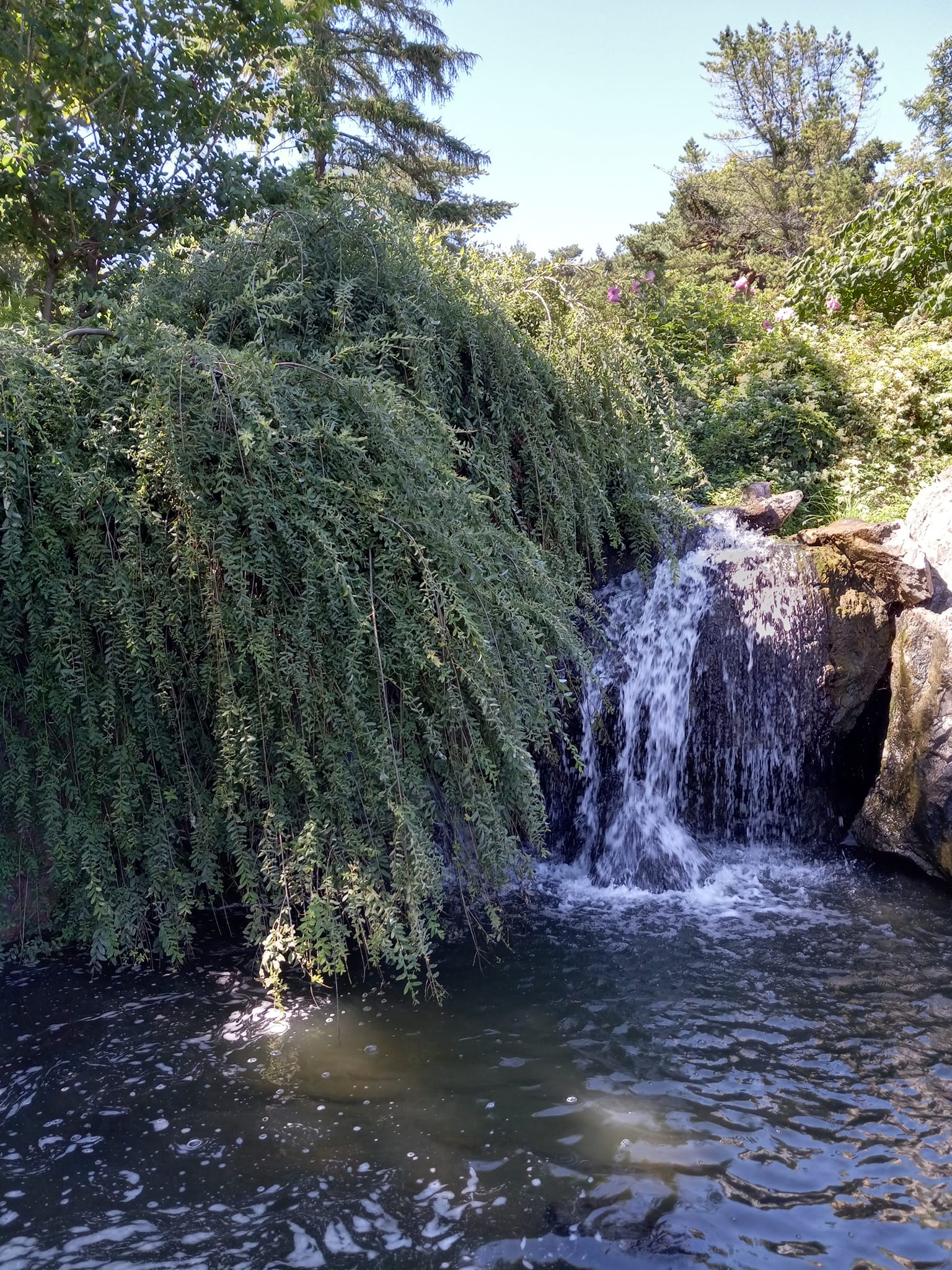
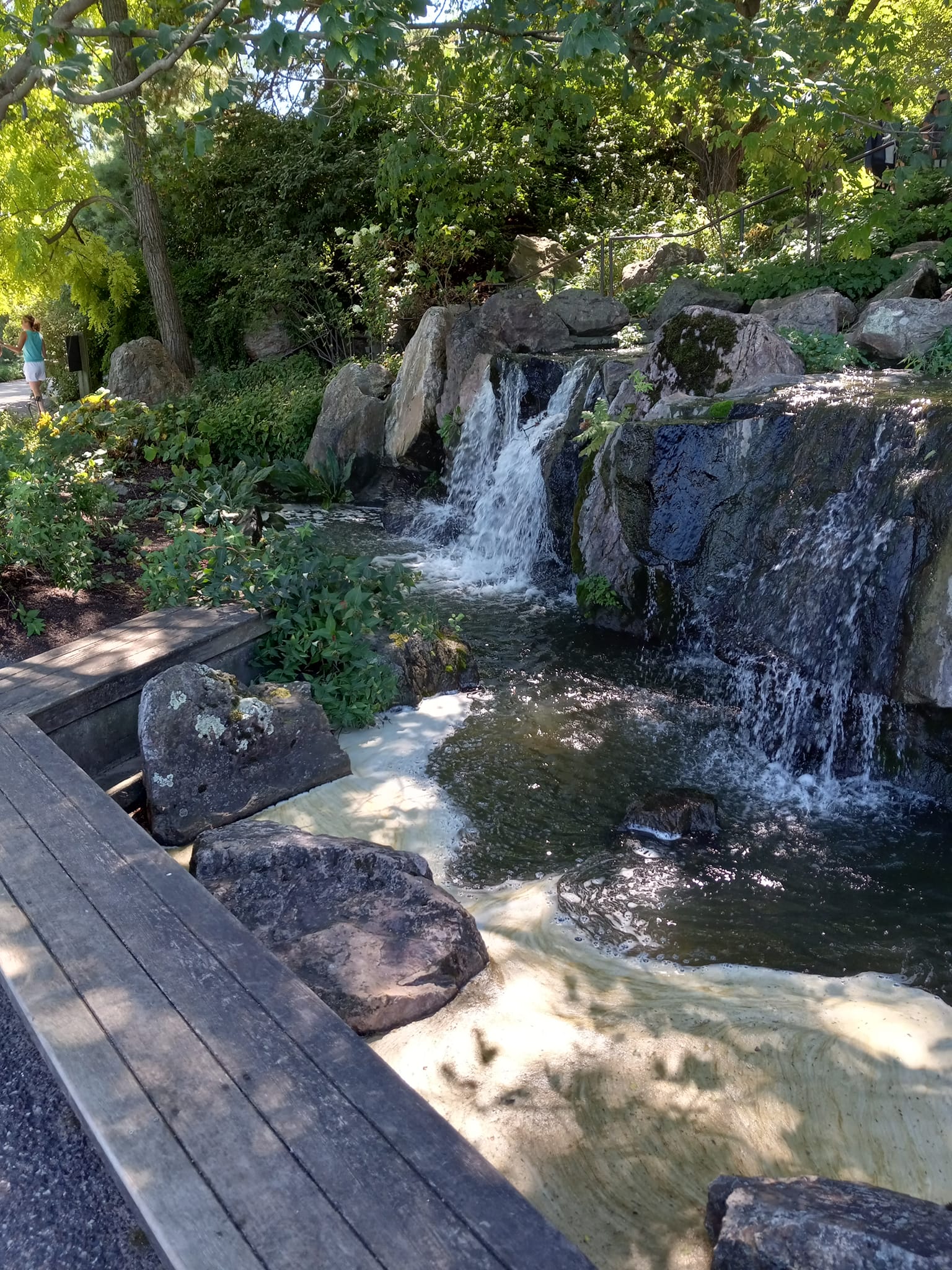
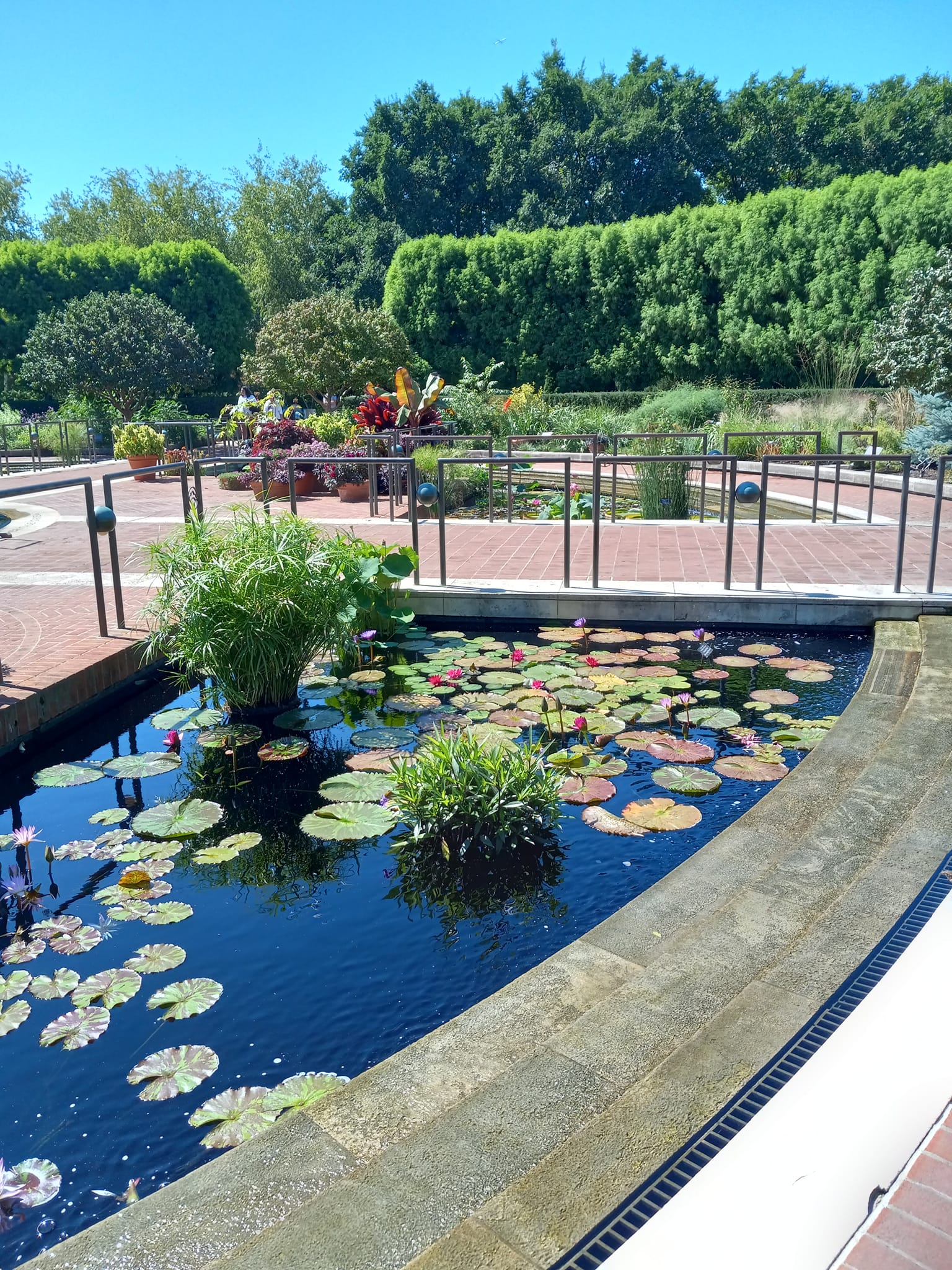
My generous poet-host, Julie Isaacson, knew from my writing and my biography that I would enjoy a walk around the Chicago Botanic Gardens–and she was so right! The gardens offered just the respite I needed after airplane travel. We hadn’t the time to stroll all 280+ acres, but the chance to walk amid trees and beside water in the middle of an urban expanse was genuinely restorative.

Now I am pulling weeds and pruning for the approaching autumn, activities that allow me to settle into myself internally and which sometimes result in poem drafts. Please wish me luck on both endeavors!

Script, postscript

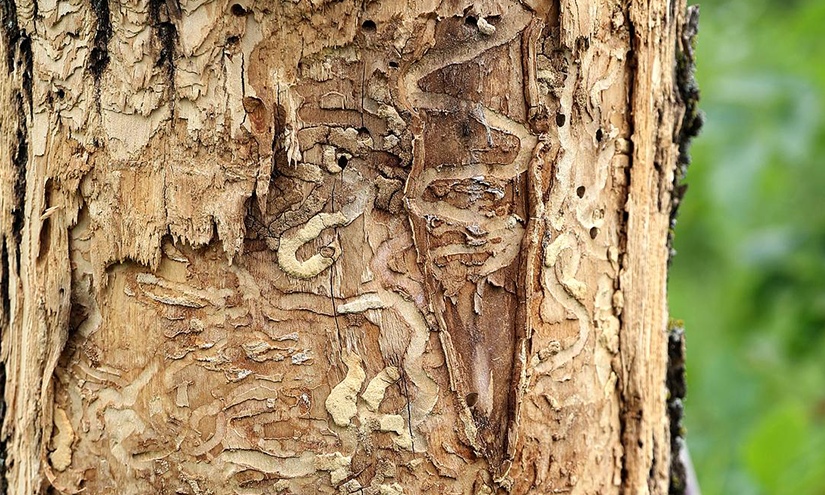
The weather has been glorious lately, which has the downside of getting rather droughty. No rain in the forecast, either, so it is time for supplemental watering if I want to keep harvesting from the vegetable garden. There’s not much left there, though; I may just wait things out and save the water. Meanwhile, some of our days have recently been punctuated by the sound of green ash limbs crashing in the nearby woods. When I investigate the trees, there are the telltale scribbles of ash borer on the trunks. The marks look like script.

I learned, while teaching college freshmen the past few years, that many younger adults do not know how to write or even to read script. Many children never get the lessons in handwriting in the second through fourth grades the way I did. Instead, they learn keyboarding–a skill I got to in my junior year of high school but never really have mastered (yes, even now I use a self-developed version that’s sort of an advanced hunt-and-peck method). It’s hard to believe that reading script is a task that will be relegated to specialists in years to come, but I shouldn’t be surprised if that’s what happens. To many of my college age students, handwritten script in English is almost indistinguishable from the marks of ash borers. They don’t see the need for that particular skill. Handwriting is going the way of letter-writing.

Perhaps we live in a post-script world?

I have been thinking about the handwritten word recently because of a recent incident while visiting my mother. She received a small refund check from an insurer, and though she understood what it was and that she no longer uses her checking account–we siblings take care of that through power of attorney–she was confused about what to do with it. “Sign it, Mom,” I told her, offering her a pen. “We’ll deposit it for you.” I turned the check over and pointed to the line for signature on the back.

She wavered, pen in the air. “I don’t…I don’t,” she said (her aphasia has advanced past the point of expressing full sentences). It took me a moment to realize that she could not recall how to sign her name. I placed my hand around hers and helped her start with the capital B.

I didn’t cry, but the experience hasn’t left me alone. I suppose there may be a poem in this incident, but if so, it’s a sorrowful one.

Classification

An admission: I’m barely competent at the promotional aspect of The Writing Life and would prefer to hole up in my house and garden and just… write. But writers need readers, and writers benefit by meeting other writers (and readers); and I’ve always been interested in learning new things, even things that are not particularly fun or that I am not naturally adept at. Such as educational learning management systems (ie, “portals”). Such as recording audiofiles of my poems. Such as contacting potential poetry-reading venues or reviewers. Or coming up with clever ways to let people know about my book.

I got a couple of responses from my initial forays, which is lucky. One of these sent me a sort of writer’s questionnaire about my book, and one of the responses I’m supposed to give is to say how I would classify my latest poetry collection. That got me mulling over the whole idea of categorization, classifying, and stereotypes. Genre–that’s easy. It’s poetry. But the sub-category of this book? uh…

~

At the beach earlier this week, we found a much-broken up rock jetty that teemed with creatures. As I sat back on my heels and peered into the mixture of sand-water-rock-mullosk-kelp, I found myself thinking about Aristotle’s immanent realism (epistemology/natural philosophy), ideas he likely nurtured while examining the tide pools of Lesbos. Or I imagine that he may have done so. We humans observe, and then classify or categorize based upon these observations: similarities, differences, various adaptations–in environment, habit, behavior, construction of the being or entity itself.

I think if I had known as a child and young woman that there was a career path called “a naturalist,” I would have pursued it.

~

Unclassifiable doesn’t strike me as much of a selling point. However, there are always art forms that are, to use a current term, intersectional or interdisciplinary, and creations that repurpose, alter, or reimagine the known or customary into something new and intriguing. Fellow blogger and talented poet and novelist Lesley Wheeler‘s books come to mind, as do works by Anne Carson and books from Coffeehouse Press and Tarpaulin Sky (among others).

My poetry is not experimental nor groundbreaking, though it is a little quirky; so here is my recent attempt to classify The Red Queen Hypothesis and Other Poems:

Touching on a range of topics and employing variety in poetic craft—free verse, metrical verse, rhyme, and classic forms—the poems in The Red Queen Hypothesis play with invention, science, and the environment of the everyday.  One example of these juxtapositions is the title poem: a villanelle, based on an evolutionary theory named for an episode in Alice through the Looking Glass, that sums up the corporate rat race. Sometimes tongue-in-cheek, sometimes disturbing, the poems urge readers to observe and to reconsider what is beautiful.

~

I dunno. Does that seem like a remotely interesting description?

(Really not adept at the promotional biz.)

Aristotle, supposedly.
from https://www.nytimes.com/2016/05/27/world/europe/greece-aristotle-tomb.html

Mindlessly

There are some necessary but mindless tasks that I’m good at and don’t mind doing. Weeding, for example (unless it’s raining, or disgustingly hot), or cleaning a bathroom. My morning chore today entailed removing staples that fastened carpet underlayment to the floor. There are dozens of these staples stuck in the subfloor, and most of them have bits of foam-like fabric wedged in them. The edges of the room are studded with tacking strips–annoying to remove when one is not a professional. Best Beloved and I did consider hiring someone to replace the floor, but since it is a job we can do ourselves…well, we have the time and are doing it.

There’s a difference between the mindless and the tedious. I don’t care for tedium; but a task I can mindlessly manage–something physical, but not too demanding, without a lot of surprises I need to problem-solve–those projects can be almost relaxing. When weeding, my thoughts can wander. The job is so familiar and repetitive that there is no need to devote much brainpower to it. Ideas, reflections, observations, images can float aimlessly in my mind. I can think about poems while weeding. Taking a walk in a woods or quiet countryside offers me the same sort of internal/external environment.

Proofreading was like that for me, back when I was a proofreader (when there were such things as proofreaders in every newspaper, type or print shop, publishing house, ad agency, and legal department). Editing takes some thought; but the less engaged a proofreader is with the text, the better. I was employed as a proofreader when I first recognized that I was truly serious about writing poetry, and I found value in the ’empty mind’ that my workaday job fostered. There was a bonus in that sometimes I did glean new information from the materials I read.

~

Composing this post, it strikes me that “mindless” is the wrong word, or not an accurate word to convey what it’s like to feel internally occupied while the physical body’s doing something else. “Reflection” implies more stillness. Something more akin to walking meditation?

At any rate, I can hope that the weeding and staple-removing might eventually get my poetry mojo re-booted. I have to work on my next manuscript and continue to promote my latest book, too. In the meantime at least I’m accomplishing something.

~