Curriculum vitae

My year has begun with half a dozen literary journals declining my poems, but it has also begun with a proliferation of new poems–which makes me happy. There are several reasons for a prolific spurt, some of which involve sad events that have turned me toward reflection. While sorrow isn’t a reliable prod for writing in my case, reflection almost always is. Also, attending a workshop is generative for me.

In last week’s session, we read Lisel Mueller’s “Curriculum Vitae,” and Anita asked us to emulate the poem for our own life story. I encourage you to read Mueller’s poem if you are not familiar with it; it’s full of lovely imagery and is so concise and evocative that it stands as autobiography–quite an amazing piece. Also daunting: how to use that poem as a writing prompt? I needed a strategy, so to keep myself as brief and non-narrative as possible, I limited my version to 15 points instead of 20. Then I edited it down several times, taking out as much as possible while leaving things that feel “true.”

What I realized after this practice in form, and after revising it and tightening it up, is that if I were to start again rather than revise–and were to focus on different aspects of my life experience–I could write a completely different, but still true, poem. I could write a dozen completely true and completely different CV poems! I could have used national events that occurred during my life and had greater or lesser impact on me–the Kennedy assassination, the March on Montgomery, Viet Nam War on television, etc. all the way to 9/11 and since then; or I could have focused on friends and family, their appearances and disappearances from my life; or places I lived or traveled…easily a dozen CVs, curated to present a lifetime.

So while the piece I wrote isn’t a “keeper,” not something I would send out to literary journals, the practice of writing and revising it has been remarkably useful (thank you, Anita Skeen!); I’m more aware than ever of how perspective, focus, and image affect narrative. And of how many ways there are to “tell” an experience, which of course is something poets often do: revisit, re-frame, re-imagine an experience, loss/trauma, or relationship using numerous forms, images, perspectives, speakers, and so on.

Which is certainly one reason Anita asked us to try this exercise.

I did not manage to be as lyrical and concise as Mueller, but then I didn’t expect to; she was an amazing poet. From her poem cited above, I especially relate to the line: “At home the bookshelves connected heaven and earth.” It felt like that at my parents’ house, too.

I’ll be brave and post the practice poem, one of many versions of my autobiography.

~

CV, after Lisel Mueller

1. Three weeks before summer solstice, I enter the world. My father considers me the first perfect thing in his life.
2. Underfoot, meadow grass and church aisles.
3. We move from the manse to the city, where my sister goes twice to the hospital and I walk two blocks to school.
4. Suburban house, square and white as a die. We learn to ride bicycles in the street.
5. Bussing and gas shortage, algebra, barefoot girls in summer. My embarrassment at growing too tall, too thin, too bookish, too moody.
6. Early entry into college. When the only thing I wanted was to get away.
7. In Michigan, snow like I had never seen before.
8. Some years of misery, tedious, purposely omitted. But I meet the people who most encourage me to write.
9. Back to my parents’ kind embrace. Celibacy, recalibration, writing.
10. We meet one summer. I write you so many letters. It might be love.
11. Two children 18 months apart, vegetables in the backyard: it is love.
12. Autodidact in the garden, in the world of literature, in child-rearing. There are cats, chickens, guinea pigs, a beloved dog, but I need to return to study and poems.
13. Loss and joy keep me writing, teaching keeps me busy, children grow and travel far. My books see print.
14. Pandemic.
15. My father dies, my mother loses her power of speech, friends start failing, there are dark weeks. Many hours in the garden, growing and grieving. We hold on, uncertain, but whole.

~

Promptings

I have mixed feelings about poetry prompts. There have been times when using prompts has really got me writing and feeling inventive about poetry. I’ve had instructors (and read books) whose prompts seemed terrific for me; but maybe I felt already ‘primed’ for writing, anyway, and it was not so much the prompt itself but the circumstances that led to fruitful drafts. At other times, prompts appear useless, or even–dare I say–insipid. My current belief is that, for me, circumstances and instructor matter more than the cleverness of the prompt. Any prompt can be delightful if only I find myself situated in the mood or feel an urgency to write.

The virtual workshop I’m taking with Anita Skeen opened with a discussion of poems (by Roethke, initially) and then moved to some list-making and prompts. This is not unusual for workshops, and lists are a fine way to begin thinking about poems. The prompts we were assigned employed both lists and a method for drafting a poem. So far, I’ve drafted four or five poems in a week: therefore, success (!) even though only one of the drafts seems to have legs.

I think what happens is that after many, many years of writing poetry (or making any kind of art) one begins to feel a rhythm that is almost circadian–as analogy–that informs a person about flow. I ask myself, “Am I ready to write today?” The answer may not be yes. But if it is yes, then I can just write. No expectations, and it’s okay to use a prompt, or re-write an older poem, or just free-write about whatever moment I happen to be in. Usually, in this frame of mind, I don’t get concerned about writing well. I just start on in.

If the am-I-ready answer isn’t a definite yes, then I may procrastinate or distract myself by cleaning the house or reading a book. I can overcome the “maybe” by turning to work by a poet whose work I find interesting or by experimenting with a prompt. Sometimes, it helps to give myself a deadline of some kind–this is why workshops are often useful!

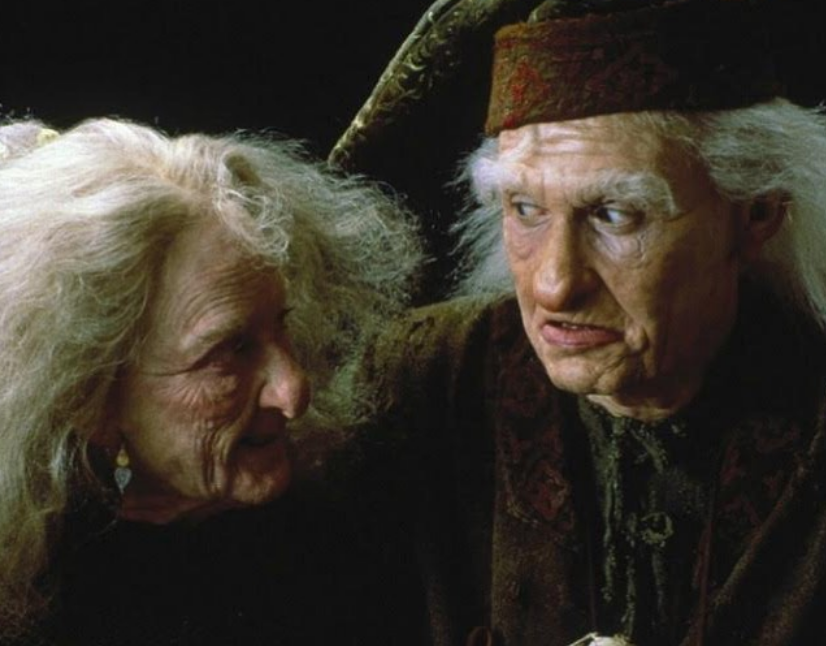
But the answer may simply be, “No, not today.” Sometimes we have those non-creative days. It is alright to have them. Art shouldn’t be about pushing out ideas to get to a “product.” I’m suddenly laughing to myself, thinking of Billy Crystal as Miracle Max in the movie The Princess Bride: “You rush a miracle man, you get rotten miracles.”

At least with writing, one gets a chance to revise.

Carol Kaine & Billy Crystal in The Princess Bride (20th Century Fox, 1987)

If you are a writer, what do you think about the use of prompts?

Re-assessing

Another clear day; we finally got an inch or so of rain on Friday, which was much needed, and since then the temperature has cooled a little. This late in November, it finally feels like autumn. On my morning walk today, I was happy to see this handsome creature airing its wings in the sunshine. Our local turkey buzzards have been active lately. I’m fairly certain that the snag this one’s perched on is a green ash tree, clearly well-visited by woodpeckers.

My low mood seems to have abated, at least temporarily, and I wrote a few poems and revised a few others during the past three days. I’m trying to accept the fact that this year, we will see neither our son nor our daughter for the Thanksgiving and Christmas holidays. So I’m trying to get creative about things to do that we might not have done if we were preparing for family celebrations. Yet we miss the concept of family celebrations. I guess that’s a socio-cultural thing, right? I may need to reassess what value “the holidays” have for me these days.

~

I have also kept myself busy re-assessing a chapbook manuscript I’ve worked on forever (it seems) and am now looking for the sort of small, independent publisher that might consider a hybrid poetry-journalistic/historical work influenced by Muriel Rukeyser‘s long-poem The Book of the Dead. My poem is about a Korean War veteran tried as a traitor upon his return to the USA, a man who was my friend David Dunn’s father. It has been a real creative challenge to figure out how to tell his story, and the resulting text is definitely “hybrid,” with footnotes, magazine articles, military court proceedings, letters, and poems. People who believe that poems simply flow from some internal inspiration would probably take issue with a poem-ish thing like this, but I keep feeling compelled to find a way to tell this man’s story. The unfairness of it, the long-term damage, the people who used him as a scapegoat, his short life (he died at his mother’s, age 39, discouraged and unwell from physical wounds that never healed, divorced, unable to overcome the dishonorable discharge that kept him from gainful employment). David kept losing his father over and over: to prison, to PTSD, to divorce, to death. It’s an all-too-common narrative, but each tale is also deeply and profoundly individual. Hence the need to write it.

Drying up

….and the drought continues into mid-November. This is a very long stretch of dry weather, and the rivers I’ve crossed recently–the Delaware, the Schuylkill, the Lehigh, the Susquehanna–are looking mighty low. Little islands are showing up in the center of the riverbeds. Tree roots visible along the banks. I found this government website that filled me in concerning the current situation. Looking at the charts, wow.

My low mood continues, for a number of reasons: the recent political news, the continuing wars, my mother’s consistent decline, the drought, my physical distance from my grown children on the other side of the continent, a friend’s death, a bunch of recent poetry rejections, the fact that I can’t go into a store without hearing Christmas music…granted, some of these reasons are not earth-shattering but the effect is, well, cumulative. Han VanderHart’s recent blog post speaks to the rejection, reminding me of things I know and should keep in mind. The challenge is just getting through and occasionally finding delights at which to marvel, for the delights surely endure. Ross Gay’s Book of Delights is my book group’s next selection, a book I’ve read before but which–at this particular moment–will probably benefit me when I re-read it.

I also feel creatively dried-up, and that’s dismaying. Reading novels (see my last post) offers peasant distraction but seldom gets me writing my own work. I’ll never be a novelist. I’ve been reading poetry, online and in books, as I always do; yet right now, the poems I have been reading, no matter how wonderful, have not inspired me to work on my own.

I’m not even revising! This is not my usual self, not my poetry “norm,” not a space in which I feel happy or well-regulated or at least inspired. Perhaps I have encountered the dreaded writer’s block. Or rather, a drought of some kind, an inner sluggishness of the imaginative flow. Despite the glorious stretch of sunny days and moonlit nights, the incessant blue sky reminiscent of those high-altitude desert environments I seem to love, despite these delights, I’m discontented.

How very human of me.

Listen, there’s a trio of redtail hawks along the woodlot. Their nasal “screeee” and their graceful swoops between the bare branches catch my attention. Sunlight on the field tells me, “You could at least get outside and take a walk.” Okay. Can do.

Recuperating

Last week took a lot out of me, many reasons for that, mostly keeping those reasons to myself. I needed some rest from exertion and from social media, so I’m re-reading Les Misérables. In which Hugo seems to be trying hard to convince readers that compassion and goodness can be awakened in the hardest of hearts through the process of gentle persistence and genuine decency. Radical decency, as a friend of mine put it. Well.

I won’t write that off as an impossibility, since lord knows many things that seem impossible are not. But yes, Hugo was writing fiction, and one turns to fiction for escapism but also for reference, and for understanding human actions and feelings, and for perspective, and for information. I just completed Richard Powers’ Overstory, which offers a vast range of perspectives on the above-mentioned and adds ecology and forest infrastructure and the psychology of groups into the mix. Novel-reading has been giving me a sense of overarching historical range that lifts me a bit from my too-close focus on my own small life and my ability to sustain hope and make art. That acts as a form of recuperation, if you’re me.

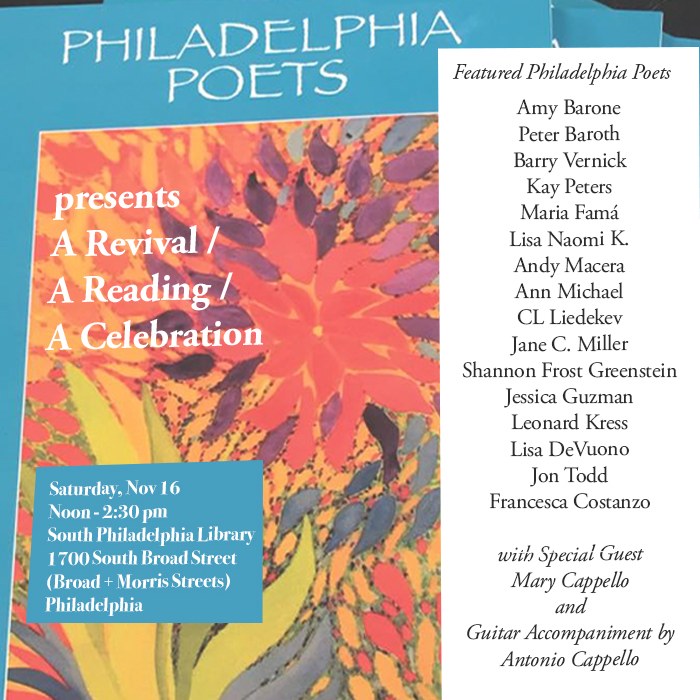
This week, though, happens to be full of poetry. Tomorrow, I’m attending a reading at a nearby public library, where I’ll see many poetry colleagues, the sorts of folks who create a community of local writers. Friday, I’ll be reading with Montgomery County’s Poet Laureate, my friend Lisa DeVuono, at the retirement community where my mother resides. Saturday, I’m heading down to Philadelphia to read with another long-time poetry community in celebration of Philadelphia Poets, a long-running zine established decades ago by the late Rosemary Cappello.

It is good I have had some reading-novels time, and it is good I’ll be having some reading-with-poets time ahead. Both are nourishing to my soul. I haven’t been writing much lately, but I will be eventually. Meanwhile, I’m still waiting for the drought to break…we got a fraction of an inch of rain a couple days ago, and I really hope there is more ahead.

Whatever you happen to need to nourish your own soul, make time for it.

Drought, again

The temperatures here in this eastern Pennsylvania valley have been mild, even warm, which isn’t that unusual for October, anymore. What’s different is the lack of rain. Northern New Mexico had more rain the past three weeks than our region did. Now that is unusual, and a bit worrisome. Our local trees have been enduring numerous stresses in recent years: irregular rainfall, invasive insects, road construction and housing developments, run-off, and viruses. Droughty autumns and winters do not make for resilient, happy trees and other perennials, unless they are desert varieties.

I love the desert, but the Lehigh Valley (where I live) is not primed to be a desert. We need the temperate moisture of rivers flowing down to sea level and 50″ of rain each year. It would be interesting to learn xeriscaping and how to garden in low-moisture regions, but only if I were living in one. I’ve been concerned for a long time about the climate changes I see occurring around me, noted the differences year by year in my gardening journal, tried to limit my own water use even in this temperate, damp-ish area. But. On my own, I cannot conserve enough water to keep the 70-foot-tall tulip trees and large oaks and colorful maples healthy. Nor the soil and its microorganisms, fungi, understory plants, and useful arthropods.

True, sometimes the long days of rain and overcast skies we get in autumn, winter, and spring feel oppressive; and they make my joint pains flare. But I count for little, whereas the earth counts for a lot. I’d gladly trade some low-barometer aches for a vibrant, healthy local climate.

~

The frosts, though light and few, are arriving now. Maybe we will get rain by Election Day? I have too many hopes for next week. Best not to speculate; I can wait.

In the meantime, I have just finished reading Cindy Hunter Morgan’s very beautiful new collection, Far Company, and I recommend it, especially if you like poetry with an environmental resonance and poems of memoir and recalled experience. Purchase it from Wayne State, not Amazon, if you can. To frustrate a certain billionaire, not that he will notice.

We do the small things, right?

With color

I’m taking a break from the garden and from the news cycle and indulging in a different form of work: “Making Poems, Making Books,” a 4-day workshop with poets Anita Skeen and Cindy Hunter Morgan at Ghost Ranch in Abiquiu, NM. Yes, I’ll be making my own book–a small accordion book. There are about a dozen of us in the workshop, which is centered around the idea of color. Autumn in northern New Mexico offers a range of hues somewhat different from the post-equinox colors of eastern Pennsylvania. Perhaps that will inspire me. The last time I took a workshop here was in 1993, and I learned how to draw/paint in chalk pastels. A long time ago–and yet, walking around the dusty alfalfa field in the center of the Ranch’s office and dorm buildings, I felt completely at home. As if I’d been here just last year.

This week differs from the artist residency I attended at Joya-AiR in May because I’m part of a class getting instruction in how to make a hand-made book and also participating in feedback on our writing. Nonetheless, every afternoon there’s a nice stretch of time to work on solo projects, hike, drive to some nearby sites of interest, or nap. I will admit I have been doing more napping than I had hoped. The high altitude, dry air, walking more than usual (on rocky trails) and the emotional energy it takes to learn a new skill and meet new people have conspired to creep up on me some afternoons.

That’s fine with me, though, because I’m banking many images, quotes, anecdotes, ideas, prompts–all the things memory can do.

And I am drafting some new work, so there’s that as well.

~

Enjoying the session and the people, third best thing about this trip. Being back at Ghost Ranch, second best thing, though it is perfectly wonderful. Best thing? Getting some time in the Albuquerque area to visit with my daughter and her partner. And their dog. And their cat, guinea pigs, and beehives. According to her, bees kept in hives (apiculture) are considered considered agricultural animals.

Who knew?

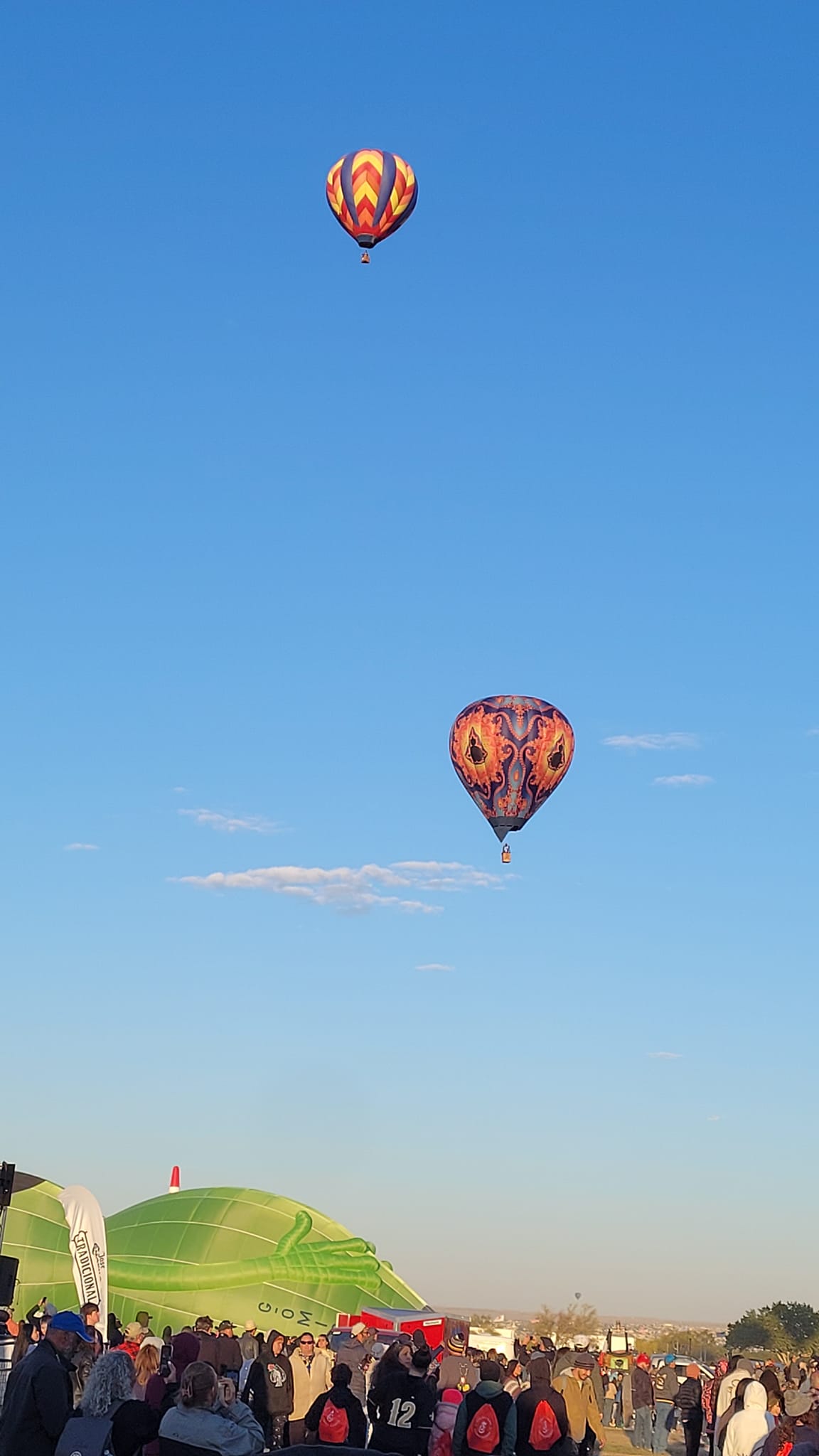
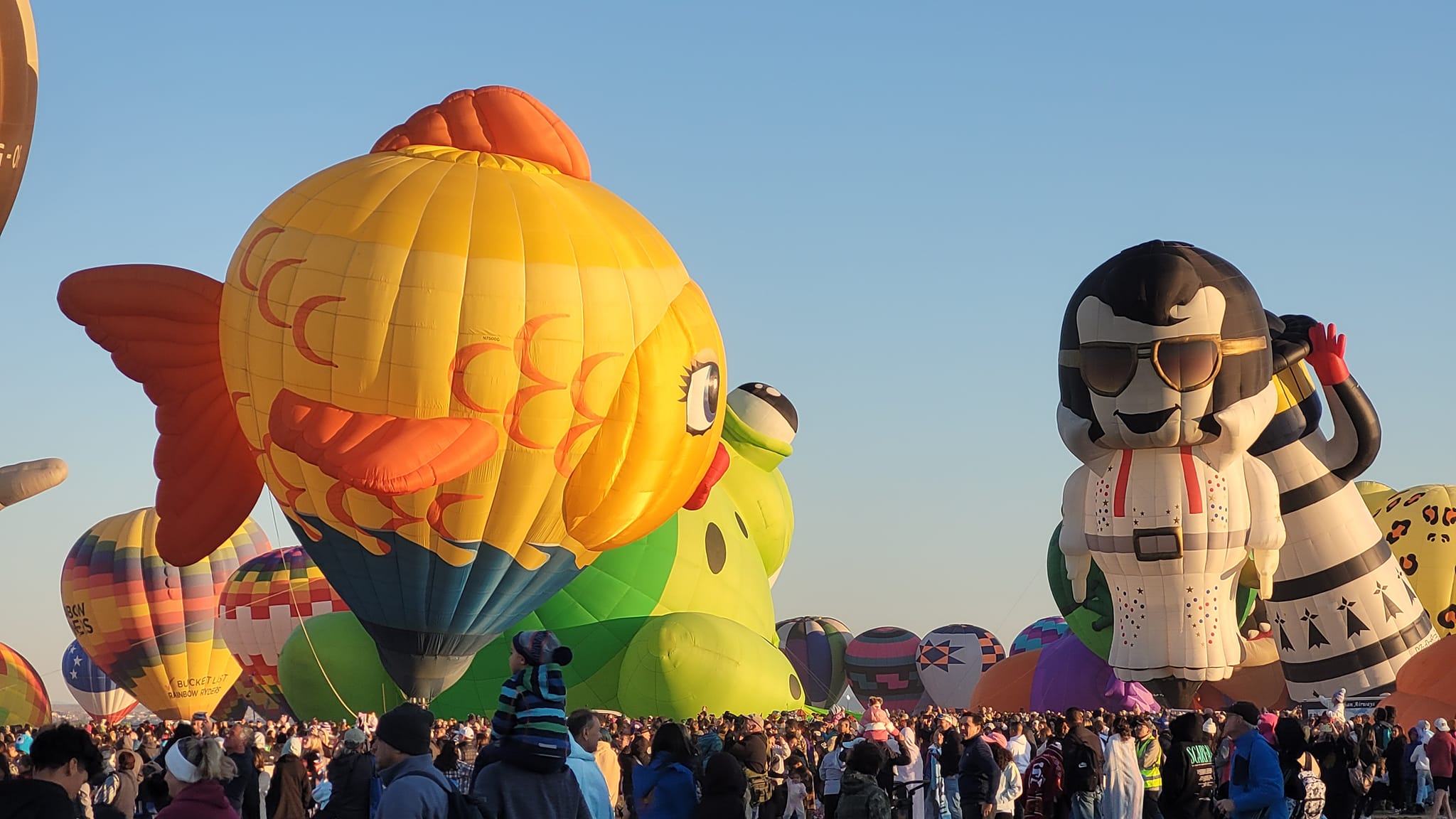
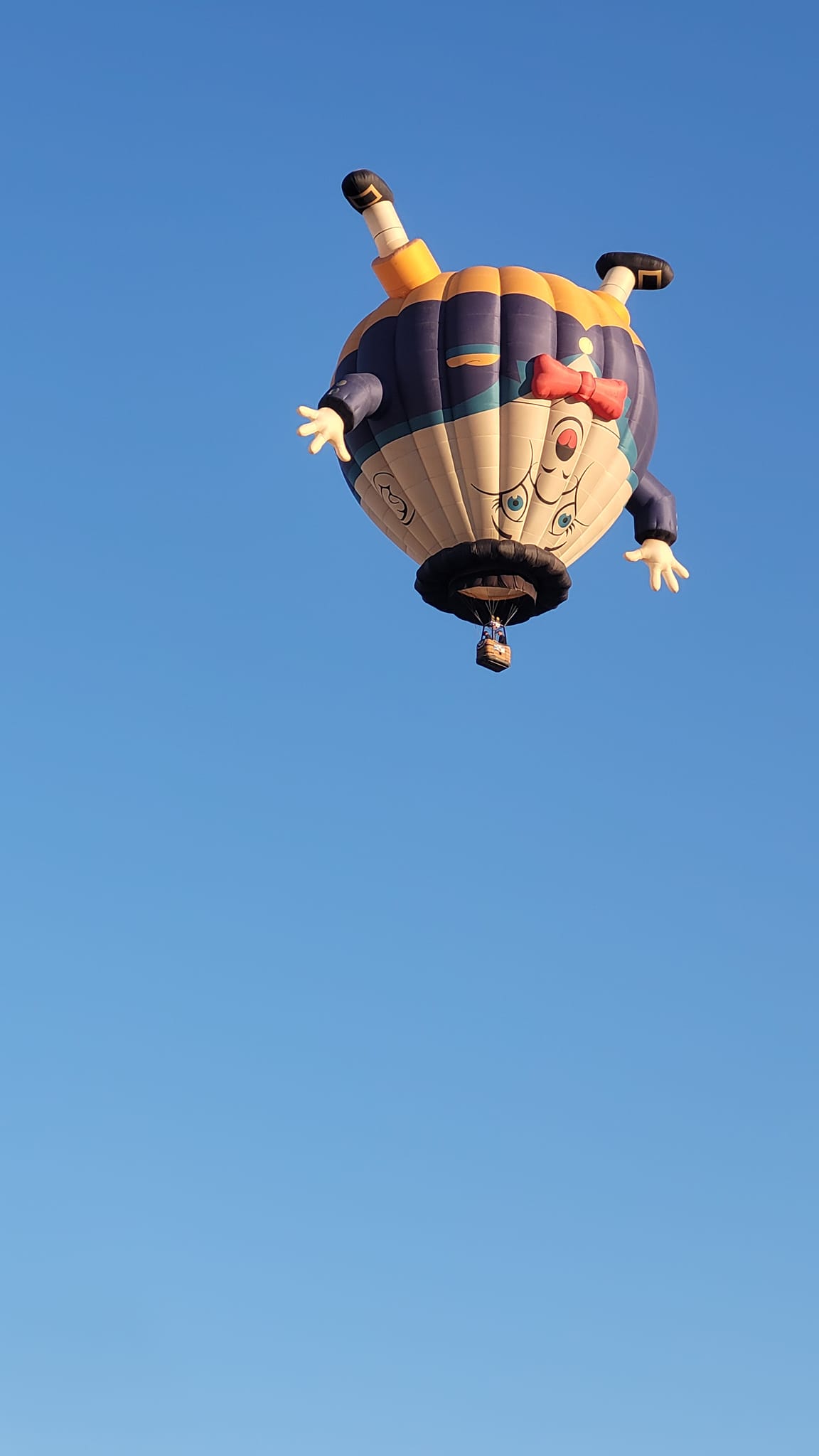
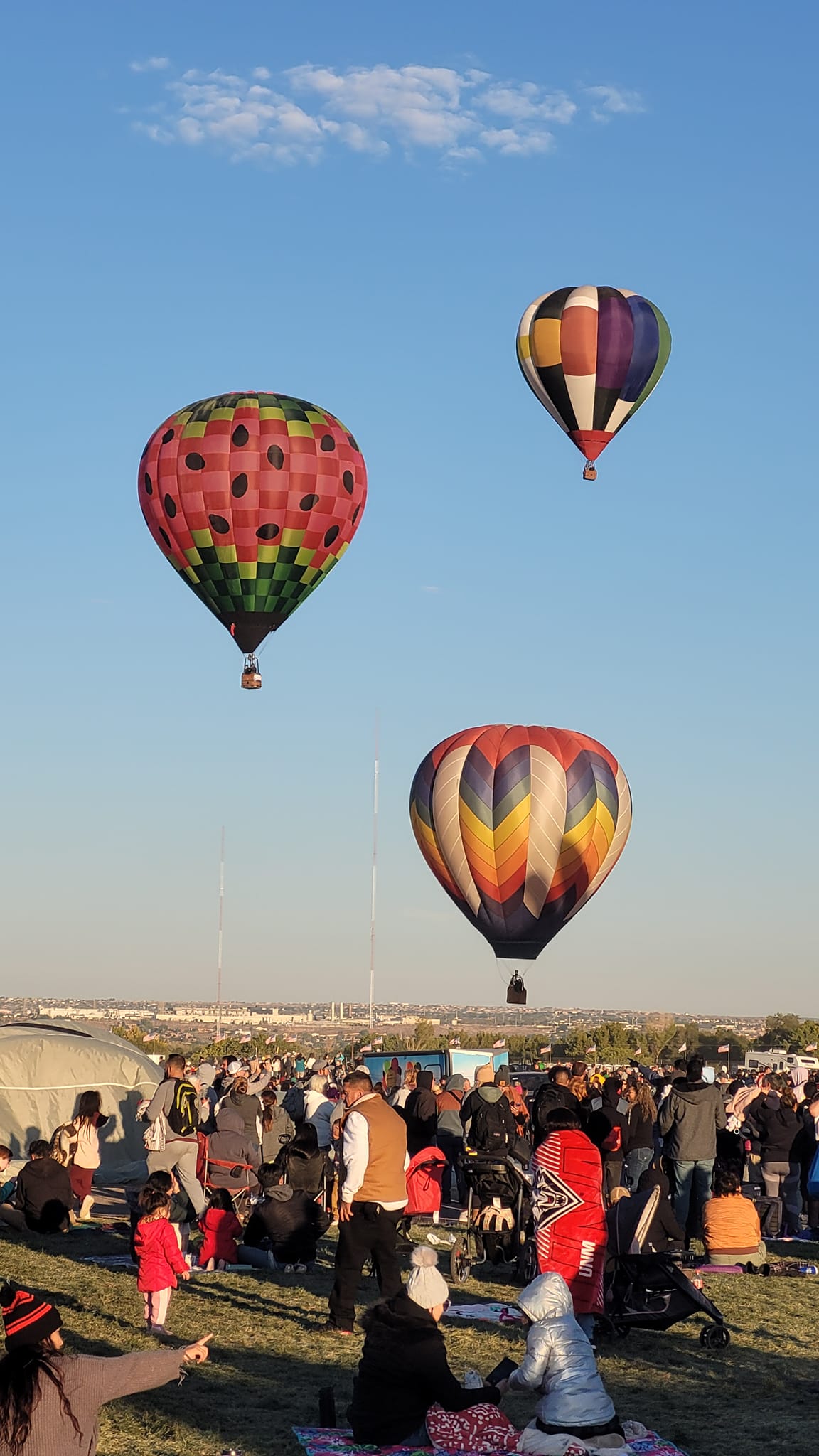
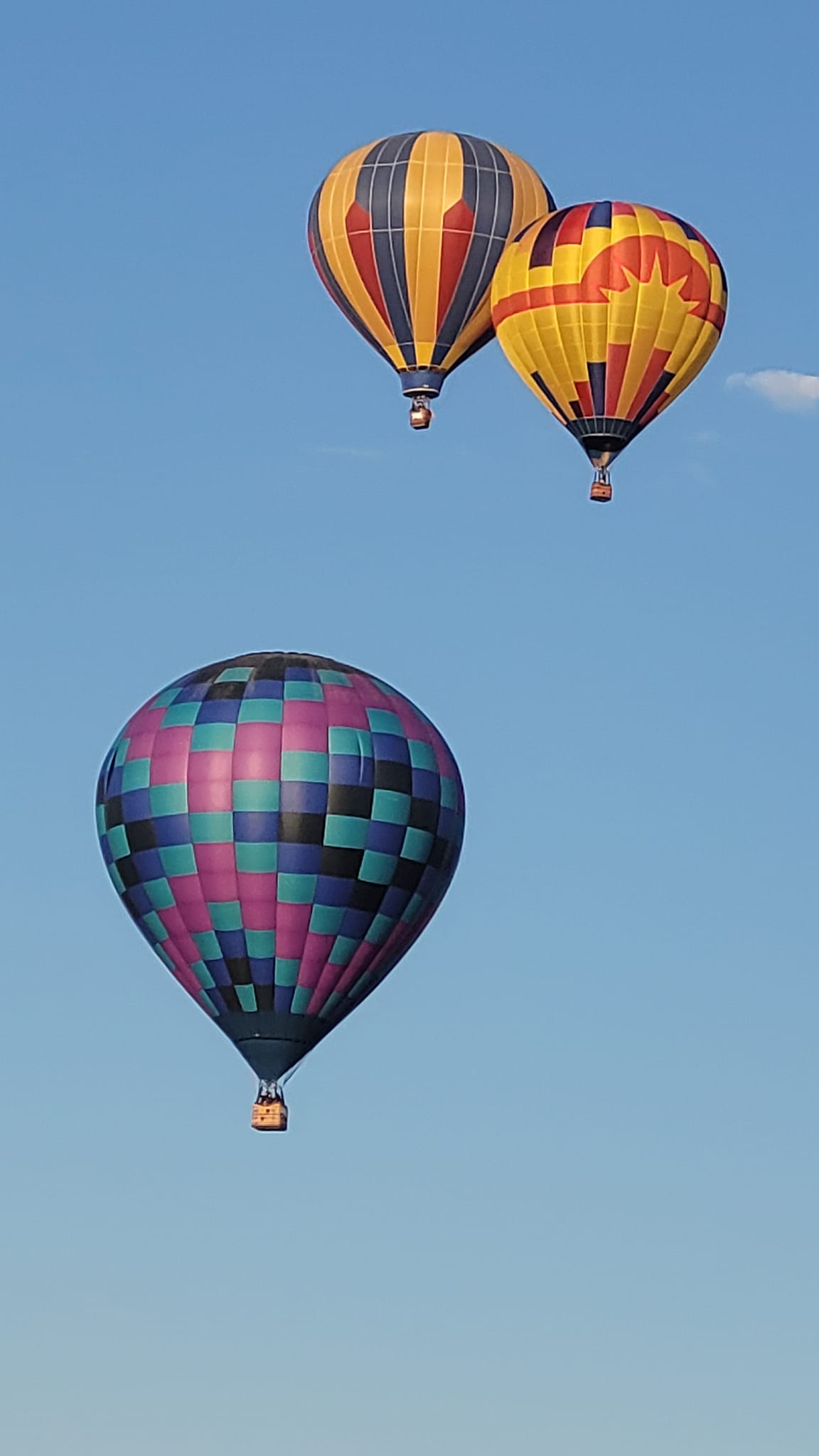
It’s time for my nap, I think. But I have wanted to post about this workshop/retreat before I get home again, just to remind myself of how grateful I am to be here, to be writing, to be seeing my child, to be–yes–escaping from the media frenzy as the presidential election looms. If that seems like something you need, as well, all I can do is send a few cheerful photos I took at the Albuquerque Balloon Fiesta.

~

Just reading

Sunday evening, my weeding stirred up so much dust and chaff that I needed to wear a bandanna around my nose and mouth. A continuous late-summer drought. There are still tomatoes and basil, sunflowers and zinnias, but the avian migration has been going on for some weeks and the days are getting shorter. Just after equinox, three weeks without rain; at last the sky clouds over and drops a little moisture on the parched soil. Yellow leaves sift onto the lawn. Small flocks of robins rejoice in the softer top layer of dirt, pull at grubs and worms, then fly off.

~

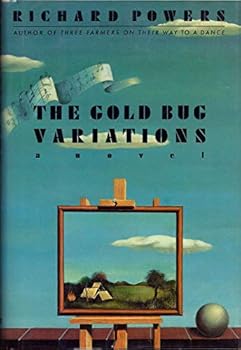
The rain’s necessary, and I’m grateful. Rainy days, however, take issue with my body–or, probably, the other way around. The need to take NSAIDs and rest offers the opportunity for just reading. This isn’t a bad thing, especially as I had Richard Powers’ novel The Gold Bug Variations to hand. It’s a tour de force of pattern, structure, code-breaking, DNA-building, relationships, love, chemistry, music, art, literature, and much more. I love the references (the narrator is a reference librarian), the minutia, history, alliteration, lists, compilations*, the whole thread of the novel’s dramatic arc, its relationship (mathematically, metaphorically, structurally) to music and the work of the gene-sequencing science. The book tells the parallel stories of couples who fall in love 25 years apart, the coincidences and randomness, the patterns that may not be patterns. I’m thoroughly wowed by an author who puts so much research into his writing and makes everything fit somehow.

Powers must have been about 33 when he completed this novel. I can’t imagine being so wise about human behavior and so informed about the sciences and music theory at that young age. Well, for one, I’m not as brilliant as he is; and two, I was raising toddlers when I was 33, which is a science unto itself and as revelatory as any book I could have been reading or writing in early mid-life.

But I digress. This book interests me on so many levels that I’ll be thinking about it for weeks. I may have to re-read it, take notes next time. I kept wanting to underline passages–it’s a library book, and marginalia is a no-no. I can imagine reading it again to the strains of the Goldberg Variations–indeed, I read a few chapters to said accompaniment this time. This is not a swift and easy read: it took me awhile to feel warmed up about the narrator, though she’s funny and smart. By the end, I loved her like a friend.

Honestly, novels seldom get me this excited or inspired. I’m glad I had a crappy day so I could justify lying around and “just reading.” As if “just reading” is not a worthwhile endeavor. The weeds can wait.

~

* re compilations: a word Powers employs often in this novel is the neologism/computer programming term “kludge.” I wasn’t familiar with it. But it’s a terrific word! https://www.etymonline.com/search?q=kludge

August

August is the month of the Sealey Challenge, which basically urges those who like/love poetry to read a book of poetry each day of the month. I haven’t given myself the challenge this year, but I am posting individual poetry books on my Instagram account daily–books from my personal library, mostly–and that means that I read a few of the poems, too. Sometimes I get carried away and re-read the entire book. [@aemichaelpoet]

This is not a bad thing.

Meanwhile, August this year behaves as it usually does, weather-wise: blisteringly hot and wiltingly humid. That would be okay except that June was so hot and dry and now an early hurricane has begun its climb up the coast; for now, we are stalled in a heat dome, and by Friday we may be inundated with rain. All of this means that my tomatoes are likely to split just as they all get plump and ripe. It also means that our annual folk life festival (Goschenhoppen) is likely to be a muddy, damp affair with fewer attendees than usual. These things happen, and they happen more frequently when the planet undergoes climate change.

~

August, as most of us learned back in grade school, is named after the emperor Augustus, whose name means “venerable, noble, majestic.” [Source: my favorite, Etymology Online]. The online source notes that “In England, the name replaced native Weodmonað ‘weed month’.” Weed month is a perfect name for August, and I think I will adopt it from now on. It certainly fits the current state of my vegetable patch as the dog days keep the outdoors too miserable for heavy labor in the dirt.

At least for me, however, the laboring can be optional as long as I don’t object too strenuously to a haggard-looking garden. The people who are truly hard workers this time of year are construction and road crews, landscaping crews, farm workers, roofers, line workers, and others who have to brave the heat and humidity to make a living. Also the janitorial staff crews at schools and dorms and other older buildings that don’t have reliable–or any–air conditioning. When we are outdoors working at the festival in August, we get a taste of how challenging it is to do physical work in the heat. This is actually an educational aspect of the festival for those who participate, especially for younger people who are new to the festival. We remind them that people worked like this all the time, in summer and during snowy winters and in the rain and without electricity…with no escaping it, since they needed to work hard just to stay alive.

Perhaps unfortunately, our forebears’ grinding efforts may have led to the idea that only hard work will save us and make us morally upright human beings. Few of the early Germanic settlers here had much time to read or compose poetry, to savor novels, to learn to play an instrument. Art was acceptable to a degree, so long as it decorated otherwise-useful objects. The poetry of the Bible was acceptable, but it wasn’t studied for its beauty. A person with my sensibilities and temperament would probably have been an outlier in Goschenhoppen’s historic community. If I’d lived to be 66 in the early 1800s, I’d be considered “an old cripple,” mostly blind and bent over with arthritis and stenosis. But maybe I’d be the kind of old woman who tells stories.

On the other hand, maybe I’d be considered a witch! I guess it depends on what sort of stories one decides to tell.

At a previous year’s festival, with my daughter. Bewitching the local kids with potato candy!

Useful avoidance

Trapped inside with the air conditioner on for over a week, I sat by my bookshelves going through the poetry books in my library. I’m re-reading, assessing which books I truly want to keep because I turn to them often or learn something each time I read them, which books I keep for sentimental reasons (maybe I know the author personally), which ones to keep because they are signed copies, which ones are long out of print and I would never be able to replace them. Some of them remind me strongly of places or eras in my life: I bought this one in a small bookshop in Grand Rapids MI, or this one at Barnes & Noble when it was just one store on a NYC street corner, or these at the storied and much-mourned Gotham Book Mart or St. Mark’s Bookshop. What are good reasons to keep books when I really have to downsize? It’s not an easy task, and the first of many in the process of getting rid of stuff so my kids won’t be stuck doing it. Besides, I enjoy re-reading these books. My children are not as enthusiastic about poetry as I am, so it makes sense that someone who loves the works on the shelves be the one who makes such decisions. It feels good to be surrounded by the words of wonderful writers when the outdoors is brutally hot and humid, and every joint in my body aches.

Surrounding myself with other people’s books also acted as one more way of avoiding my own creative work. Sometimes, though, waiting around and doing nothing on a project ends up bringing clarification or new ideas. It can prove useful. I have been stalled on my in-progress manuscript, so a month or so back I asked someone to take a look at it–and then I got caught up in doing other things. Like getting cataract surgery and having covid, and then it was gardening in full swing under sweltering weather, and then the bookshelves… I wasn’t exactly procrastinating, but neither was I actively working on, or even thinking about, the collection.

Acquired when I was much younger, and cool bookshops abounded.

And one night recently–during a much-needed rainstorm–I got a brainstorm! I realized I was trying to pack too many topics into what really should be a manuscript more closely focused on how people who love one another vary in their relationships to old age and death, and on how the contemporary social and medical aspects of the aging process pull us in uncomfortable directions, often distancing us from those relationships. So yes, there should be family poems, hospice poems, biblically-influenced poems, and dealing-with-everyday observation poems. Also some poems of hope and love, poems reminding me (and readers) of the need for compassion in all dealings. But the draft had 92 poems in it, far too many; and some were there just because I like them or they’d been published in a good journal. Which are actually not good enough reasons to include a poem in a collection, according to most of the editors I know.

I am back to thinking about the manuscript and digging up potatoes–a nice crop this year–instead of culling the poetry books because, thank goodness, the heat wave’s subsided a bit. But in the process of this non-routine summer I have allowed numerous weeds to flourish and set seed; all the more work for NEXT year’s gardening, but it’s been too hot to deal with said interlopers. I like to believe the weeds and I are reaching a sort of understanding, but it is not really a compromise. All the concessions have been on my part. [Note: weeding a personal library is less physically taxing but not really any easier.]