Source material

Creative writers are often asked where they get their ideas from. In my own case, the answer to that varies a great deal. Sometimes ideas arise from personal experience, of course, but one’s life offers only so much material if you are a relatively staid person like me. Topics for poems can arise from recent headlines or from histories, written or oral; from conversations overheard in a grocery line; from stories other people tell me; from folk tales; from science books; from dreams; from works of art, and numerous other sources. It’s this wide array of possibilities that make the concept of the creative-writing prompt so popular. A quick Google search for “creative writing prompts” offered well over 20+ pages of entries, in several languages.

Photo by Pixabay on Pexels.com

I have written pieces based upon prompts, especially when in a workshop or class, or when I feel rather tapped out of my own imaginative source material. I’m especially fond of writing that stems from viewing or experiencing a work of art–sculpture, painting, musical composition, dance, installation art (ekphrastic poems). Generally speaking, though, that’s not from whence my poems originate.

I can’t really say why I feel an urge to put down in writing specific reflections about something that’s caught my attention–or even what sort of experience evokes my response. Maybe I feel intrigued by an image, a detail, or an ambiguity–a question arises in my mind that I tussle with for awhile. Then, I may compose a draft and let it sit. Two days. Two years. Longer. Lately I’ve been revising some old poems and have realized I no longer recall what their incipience was. Which can be a good thing, because I am no longer wedded to the “reason” I wrote them and can instead consider whether they can be crafted into decent poems.

I am also working on a manuscript that I let sit for at least six years. An idea got into my mind after reading Robert Burton’s 17th-century book on depression, The Anatomy of Melancholy, quite some time ago (2017, perhaps?). I took a stab at writing what seemed to be evolving into a historical fiction story, which is not my usual approach (I have zero practice at plot and dialogue). Then, I stopped. As one does. But the topic lodged in me somewhere, I suppose, and early this year I returned to it. What if, I wondered, the draft could be restructured into a series of prose poems? There might be a sort of hybrid novella-poem in the earlier draft.

That’s more or less what I’m developing, at least for now, and we’ll see what if anything emerges. It’s keeping me interested, which I like, and the experiment feels fresh compared with “writing what I know,” or writing “how” I know. Because yes, of course we ought to write what we know; but we also know about human beings, and we have imaginations, and anything is possible.

By Robert Burton – Burton’s Anatomy of Melancholy, 1628, in the British Library, Public Domain, https://commons.wikimedia.org/w/index.php?curid=84390857

Points of view

I ran across something online that made me shudder–and it wasn’t politics or global tragedies but something sillier and more personal. Apparently there was a trend a decade ago of adults reading their adolescent diaries, aloud, in public (see “Mortified”). Ugh. The few times I have been tempted to read any of my old diaries or journals, I’ve stopped after a few sentences. Shuddering. This is less likely to happen with journal entries I wrote in my 30s or later; at least I hear my younger adult self in those words. But hearing the adolescent me, or the young woman of college age? No, thank you. I embarrass too easily.

Yet I found I was thinking today of this passage of Proust’s, which he gives to the character of the artist Elstir:

“There is no man,” he began, “however wise, who has not at some period of his youth said things, or lived a life, the memory of which is so unpleasant to him that he would gladly expunge it. And yet he ought not entirely to regret it, because he cannot be certain that he has indeed become a wise man–so far as it is possible for any of us to be wise–unless he has passed through all the fatuous and unwholesome incarnations by which that ultimate stage must be preceded…We do not receive wisdom, we discover it for ourselves, after a journey through a wilderness no one else can make for us, which no one can spare us, for our wisdom is the point of view from which we come at last to regard the world.”

There’s some comfort in that. I would not call myself wise, but I’m definitely wiser than I was at 15 or 21. I suppose I’m still sometimes “fatuous and unwholesome” (whatever Elstir meant by that), awkward in society, and mistaken in some of my intuitions. But I have discovered myself for myself, with all the pain, sorrow, embarrassment, and joys that such discovery requires, and have developed my own point of view. In addition, I’ve learned that each person holds their own point of view. We don’t all think alike or in concert and may never fully understand one another. That makes the world contentious, yes. And interesting.

Reading Old Diaries

When I wrote about the city
it was as though I knew
I didn’t belong there,
would not thrive—as though
I wouldn’t stay long
and so pressed each line
on page urgently, camera
shutter clicks, each image
framed in fractioned seconds
as people jaywalked and
side-walked, as pigeons
or sparrows alighted to peck
at civilization’s least crumbs,
as young men lovely and
unattainable grew ill, as city
failed to succor any of us,
as my ambition floundered.
Years back. So that what
I recall is what I photographed
or wrote, however inconsistent.
Naively urbane, the city
my youth inhabits lies brittle
in the pages. The past undoes
itself at last. Or I do.

~~
I'm embarrassed to note that I've forgotten where this poem was published. My files are elsewhere at the moment. I'll update if I remember... *It appeared in Loch Raven Review!

Illusions, connections

Reading Proust again returned me to some of my own past reflections on memory and self, the capital-S Self. A decade or so ago I spent considerable time reading in philosophy, physics, and neuroscience in an endeavor to get a grip on human consciousness and, perhaps, behavior. I posted about some of these texts on this here blog, in between writing about poetry, the garden, and my teaching job. Recent coincidences of reading returned me to this topic, “the hard problem of consciousness,” and made me consider how our embodied selves/minds/awareness: use shortcuts to manage the overwhelming inputs of our environments; define who we are using subjective if physically-based perceptions; and fail to see the obvious because of habituation and the apparent need to confirm what we believe we know. Illusions! The Vedic concept of Māyā, Plato’s Theory of Forms…propaganda, Penn & Teller, quantum physics, complexity theory, Marcel Proust, complementarity. I have a lot on my mind.

If it IS on (or in) “my” “mind.” For there’s even some question about that, as proposed by Neil Theise in his book Notes on Complexity. Just as light can be a wave or a particle, depending upon perspective and viewer (see: complementarity), it’s possible that our minds or selves can be individual and separate but also connected and boundary-less. The subtitle of this text is what appealed to me: “A Scientific Theory of Connection, Consciousness, and Being;” so far, I’m enjoying it and finding inspiration.

It’s needed, inspiration. Despite a few plunges into new drafts (see here), I have not been writing much for at least two months, and I miss it. The ideas from physics and neuroscience that intrigue me include potential metaphors and terms such as quenched disorder, endosymbiosis theory, and holarchy. These–along with the hard problem of consciousness–all have some relationship to complexity theory, and Theise does an elegant job of writing about complicated science concepts for the non-expert.

I ran across Notes on Complexity right after finishing Sleights of Mind, a book about the neuroscience behind the sort of illusion we call entertainment magic: sleight of hand, sawing people in two, mentalist “mind-reading,” and other performances; the authors, Susana Martinez-Conde, Stephen Macknik, and Sandra Blakeslee, are trying to discover more about how brains work (or filter, and sometimes don’t work so well) by studying how we get fooled by illusionists. This is a fun book, even more fun for me because one of my Best Beloveds has long been an enthusiast of magic shows and magicians. Martinez-Conde and Macknik are neurologists, so–unlike Theise’s text–this book is very body-mechanics in its basis. Their work reminded me of how amazing the human physiological system is. And it’s entertaining.

Before these non-fiction reads, I was finishing up with Proust who, in his own creative way, was exploring the interiority of the human self and carefully observing human interactions, behaviors, assumptions, prejudices, and aesthetics. Not neuroscience, because there is no science to it, but definitely related to how our brains and bodies process experience. My sense is that poetry works that that way for me: it’s not an abstract stream of thought but something inextricable from bodily experience, maybe even, through the environment in which we exist, something deeply connected to everything, a global being-there.

The way we process experience (and is this consciousness?) is largely what leads us to the arts, to make art or to appreciate it, and to decide what feels compelling, important, beautiful. And it’s not all in our heads.

As you wish

Photo by Ahmed u061c on Pexels.com

Discouragement, a regular visitor to this writer (and many other writers), has settled into the house with me. Summer is often, for me, a time of writing less and doing outdoor and social things more; this year, though spring was lovely despite torrents of rain, summer commenced with the deaths of two long-time friends, and I haven’t been able to shake my low mood. Now the rejection slips are arriving thick and fast, and I’m questioning the value of my work in particular and of creative writing in general. Like, why bother? What am I doing this for? For whom? What’s my purpose? And under what circumstances? Why?

Brooding certainly offers no help, nor does it change “declined” to “accepted.” Creative persons often find themselves questioning their pursuits, so I have good company. (Having just about completed the last book of Remembrance of Things Past, I can report that Proust’s narrator–largely a stand-in for Proust himself–wanders in the dark through wartime Paris pondering his own decision to try being a novelist and feels discouragement and doubts aplenty.)

Somewhere on a social media platform, I encountered these words by Virginia Woolf (from “A Room of One’s Own”): “So long as you write what you wish to write, that is all that matters, and whether it matters for ages or only for hours, nobody can say.” Good perspective, that, to stop being concerned for how long your writing matters, or to whom, as long as what you write is what you wish to write. And then if you don’t submit your work for publication? Maybe that is something you can live with. Rather, something I can live with; at this point in my life, I have had hundreds of poems and essays published, six chapbooks, and three poetry collections…maybe from now on, I should write (as I always have) for myself. Even if my work is not in fashion, or considered irrelevant, or judged as potentially lasting, it is still what I wish to write, what I find necessary to express.

Though one does write to express things, and expression seeks audience. That’s a perspective for another day, perhaps. Meanwhile, back to weeding the garden and picking cucumbers, beans, tomatoes, zinnias, and sunflowers.

Reading Proust again

I’m embarrassed to note that the name of Proust evokes hilarity in my two (adult) children, since they immediately think of the Monty Python skit (see it here). Needless to say, neither of them has read Proust; but at least they have some familiarity with the famous writer, so I’m not a total failure as an educational model for my kids.

I read the novel(s) at age 19 or 20 and was entranced. Probably that indicates a kind of romantic nerdiness on my part as well as a love of words, of art and music, evocative sentences, descriptive prose, complex emotional situations, history, and confusion about the world of adults I was at that time entering. That I stuck it out through all seven volumes of the Scott Moncrieff translation says something about my persistence with literature and the beauty of that translation. [The Public Domain Review has a nice overview essay on Moncrieff here.] In the decades that followed, I kept meaning to re-read In Search of Lost Time; but it’s quite a commitment and, let’s face it, that is the sort of plan one tends to postpone.

But I began the task this summer with the Lydia Davis translation of Swann’s Way, though I may move on with the Moncrieff editions if that’s what I can find at the library. (Somewhere in my attic is the three-volume Mitchell edition, but I started that years ago and found I didn’t like his approach.) I suppose a first-time reader might want to experience the books all through the same translator, but even the Moncrieff doesn’t succeed in that since he died before he got to Time Regained. The new Penguin series, for example, has a different translator for each book.

Ah, the difficulties of translation. If only I could read French!

During the past decade, I have done a smattering of re-reading novels (and poetry collections) that I first read in my late teens or very early 20s: Tolstoy, Woolf, Dostoevsky, Dickens, Blake, Atwood, LeGuin, among others. It’s always interesting to re-read a book that I haven’t read in decades because, although the book has not changed, this reader has, to some extent at least. Fewer allusions and implications go over my head, for one thing. The motivations of mature characters make more sense now, and the yearnings and errors of youthful characters, while sentimental and familiar, seem distant; also, I have a better sense of the historical eras in which these novels were set or written. As a teenage girl in the USA in the late 1970s I had very little background in the social strata of fin de siècle France or of Russia during the Napoleonic Wars, or even of Victorian Britain, yet the authors swept me up in the petty striving and the political aspects of their worlds…and the difficulties involved in surmounting them, achieving them, or living outside of society’s expectations.

Photo, 1971 Opel Kadett: Rudolf Stricker, https://commons.wikimedia.org/w/index.php?curid=16078675

For all that I may be the wiser now, and can pick up more of the irony and humor, and more of the ‘adult themes’ (for example, until I was 17 or so I knew absolutely nothing about homosexuality), it is still the beauty of the prose and the rhythmic sweep of sentences and paragraphs that get me wrapped up in a book like this one. Besides, I love art and artists, architecture and music, and evocative descriptions of landscapes and gardens just as much now as I did then–possibly even more. Proust introduced me to so much when I was first reading these novels. Because of him, I read Racine, and Zola, and art criticism of the early 19th century, and looked at Impressionist painting in a new way, and recalled to mind the one trip I have ever taken to France (three years earlier, at age 16) as his novels described the Champs-Elysées, the Louvre, Versailles, the streets and parks of Paris’ arrondissements, and the villages in the countryside through which we had driven in a rented Opel.

Now, those recollections of France are dim. And the world has changed in 50 years. Proust knew: if I were to return, I would not be likely to reclaim my past–possibly not even remember it. France would be new to me, which is an idea I rather like. Possibly I’ll go back; in the meantime, I will relish the remembrance of reading what I have read in the past.

Reading in shade

It’s the time of year when, according to the lunisolar calendar, we move from 小暑 xiǎoshǔ–when the heat begins to get unbearable–to 大暑 dàshǔ, the hottest time of the year. It may also be the greenest time: my garden suddenly plumps out huge squash leaves, giant sunflowers, masses of beans, zinnias, basil. The tomatoes are finally burgeoning after a late start. It’s too hot to spend much time weeding and pruning: I harvest what I can and retreat to the shade as soon as possible, where I can read.

A friend recently lent me a book of short stories, Human Sacrifices, by María Fernando Ampuero, an Ecuadoran writer. It’s been ably translated by Frances Riddle, and the stories are startling and harrowing. Not something to check out for a light summer read on the beach, but memorable and thought-provoking. One critic says Ampuero’s work is South American gothic. I don’t agree–and I think it’s kind of a cheesy shortcut in a review–but perhaps that phrase does convey the flavor of some of her stories. Anyway, it’s always a treat to find a writer whose work I’m unfamiliar with and whose work is admirable.

I’ve been taking a break from reading poetry, though that wasn’t planned on my part. July brought a wedding, a death, and some travel; and now, in the intense summer doldrums, I prefer to read for entertainment or information, or just to pass the time. Poetry takes more brain and heart space for me, more “intentionality” or concentration, than most non-fiction books or novels do. This is not to say any other genre is less demanding in and of itself. It’s a personal quirk: I am more attentive when reading poetry than I am when I read other forms of literature, probably because I’m unconsciously (or consciously) endeavoring to learn something of the craft and style and context of poems by other poets. It’s a method of processing how to write poems. But as I have no plans to write fiction or non-fiction, I read such genres for entirely different reasons.

Usually I try to read outside on the porch, in the hammock, on the garden swing. Some days it is just too damned hot and humid, though, and I resort to the air-conditioning indoors. The indoor climate has no flies or gnats but also no bird songs, cicada hums, cricket calls, breezes, scents of summer. Indoors is less than ideal (except in the teeth of winter!).

Recently I’ve added a shade garden where the chicken run was in decades past, under the umbrella of our largest white oak. I haven’t yet added a bench, but a lawn chair suffices for now. Alas, it is a bit buggy, but so is the hammock. The pleasure of summer reading in shade outweighs the inconvenience of the minor fauna…most of the time.

Blue

At one of our local used book stores,* I found a copy of William Gass’ 1976 On Being Blue: A Philosophical Inquiry. Gass writes in a style one might term prolix; but if you are like me and sometimes appreciate lists, wordplay, allusions, lengthy sentences, and fine distinctions in your sentences–as well as humor–while exploring the limits and the stretches of words and language, this book-length essay on the word/concept/color/iconography/sexual innuendo/moody attitude and conflicting meanings of the word blue might appeal. I’ve been feeling a bit on the blue side lately, hence my attraction to the book (though I do like Gass as a writer, as long as I don’t have to read too much of him at one time). And guess? It cheered me! [I will caution the reader who avoids the use of “bad language” that Gass employs such words in this essay, for purely intellectual reasons…]

Granted, my feeling blue has a different tone from other uses of the word: blue postcards, sexual meanings of blue–I’m reminded of the movie “I Am Curious (Blue)” which was considered racy and given an X rating when I was a kid, though the blue in that title referred to the Swedish flag, apparently. My blue is the blue of songs like “Baby’s in Black” or Joni Mitchell’s “Blue” album. Or just that classic music form, the blues.

And I’ll get over feeling this way. That’s what moods are: feelings that come and go, transitory. It always seems as though low moods stay around longer than neutral or cheerful ones, but many scientific studies show that it is our perception and memory of the negatives that make us think we are sadder for longer. Even Wikipedia has an entry on negativity bias, with some sources if you want to check things out yourself. As I age, I realize that bad moods and sad events and past mistakes don’t need to stick around as much as I used to think. A bit of mediation, some practice and readings in Zen and in psychology, a lengthening perspective on life’s vicissitudes, some counseling and even some medicine; whatever it is that’s brought me here, I recognize that before long the depressive hours will lift. Also I know some methods of thinking that assist me to move to more neutral ground.

I will note there are many kinds and hues of blue, enough for Gass to write 112 pages on it and for the word to appear in 85 files of my own poetry during the past 12 years–I did a quick word search just to find out. That is in the files alone, and each file contains many poems. so I can only imagine how much I have over-used the word in my writing life! Certainly, not all of those blues are sad. Many are beautiful, sunny, the blues of blueberries and balloon flowers, the New Mexico sky, mountains and oceans; teal-blues and turquoise, the bright royal blue I like to wear, the pale color of robin’s eggs.

Blue. It has always been my favorite color.

~~

*The bookstore is Apport, in Emmaus, PA. Ben has an active Instagram feed and really cool catalogues of odd books, art, and ephemera.

*The first “blue” above is an encaustic painting by Deborah Barlow; the second is at Bandolier National Monument; the third is of the Blue Ridge Mountains; the last was taken at an inlet bay, maybe in Delaware–I’ve forgotten.

Perfumes and tunes

This time of year, certain blooms and fragrances evoke my childhood memories. I spent most of my childhood and all of my adolescence in southern New Jersey, along the Delaware Bay; the swampy coastal plains have now largely burgeoned into suburban housing developments, but in the late 1960s there were actual townships with old-fashioned suburbs–the kind with sidewalks–and many a privet hedge that bloomed in early June with small, white spires that gave off a faint scent. In overgrown areas of meadow and scrub, the sweet smell of Japanese honeysuckle perfumed muggy evenings. And while I don’t recall much scent from the mimosa trees in bloom on Harvey Avenue, once those fallen pink blossoms began to rot on the sidewalk, they added a distinct punk that meant summertime. The honeysuckle is blooming here now, making me wonder about the neuroscience behind the sense of smell. Gotta check out these books, perhaps: Kiser reviews four recent books on olfaction.

On a side note, none of these evocative plants are native to the Americas: Ligustrum vulgare, Lonicera japonica, Albizia julibrissin–and yet I associate them with South Jersey. It is almost like a refrain in my memory-mind.

To speak of associations reminds me of Alexis de Tocqueville. I’ll post a quote of his below, one that makes me think of language and poetry and science. But back to refrains:

Musical refrains also run through my brain, evoking memories and nostalgia, or just being irritating “earworms.” At any given time such tunes may include Tchaikovsky’s Serenade for Strings, strains from a late Haydn quartet, one of many Springsteen songs, Marvin Gaye’s version of “I Heard It Through the Grapevine,” or–most confounding of all–the Chock-full-o’Nuts jingle from the 1960s or some similar commercial sloganeering. Why such things wear a familiar groove in the gray matter I don’t know, though Oliver Sacks’ book on music (Musicophilia) and Daniel Levitin’s This Is Your Brain on Music offer some insights, and I’m thinking of reading this one by Samuel Markind when it comes out later this year.

Alas, I’m not gardening because once again the garden is awash in mud, so I entertain myself with endeavoring to discover how/why my brain works (and yours, and anyone else’s), since that’s one of my favorite lines of inquiry when I can’t work outside. I will take a sodden walk later and dwell on possibilities while enjoying the scent of the invasives; I’ll work on some poetry revisions; maybe I’ll listen to music…and freely associate with any and all possibilities. Here, as promised, Alexis de Tocqueville:

“When citizens can associate only in certain cases, they regard association as a rare and singular process, and they hardly think of it.

When you allow them to associate freely in everything, they end up seeing in association the universal and, so to speak, unique means that men can use to attain the various ends that they propose. Each new need immediately awakens the idea of association. The art of association then becomes, as I said above, the mother science; everyone studies it and applies it.”

Honeysuckle photo by Nadiye dabau015fu0131 on Pexels.com

Back in PA

Last year at this time, I had covid and was languishing in bed, unable to tend to the garden. A regional drought meant I really should have been watering the new plants; and it also kept the weeds firmly rooted, fighting for dominance in the vegetable patch. This year, I timed a trip to New Mexico just when I ought to have been harvesting spinach and planting out tomatoes, beans, and squash. Oops. And then it rained buckets the whole time I was away (much-needed rain, but…). Therefore, the garden situation was not ideal. But garden situations seldom are ideal because Nature does its own thing regardless of my plans.

At any rate, eastern Pennsylvania finally moderated its weather enough that I got the weeds and the seeds and transplants more or less under control this past week–“control” being a general term subject to, well, Nature. The peonies bloomed gorgeously on schedule, as did the nefarious multiflora roses and Russian olives that plague the hedgerow. The catbirds and Eastern kingbirds are back; the robins’ first brood has hatched; the orioles are insistent in the walnut trees and brilliant in the garden, chasing the barn swallows. I’m not doing much writing, though I drafted one or two beginnings of poems. Outdoors takes precedence–not that I can’t write out of doors, I often do so. But poems can wait in a way the garden cannot.

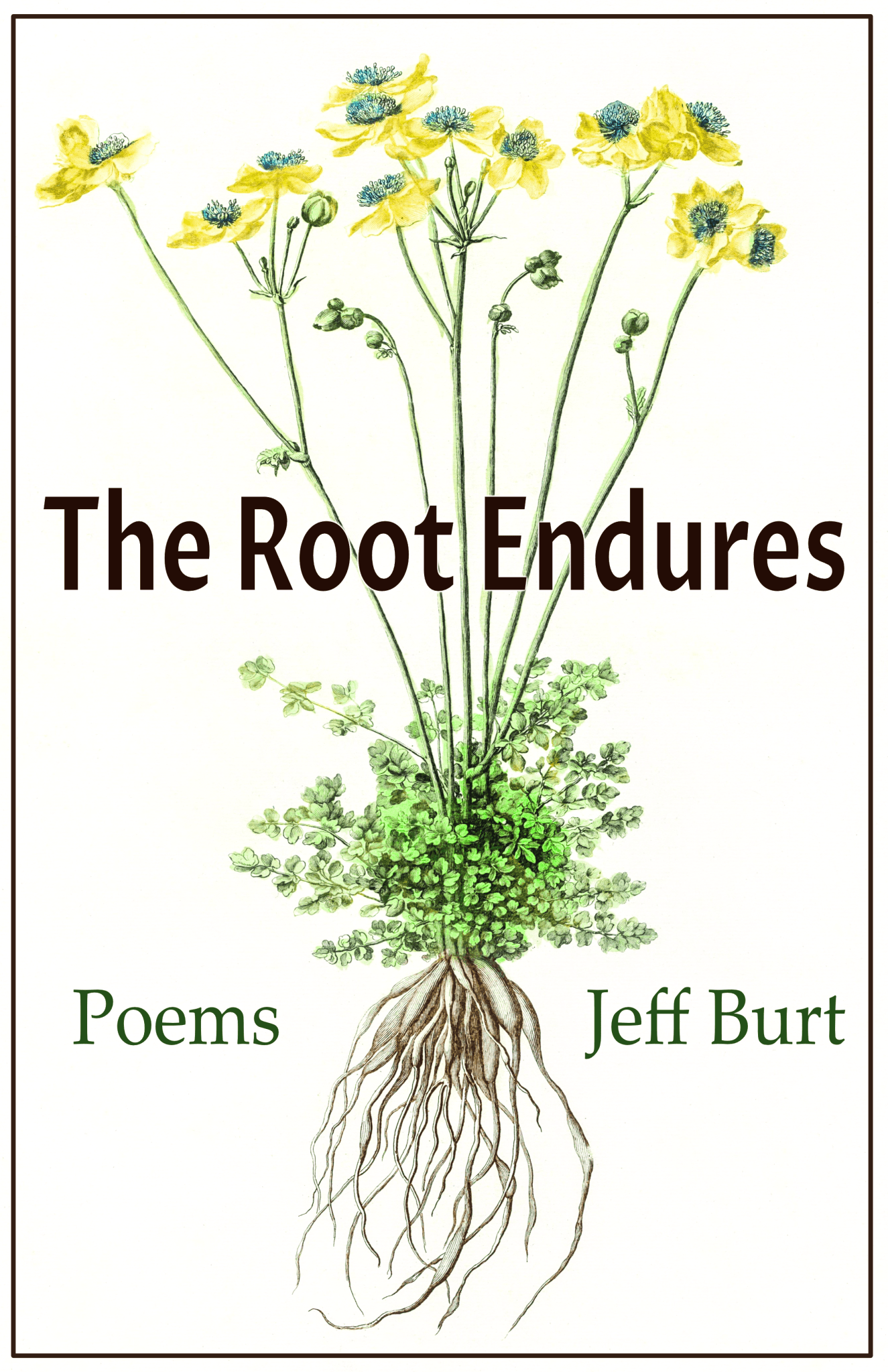
And, speaking of poems (and Pennsylvania), I returned from my trip to find this Keystone Poetry anthology awaiting: https://www.psupress.org/books/titles/978-0-271-09990-3.html–the followup to 2005’s Common Wealth anthology, also edited by Marjorie Maddox and Jerry Wemple.

The new anthology, 20 years after the initial one, has poems by about 180 poets–yes, I am one of them–covering the corners and the center of the Keystone State. I like it even better than the first collection, and it is clear the editors learned much from the experience of curating poems and creating a cohesive “experience” of the regions. Granted, since I know both of the editors personally and appreciate their poetry and their visions, I may be biased. But that’s okay. Objectively, I truly get how huge an undertaking this was and how well it has turned out. For educators, there is a section at the close of the anthology full of suggestions for reading, writing critically, and writing creatively based on this anthology, and even in comparison with the previous one. As both editors are college professors who teach creative writing and critical writing, these appendices are well-thought out and worthwhile.

I miss the aridity of New Mexico, which seems to benefit my overall health. And I miss my daughter immensely. But springtime in eastern PA has many compensations, not the least of which are blooming even as I write.

Plan B (reading)

While I was traveling the high-altitude desert regions, my home valley got its much-needed rain. And the rain continues. And continues. My plan was to get to work on my gardens as soon as I came back, to weed and plant out seedlings. Well, it’s a bit too wet for that. Also chilly and humid and sea-level, and therefore my physical adjustment has been a bit …bumpy. So, Plan B.

The Plan B default for me usually entails spending “down time” reading, writing, or housekeeping, though visiting the library and meeting friends for coffee fall under Plan B, too. Today, since I feel lousy and have a spate of brain fog, reading has been the choice. I still have a few books on the bedside pile that I haven’t gotten to–mostly poetry collections I bought at AWP at the end of March. But also there is Ocean Vuong‘s heartbreaking and beautiful novel-that-reads-like-memoir, On Earth We’re Briefly Gorgeous, that I finally got around to reading, and a back issue of Rattle Poetry a friend gave me–one that was largely devoted to haiku and related forms–that featured a fascinating interview with Richard Gilbert (thank you, Lesley S!). On the poetry-only book list, I read January Gill O’Neil’s Glitter Road, Julie Kane’s Naked Ladies, and Ross Gay’s first collection, Against Which. All quite useful to me in times when I feel bleak and physically frail–there’s humor, sorrow, and bravery in all of these writers’ poems. Though I’m too foggy-headed to write mini-reviews at the moment, I encourage my readers to check these poets out.

Perhaps my next post will be about the lovely time my friend and I had in northern New Mexico, visiting my daughter and Santa Fe, including my opportunity to see Bandelier National Monument again and ponder its environments and history. A trip like that takes some time for me to “digest.” But it was wondrous. And so is a day at home to recuperate in my favorite way: reading.