Feeder streams

A friend and I had a conversation about storytelling and human connectedness, relatives and family myths. We recognize that with age and relationships come references and allusions–some that operate only within the family system, others that interconnect with the wider social world. The televised funerals of some celebrated US citizens (Aretha Franklin, John McCain) offer excellent examples of how various eulogists–family, colleagues, close friends–endeavor to extend their feelings about the person to others. The best eulogies tell stories. It’s how human beings learn about one another, how we connect, bond, and cohere. The process reminds me of feeder streams that follow gravity and the earth’s geological patterns to wend their ways to join a river.

A river enlivened my childhood. Several rivers, in fact–the Hudson, the Delaware–but the one that comes to me at this moment is the Eel River in Indiana, pictured in my recent post here. By coincidence, just this week Streetlight, an online literary review, published my poem “Eel River Meditation.” In less cheerful news, someone whose presence I associate with South Whitley, IN has entered hospice care. These associations summon memories that carry me into that realm of family tales, rituals, jokes, sorrows, generational mythology.

My grandmother lived beside the Eel. A self-taught artist, she painted the bridge over the river many times, in all seasons. It must have steadied her sense of being in the world, of being in place; certainly, her paintings evoke that place, a small Indiana town, in those of us who knew and loved her.

And what could be more metaphorical than a bridge? Than a river? Than the changing seasons?

Locally, this rainy summer in my valley region, the feeder streams are full to overflowing and rushing to the Lehigh River, flooding the low-lying marshy areas, stranding the occasional cow or motorist. The fall semester has begun, and the garden’s mostly abandoned to the aforementioned weeds. My mind and heart are full, too. Maybe there will be poetry.

Eel River Bridge Edna Michael

South Whitley’s Eel River bridge, early summer. Edna Michael


Parsing the garden

To parse is to analyze components–in linguistics, we parse a sentence, in computer science, we parse coded commands. In the literary analysis of a poem, a reader may divide a line or phrase into its parts of speech and then analyze the components (or look at an unusual expression or syntax in a line) to try to interpret meaning or to expand on possible readings or meanings…the semantics behind the tokens of image, grammar, metaphor, allusion, sound, punctuation, placement upon the white space of the page.

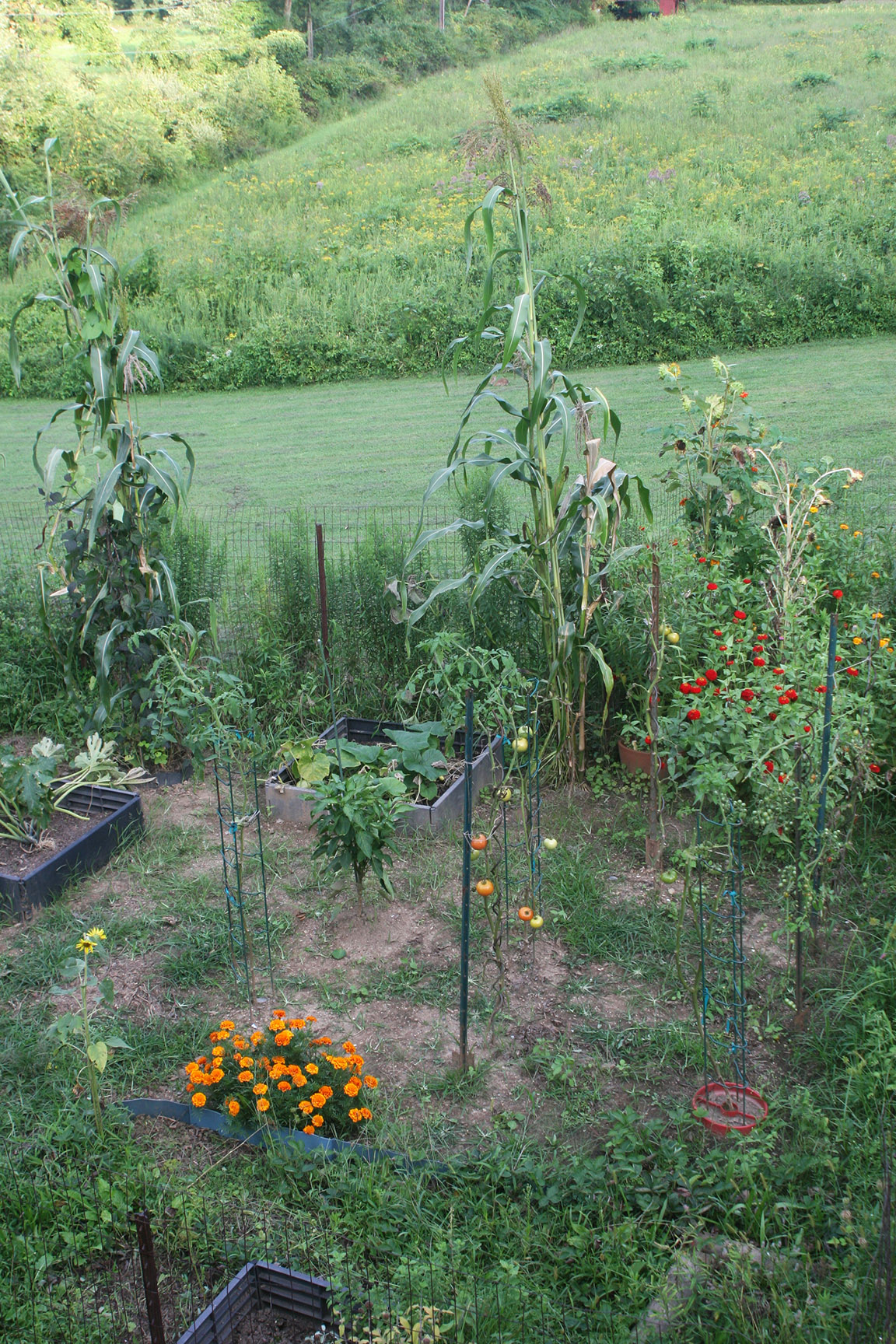
Today, I pushed the metaphor by parsing my garden.

The weather from July onward has been hot, humid, and unusually wet. The corn and the beans in local fields were happy; but much in my vegetable garden reveals, with parsing, specific summer details of stress and the gardener’s neglect.

IMG_5601.jpgToo much rain during ripening time led to cracked tomato skins and viruses in the vines. The zucchini did well for a time, then succumbed to powdery mildew. The beans didn’t mind the weather, but I had a plague of voles whose small depredations worked some cumulative damage–they nibbled a number of plants at the stem base, which meant a slightly less abundant yield, of course. Cucumbers offered lots of fruit initially, then downy mildew set in. I harvested one of the two cabbages with only minor slug damage, and the fat variety of carrots grew well (with no sign of whiteflies); but there were lots of bugs on the kale this summer and, given the intense heat, I had a short lettuce season.
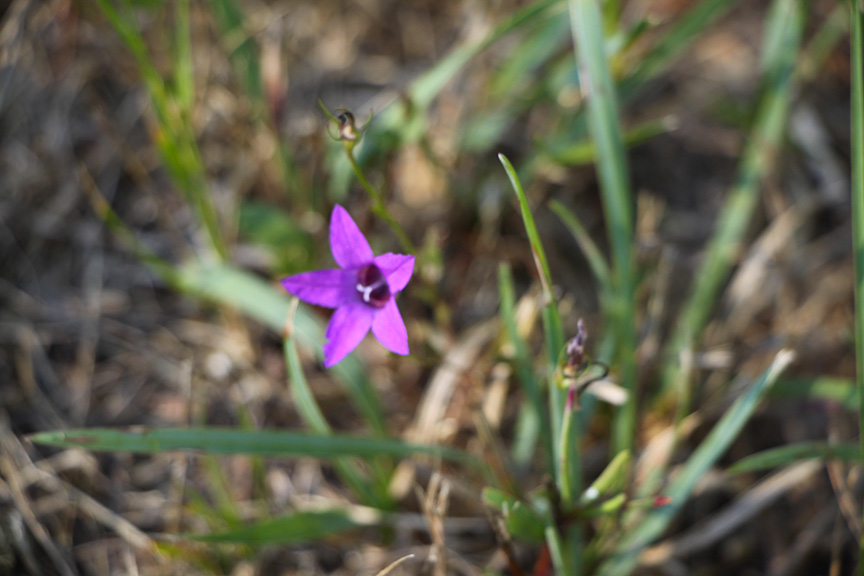
And then, there are weeds, which offer many details about the weather conditions…and the fact that the gardener gave up and stopped pulling weeds when the soil devolved into heavy mud and who then refused to brave the task in the numerous over-95 degree F days that weren’t rainy. Today, I began a list: nutsedge; crabgrass; English plantain; pigweed; puncturevine; bindweed; galinsoga; creeping thistle; multiflora rose; horseweed; knotweed; spotted spurge; rabbitfoot clover; virginia creeper; japanese stiltgrass; wintercreeper; mugwort; solidago; wild aster; chicory; poison ivy; not to mention various sorrels and clovers and Queen Anne’s lace…and others I have yet to identify.

If I were to parse each weed, I could detail its likes and dislikes as to soil, growing conditions, root systems, pollinators & pollination strategies, seed dispersal methods, attractiveness to birds or rodents (see seed dispersal methods), and eventually could compile a meaningful ecological and environmental semantics for the little plot that is my backyard truck patch. No doubt I’d learn a great deal about the garden, but no doubt I have done so already–if less exhaustively, less “scientifically.” Would the garden then become more meaningful to me?

It’s a thought experiment; I’ve no intention of trying it, though I do think it would yield interesting results. In the many years I have worked the soil, I have written poems that, perhaps, do parse the garden. That will have to be interpretation enough for my part.

overlay

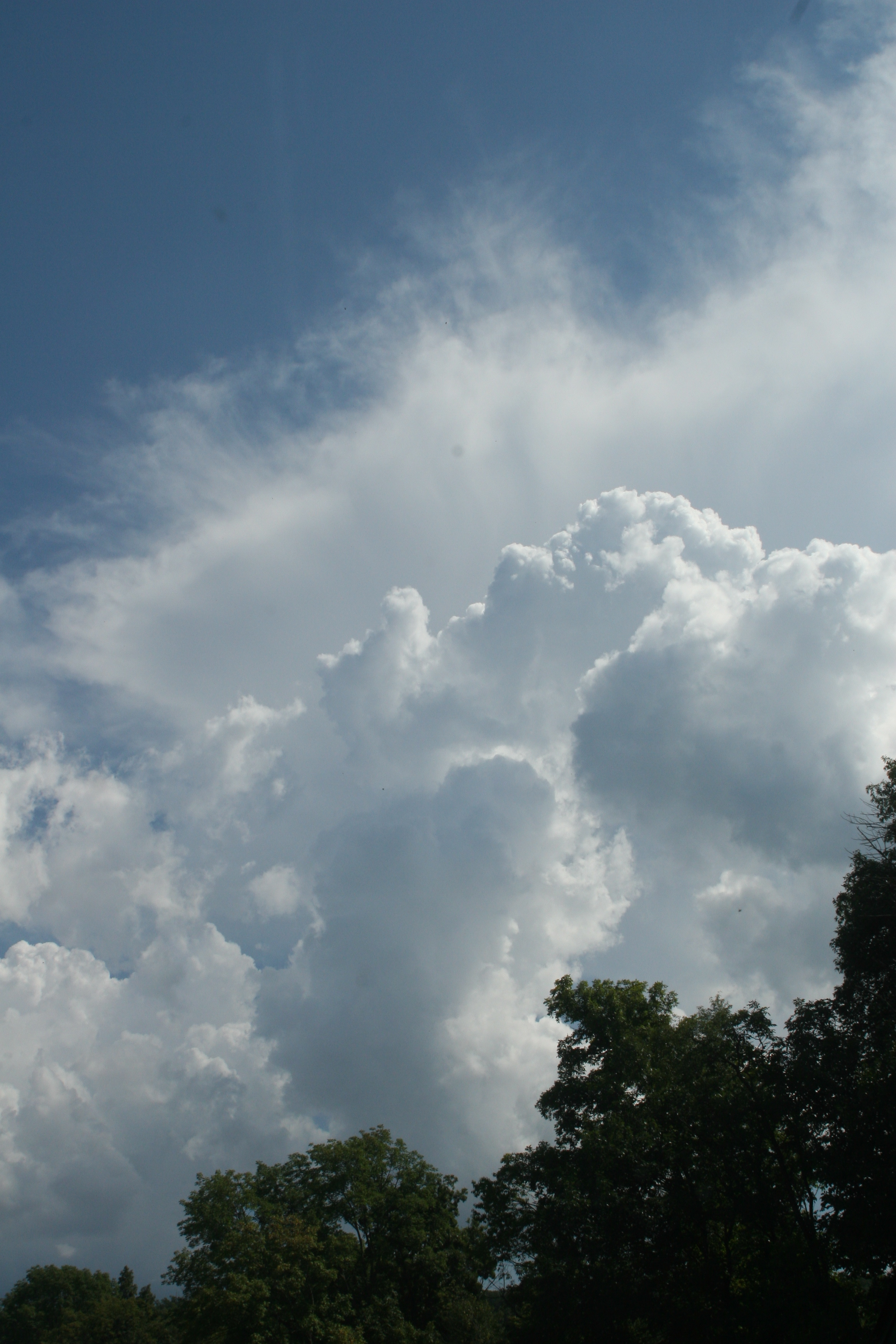
Interesting sky above the garden.

Berrying

Each year, dill starts going to seed as the beans plump out almost overnight. It’s time to make dilly beans, if you can stand to work in the kitchen, canning–as my grandmothers always did, without the assistance of air conditioning.

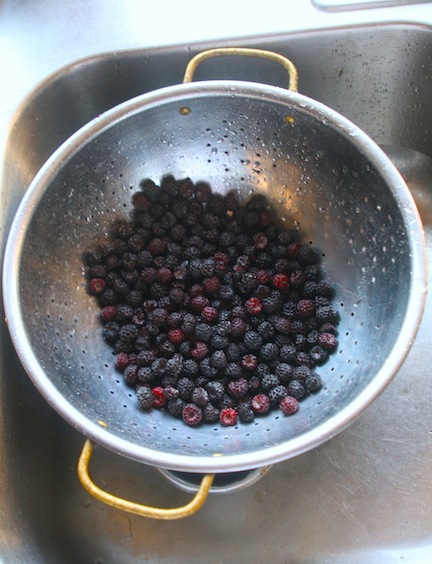
No, thanks. I prefer beans fresh. I rise as early as I can and harvest them before the sun gets too high. This morning, I remembered to look for blackberries, too.

IMG_5460

Turns out this is a good year for blackberries. The canes are loaded with fruit and weighted with vining wild grapes and honeysuckle. The latter bloomed rather late this year and are still putting forth fragrant flowers. The marvelous scent made berry-picking quite soothing.

Soon, the catbirds and orioles and everyone else will be harvesting these berries. Despite their thorns (which didn’t deter me, either).

~

It has been far too hot to work in the garden, however; so I have been writing, and submitting work to literary journals, and even painting a little–something I have not done in years. Finding ways to be both creative and relaxed. Much needed.

Seemingly small stuff

Things to view, things to think about.

Sub Rosa’s post on floral aesthetica here.

IMG_4663

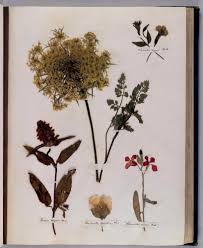
Emily Dickinson’s herbarium, thanks to Harvard (it takes a few seconds to load) here.

qalace ed

William Bartram‘s 18th-century drawings of American flora.

bartramx

~

Lovely words from Lesley Wheeler, and so true for me, too: “…reading and writing puts me in an honest place. Plus, while poems contain struggle of all kinds, they also constitute separate worlds it can be a great relief to enter, because good poems are not unjust or disruptive of bodily integrity.”

Aesthetic “therapy”

I have been musing on Rebecca Solnit’s text in which she writes about the Romantics’ “new” appreciation of Nature. I was particularly struck by her research about how in Europe, and among the Eurocentric American colonizers, pre-Romantic era society considered mountains not only dangerous but also “ugly” (in Wanderlust: A History of Walking). Aesthetics began to change in the late 18th and the 19th centuries. Walking the natural world for something other than pure transportation from place to place altered our social ideas about what’s “beautiful.”

~

“The first question I ask myself when something doesn’t seem to be beautiful is why do I think it’s not beautiful. And very shortly you discover that there is no reason.”  —John Cage


~

This train of thought reminded me of Jack Fisher’s water tower. Jack was a friend and extended-family member who who lived in Bucks County, Pennsylvania from the 1940s until his death in 1999. He was an architect, engineer, teacher, builder of many things, and an artist.

Often when we were visiting, Jack would show us a painting he was working on. On this occasion, he told us how annoyed he had felt at a new condo development; the big, aqua-colored water tower rising from the housing campus especially irked him. “It’s so ugly!” he said. “So ugly, and I was feeling so mad, I decided to do a landscape painting of the damned thing. And here’s what’s funny–I kind of like the composition here, and the colors. What do you think?” He was right. It may have been an ugly water tower, but it was a lovely painting.

Unfortunately, I do not have an image of that painting except in my memory; here, however, is a painting of Jack’s that depicts the fields in Bucks County, PA, which he considered beautiful.

jackpainting004

Suber’s Field with Clouds, Jack Fisher, oil, 1998

Imagine a water tower here, and a sea of peak-roofed condominiums. And a balanced composition, and a deft use of colors.

~

Looking closely enough at something to find that you no longer see it as ugly requires an almost meditative change in perspective. It’s been an approach useful to me as a poetry prompt and as a means of more closely appreciating the world and everything in it. I don’t mean that I identify with the 19th-c Romantics, though I eagerly trod where Wordsworth trod when I visited the Lakes District a few years back; I don’t. My view of nature is really with a small ‘n’ and is pragmatic and scientific, among other things.

But: John Cage’s question to himself is a reminder to be compassionate, to observe with openness, information, education, perspective, and loving-kindness…while walking through the world.


Courting, sparking*

Early June. Honeysuckle on the breeze. New graduates on the move to wherever they are fortunate enough to get jobs. Blessings & good luck!

Many local songbird species fledged during the last week or two, and now the courting has begun for the second brood of spring.

IMG_5396

Robins’ nests: one never completed; one abandoned; one used, the fledglings flown.

~~~

Meanwhile, among those bearing exoskeletons, pheromones also drift upon the air. I saw quite a bit of this activity during my lunch break. I was sitting by the library, next to ash and maple trees, prime feeding and hatching spots for boxelder beetles.

boxelderPairCO1a

Boxelder bugs mate in June here. This photo by bug-master Eric Eaton, co-author of the Kaufman Field Guide to Insects of North America

This is a good place for me to make a plug for one of my favorite bloggers, the anonymous author/photographer/entomology geek known as standingoutinmyfield.

~~

Meanwhile, I have been contending with some minor but niggling health issues and hope to get those sorted out soon, because I will be reading poetry at the beach on Monday, June 18–Cape May, New Jersey [hooray!]. Info appears on my Readings & Events page.

~

* Yes, Joni Mitchell fans, yes.

Haiku, moon, peony

During busy times, we may need a few moments of solitary reflection.

~

381-1233891708GdW7.jpg

Full moon moonlight
Sony Cyber-shot DSC-V1
10/800s, f 2.8, ISO 100, 7 mm

253142_2101392498695_2412222_n


~
flower moon
fireflies enlighten
the pear tree
~

I’m currently reading David Bayles’ and Ted Orland’s encouraging little book, Art & Fear. Nice reading to tuck around the edges of a few full weeks.


Nesting

Nesting. I’ve just finished reading Sarah Robinson’s thoughtful, gentle book by that title, which has offered me interior space at a time I need it. Deborah Barlow does a lovely review here.

9780981966717.jpeg

~

Outside my window every morning…conference of the birds.

The Conference of the Birds (or The Speech of Birds, or The Bird Parliament) is a Persian (Sufi) poem by Attar of Nishapur, an allegory of sorts in which the hoopoe instructs the other birds on how to find their king, which they can do by following the path of the right way to live. Here is an excerpt from the 1888 FitzGerald translation:

Behold the Grace of Allah comes and goes
As to Itself is good: and no one knows
Which way it turns: in that mysterious Court
Not he most finds who furthest travels for’t.
For one may crawl upon his knees Life-long,
And yet may never reach, or all go wrong:
Another just arriving at the Place
He toil’d for, and—the Door shut in his Face:
Whereas Another, scarcely gone a Stride,
And suddenly—Behold he is Inside!—

There are more adept, contemporary translations such as those by Dick Davis, Sholeh Wolpe, or others. This one’s copyright free and thus available here.

conf-birdsThe poem inspired the title composition of one of my favorite jazz albums of all time, this one by The Dave Holland Quartet, recorded in 1972. A college friend who loved Anthony Braxton’s music introduced me to this record, and it was one of the things I had in common with my dear David Dunn–early in our friendship, we learned that we loved some of the same poets and some of the same music.
~

Nesting season. The earliest fledglings have begun to leave their temporary homes. Some birds seem to return to their house sites–or perhaps their offspring do so. There are ledges here that shelter robins’ nests every year; there are certain trees the orioles seem to favor over and over again.

My children “fledged” some time ago. One’s returning to the house soon, but only for a visit. All homes, no matter how long loved and lived in, are only temporary shelters.

smallnest2


Wordless

The landscape’s brought colors and pollinators and all the juiciness of reproduction cycles into the season’s height. Time to take walks and breathe.

And say nothing.

And let the words subside for awhile, and percolate the way the rains percolate through the wet, warm soil and into the waiting earth.

~

azurea


Today’s eft

muscariSometimes, winter feels long. When the weather fails to provide chances to get into the garden, I feel “antsy.” Something in my operating scheme malfunctions, and I lose focus–even my writing process suffers. I keep thinking of how my mother tells me she likes to get her hands in the earth, dig in the crumbly soil, plant things; and she has never been much of a gardener in the classic sense. Not the way my mother-in-law was: a perfectionist, an expert, a person who liked to plan a symphony of colors and leaf shapes, a progression of bloom times.

My mother just needs to get her hands dirty.

~

Today, the weather turned unseasonably warm, a brief window on a weekend that permitted me my garden escape. So I found myself thinking of these two Beloveds while I dug in the dirt, sowed some carrot and beet seeds, and evaluated the progress of the early lettuce. When I work in the garden, my mind wanders, then empties. It’s good for my writing and good for my soul. I suppose there’s merit in it for my physical body as well, as long as I remember not to overdo things and put out my back! Then, too, I am accompanied by these two women, so many gardening memories and instruction, so much that I’ve learned in the process of growing vegetables and plants.

~

Some of my friends consider me an expert in the garden, but I am merely modestly educated, mostly in the School of Experience. Expertise? I considered enrolling in the Master Gardener certification program; but frankly, I prefer to garden with beginner’s mind. I love what experts have to teach me and, being bookwormish by nature, I learn a great deal by reading books by experts.

Mostly, though, I learn from the garden–or from the hedgerow, the woodlot, the fields, the meadow, the wetlands. I’ve discovered that sometimes, the experts’ methods are not replicable in my yard; but a series of trial-and-error experiments of my own may produce the desired result. I have learned to let go of some of my “desired outcomes,” because the plant world and the weather control my stewardship of the soil more than anything I can attempt to do.

Letting go…well, that is the Zen of landscaping and raising vegetables and putting in a perennial bed. Also there is the constant, tedious maintenance–the tending and nurturing–that requires discipline. The discipline can be mindful, and it can also foster empty mind.

~

And there is, awaiting at every moment, discovery.

Today’s discovery in the garden was an eft. This one was hiding, next to an earthworm (which it resembles when its feet are tucked close), under a slab of slate I’d left out near the strawberry patch.

newt-eft2

Hello! And may you shortly find a body of water in which to live out your amphibian days. And may no predator consume you before you mate and create further newts. And may this fine, warm-soiled spring provide us all many opportunities to dig in the soil and get our hands dirty.

~

[This newt is a salamander in the subfamily Pleurodelinae, and the wiki commons info for the photo, which I have altered slightly, is here].