Jewel

Joya’s curator/founder Simon Beckman requests an artist’s statement from the residents, and mine is below. Compared to many of the resident artist statements, mine seems quite brief–artists often have complex conceptual ideas to describe and rely more on images, so their statements (words!) are often lengthier. I’m a writer, but I’m a poet; concise use of words ought to be my metier.

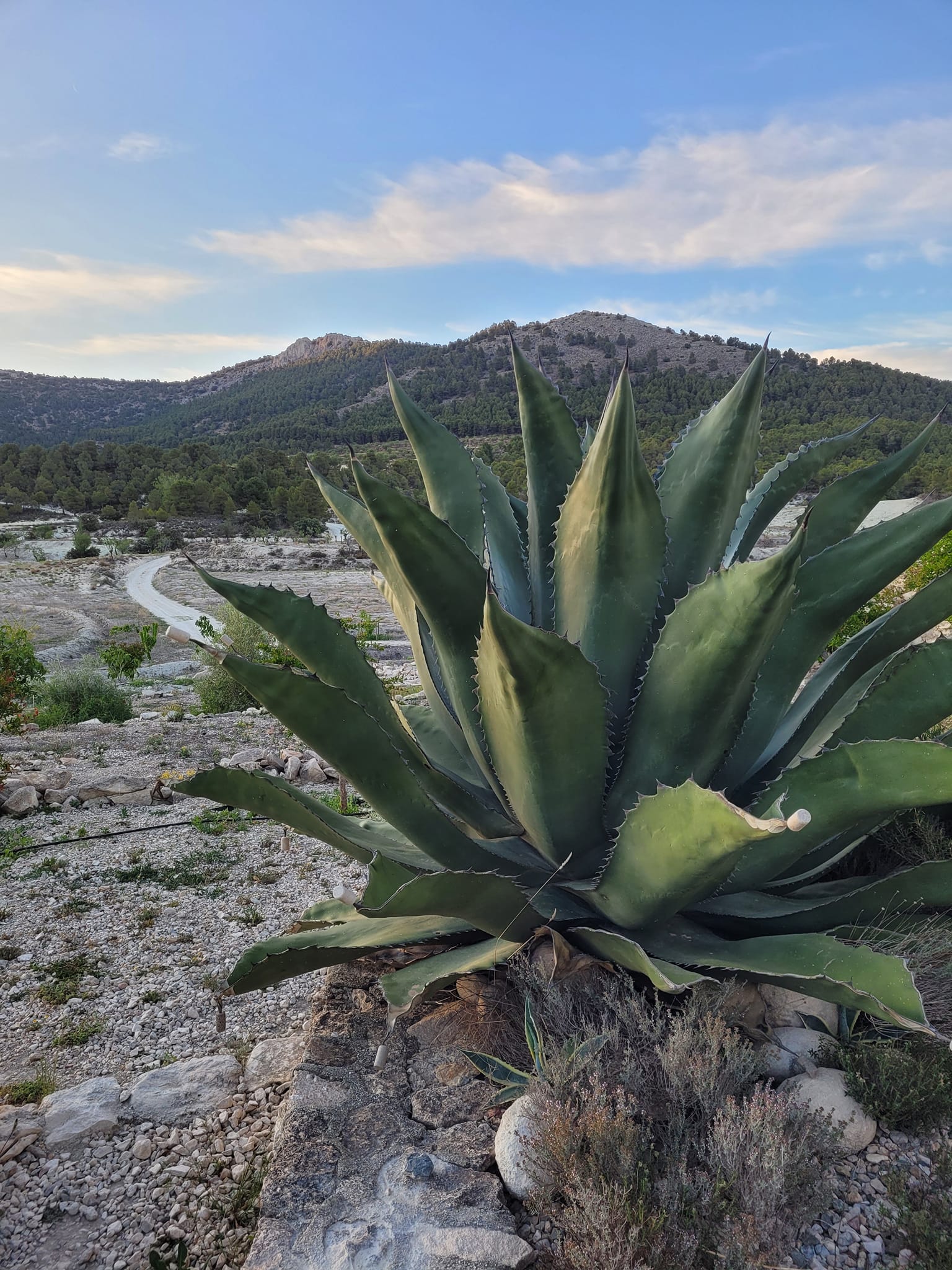
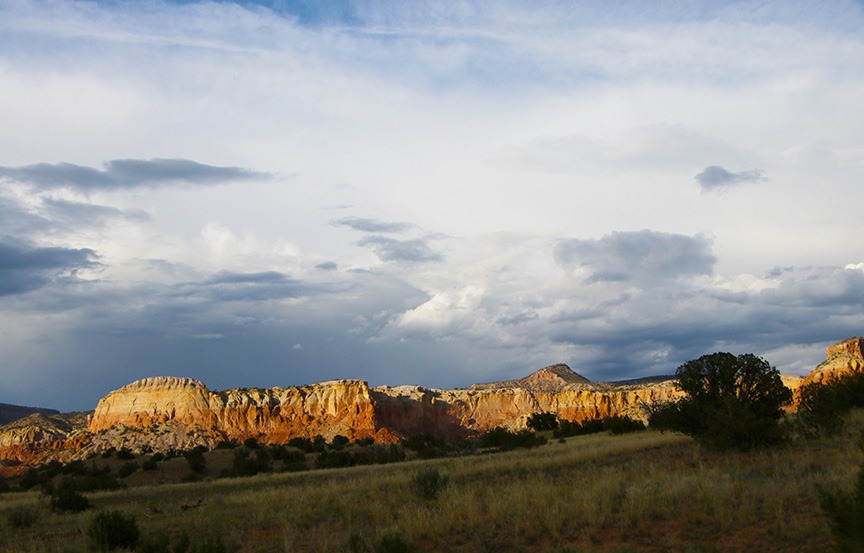
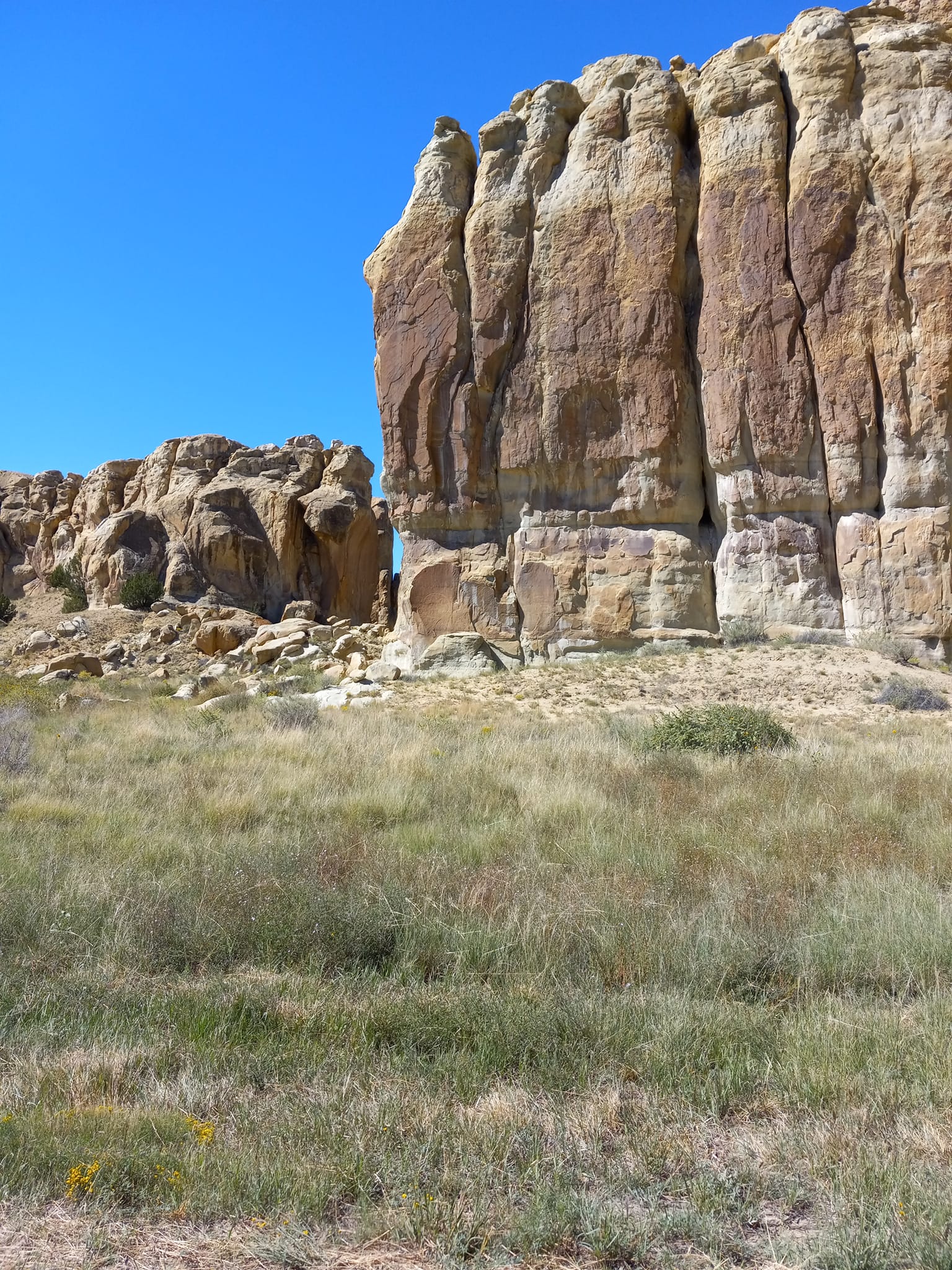
La jolla, and la joya, mean “the jewel” but also–especially the latter spelling–refer (geologically) to a bowl-like valley. The description is both physically and metaphorically apt, and provides context for the poem below my statement.

~~

In wild places, some part of me that’s not domestic surfaces. I experience a rise in my level of awareness regarding my surroundings, an apprehension in the etymological sense of “a seizing upon, laying hold of; understanding” (Etymology Online). In canyons, caverns, riverbeds, forests—yes, in the desert, too—I respond wholly differently from the way I encounter unfamiliar human-made spaces. While at Joya-AiR, I encountered both: new environments that I’m integrating into my inner ecology. New forms of art. That process of integration, an exciting one, will continue long after my residency here has ended.

It has been such a pleasure to interact with artists whose mediums vary from my own. I was the only poet in this group, and the opportunities I’ve had to learn more about the visual arts have been amazing and useful. My first loves were sketching and painting, and although my longtime practice has been writing, imagery has ever been vital to my creative work. I thank them for their generosity of spirit. What artists can offer to one another is an aspect of themselves through their perspectives as well as their mediums and works. This kind of giving and exchange strikes me as quite personal and enriching. It is something we can do for the world, too.

The extensive work that Simon and Donna have been doing here to make the place both welcoming and ecologically sustainable impresses me and confirms my conviction that with creativity, open minds, and persistence, humans can manage to live more cooperatively with the planet and damage it less—even, perhaps, help it to heal itself.

I will keep the images of Cortijada Los Gázquez with me for a long time.

~~

Jewel

…implies what is small, exquisite, bright.
At even higher altitudes, glassy glacial pools
shine at the caldera’s ridges.
Here, the hills’ aridity offers nothing
but shallow canyons where once
a river coursed, twisting around a cavity
anchored by holm oak and Aleppo pines.
The pinsapos sway in late afternoon,
their cones studded with hardy seeds.

Almond and olive trees dot pale clay soil.
No desert is ever gentle—what survives
must be temperamentally suited to the climate—
but what’s cradled in these ancient mountains
seems gentler than most. Night’s stars,
exquisite. Evenings of ruby, amber, amethyst.
Days that define bright. And when rain descends,
however briefly: everything gleams.


[Cortijada Los Gázquez, Vélez Blanco, Spain]


Good w/words

I hear it often from people: “You’re a writer, you’re good with words.”

What I’m reflecting on while in a space where I have the time to reflect is that maybe, some writers are those folks who are not by nature “good with words.” Words, we may have, yes! We love words, love to read, love books, love poetry, love language. But that doesn’t mean that words come easily. We may have to work for and with them, rearrange and revise, check meanings and spellings, consider etymology and new ways of using words.

It may be we wrestle with them and, like Jacob with the Angel, find the process causes injury as well as revelation.

A study by Marc Chagall for his Jacob Wrestling with the Angel, ca, 1963

Writing may be a cat that follows us home when we really have nothing to feed it and our apartment building doesn’t allow cats, but there it is: needy and appealing, sitting on our doorstep.

For many writers, words are hard. As Virginia Woolf wrote, “Oh to be silent! Oh, to be a painter!” Some writers might prefer to be making a non-wordy art. Less energy to expend on how to say.

I know I can speak for a few writers when I state that, at least sometimes, words can be easier to write than to speak. If I’m chatting to somebody about my family or the garden or my opinions about online learning management systems (LMSs), I don’t usually have trouble with words. Those concepts stay within the familiar and the easy-to-express, even among people I barely know. In such conversations, I can be lively, make jokes, have opinions, and tell stories. This is social speech of a casual sort, even when the subjects are often close to my heart (well, not LMSs…).

But many things that are either more philosophical or more deeply reflective, even intimate, evade me when I try to say them in conversation. Questions I have, I may fear to ask. Describing a feeling, sensation, or emergent idea can be so difficult I decide just to stay quiet, listen to what I can glean from others. If my fellow conversationalists are patient and sympathetic and stay with me through more abstract, emotional, or artistic/philosophical topics, I will still find myself losing the thread of my sentences and tapering off into gesture. Gesture covers (badly) what I can’t seem to put into words. Even though I am supposedly good with words.

Later, I may endeavor to express in writing what I wanted to say when I resorted to silence. Writing is not the heat of the moment–there can be revisions, honing of concepts, maybe some research to cover the various vague lacunae during which I’d previously resorted to shrugging. Shall we say: clarification of thought through better words in a better order.* I may never learn to be adept at succinct intellectual conversation, but I can eventually get to compression of language for effect in a written text.

That would be enough. Or maybe it’s as David Kirby writes in his poem “The Wreck of the Edmund Fitzgerald”— “Writing isn’t hard./You just have to be patient. You just have to get/everything right.”

~

*Samuel Taylor Coleridge‘s definition of poetry: best words in the best order.

Vacuum of meaning

Seven months ago, my mother’s handwriting was decipherable–to a degree:

Her script now resembles nothing so much as asemic “cursive”:

Asemic writing is a wordless open semantic form of writing. The word asemic means “having no specific semantic content”, or “without the smallest unit of meaning”. With the non-specificity of asemic writing there comes a vacuum of meaning, which is left for the reader to fill in and interpret. Wikipedia

Her words likewise sound as though they possess no semantic content, but her body language, facial expression, and intonation when she speaks make it clear that there is a unit of meaning in whatever she tries to convey verbally. It amazes me that she doesn’t seem particularly frustrated by her aphasia. Although I can’t know what my response to aphasia would be, I doubt I would be as accepting and unflustered as my mother is.

I think of how Eloise Klein Healey wrote her book of poems Another Phase while experiencing Wernicke’s aphasia after a bout of meningitis. I gave my mom this collection a few years back; she marveled at these short poems, when she was still able to read, deeply impressed that Klein Healey persisted in using words–creating poetry, no less–despite aphasia. Eloise has regained some of her fluency, while my mother can only get worse (her aphasia is due to vascular dementia, from which there is no possible return).

Yet my mother continues to write–to take notes? jot down ideas?–it’s not possible to know, but I find her cribbed, indecipherable cursive here and there on pieces of paper on her desk, and in a notebook in her dresser drawer. It resembles asemic writing now. That habit of recording some aspect of one’s life, or of making lists…it appears that muscle memory can include the small-motor habit of handwriting. I wonder if she is making meaning in some way that I cannot possibly discern, something interior but necessary to her. As a writer, the idea appeals to me. But I also wonder what the point of writing is when there is no audience, so that the act is no longer an act of communication. Does it then become a “vacuum of meaning”?

~

In happier (meaningful?) news, January’s surprisingly full of poetry this year, and I have had time to attend, participate, listen in. Plus it finally feels wintry here. Snow’s coming down, herbal tea warms me in the afternoon, and we’ve lit the fire in our fireplace more than a few times, burning up the dead-fall ash trees that have been coming down around the property the past three or four years. I’m staying inside more than usual, “yin energy” restfulness. And withholding some lovely news for now, awaiting confirmation, enjoying the possibilities ahead.

Vision/revision

Although the word “vision” derives from the Latin visionem, it first appeared in English with the definition of things seen in the mind or via the supernatural. Vision as simply the sense of sight is a later meaning (late 15th c.), and vision referring to foresight dates only to 100 years ago [see https://www.etymonline.com/word/vision#etymonline_v_7835]. The cliché “a vision of loveliness” provides an example of the early, 13th century meaning, as does the phrase “visions of sugarplums.” Poets have long been known for writing about, or being under the influence of, such vision.

When the first flush of poetic vision inspires work that later needs some adjustment, writers turn to revision. According to Etymology Online, revision’s history in English first showed up as a noun in the 1610s: “act of looking over again, re-examination and correction,” from French révision, from Late Latin revisionem (nominative revisio) “a seeing again” … the meaning “that which is revised, a product of revision” is from 1845.” This noun, and its verb form (the act/work/verb-sense of revising), keep me occupied a good bit of the time, especially lately while I’m trying to catch up with a large backlog–20 years of poetry drafts.

And then there’s this: https://www.hopkinsmedicine.org/health/conditions-and-diseases/cataracts#vm_A_20f6f6e1… blurred vision, leading to eye strain, drier eyes, halos around lights at night, trouble reading street signs. Yes, time to get a cataract evaluation, suggests my optometrist. “It’s our legacy,” my brother says, because our dad and most of his siblings got cataracts before age 70; Dad was only 48.

Efforts to correct cataracts apparently date as far back as 600 BCE in India, reports the American Academy of Ophthalmology, but the “father of modern cataract extraction surgery” was Jacques Daviel in 1747; since then, the surgery’s come a long way. I’m not worried about having it done and actually rather eager to see better and not need glasses all the time, though it could be over a year before that happens. In the meantime, the symptoms are irritating but not too significant. I can read books (and drafts of poems) just fine. I just might want to avoid driving in the dark, rainy nights of midwinter.

Johns Hopkins Medicine

Anticipating removal of the thickening, cloudy lens that blurs my visual outlook offers a metaphor for the revision process in my writing. Observation, reflection, critical analysis, problem-solving, intervention, re-envisioning, repair. And perhaps: clarity, if I’m lucky.

Practice

I have been reading novels, which affects my state of mind, makes me dreamy and distracted, foggy-headed, and full of the conflicts in their plots. Or maybe the weather is what does it–too much lovely late autumn sun and not enough rain, which feels “off” for our region; and once the rain finally arrives, it is a dour and chilly dousing I have to convince myself to feel grateful for. Likely the news cycle has not helped my mood. My nine-year-old self emerges from a distant past, crying, “People are so mean!” My parents can no longer sit down beside me and offer comfort.

Time to switch to the poets. I’m finally getting around to reading Ocean Vuong’s Time Is a Mother, a collection that’s been on my to-read list for far too long. The very first poem, “The Bull,” startled me into reading it twice. “I reached–not the bull–/but the depths. Not an answer but/an entrance the shape of/an animal. Like me.” Enough to jolt me out of my fiction-induced haze, especially on a day like this one when I feel the anxious dreamy child in me more than I wish. The prose poems later in the book intrigue me, as well: a very different prose than is found in most novels.

~

“People are so mean!” –I said that often when I was a child. People were mean to me and mean to each other. The news was full of warfare and protest. Grownups were mean, kids were mean, teachers were mean. I had a few complaints, but I also possessed the clueless narcissism of a child. Needless to say, I was not one of those precocious, old-soul children I sometimes read about in books. My siblings could have pointed out a few examples of my own meanness. And I was too much of a coward to stand up for others who bore even more teasing than I did, or to advocate forcefully to right wrongs. As a result, I always feared that my life has been rife with sins of omission.

I wrote the following poem two years ago. I must have been in a similar frame of mind.

~

In Which I Give Myself a Scolding Concerning Compassion

While pruning the quince with its
	twisted thorny syntax of greenwood
	I reflect on errors, mine,
	in the arena of compassion—
the quality and behavior I value most
	and in which I am deficient.

Empathy I’ve got, but compassion requires
	motivating force toward good
	and needs, in my case, practice.
I haven’t practiced enough. I feel the prick
	of quince or conscience through
	my gloves damp from autumn drizzle, 
disentangle stems’ inventive turns, toss cuttings
	on the ground. I disappoint myself.

Perhaps meditation would avail, yet
	I’m incompetent at meditation
	though my friend in her monastery
	by the frigid bay once told me
everyone is bad at meditation for the first
	ten years or so.

Lopping off twigs and branches I imagine
	her sitting on her cushion while
	icebergs converge in saltwater cove
	a wash of pale gray during the short-day
months while she practices one kind of compassion.

My friend who always stops to help a stranger
	change a tire or rescues a loose dog
	from the side of a highway practices 
another form of compassion.

I lack it—that immediate impulse of outreaching,
	kindness. It strikes me as a flaw, the log
	in my own eye it took me years to see.
	So when the late-season mosquito
lands on my forearm to sup perhaps its last
	nourishment, I refrain from flattening it—

a microscopic act of compassion in a world so needy,
	but perhaps a start.
~


Untethering

I’ve read many memoirs and non-fiction books about cognitive decline and living with a beloved person who has a neurodegenerative condition; from Oliver Sacks to the recent biography of Terry Pratchett and many of the books we’ve read in my “morbid book group,” information in these texts connects with the personal emotions involved in deeply complicated human ways. There are also quite a few poetry collections themed around this type of loss, and I ought to compile a list one of these days, because poetry has been helpful to me as my family and I contend with elders dealing with forms of dementia (and there are many forms). That fact has led me to wonder whether readers even need another poetry collection centered around cognitive loss. Since so many of my poems during the past four or five years intersect with or explore that topic, I have considered making a manuscript of them. I hesitate. Too much sadness?

Yet while the circumstances that evoke such poems are usually sad, the disease progression differs, as do the personalities of the persons with cognition loss and the personalities of their loved ones. Perspectives on the persons and the diseases also vary a great deal. Similarities exist–enough to make a reader feel recognized–but situations and value systems mean there are as many ways to write about dementia as there are to write about anything else. My mother-in-law and my mother both were diagnosed with the same thing, vascular dementia, but their living situations, support, and the ways they responded to the aphasia and the cognitive effects create two different stories about the disease.

These days, my mother sometimes seems unmoored from the present moment, but not absorbed in memory either–just kind of lost in the ozone. Self, language, memory…sometimes they slip away from her physical body. In this process, though, she has things to teach me. Just as my hospice patients do, and as their families do, by helping me to widen my understanding of human beings and how we get by in the world. Or how we flounder differently from one another. Or how we rescue one another.

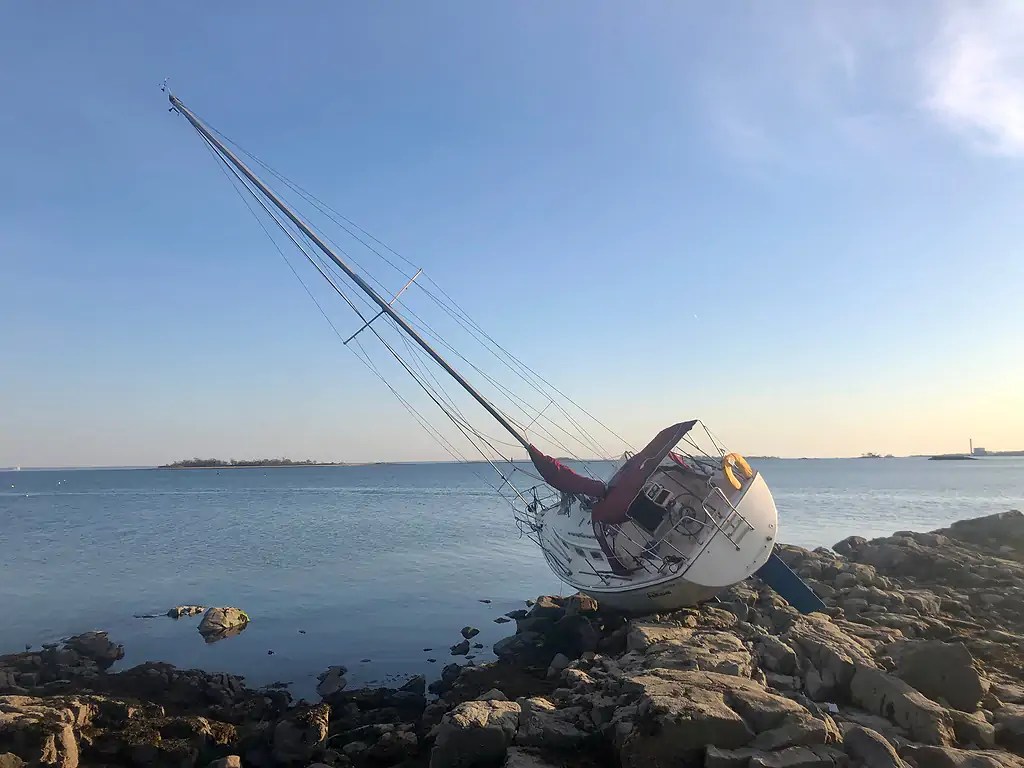
Adiamo unmoored photo: Thane Grauel, 2023

I take this gradual loss into myself–that’s what most of us do–and it’s hard, it’s painful to keep myself open to learning and love when what I first notice is untethering and loss. But yesterday when visiting my mother I noticed she has a cobbled-together notebook in which she sometimes writes (in tiny, indecipherable script). Some pages she had divided into three columns, some have scraps of letters or newspaper clippings stapled to them. Are her pages a record, or a practice? She cannot tell me. Yet it was kind of amazing to realize she does this with apparent intent. She has her reasons, if not her reason in the classic sense.

For all that visiting with her generally means a slow amble down the hall or sitting beside her while she sighs, eyes closed, drifting–despite the emptying hours–she is a Self, and she interests me. So I grieve the loss of who-she-has-been and anticipate the sorrow I’ll feel when she dies, but not everything either of us experiences is sadness. Of the poems I have read about losing a beloved person to neurodegenerative conditions, the range in scope covers a vast continuum of human existence, from misery and resentment and sorrow to revelation and even joy. Why would I avoid the full experience life offers?

Some awe

In 2015 (I think), I posted about the University of Berkeley’s professor Dacher Keltner‘s studies examining the experience and emotion of awe. Now he has a book, Awe: The New Science of Everyday Wonder and How It Can Transform Your Life. The subtitle’s unwieldy and promises a little much–I’m sensing a publisher’s or publicist’s input there. Keltner’s a psychologist, not a popular self-help author, but whatever…

The ways scientists attempt to study human emotions amaze me with their inventiveness. How does one conduct empirical experiments on anything so wildly subjective? (And honestly, I question whether empiricism is always as objective and reliable as scientists believe it is–though we haven’t developed a better method yet.) This book answers some of my questions about the “how” of studying emotion, which includes a good deal of physiology; after all, human emotions are based in human bodies. Qing Li’s book on forest bathing touches on some of these methods of study as well. Blood pressure, heart rate, breath rate: those can be measured, and there’s exhaustive research that shows how such aspects of our physiology connect with feelings of well-being, even before looking at the roles hormones and neurotransmitters play.

But what about awe? Isn’t that usually a feeling that takes your breath away? That might raise the pulse, that might be fear as easily as joy? Keltner writes about the line between fearful shivers of the Halloween-night kind and goosebumps that appear when humans feel awed. Also our tears–of joy, grief, physical pain, and those tears that we feel when we are “moved” by an act, a place, a work of art. He cites Rose-Lynn Fisher’s photos of tears, which I was happy to see mentioned because I love her work (a poem about those photos appears in my book The Red Queen Hypothesis). He cites Ross Gay’s poems and prose poems/essays of joy and gratitude, in books I happen to love. And Keltner offers an anecdote about poet laureate Robert Hass and the “whoa moment” that arises in “myriad cultural forms.”

Among those forms is poetry, and here’s where this text got me considering what I love in reading poetry and what I may be aiming for when writing it: the term he uses is everyday awe.

Deep awe–I’m not enough of a genius with words to create a sense of deep awe with a poem, though I admire the geniuses who have been capable of such art. But everyday awe? That’s a feeling with which I’ve been familiar since my childhood and which I have never lost sight of. For me, it arises from my favorite pastime: observation. The fog-mantled tent-spider web in tall grass, the sparrows sipping from city-street potholes, the toddler showering his baby sister with dandelion flowers, the smell of honeysuckle early in June, or campfires or cinnamon. Sea spray in my face. Sand in my shoes. The way my mother’s 90-year-old skin stretches and smooths when I stroke her arm. Skunk cabbage unfurling with the morning sun behind it. These things I can write about; the words are everyday words, and this is my everyday world. That, for me, is where the art of poetry and the experience of living intersect.

Lists

There can be beauty in a list: its specificity, also the rhythm and sound–which order does the poet choose for each word? That matters. Chronology perhaps; category, like the scientist; or else sound, such as alliteration; or possibly by the thread of some concatenation that gradually creates associations. The logic of a list poem differs from other forms of lists.

I always think of Whitman as an early and consummate “list poet,” though a great many of his poems do not rely on the strategy. There are list poems that employ anaphora and those that build through phrases. Others rely on modifiers that escalate or change tone to surprise the reader. In my own process it has been useful to begin drafting poems through listing, though often I abandon the list when I revise.

Also, I teach myself about the world and its people, environs, and ideas through lists.

For example, having strayed temporarily from my home region, I’m getting acquainted with a “new” place by making lists of birds, trees, flowers–yeah, the naming-things approach so basic to human beings, like when my children were just learning to talk and conversation with them consisted largely of naming objects or actions.

This is not a poem:

Pygmy nuthatch, juniper titmouse, pinyon jay. Gambel oak, Abert’s squirrel, pinacate stink beetle, skink. Quaking aspen, limber pine. Common raven, Woodhouse’s scrub-jay, fireweed, globemallow, bear corn, oak gall, crow. Pinyon, cholla, Ponderosa pine, alligator juniper, Apache plume, sandwort, groundsel. Gneiss, granite, gray oak, spotted towhee, rabbitbrush, bajada, arroyo, muttongrass, mesa, schist.

~

However, these words now evoke images, sounds, memories, senses that–who knows?–may end up in poems eventually. Because poetry is about and in the world.

Goals, sort of

Our regional drought continues. I sometimes entertain the idea that the universe is telling me I might as well consider moving to the Southwest–where my children now reside–since the Mid-Atlantic area currently has less rainfall, higher temperatures, and lower humidity than where they are. Granted, this is likely to be a temporary situation; but for the present, I get the chance to walk on crunchy grass and hard soil daily and see how I like it. And to see blue skies for days on end, and see how I like that. What next?

Speculating on “what next” comes rather naturally to me, a reflective sort of human being; but making goals and ambitions toward accomplishment–not so much. Lately, though, the years-ahead thinking has been moved the forefront of my thoughts. It’s all those dang Medicare and Social Security and AARP mailings, in part, and my peers and I heading into the so-called retirement years. Inescapable: the conversations crop up around the dinner party table, while having coffee with a pal, or on a phone call with siblings. People keep asking me what my new goals are. I suppose, having reached the age Social Security (used to) kick in, I was expected to come up with new goals? Must have missed that memo.

Goal: the word is of uncertain origin, says Etymology Online, but appears in the 14th c “with an apparent sense of ‘boundary, limit.’ Perhaps from Old English *gal ‘obstacle, barrier,’ a word implied by gælan ‘to hinder’ and also found in compounds (singal, widgal). That would make it a variant or figurative use of Middle English gale ‘a way, course’…” And there’s the further meaning of a stake that signals the end point of a game. Interesting that goal can be an obstacle, a limitation, an end-point, or a pathway.

If I think of it as a pathway, the question is, what do I want to do? After many years as an educator…do I throw all that experience away and take up something else? My guess is that I’ll find myself imparting information of some kind, one way or another, regardless of employment status. So no major change of course, just a change of scenery, situation, or audience. After all, I will still be writing.

Or are we talking aspirations? What is it I would like to plan for…self care? travel? conferences and retreats? Time to do–what, exactly, and with whom? Here there are perhaps barriers and limitations: can we ever stop worrying about how much will it cost and how much time it will take to achieve the specified goals? And obstacles–you cannot plan for them. Maybe I go blind or get cancer or get hit by a bus. Maybe the apocalypse occurs in my lifetime. That would certainly be the stake that signifies “game over!”

Then again, what if my plans are to get into the woods more, sit under trees more, take more walks, read more books, tend to plants and animals, hang out with my beloveds, write poems? Those things, I want to do in future. But it isn’t as though I am not already doing them now.

Photo by Michael Heinrich on Pexels.com

Novels & words

When I was about seven years old, I discovered books offered me a way to immerse myself in adventure and temporarily escape life’s discomforts. Novels, and later, poetry, were the genres I turned to most often. Though I also liked history, science, biographies, and art, there was something about a piece of sustained fiction that enthralled me so deeply I could easily ignore anything around me: the television, my siblings’ bickering, the vacuum cleaner, my parents’ calling me to dinner. In later years, immersed in a book, I risked going late to class or missing my stop on the F train. The only area of my life where I understand what is meant by hyperfocus has been reading.

Then I had children, which changed everything. I remained an inveterate reader, but I found it far easier to get through non-fiction, poetry, essay or short story collections, and literary memoirs than to devote myself to novels. It was simply too easy to get lost in a book of fiction, to wrap myself in those worlds to the detriment of my own. Too easy to become irresponsible to life’s requirements, which were suddenly so many and so urgent. If my situation had been different–let’s say, commuting by train for half an hour or more daily–I might have continued reading a hundred or more novels a year. But I was home in the rur-burbs with two young kids, and I could read only in short spurts throughout the day. Granted, I read a lot of books to my son and daughter, some of which were new to me and most of which were fictional…but a bit below my grade level.

Those children are in their 30s now, but I became so accustomed to the non-fiction genre that only recently have I begun to turn back to my first love, the novel. Granted, I did my reading-all-of-Dickens stint during covid, and I never completely abandoned reading novels; but I got out of the habit. Because my workplace office is now in the library, however, I have been picking up the occasional, usually contemporary, novel that appears on the library’s New Acquisitions display. This is where I found R.F. Kuang’s book Babel, or The Necessity of Violence: An Arcane History of the Oxford Translator’s Revolution. Imagine an alternative Dickensian-era Britain, with the underlying power struggles between education and political power as per Pullman’s His Dark Materials series, and the almost-believable otherworldliness (and creative footnotes) of Susanna Clarke’s fiction…with the late-adolescent outsiders who bond over knowledge that cements the Harry Potter books…and add some genuinely academic background on linguistics and etymology.

That’s about as close as I can describe Babel by means of other books, but what I really enjoyed about the novel is the way it got me thinking about how dismayingly interconnected education and scholarly pursuits are with power structures such as governments, politics, wealth, and colonialism. Kuang deftly shows her readers how the focus on knowledge that her characters love and possess talent for inevitably leads to a narrowness in their perspectives that differs almost dangerously from an uneducated ignorance. They are good young people, but they operate as elites in a fundamentally callous system. The system either corrupts or smothers. The “fun” part of her world construct is that power operates on the use of words: on languages and their etymologies, which are magical enhancements.

But of course, power does hinge on the use of words, doesn’t it?

The question this poses in my mind has something to do with poetry, with the writing of it, the speaking of it, its use of words that are not magic but can carry with them a power to evoke that seems pretty magical at times. Reading this novel was not only entertaining (sad, thrilling, surprising)–it got me, after I’d completed hyperfocusing, to reflect on ideas that twine with the roots of poetry. To me, that’s the best takeaway from any reading experience.