Untethering

I’ve read many memoirs and non-fiction books about cognitive decline and living with a beloved person who has a neurodegenerative condition; from Oliver Sacks to the recent biography of Terry Pratchett and many of the books we’ve read in my “morbid book group,” information in these texts connects with the personal emotions involved in deeply complicated human ways. There are also quite a few poetry collections themed around this type of loss, and I ought to compile a list one of these days, because poetry has been helpful to me as my family and I contend with elders dealing with forms of dementia (and there are many forms). That fact has led me to wonder whether readers even need another poetry collection centered around cognitive loss. Since so many of my poems during the past four or five years intersect with or explore that topic, I have considered making a manuscript of them. I hesitate. Too much sadness?

Yet while the circumstances that evoke such poems are usually sad, the disease progression differs, as do the personalities of the persons with cognition loss and the personalities of their loved ones. Perspectives on the persons and the diseases also vary a great deal. Similarities exist–enough to make a reader feel recognized–but situations and value systems mean there are as many ways to write about dementia as there are to write about anything else. My mother-in-law and my mother both were diagnosed with the same thing, vascular dementia, but their living situations, support, and the ways they responded to the aphasia and the cognitive effects create two different stories about the disease.

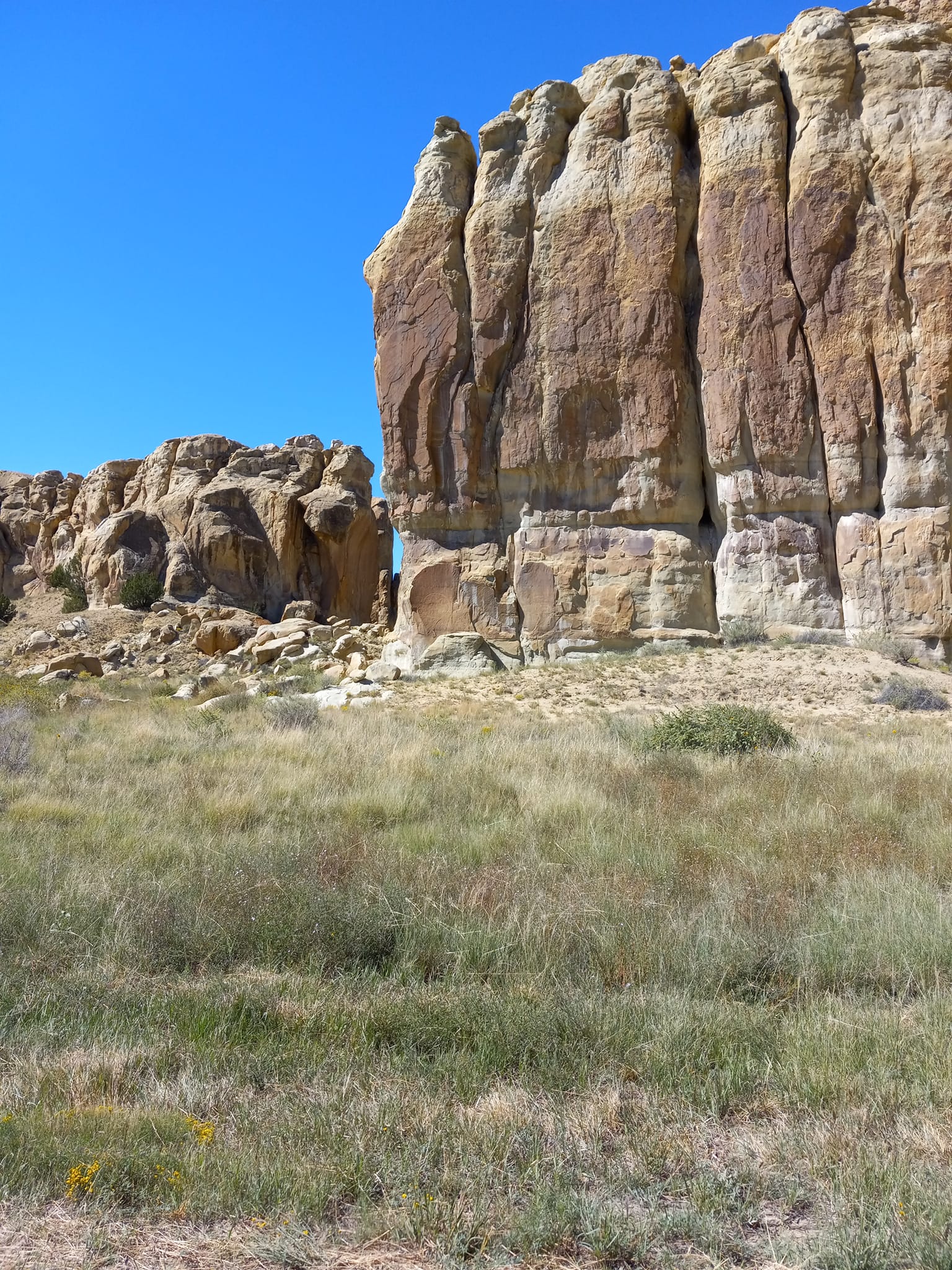
These days, my mother sometimes seems unmoored from the present moment, but not absorbed in memory either–just kind of lost in the ozone. Self, language, memory…sometimes they slip away from her physical body. In this process, though, she has things to teach me. Just as my hospice patients do, and as their families do, by helping me to widen my understanding of human beings and how we get by in the world. Or how we flounder differently from one another. Or how we rescue one another.

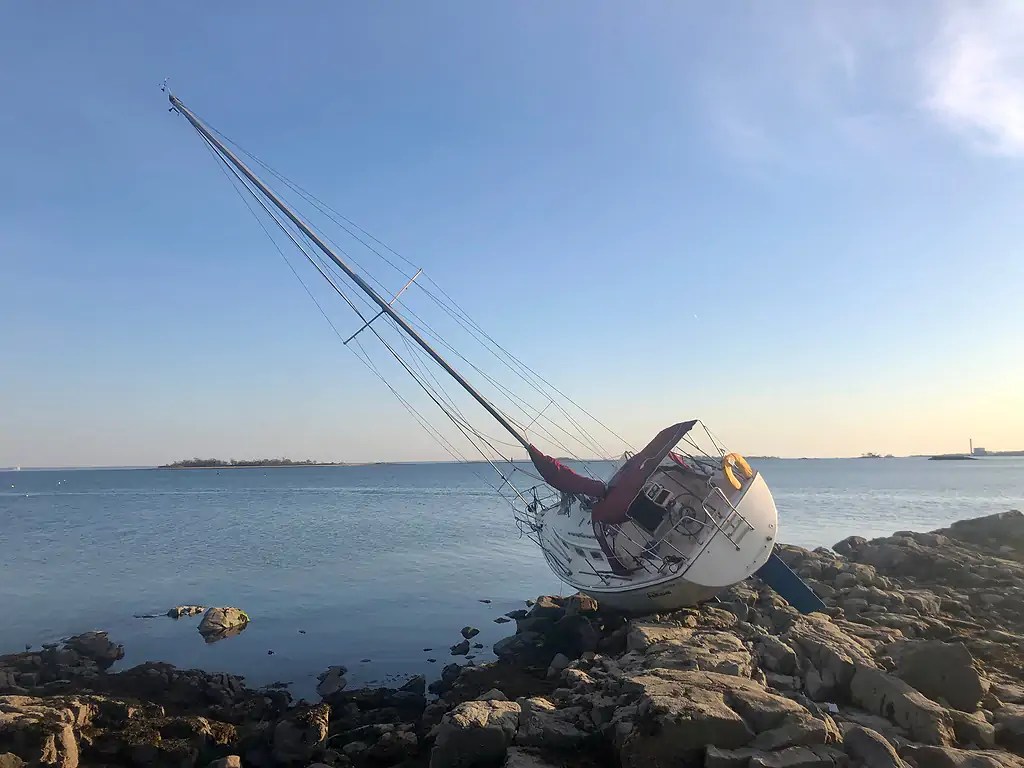
Adiamo unmoored photo: Thane Grauel, 2023

I take this gradual loss into myself–that’s what most of us do–and it’s hard, it’s painful to keep myself open to learning and love when what I first notice is untethering and loss. But yesterday when visiting my mother I noticed she has a cobbled-together notebook in which she sometimes writes (in tiny, indecipherable script). Some pages she had divided into three columns, some have scraps of letters or newspaper clippings stapled to them. Are her pages a record, or a practice? She cannot tell me. Yet it was kind of amazing to realize she does this with apparent intent. She has her reasons, if not her reason in the classic sense.

For all that visiting with her generally means a slow amble down the hall or sitting beside her while she sighs, eyes closed, drifting–despite the emptying hours–she is a Self, and she interests me. So I grieve the loss of who-she-has-been and anticipate the sorrow I’ll feel when she dies, but not everything either of us experiences is sadness. Of the poems I have read about losing a beloved person to neurodegenerative conditions, the range in scope covers a vast continuum of human existence, from misery and resentment and sorrow to revelation and even joy. Why would I avoid the full experience life offers?

Some awe

In 2015 (I think), I posted about the University of Berkeley’s professor Dacher Keltner‘s studies examining the experience and emotion of awe. Now he has a book, Awe: The New Science of Everyday Wonder and How It Can Transform Your Life. The subtitle’s unwieldy and promises a little much–I’m sensing a publisher’s or publicist’s input there. Keltner’s a psychologist, not a popular self-help author, but whatever…

The ways scientists attempt to study human emotions amaze me with their inventiveness. How does one conduct empirical experiments on anything so wildly subjective? (And honestly, I question whether empiricism is always as objective and reliable as scientists believe it is–though we haven’t developed a better method yet.) This book answers some of my questions about the “how” of studying emotion, which includes a good deal of physiology; after all, human emotions are based in human bodies. Qing Li’s book on forest bathing touches on some of these methods of study as well. Blood pressure, heart rate, breath rate: those can be measured, and there’s exhaustive research that shows how such aspects of our physiology connect with feelings of well-being, even before looking at the roles hormones and neurotransmitters play.

But what about awe? Isn’t that usually a feeling that takes your breath away? That might raise the pulse, that might be fear as easily as joy? Keltner writes about the line between fearful shivers of the Halloween-night kind and goosebumps that appear when humans feel awed. Also our tears–of joy, grief, physical pain, and those tears that we feel when we are “moved” by an act, a place, a work of art. He cites Rose-Lynn Fisher’s photos of tears, which I was happy to see mentioned because I love her work (a poem about those photos appears in my book The Red Queen Hypothesis). He cites Ross Gay’s poems and prose poems/essays of joy and gratitude, in books I happen to love. And Keltner offers an anecdote about poet laureate Robert Hass and the “whoa moment” that arises in “myriad cultural forms.”

Among those forms is poetry, and here’s where this text got me considering what I love in reading poetry and what I may be aiming for when writing it: the term he uses is everyday awe.

Deep awe–I’m not enough of a genius with words to create a sense of deep awe with a poem, though I admire the geniuses who have been capable of such art. But everyday awe? That’s a feeling with which I’ve been familiar since my childhood and which I have never lost sight of. For me, it arises from my favorite pastime: observation. The fog-mantled tent-spider web in tall grass, the sparrows sipping from city-street potholes, the toddler showering his baby sister with dandelion flowers, the smell of honeysuckle early in June, or campfires or cinnamon. Sea spray in my face. Sand in my shoes. The way my mother’s 90-year-old skin stretches and smooths when I stroke her arm. Skunk cabbage unfurling with the morning sun behind it. These things I can write about; the words are everyday words, and this is my everyday world. That, for me, is where the art of poetry and the experience of living intersect.

Lists

There can be beauty in a list: its specificity, also the rhythm and sound–which order does the poet choose for each word? That matters. Chronology perhaps; category, like the scientist; or else sound, such as alliteration; or possibly by the thread of some concatenation that gradually creates associations. The logic of a list poem differs from other forms of lists.

I always think of Whitman as an early and consummate “list poet,” though a great many of his poems do not rely on the strategy. There are list poems that employ anaphora and those that build through phrases. Others rely on modifiers that escalate or change tone to surprise the reader. In my own process it has been useful to begin drafting poems through listing, though often I abandon the list when I revise.

Also, I teach myself about the world and its people, environs, and ideas through lists.

For example, having strayed temporarily from my home region, I’m getting acquainted with a “new” place by making lists of birds, trees, flowers–yeah, the naming-things approach so basic to human beings, like when my children were just learning to talk and conversation with them consisted largely of naming objects or actions.

This is not a poem:

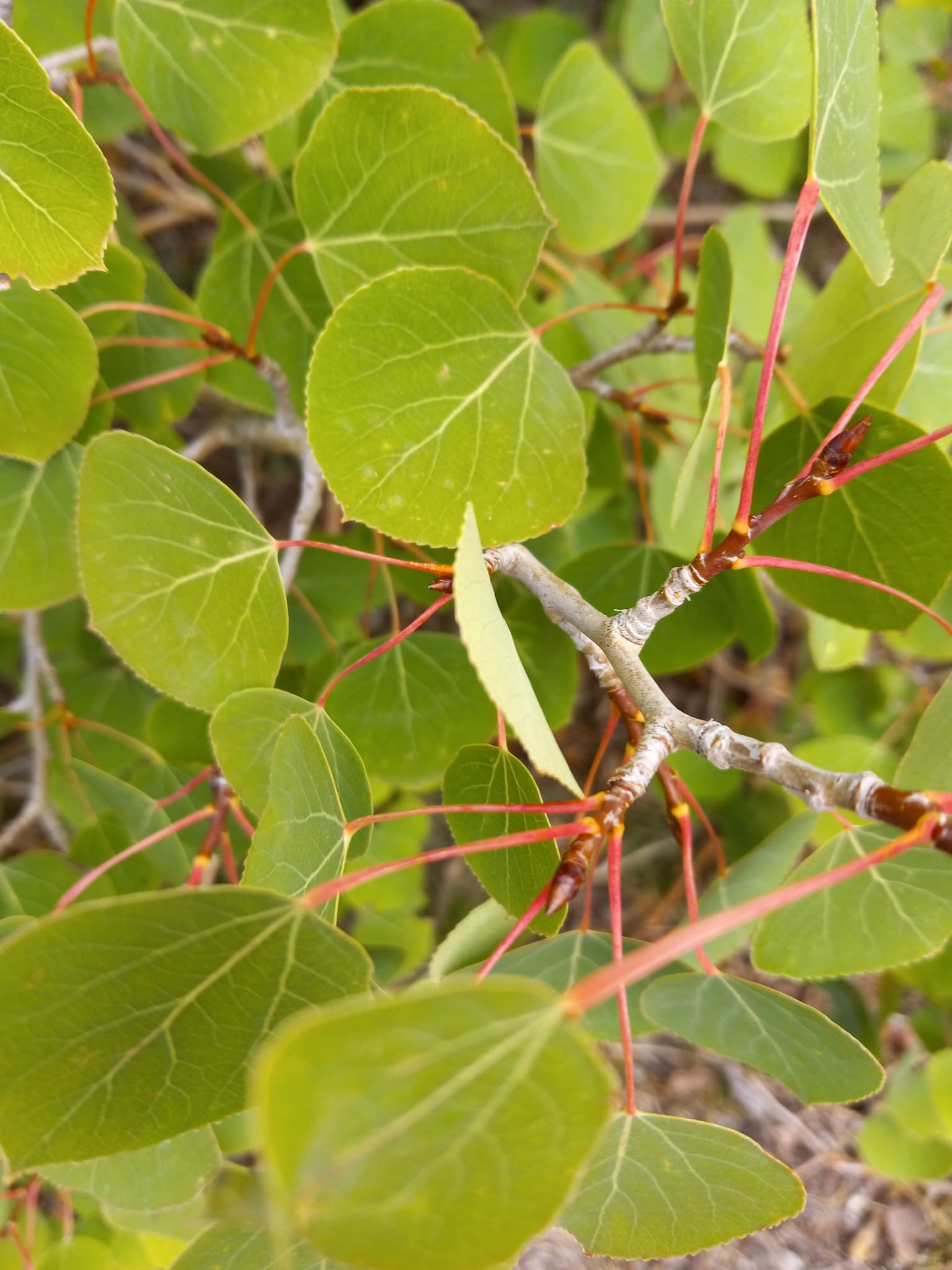
Pygmy nuthatch, juniper titmouse, pinyon jay. Gambel oak, Abert’s squirrel, pinacate stink beetle, skink. Quaking aspen, limber pine. Common raven, Woodhouse’s scrub-jay, fireweed, globemallow, bear corn, oak gall, crow. Pinyon, cholla, Ponderosa pine, alligator juniper, Apache plume, sandwort, groundsel. Gneiss, granite, gray oak, spotted towhee, rabbitbrush, bajada, arroyo, muttongrass, mesa, schist.

~

However, these words now evoke images, sounds, memories, senses that–who knows?–may end up in poems eventually. Because poetry is about and in the world.

Goals, sort of

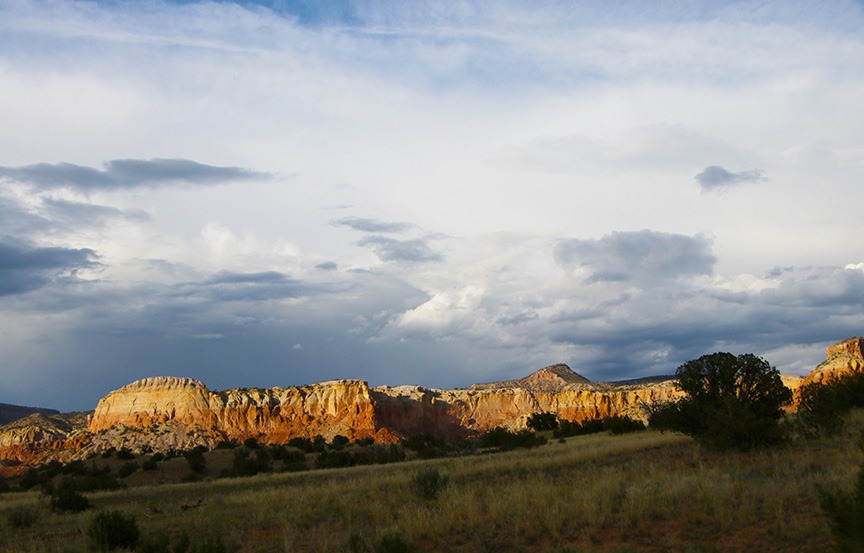
Our regional drought continues. I sometimes entertain the idea that the universe is telling me I might as well consider moving to the Southwest–where my children now reside–since the Mid-Atlantic area currently has less rainfall, higher temperatures, and lower humidity than where they are. Granted, this is likely to be a temporary situation; but for the present, I get the chance to walk on crunchy grass and hard soil daily and see how I like it. And to see blue skies for days on end, and see how I like that. What next?

Speculating on “what next” comes rather naturally to me, a reflective sort of human being; but making goals and ambitions toward accomplishment–not so much. Lately, though, the years-ahead thinking has been moved the forefront of my thoughts. It’s all those dang Medicare and Social Security and AARP mailings, in part, and my peers and I heading into the so-called retirement years. Inescapable: the conversations crop up around the dinner party table, while having coffee with a pal, or on a phone call with siblings. People keep asking me what my new goals are. I suppose, having reached the age Social Security (used to) kick in, I was expected to come up with new goals? Must have missed that memo.

Goal: the word is of uncertain origin, says Etymology Online, but appears in the 14th c “with an apparent sense of ‘boundary, limit.’ Perhaps from Old English *gal ‘obstacle, barrier,’ a word implied by gælan ‘to hinder’ and also found in compounds (singal, widgal). That would make it a variant or figurative use of Middle English gale ‘a way, course’…” And there’s the further meaning of a stake that signals the end point of a game. Interesting that goal can be an obstacle, a limitation, an end-point, or a pathway.

If I think of it as a pathway, the question is, what do I want to do? After many years as an educator…do I throw all that experience away and take up something else? My guess is that I’ll find myself imparting information of some kind, one way or another, regardless of employment status. So no major change of course, just a change of scenery, situation, or audience. After all, I will still be writing.

Or are we talking aspirations? What is it I would like to plan for…self care? travel? conferences and retreats? Time to do–what, exactly, and with whom? Here there are perhaps barriers and limitations: can we ever stop worrying about how much will it cost and how much time it will take to achieve the specified goals? And obstacles–you cannot plan for them. Maybe I go blind or get cancer or get hit by a bus. Maybe the apocalypse occurs in my lifetime. That would certainly be the stake that signifies “game over!”

Then again, what if my plans are to get into the woods more, sit under trees more, take more walks, read more books, tend to plants and animals, hang out with my beloveds, write poems? Those things, I want to do in future. But it isn’t as though I am not already doing them now.

Photo by Michael Heinrich on Pexels.com

Novels & words

When I was about seven years old, I discovered books offered me a way to immerse myself in adventure and temporarily escape life’s discomforts. Novels, and later, poetry, were the genres I turned to most often. Though I also liked history, science, biographies, and art, there was something about a piece of sustained fiction that enthralled me so deeply I could easily ignore anything around me: the television, my siblings’ bickering, the vacuum cleaner, my parents’ calling me to dinner. In later years, immersed in a book, I risked going late to class or missing my stop on the F train. The only area of my life where I understand what is meant by hyperfocus has been reading.

Then I had children, which changed everything. I remained an inveterate reader, but I found it far easier to get through non-fiction, poetry, essay or short story collections, and literary memoirs than to devote myself to novels. It was simply too easy to get lost in a book of fiction, to wrap myself in those worlds to the detriment of my own. Too easy to become irresponsible to life’s requirements, which were suddenly so many and so urgent. If my situation had been different–let’s say, commuting by train for half an hour or more daily–I might have continued reading a hundred or more novels a year. But I was home in the rur-burbs with two young kids, and I could read only in short spurts throughout the day. Granted, I read a lot of books to my son and daughter, some of which were new to me and most of which were fictional…but a bit below my grade level.

Those children are in their 30s now, but I became so accustomed to the non-fiction genre that only recently have I begun to turn back to my first love, the novel. Granted, I did my reading-all-of-Dickens stint during covid, and I never completely abandoned reading novels; but I got out of the habit. Because my workplace office is now in the library, however, I have been picking up the occasional, usually contemporary, novel that appears on the library’s New Acquisitions display. This is where I found R.F. Kuang’s book Babel, or The Necessity of Violence: An Arcane History of the Oxford Translator’s Revolution. Imagine an alternative Dickensian-era Britain, with the underlying power struggles between education and political power as per Pullman’s His Dark Materials series, and the almost-believable otherworldliness (and creative footnotes) of Susanna Clarke’s fiction…with the late-adolescent outsiders who bond over knowledge that cements the Harry Potter books…and add some genuinely academic background on linguistics and etymology.

That’s about as close as I can describe Babel by means of other books, but what I really enjoyed about the novel is the way it got me thinking about how dismayingly interconnected education and scholarly pursuits are with power structures such as governments, politics, wealth, and colonialism. Kuang deftly shows her readers how the focus on knowledge that her characters love and possess talent for inevitably leads to a narrowness in their perspectives that differs almost dangerously from an uneducated ignorance. They are good young people, but they operate as elites in a fundamentally callous system. The system either corrupts or smothers. The “fun” part of her world construct is that power operates on the use of words: on languages and their etymologies, which are magical enhancements.

But of course, power does hinge on the use of words, doesn’t it?

The question this poses in my mind has something to do with poetry, with the writing of it, the speaking of it, its use of words that are not magic but can carry with them a power to evoke that seems pretty magical at times. Reading this novel was not only entertaining (sad, thrilling, surprising)–it got me, after I’d completed hyperfocusing, to reflect on ideas that twine with the roots of poetry. To me, that’s the best takeaway from any reading experience.

Generosity

It is a well-documented fact that writers can be dismissive, hypercritical, and downright insulting when it comes to the work of their peers and predecessors. Juvenal, Samuel Johnson, Oscar Wilde, Dorothy Sayers and her nemesis Edmund Wilson, Dorothy Parker, John Logan…the list is long and spans centuries. Some of the critiques are valid, in their way; many are wickedly funny, which doesn’t remedy the unkindness of the barbs. Most writers who have been writing and presenting or publishing their work for awhile will have encountered some less-than-generous “feedback” from other writers. Given human nature, such responses are probably inevitable.

In the mediated circle of the voluntary critique group such as may be found among MFA programs or community writers’ groups, the group or mentor often establishes protocols for sharing work–methods of responding to creative efforts that avoid too-harsh criticism, ad hominem attacks, or dismissive/discouraging comments. Once your writing is out in the world in whatever public form (print, slam performance, live reading, video, online, etc), however, the best advice is sometimes “don’t read the comments.”

Many agendas may drive the urge to bash particular writers or their works, among these envy, attention, pride, status, self-preservation, righteous indignation, or a sense that one needs to scramble to make space for oneself in an already small environment (“the literary world”). Even, dare I say, ignorance. I could speculate on reasons for unkindness until the proverbial cows come dawdling home, but I suppose it can be attributed to a kind of social Darwinism. People can be mean-spirited when threatened. Though exactly how the writing of poetry poses a threat to other poets remains a mystery to me.

Maybe I am a Pollyanna (entirely possible), but although I can recall some incidents and critiques that have stung me, there have been far more instances of generosity from fellow writers. While contemplating writing this post I sat back and decided to count how many fellow writers have extended courtesy, respect, useful advice, helpful criticism, networking and publication leads, encouragement, and the sense that I’ve “been seen”–acknowledgment as a writer–and I found the list was long. I considered listing names, but there are so many…and I was afraid I’d inadvertently overlook someone. I consider this an excellent “problem” to have.

Granted, some stings have been…memorable. However, I’ve been writing and publishing poetry and related prose since the early 1980s, so there have been many years during which I’ve had the joy of connecting with other writers in generous ways. Writing is both a large community and a small one, depending upon where I am in my own life: local at times, semi-isolated other times, and then–thanks to social media platforms, with which I have love/hate relationships–national and international!

As I get ready to pull back a bit from my work in the realm of higher education, I hope that the lessons I have learned about being generous to my students, gently encouraging while pointing out areas to keep working on, will stay with me. My feeling about poetry is that there’s certainly room for more of it in a world which can be harsh, and that acknowledging other humans’ urge to express their awe, fear, grief, passion, love, anger, and perspective won’t actually harm many of us.

Thus, to all of the fellow writers and artists living and dead who have been generous to me: Bounteous gratitude. I’ll keep trying to pay it forward.

Artistry, art

Wednesday evening I participated in a lovely (if under-attended) event at a local listening room, Godfrey Daniels Coffeehouse. The venue’s been in existence nearly half a century and hosts many a folk, blues, and folk-rock band/singer-songwriter, as well as the occasional puppet show, jam, open mike, children’s event, and poetry reading. Quite a storied place. Dave Fry, one of the co-founders, offers a monthly “Dave’s Night Out” during which he invites songsters, singers, lyricists, musicians, and poets to take the small stage and present their work as well as discuss their working process–with Dave himself and with the audience. It’s a wonderful opportunity to exchange creative and artistic ideas in public. The poets were me, Danielle Notaro, and Cleveland Wall. Dave’s take on the evening is here.

On the way home, my beloved and I had a discussion about artistry and “being an artist.” As he is from an artisan/craftsman background, he does not think of himself as an artist. The term seems a bit “elevated” to him. And while he is a creative problem solver–crucial to being an artist–I see why he does not consider himself an artist.

Some of that thinking is simply semantic, however, a perception based on someone else’s definition of an artist. Beloved asked me, “Do dancers or musicians consider themselves artists? Do you consider yourself an artist?” Good question, and the answer’s probably individual (i.e., it depends).

I mean–do I consider myself a poet? A writer? Let alone an artist. I immediately thought of a Substack post by my friend, journalist (journalists are writers!) Peter Moore, in which he publishes an excerpt from his post-college diary. Brave man.

“On the ferry from France to Folkestone I floated on a rising tide of words words words: “I must enter into the intense feeling I had while riding the Tube this morning,” I wrote, “that I honestly feel like a writer, that it was just a matter of time and effort before I am recognized as one. I hope and trust that this is prophetic.”

https://petermoore.substack.com/p/r2e-excerpt-46-the-rising-tide-of

Yeah, I remember feeling those particular 22-year-old feels and the questioning that accompanies them. I am certain that similar enquiries appear in my old journals, though I may have been more cynical and less trusting than Peter was. He closes this post by saying: “Meanwhile, all those blank pages were screaming at me. Fill them with what, aside from intense living?

“Pretensions to artistry!”

~

Which is not to say that poets and writers and dancers and songwriters are not artists. It’s just that some of these folks think of themselves as artists, and others think of themselves as artisans, or craftspeople, or creative innovators, or…name it what you will. Poetry is a form of creative expression, and if you (dear reader) categorize that as art, then it is. If my poet colleagues think of themselves as artists, I respect that and will not argue. Perspectives, right? Not the same as pretensions, although I will admit that in my opinion, there are some people who write poems, and other things, a bit pretentiously. I have been guilty of the same, especially when I was young and getting the practice underway. Pretentiousness may even be a kind of motivation. We learn humility as we practice our missteps.

Contemporary Western society casts a great deal of gravitas and status on the word “artist.” So to answer my spouse, I replied that well…I do consider myself a writer and a poet, but I seldom think of myself as an artist. However, if you think poets are artists, I am an artist. Because I do indeed think of myself as a poet. I cannot get away from that urgent need to observe, imagine, interpret, restate, turn into metaphor, reflect, create into form, and otherwise do the making (Poiesis) of word play.

Information from poems

I tried to attend a poetry event on Saturday afternoon, but the weather was against me.

The rain came accompanied by lightning strikes, high winds, falling branches, flash-flooded roads, sleet, and a little hail, all in the space of two and a half hours. I left home only to turn around after three miles. The highway was blocked with traffic piled up due to various “storm-related events” (said the weather sites). Actually, I was grateful for the storm, since our region has been unusually dry and even warm for April–my trees, shrubs, meadow, and perennials needed rain. And upon my return, I got back to reading books of poetry. This past week these included collections by Marilyn Chin, Elizabeth Metzger, Grant Clauser, Jennifer Franklin, and Natalie Diaz. Some wonderful work there.

Through these books of poems, I also gleaned lots of interesting information. That’s something many people who claim not to like poetry don’t understand: you can learn about so many things through poetry! Poems contain fascinating facts, intriguing perspectives, tons of social and cultural observations, vocabulary and terms I would not have known about otherwise…poems have been the impetus for me to learn more about astronomy, theology, historical events and people, the geography and topography of the earth and its oceans, the life cycles of insects and plants, how metal shops operate, how to catch fish or tie a fly, what it is like to “live with a disability,” how the process of dying has differed from era to era and place to place, what it is like to reside in a war zone, the traditions of people whose backgrounds differ from my own, and other so-called “non-fictional” information.

Facts, in other words. Poems may inhere in the emotional or intellectual realm in many ways, but they also can–and often do–inform. They contain facts as well as multitudes. If people did not get so hung up on trying to decode a secret meaning behind everything they encounter that appears to be a poem, they might be surprised at how much they could learn from such (usually) brief texts. Yes, it might help to look up a word or a reference or two. That can get a reader started on a whole trail of interesting and valuable knowledge, widening the worldview, changing the perspective.

It may even lead a person to recognize that facts can change depending on point of view. Contemporary science acknowledges this, but most human beings haven’t accepted it yet. Anyway, this points to one reason poetry has often been considered unconventional, subversive, even dangerous or radical: Poems can challenge the status quo of what is accepted, received, unquestioned in society’s knowledge base. Terrifying the authorities by means of information.

Go for it. Read a book of poems.

~

Coming up in May, I’ll be featured once again at GoggleWorks in Reading PA, 6 pm on May 4th…it has been awhile since I was there (2012), and I look forward to it!

Life-shifts

This week marks one of those “big birthdays”–my mother turns 90. The birthday feels bittersweet; for, in many ways, I have been in the process of “losing” my mother since her diagnosis of vascular dementia in 2017.

Or is it that she is losing? Losing cognition, a sense of time, the words to say…anything at all. She has not yet lost a sense of emotional self, though I know that if her body doesn’t give out first, that will eventually occur. I’ve been through this before, with my mother-in-law. Helping people navigate dementia is a challenging task.

Therefore, as I celebrate her birthday, I also celebrate the goodness of the people (nurses, CNAs) who assist her daily at her skilled-nursing apartment, the social worker who visits with her and brings her mail, the acquaintances who smile and greet her even though they know there cannot be conversation (of any meaningful sort). The doctors and nurse practitioners who find ways to communicate with her about how she feels physically. It cannot be easy, even with someone as even-tempered and pleasant as my mother continues to be.

A funny thing about my mom. When she was my age, we used to tease her and my dad about “getting old.” She’d toss our teasing aside by insisting, “You’re not old ’til you’re 90!” Even with a few health issues, she and my father continued to be curious about the world and the people in it, traveling, going to parties, trying new things (cross-country skiing, Thai cuisine, activities with grandchildren). About 8 years ago, when my dad was ill with cancer and meningitis and going in and out of the ICU, Mom said she felt old. We retorted, “But Mom! You’re not old ’til you’re 90!”

Now she really is 90. Bless her good kind heart. <3

~

February 26th is just another day, another year–and at this point, my mother has very little sense of time. It is likely that my mother’s life-shifts are in the past, and the next shift (there’s no escaping it) will be death; but who can tell? My mother’s ninetieth feels like a huge shift in my life as her daughter, as an adult, as a mother to grown people, and as a writer in the world. Why this is so, I can’t say. It’s certainly something I’ll be reflecting on often in the coming years, and the reflections emerge in my writing. As I work on revising the poems I’ve drafted in the past 5 years, the topics of aging, mortality, aphasia, and memory keep showing up. Things I can consider myself fortunate, perhaps, to be preoccupied with, rather than being forced into confronting a natural disaster (Pakistan, Turkey, Syria, and others) or war (Ukraine, Syria, and other regions).

Here’s part of a poem I’ve been wrestling with lately.

                       ... --I would untangle
my mother's mind if I could be let access to its
recesses, but those stay hidden like the life in hedge
and meadow, in the woody undergrowth,
unknowns twisted together, impenetrable.
...

How fortunate for me that my mother is not far away, is well-housed and safely cared-for, and has had a long, creative, fruitful life to celebrate this weekend. Nonetheless, the grief inheres. The hardest shift? I miss the person she has been all my life until recently. And yet: here she is. Herself, more impenetrable than ever. And loved.

~

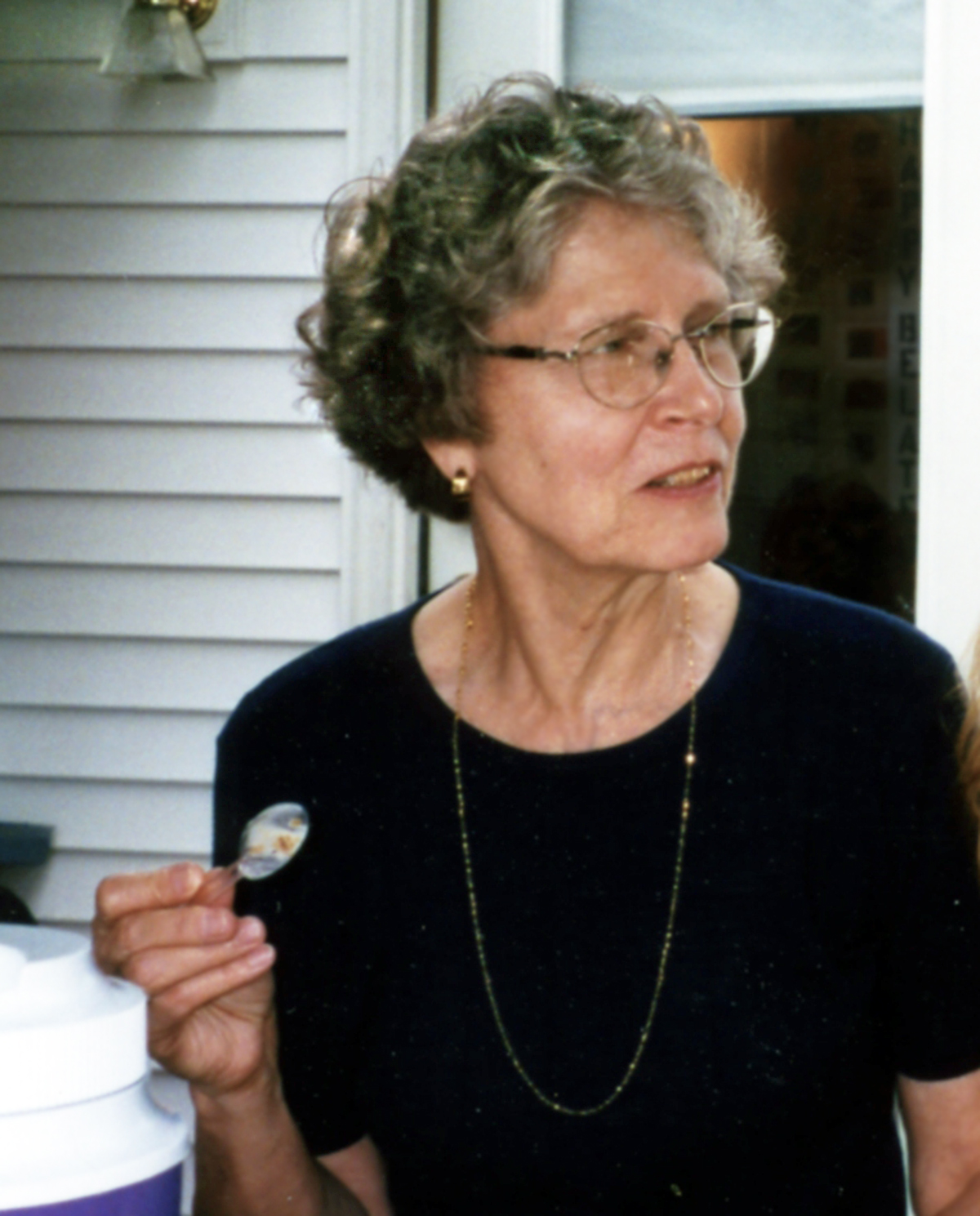
Mom at about my current age–ca. 1998 or ’99.

Alone not lonely

Recent read: Party of One: A Loner’s Manifesto by Anneli Rufus, a book that I would have found enlightening if it had only been around when I was 18 years old. But many things were as yet unwritten 45 years ago, and even if this book had been–I might not have discovered it. Rufus celebrates social loners, decrying the myth that people who prefer time by themselves to socializing are by nature dangerous and threatening. That knowledge would have been a great relief to me when I was young; but I eventually learned on my own that the “loner myth” is, indeed, a mistaken idea perpetrated by too many so-called experts in our society. Through my lifelong bookworm habit, I learned a great deal about people who chose to be alone, chose small circles of friends, or chose to keep friendships going by letter rather than through visits.

All of which options seemed perfectly reasonable to me. I like people and deeply need my friends and family, but I’ve always found a different form of comfort in–and need for–being by myself. I joined Girl Scouts mostly because my two best friends were Scouts, but I was the kid who dawdled on hikes, slowing down to look at the plants and mosses, and I pretended to be asleep when camping so that others would stop chatting to me. When I found my old Girl Scout sash some years back, it was festooned with badges earned for loner-type skills: literature, sewing, whittling, embroidery, and other crafts or pursuits I could accomplish on my own. Selling cookies? Nah. I managed to be the worst cookie salesperson in the troop for several years running.

In high school, I joined the marching band. It was required duty for every student in the concert band, where I played flute. My sister protested against that requirement and succeeded in getting out of marching band, but the self-advocacy did not seem worth it to me-at-15. Besides, band provided me with a few close friends and some sense of high-school camaraderie which, as a sensitive nerd who was never much for teams or competition, gave me a veneer of normalcy in a very team-oriented time and place. I was not a rebellious loner but a stealth loner.

Despite often feeling a bit like an outlier among my peers, I had no burning need to belong or be accepted, and that need (and lack of acceptance) in a person is what leads to “pseudo-loners” (Rufus’ term). Those are the people most likely to get angry, resentful, hostile, or suicidal, she claims: the ones who want to fit in but are ostracized or blocked. The rest of us just want to be left alone when it suits us. It’s not the same thing.

Loner, introvert, eccentric, moody, artistic, creative, sensitive, weird–at my age, I don’t need a manifesto. Experience demonstrates a person can be friendly and funny and easily-tired and sometimes withdrawn and able to speak in public and irritated by too much noise or novelty and can dance at parties and laugh too loudly and a thousand other things that are contradictory and not simple to pin down. (And capable of polysyndeton!) But if you know a child who is content being by themselves and who may feel pressured by well-intentioned adults, I recommend Leo Lionni‘s Caldecott-winning book Frederick. It is a story I loved as a child, and now I realize why. The quiet mouse who is off on his own while his busy community harvests food for winter proves valuable to his mouse-society by offering them poems and stories that ease their discomfort when they are cold and hungry.

In some ways, that has been my lifelong dream.