Lyrical

I may have mentioned in my last post that I am reading Jonathan Culler’s book on the theory of the lyric with the intention of getting back to my own work, revision at very least, writing if at all possible. So I have begun.

Lyric continues to be my main poetry mode, though I do pursue narrative and non-lyrical haiku forms occasionally. I haven’t spent too much time dwelling on how to define lyric as a genre; I just accept it as a sort of catch-all term for a continuum of many kinds of poems that in general are brief, “you” or “I” directed, subjective as to observation, and often patterned rhythmically or patterned using rhyme.

Here are some quotes from the book that I found useful, thought-provoking, or relevant.

~

“Fiction is about what happened next; lyric is about what happens now.”

“Many twentieth-century poems…require sounding or voicing and may juxtapose phrases that evoke various voices…[asking] to be read in relation to the lyric tradition…”

“Poems provide formulations that may explain for you a situation you found incomprehensible.”

“The lyric, by its formal patterning and mode of response, asks to be learned by heart, even if that seldom happens…” (This concept is one he takes from Derrida).

“The lyric aims to be an event, not a representation of an event, and sound is what happens in lyric.”

“Lyric address is usually indirect.” (This, despite the frequent use of apostrophe in lyrical poetry, which Cullers argues is used indirectly most of the time.)

Lyrical apostrophe “posits a third realm, neither human nor natural, that can act and determine our world.”

“If one were to treat lyric as a domain to be mapped, one would need a multidimensional space.”

Jonathan Cullers

~

I especially like that last one. Lyric as Kosmos, as universe (and possibly universal). It jives with Whitman in some ways–resonates, at very least, with his idea of poetry as vast and of himself (as poet) containing multitudes.

Something to aspire to be, to write, to wrap my mind around.

Cycles & theories

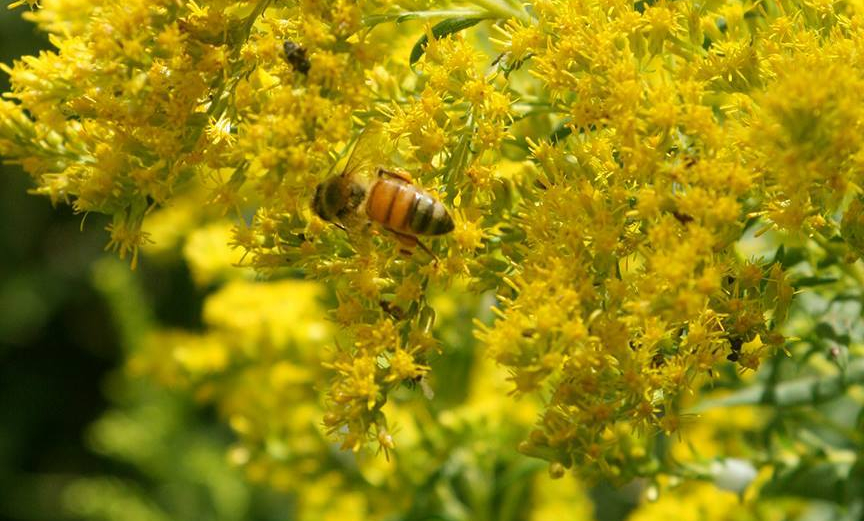
The Chinese lunisolar calendar puts us between 立秋 lìqiū, or start of autumn, and 處暑 chùshǔ, or limit of heat. Certainly the heat here lately has felt limiting, but the term more likely refers to the end of the hottest days of the year. My backyard world fills with haiku imagery for waning summer and impending autumn: katydid and annual cicada calls, birds starting to flock, morning glory and goldenrod, ripe pears, apples beginning to redden, hosts of butterflies. I watch as a hummingbird visits sunflowers, cannas, buddleia, corn tassels, and zinnias. Ripe tomatoes and zucchini weigh heavily on their vines.

Yesterday, a doe nibbled pears while her late-born twin fawns wove between her legs and the Queen Anne’s lace beneath the tree. The air hangs so humid, even the monarch butterfly’s wings seem to droop. A sense of waiting.

And I prepare for the fall semester. Cycles continue: that’s a good thing, isn’t it?

~

Therefore, to engage my intellect when my expressive ability with words seems sparse, I’m reading about theory. Specifically, the theory of the lyric in Western poetics, which turns out to be abstract and scholarly (no surprise, really–theory tends to be scholarly). My guide for this outing is Jonathan Culler’s book Theory of the Lyric. This text manages to be relatively readable despite its terminology; and as the terminology for the lyrical poem encompasses a long history of definitions, rhetoric, explanations, subgenres, and antiquated jargon, the going occasionally gets tough. I’m learning a great deal, however, about poetic experimentation over the centuries.

I now recognize that I have subsumed the idea of lyricism as it came down to American writers through Romanticism (see Hegel). It’s just that the concept of subjectivity in the lyric, and inward-turning emotion and the poet as speaker, has been so pervasive in Western poetics and pedagogy that it seemed a basic premise. Yet it was not always thus, and certainly other cultures employ lyricism differently and view it differently. It’s never an easy task to view from outside what is inherent in one’s own culture, but that’s where books like this one enlighten and challenge.

Besides the theory and historicity of poetry and the task of poetics, however esoteric and abstract, theory texts often elicit from me the urge to move to something more concrete, more creative.

I can only hope.

Fallow me

Blogger/poet/bookmaker Ren Powell recently suggested going fallow for awhile “to see what comes of it.” I tend to go through fallow periods quite accidentally. Used to call them writer’s block, but I don’t view them like that anymore. Fallow strikes me as a more accurate term for a number of reasons, some of them etymological. In current agriculture, a fallow field remains uncultivated purposely, to rest and improve the soil’s fertility. That seems more accurate to my current state of mind than “dry” or “blocked.”

Consider the field left fallow: plenty goes on there. Weed seeds germinate and sprout, annelids and arthropods, insects, and beetles, in their various life stages, multiply and move about. Voles, mice, toads go a-hunting. Bacteria do their thing. It’s not a lifeless place, the fallow plot.

But I haven’t been writing.

The publisher of my next book (The Red Queen Hypothesis) says yes, it’s still on her docket and will see the light of day–and print–next year, but that heartening news has not kicked me into gear on the writing front. And yet, by the time that collection comes out, the newest poem in it will be 6 years old. Some of the poems are almost 20 years old; it will not feel like a “new book” to me! Where, then, to put the newer work? What to do with the two half-completed, partially-revised collections of newer compositions that lie next to my desk and languish on my computer’s hard drive? Where is the motivation to finish the work or to start fresh?

I don’t know the answer to that just yet. But here’s an off-the-cuff haiku I dreamed up this morning that reminds me a bit of Issa’s poems.

~

fallow field
even a bird's dropping 
contains a seed 
painting by Jack FIsher

For example

Still mulling about how language changes and whether or not I agree with Emerson:

“Language is fossil poetry. As the limestone of the continent consists of infinite masses of the shells of animalcules, so language is made up of images, or tropes, which now, in their secondary use, have long ceased to remind us of their poetic origin.”

Ralph Waldo Emerson

Well, maybe not the tropes’ poetic origin but the words’ cultural origin. Their social origins, because language is inherent in human culture–we must communicate to survive. And if that means language includes words with violent origins or male hierarchical origins or race supremacist origins or nationalistic origins, the words cannot so easily be erased. We use them as they are, regardless of their nasty backgrounds, tropes and metaphors and all. An accretion of meanings alters the words as cultures evolve and change.

That doesn’t mean we should not critique or examine our words.

In a decade or two, terms change. Jargon, technology, politics, culture all exert forces on how we say what we mean. Here’s an example from my own experience as a creative writer. I wrote a poem in 1983 (published in a journal I cannot at the moment recall), a poem about yearning, in which the speaker observes a male-bodied person who dresses as a female. In 1983, the most respectful word to use for such a person was “transvestite.” Hence the title I chose for the poem: “Transvestite on the Long Island Ferry, July.”

Perhaps the person in the poem was not transvestite but transgender (though that was very rare in 1983)–or “gender-fluid.” In my poem, the observer/speaker uses the pronoun “she.” The observer can only speculate and does so on the speaker’s terms. Without the word transvestite in the title, the poem could be more generally understood–as, say, an older speaker watching a young female.

As the writer of this poem, I’m not going to revise its terminology; but I might change the title if I were ever publish it in a collection (this poem, nearly 40 years past its composition, has not appeared in any of my books). Given that, here it is–with a change in title and nothing else. What do readers think?

~~

On the Long Island Ferry, July
 
She leans against the deck rail,
  her red dress an amaryllis
    in a khaki sea.
 
I notice she is unfamiliar with the problem
  of holding a dress down over her backside
    while keeping the wide white sunhat in place—
 
and what to do with the matching bag?
  That kind of awkwardness
    marks her as an amateur.
 
I think, she wants womanliness
  like in the movies—
    La Dolce Vita, maybe—
 
she hasn’t learned, yet, about women.
  I could laugh at her impression,
    but I understand her longing.
 
She stays at the rail, struggling to enjoy flirtation,
  the barfly wind pestering her relentlessly,
    Hey honey, wanna go out?
 
Boozy breezes disarrange her hair,
  grab at her panties,
    try steering her to a quiet corner.
 
But she stays put. I sympathize with her need
  to drink in the restless waters of the Sound,
    feeling new in her body: bright, swirling, real.
 
I watch her from Bridgeport to Long Island
  with a kind of envy, unable to recall
    the last time I longed for anything so completely.


~~

Naming names

A friend sent me the link to this NY Times article and asked my response as a gardener and as a writer who teaches writing. She wondered whether the flower-name Mexican hat (a type of coneflower) is racist, and if a flower resembled a beret and were called French hat, would that be racist?

“This Moth’s Name Is a Slur. Scientists Won’t Use It Anymore.”
https://www.nytimes.com/2021/07/09/science/gypsy-moth-romani-entomological-society.html?referringSource=articleShare

She has given me much to think about. I suppose people ought to use the botanical name to identify such things, but most people aren’t going to refer to gypsy moths as Lymantria dispar. Though if you look at the botanical names, those too bear some consideration as Eurocentric or white supremacist, given their inherent background: so many plants are named for their (colonizing) European “discoverers” or have names that mean “ugly” or “stinky” or, in the case of Lymantria dispar, “ill-suited and unlike.”

The reason Mexican hat (or French hat, for that matter) might be considered racist is that they are inherently stereotypes. Mexico is a huge and diverse place, and not everyone there wears a sombrero any more than all French people wear berets. I suppose we could call them sombrero flowers. That would be naming them by what they resemble. And we could call Dutchman’s Breeches pantaloons flowers. That’s a whole lotta name-changing going on, and the likelihood that everyone will take to the new names? That, only time will tell.

As to gypsy moths, the name was dubbed in a derogatory way–as in, “We don’t want those traveling gypsies around (and that’s what these moths are like).” So, it is a slur. A verbal aggression against Romani people who were already tagged with a name someone else gave them (the etymology of the name is here: gypsy).

Hypothetically, we could continue to call the moths gypsy moths; but when we use the term, we can tell our children (for example) it used to be considered a bad thing to be a gypsy, but the Romani people aren’t bad and neither are the moths–the moths are just being moths and doing what moths do. It’s people who brought them to a place the moths could end up being so destructive that we now have to kill them or discourage them from breeding here. [BTW, it was the white European people who colonized the American continent who brought the moths here.]

Yes, that’s complicated. Most people don’t want to go to the bother of subtle explanations. So sometimes a name change is actually simpler. People complain about “politically-correct language” and changing English into something it shouldn’t be…it can be difficult to keep track of.

But because English is a living language, I expect and generally accept changes to the language as there are changes in our living culture. Am I always happy about “verbing a noun” or use of the words “impactful” and “relatable” or mixing up “lie” and “lay”? Um, no. Does the speed of change make my job more difficult? Why, YES! But if a person makes me aware of sensitivity in language, such as stereotyping, I respect that. It makes me reflect on language and culture.

The beauty of the world in which we reside. Here’s Ratiba columnifer (the flower formerly known as Mexican hat).

https://www.highcountrygardens.com

Reading not writing

But the next best thing to writing is reading. Or maybe it’s the other way around; if I had not loved reading, I would never have started writing.

Stacked beside the bed:

A Book of Psalms (Stephen Mitchell)

The Book of Joy (Archbishop Desmond Tutu, Dalai Lama XIV, Douglas Abrams)

The Book (Keith Houston)

The Darker Fall (Rick Barot)

Theory of the Lyric (Jonathan Culler)

Shifting the Silence (Etel Adnan)

Noise (Kahneman, Sibony, & Sunstein)

Haiku 2021 anthology from Moonstone Arts Center

I love how the first three books all have BOOK in their titles. The Adnan and the Mitchell are re-reads that settle my soul while keeping my mind active and inquisitive. The Book of Joy has been surprisingly helpful to me so far (I am reading it a bit at a time while other things are going on).

Anyway, I can garden. We have had plentiful rain and now I have plentiful beans, basil, zucchini, carrots; numerous tomatoes cluster under leaves, so whenever they ripen we’ll have more splendid organic tasty produce. I will continue to pull out the crabgrass, wild mustard, pigweed, smartweed, etc. Culling, cultivating, collecting sunlight through my vegetables and through my skin (yes, I wear sunscreen–and a hat)…there are worse things in life than an inability to compose poems. And I can read, thank heaven. Reading poetry, and reading about poetry, provides plenty of joy.

One of the practices of joy mentioned in the Dalai Lama’s & Desmond Tutu’s book is gratitude. Fortunately, that practice has never been difficult for me.

under clouds /heat rises from soil /beans grow plump


The right words

Due to mini-strokes and constriction of the blood flow in her brain, my mother has developed the same form of cognitive decline that my mother-in-law had: vascular dementia. In both cases, aphasia ravaged their speech as their conditions worsened. My partner’s stepmother also had aphasia due to stroke, so I have now witnessed the condition up close among three women who had very different backgrounds and personalities. As aphasia presents most noticeably as a loss of verbal expression (talk about being at a loss for words!), the condition fascinates me (a person who loves words).

And devastates me. My mother had never been “good at words” the way my father was, but she was a compassionate listener and often could find the right things to say when my glib and witty friends and family members could not. I recall many times when she would ask to talk to me alone and express something she’d been keeping to herself and reflecting upon, waiting until she could “say it the right way.” Now, she can say almost nothing “the right way.” Rain becomes snow; snow becomes green; hat becomes clark; tomato becomes red; table becomes place…and even these are unreliable substitutes, likely to change from one conversation to the next. The pronoun she has vanished from her lexicon. Her vocabulary is little better than a five-year-old’s, and she inadvertently invents words that are essentially meaningless while trying to convey meaning.

She can still read, a little, and slowly. A few months ago, I gave her a book by Eloise Klein Healy, Another Phase. Healy, a well-known poet, was stricken with Wernicke’s aphasia and–with a devoted speech therapist’s help–regained the ability to compose poetry again, though the work she now produces reflects her profoundly-changed expressive abilities. My mother was pleased that she could read the book and that Healy could make poems even with aphasia. And Mom understood the poems–had memorized a few image-lines that she liked. This stunned me–memory’s often wrecked by vascular dementia, or so we are led to believe. But my mother has a good memory. She merely has extremely limited verbal expressiveness–an inability to locate the right word, and a loss of numeracy and literacy. Alas, the result means she cannot make her ideas and thoughts known to others. Isolating.

The pandemic lockdowns at her assisted living campus, my father’s death after 62 years of marriage, her gradual hearing loss, her inability to drive or go shopping–all of these led to further isolation. And isolation, of course, worsens the dementia.

Now that the lockdowns have been lifted, my family members are spending as much time as we can visiting her. One Best Beloved drove her to the church she has been attending by Zoom, now that in-person services have resumed. This past holiday weekend, I picked her up at her apartment and drove her back to my house. Due to my dad’s ill health and the pandemic, it has been over two years since she was here; but for 25 years, she and my father drove here many, many times. It was heartwarming to watch her as she relished returning to a familiar and much-loved place, which also happen to be my house and yard.

She kept saying, “This is so good. This is so, so good!” We’d arranged a mini-gathering for lunch, and there was tasty food and lively conversation all around her. She doesn’t seem to feel frustrated at not being able to join in the dinner chat; I think she was glad just to listen. After awhile, her vocabulary even expanded a bit. She said, “This is fun!” and “This is so great!” in addition to repeating how the day was so good. The joy was palpable.

(I am reading about joy just now, as it happens–a book by Douglas Abrams, Archbishop Desmond Tutu, and the Dalai Lama called The Book of Joy. More on that another time, perhaps.)

After lunch, some dessert, and a brief nap, my beloved mom admitted it was probably time for her to return to her apartment. I drove her home, and the ride back was full of comfort and ease and quiet companionship such as I haven’t felt with my mother during the past couple of difficult years, though it’s been there my whole life. I was helping her out of the car when she said, “That was wonderful. Let’s do that again!” Two sentences in perfect grammar, and a boost in vocabulary from good to wonderful.

“Only connect.” I don’t think E.M. Forster was referring to aphasia or to isolation in Howard’s End, but the phrase suits today’s post. Human connection matters. Indeed, it’s wonderful.

The berries

It is my custom to pick blackberries in the heat of the day. Perhaps I relish discomfort: the heat, the muggy late-June or early July weather, the thorny canes interspersed with other thorny canes and exuberant vines, poison ivy among these. I always end up scratched, sweaty, sunburned, and itchy; but I end up with blackberries.

Picking at midday means I encounter fewer mosquitoes, for one thing. And in midday I am likely to be the only berry-gatherer in the thickets. Everyone seems to love blackberries and mulberries—which ripen about a week earlier, so these berry seasons overlap. Everyone! Birds, squirrels, deer, foxes, groundhogs, raccoons, possums, bears…

Blackberry fruiting gives way to blueberries, and blueberries to wineberries and elderberries, so that bellies get filled and seeds get dispersed all over the place. I hear rustlings in the hedgerows and at the edge of the woods at night, so yes, I would rather loot my fruit when only “mad dogs and Englishmen” are outside.

Tonight, we’ll have berry cobbler.

I’m still not writing very much new work, but blackberry picking brought to mind this poem from quite some time ago. The poem’s speaker is hiking, not berrying, but I thought of it just the same.

~

Bear & Cloudburst


Blue Ridge, 4200 feet:
we start our ascent, sweet
cicely going fast to seed

trailside goldenrod in bloom.
Bees hover and hum,
we walk one by one by one by one

summer-heat left behind
smothered in pipe vine.
Track and blaze. Trail climbs

through laurel—twisted, dry
from two years’ drought, sky
overcast, color of thin whey

but the ranger doubts rain,
has hoped too long, in vain.
As we file by, he waves.

Further up. Dense shrubs
thickets of berries slubbed
like raw silk, leaves daubed

with stippled insect eggs
or lichen, fungus, swags
of spider webbing, sacs and bags

and butterflies, brute gnats
undeterred by repellent. We swat
stobs, are scratched. The scat

along trailside I recognize as bear
but say nothing, though a fear
threads my ribs tightly where

instinct thumps. Our feet tramp
soil, each step sounds the tamp
of soles ascending; camp’s

four hundred meters’ altitude
below. Skeletal crane-fly skewed
dry in a web. We walk through                       

woods, a clearing up ahead
when a pungency attests
to recent presence, and Alice says

“There’s a funny smell.”
Her voice seems oddly small.
We summon our collective will,

engage in loud conversation.
Bears aren’t known for discussion,
are likely to flee in disgust. Then,

thunder. Air, though thin,
grows humid. Under the din
the tree-line begins

to go, our path exposed
as a blade of lightning explodes
ahead, just to the north.

Pick up the pace. Slouch
back to the undergrowth, the touch
of brambles like a scutch

on skin. We scuff the leaves
in the musky, bracing odor, pleased
to be off-summit, our speed

faster than before and louder
as we plunge downhill and wonder
where the bear has wandered

and if it’s found shelter.
We’ve half a mile to weather
in the rain. I slip. I’d rather

climb into some outcropped sweep
hidden beneath a sweetgum tree,
nuzzle the berry-breathed bear, and sleep.


In which I regress

I was a child who liked mud puddles. Well, mud, generally–but splashing through mud puddles was an especial pleasure. Barefooted in mid-summer at the beach or in the yard; booted other times of year, because I knew better than to wreck my shoes.

Water sends me back. I’m somewhere between the ages of 3 and 11. I am in one of my happy places. A puddle. A puddle in the rain, perhaps.

Of course people, as early humans existing in the marvelous and dangerous world, would infer that water is holy.

~

~

I felt water’s holiness when I was a child. Though perhaps that was a memory of the baptismal font, with me in my father’s grateful embrace.

Constricted

I am forcing myself to write despite my sense that the flow, such as it is, has narrowed. I’m keenly aware that there’s a lot of material beyond the blockage and opening the floodgates may be as unmanageable as the “dry period” is unrewarding. Funny thing about balance. Keeping the seesaw level–no easy task. And as my peers and I progress toward aging, the constriction metaphor applies all too well. Many people I know now walk around with plastic or metal tubes inserted in their interiors to keep vital organs ‘flowing.’ My mother’s brain operates through constricted blood vessels, and now she can barely produce an understandable sentence. My lower back’s accumulating calcium deposits that have narrowed the path my spinal cord takes as it does its daily, necessary work.

Sometimes the flow of anything gets constricted. In our bodies. In the earth’s rivers. In our cities and houses: clogging and backups, plumbing and traffic. We implant stents, dig culverts, widen highways, remove the blockage–once we have determined where it is. There’s the challenge. Where is the rub that keeps us from our dreams? (Hamlet couldn’t figure it out, either).

Normally, I read at least a book a week; lately, just magazine articles, or no reading at all. Very strange for me–and I wonder whether my lack of motivation for reading and my current “dry spell” hinge on sorrow. My workplace has been busy lately, lots of scheduling, many meetings and decisions, not much time for personal reflection. It becomes natural, easy, to do the work of routine and ignore the kind of creative effort that grief requires. In my case, there’s also speculative grief: I know my mother’s dying little by little. We who love her spend as much time as we can with her, lifting our own spirits whenever our visits or gifts of chocolate and flowers and dinners out make her happy. What does she love? Fresh strawberries, for example. I bring them from my garden. She savors them. My day is made.

But I come home sad.

vessels, unconstricted

~

I wrote to a friend recently:

My writing practice has suffered a bit during pandemic but feels also as though underlying changes are in process. Just not much by way of results yet.
Somewhat surprised that my father’s death has affected my practice. Or perhaps it is my mother’s aphasia, frailty, and impending death that’s at work here. Or maybe just the stress of trying to maintain my job and relationships with colleagues and students under pandemic protocols, which has not been easy.
My brain’s been stuffed with things like learning new technology and teaching practices, and that leaves less room for wandering and interconnections and daydreaming. And then I have less energy for the creative work, as well. The garden’s been good, though. I’m not discontented, just feeling the currents of interweaving changes.

~
I suppose those interweaving changes may be a bit knotted, if they are threads, or partially dammed, if they are streams. Maybe why that’s the case does not matter much. What matters more is how to proceed when it seems nothing’s forthcoming–patience, force, ritual, practice, or…change.

You can judge your age by the amount of pain you feel when you come in contact with a new idea.

Pearl S. Buck

Wry words from Ms. Buck. Meanwhile, where are those new ideas? Maybe I just don’t feel up to unblocking the flow just yet. A little apprehensive about the pain.