Autumn, time transfixed

IMG_0127

When we were initially landscaping our property, I chose to plant a particular species of zelkova known for its lovely fall foliage color. I cannot recall the variety now, although I am sure I recorded it in my garden journal 16 years ago. The leaf color is challenging to capture in a photograph. If only I were a painter, then I might manage. Of course, the color varies depending upon time of day, cloudiness, and atmospheric changes.

It is a lovely tree that announces the equinox quite articulately.

~

Equinox, autumnal: a slowing of crickets, the brief visits of migratory birds, quieter dawns, fewer bats at dusk, longer shadows. Time is far from transfixed.

~

I visited the Museum of Modern Art, New York City, on a warm October day to see the René Magritte exhibit. Magritte’s work is so easy to parody, so graphically amusing, that my brother–who was not all that familiar with the artist–at first said, “This reminds me of mediocre high school art.” After viewing the entire gallery, however, he had changed his mind about Magritte.

Magritte did a great deal of commercial art and, like Warhol years later, felt comfortable with the kind of graphic representation to which wide audiences respond. And then he played with that audience’s expectations, sometimes more effectively than others. One painting which certainly upends expectations and which I was glad to see again is La Durée poignardée, on loan from the Art Institute of Chicago; it was a favorite of my late friend David Dunn.

La Durée poignardée (1938)

time-transfixed-1938(1).jpg!BlogThis image of the painting appears at http://www.wikipaintings.org/en/rene-magritte#supersized-featured-211652

~

Here’s some playfulness concerning the title. The French word poignarder means to stab, and the implication is to stab with something pointed, ie, a dagger, since the verb is transitive. It interests me that the accepted English translation for this painting is “Time Transfixed.” The meaning I associate with transfixed in terms of, say, holding in one place (pointedly?) is that of pinning insects to a board as in lepidoptery displays. In this painting, the “stabbing” seems to be reversed: the pointy end emerges rather menacingly from the static, domesticated mantelpiece. If this image depicts the verso side of the display, it could be time itself that has been killed, spread open, and pinned, invisible from this aspect. Or perhaps the translation should be “Time Stabbed through Its Continual Duration,” stabbed with a poniard in the shape of something almost as ongoing, the contemporary barreling locomotive engine.

As it is a genuine surrealist painting, no particular meaning can be assumed. The images are random; make of them what you will. Magritte came up with wonderful, mysterious titles for his work–his paintings and their titles have inspired quite a few poets over the years. David Dunn was among them.

No wonder, really; this artist was quoted as saying, “The function of painting is to make poetry visible.”

~

Meanwhile, since I am not a painter, I will let the zelkova tree make poetry visible to me for a few days…and then get back to writing some myself.

In which I discuss the theme of death in literature

~

Victor Brombert offers an octogenarian’s reflections on death, literature, and the creative process (storytelling, history-creating, poetry-inspiring) in a recent Chronicle of Higher Education. I found his musings of interest partly because I have best beloveds who are octogenarians and partly because Brombert is a dyed-in-the-wool humanities professor (professor emeritus of Romance and comparative literatures at Princeton) whose thoughts on mortality cannot help but have been shaped by his long associations with such texts, as well as by his long life and his experiences. “After Omaha Beach, where I discovered that I decidedly did not have a heroic vocation, I also discovered between the hedgerows of Normandy how repellent the smell of dead cows and dead men can be, how repulsive the sight of half-burned tank drivers finished off by machine-gun bullets, their bodies folded over the turrets, or of gunmen and mechanics who had tried in vain to crawl out of escape hatches,” Brombert recalls; then, he reminds himself that he had considerable warnings about war’s savagery–through literature–citing Montaigne and The Iliad. In fact, he says that “the theme of death stood for me in a special relation to literature.”

About death’s “special relationship with literature,” my education agrees with his. Before I ever had much experience with death in the immediate small circle of my own life, I had encountered it in the books I read voraciously. I knew death could be gruesome, sentimental, slow, quick, painful, transformative, pointless. But I was very young, and I did not, could not, fully understand with what I was engaging: the very question of being and non-being, of what comes “after” and if there is an “after,” and if those words as we know them (temporally) mean anything at all.

Brombert says: “I began to understand that all art and the love of art allow us, according to André Malraux’s famous pronouncement, ‘to negate our nothingness.'” His reading, his studies of art and humanist thinking, “elated” him. He felt drawn to Montaigne, whose essays he calls “flexible and meandering” and whose reflections on mortality seemed affirming in that death itself was “subject to laws of transition, passage, natural progression, or process.”

~

Brombert recognized his job as a teacher of literature was a kind of giving voice to the dead. Here, I think of Hofstadter’s conclusion about human consciousness: that it is shared, carried on–in part–by living human beings after the bodily death. Is that troubling, or comforting? Some excerpts:

[W]riting itself was implicitly suffused with the theme of mortality, especially narratives and storytelling in general (the example of Scheherazade of One Thousand and One Nights came to mind) as ways of eluding or delaying the inevitable.

Plato set the tone in the Phaedo when he had Socrates tell his disciples, before drinking the poison hemlock, that true philosophers concern themselves with nothing but dying and death, that philosophy is in fact the study of death. This seemed to me rather excessive.

Though never losing sight of his mortal condition, Montaigne is primarily intrigued by the processes of life, the mutations from day to day, as he watches his own decline and feels, as he puts it, that he is dissolving and slipping away from himself (“Je fons et eschape a moy“). His concern is not with essence or being but rather with transition: “I do not portray being, I portray passing” (“Je peints le passage“). Throughout, his Essays affirm the need to live to the fullest. Yet, in a deep sense, his thought seems prompted by the recurrent sense of the transitory and the perishable.

Kind of dovetails with the concept of impermanence, no?

~

On a closing note, and back to my favorite topic of poetry….Billy Collins has claimed that “the theme of poetry is death.” Like Brombert’s assessment of Socrates’ claim, I’m inclined to think this statement is a bit exaggerated. There’s merit to it, however. Worth thinking about.

Collins’ poem “The Dead” offers one way of thinking about death in a poem; this link will take you to a clever animated version of this poem.

And there’s a nice example of paronomasia: animating the dead!

Wisdom of insecurity

My mother pointed me to a short piece on mindfulness meditation excerpted from Jack Kornfield‘s work (it probably came from one of his books, such as The Path of Insight Meditation).

He spends several paragraphs writing about the dharma of wisdom and about impermanence, quoting a Buddhist sutra “Thus shall you think of this fleeting world.” He notes that when meditating, one is more likely to realize that everything around us is in a state of change. It’s more noticeable, this changing, because the person meditating has become still and is observing closely.

Change is dharma’s first law: uncertainty and impermanence. The laws of science bear this out; entropy, evolution, constant change and motion everywhere.

Kornfield then does a good job of explaining to Westerners what Buddhists mean when they say “all life is suffering.”

“This brings us to dharma’s second law. If we want things that are always changing to stay the same and to get attached to them, we get disappointed, we suffer. Not because we should suffer–this is not something created to punish us. It is the very way things are, as basic as gravity. If we get attached to something the way it is, it does not stop changing, Trying to hold onto ‘how it was’ will only create suffering and disappointment.”

What could be clearer? We know we cannot wrestle a person or a place to the ground and pin it in place and have it remain unchanging for us. Without change, nothing can live.

What upsets people is that they are uncomfortable with the insecure feelings change tends to bring. Also, there’s that tendency to look for cause and effect, for blame, for control and certainty.

Thinking about thinking–as I have been lately–and consciousness and, to some extent, fear, I recognize I need to “relax with uncertainty.” That’s how Kornfield puts it. he says there is wisdom in insecurity because it is natural.

“Letting go does not mean not caring about things. It means caring for them in a flexible and wise way,” Kornfield writes. Sometimes, when I feel content and relaxed and able to “let go” of nagging and difficult and scary and challenging things, loved ones ask me whether I care or not. I do care. I recognize, though, that there are times no amount of caring can “fix” a problem. Sometimes, acceptance and encouragement and letting go work much better than controlling intervention.

A great deal of my poetry begins in a flexible, accepting “space” that recognizes, and embraces, uncertainty. I wish I could find myself in this Way more often.

Impermanence (thanks to David Sloan)

Impermanence (thanks to David Sloan)

Science is poetic? A debate

Here’s a video I found entertaining and thought provoking–a scientist, a poet, and a philosopher discuss the intersection (or if there is an intersection) between poetics and science.

This debate hinges on a Richard Dawkins statement: “Science is poetic, ought to be poetic and has much to learn from poets.”

The home site is the Institute of Art and Ideas, which is also worth exploring a bit.

Poetic Theories: Can scientists learn from poets?

Ken Binmore, Mary Midgley, Ruth Padel.

What is your take-away from the discussion? I’m curious about which stance seems most convincing, though I suspect one’s fundamental opinion on such topics isn’t easy to change.

Virtual, physical, personal

~

Redbud leaf in fall

Through the blogosphere, I’ve met some fascinating and talented people. The virtual connection, although I have learned to value its scope and immediacy, generally seems a bit wanting in connection for me. Even though I tend toward introversion, my favorite way to connect with people remains face-to-face. [Go ahead, call me old-fashioned.]

In the days of listservs and message boards, I first began “meeting” colleagues online. I signed up for the Women’s Poetry listserv (Wom-Po), which is still active today. One of the best things about that list, besides the fact that I learned a great deal about poetry/women’s poetry/teaching poetry/contemporary and historical female poets, is that I met many of my colleagues in person while attending writer’s conferences, readings, and similar events.

What joy for a person like me, who tends to be a bit reserved about meeting new people. For introverts, a virtual introduction and conversational exchange online–even just recognizing a name on the listserv–has made possible a route to social icebreaking at conferences like AWP.

This past Saturday, another virtual connection joined the realm of the physical when I got the chance to meet–in person–artist Deborah Barlow at the opening of her show at Morpeth Contemporary gallery. I’ve seen her artwork on her homepage; but as is often the case, viewing the work in person was revelatory and beautiful. And meeting the artist herself–also revelatory and beautiful!

I recommend her blog, Slow Muse, which has alerted me to many a terrific book on creative thinking, the creative process, and poetry as well as introduced me to several wonderful contemporary artists’ work.

As the seasons undertake the dying-toward-renewal process, I welcome musings and inspirations. The shining, textural depths of Barlow’s paintings offer another way of looking. As do good books and sunny mornings on the back porch.

Equinox: autumnal

ann e. michael poet

I do like early autumn. The bright flowers of late summer possess almost tropical coloration: tithonia, goldenrod, zinnias, dahlias, canna lilies, cosmos, salvia, marigolds…meanwhile, the leaves begin to turn. Where I live, the euonymus alatus (spindle-tree/burning bush), sassafras, and sumac are the first leaves to redden, along with the five-leaved Virginia creeper vines.

My reading in Bloomsburg was a great experience. There was a full house, the sound and lighting systems worked, and the Moose Exchange is a delightful building, similar in purpose to many arts-venue collectives in other small US cities as they attempt to revitalize their downtown regions. The building was once the home of the Moose Lodge, one of many community associations that once worked to keep small cities and neighborhoods vibrant in the days before flight to the suburbs. My reading, part of the Big Dog reading series, took place in the third-floor ballroom! Afterwards, we had dinner in a terrific little Italian restaurant just off Main Street. Portobello mushroom ravioli in sage-butter, delicious.

The drive home was quiet–mostly highway, late crickets still making noise along the road, full moon in a perfectly cloudless sky.

I recognized that I can work on my writing practice more diligently and less anxiously than I have been. There are ways to make space in my life for creativity again. My recent readings on consciousness and the nature of being lead back to the poetics of space somehow.

first day of Autumn
my heart is pounding wild
Ah! The full moon

     ~Basho

Poetry reading in Bloomsburg

This is just to say

(a little William Carlos Williams title phrase to acknowledge the natal day of a truly “American” 20th-century poet)

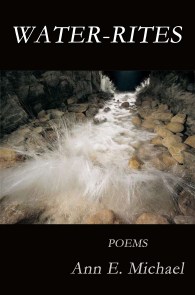
…that tomorrow, September 18th, I will be reading from Water-Rites, and presenting a few newer poems, at Bloomsburg Pennsylvania’s Moose Exchange. The venue is a non-profit cultural arts center in the college town of Bloomsburg PA. More on the event here.

Wednesday evening, there’ll be a full moon over the Susquehanna River, which flooded two years ago this month and stranded many college students (though they were without electricity and water, they were on the hill). The floodwaters inundated the lower part of town, including the main streets and many businesses; the damage to town and the homes of many citizens was devastating. Bloomsburg creative writing professor Jerry Wemple had invited me to read at a poetry festival that very week. The festival was, of course, canceled. Jerry was kind enough to invite me to give a CVPA reading at Moose Exchange this year. Fortunately, the weather for this week is forecast to be quite sunny.

For another WCWilliams moment, click here.

https://i0.wp.com/www.keylimepietree.com/Red_Plums_on_tree.jpg

plums (“so sweet”)

Gratitude & Qigong

My mother is still living. I am grateful for that.

My mother and I get along well. In that, we are fortunate.

Furthermore, although she is an octogenarian, my mother is in reasonably good health. Another reason for gratitude.

Her interests are varied, and she’s willing to try new things. My mother has always been quietly innovative about life. She has pursued alternative therapies for health and emotional well-being, read difficult texts, studied disciplines and subjects that challenged her, traveled the world, lived in foreign lands.

Mostly, she has been a care-giver of one kind or another. This past weekend, I took my mother with me to a Qigong and Mindfulness retreat, thinking she could use a couple of days of restorative practices and a little time off from care-giving for others in order to care for herself. In addition to several hours of “medical qigong” (Yi gong), we learned some practices for spiritual qigong (Tao gong), got information about implementing a plant-based diet, observed a tea ceremony, tried our hands at Chinese bamboo brush painting, and followed a labyrinth path in a walking meditation. It was quite a significant conclusion (of sorts) to my recent weeks of thinking about consciousness as presented by various “Western” thinkers on the subject.

Yin-Yang

Kirkridge Retreat Center hosted the weekend. Kirkridge’s organization is dedicated to peace, compassion, and community–to the concerns of social justice and to individual healing. It is a peaceful place, located on a steep, wooded hill. The setting alone fosters a sense of restorative energy. Our teachers were excellent, informative, and full of grace. The meals were terrific. The crickets sang sweetly and the moon shone amidst the clouds. My mother and I felt grateful for the event, the weather, the place, the people, for the breaths animating our bodies and for one another.

Consciousness & cosmology

"Syntax" by Steve Tobin. Copper, bronze.

“Syntax” by Steve Tobin. Copper, bronze. What can be said about all the things we think make up an “I”?

~

I’ve completed I Am a Strange Loop and Why Does the World Exist? and found, not entirely to my surprise (but to my delight–braiding and synthesis!), that the existential, metaphysical, and cosmological aspects of both authors connect intriguingly. Thomas Nagel, an important “philosopher of mind,” appears as an influence in both of these writers’ books, and Einstein and Plato and Heidegger. Both authors end up citing Derek Parfit’s work, and Holt even interviews him! It turns out that trying to determine the “reason” the world exists at all is not that different from trying to understand what consciousness is made of and where it resides.

After taking up mathematical proofs and several philosophical arguments, as well as neurological science as a basis for the evolution of “mind,” Hofstadter’s book gradually takes apart the mind-body problem that Descartes made so iconic for Western civilization’s thinkers. He keeps returning–and that’s an appropriate word–to the metaphor of looping. He looks at the strange loops of Escher’s drawings and of string theorists’ rolled-up dimensions and alerts us to how crucial the concept of self-reference is to the theory of consciousness.

The need for self-referentiality in a fully “human” consciousness gets him to the idea of “small-souledness” (among, say, such beings as mosquitoes). What portion of our selves makes us able to think about thinking, for example? Is that identity, or consciousness? What’s the difference? Here is where Parfit comes in. Hofstadter writes that Parfit “staunchly resists the idea that the concept of ‘personal identity’ makes sense. To be sure, it makes sense in the everyday world we inhabit…we all more or less take for granted this notion of ‘Cartesian Ego’ in our daily lives; it is built into our common sense, into our languages, and into our cultural backgrounds.”

~

If we care at all about what there may be beyond our everyday lives–and certainly people like Hofstadter, Holt, Bachelard, and me, among others, do care–we need to get “meta” in our meditations, which invariably leads to paradoxes and thorny tangles. Hofstadter’s book also engages with his ‘personal life’ (if, indeed, a personal identity or personal life exists). When his wife died, he found himself engaged in the seemingly unanswerable question of “Where did Carol go?” Did “Doug-and-Carol,” the shared dreams and lives and understandings of two people who knew one another intimately, simply vanish when Carol’s body died? Hofstadter cannot fathom that this shared identity “goes poof” when the body stops. He, after all, still feels connected to the Doug-and-Carol shared consciousness.

It feels real to him. So–what is consciousness? From whence does it emanate, or originate? Is it real, or is it an illusion–is there no such thing as the personal identity we hold so dear that we cannot even imagine ourselves any other way than as an “I”? (Are feelings real?)

~

Jim Holt’s book likewise gets more personal as the chapters progress and as he wrestles with his existential inquiry through texts and interviews. That seems quite appropriate: how can we use language to untangle what language itself makes vague and confusing? (See Tobin’s sculpture “Syntax,” above, for a physical view of loopy entanglement and potential words). Holt’s inquiry initially seems based on the abstract, mathematical, physics of why/how the universe got here; but he ends on the metaphysical and philosophical…whereas Hofstadter entertains the metaphysical from the get-go but employs mathematics, psychology, and brain physiology as well as philosophy. And they encounter similar quandaries, paradoxes, and uncertainties. Both authors essentially come to a similar conclusion about the mystery of existence, though they accept or compromise with their conclusions in slightly different ways. Then again, they are different people who have lived different experiences. Reading both books has been, for me, a valuable experience and one that’s made me examine my own thinking about being.

~

Apropos of these musings, and thanks again to Popova of Brainpickings, here’s a few more words on some contemporary thinkers who have theorized as Holt has (in particular, Lawrence Kraus) in the debate on Something vs. Nothing: “What is Nothing”

~

…And, apropos of nothing in this post, but to lighten the mood, here’s an amusing little blog from The New Yorker about pilcrows & pound signs & ampersands.

Grief, poetry

I think it is important that people read Mark Doty’s deep and appropriate comments on whether (or, possibly, how) poetry can console “a grieving public.” It’s on the Poetry Foundation’s website.

Doty’s poetry has always struck me as particularly powerful at evoking, and embodying, the way the world that is (physical, phenomenological) intersects with the world of the mind (both intellectual and emotional). He is likewise an excellent, reflective, poetic prose writer and memoirist.

On this day, which still sears pretty heavily into the collective and individual consciousness of many U.S. citizens, Doty’s observations about public and private shared grief, and how we “process” such emotions are apt and compelling. Doty begins with Wislawa Szymborska’s heartbreaking, and controversial, poem “Photograph from September 11.” In his commentary, he asks, “What can the artist do, in the face of the dreadful, that which can’t be assimilated?” and says that

To name it is to diminish it and, in the process, to come head to head with the inadequacy of the tools of poetry to circumscribe such experience. It is a gesture recognizable from Neruda’s great poem occasioned by the Spanish Civil War, “I Explain Some Things,” in which he writes that the blood of the children ran in the street “como el sangre de ninos”—“like the blood of children.” There is no adequate gesture, nothing in the arsenals of figuration that will serve; only a terrible plainness of saying, or of pointing toward what cannot be said, can rise to these occasions.

He observes–and I have to agree with him here, “I understand the human need…to give shape to grief, but surely the first response to such a rupture in the fabric of the world ought to be a resonant, enormous silence. To come too quickly to words is, ultimately, a form of arrogance; the easy poem suggests that loss is graspable, that the poet has ready command of speech in the face of anything.”

Elegy takes me awhile. Silence and the awe of disbelief and the need to think come first; indeed, are necessary. For me, perhaps the most stunning September 11 “elegy” is, surprisingly, from Blue Man Group: the mostly wordless video “Exhibit 13.”

Doty moves on: he says, “All poems of public grief are private poems first. If, that is, they are any good, and not merely occasional pieces that serve to mark a moment and reinforce what people already think.” True. And then, these words, which artists are more likely to understand than no-artists, because there is potentially something “hard” in them–

The act of making a poem is a movement from private feeling and perception, the inchoate stuff of experience, into the shared realm of language. At some point along the way, the poet usually becomes less interested in understanding or naming experience, and more intrigued by the words themselves, by the patterned arrangement of sound and silence on the page and in the ear, the pleasures of giving form. And it is a pleasure, poetic making, even when what is being shaped is dreadful.

The aesthetic, the gorgeous, emerging from horror. Isn’t that almost–almost–manipulative? Doty recognizes and disabuses us of that notion by citing his own experience of writing about AIDS:

I was setting things down for myself because I needed to, and then experiencing…that progress toward impersonality which comes with the making of poetry. That must be among the strangest of poetry’s many paradoxes: that we are driven to write by fire and then must distance ourselves to a cool dispassion in order to make those flames burn for anyone else. That is not a heartless thing, or an opportunistic one, to turn your experience into art.

Yes, please read his essay if you are interested in what art is and what it does and how it relates to public experience of any kind.

“I think what the poet must do is pay attention to the nature of subjectivity, to the experienced, lived hour, and trust the paradox that if we succeed in representing that, we may approach speaking to our fellow citizens. I hope so.”  ~Mark Doty

More posts on grieving and art:  Despair&Fear, December 24