In the first weeks of this year, I participated in a virtual poetry workshop with Anita Skeen. It was so useful to me that I signed up for another workshop, this one on writing the prose poem, with mixed-media artist and poet Lorette Luzajic. She is the editor of an online prose-poetry lit journal, The Mackinaw.
In this workshop, I’m returning to a form I learned early in my writing practice. My friend and mentor David Dunn may have introduced me to prose poems, I cannot recall anymore; but I do know he was writing them in 1980 and that some of the poems in our collaborative chapbook The Swan King are either prose poems or on the verge of being prose poems. Prose poetry was then considered a “new” form and was (& in some quarters, remains) controversial among poets and critics. It sounds self-conflicting: if it is prose, how can it be poetry?
In the decades since I was very new to poetry, reading everything I could find of contemporary work and experimenting all over the place, the prose poem has been much written-about in literary forums and academia and is–mostly–on pretty sturdy footing as a “form” of poetry. I never completely stopped writing prose poems, and a few appear in most of my books. I’ve been writing so many sad lyrical-narrative poems since 2018, however, that I haven’t spent much time really playing with poetry, and play is a huge part of creative thinking. So Lorette Luzajic’s workshop, which gives us a chance to experiment and play, appealed to me.
The workshop has got me thinking about versions and expansions of the form, turned up some exciting new poets to read, and offered amusing prompts that have moved me into ekphrastic, surrealistic, dream-based, and pop-culture themed poems. I have found some surprises in my own work, which is always a reviving feeling.
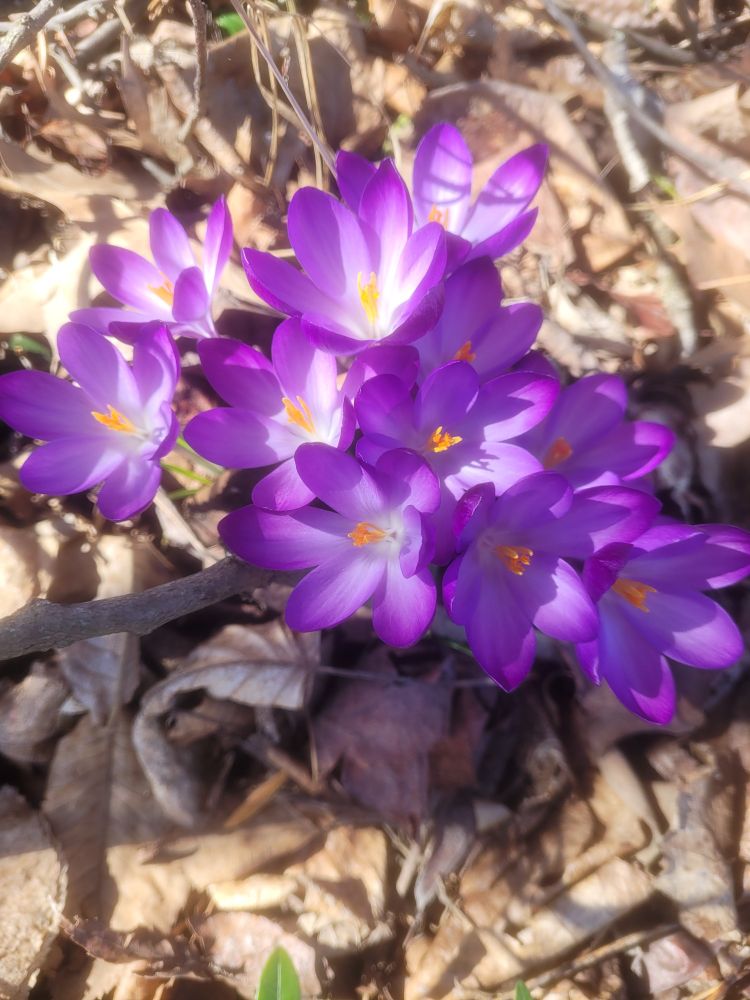
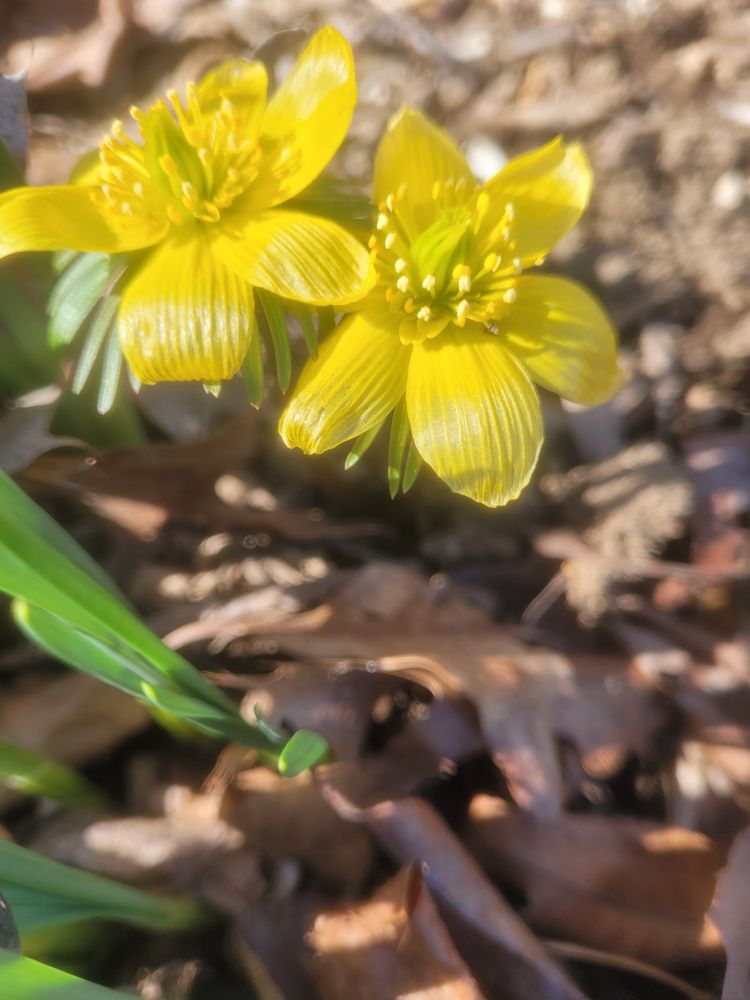
Also, we are almost at the vernal equinox. My environment is brightening in small ways, which tends to help with enduring the tough stuff.
I try not to hate on February. The days do get longer; there’s often some early blooming or greening, a little more birdsong in the mornings, days that aren’t too miserable for walking. But. A lingering malaise of the spirit often natters about in the background of my days. This year, I am trying an infusion of art.
I’ve enrolled in an art class–visual art–drawing, sketching, experimenting with different media such as gouache, watercolors, pastels, colored pencils. I just want something to do with my eyes and hands that isn’t reading, writing, photography, social media/texting. I think of it as an exploration. The workshop I took with Anita Skeen and Cindy Morgan Hunter in October made me realize that using other forms of art might feel good to me, body and soul. This year, starting now (February), I’m taking an 8-week art class with Helene Parnell of Blue Church Art. We shall see how that goes. I am not doing this to create a good “product” but to enjoy the less-intellectual, more freeing aspects of the art as process…the way I did with the collages and book-making in the New Mexico workshop.
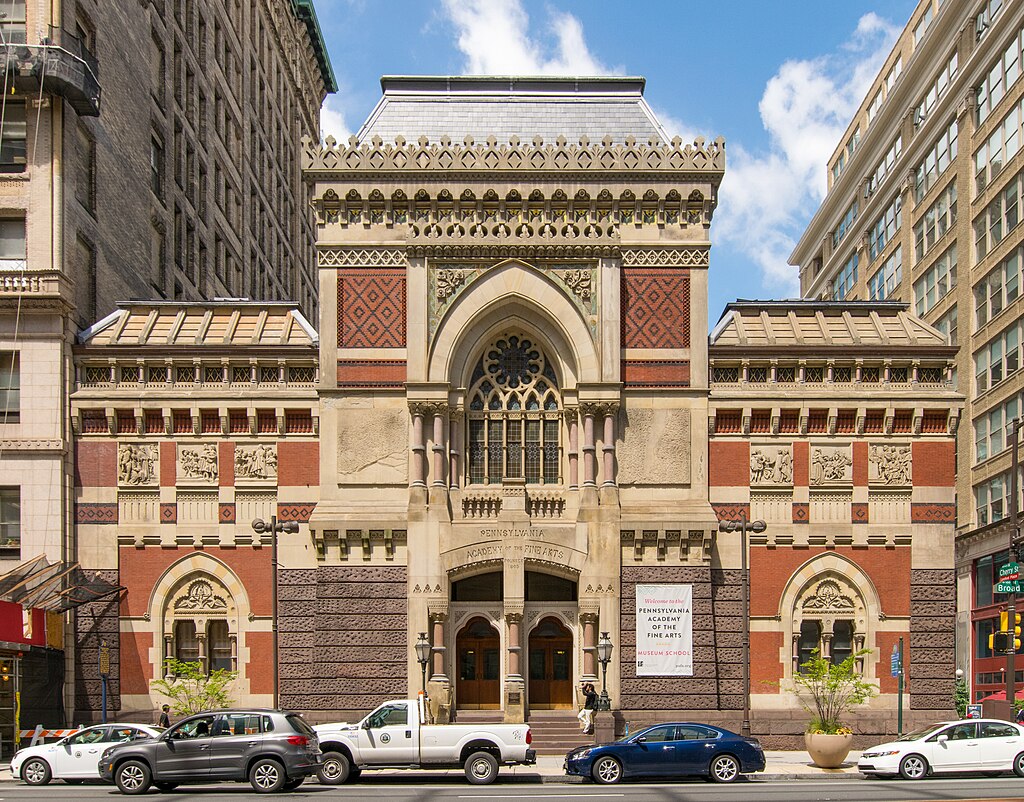
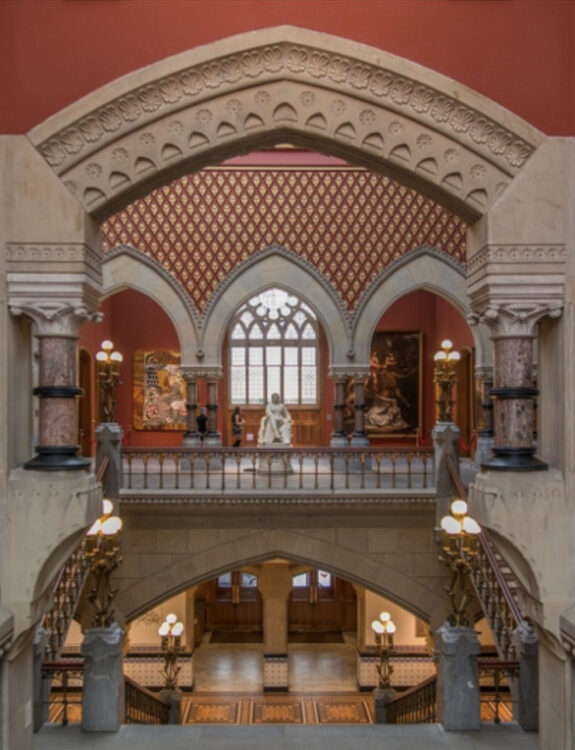
In that frame of mind, I accompanied my Best Beloved to Philadelphia to visit PAFA, Pennsylvania Academy of Fine Art. It’s something I have been meaning to do for, literally, decades–even though we are often in the city, somehow I haven’t gone back to PAFA which I recall from a visit (in my teens!) and kept meaning to see again.
Pennsylvania Academy of the Fine Arts
Here’s irony! The historic 1805 building I recall so well is closed for renovation until next year, and many of the paintings are “traveling,” i.e., on loan to other museums, through a show called “Making American Artists.” Most recently, to Albuquerque NM, though the exhibit closed there in September. The Academy, however, has employed the large, windowed, modern gallery spaces across the alley from the old building as temporary museum space and curated some fascinating exhibits for viewing and learning from. We enjoyed the Philadelphia-themed historical and cultural arts, crafts, and objects that came from the Atwater-Kent Museum. The mix of mostly-20th c. American paintings, prints, and sculptures in the upstairs galleries showed us how little we know about more contemporary US artists (outside of the super-famous ones like Hopper, Hockney, de Kooning etc). The plaster casts of famous European sculptures which students used–and still use–for drawing practice are now located in the lower level.
That brought back memories of when I was a teenager in love with art. I will have to go back once the renovations are done, because I remember the building as I visited it in the early 1970s, a strangely decorative place where students could be found sketching one of Michelangelo’s carvings or painstakingly drafting the composition of a painting by Winslow Homer. How I longed to be one of those art students!
PAFA interior, pre-renovations
That desire has been much altered by time, but my love of “the visual and plastic arts” stays with me. I enjoy writing ekphrastic poems; perhaps my foray into making artwork will energize me these last weeks of February and keep me going into spring.
My year has begun with half a dozen literary journals declining my poems, but it has also begun with a proliferation of new poems–which makes me happy. There are several reasons for a prolific spurt, some of which involve sad events that have turned me toward reflection. While sorrow isn’t a reliable prod for writing in my case, reflection almost always is. Also, attending a workshop is generative for me.
In last week’s session, we read Lisel Mueller’s “Curriculum Vitae,” and Anita asked us to emulate the poem for our own life story. I encourage you to read Mueller’s poem if you are not familiar with it; it’s full of lovely imagery and is so concise and evocative that it stands as autobiography–quite an amazing piece. Also daunting: how to use that poem as a writing prompt? I needed a strategy, so to keep myself as brief and non-narrative as possible, I limited my version to 15 points instead of 20. Then I edited it down several times, taking out as much as possible while leaving things that feel “true.”
What I realized after this practice in form, and after revising it and tightening it up, is that if I were to start again rather than revise–and were to focus on different aspects of my life experience–I could write a completely different, but still true, poem. I could write a dozen completely true and completely different CV poems! I could have used national events that occurred during my life and had greater or lesser impact on me–the Kennedy assassination, the March on Montgomery, Viet Nam War on television, etc. all the way to 9/11 and since then; or I could have focused on friends and family, their appearances and disappearances from my life; or places I lived or traveled…easily a dozen CVs, curated to present a lifetime.
So while the piece I wrote isn’t a “keeper,” not something I would send out to literary journals, the practice of writing and revising it has been remarkably useful (thank you, Anita Skeen!); I’m more aware than ever of how perspective, focus, and image affect narrative. And of how many ways there are to “tell” an experience, which of course is something poets often do: revisit, re-frame, re-imagine an experience, loss/trauma, or relationship using numerous forms, images, perspectives, speakers, and so on.
Which is certainly one reason Anita asked us to try this exercise.
I did not manage to be as lyrical and concise as Mueller, but then I didn’t expect to; she was an amazing poet. From her poem cited above, I especially relate to the line: “At home the bookshelves connected heaven and earth.” It felt like that at my parents’ house, too.
I’ll be brave and post the practice poem, one of many versions of my autobiography.
~
CV, after Lisel Mueller
1. Three weeks before summer solstice, I enter the world. My father considers me the first perfect thing in his life. 2. Underfoot, meadow grass and church aisles. 3. We move from the manse to the city, where my sister goes twice to the hospital and I walk two blocks to school. 4. Suburban house, square and white as a die. We learn to ride bicycles in the street. 5. Bussing and gas shortage, algebra, barefoot girls in summer. My embarrassment at growing too tall, too thin, too bookish, too moody. 6. Early entry into college. When the only thing I wanted was to get away. 7. In Michigan, snow like I had never seen before. 8. Some years of misery, tedious, purposely omitted. But I meet the people who most encourage me to write. 9. Back to my parents’ kind embrace. Celibacy, recalibration, writing. 10. We meet one summer. I write you so many letters. It might be love. 11. Two children 18 months apart, vegetables in the backyard: it is love. 12. Autodidact in the garden, in the world of literature, in child-rearing. There are cats, chickens, guinea pigs, a beloved dog, but I need to return to study and poems. 13. Loss and joy keep me writing, teaching keeps me busy, children grow and travel far. My books see print. 14. Pandemic. 15. My father dies, my mother loses her power of speech, friends start failing, there are dark weeks. Many hours in the garden, growing and grieving. We hold on, uncertain, but whole.
I have mixed feelings about poetry prompts. There have been times when using prompts has really got me writing and feeling inventive about poetry. I’ve had instructors (and read books) whose prompts seemed terrific for me; but maybe I felt already ‘primed’ for writing, anyway, and it was not so much the prompt itself but the circumstances that led to fruitful drafts. At other times, prompts appear useless, or even–dare I say–insipid. My current belief is that, for me, circumstances and instructor matter more than the cleverness of the prompt. Any prompt can be delightful if only I find myself situated in the mood or feel an urgency to write.
The virtual workshop I’m taking with Anita Skeen opened with a discussion of poems (by Roethke, initially) and then moved to some list-making and prompts. This is not unusual for workshops, and lists are a fine way to begin thinking about poems. The prompts we were assigned employed both lists and a method for drafting a poem. So far, I’ve drafted four or five poems in a week: therefore, success (!) even though only one of the drafts seems to have legs.
I think what happens is that after many, many years of writing poetry (or making any kind of art) one begins to feel a rhythm that is almost circadian–as analogy–that informs a person about flow. I ask myself, “Am I ready to write today?” The answer may not be yes. But if it is yes, then I can just write. No expectations, and it’s okay to use a prompt, or re-write an older poem, or just free-write about whatever moment I happen to be in. Usually, in this frame of mind, I don’t get concerned about writing well. I just start on in.
If the am-I-ready answer isn’t a definite yes, then I may procrastinate or distract myself by cleaning the house or reading a book. I can overcome the “maybe” by turning to work by a poet whose work I find interesting or by experimenting with a prompt. Sometimes, it helps to give myself a deadline of some kind–this is why workshops are often useful!
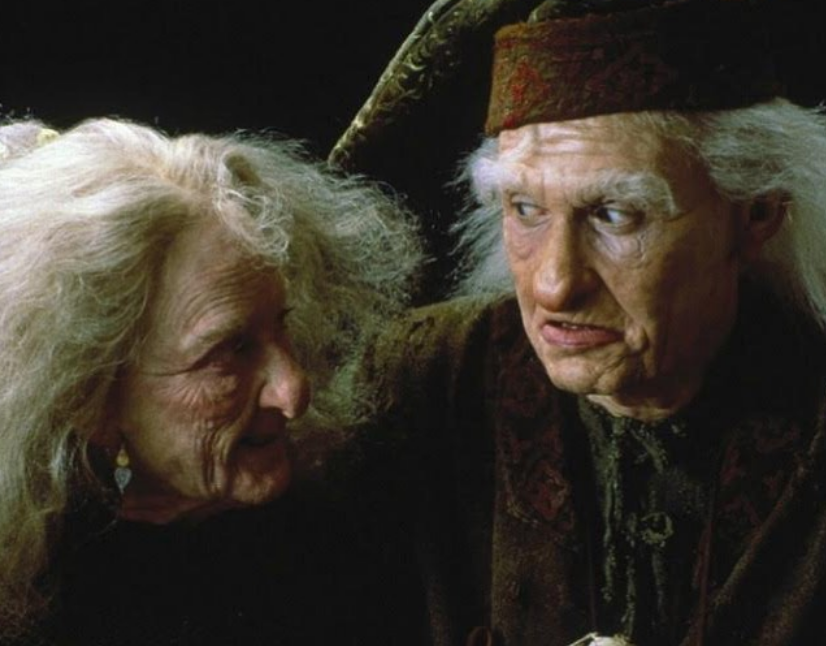
But the answer may simply be, “No, not today.” Sometimes we have those non-creative days. It is alright to have them. Art shouldn’t be about pushing out ideas to get to a “product.” I’m suddenly laughing to myself, thinking of Billy Crystal as Miracle Max in the movie The Princess Bride: “You rush a miracle man, you get rotten miracles.”
At least with writing, one gets a chance to revise.
Carol Kaine & Billy Crystal in The Princess Bride (20th Century Fox, 1987)
If you are a writer, what do you think about the use of prompts?
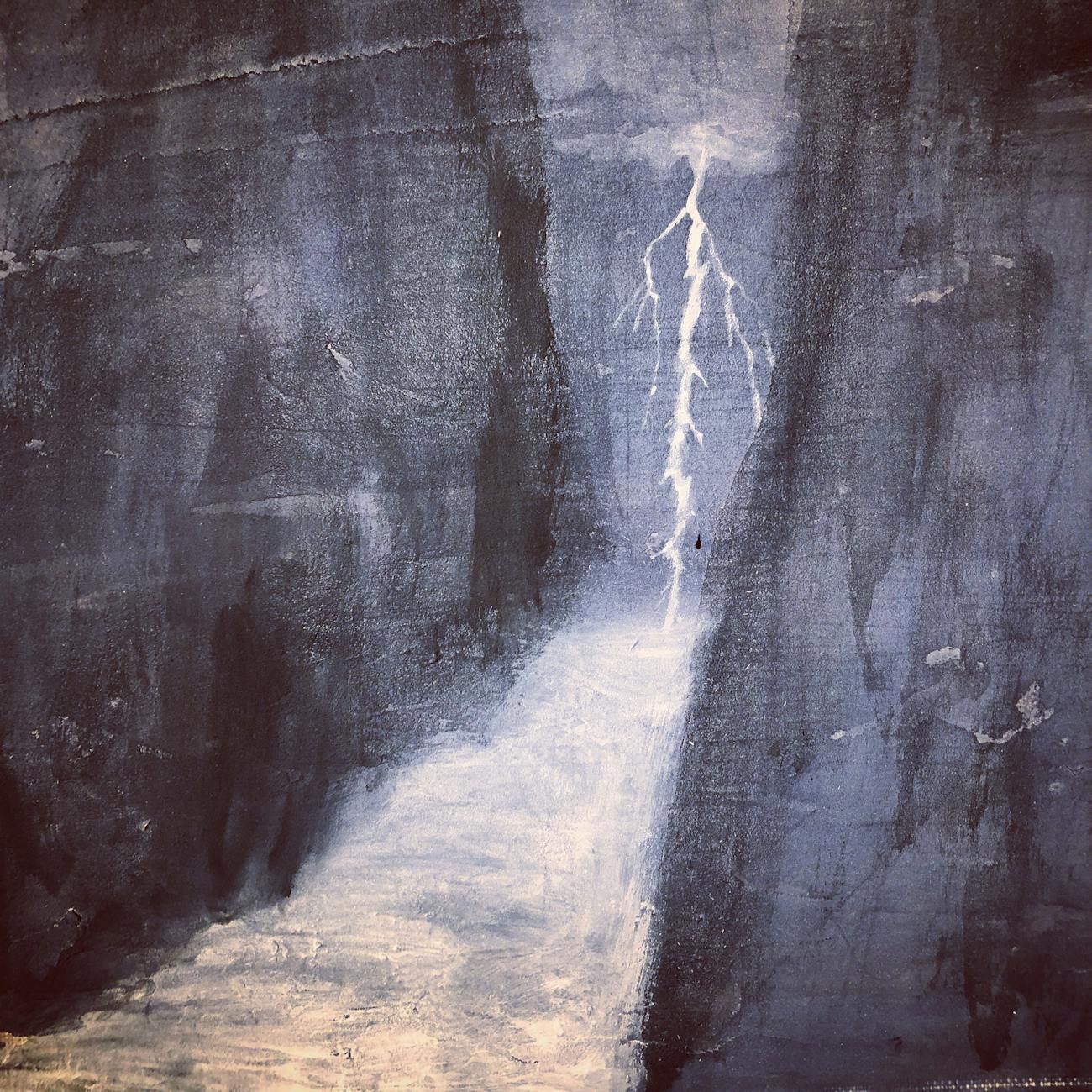
2024 closed with “thundersnow” in my neck of the woods, a weather phenomenon that I find rather thrilling in its strangeness. And the year commenced with the conflagrations in California, not to mention everything else that goes on daily in the cosmos. Oh, the difficulties of life in interesting times.
It so happens that I had made plans, and purchased plane tickets, to visit my son in Los Angeles during the week that AWP is holding its annual conference there, in March–that is, assuming the situation in Los Angeles County doesn’t get even worse and assuming his apartment building survives the fires; it hasn’t been easy to keep myself from doom-scrolling and watching updated fire maps. I remind myself that there is not a thing I can do beyond sending money to charities and such, perhaps, and waiting for the winds to change, and that making myself stressed will actually do harm. But I am not one of those Pollyanna types (now termed a “toxic positivity” person, I have recently learned). I’m aware that the world can be hard, and that we may suffer. So, as my yoga and tai chi instructors would tell me:
Breathe.
There’s no point in trying to decide whether this start to the year is auspicious or inauspicious, though if I’m going to go with signs and auguries, I might choose to follow the Chinese year and move my year’s start to January 29, Year of the Wood Snake–and get all this awful stuff (including January 20th) packed into LAST year.
As I noted in my year-end post, a year’s end–or beginning–is arbitrary.
~
As for writing-related resolutions, I make them all the time, not just at the beginning of the year. But in that one respect, the first dozen days of January are going surprisingly well. I’ve been spending more time on revising older–sometimes much older–work, and I have been drafting some new poems. I even submitted just a few things to lit journals and have been making minor progress in the monumental task of culling and organizing my writing files.
Best of all, I enrolled in an online poetry workshop with Anita Skeen through the Friends of Theodore Roethke Foundation, which starts this week. And I registered for an art class in February, so my plans to focus more on my creative work post-retirement are proceeding more or less apace. We balance fear and misery with art.
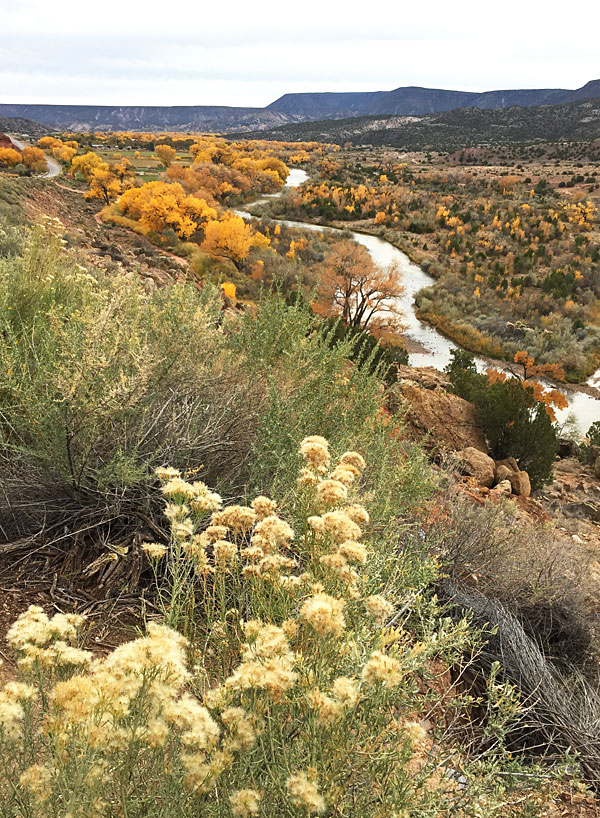
I have experienced two autumns this October: one in New Mexico, one in Pennsylvania. In the American Southwest, high up in the world, the cottonwood trees that hug every available water source were going a brilliant gold while I was there. Any view above a creek or river revealed a winding path of yellow–along the Chama, along the Rio Grande. The tiny-leaved oaks were turning brown-leaved and dropping scads of acorns along the paths. The oranges and reds are mostly there year-round, on the mesas and in the canyons.
It was wonderful to experience a poetry workshop with Anita Skeen and Cindy Hunter Morgan and to learn how books are made by hand, wonderful to draft some poems using color imagery and ekphrasis, wonderful to meet some fascinating people with whom I enjoyed pushing past my/our comfort zones and into art forms we may have been a bit less comfortable with. These are reasons to attend an instructor-led workshop, seminar, or residency. I spent part of last September in New Mexico, but it wasn’t the most spectacular time for autumn coloration–whereas October certainly gleams in northern NM!
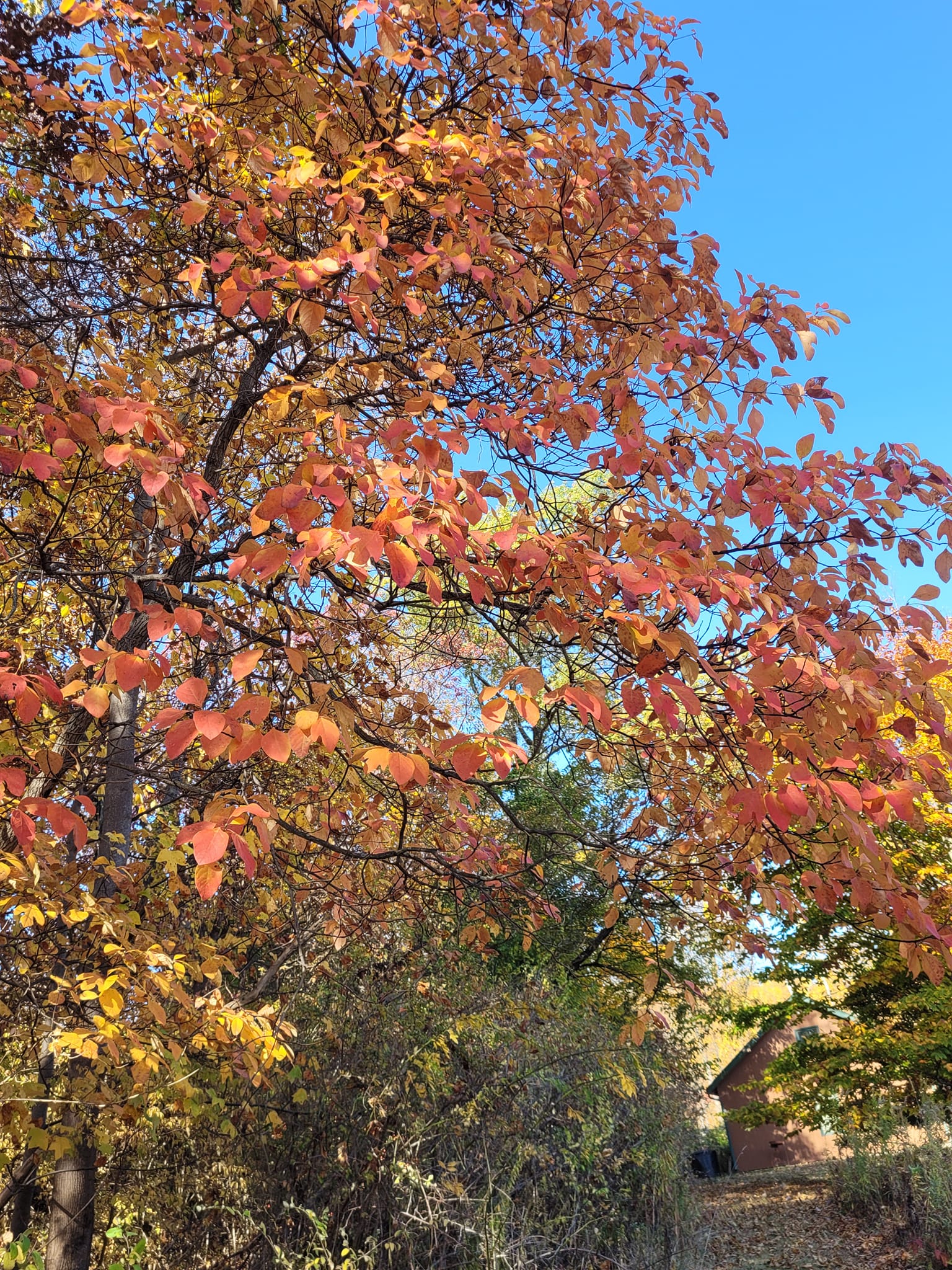
When I returned home, I had missed “peak season” for color in Pennsylvania; my husband said that came a bit early this year because of drought. But it’s still very bright here. The maple leaves haven’t all fallen, most of the tulip trees are still yellow, the hickories haven’t reached peak gold yet, and many of the sassafras are that warm coral color I love so well. The burning bushes? Ours hasn’t dropped its bright fuchsia-maroon leaves. It’s a vivid presence at the corner of the house.
~
Therefore, I have two autumns this year, one sea-level Mid-Altlantic East, and one high-altitude Southwest.
Which strikes me as an abundance of beauty and color. So I am continuing the theme of last week’s workshop. Here’s a new draft of a new poem just for the joy of it. [This fall, those of us in the USA could use a bit of joy.]
I don’t have a title for it yet. Maybe you can help me think of one.
~
The difference between orange leaf color and orange rock color. Between the greens of grass and juniper, the pale dun of meadow’s die-back and beige sand stretching westward to the mountains. Even the clear sky’s blueness on fair, mild mornings differs by an almost measurable degree. Something to do with altitude and aridity, the science of which I don’t really understand. Life’s variations and hues— striated like cliffs, buttes, mesas, like hills of maple and hickory in fall— beautiful and strange. Even when I close my eyes, color- memories, all those shades I can’t define, sift through my skin. Into blood. Into bone.
I’m taking a break from the garden and from the news cycle and indulging in a different form of work: “Making Poems, Making Books,” a 4-day workshop with poets Anita Skeen and Cindy Hunter Morgan at Ghost Ranch in Abiquiu, NM. Yes, I’ll be making my own book–a small accordion book. There are about a dozen of us in the workshop, which is centered around the idea of color. Autumn in northern New Mexico offers a range of hues somewhat different from the post-equinox colors of eastern Pennsylvania. Perhaps that will inspire me. The last time I took a workshop here was in 1993, and I learned how to draw/paint in chalk pastels. A long time ago–and yet, walking around the dusty alfalfa field in the center of the Ranch’s office and dorm buildings, I felt completely at home. As if I’d been here just last year.
This week differs from the artist residency I attended at Joya-AiR in May because I’m part of a class getting instruction in how to make a hand-made book and also participating in feedback on our writing. Nonetheless, every afternoon there’s a nice stretch of time to work on solo projects, hike, drive to some nearby sites of interest, or nap. I will admit I have been doing more napping than I had hoped. The high altitude, dry air, walking more than usual (on rocky trails) and the emotional energy it takes to learn a new skill and meet new people have conspired to creep up on me some afternoons.
That’s fine with me, though, because I’m banking many images, quotes, anecdotes, ideas, prompts–all the things memory can do.
And I am drafting some new work, so there’s that as well.
~
Enjoying the session and the people, third best thing about this trip. Being back at Ghost Ranch, second best thing, though it is perfectly wonderful. Best thing? Getting some time in the Albuquerque area to visit with my daughter and her partner. And their dog. And their cat, guinea pigs, and beehives. According to her, bees kept in hives (apiculture) are considered considered agricultural animals.
Who knew?
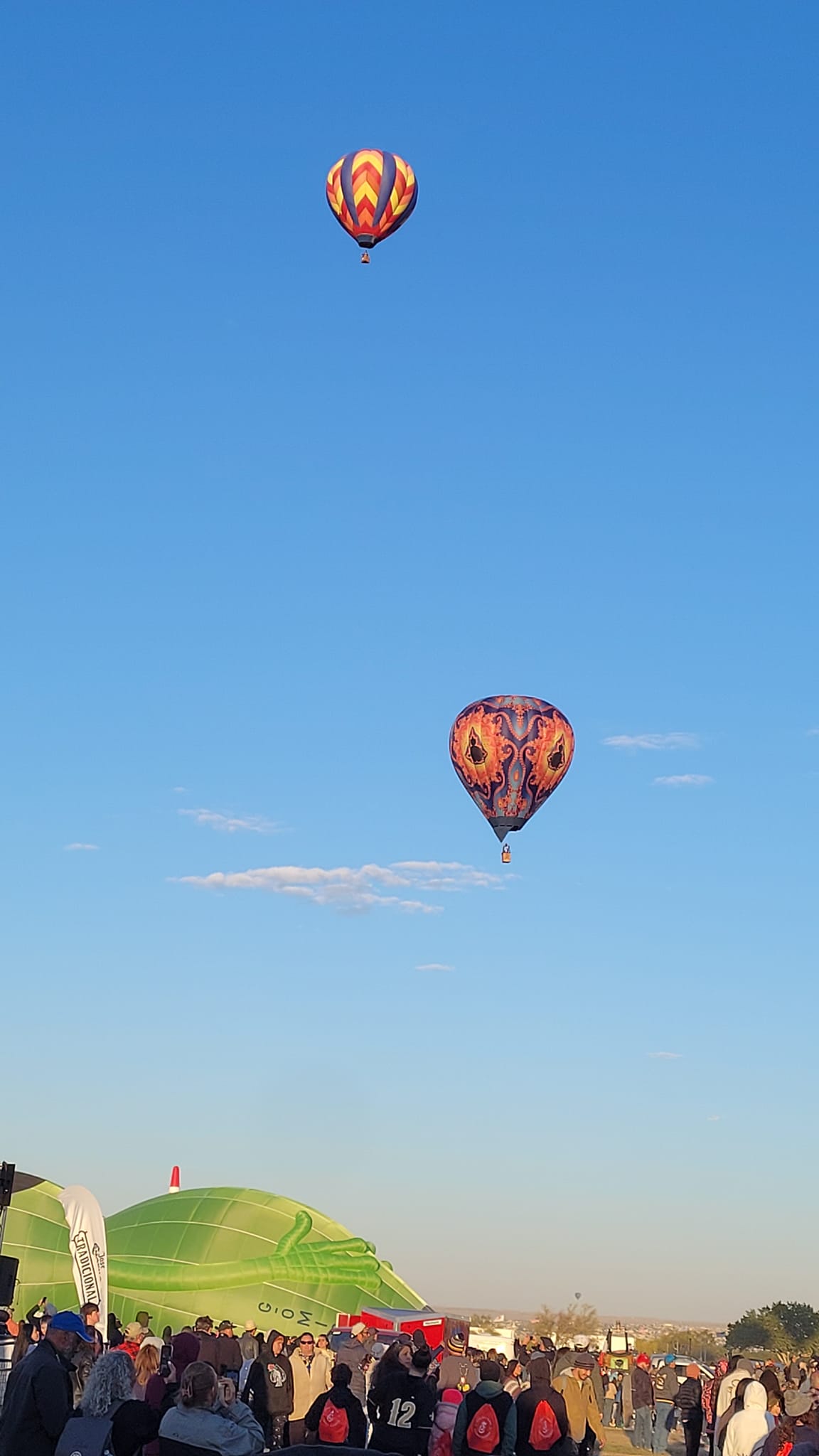
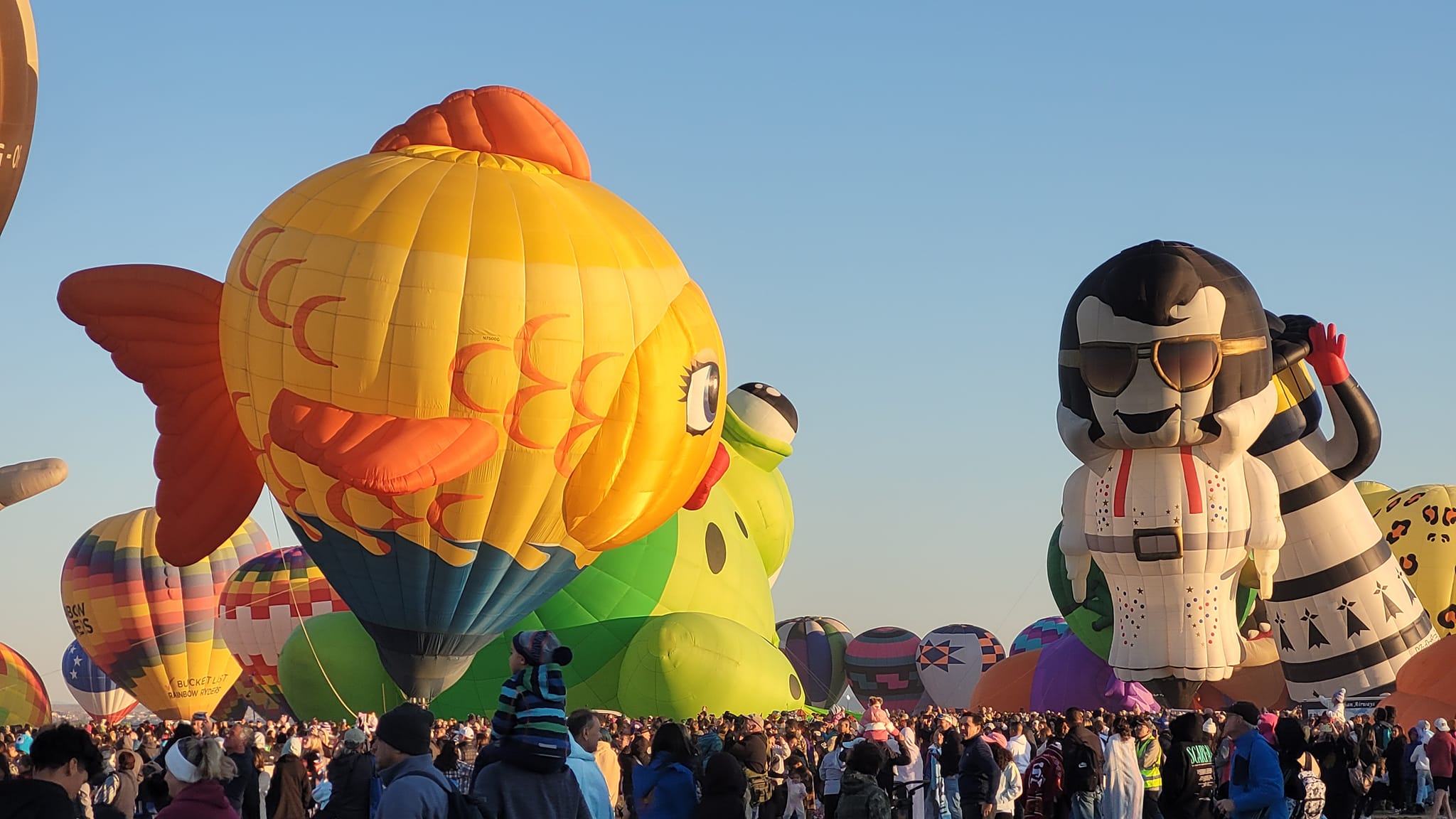
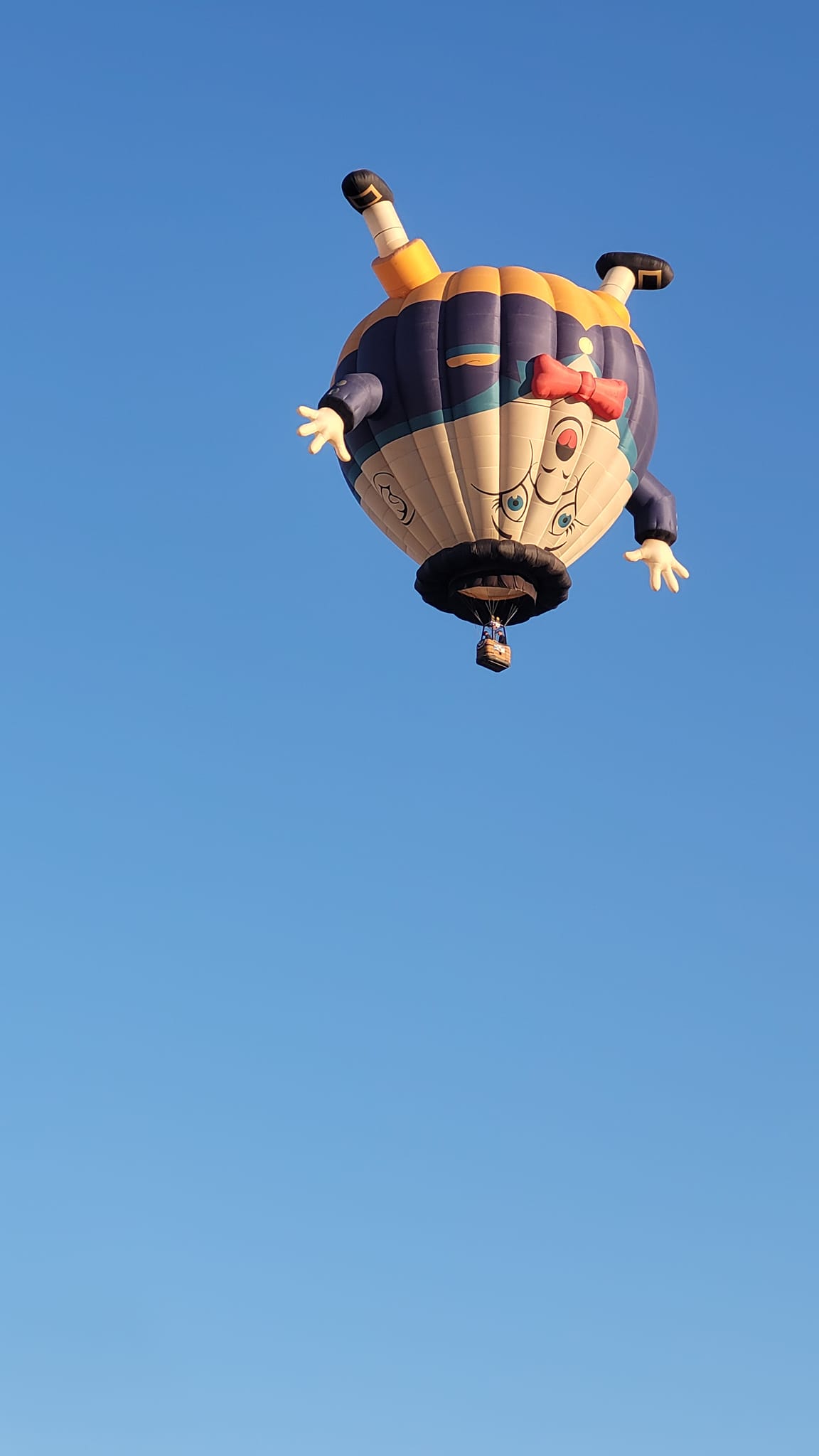
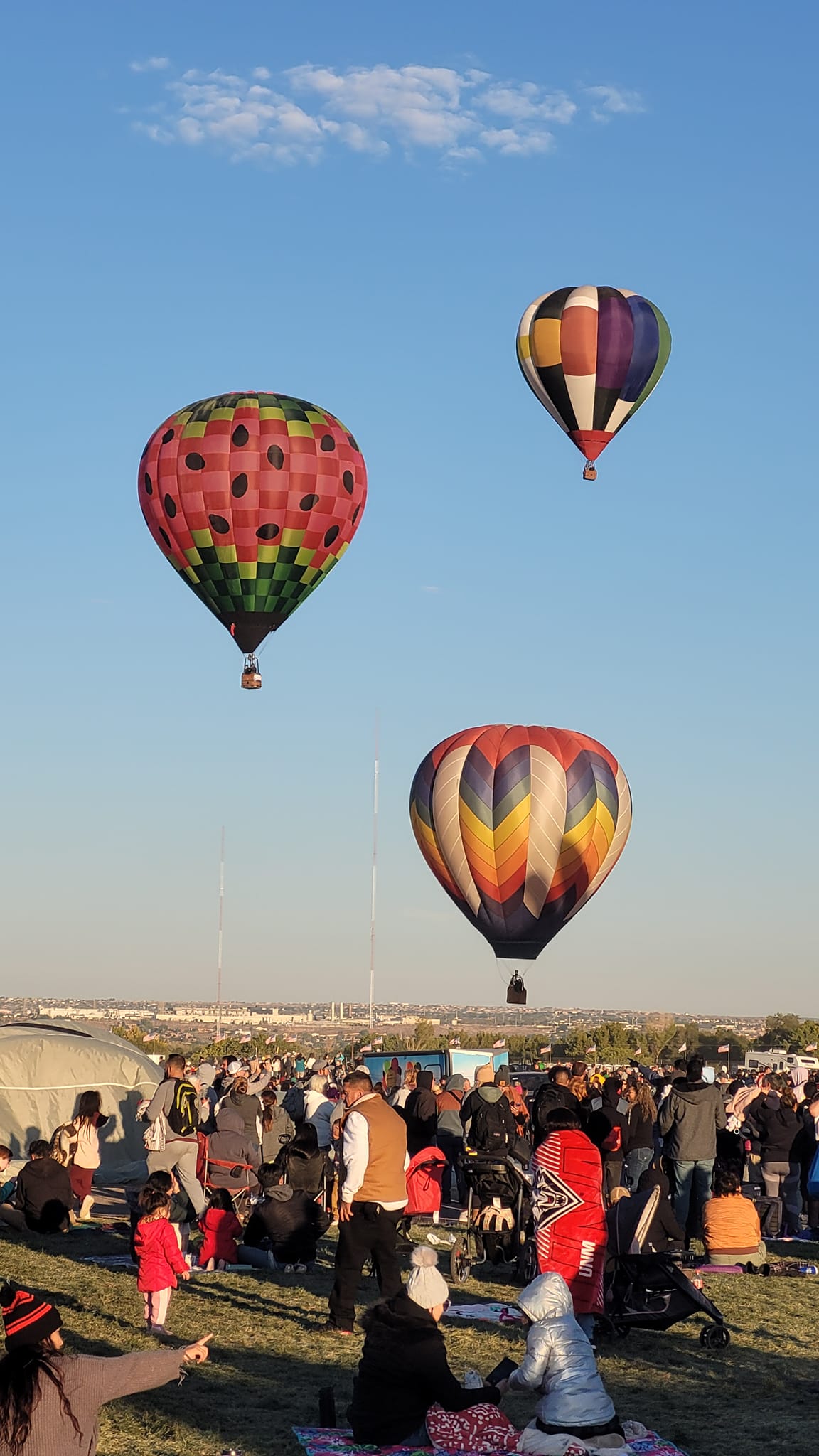
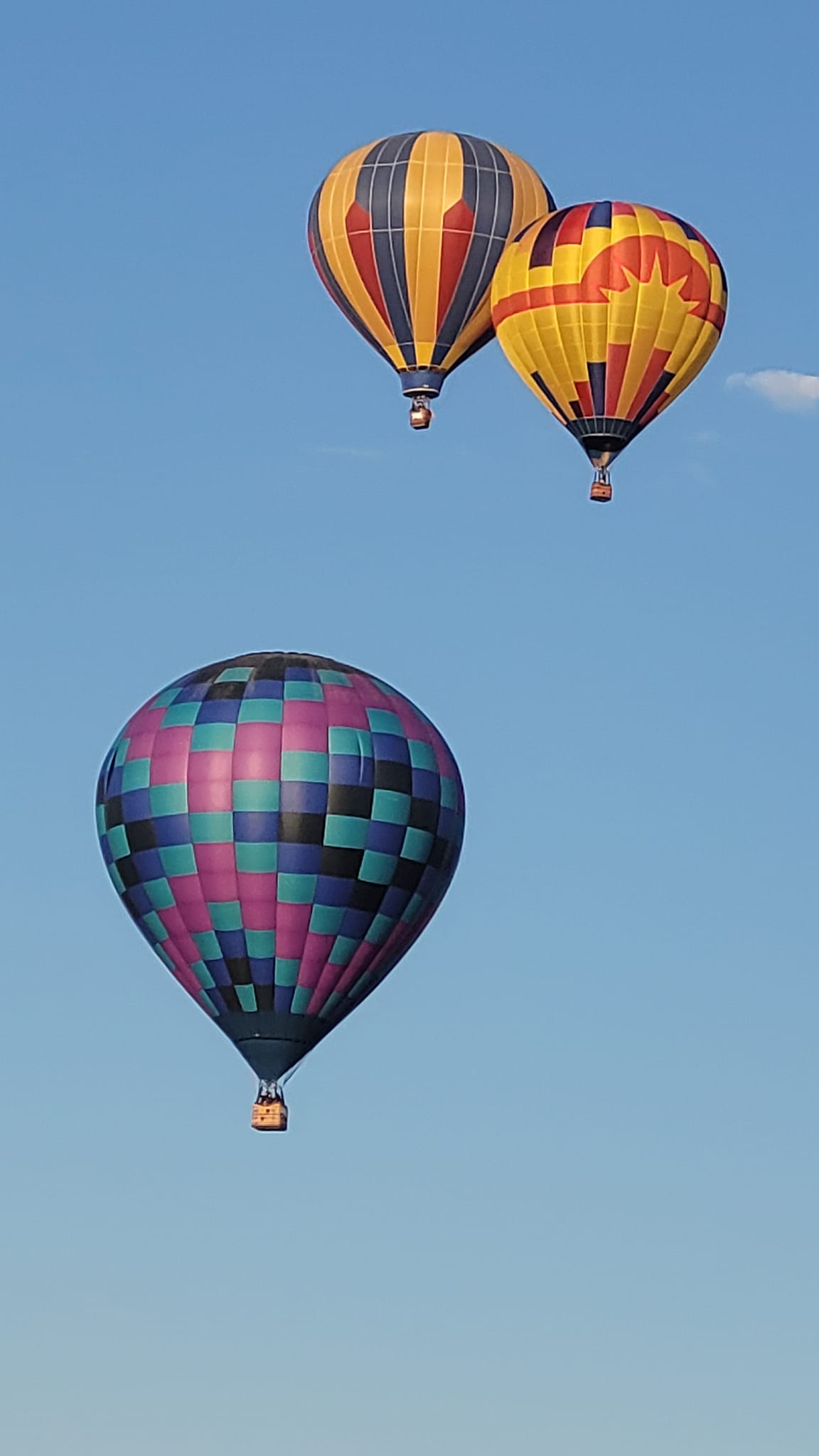
It’s time for my nap, I think. But I have wanted to post about this workshop/retreat before I get home again, just to remind myself of how grateful I am to be here, to be writing, to be seeing my child, to be–yes–escaping from the media frenzy as the presidential election looms. If that seems like something you need, as well, all I can do is send a few cheerful photos I took at the Albuquerque Balloon Fiesta.