I have been missing my dad, so today I put on his old cotton knit sweater, the one that’s developing holes in the weave, the one I kept because his scent lingered in its fibers. It’s been over five years since his death and, alas, that familiar scent has finally vanished from the sweater. Though I like to think that it has been absorbed into the other items in my closet, maybe the hoodie my daughter knitted, maybe the flannel pjs, maybe the four old pairs of jeans I wear continually or the one full-length gown I’ve seldom donned but have kept for reasons not entirely rational. I’m hoping my dad has somehow permeated my closet, the things I wear next to my skin, my life.
And I came across this poem recently in Gary Whited’s Having Listened. Indeed, it resonates in the way a poem can, a sort of slanted parallel of feeling, affinity, relationship. I love the idea of “shirt knowledge,” the thought that inanimate objects might “know” in ways humans cannot perceive. Those last lines: “how to be private and patient,/how to be unbuttoned,/how to carry the scent of what has worn me,/and to know myself by the wrinkles” seem accurate to my current state. Comfortable, comforting.
Like an old shirt. Like a good poem. Like a memory of my dad.
~
My Blue Shirt
hangs in the closet of this small room, collar open, sleeves empty, tail wrinkled. Nothing fills the shirt but air and my faint scent. It waits, all seven buttons undone, button holes slack, the soft fabric with its square white pattern, all of it waiting for a body. It would take any body, though it knows, in its shirt way of knowing, only mine has my shape in its wrinkles, my bend in the elbows. Outside this room birds hunt for food, young leaves drink in morning sunlight, people pass on their way to breakfast. Yet here, in this closet, the blue shirt needs nothing, expects nothing, knows only its shirt knowledge, that I am now learning—how to be private and patient, how to be unbuttoned, how to carry the scent of what has worn me, and to know myself by the wrinkles.
We got some rain on Saturday, which we’ve needed, and dismal cold rainy January days are perfect for settling down with a book. I’m reading The Unsettling of America, Culture & Agriculture (1977) by poet, writer, farmer, educator, activist Wendell Berry, still working at 91–his book Sabbath Poems was published in 2024. I’m much more familiar with Berry’s poetry than his prose, though he’s written at least half a dozen novels and many books of nonfiction. This text, I’ve since learned, is one of his more famous–it’s been revised and re-issued six times. The copy I got from the library is the original version and features cover blurbs by Gary Snyder, Wallace Stegner, Edward Abbey, and Stewart Brand, among others; Publishers Weekly summed up the book as “a cool, reasoned, lucid and at times poetic explanation of what agribusiness and the mechanization of farming are doing to the American fabric.”
Which is a fairly good one-sentence précis, though Berry’s wording often strikes me as more passionate than “cool,” and agribusiness is only one aspect of his critique. I was in high school in the 1970s, and at the time it seemed average Americans were beginning to recognize that pollution and overpopulation could be problematic, that maybe we needed to eat more natural and wholesome foods, and that establishing an Earth Day might help people turn focus toward the planet. Simultaneously, we had Earl Butz as Agriculture Secretary, a man who ended many New Deal programs to help “small” farmers and who encouraged large (eventually, corporate) farms. Butz appears several times in this book, and no wonder; he and Berry debated the topic in public and in print, and their thinking was almost diametrically opposed concerning the philosophy behind agriculture. Berry’s book is a social and philosophical argument that is only somewhat dated and really quite prescient, though he might come off as mildly curmudgeonly to today’s readers. Or maybe not so prescient. He was simply paying attention.
The sections of the book that most resonate with me are those in which he writes of nurturing and relationships, and points out that good relationships involve responsible actions and collaborative, mutual care whether they are marital, family, or social relationships or relationships with the soil, the flora and fauna, the whole planet. He predicts a future in which people live in their houses and not with the land, or even within their communities, and where wilderness is “conserved” so that it can be exploited for entertainment and scenic views. People in the US, he says, don’t feel responsible for the land on which they live; they don’t understand its cycles, its weather patterns, its waterways; their property is merely property–a commodity for convenience and investment. I’d say that future is already upon us.
Thus, Berry has made me think more deeply about my relationship with “my” property. If you’ve read this blog for awhile, you may notice how often I consider weather, dirt, local animals, insects (especially invasive or non-native ones), plants, tree diseases, water–I’m no farmer, but I am a gardener and do feed myself at least partly from my own backyard. I take almost daily walks around the perimeter of our 6+ acres, poking around in the hedgerows, scanning the sky, looking down at walnuts and animal scat, watching for new buds or coloring leaves or bird nests or wildflowers. I worry over droughts and hailstorms and flooding. Climate change concerns me in very local and specific ways, not just in general.
One could say I’m at least trying to nurture the earth. I’ve made many mistakes along the way and done some damage that I’m learning how to rectify; I have also realized that I have to accept some changes, such as incursions by invasive species, because they are beyond my control. Through the almost 30 years we’ve lived on this land, I’ve tried to understand it better. After all, we built a house on it. The soil was hard-packed, acidic, overused from previous decades of corn-growing, full of stones, sumac, and asiatic rose bushes, a fallow field that hadn’t been planted or farmed in decades but didn’t necessarily need me to tend it. It wasn’t my family’s land, and I didn’t intend to end my days here; however, I figured if I was going to live on this spot, I had better do whatever tending and nurturing it might require.
Which is about the best I can do as far as a relationship with the land in which I dwell, and about the best any of us can do in any long-term relationship: try to understand it, get acquainted, do some research, make plenty of observations (maybe take notes), and nurture what seems to need special attention and care. The land has given me much more than I’ve ever given it. It’s offered shelter, beauty, an education, food, the companionship of animal life, cricket sounds, tree frog songs, firefly lights on long summer nights, open spaces for my children to play in, owl calls and fox kenning, the grace of leaping whitetails, dead-fall wood we can burn in winter, forest-bathing, hammock-swaying, inspiration for writing. The wonderful porch here, where I often sit to write in my journal, opens a view to the meadow out back. So many poems started on that porch, with that view…
That’s how the earth nurtures me. May I be somehow worthy of it.
Creative writers are often asked where they get their ideas from. In my own case, the answer to that varies a great deal. Sometimes ideas arise from personal experience, of course, but one’s life offers only so much material if you are a relatively staid person like me. Topics for poems can arise from recent headlines or from histories, written or oral; from conversations overheard in a grocery line; from stories other people tell me; from folk tales; from science books; from dreams; from works of art, and numerous other sources. It’s this wide array of possibilities that make the concept of the creative-writing prompt so popular. A quick Google search for “creative writing prompts” offered well over 20+ pages of entries, in several languages.
I have written pieces based upon prompts, especially when in a workshop or class, or when I feel rather tapped out of my own imaginative source material. I’m especially fond of writing that stems from viewing or experiencing a work of art–sculpture, painting, musical composition, dance, installation art (ekphrastic poems). Generally speaking, though, that’s not from whence my poems originate.
I can’t really say why I feel an urge to put down in writing specific reflections about something that’s caught my attention–or even what sort of experience evokes my response. Maybe I feel intrigued by an image, a detail, or an ambiguity–a question arises in my mind that I tussle with for awhile. Then, I may compose a draft and let it sit. Two days. Two years. Longer. Lately I’ve been revising some old poems and have realized I no longer recall what their incipience was. Which can be a good thing, because I am no longer wedded to the “reason” I wrote them and can instead consider whether they can be crafted into decent poems.
I am also working on a manuscript that I let sit for at least six years. An idea got into my mind after reading Robert Burton’s 17th-century book on depression, The Anatomy of Melancholy, quite some time ago (2017, perhaps?). I took a stab at writing what seemed to be evolving into a historical fiction story, which is not my usual approach (I have zero practice at plot and dialogue). Then, I stopped. As one does. But the topic lodged in me somewhere, I suppose, and early this year I returned to it. What if, I wondered, the draft could be restructured into a series of prose poems? There might be a sort of hybrid novella-poem in the earlier draft.
That’s more or less what I’m developing, at least for now, and we’ll see what if anything emerges. It’s keeping me interested, which I like, and the experiment feels fresh compared with “writing what I know,” or writing “how” I know. Because yes, of course we ought to write what we know; but we also know about human beings, and we have imaginations, and anything is possible.
At one of our local used book stores,* I found a copy of William Gass’ 1976 On Being Blue: A Philosophical Inquiry. Gass writes in a style one might term prolix; but if you are like me and sometimes appreciate lists, wordplay, allusions, lengthy sentences, and fine distinctions in your sentences–as well as humor–while exploring the limits and the stretches of words and language, this book-length essay on the word/concept/color/iconography/sexual innuendo/moody attitude and conflicting meanings of the word blue might appeal. I’ve been feeling a bit on the blue side lately, hence my attraction to the book (though I do like Gass as a writer, as long as I don’t have to read too much of him at one time). And guess? It cheered me! [I will caution the reader who avoids the use of “bad language” that Gass employs such words in this essay, for purely intellectual reasons…]
Granted, my feeling blue has a different tone from other uses of the word: blue postcards, sexual meanings of blue–I’m reminded of the movie “I Am Curious (Blue)” which was considered racy and given an X rating when I was a kid, though the blue in that title referred to the Swedish flag, apparently. My blue is the blue of songs like “Baby’s in Black” or Joni Mitchell’s “Blue” album. Or just that classic music form, the blues.
And I’ll get over feeling this way. That’s what moods are: feelings that come and go, transitory. It always seems as though low moods stay around longer than neutral or cheerful ones, but many scientific studies show that it is our perception and memory of the negatives that make us think we are sadder for longer. Even Wikipedia has an entry on negativity bias, with some sources if you want to check things out yourself. As I age, I realize that bad moods and sad events and past mistakes don’t need to stick around as much as I used to think. A bit of mediation, some practice and readings in Zen and in psychology, a lengthening perspective on life’s vicissitudes, some counseling and even some medicine; whatever it is that’s brought me here, I recognize that before long the depressive hours will lift. Also I know some methods of thinking that assist me to move to more neutral ground.
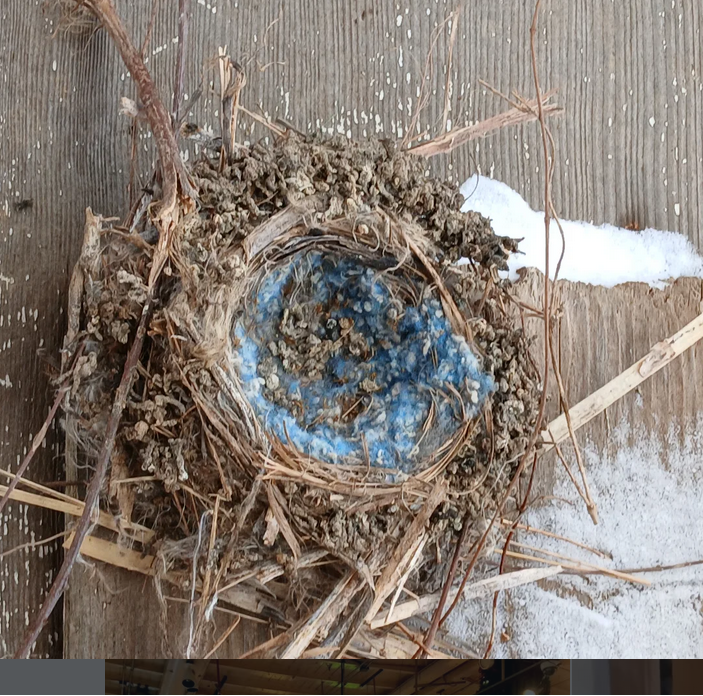
I will note there are many kinds and hues of blue, enough for Gass to write 112 pages on it and for the word to appear in 85 files of my own poetry during the past 12 years–I did a quick word search just to find out. That is in the files alone, and each file contains many poems. so I can only imagine how much I have over-used the word in my writing life! Certainly, not all of those blues are sad. Many are beautiful, sunny, the blues of blueberries and balloon flowers, the New Mexico sky, mountains and oceans; teal-blues and turquoise, the bright royal blue I like to wear, the pale color of robin’s eggs.
Blue. It has always been my favorite color.
~~
*The bookstore is Apport, in Emmaus, PA. Ben has an active Instagram feed and really cool catalogues of odd books, art, and ephemera.
*The first “blue” above is an encaustic painting by Deborah Barlow; the second is at Bandolier National Monument; the third is of the Blue Ridge Mountains; the last was taken at an inlet bay, maybe in Delaware–I’ve forgotten.
Last year at this time, I had covid and was languishing in bed, unable to tend to the garden. A regional drought meant I really should have been watering the new plants; and it also kept the weeds firmly rooted, fighting for dominance in the vegetable patch. This year, I timed a trip to New Mexico just when I ought to have been harvesting spinach and planting out tomatoes, beans, and squash. Oops. And then it rained buckets the whole time I was away (much-needed rain, but…). Therefore, the garden situation was not ideal. But garden situations seldom are ideal because Nature does its own thing regardless of my plans.
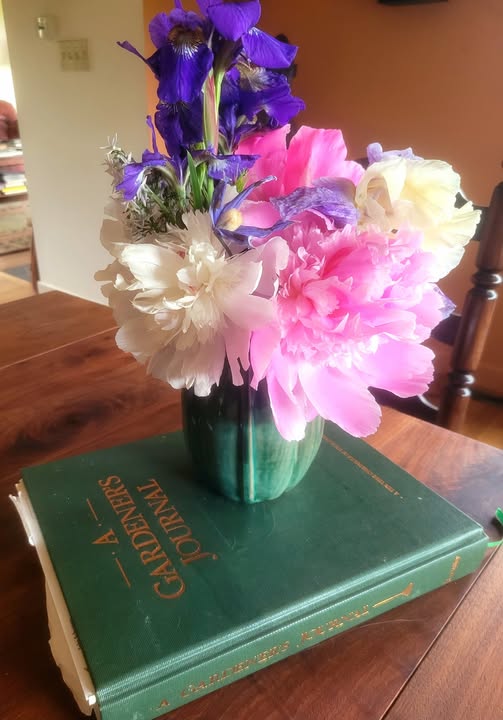
At any rate, eastern Pennsylvania finally moderated its weather enough that I got the weeds and the seeds and transplants more or less under control this past week–“control” being a general term subject to, well, Nature. The peonies bloomed gorgeously on schedule, as did the nefarious multiflora roses and Russian olives that plague the hedgerow. The catbirds and Eastern kingbirds are back; the robins’ first brood has hatched; the orioles are insistent in the walnut trees and brilliant in the garden, chasing the barn swallows. I’m not doing much writing, though I drafted one or two beginnings of poems. Outdoors takes precedence–not that I can’t write out of doors, I often do so. But poems can wait in a way the garden cannot.
The new anthology, 20 years after the initial one, has poems by about 180 poets–yes, I am one of them–covering the corners and the center of the Keystone State. I like it even better than the first collection, and it is clear the editors learned much from the experience of curating poems and creating a cohesive “experience” of the regions. Granted, since I know both of the editors personally and appreciate their poetry and their visions, I may be biased. But that’s okay. Objectively, I truly get how huge an undertaking this was and how well it has turned out. For educators, there is a section at the close of the anthology full of suggestions for reading, writing critically, and writing creatively based on this anthology, and even in comparison with the previous one. As both editors are college professors who teach creative writing and critical writing, these appendices are well-thought out and worthwhile.
I miss the aridity of New Mexico, which seems to benefit my overall health. And I miss my daughter immensely. But springtime in eastern PA has many compensations, not the least of which are blooming even as I write.
….and the drought continues into mid-November. This is a very long stretch of dry weather, and the rivers I’ve crossed recently–the Delaware, the Schuylkill, the Lehigh, the Susquehanna–are looking mighty low. Little islands are showing up in the center of the riverbeds. Tree roots visible along the banks. I found this government website that filled me in concerning the current situation. Looking at the charts, wow.
My low mood continues, for a number of reasons: the recent political news, the continuing wars, my mother’s consistent decline, the drought, my physical distance from my grown children on the other side of the continent, a friend’s death, a bunch of recent poetry rejections, the fact that I can’t go into a store without hearing Christmas music…granted, some of these reasons are not earth-shattering but the effect is, well, cumulative. Han VanderHart’s recent blog post speaks to the rejection, reminding me of things I know and should keep in mind. The challenge is just getting through and occasionally finding delights at which to marvel, for the delights surely endure. Ross Gay’s Book of Delights is my book group’s next selection, a book I’ve read before but which–at this particular moment–will probably benefit me when I re-read it.
I also feel creatively dried-up, and that’s dismaying. Reading novels (see my last post) offers peasant distraction but seldom gets me writing my own work. I’ll never be a novelist. I’ve been reading poetry, online and in books, as I always do; yet right now, the poems I have been reading, no matter how wonderful, have not inspired me to work on my own.
I’m not even revising! This is not my usual self, not my poetry “norm,” not a space in which I feel happy or well-regulated or at least inspired. Perhaps I have encountered the dreaded writer’s block. Or rather, a drought of some kind, an inner sluggishness of the imaginative flow. Despite the glorious stretch of sunny days and moonlit nights, the incessant blue sky reminiscent of those high-altitude desert environments I seem to love, despite these delights, I’m discontented.
How very human of me.
Listen, there’s a trio of redtail hawks along the woodlot. Their nasal “screeee” and their graceful swoops between the bare branches catch my attention. Sunlight on the field tells me, “You could at least get outside and take a walk.” Okay. Can do.
Last week took a lot out of me, many reasons for that, mostly keeping those reasons to myself. I needed some rest from exertion and from social media, so I’m re-reading Les Misérables. In which Hugo seems to be trying hard to convince readers that compassion and goodness can be awakened in the hardest of hearts through the process of gentle persistence and genuine decency. Radical decency, as a friend of mine put it. Well.
I won’t write that off as an impossibility, since lord knows many things that seem impossible are not. But yes, Hugo was writing fiction, and one turns to fiction for escapism but also for reference, and for understanding human actions and feelings, and for perspective, and for information. I just completed Richard Powers’ Overstory, which offers a vast range of perspectives on the above-mentioned and adds ecology and forest infrastructure and the psychology of groups into the mix. Novel-reading has been giving me a sense of overarching historical range that lifts me a bit from my too-close focus on my own small life and my ability to sustain hope and make art. That acts as a form of recuperation, if you’re me.
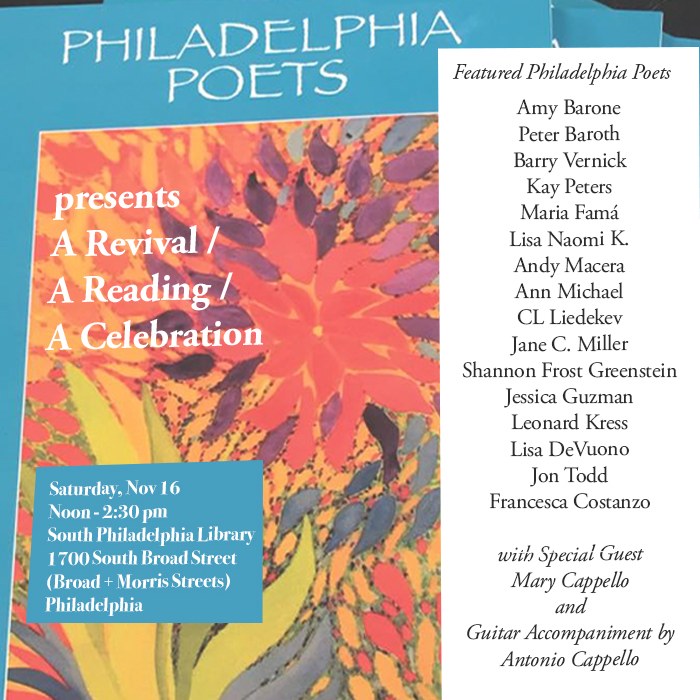
This week, though, happens to be full of poetry. Tomorrow, I’m attending a reading at a nearby public library, where I’ll see many poetry colleagues, the sorts of folks who create a community of local writers. Friday, I’ll be reading with Montgomery County’s Poet Laureate, my friend Lisa DeVuono, at the retirement community where my mother resides. Saturday, I’m heading down to Philadelphia to read with another long-time poetry community in celebration of Philadelphia Poets, a long-running zine established decades ago by the late Rosemary Cappello.
It is good I have had some reading-novels time, and it is good I’ll be having some reading-with-poets time ahead. Both are nourishing to my soul. I haven’t been writing much lately, but I will be eventually. Meanwhile, I’m still waiting for the drought to break…we got a fraction of an inch of rain a couple days ago, and I really hope there is more ahead.
Whatever you happen to need to nourish your own soul, make time for it.
The temperatures here in this eastern Pennsylvania valley have been mild, even warm, which isn’t that unusual for October, anymore. What’s different is the lack of rain. Northern New Mexico had more rain the past three weeks than our region did. Now that is unusual, and a bit worrisome. Our local trees have been enduring numerous stresses in recent years: irregular rainfall, invasive insects, road construction and housing developments, run-off, and viruses. Droughty autumns and winters do not make for resilient, happy trees and other perennials, unless they are desert varieties.
I love the desert, but the Lehigh Valley (where I live) is not primed to be a desert. We need the temperate moisture of rivers flowing down to sea level and 50″ of rain each year. It would be interesting to learn xeriscaping and how to garden in low-moisture regions, but only if I were living in one. I’ve been concerned for a long time about the climate changes I see occurring around me, noted the differences year by year in my gardening journal, tried to limit my own water use even in this temperate, damp-ish area. But. On my own, I cannot conserve enough water to keep the 70-foot-tall tulip trees and large oaks and colorful maples healthy. Nor the soil and its microorganisms, fungi, understory plants, and useful arthropods.
True, sometimes the long days of rain and overcast skies we get in autumn, winter, and spring feel oppressive; and they make my joint pains flare. But I count for little, whereas the earth counts for a lot. I’d gladly trade some low-barometer aches for a vibrant, healthy local climate.
~
The frosts, though light and few, are arriving now. Maybe we will get rain by Election Day? I have too many hopes for next week. Best not to speculate; I can wait.
In the meantime, I have just finished reading Cindy Hunter Morgan’s very beautiful new collection,Far Company, and I recommend it, especially if you like poetry with an environmental resonance and poems of memoir and recalled experience. Purchase it from Wayne State, not Amazon, if you can. To frustrate a certain billionaire, not that he will notice.
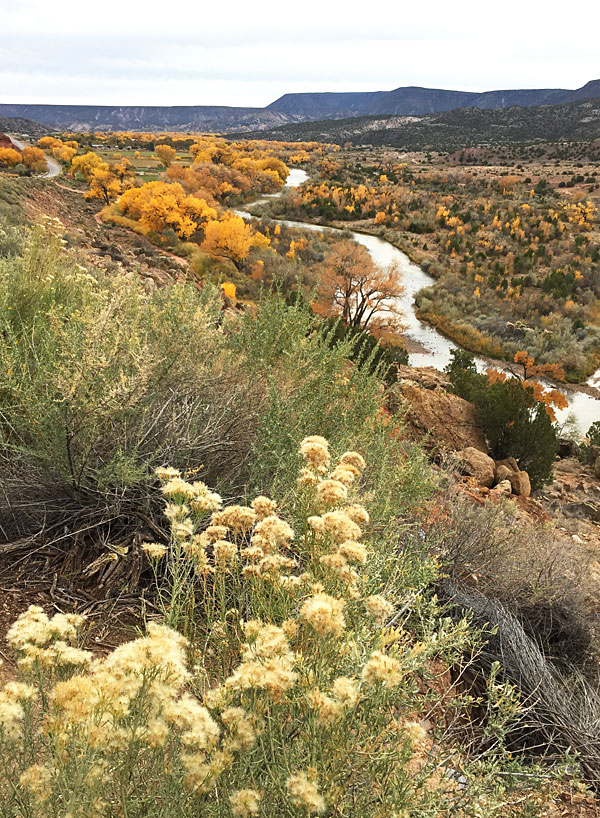
I have experienced two autumns this October: one in New Mexico, one in Pennsylvania. In the American Southwest, high up in the world, the cottonwood trees that hug every available water source were going a brilliant gold while I was there. Any view above a creek or river revealed a winding path of yellow–along the Chama, along the Rio Grande. The tiny-leaved oaks were turning brown-leaved and dropping scads of acorns along the paths. The oranges and reds are mostly there year-round, on the mesas and in the canyons.
It was wonderful to experience a poetry workshop with Anita Skeen and Cindy Hunter Morgan and to learn how books are made by hand, wonderful to draft some poems using color imagery and ekphrasis, wonderful to meet some fascinating people with whom I enjoyed pushing past my/our comfort zones and into art forms we may have been a bit less comfortable with. These are reasons to attend an instructor-led workshop, seminar, or residency. I spent part of last September in New Mexico, but it wasn’t the most spectacular time for autumn coloration–whereas October certainly gleams in northern NM!
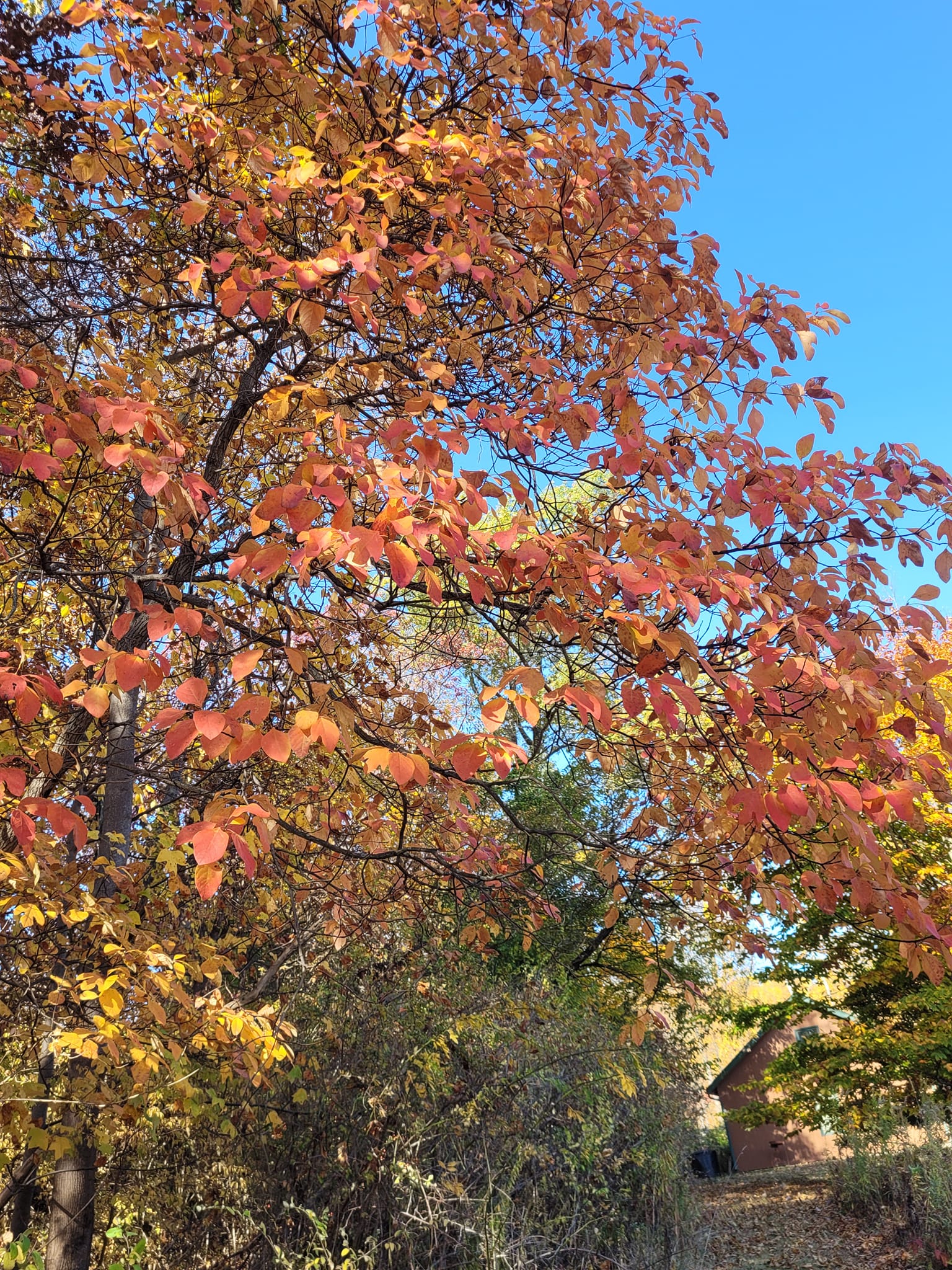
When I returned home, I had missed “peak season” for color in Pennsylvania; my husband said that came a bit early this year because of drought. But it’s still very bright here. The maple leaves haven’t all fallen, most of the tulip trees are still yellow, the hickories haven’t reached peak gold yet, and many of the sassafras are that warm coral color I love so well. The burning bushes? Ours hasn’t dropped its bright fuchsia-maroon leaves. It’s a vivid presence at the corner of the house.
~
Therefore, I have two autumns this year, one sea-level Mid-Altlantic East, and one high-altitude Southwest.
Which strikes me as an abundance of beauty and color. So I am continuing the theme of last week’s workshop. Here’s a new draft of a new poem just for the joy of it. [This fall, those of us in the USA could use a bit of joy.]
I don’t have a title for it yet. Maybe you can help me think of one.
~
The difference between orange leaf color
and orange rock color.
Between the greens of grass and juniper,
the pale dun of meadow’s die-back
and beige sand stretching westward
to the mountains.
Even the clear sky’s blueness
on fair, mild mornings
differs by an almost measurable degree.
Something to do with altitude
and aridity, the science of which
I don’t really understand.
Life’s variations and hues—
striated like cliffs, buttes, mesas,
like hills of maple and hickory in fall—
beautiful and strange.
Even when I close my eyes, color-
memories, all those shades
I can’t define, sift through my skin.
Into blood. Into bone.
I’m taking a break from the garden and from the news cycle and indulging in a different form of work: “Making Poems, Making Books,” a 4-day workshop with poets Anita Skeen and Cindy Hunter Morgan at Ghost Ranch in Abiquiu, NM. Yes, I’ll be making my own book–a small accordion book. There are about a dozen of us in the workshop, which is centered around the idea of color. Autumn in northern New Mexico offers a range of hues somewhat different from the post-equinox colors of eastern Pennsylvania. Perhaps that will inspire me. The last time I took a workshop here was in 1993, and I learned how to draw/paint in chalk pastels. A long time ago–and yet, walking around the dusty alfalfa field in the center of the Ranch’s office and dorm buildings, I felt completely at home. As if I’d been here just last year.
This week differs from the artist residency I attended at Joya-AiR in May because I’m part of a class getting instruction in how to make a hand-made book and also participating in feedback on our writing. Nonetheless, every afternoon there’s a nice stretch of time to work on solo projects, hike, drive to some nearby sites of interest, or nap. I will admit I have been doing more napping than I had hoped. The high altitude, dry air, walking more than usual (on rocky trails) and the emotional energy it takes to learn a new skill and meet new people have conspired to creep up on me some afternoons.
That’s fine with me, though, because I’m banking many images, quotes, anecdotes, ideas, prompts–all the things memory can do.
And I am drafting some new work, so there’s that as well.
~
Enjoying the session and the people, third best thing about this trip. Being back at Ghost Ranch, second best thing, though it is perfectly wonderful. Best thing? Getting some time in the Albuquerque area to visit with my daughter and her partner. And their dog. And their cat, guinea pigs, and beehives. According to her, bees kept in hives (apiculture) are considered considered agricultural animals.
Who knew?
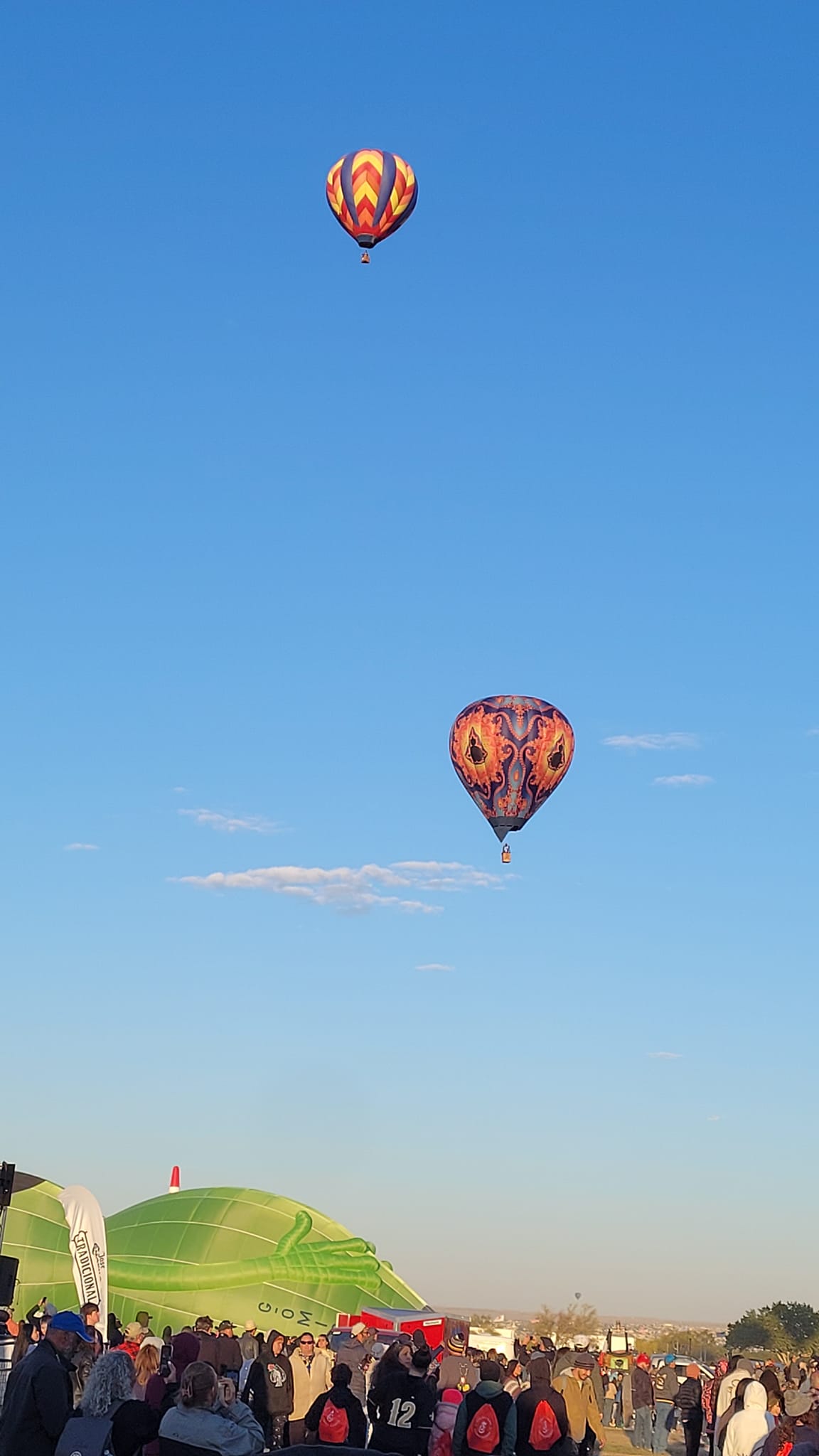
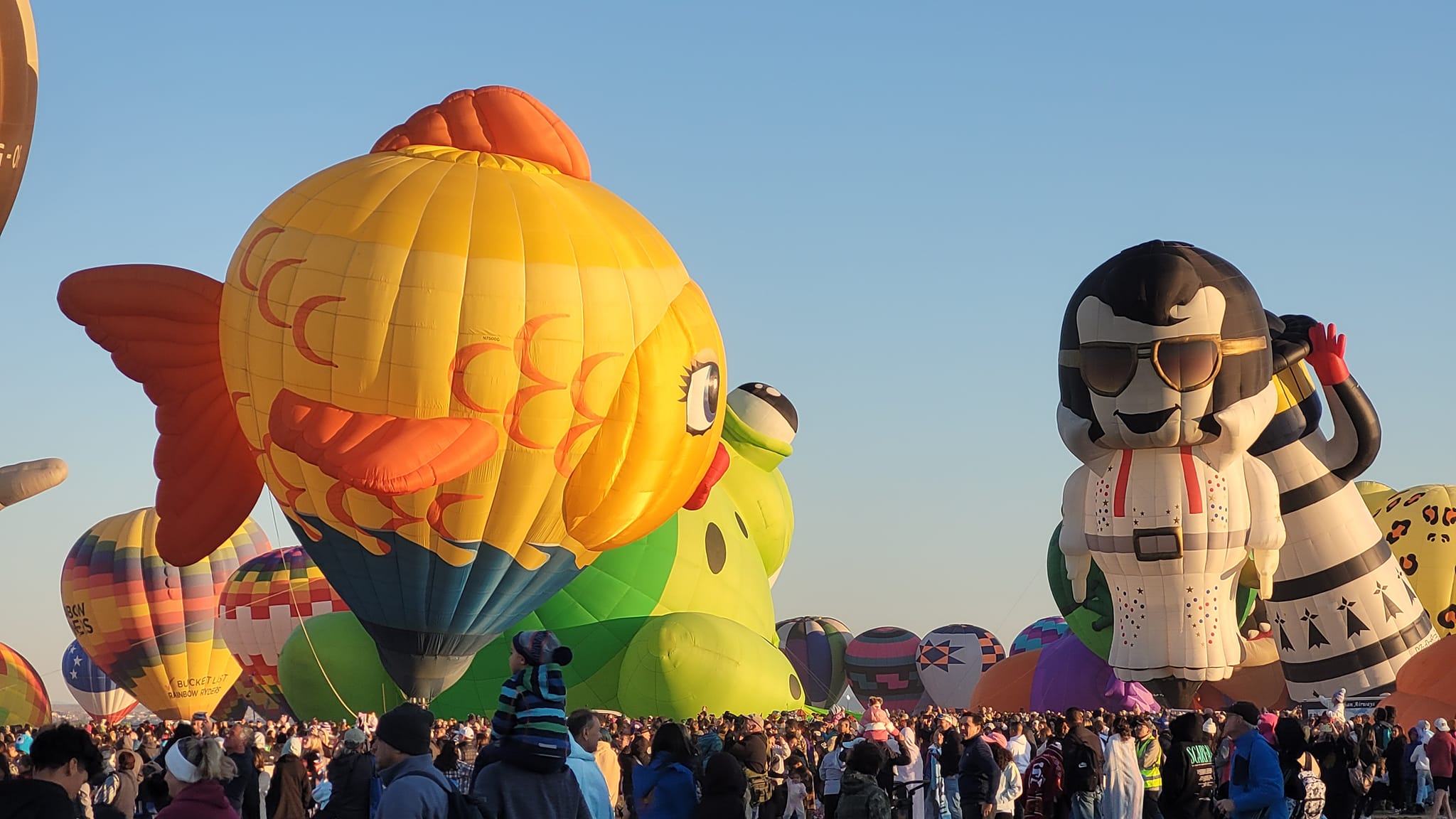
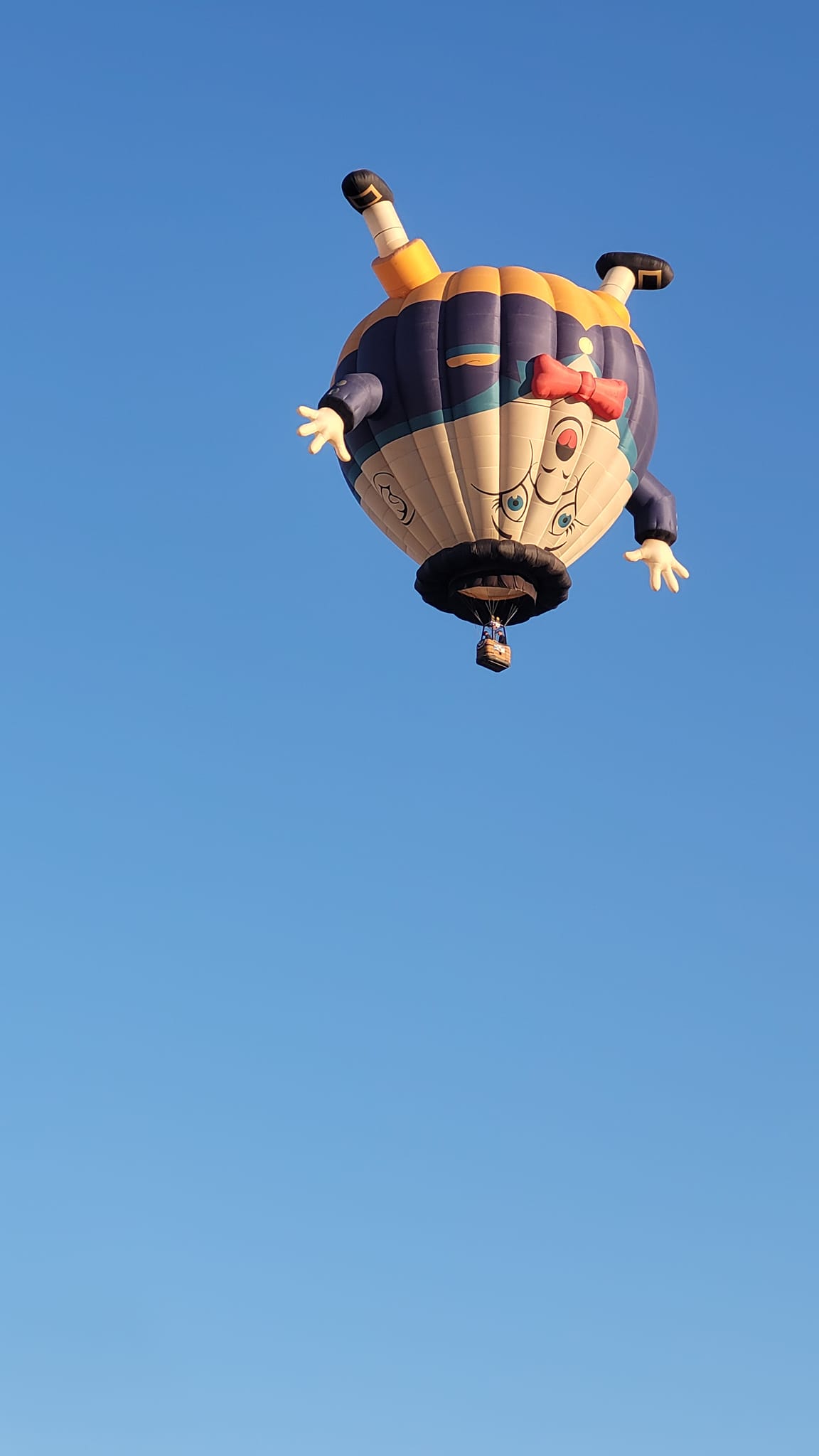
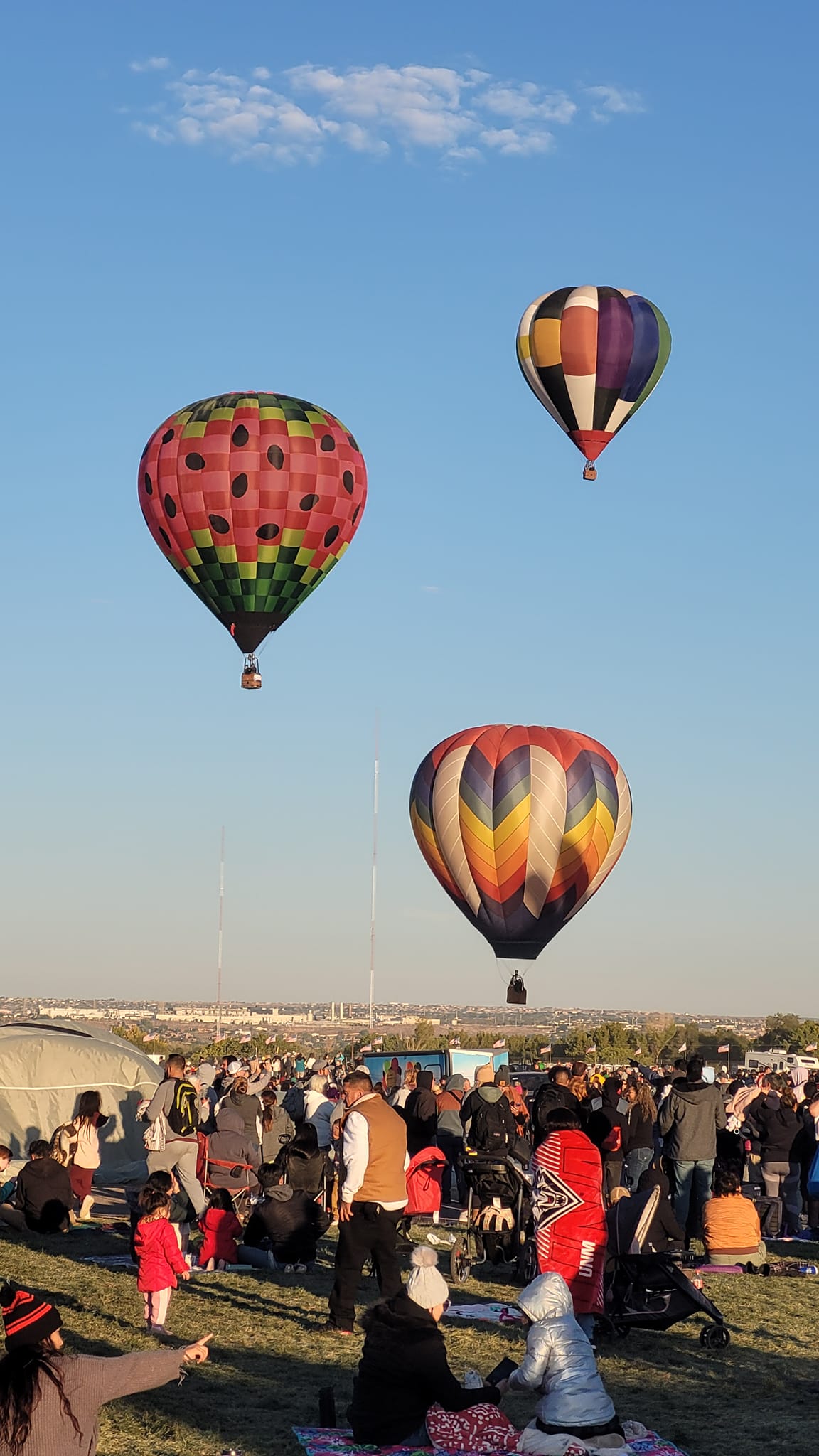
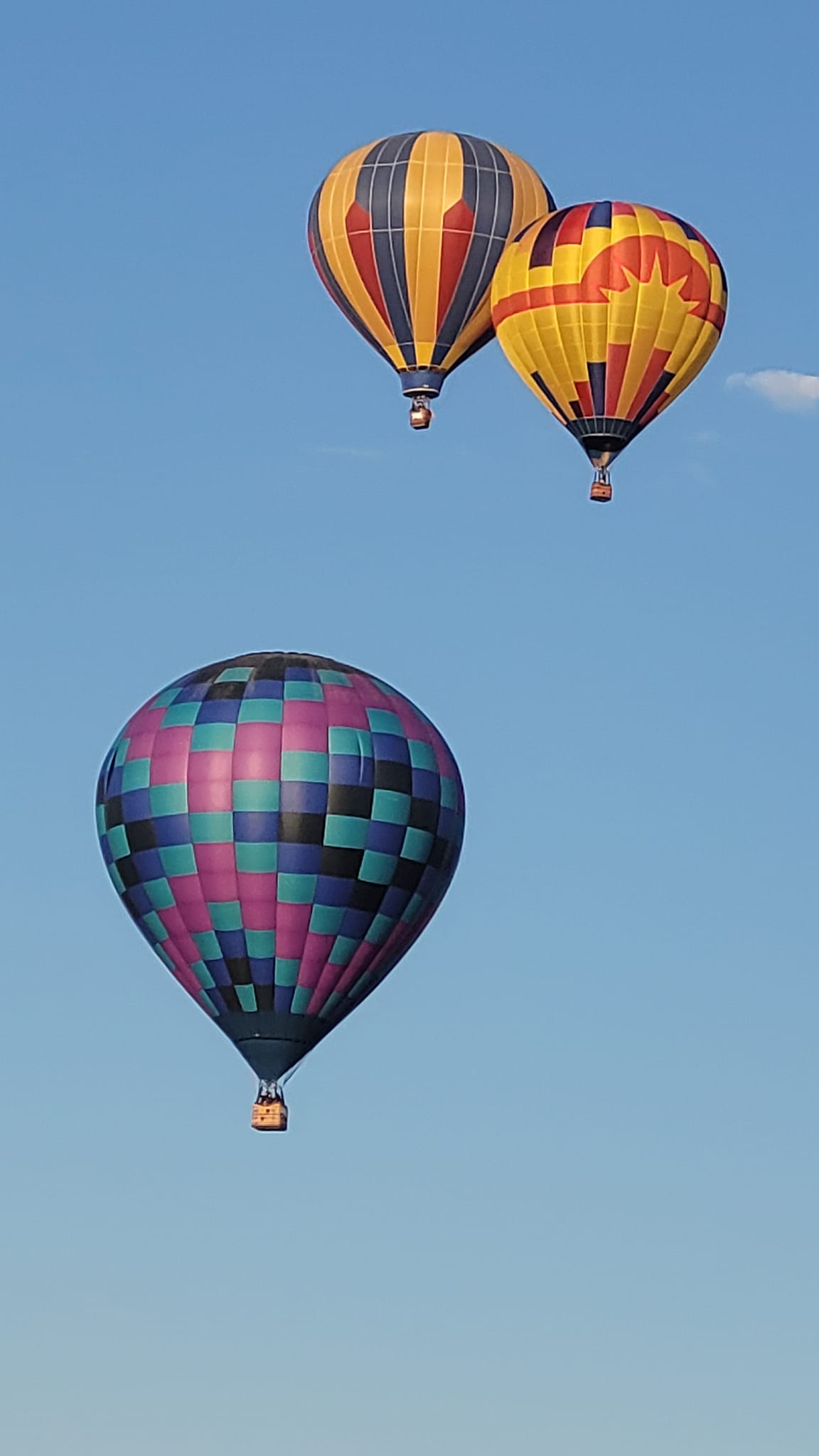
It’s time for my nap, I think. But I have wanted to post about this workshop/retreat before I get home again, just to remind myself of how grateful I am to be here, to be writing, to be seeing my child, to be–yes–escaping from the media frenzy as the presidential election looms. If that seems like something you need, as well, all I can do is send a few cheerful photos I took at the Albuquerque Balloon Fiesta.











 ann e michael