Last messages

End of another year. This one included some truly joyful times that will stay with me for quite awhile. But in that almost-inevitable reflection that arrives with the winter solstice, I find myself recalling dear ones whose lives closed in the past 12 months. I used to have physical reminders of friends and family, the last card or letter they wrote, something to put into a file or drawer or keepsake box and take out from time to time; a photograph or two, or maybe a recording of their voice on tape. Now that human communication has mostly migrated to the digital, to the “cloud,” those tangibles are much less common. But the messages persist.

A few weeks back, I migrated to a newer cellphone and, in the process, moved a year’s worth of text conversations to the new device (I’m not sure how I did that). All the old messages popped up, including three from dear people who are now deceased. Quite a different form of “ghosting.” I’ve kept in an online folder many email messages from my most frequent correspondent and long-time friend, who died February 1st, but I can’t quite bring myself to look at them yet. And it isn’t quite the same experience as opening and unfolding old letters.

I can’t bring myself to delete the messages from my phone, however. I suppose at some point that will occur, perhaps in another upgrade. Letters are ephemeral, too; all it takes is flood or fire. We have to rely on our minds, our memories, when it comes to recalling loved ones. Maybe that is what elegy is for, I don’t know.

~

As for the present–the Spirit of Christmas Present* ?–some of my Best Beloveds will be gathering here and there with me soon. Once the holiday hubbub dies down and the lonelier, cold January days arrive, I have poetry workshops to look forward to. They’ll be online, which suits my schedule in winter. Last year, I enrolled in two such workshops and found they spurred me to get a good deal of writing done, so I figured I might try repeating the process. Anita Skeen is doing another series for The Friends of Roethke Foundation with readings, prompts, and discussion on “writing toward wisdom.” In Dickens’ era, I’d be considered old enough to be wise (though most of us, Dickens certainly included, know better about age inevitably bringing wisdom). But the operating word for Skeen in this case is “toward.” It will be interesting to see where she takes her workshop participants in the new year.
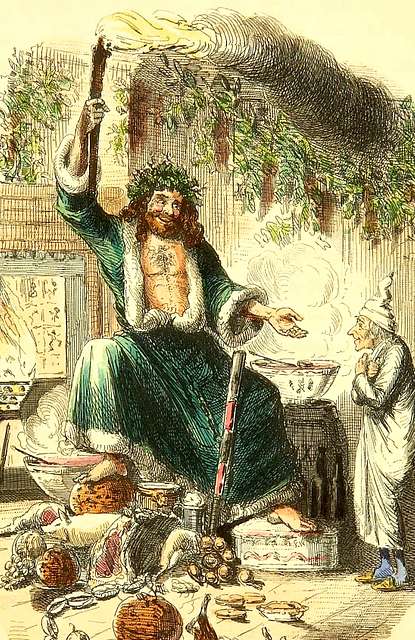
* John Leech illustration

As you wish

Photo by Ahmed u061c on Pexels.com

Discouragement, a regular visitor to this writer (and many other writers), has settled into the house with me. Summer is often, for me, a time of writing less and doing outdoor and social things more; this year, though spring was lovely despite torrents of rain, summer commenced with the deaths of two long-time friends, and I haven’t been able to shake my low mood. Now the rejection slips are arriving thick and fast, and I’m questioning the value of my work in particular and of creative writing in general. Like, why bother? What am I doing this for? For whom? What’s my purpose? And under what circumstances? Why?

Brooding certainly offers no help, nor does it change “declined” to “accepted.” Creative persons often find themselves questioning their pursuits, so I have good company. (Having just about completed the last book of Remembrance of Things Past, I can report that Proust’s narrator–largely a stand-in for Proust himself–wanders in the dark through wartime Paris pondering his own decision to try being a novelist and feels discouragement and doubts aplenty.)

Somewhere on a social media platform, I encountered these words by Virginia Woolf (from “A Room of One’s Own”): “So long as you write what you wish to write, that is all that matters, and whether it matters for ages or only for hours, nobody can say.” Good perspective, that, to stop being concerned for how long your writing matters, or to whom, as long as what you write is what you wish to write. And then if you don’t submit your work for publication? Maybe that is something you can live with. Rather, something I can live with; at this point in my life, I have had hundreds of poems and essays published, six chapbooks, and three poetry collections…maybe from now on, I should write (as I always have) for myself. Even if my work is not in fashion, or considered irrelevant, or judged as potentially lasting, it is still what I wish to write, what I find necessary to express.

Though one does write to express things, and expression seeks audience. That’s a perspective for another day, perhaps. Meanwhile, back to weeding the garden and picking cucumbers, beans, tomatoes, zinnias, and sunflowers.

So many losses

–For a dear friend, requiescat in pace.

~

Ironies

She asks herself how likely it is she will vote
in the next election, how long she will endure
under this administration

how it feels to be dying as this
president begins his term, the candidate she spurned
more than once before

to think he might outlast her wasn’t what she or
anyone expected, yet here we are and, she says
she won’t suffer all of it

I consider that a blessing, she says


~
photo: David Sloan.

Poem-ish thing

I don’t really feel ready to write what’s on my mind today. I do appreciate the cooler weather that means I can mindlessly pull weeds from the perennial beds and the vegetable garden without sweating or sunburn. Here’s a spur-of-moment poem-ish thing to mark, for myself, the place I’m at.

~

All morning, redtails shriek overhead
pleas or threats
or just announcing their presence
they don't much care
how I interpret them.
I don't interpret them.
Listen only for brown crickets,
whirring cicadas that have begun
to wind down late in August.
My father died in an election year
77 days before he could have
cast his vote. I'm reminded of that now,
how distracted I was and how,
though the election mattered,
my father mattered more.
For most of us, what's near the heart
obscures other concerns. Look:
there is dew on the grass,
barn swallows have
already left the garden.
~

Transformation & intention

During the past few weeks, I have been reading–one at a time, with pauses–the essays in Ross Gay’s book Inciting Joy. His earlier book (The Book of Delights) was easier, a bit less complicated. About, you know, gratitude–even though he describes his father’s death in the first essay of that one. He gets to something about grieving in the 13th “Incitement” of this book, however, that made me put the text down and say to myself: This is what I have been trying to get my poems to do for some time now.

(I did pick it up again and finish reading it, by the way.)

He insists that we remember how transforming grief is. Not can be, but is. Always: “When that one thing [that we grieve] changed, everything changed. Light through the trees in October now different. The sound of the playground…cooking a meal. The future. The past. All of it changed. That is what the griever is metabolizing.” He points out this metabolizing can’t be timed, that grieving pays no attention to whether it has been a day or a year or decades: “It seems to me that grief is not gotten over, it is gotten into. And the griever teaches us, or reminds us, there is no pulling it apart. Because grieving, alert to connection, is never only one person’s experience.”

Maybe we grieve for one person, or one beloved companion animal. Maybe we grieve that our youth is over, that our children are grown, that our favorite mom & pop store has been razed to make way for a Starbucks. Or perhaps we grieve for our planet, as Greta Thunberg does: “You have stolen my dreams and my childhood with your empty words…People are suffering. People are dying. Entire ecosystems are collapsing.” There are so many reasons why we feel loss. Loss is what life offers us, loss but also transformation. I think what Gay tries to say in his recent essays is that because there is something to sorrow that we all can connect with, our grief itself can connect us, give us understanding–maybe even joy.

A complicated kind of joy. A joy that acknowledges that life can be tough and sad. And instead of reeling away from people who are clearly–and sometimes not so clearly–suffering, we could connect instead, even though we are also terrified of suffering. Maybe that is another reason I became a hospice volunteer years ago, after my dad had been in and out of the ICU frequently, even though I had spent my childhood and many of my adult years being frightened of death and dying.

Good poems offer readers that sense of connection, which Gay and others sometimes refer to as mycelial (Lesley Wheeler in her poems, Robin Wall Kimmerer in her books and Merlin Sheldrake in his, the movie “Fantastic Fungi”…among others). My favorite poems by my favorite poets, now that I think about it, have always had that effect on my heart: recognition of connectedness with other humans or with other beings, with the environment, with the past-and-future, with (thank you, Walt Whitman) the Kosmos. The recent interactions I had and connections I found at the Joya residency cemented this fundamental awareness, that all of us are part of our huge, interconnected experiences in life.

Of course, writing strong work isn’t easy, doesn’t often happen; but here’s the place in our mutual social connectivity where intentions really do matter–because the intention impels us to work, practice, and dream. The intention is to create and, through whatever we create, to extend our human network. NOT our much-ballyhooed “social networks.” Those can go to hell (and we can’t take ’em with us).

Anyway, such are my intentions for working in the world of words, of poetry. And that’s also the reason I read so much poetry, in case you were wondering.

~

https://www.smallwoodlandthings.com/ Heather Brooks, artist

Life-shifts

This week marks one of those “big birthdays”–my mother turns 90. The birthday feels bittersweet; for, in many ways, I have been in the process of “losing” my mother since her diagnosis of vascular dementia in 2017.

Or is it that she is losing? Losing cognition, a sense of time, the words to say…anything at all. She has not yet lost a sense of emotional self, though I know that if her body doesn’t give out first, that will eventually occur. I’ve been through this before, with my mother-in-law. Helping people navigate dementia is a challenging task.

Therefore, as I celebrate her birthday, I also celebrate the goodness of the people (nurses, CNAs) who assist her daily at her skilled-nursing apartment, the social worker who visits with her and brings her mail, the acquaintances who smile and greet her even though they know there cannot be conversation (of any meaningful sort). The doctors and nurse practitioners who find ways to communicate with her about how she feels physically. It cannot be easy, even with someone as even-tempered and pleasant as my mother continues to be.

A funny thing about my mom. When she was my age, we used to tease her and my dad about “getting old.” She’d toss our teasing aside by insisting, “You’re not old ’til you’re 90!” Even with a few health issues, she and my father continued to be curious about the world and the people in it, traveling, going to parties, trying new things (cross-country skiing, Thai cuisine, activities with grandchildren). About 8 years ago, when my dad was ill with cancer and meningitis and going in and out of the ICU, Mom said she felt old. We retorted, “But Mom! You’re not old ’til you’re 90!”

Now she really is 90. Bless her good kind heart. ❤

~

February 26th is just another day, another year–and at this point, my mother has very little sense of time. It is likely that my mother’s life-shifts are in the past, and the next shift (there’s no escaping it) will be death; but who can tell? My mother’s ninetieth feels like a huge shift in my life as her daughter, as an adult, as a mother to grown people, and as a writer in the world. Why this is so, I can’t say. It’s certainly something I’ll be reflecting on often in the coming years, and the reflections emerge in my writing. As I work on revising the poems I’ve drafted in the past 5 years, the topics of aging, mortality, aphasia, and memory keep showing up. Things I can consider myself fortunate, perhaps, to be preoccupied with, rather than being forced into confronting a natural disaster (Pakistan, Turkey, Syria, and others) or war (Ukraine, Syria, and other regions).

Here’s part of a poem I’ve been wrestling with lately.

                       ... --I would untangle
my mother's mind if I could be let access to its
recesses, but those stay hidden like the life in hedge
and meadow, in the woody undergrowth,
unknowns twisted together, impenetrable.
...

How fortunate for me that my mother is not far away, is well-housed and safely cared-for, and has had a long, creative, fruitful life to celebrate this weekend. Nonetheless, the grief inheres. The hardest shift? I miss the person she has been all my life until recently. And yet: here she is. Herself, more impenetrable than ever. And loved.

~

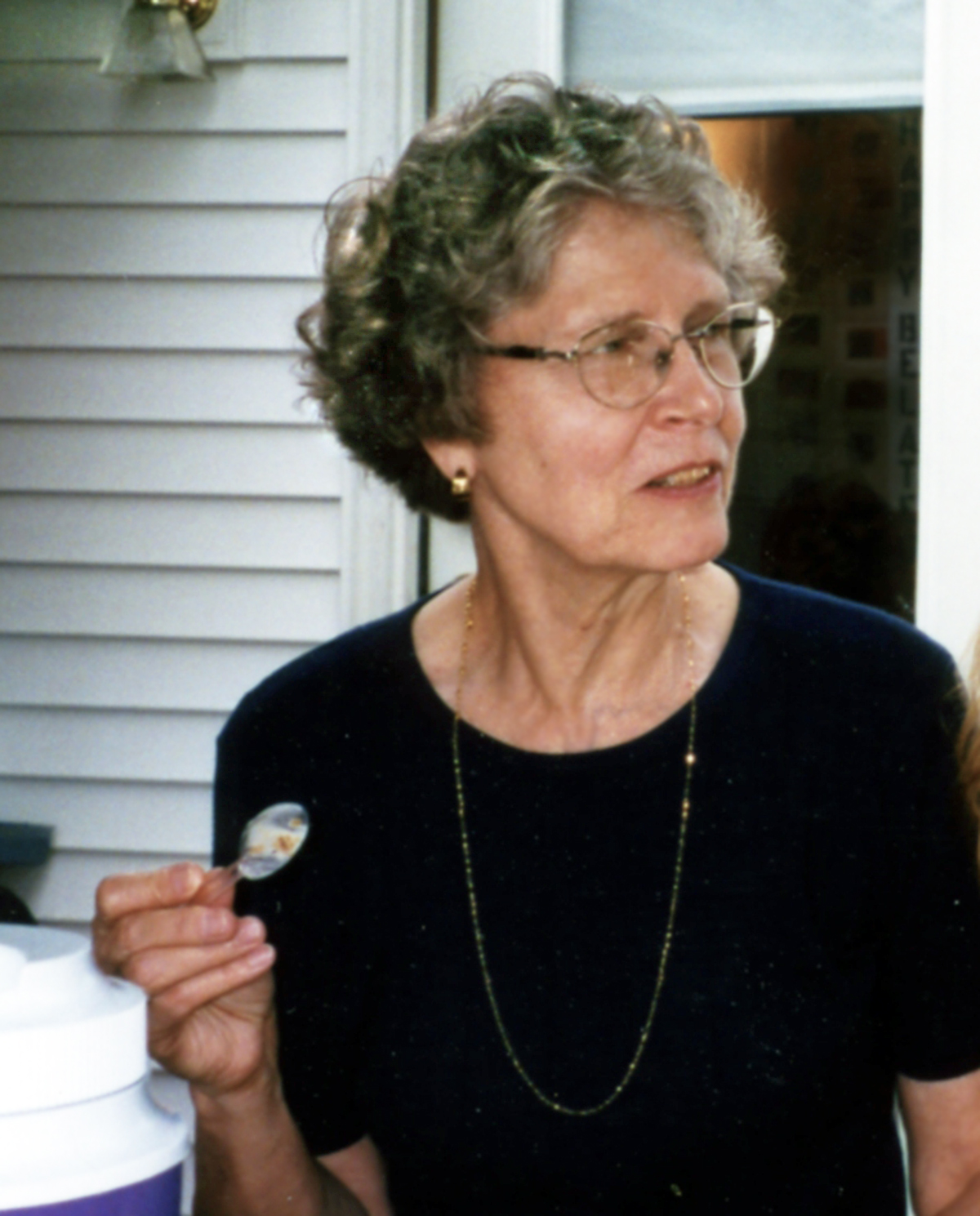
Mom at about my current age–ca. 1998 or ’99.

Solo endeavor?

It was great fun to be back in person, in Philadelphia, reading poetry aloud. Prepping for the performance made me aware, though, that I have no current obsession to mull upon; that may be why I have not been writing many poems of late. However, I recently felt inspired by Lesley Wheeler’s blog post including some prompts from poets. Prompts! Of course. Those are ways into writing when writing has not supplied the writer with her own ways into writing.

Therefore, I’ll close another year of my blog with a piece I drafted using Lesley’s conjunctions prompt. What resulted from the free-write surprised me, which is a good thing (it’s fun when I surprise myself, though this gets a bit dark toward the close–but dark contains interesting objects). And many thanks to Lesley and to the other poets whose prompts she shared. It’s likely I will keep working with them until my next poetic preoccupation.

~

So I’m tired of hearing people start their sentences with “So” on podcasts and the radio and TV, “so” a verbal tic, a word instead of “um,” which serves the same purpose but admits, more humbly, of uncertainty, which says I am pausing to gather my thoughts before speaking; whereas “So” sets up an explanation leading to opinion or argument, or so it seems to me.

So I’m sitting on my back porch even though it is late December, clouds gathering over bare trees. I hear woodpeckers deepening holes in trees, a rat-a-tat drill, and white-breasted nuthatches loud along the woodlot, and I ponder emerald ash borers and climate change and how to handle human aging in a capitalist society.

So what I wonder is “Am I afraid?” Some questions possess a looming quality, I guess this is one such. In my wicker chair, in my own backyard, no. Not afraid. The mood’s serene, no tightness in my chest no racing heart, not even facing death–as we all must do, though most of us refuse. Where are you going with this, Writer?

So all I’m saying is, I have fears about the future yes but not about dying, because dying I will face alone. Even when loved ones can be beside us, we are not an us when death comes. Each dies to their ego alone, interior to the world, most alone at death no matter who surrounds us.

So why, then, do I volunteer for hospice work, where the goal is not only to alleviate some of the pain but also to keep people from dying unaccompanied? My reasons are complicated, people are complicated. So let me just say that having been present when human beings die, that passage may not necessarily be a lonely one. But it is accomplished alone.

Adaptable

The squirrels have begun an assault on my vegetable garden, drawn by a stunning and unplanned stand of sunflowers starting to go to seed. I can’t say I blame them, and I don’t mind that they eat the sunflowers–the birds can grab plenty. It’s the intelligence of squirrels that rallies the assault: they find a food source, tell their friends, and then explore further into the garden. That’s where I get annoyed with them. In this dry, hot weather they seek out the juicy tomato fruits and, while there, sample everything else they can find.

But their appearance is due to human circumstance and intervention. The development of a suburban cul de sac next door instead of the cornfield of past years, for example, and the pressure that has led to fewer predators in our little environment. More deer in smaller acreage, and deer eat oak saplings, so we have fewer oak trees maturing along the woodlot. With less mast available, why not turn to sunflower seeds, tomatoes, pears, even squash? Squirrels will take advantage of those changes. Very adaptable creatures.

Adaptability is admirable, and required if beings are to stay alive, let alone evolve. When I visit my beloved, aphasic, widowed mother, I marvel that she can nevertheless, under enormous changes, navigate the world. Granted–she has assistance. But not all human beings with assistance manage to maintain a benign and compassionate sense of self as their bodies fall apart with age.

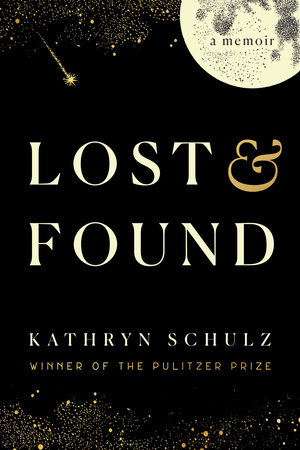
Which brings me to Lost and Found, a Memoir, by Kathryn Schulz. My book group read this one recently, and I started reading it without doing any research about the book or the author–too busy with other things, and sometimes I like to be surprised by a text. By page 60, I was teary-eyed, because the story Schulz tells resonates with me. This month marks the second anniversary of my dad’s death, and the book begins with the death of Schulz’s beloved, curious, intellectual, chatty father.

This is the “Lost” of Lost and Found. Schulz writes beautifully, and writes beautifully of how complex and fraught the impending death of a loved one can be–the decisions, the fears, memories, even the forms that must be filled out and submitted so that the insurance and medical bills get properly taken care of. Meanwhile, we grieve and remember and numbly try to keep on in our suddenly bereaved “normal lives.” Schulz describes the environment of grief accurately and poignantly.

The “Found” section of the book describes love: new love, romantic love, the thumping of the heart and surprise at finding a person who’s the person. Here, Schulz’s experience differs considerably from mine, yet her writing took me back to days of feeling the heady excitement of getting to know someone deeply, intimately. The memoir, though it begins in sorrow, ends with the vulnerable opening into the shared territory of long-term relationships, whether those are among families, friends, or spouses.

As wretched as the world often is, we–and the rodents, insects, plants, etc.–find ways to adapt for far longer than seems likely. In the face of war and climate catastrophe and the loss of what we love, some of us manage to change and stay resilient, teaching new skills to those who come after us. We do so through art, literature, dance, music, community, love. It isn’t easy and it isn’t certain. But it’s all we’ve got.

Revision revisited

National Poetry Month comes to a close this week, as does my experiment with revising someone else’s poem. It was a fascinating practice, because it involved a kind of interpretation and re-imagining, taking–in this case–a poem written in Portuguese in 1928, and seeing whether through revising, I might make it mine (if not make it new). In slightly less than a month, I reworked the poem ten times. That’s a pace much quicker than I generally revise my own work. Which also made for an interesting process.

No judgment on the outcome, such as it is. The purpose of the prompt was to keep me writing and to remind me to get revising my poems, and it did have the intended effect. When emotional, physical, job or life obstacles clutter the writer’s terrain, attending to a writing project–however arbitrary–can have a salubrious effect. Or at least grease the wheels a bit.

The initial piece: I randomly chose the following poem by Pessoa in the heteronym of Ricardo Reis, in Honig & Brown’s translation:

"Whatever stops is death, and is our death"

Ricardo Reis (Pessoa)

Whatever stops is death, and is our death
If it stops for us. That very shrub now
    Withering, takes with it
    Part of my present life.
In everything I saw, part of me remained.
With all I saw that that moves I too move.
    Nor does memory distinguish
    What I saw from what I was.
~~

That was my ground zero. Perhaps I chose it because it reminds me a bit of Dickinson’s “Because I could not stop for Death.” I will not reproduce all ten ‘versions’ I drafted, though that might interest someone (who exactly, I don’t know…). Here, however, is the tenth version, which sounds much more like me:

Revision
            after a poem by Ricardo Reis {Fernando Pessoa}
                        “Whatever stops is death…”

Hurrying to wait,
I contemplate
the final cessation
which
like the intersection
of Lanark Road and Rt. 309
lies up ahead:
red light, stop sign.
 
At a less determinable
distance, death does its duty—
part of me goes dying daily
each fallen leaf
dry stalk and road-killed
grey squirrel
pulls me closer
to my own departure
the way
a mother grasps her
child’s hand while running
to catch a crosstown bus—
hurrying.
 
I imagine memories
will dissipate, and freeze—
slowness and blur
will burgeon
until I can’t discern
the glistening new cicada
from its static husk
or morning’s gleam from dusk’s
cluttered, cloudy smog
or red lights from yellow
 
change will be stopped
at that intersection because
I will no longer know who
or what it is I was.
 

~~

One of the things I take away from this effort is that I do have a recognizable voice in my work. That was something I fretted over for many years, the concept of possessing a poetic voice. I have written in so many styles and taken different approaches to work and, for awhile, topic, that younger me worried that I had not developed a voice. Apparently someone long ago convinced me of the importance of having a recognizable voice; now, I barely recall why lacking it would feel like such a terrible thing. But reading my revision of Pessoa’s original, I sense his idea but hear my voice and my interpretation of his idea.

I’m not sure this is the final draft–whether this poem is finished or not, or whether it ever will be. I thank Pessoa for providing the starting point for the experiment and for making me stop and consider whether memory distinguishes who I am from who I was.

~

Finally, a recent brief poem in One Art Poetry Journal: https://oneartpoetry.com/2022/04/21/passover-by-ann-e-michael/

In which my dad appears

When does bereavement permit the writer to get back to the writing process? I have had quite a few conversations about this topic in the past few decades, and the answer’s pretty obviously “It depends.” I think of Donald Hall writing during Jane Kenyon’s illness and death and afterward–the stunning poems of Without. When my friend David Dunn died, I wrote immediately and often, sorrow emerging through elegies and remembrance. But I was younger then, and less experienced in the arena of bereavement.

During my mother-in-law’s two-year decline toward dying, I found myself writing about the challenges we faced–physical, emotional, communicational (that’s not a word, but I’m leaving it here all the same). Afterward, I could not/did not write. What interferes?

Why my thoughts turn this way: because, lately, my dad keeps turning up in my poem drafts.

I did not write much last year and did not submit any work.* For some reason, though I blogged and wrote long emails to friends and read many inspiring books, I did not feel particularly creative. But I wouldn’t have associated that semi-arid year with my father’s death; I figured my creative void was more about covid and an increase in chronic fatigue symptoms.

To jump start myself this year, I signed up for an online workshop (see this post). It has helped–I’ve drafted more poems in five weeks than I wrote in five months last year. But there’s been a peculiar outcome to these poems: despite widely differing prompts, source poems, and initial processes, my dad or something I connect with him appears in almost a third of the new drafts. I wonder what my subconscious is doing behind my day to day routine. Is this a response to bereavement, or a sign that I’ve accepted his death, or a reminder to self of what a huge loss it has been to me?

Not that I have a definitive answer to any of those questions. I do feel grateful for his appearance, though. He had a good sense of humor and loved to sing–nice things to have in a poem.

~

Thanks, Dad.

~

*Well, almost no work. Thanks to Marilyn Hazelton, editor of red lights tanka journal, I did submit tanka poems in 2021; and she accepted a few for this season’s edition (print only).