Discourse: talking about poetry

This post is a response to Fox Chase Review‘s post which can be found here: Poetry in Decline?

“G” asked for responses to the need for a revolution in (USA) poetry, stemming from Diane Sahms-Guarnieri’s comments. Her ideas were excerpted, so I may be missing some of her assertions or evidence. In one way, she echoes Dana Gioia’s famous “Can Poetry Matter?” essay and book (1992): that is, in terms of questioning the isolated, academic support of poetry, poetry study, MFAs, and university publishers as elitist and as dampening a wider audience for poetry. While Gioia tends to support the literary canon in general, he stresses in his early essay that poetry has its own specialized, “frenzied” little circle of literary lights but that the art itself no longer exerts much influence on life, culture, and thinking in the USA.

From Gioia’s introduction:

The situation has become a paradox, a Zen riddle of cultural sociology. Over the past half century, as American poetry’s specialist audience has steadily expanded, its general readership has declined. Moreover, the engines that have driven poetry’s institutional success—the explosion of academic writing programs, the proliferation of subsidized magazines and presses, the emergence of a creative-writing career track, and the migration of American literary culture to the university—have unwittingly contributed to its disappearance from public view.

Sahms-Guarnieri further suggests that isolated, academic styles of poetry are partially to blame for poetry’s “decline” among US readers and calls for a return to realism.

I’m not sure “realism” is the answer, because many infusions of style, energy, or revolution that have done poetry good as a whole have not exactly fallen into that category (was Lorca a realist? just as one example). I embrace the idea of the narrative-lyric mode, which may be considered a kind of realism; but I also love many, many other styles of poetry, some of which are “difficult” and not easily accessible to the general reader. The main means through which I learned the diverse structures and approaches to poetry is through reading on my own, autodidact that I am. Yet formal study and literary criticism increased and deepened my passion for this art. I teeter on the fringe of academia though I am a poet who writes outside of the classic academic framework.

I feel compelled to defend the teaching of poetry, though I admit the process is often done badly. Still, one of the things academia does best is to examine the work, and I feel readers who examine what they love more closely will benefit from doing so (rather than taking the “I know what I like” stance). Academics have, since the 1970s, begun seriously to read beyond “the canon,” and that is all to the good. Academia doesn’t produce the best art, however. Knowing how things work in theory does not equal expertise. I know how a bicycle works, but I am pretty sure I couldn’t build one from scratch.

~

The poems that remain timeless are seldom elitist. The problem with the elite is that it eventually falls from grace. When that occurs, the allusions and puns and, often, the entire foundation of the piece get lost. This issue can be equally true of poems that are “realistic.” If the poem offers no recognizable aesthetic, purpose, or sensation, it ceases to be valuable to future readers. Many of today’s poems will suffer this fate–mine among them–and that’s not a bad thing. We don’t get to judge which art is revolutionary, prescient, timeless; later generations make those judgments.

And that is one reason many writers resent academia and university presses: it seems as though these institutions are “at the top of the mountain” and trying to keep their situations exclusive; in other words, they are acting as cultural, literary judges. So they are…in their time. They cannot enshrine themselves for the future. Art doesn’t work that way.

~

Contemporary Poetry Review claims it is there to resuscitate contemporary poetry, which implies poetry’s suffering a near-death experience. I do not think poetry is dying. I think it is changing, which it has always done, because art is responsive to and entangled with culture and therefore defies stasis.

Poetry, like most art, tends to exist on the cultural fringe, where it hangs out with curious, inventive people who bother to seek for it. Some of them look on the mountain top, and some of them look online, or in pubs that host open mics, or at independent bookstores, long may they thrive. With luck, and maybe some encouragement, those people might buy a book or two–including POD-published or self-published books (why not? –and while you’re at it, Water-Rites is still available!). This last point coincides somewhat with Larry Robins’ perspective in the Fox Chase Review piece.

If you really do know what you like, regardless of how you make that judgment, buy a copy of the book. And don’t get it second-hand from Amazon if you can help it–buy from the small press or the author or an indie book shop if you can find one in your area. Read it again and again, and figure out why you like it. Tell someone else. Discuss what you love.

That’s what keeps poetry alive.

water-rites_cover

Comparison as analysis

April may be the cruelest month, may be the time of cherry blossoms hung with snow, may be the time to celebrate poetry–as if we could confine it to one month, those of us who love it–anyway, it is also the last full month of the spring college semester. After endeavoring to impart some understanding of the principles of literary analysis of poetry to my students for the past ten weeks, I assigned a short paper that taught me a great deal. Perhaps it taught my students something, as well.

It occurred to me that metaphor–indeed, most figures of speech–are based upon likenesses, direct or analogous or implied. Yet we Western thinkers are taught to observe differences first and foremost. We learn that red is different from blue, that a ball is different from a block; and I am not disputing those differences. When we speak metaphorically, however, we imply similarity instead. My students default to contrast for analysis and to similarity for description.

There’s nothing inherently wrong with that; it’s very Aristotelian. But what if we turn things 180 degrees? Think of Linnaeus, who classified so many plants and animals; he grouped life forms according to likeness. The differences branched off from the similarities. He described what was overtly or subtly similar, then analyzed for differentiation.

Any two poems have at least a few things in common, so I asked my students to do a comparison-only study, briefly, in a 2-page paper. Initially, they had a great deal of trouble with the assignment. They wanted to contrast. Their interests lay in what was noticeably different about each poem. They genuinely struggled to stay on the topic of similarity, but the outcomes were some of the best papers I have yet had from this class. A student told me that this exercise “really made me think.” Yin-Yang

Fascinating response, really. What does it tell us about our brains, our education, our observational instincts, that we want to stress difference before similarity? Is this a Western civilization thing, or an in-our-DNA-thing? I wonder.

The process that makes a person think, though, is a learning process for certain. Once we can recognize similarities between disparate works of art, we can perhaps recognize similarities between philosophies, religions, human beings. The very differences may become beautiful or intriguing rather than frightening or alien. We may learn to become more comfortable with variety, and more appreciative of it. I know my reading life would be much the poorer if I refused to read, try to understand, or value novels or poems that seemed challengingly “other.” I do not love all of the work I read, but everything teaches me something.

The poems below are very different. In what ways, specifically, are they alike?

Spleen (by Charles Baudelaire, tr. by Robert Lowell)

I’m the king of a rain country, rich
but sterile, young but with an old wolf’s itch,
one who escapes Fenelon’s apologues,
and kills the day in boredom with his dogs;
nothing cheers him, darts, tennis, falconry,
his people dying by the balcony;
the bawdry of the pet hermaphrodite
no longer gets him through a single night;
his bed of fleur-de-lys becomes a tomb;
even the ladies of the court, for whom
all kings are beautiful, cannot put on
shameful enough dresses for this skeleton;
the scholar who makes his gold cannot invent
washes to cleanse the poisoned element;
even in baths of blood, Rome’s legacy,
our tyrants’ solace in senility,
he cannot warm up his shot corpse, whose food
is syrup-green Lethean ooze, not blood.

~ ~
Arrival (by William Carlos Williams)

And yet one arrives somehow,
finds himself loosening the hooks of
her dress
in a strange bedroom–
feels the autumn
dropping its silk and linen leaves
about her ankles.
The tawdry veined body emerges
twisted upon itself
like a winter wind . . . !

~

(These poems are shared under the Creative Commons and are copyrighted by the estates and/or publishers of these poets)

Judging poems

During National Poetry Month, a local newspaper (Lehigh Valley Press) sponsors, with a local public radio station (WDIY), a poetry contest for children ages 6-17. This year I was one of seven people, most of us educators, on the judging panel.

Judging poetry is always a rather fraught endeavor, and when one is reading the work of novices–particularly very young ones–setting standards can be challenging. What were we looking for, exactly? How could we decide whether the writing of one 14-year-old was “better” than the work of another? How to assess the poetry of 8-year-olds?

Our coordinator and organizer began with such questions and by asking us to describe what each of us seeks in any poem–not poems by children, but any good poem. Would children’s work feature any of these attributes? Successful attempts at poetic strategies or craft, for example–we may be able to determine that a 10-year-old’s work shows signs of poetic craft. Imagery that moves beyond the expected or clichéd? Young people often prove quite capable of that part of writing.

We are experienced in the classroom, too, and can usually tell when a child’s work shows signs of being ‘overly-coached’ by a well-meaning adult. Alas, all too often an adult’s interference deadens the imaginative if occasionally grammatically-incorrect approach children take. We can also tell which poems come of a classroom assignment when we get submissions of numerous 7-line poems on “snow.” This is not to suggest that none of the poems are worthy of note: an imaginative writer of any age can probably create a lovely piece conforming to the assigned framework. But, as teachers, we found ourselves responding to the assignments themselves (“That’s clever and would work well with third-graders, too;” “They must be studying the Black Plague;” “Looks as though they made a word bank for this one;” and so on). We had to remind ourselves to look at the work itself for the earmarks of imaginative ideas and use of language.

Interestingly, first-place poems seemed obvious and agreement was usually unanimous. This was true for elementary school, middle school, and high school writers: the best work does stand out.

Choosing the second and third place poems was more difficult and resulted in lively conversation about what makes a good poem, what matters more: authenticity of experience? discernible voice? vivid imagery? clear use of craft? emotional expression? imagination? Each of the judges had useful insights that reminded me of the value of thoughtful criticism and the value of poetry-as-art.

It was also heartening to read the work of so many young people who showed a willingness to play with words, to think about aesthetics and feelings and language, and to show their work to others. I’m grateful to the teachers who took the time to introduce their students to poetry and to encourage their pupils to write.

Mortise & tenon

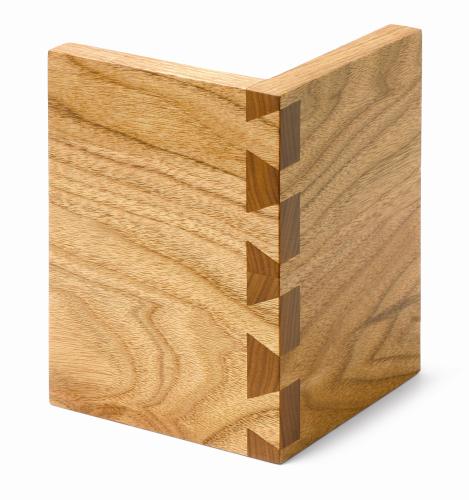
In a post late last year, I examined a Gerard Manley Hopkins poem for the way the lines and images might be considered as hinges. Another metaphor for how poems work–one I have been churning in my mind for a couple of years now–is joinery of another kind: mortise and tenon. What joinery does in woodworking is allow the cabinetmaker to connect separate pieces of wood together in such a way as to allow a little movement as the wood responds to temperature and moisture changes. Good wood joinery requires experience and thoughtful attention, as there are often additional challenges such as connecting end grain to long grain. Amateurs resort to screws, nails, and glue to cobble projects together because joinery takes time to learn and requires technique and practice that the average DIY “carpenter” does not possess.

True craftspeople learn, practice, and employ conventional joinery techniques and often develop their own signature styles. The craft of woodworking parallels the craft of poetry: there are tools and techniques, strategies and conventions, patterns to follow, and inventions and innovations to create. Both crafts join together materials that seem alike (wood to wood, words to words), and yet it can be damned hard to get those connections to hang together solidly and make a coherent and stable whole.

~

Odate's

Odate’s “Pride of New England” [1982] photo: Laure Olender

~

My friend Toshio Odate was trained as a shoji maker and has worked as an educator, artist (sculpture), and craftsman-in-wood for most of his 82 years. Possibly his best-known book is the practical but also spiritual Japanese Woodworking Tools: Their Tradition, Spirit and Use. This text will teach you how to choose, care for, sharpen and use traditional Japanese hand tools, meanwhile illuminating the history and spirit of the woodworking craft in Japan. Toshio reveres the work of humans, the human touch, the effort of making that goes into a handmade object; and his sculptural pieces reflect his passion. The large sculpture above, Pride of New England, stands on his property under the hardwood trees and above the nearby creek. Nothing holds these huge slabs and trunks of wood together but hand-cut joints: mortise and tenon, mostly.

~

I’m going to try to explain a connection between poetry and joinery through a brief examination of the poem “Whereof the Gift Is Small” by Maxine Kumin. This poem appears here, and I think you ought to check out the link to a Q & A on this poem, as it is enlightening and amusing (as Kumin so often is).

Whereof the Gift Is Small

       Henry Howard, Earl of Surrey

And short the season, first rubythroat
in the fading lilacs, alyssum in bloom,
a honeybee bumbling in the bleeding heart
on my gelding’s grave while beetles swarm
him underground. Wet feet, wet cuffs,
little flecks of buttercup on my sneaker toes,
bluets, violets crowding out the tufts
of rich new grass the horses nose
and nibble like sleepwalkers held fast—
brittle beauty—might this be the last?

~

This lovely small poem is framed by phrases from Henry Howard, Earl of Surrey’s sonnet “The Frailty and Hurtfulness of Beauty,” so right away we have an old poem joined to a new one; and as Kumin admits in her commentary on the piece, “Picking lines from others’ poems is hazardous and I don’t recommend it.” Woodworkers will recommend that old, seasoned wood not be joined to green wood for practical reasons. Good reasons, too. But that does not mean one should never attempt it or that it cannot be successfully done. A master like Maxine Kumin can succeed–but with caution.

How might one approach the joinery of words as apparently distant from one another in tone or image as “sneaker” and “rubythroat”? The grave of the gelding (a gap, into which something solid may be placed) gives the reader one opening. There is also the stepping-down aspect of the images, each connecting to the next. The bird appears higher in the poem, quite literally, up there with the lilacs fading on their tall stems; but the alyssum blooms much lower to the earth, as do the bleeding hearts where the bee is busy. The grave and beetles take us deeper. Then, up ever so slightly, to the low-growing buttercups and the damp cuffs of the speaker’s trousers and the noses of still-living, grazing horses…with a “brittle” reminder that this season is short (“the gift is small”). If you are familiar with Surrey’s poem, there’s a marvelous resonance here, though I feel Kumin’s tenor is a bit less cynical than Surrey’s.

dovetail joint

dovetail joint

Kumin’s poem is not a full sonnet, and some of her end-rhymes are slant. A modernity pervades her piece, yet the older poem’s language and sensibility are evoked nonetheless. How elegantly she achieves this balance. I think the first joint in the poem appears at line 4, at which point the nature imagery of the first three lines, which could incline to the romantic, solidly connects with the real fact of death. This line also introduces us to our speaker: the gelding is “my” gelding. Line 6 provides another clear connection: the speaker here exists very much in the present moment, wearing sneakers, noticing the buttercups. This line fits into the poem like a well-cut dovetail, linking the pastoral descriptions with the reflective mode the speaker turns to after observing the horses. And there, between the em dashes, we find Surrey’s “brittle beauty,” a tenon that fits the space and holds the entire brief poem together.

Good joinery is often invisible except to those who appreciate the work and take the time to look for it. Toshio solved the engineering challenge of constructing his sculpture through a process of reflection, experiment, experience, and revision. How like a poet’s work that seems to me! When I told him I feel his work is analogous to poetry, he was initially flabbergasted. Maybe the surprise stemmed from a difference in the approach to poetry across cultures, or maybe from a difference in the way a plastic artist perceives a largely abstract art like poetry. Maybe I could not explain my idea adequately to a person for whom English is not a first language. Actually, I’m not certain he believed there is as much human touch and hand-work involved in poem-making as there is in woodworking or the sort of made-by-hand sculpture Toshio does. We agreed not to fully understand one another.

About a year later, I attended a special event at his home, a celebration of the Object as Being, for which I composed a poem. That summer, he called and said, “I think maybe I understand now what you mean.”

~

endnote: If you’re interested in learning more about Toshio Odate, here is a 1996 article from The New York Times and a 2009 blog post (including a short video) from Tom’s Workbench, as well as a short on making shoji screens–from Martha Stewart’s network.

Difficult criticism

I have a list of books to read, yet I am often reading something else. Something I have stumbled on in the library or on a friend’s site or bookshelf…

The most recent of these is Rosanna Warren’s Fables of the Self, a book of essays on lyricism in poetry that has a distinctly classicist bent. It’s an odd book, though, because there are tightly-controlled, scholarly critical essays in here and also memoir; the book closes with a journal witnessing her father’s dying. I’ve found the personal pieces thought-provoking and often lovely. I’ve found her criticism scholarly and difficult.

The fault is mostly mine: I have very limited background in classicism. No Latin, no ancient Greek, few readings of the classic writers even in translation. By the classic writers I mean such early Western poets as Horace, Virgil, Catullus, Theocritus, Ovid, Sappho, Euripides (but also Dante, Milton, etc.). These are foundational works, but they did not act as my foundation for poetry or poetics; I studied them later in my readings of poetry–and not in a scholarly way. Warren kindly offers translations for all of the original dead language passages she quotes, so she understands that her audience may be less familiar with the texts than she is. Nevertheless, I find this book quite difficult to read, since I am always stopping to look things up or re-read a paragraph and make certain I am following her exposition or argument.

It is challenging to me to read a discussion of, say, Mark Strand’s poetry that uses Horace’s odes or the poems of Alcaeus to demonstrate the thread of the pastoral that appears in Strand’s work. Yet by reading these essays, I learn about the alcaic lyric stanza and can pursue more on that topic if it interests me. I can go to Horace knowing a little more what to expect (as I only know his most famous/familiar georgics). I’m reminded of being in my 20s and reading Proust (yes, all the way through); I kept taking notes on what else to read…Racine, for example…as those allusions appeared in the novel. As a result, I got quite an education–if a rather eccentric, autodidactic one–in classic French literature and art and music. Then I read Hugo and Flaubert and Baudelaire. My life would be less rich if I hadn’t been moved to pursue those references beyond the text.

Similarly, I am likely to be reading more of the classical literature, and perhaps to understand it a bit better (as to how it relates to contemporary life and art) thanks to Rosanna Warren.

When the going gets tough, the tough get reading!