Spinning & flashing

While traveling, I finished Octavio Paz’s The Bow and the Lyre and also Dave Hickey’s The Invisible Dragon, two very different books that I’m still churning around in my mind as they intersect on the subject of beauty in the arts.

Hickey’s work has been much more controversial than has Paz’s; but then, he addresses a completely different audience in his book (most specifically art world critics, a contentious bunch to begin with). Both writers spend some time on the idea of rebellion in art, and there’s much to consider on just that topic alone. But I feel as though I need to re-read both books and jot down my thinking because–well, they cover so much that relates to my interests. I cannot keep all of this information, and all of these concepts and revelations, in my mind at once.

My brain’s spinning.

Which is a good thing. To spin is to draw and twist into a thread, to gyrate, whirl, “to evolve, express, or fabricate by processes of mind or imagination” [Merriam-Webster], to twirl, roll and yaw, speed along, etc. When the brain does these things, neurons are firing happily. The brain also needs meditative rest, true, but the whirling of intriguing thoughts is a better activity than the grating stir of anxieties or the dull repetition of too-familiar routines.

About Paz. All of the essays in The Bow and the Lyre are good, but some are better than others–and some just appeal to my interests more than others. The glib aphorisms I complained of earlier turn out to be forerunners of quite thorough explorations into the “what” of poetry and of being. I came away amazed at the breadth of the author’s knowledge, the depth of his close reading, his philosophical forays and his artistic analysis and his creative intuition. We should be glad our Nobel laureates are of this caliber.

Furthermore, coincidentally of course, Paz (writing in the late 1950s and early 1960s) cites Heidegger, who was alive at the time; proto-phenomenologist Husserl; and Deleuze–a philosopher who’s on my to-read list. Also many others, some of whom are Mexican or Spanish poets or dramatists with whom I have little or just passing familiarity, and most of whom are poets and philosophers I’ve read (whew, so I didn’t get too lost in his examples).

My favorite chapter is the one on Image in the poem, but I admire his thinking in so many of these essays. Paz discusses the much-acknowledged need for tension in the poem, a topic I thought I’d already read enough about, but his approach strikes me as particularly clear and apt. Robert Bly has written about the “leap” in a poem (see his small gem Leaping Poetry) and the suggestion of the twist or surprise in a poem is not new. Paz considers the poem as a kind of rebellion because the poem is always outside of the expected cultural norm, because the poem is slippery and cannot easily be pinned down–else it fails. There is also a startling-ness to the good poem–his translator employs the word “fulgurant,” an obscure but specific word meaning amazing in an impressive way–suggestive of a flash of lightning.

The tension need not be so flashy. It can be subtle, but the poem has to have earned its ‘turn.’ How does that happen? Paz says that tension is created in tandem with the reader: the reader is an integral part of the poem. What occurs in the poem (in terms of form, imagery, metaphor, meaning, rhythm, wordplay, etc.) will be unexpected even though the reader anticipates it. In fact, the reader desires the surprise, wants the unpredictable, and the poem will be weaker for the lack of it. It’s like watching a fireworks display. You anticipate the noise, “chrysanthemums” and “fountains,” but you’re never quite sure when exactly the rocket will spew forth its light or what form the explosion will take.

The reader expects change and transformation from the poem, expects puns, twists, leaps, juxtapositions, and all the rest. The reader feels that thrill from a poem when the expectation is justified but the delivery of the surprise nevertheless startles. Paz would say that is a revelation.

And this is only one tiny aspect of this deep and intriguing book. No wonder my head spins, and I feel transformed!

Hiatus

I am traveling to see a beloved family member in North Carolina’s Blue Ridge Mountains, and I have no laptop. Therefore, a hiatus. More on Octavio Paz, poetry, poetics and speculative philosophical musings in a couple of weeks.

Meanwhile, I hope my garden manages without my attention…

water-rites_cover

Bow, lyre, poetics

books~~

I’m reading a collection of essays by Octavio Paz (Mexican poet, 1914-1998), The Bow and the Lyre (published in Spanish in 1956 and translated from the 1967 2nd edition by Ruth Simms).

[I like this photo of him but have not yet tracked down the year and the photographer. I’ll try to do that soon for permissions reasons.]

Paz is so quotable. He’s full of marvelous little aphoristic-sounding phrases such as:

“Poetry reveals this world; it creates another. Bread of the chosen; accursed food. It isolates; it unites.” The first chapter of the book begins with these phrases and images, almost biblical in their parallel rhetorical structure and intentionally paradoxical.

“Obedience to rules; creation of others. Imitation of the ancients, copy of the real, copy of a copy of the Idea. Madness, ecstasy, logos.” Here, he moves to triads… “play, work, ascetic activity…vision, music, symbol.”

Then he moves on to style, metricity, historical antecedents, art. “The unrepeatable and unique nature of the poem is shared by other works: paintings, sculptures, sonatas, dances, monuments. To all can be applied the distinction between poem and utensil, style and creation…the diversity of the arts does not hinder but rather emphasizes their diversity.”

The first chapter is philosophical, a kind of poetics taking a vast history as context and individuality as scope. I might have quibbles with some of his assertions; I might find his metaphors and analogies a bit too facile. But I do find the writing juicy and thought-provoking.

~

A fine essay, I must say, is Paz’s fourth chapter on verse and prose. I could read this text over a few times, I could use it to begin a second master’s thesis or to help me teach an advanced class on poetry. Marvelous work! I especially appreciate his insights into the necessity and diversity of rhythm as culturally/linguistically based. And, as a writer from the USA, I love his thinking about the Americas and Europe, our language precedents and influences, and how Paz interprets their differences. What a terrific, brief but clear, exploration into Eliot and Pound! Into Mallarmé an Baudelaire and Poe and the German Romantics, into Joyce and Neruda and Lorca, and the difference between Spanish-speaking poets of the Americas and those of Spain. What a creative inquiry into the development of free verse in three or four different cultures and eras!

I learned a good deal. More later, I suppose.

Too difficult?

Another difficult book, Poetry, Language, Thought by Heidegger offered me less insight than I’d hoped and irritated me more than other philosophical readings I’ve been perusing lately. I do see a link between Heidegger and Merleau-Ponty, Bachelard, etc.; these essays also connect to linguistic and semiotic philosophies. In the semiotic-etymological vein, however, I much prefer Umberto Eco‘s writing.

Of the essays in Poetry, Language, Thought, my favorites are “The Thinker as Poet,” “Building Dwelling Thinking,” and “The Origin of the Work of Art,” although that last one is problematic in a number of ways. Heidegger uses etymology, history, and his own concept of the fourfold making  up the onefoldedness of being (crucial to his philosophical cosmos but unconvincing to me) to question being and origin. The problem, always, is language. How to express the inexpressible? How can we use words to communicate when we cannot even reasonably define them–there’s no staying-in-place with words. Wittgenstein proves that even so simple a word as “game” has no single, stable definition that can serve as a premise for a logical assertion–yet, he notes, we do not need a definition in order to use the word. [For a ‘cave-man’s explanation’ of this topic, see the section called “Meaning and Definition” in this Wiki article: philosophical investigations.]

Dwelling: a light-house

Dwelling: a light-house

As a poet, I work with words, so these ideas interest me. Heidegger hasn’t helped much, though his discussion of what it means to “dwell in” will stay with me, resonating a bit with Arne Naess’ writing. I also found helpful his assertion that the best meaning for the word truth is unconcealedness. I like the idea that Truth, that vague abstract Big Concept we invoke so often as pursuit or justification, is always and ever present–but that we must un-conceal it, a slight variance in connotation from the usually-cited revealing of truth.

~

Some Heidegger quotes of note:

“Truth is at work in the work [of art]”

“Art…is the becoming and happening of truth. All art is essentially poetry” –because, “poetry is the saying of the unconcealedness of what is.”

~

So onto what irritated me. Among other things, most of all the essay “What Are Poets For?” The discussion stems from a famous line of Hölderlin‘s: “…and what are poets for in a destitute time?” Heidegger proceeds to use this famous inquiry to examine a lesser known poem by Ranier Maria Rilke–in the sort of philosophical critical analysis that drives me bonkers. Granted, this is a personal bias of mine and I won’t go into a rant upon it in this post. But, if you have read Nabokov’s novel Pale Fire, you’ll have some idea of what I mean by interpretation for one’s own purposes. This essay could almost have been Nabokov’s inspiration.

Maybe it’s me, and Heidegger is just too brilliant for my limited depth in philosophy and art. But I am pleased to be leaving him behind now and am already enthusiastic about the lectures and essays in Octavio Paz’s The Bow and the Lyre.

I suppose I ought to stick with poets who philosophize about poetry.

Myotonia congenita

Here’s the “Fainting Goats” poem I referenced in an earlier posting. It appears in the Spring 2013 issue of Philadelphia Poets.
~~

Fainting Goats

Next door, the neighbor’s raising goats.
I hear them bleating in the mornings while they wait
for feed, their stuttering punctuates the day.
Evenings, they murmur like a small crowd at a magic show.

The goats fall into a brief paralysis at any sign of danger:
they bleat and stiffen, roll onto their sides like live piñatas,
legs outstretched, then collect themselves and bolt
fast as they can, to the far side of the pen.

My neighbor says they’re bred by shepherds
to distract roving predators from the sheep,
sacrificed to the wolf or bobcat if the startle
lasts too long or if the predator’s swift.

Think of the white sheep fleeing in droves,
shunting themselves away from their fallen companion,
trammeling hillside toward safety while the goat
recovers, bellering, attempting its escape.

My neighbor chose them for their novelty,
chases them with an umbrella, makes certain
they maintain the reflex that causes their bodies
to seize and stumble. This is how

we keep our frailties alive, inbred, and how we fall,
sometimes luckily, sometimes into the jaws
of a starving winter day, asking ourselves if it’s destiny
or heredity, lost before we determine the answer.

~~

For other poems, see the Poems page here. Or buy my books–see the Books page here.

Thanks!

“Next Big Thing”

A friend & colleague-in-poetry, April Lindner, has invited me to participate in the round-robin writing blog event (termed a “blog hop”) called “The Next Big Thing.” Thanks to Molly Spencer for coordinating this web-event, which has been going awhile, so she is no longer curating it as actively. At the end of this post, I’m linking my readers to a handful of other participants. From their sites, you can locate others…and so on! We hope to foster discovery of writers our own blog followers–or random visitors–are not yet familiar with, and to spur readership in general. I love to read, and I have a mission to introduce more people to reading, to poetry, and to contemporary artists–especially word-artists. Therefore, I’m thrilled to be asked to add my 2¢ to The Next Big Thing…even though some of the formulated “interview questions” lend themselves more to fiction writers than to poets. Some of the answers may end up sounding a bit far-fetched, or simply silly.

But poets do possess senses of humor, folks. We are not all depressive garret-dwelling introverted cynics. [Ha!]

~

Now to commence with the interview questions:

What is the working title of your next book (or story, or project)?

I have two. One manuscript is finished, and I am seeking a publisher–that one is titled The Red Queen Hypothesis. The work-in-progress is tentatively called Barefoot Girls.

Where did the idea come from for the book?

imagesThe Red Queen Hypothesis seems to be culled from a bunch of my poems musing on science. I love science because it is so weird, much odder than so-called real life. Also, the nomenclature…I swoon over those latinates, Greek roots, and things-named-after-other-things. Here’s the biological definition of the Red Queen Hypothesis from Wikipedia: “an evolutionary hypothesis which proposes that organisms must constantly adapt, evolve, and proliferate not merely to gain reproductive advantage, but also simply to survive while pitted against ever-evolving opposing organisms in an ever-changing environment.” As Alice and the Red Queen are hurriedly running through the chessboard of Wonderland in Through the Looking-Glass, the Queen remarks, “Now, here, you see, it takes all the running you can do, to keep in the same place.” Don’t we often feel that way?

PBS has a good little article on it here, for those who want to learn a little science with their poetry.

Barefoot Girls evolves as I revise. As of now, the poems are memoir-based about being a teenaged girl in New Jersey, and many of them allude to Bruce Springsteen songs. The collection is, I suppose, lyrical narrative in style. Mostly free verse but with some ballad-type pieces and even a sonnet or two. I may have some trouble getting that manuscript into print because I have to get Springsteen’s permission to use a couple of epigraphs. God knows how long that will take–or if it is even possible!

What genre does your book fall under? Poetry. No other genre need apply.

Which actors would you choose to play your characters in a movie rendition?  

I would love to have Gary Cooper or Barbara Stanwyck play characters in my poems, which makes about as much sense–since they are dead–as making a movie of a poetry collection.

What is the one-sentence synopsis of your book?   

Life, love, family, environment, death, memory, animals, youth, curiosity, god.

Will your book be self-published or represented by an agency?

1) No.

And 2) –you have got to be kidding! Literary agents in the USA generally avoid poets as though we harbor west Nile virus.

How long did it take you to write the first draft of your manuscript?

Four years, generally, though some individual poems evolve more slowly. My first full-length collection, Water-Rites, took much longer…closer to ten years.

Who or what inspired you to write this book?

Ah, the “inspiration” question. I have a deep indifference to the question of inspiration. I suggest you read other writers on this topic.

What else about your book might pique the reader’s interest?

The Red Queen Hypothesis includes numerous poems that employ formal strategies, as well as plenty of nonce forms; I think of them as experiments, the way scientists frame their work though experiment.There are also philosophical undertones. It is a book of questions that are scientific, speculative, spiritual and philosophical. Barefoot Girls, the project in process, also poses questions–but of a different kind. More social and gender-related questions, more coming-of-age curiosity. The fact that these poetry pursuits came one after the other intrigues me since they seem in many ways fairly unrelated. Perhaps I will discover the relationship as I continue to revise Barefoot Girls.

Meanwhile, if anyone can suggest a publisher for RQH, I’m all ears!

Who are you tagging for The Next Big Thing?

~As The Next Big Thing is on hiatus, I suggest my readers browse for it or follow the links below that will lead to other links & literary discoveries!!

Here are some other Next Big Thing posts:

http://boysinger.wordpress.com/2013/02/24/the-next-big-thing/

On being understood

I’ve just learned that a poem of mine, “Fainting Goats,” was awarded a prize from the journal in which it appears, Philadelphia Poets. Liz Abrams-Morley was the judge.

To my delight, the editor of Philadelphia Poets (the lovely and talented Rosemary Cappello) requests judges to write their rationale for choosing the poems as winners, and here’s what Abrams-Morley has to say about “Fainting Goats.” She understands the poem, and that feels deeply rewarding to me.

A very close third place, Ann Michael’s “Fainting Goats” is a poem which intrigues and engages from its unexpected title (and subject) to its terrific, enlarging and emotionally challenging final stanza.  The opening is conversational, a straightforward statement which addresses the reader, and introduces an unexpected fact: “Next door, the neighbor is raising goats.” This drew me right in to the detailed treatise on the quirky fainting behavior of goats, which are almost playfully and so perfectly described as murmuring “like a small crowd at a/magic show” and rolling on their sides “like live piñatas.”   The poem takes a darker turn as Michael reveals that the goats are living distractions, bred by shepherds to draw predators away from sheep. “Think of the white sheep fleeing in droves,// …toward safety while the goat/recovers, bellering, attempting its escape.”  The neighbor, meanwhile, simply “chose them for their novelty,” a statement which chilled this reader following, as it does, immediately on the heels of the harrowingly detailed description of the goat as potential sacrifice to some predator.  As a reader, I felt the panic of prey animals and heard that goat’s cry.

Structurally everything about this poem works.  The unrhymed quatrains, even meter,  conversational language and line breaks—all the poetic choices Michael makes support the poem’s content and feel “right,” even inevitable.

The final stanza opens out the poem, enlarges its vision magnificently, transforms the goat story from conversational tale into powerful metaphor.  Michael’s closing is flat- out gorgeous and provocative.  It leaves the reader, as many of the best poems do, with a question to ponder, rather than with commentary or answer.  I found myself returning and returning to these lines: “This is how//we keep our frailties alive, inbred, and how we fall/ sometimes luckily, sometimes into the jaws/of a starving winter day, asking ourselves if it’s destiny/or heredity.”

I am always interested in how other people interpret my work and appreciate it when they see things that I may not have had in mind; but Ms. Abrams-Morley gleaned from my poem the very things I intended.

Thank you!

Discourse: talking about poetry

This post is a response to Fox Chase Review‘s post which can be found here: Poetry in Decline?

“G” asked for responses to the need for a revolution in (USA) poetry, stemming from Diane Sahms-Guarnieri’s comments. Her ideas were excerpted, so I may be missing some of her assertions or evidence. In one way, she echoes Dana Gioia’s famous “Can Poetry Matter?” essay and book (1992): that is, in terms of questioning the isolated, academic support of poetry, poetry study, MFAs, and university publishers as elitist and as dampening a wider audience for poetry. While Gioia tends to support the literary canon in general, he stresses in his early essay that poetry has its own specialized, “frenzied” little circle of literary lights but that the art itself no longer exerts much influence on life, culture, and thinking in the USA.

From Gioia’s introduction:

The situation has become a paradox, a Zen riddle of cultural sociology. Over the past half century, as American poetry’s specialist audience has steadily expanded, its general readership has declined. Moreover, the engines that have driven poetry’s institutional success—the explosion of academic writing programs, the proliferation of subsidized magazines and presses, the emergence of a creative-writing career track, and the migration of American literary culture to the university—have unwittingly contributed to its disappearance from public view.

Sahms-Guarnieri further suggests that isolated, academic styles of poetry are partially to blame for poetry’s “decline” among US readers and calls for a return to realism.

I’m not sure “realism” is the answer, because many infusions of style, energy, or revolution that have done poetry good as a whole have not exactly fallen into that category (was Lorca a realist? just as one example). I embrace the idea of the narrative-lyric mode, which may be considered a kind of realism; but I also love many, many other styles of poetry, some of which are “difficult” and not easily accessible to the general reader. The main means through which I learned the diverse structures and approaches to poetry is through reading on my own, autodidact that I am. Yet formal study and literary criticism increased and deepened my passion for this art. I teeter on the fringe of academia though I am a poet who writes outside of the classic academic framework.

I feel compelled to defend the teaching of poetry, though I admit the process is often done badly. Still, one of the things academia does best is to examine the work, and I feel readers who examine what they love more closely will benefit from doing so (rather than taking the “I know what I like” stance). Academics have, since the 1970s, begun seriously to read beyond “the canon,” and that is all to the good. Academia doesn’t produce the best art, however. Knowing how things work in theory does not equal expertise. I know how a bicycle works, but I am pretty sure I couldn’t build one from scratch.

~

The poems that remain timeless are seldom elitist. The problem with the elite is that it eventually falls from grace. When that occurs, the allusions and puns and, often, the entire foundation of the piece get lost. This issue can be equally true of poems that are “realistic.” If the poem offers no recognizable aesthetic, purpose, or sensation, it ceases to be valuable to future readers. Many of today’s poems will suffer this fate–mine among them–and that’s not a bad thing. We don’t get to judge which art is revolutionary, prescient, timeless; later generations make those judgments.

And that is one reason many writers resent academia and university presses: it seems as though these institutions are “at the top of the mountain” and trying to keep their situations exclusive; in other words, they are acting as cultural, literary judges. So they are…in their time. They cannot enshrine themselves for the future. Art doesn’t work that way.

~

Contemporary Poetry Review claims it is there to resuscitate contemporary poetry, which implies poetry’s suffering a near-death experience. I do not think poetry is dying. I think it is changing, which it has always done, because art is responsive to and entangled with culture and therefore defies stasis.

Poetry, like most art, tends to exist on the cultural fringe, where it hangs out with curious, inventive people who bother to seek for it. Some of them look on the mountain top, and some of them look online, or in pubs that host open mics, or at independent bookstores, long may they thrive. With luck, and maybe some encouragement, those people might buy a book or two–including POD-published or self-published books (why not? –and while you’re at it, Water-Rites is still available!). This last point coincides somewhat with Larry Robins’ perspective in the Fox Chase Review piece.

If you really do know what you like, regardless of how you make that judgment, buy a copy of the book. And don’t get it second-hand from Amazon if you can help it–buy from the small press or the author or an indie book shop if you can find one in your area. Read it again and again, and figure out why you like it. Tell someone else. Discuss what you love.

That’s what keeps poetry alive.

water-rites_cover

Favorite poems

In my last post, when writing about reading poems of grief, I mentioned Robert Pinsky–former US Poet Laureate. When Pinsky was Laureate, he promoted the program now called “The Favorite Poem Project.” The concept was to demonstrate that poetry appeals to a diverse audience; there are so many styles and types of poetry, on so many topics, that anyone can find a poem that appeals. Teachers, plumbers, teenagers, soldiers, business executives, mail carriers, truckers, grandparents, schoolchildren–anyone who had a poem that had special meaning was invited to say a bit about why or how that poem meant so much and then to read the poem aloud to an audience. Pinsky’s project included favorite poem reading events, and videorecordings of such events, now archived at the site…and a book.

This year–this past Tuesday, to be quite exact–I took part in a favorite poem reading at the college where I work. I find these readings rejuvenating. Sometimes the stories that surround the poem choice are heartwarming, sad, or funny. Some readers tell an anecdote about a favorite teacher, relative, friend, or book; it’s wonderful how those stories “work” with the chosen poem. The director of information technology related the story of how, when her mother was in labor with her, her mother was taken to the hospital by hearse because taxis in the south did not serve her “black neighborhood.” A dance professor offered the romantic story of his long-distance courtship with his (now) wife via letters and poems…and Neruda. An instructor spoke of his fascination with attics and his father’s estrangement from the family and then read Stanley Kunitz‘s amazing poem “The Portrait.”

The poem I read was also a Kunitz poem, “The Snakes of September,” one of his later works. I am not sure this is my favorite poem–indeed, I would be hard pressed to come up with one only, and I might choose Ben Johnson’s “On My First Son” or Mary Oliver’s “Wild Geese” or Li-Young Lee’s “The Gift” or…well, there are dozens. I just chose one I thought would suit the evening, a poem with a garden in it, and an allusion to Eden, and the lovely phrase “the wild/braid of creation/trembles.” It speaks to me.

Look for poems that speak to  you. Keep them near  you, on the fridge or by your desk, in a notebook by your bed, or in your heart. Share them if you feel the urge; you will be doing good.

Blessings for National Poetry Month and always.

“The difference between Despair/And Fear”

~

Events such as the tsunamis in Indonesia and Japan, devastating earthquakes or hurricanes that result in high death tolls, industrial accidents that destroy communities—these seem impossible to control and blame is hard to place, even in the latter case. News coverage in such situations tends to focus on damage and recovery efforts, then shifts to the next drama. Tragedies wrought by specific human perpetrators, however, become media spectacles here in the USA. The same few seconds of terrible footage repeatedly fill television and computer screens; viewers feel drawn into the activities of SWAT teams and reporters and the compelling speculations of forensic psychologists, terrorism experts, social commentators, politicians, witnesses. There are heated exchanges on social media forums.

~

I’m beginning to believe societies get the popular culture they want or, alas, deserve (late Rome’s “bread and circuses,” anyone?). The circuses give us what society’s members, apparently, want to consume. Art, however, offers what they need, whether or not they want it. During times of media frenzy, when the culture in which I live seems numbed by “infotainment” and nonstop visual and audio coverage of tragic events, I find myself turning to art—usually poetry—for grounding, for solace, for affirmation of the human spirit and for a way to confront human truths.

~

I do not suggest that poetry necessarily comforts. Often, it wears me ragged, forces me to wrestle with ambiguities, to question my values. Sometimes, art brings me to tears.

I do not consider these results to be negative results. These reactions are human reactions; I am reminded of my humanity through my engagement with art.

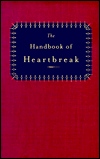
A good little anthology for times of grief is The Handbook of Heartbreak, edited by Robert Pinsky. Pinsky’s selections cover the human spectrum of sorrows: broken romances, dead pets, war, disaster, family and social losses and the desolate emptiness of depression, sorrow that is concrete and existential, spiritual and personal and cultural.

~

Speculation is something inquisitive minds do well, but it is easy to believe our speculations, to forget they are merely imaginings that may or may not be valid. When a crime becomes a widely-broadcast web of information blips, the suspect is forejudged in the court of public opinion; I feel concerned about our nation’s commitment to the concept of innocent until proven guilty in a court of law (how on earth will that be possible?). What irks me most about media coverage of the Newtown, Virginia Tech, Aurora, Tucson, Boston Marathon, Columbine and other killings is the retreat into a kind of contorted deductive reasoning based on imaginative constructions of human intent and purpose—the search for motivation that drives the forensic end of these crimes becomes a news story led by experts who imply they can get to the truth. But can we ever know the truth? Each human being is unique and ultimately unexplainable, and often the way we are best reminded of that fact is through art: fiction, theater, paintings, poetry. On his New Yorker blog, Adam Gopnik notes:

Experts tell us the meaning of what they haven’t seen; poets and novelists tell us the meaning of what they haven’t seen, either, but have somehow managed to fully imagine. Maybe the literature of terrorism, from Conrad to Updike (and let us not forget Tolstoy, fascinated by the Chechens) can now throw a little light on how apparently likable kids become cold-hearted killers. Acts of imagination are different from acts of projection: one kind terrifies; the other clarifies.

~

We need clarity.

~

I might add that in my day job, I work with young people between the ages of 17 and 24, day in, day out. These young adults experience varying levels of frustration, confusion, numbness, fear, anxiety, excitement, need for risk, need for security, withdrawal, social discomfort, and inner turmoil. I cannot look at the perpetrators of recent civilian massacres without thinking of my students. I do not mean that I am wary or that I think one of my students might snap; what I mean is that I feel compassion for the conflictedness each human being is capable of feeling and that I understand all too well that not all of us are capable of contending with that conflict.

Some of us can accomplish through acts of imagination the confrontation with what terrifies or numbs us. These people include our artists. Those who cannot express or embrace the confrontation are at risk of projecting the inner conflict, fear, or insecurity elsewhere, as Gopnik makes clear.

Can art make us safe? We live in the world: not an inherently safe place. I think if we embrace what art offers us we will not be in retreat from the truths of the human experience but will learn to confront truths, even those that are uncomfortable. Art gives us insight, a step toward understanding. Can art grant us clarity? I think so.

Therefore, Emily Dickinson (305):

The difference between Despair
And Fear—is like the One
Between the instant of a Wreck—
And when the Wreck has been—

The Mind is smooth—no Motion—
Contented as the Eye
Upon the Forehead of a Bust—
That knows—it cannot see—

~