Back in time

At Şanlıurfa in the Urfa region, a Kurdish area in eastern Turkey, we stayed two nights after our visit to two amazing, ancient monuments that are really out in the middle of nowhere: Mt Nemrut Dağ (the tomb of Antiochus I) and Göbekli Tepe, a Neolithic site of the Stone Mound Culture, both Unesco World Heritage sites. I remember reading about the discovery of Göbekli Tepe in the early 1990s, when German archaeologist Klaus Schmidt began excavations there; the “buzz” at the time was that these megaliths mark the earliest temple or place of community worship ever recorded [ca. 9000 BC]. Since then, new discoveries unearthed at Göbekli Tepe, as well as discoveries of similar sites (such as Karahan Tepe, which we later visited) in the region, have somewhat altered Schmidt’s original speculations.

It appears now that people lived here at least part of the time, though until these discoveries, historians assumed humans in the pre-pottery Neolithic Era were hunter-gatherer nomads who did not build permanent structures. Our guide told us the current thinking is that the buildings here played some sort of role in preparing young men for adulthood–almost all of the reliefs and statuary portray male figures and male animals. But it is early yet to guess, and besides, we can never know for certain.

But there are cisterns, a system that distributed water through tunnels, containers that have traces of grains and, yes, beer. Back to the argument of which came first to humans: Bread or beer. My money is on beer. *

But to back up a few hours–first, we rose at 5 am so that we could take the circuitous drive up the mountainside to Nemrut Dağ, a relatively youthful site built around 60 BC, presumably by Antiochus I, who was connecting a slew of peoples and cultures together in a kind of Iranian-Hellenic-Armenian-etc. aggregation in a move toward empire at a time of Roman ascendancy. Commagene is the Romanized name used for this ancient region, which was a merger of Persian and Hellenic areas once Alexander the Great’s empire had disintegrated. Antiochus married a Cappadocian princess and had big plans, but his empire did not last long after his death; by 29 BC, his sons had died or been executed.

The path we walked up to get to the tumulus, 6:45am; my photo

And then over time, this huge tomb monument was forgotten until its rediscovery in the 1880s. The region feels deserted and surreal, and the climb up to the tumulus–though there is now a partially paved path–is long, the wind swirling around, full of dust. My sunhat blew off my head even though I had a neck strap. I guess that was my offering to the ancient king.

What an astonishing place it is, especially at dawn, and despite a fair but not overwhelming number of tourists.

~

Monuments are a step toward writing: they tell stories, written in stone with picture images, because the stories we tell or sing with our human voices don’t leave much of a record for cultures other than our own. I found myself wondering what the poets of these ancient places said or sang, and how their language sounded, and whether I would feel exhilarated or moved by those lays had I been there.

And at Göbekli Tepe, when I learned about the cisterns that contained beer, I thought of a poem I’d written some years ago after visiting a Mesopotamian exhibit at the Penn Museum in Philadelphia. So with a bit of awe and a bit of tongue in cheek, I’ll post it here. [It initially appeared in Mezzo Cammin.]

~

*Porter, Stout, & Mesopotamian Deity

Sisters, let us raise a glass
to agriculture, to dark brew
made possible by wooden hoes,
by seed-gatherers: me and you,
our aunts, foremothers, those
who stayed, patient, and grew
grains, diverted rain, winnowed,
boiled, fermented mash, who
certainly invented ale. For we
descend from goddess Ninkasi
who nourished babies through
breast milk fortified by beer
and whose forgotten virtue
we revive, consuming her.

~~

Thanks to copyright-free photos from Pexels since my own photos are snapshots taken with an out of date cell phone.

Adventure and ibises

At my daughter’s suggestion, we ended up in Mesopotamia: central to eastern Turkey, fertile crescent, Euphrates and Tigris, vaguely following the borders of Syria, Iran, and Armenia up toward the Caucasus to Kars. It was, indeed, quite an adventure. We were booked on a tour following a section of the storied Silk Road through Wild Frontiers, a British company, and spent 11 days in Turkey. It was informative, beautiful, marvelous–a fabulous way to spend over a week with someone I love who lives about 2,000 miles away from me. Our expert tour leader Timuçin Şahin (Tim) is a history enthusiast and sustainable-agriculture proponent who loves his native land and–despite its current repressive government–is not shy about noting its failings, complexities, and fraught past; he says a truthful narrative is the sanest way to accept the past and learn from it rather than repeat it. Though Türkiye doesn’t seem to be heading that way at the moment, and if anything, some of the processes that have led to Erdoğan’s consolidation of governmental power sound frighteningly familiar to this US citizen.

Which brings up another point about our trip: we were the only two Americans. The other ten tour participants were British, mostly pensioners. After a few days, when we felt comfortable with one another, one person admitted that “we were all a bit apprehensive about having Americans on the tour.” Apparently the perception is that more of us in the US support the current administration than is actually the case. So it was up to me and my daughter to correct some stereotypes and present as informed, kind, curious, reasonably well-educated world citizens. I hope we succeeded.

A larger-than-life bald ibis statue and yours truly at the bird sanctuary.

As I’ve no desire to chronologically report the entire trip, and honestly cannot do it justice, I am using my back-at-home time to reflect not on “highlights” (though there definitely were some) or inspiration–though there was that, too–but on some of the quieter surprises that enrich an experience like this one. For example, the Bald Iris enthusiast and savior we met in Birecik along the banks of the Euphrates. This man, whose name I didn’t write down, alas, has been operating a sanctuary for these birds for almost 40 years. The migratory kelaynak was once seen in huge flocks throughout Egypt and much of the Middle East and was considered sacred in some cultures. They went extinct in Egypt quite long ago and have been declining rapidly in the 20th century due to pesticides, climate change, environmental habitat destruction, sport hunting, etc. There are a few non-migrating colonies of Northern bald ibis in Morocco. Yes, it’s a funny-looking bird, but beautiful in its way. The ones we saw in Birecik are theoretically migratory but mostly reside in the colony, because whenever they are let out to migrate, they end up dead (found through tracking devices). The cheerful, enthusiastically hopeful ibis savior who photographs, tags, puts up nest boxes, and corrals the birds so they don’t fly off in winter is a veritable encyclopedia about these avians. He has put together a small museum, informational pamphlets, gift shop, and fund-raising platform in Birecik. There are decent human beings in the world who recognize the value of non-human creatures. This guy is an inspiration.

My readers may wonder whether I found poetry inspiration on this trip; the answer is, dunno yet. Probably, once I settle down and reflect, mull stuff over, consolidate my notes and my photos, and get over my intense jet lag. There was certainly no time for writing during the tour, as the itinerary was packed with cool things to learn, see, do, visit, hike up, float on (there were boat rides), and eat. I’d never been on a tour before. I liked this one, and because I had no knowledge of Turkey’s culture, language, economic situation, transportation options, etc, I was truly grateful for our tour guide’s expertise and enthusiasm.

Adventuring

The weather here has been hot and somewhat humid, though it continues to be dry–much drier than autumns used to be. Drought extending past August into October is becoming a more usual thing, according to my garden journal. One plant that thrives this time of year is tithonia (Mexican sunflower), and it attracts monarch butterflies like crazy. These are the monarchs that go adventuring: the super-generation of these insects that makes the 3,000-mile trip to Mexico. Here’s a brief blog from the Xerxes Society that has some quick facts. The monarchs I see in my garden may, if they are lucky enough to survive the trip, live up to 9 months, which is well past the life span of spring and early summer generations.

They are not even returning to a place they know or have ever been. Human science has never yet determined how monarch butterflies of the last summer generation find their way to Mexico. They just go adventuring, floating on air currents, supping on flowers as they travel.

I’m about to go adventuring, as well, traveling further east than I’ve ever been, in the company of one of my favorite persons in the world–my daughter. She and I had long talked about taking a mother-daughter trip together once I retired, and sooner is better than later! She found an environmentally-conscious adventure tour business that offers some really intriguing historical/archeological/environmental hike-and-bus options. We’ll find out whether the company is worth recommending & I’ll report back here, meanwhile keeping our destination unrevealed for now. A little mystery is fun.

While I am taking this trip for reasons beyond writing inspiration, I can’t help hoping it will act as a prompt and opportunity for drafting new poems. I’ve been working on new drafts, and revising older ones; but I have to admit that for awhile my creative mojo has been a bit off. Yes, this happens to any so-called “creative” occasionally, but it never feels terrific. One prefers the juicy, challenging urgency of creative flow. Wish me luck (and traveling mercies).

Plan B (reading)

While I was traveling the high-altitude desert regions, my home valley got its much-needed rain. And the rain continues. And continues. My plan was to get to work on my gardens as soon as I came back, to weed and plant out seedlings. Well, it’s a bit too wet for that. Also chilly and humid and sea-level, and therefore my physical adjustment has been a bit …bumpy. So, Plan B.

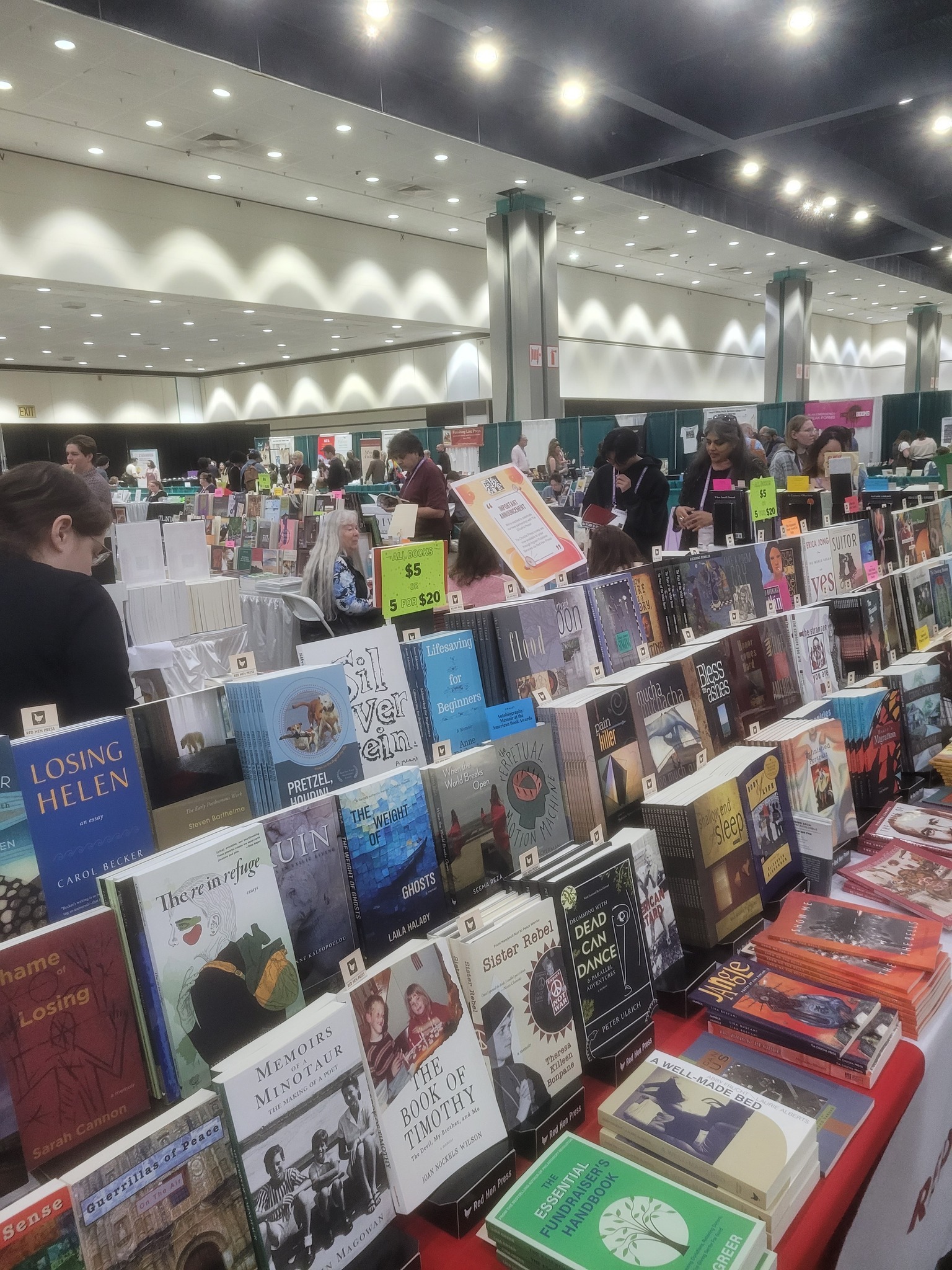
The Plan B default for me usually entails spending “down time” reading, writing, or housekeeping, though visiting the library and meeting friends for coffee fall under Plan B, too. Today, since I feel lousy and have a spate of brain fog, reading has been the choice. I still have a few books on the bedside pile that I haven’t gotten to–mostly poetry collections I bought at AWP at the end of March. But also there is Ocean Vuong‘s heartbreaking and beautiful novel-that-reads-like-memoir, On Earth We’re Briefly Gorgeous, that I finally got around to reading, and a back issue of Rattle Poetry a friend gave me–one that was largely devoted to haiku and related forms–that featured a fascinating interview with Richard Gilbert (thank you, Lesley S!). On the poetry-only book list, I read January Gill O’Neil’s Glitter Road, Julie Kane’s Naked Ladies, and Ross Gay’s first collection, Against Which. All quite useful to me in times when I feel bleak and physically frail–there’s humor, sorrow, and bravery in all of these writers’ poems. Though I’m too foggy-headed to write mini-reviews at the moment, I encourage my readers to check these poets out.

Perhaps my next post will be about the lovely time my friend and I had in northern New Mexico, visiting my daughter and Santa Fe, including my opportunity to see Bandelier National Monument again and ponder its environments and history. A trip like that takes some time for me to “digest.” But it was wondrous. And so is a day at home to recuperate in my favorite way: reading.

Changes & alterations

We built our house here about three decades ago. At the time, I was young and excited about landscaping the place; although I had been growing our own vegetables for years by then, I was fairly new to ornamental gardening. I made mistakes; I underestimated the speed at which shrubs and trees grow; I thought I could keep a handle on invasive species; the world of various bark beetles and aggressive vines was new to me; and I had no idea how hard it would be to manage almost seven acres without, say, a team of landscapers.

Or how rapidly an environment alters when the climate changes, and when cornfields and early-growth wooded areas become housing developments, parking lots, and streets. I have learned a great deal and much looks different now than thirty years ago, but the swallows still return to my garden between April 26 and May 6. My land contains fewer efts in May than it used to, but the gray frogs, spring peepers, wood frogs, and toads make their usual frenzied chorus at mating time each spring.

~

Recent changes have come from the emerald ash borer, which has decimated, or worse, the green ash native to this valley. The huge trees have come crashing down during the past 10 years, making hard work for us even if it does provide a bit of firewood. Cutting, splitting, stacking hardwood isn’t a task I’m much good at anymore. Thirty years ago, maybe…and there does not seem to be any good that comes of this tree loss, which I’ve been mourning each year as we have less and less of a woodlot treeline above the hedgerow and see more and more of the neighboring subdivision.

But on my damp, early-morning walk today, I perceived some changes that I should have expected and that offer a glimmer of hope for native trees and shrubs–despite the proliferation of Russian olive, multiflora rose, Amur honeysuckle, mugwort, wintercreeper, Asiatic bittersweet, mile-a-minute weed, and more colonizing invaders than I can tick off in one blog post. There, beside the tractor path, along the edges of the hedgerow (for edges are where things happen most quickly), I observed more tree saplings than in past years. With the vase-shaped, leafy arcs of green ash absent, sun reaches further through the thickets. And there I spot horse chestnuts starting to push up, tiny walnut trees, oak trees of differing species, “baby” hickories and maple varieties, along with understory’s smaller shrubs and trees like amelanchier, ironwood, redbud, buckeyes.

Granted, most of them won’t survive to maturity, but some of them will–gradually re-making the woodlot unless other disturbances undo the renewal.

I won’t be here in another 30 years to find out, but I find hope in these saplings. I’m also happy to see that the little woodland and field wildflowers such as false Solomon’s seal, jack-in-the-pulpit, wild violets, and mayapples remain. And though I find myself swearing inwardly at the way the Russian olives grow massive along the property line and the invasive bittersweet sends thick tendrils coiling up into the trees, it’s not the fault of the plants that they got here. Humans brought them to North America, and the plants–like European colonists–became a bit too successful in their new homes, pushing out what was here before their arrival. Am I any different, really, than the dandelion or the honeybee? My ancestors came to these shores not so long after those species were imported with earlier “settlers.”

~

The rain we’ve been getting means I haven’t been out weeding in the vegetable garden. After I take my walks, I come inside to dry off and do household chores, or make soup, or work a little on my poetry. I feel excited by a little writing project I have recently given myself, and I’ve also been playing around with drafting prose poems. Next week, I head to the high desert again for further inspiration and a chance to travel with a good friend, visit museums, and spend some time with my daughter. When I return in mid-May, the gardens, the meadow, and the woods will already be much changed.

Riches

The past week gave me riches galore; though I am somewhat poorer in the pocket for it, my cup runneth over in about every other way. It’s true that often, lately, I’ve felt that I am living in “interesting times” that are all too much and too awful to contemplate for long. Then again, I could have been alive (possibly quite briefly!) during Boccaccio’s time and weathering the bubonic plague. Thanks to The Decameron, readers later in history have been able to get a picture of what people were thinking about and imagining–or trying to escape–when things were truly terrible all around. And while I’m not pollyanna-ish about the present, I do feel grateful that I live during an era when travel to distant places is possible and rather speedy, that books are readily available, and that some of the wealthy people of the not-too-distant past decided that philanthropy included funding libraries, gardens, and museums for the average citizen to visit and enjoy. Current billionaires, please take note!

What the week entailed was a trip to Los Angeles to visit my eldest child and, while there, to spend a morning at the AWP conference book fair. Riches indeed! I “packed light” to be sure I had space in my carry-on for poetry books, which thankfully tend to be slim paperback volumes. I bought almost 20 books, I confess. So I came home weighted with literary riches, and while at the convention managed to connect (however briefly) with numerous poet colleagues. A shout-out here to Lesley Wheeler, whose book I had to purchase online because Mycocosmic had sold out! Congratulations, and I cannot wait to read it.

My days in LA were limited to four, but my son had curated a things-Mom-would-like-to-do list that included Mom’s necessary down time. It’s terrific to have offspring who are now old enough to respect my limits. [They have not always been so accommodating.]

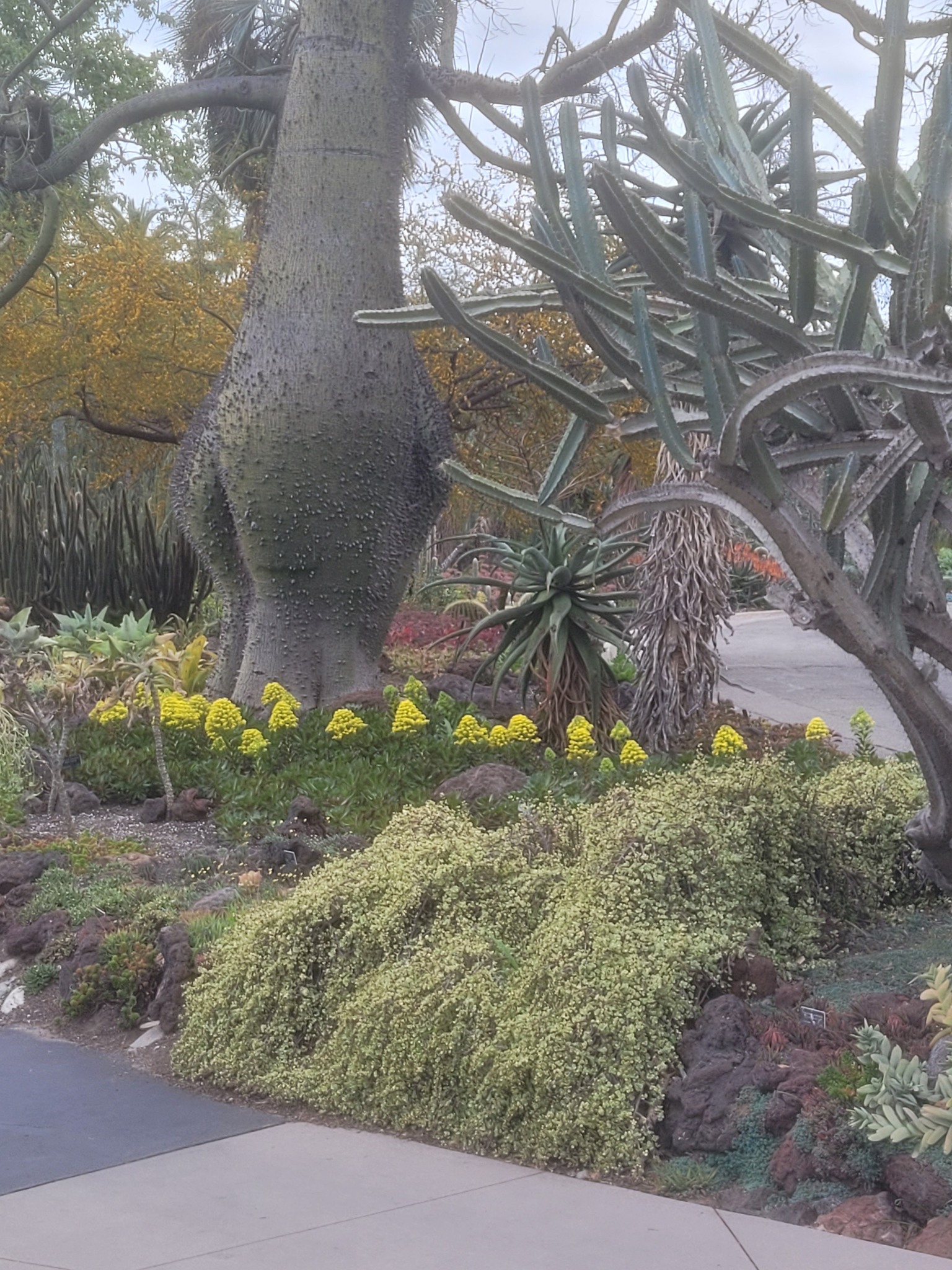
The list included several lovely meals out, a full day at Huntington Gardens and Library, a day trip up to Santa Barbara, a visit to LACMA to get an “art fix” for me and for my son’s best beloved, who loves art and architecture, and a visit to the amazing Museum of Jurassic Technology which, as far as I am concerned, is basically a series of amazing poetry prompts. I cannot possibly explain it; and the museum’s website is purposely a bit obscure and limited, compared to the immersive experience of going to the place in person. I am still thinking about it and will be for weeks.

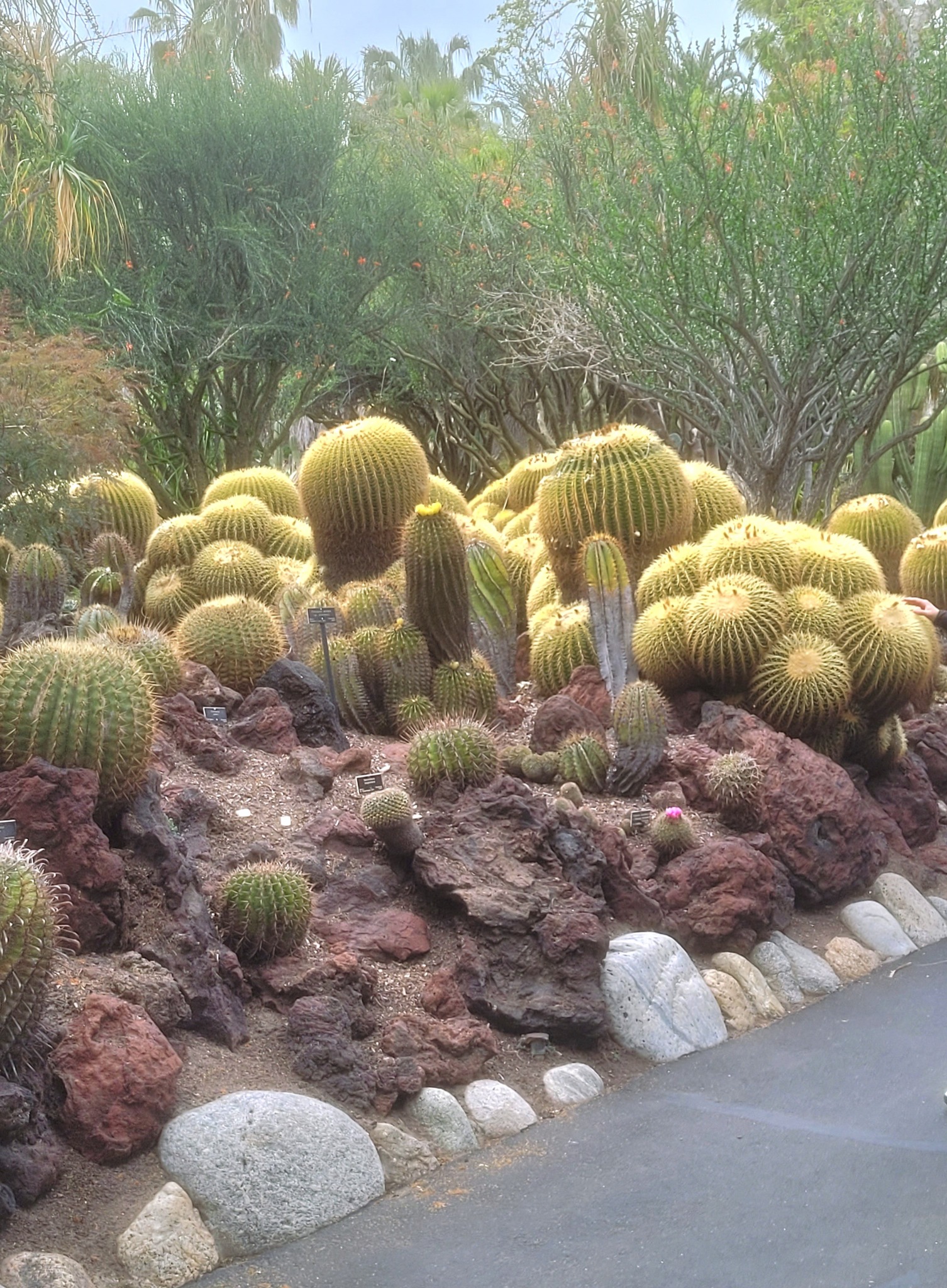
The barrel cacti at Huntington

While photo ops abound at the gardens, no photos are permitted in the Museum of Jurassic Technology; I will lead you to the website and just keep you guessing. But among the riches of the last week are germs of new poem drafts. We shall see what emerges.

Four+ days away, and I returned to spring in eastern PA: narcissus, magnolias, glory-of-the-snow, squill, bloodroot, forsythia, ornamental plum. Even more richness. Gratitude for the glory.

Close of the cruelest month

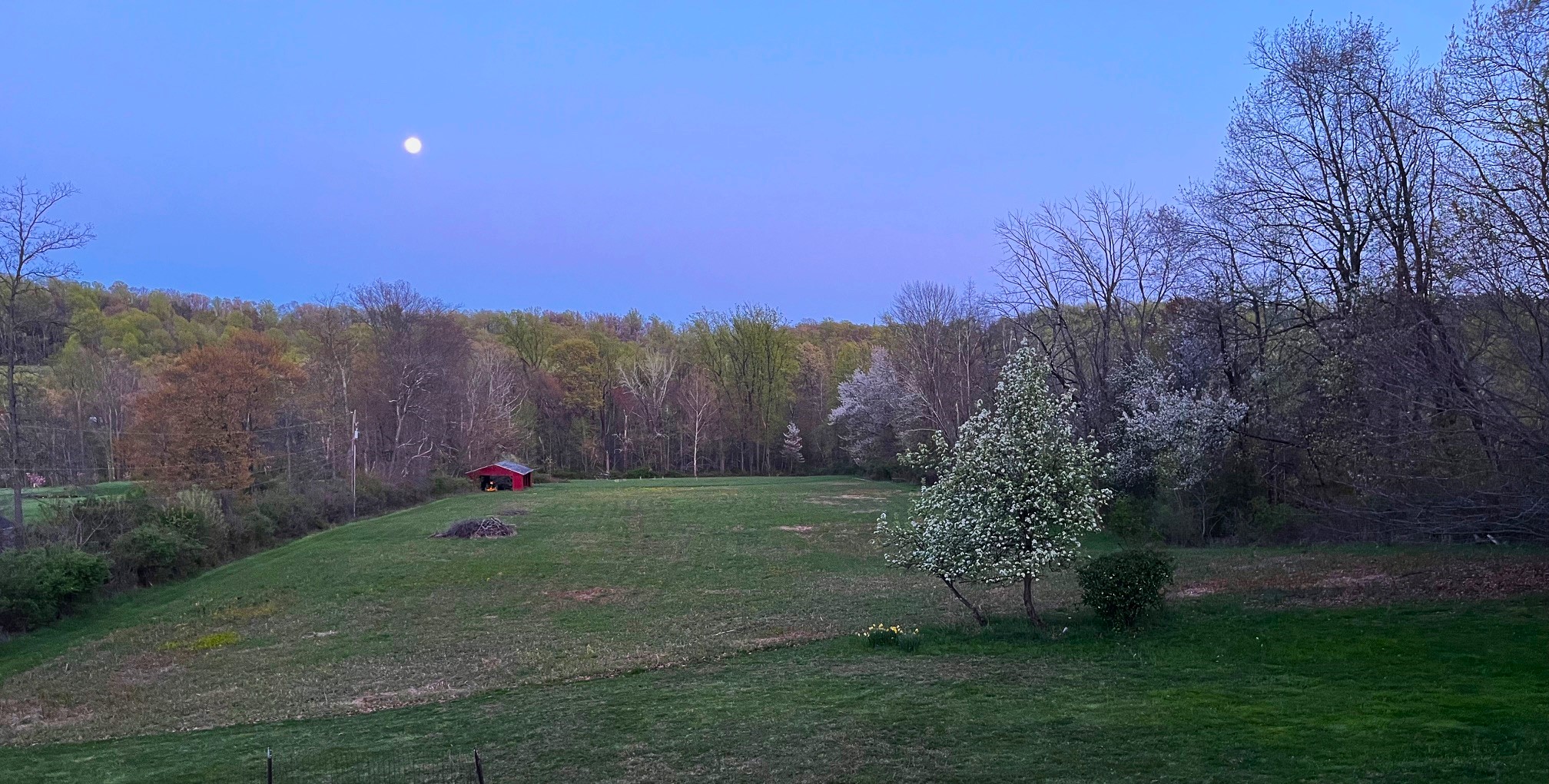
Full moon began the week as April reaches its closing days–when the redbuds and ornamental cherries are at their peak and the apple trees bloom. Soon the lilacs will open, and oak catkins will send chartreuse pollen all over the deck. Then there will be peonies and irises. I love the first weeks of May but this year will be missing some of those days. I’ll be traveling.

Because I have to prepare for my trip, attend a friend’s memorial, and prep the garden for my absence, this is my last post for National Poetry Month. I’ve chosen a poem from my book Water-Rites, a quiet poem that has always felt near to my heart. Maybe because I romanticize childhood, who knows. At any rate, I hope your poetry month was beautiful and that you continue to read and enjoy poetry. Thanks for reading mine this month.

~

On Having Lost the Confidence of Birds

Once, I was very small,
prone to long silences
and spells of aimless drifting
in the world's embrace,
staring at ants in their
grainy colonies, patterns
of activity, the slender
waists and legs,
frantic antennae waving
at me so I seemed,
for an hour, large.
Once, I could skip and sing
until dinner time, but chose
to lie front down among
dandelions, decided to watch
the skip and sing of bees,
their several kinds inducing me
to wonder about categories--
What Will or Will Not Sting--
and marvel at the dark swift birds
that lived in the martin house
and found bees edible.
In those long days I was
no threat, a quiet object
natural in the grass and breathing
at the meadow's pace.
I had not lost, yet,
the birds' confidence
nor learned how not to trust
my own body
in the world's embrace.
~

There & back again, with weeding

I have traveled to the American Southwest and back again, over a fortnight away from the humid valley where my gardens languished toward autumn, pounded by rain, while we were gone. For two weeks, we lived among the terpene-scented (pinene, not cannabis…though we did notice cannabis when in downtown Albuquerque…) environment of the Sandia Mountains, where humidity is “not a thing.” I embraced my beloved family members, not quite often enough to make up for the distance between us, but enough to feel contented for awhile. And we explored some of the northwestern/north-central parts of the state that we haven’t seen before and were awed. I have not yet tired of the geology there. It’s easy to imagine New Mexico as the benthic floor of an ancient sea!

En route home, we encountered flight cancellations and re-routing, which is practically to be expected (our checked bag arrived 20 hours after our arrival in Albuquerque, also not an unsurprising development). I hear many complaints about air travel these days. I may even have added to said complaints. While it may feel almost as inconvenient, unreliable, and uncomfortable as traveling by Conestoga wagon, you must admit it’s much faster–even if it doesn’t seem that way while you’re waiting for the bus to the economy long-term parking lot at 11 pm. If my beloveds had taken Horace Greeley’s advice in the 1850s, I might never have seen them again. So, I am grateful. Even to American Airlines.

~

Upon a (slightly delayed) return, I found that the valley in which we live had experienced considerable rain but mild temperatures; as I expected, the garden weeds were thriving. Some of that is fine with me: annual weeds can go crazy in October and I don’t mind. But the perennial vines, little shrubs, and weedy biennials and perennials? I dig those out in fall, along with the tomato vines, sunflower and corn stalks, and amaranth plants. That has been my job upon my return; and the cooler weather, with soil moist from all the rain, has been a boon. I have to admit that adjusting to the lower elevation and the higher humidity has put some strain on my ol’ body. But we did a good bit of hiking and walking in the Sandias and Bandolier and Jemez, so I was somewhat prepared for the workout.

My beloved doesn’t understand my enthusiasm for “putting the gardens to bed for winter.” It seems like boring, hard work. Yet I don’t clean everything up–I always leave cover for bees and other creatures that need leaf litter and old stems in order to winter over. However, taking down the stalks and cutting back the peonies (etc) feels satisfying to me. I work in the cooler weather and sense the difference in the air. I recognize the annuals are dying and the perennials are going dormant, the trees let go of their coloring leaves; walnuts, oaks, and hickories seem to fling their mast upon the earth with every gust of wind. There’s nothing sad or somber about the changing of seasons. Winter must arrive in order for spring to do its thing. I like to think of daffodils, muscari, and irises huddled quietly in soil and taking much-required rest before the warmth unthaws the earth. I feel the same.

Few words


red barn     long shadows
rust-colored hawk descends
and vanishes


~

moon above
neighborhood children
sun above hills


~

the day before traveling I am already traveling


Prose poem, memoir

The prose poem seems a fraught and contradictory thing to its critics, a formless form, different in some way from flash fiction–more lyrical? More imageric? Lacking plot? Years ago, I went through a period of writing them, usually taking on a persona. Lately I find I am writing them again. Sometimes I think I’m writing a haibun, yet there’s no accompanying haiku. But mine do tend toward the lyric impulse.

And here’s a prelude to a prose poem draft, which follows (if you can be patient).

~

Perhaps it was not the most sensible thing to do, given my sore foot, but I had planned a trip to Poets House for a Finishing Line Press-sponsored reading by James Ragan and did not want to forego my visit. Ragan’s poems are lovely and often deep, and he offers a reading in the spirit of a raconteur. All the places I needed to stop were within three blocks of the A train, and therefore the main concern was going up and down subway stairs. It seemed do-able, and it was; though I am physically “paying” for my journey today, it was worth it.

The bus ride to New York and back takes about two hours, during which I read, nap, or daydream. We take the Lincoln Tunnel into town, a route familiar to me for decades, this time evoking memories that have been tucked away for ages.

Of course, some of this draft is invented–when I start writing, I often have no idea where I will end up. This one surprised me.

~

We were children in the years of Sunday drives, burning fossil fuels to tour the countryside and leave the city’s skyline, obscured in puce-yellow, lead-bearing smog, for tree-lined back roads and a picnic lunch. Sometimes over bridge, sometimes under the Hudson. Each crossing tested our bravery: fear of heights, of darkness. We had a song for the bridge which we sang while watching cables’ span. We were too small to see out the windows down to sailboats and barge traffic. The tunnel had no song. We hunched in the back seat, held hands, squeezed shut our eyes, expecting to drown. On the curved ascent in New Jersey my sister chose the house she wanted to live in—many-dormered, stone, with a round tower, it jutted over Weehawken. Once we’d learned to read, we realized it was the town library, which suited her imagined lifestyle. She would choose that even today, retire to live in a library and work part-time in a bookshop. She imagines I will join her there, perhaps I might.

~

Memory to prose memoir to prose poem. Founded on rocky physicality.


weehawkenlib

The Weehawken Free Public Library