Walking

Numerous so-called health and fitness articles continually pop up on my screen, and many of them not only tout the benefits of walking but claim to know how many minutes or miles of walking (or rate of speed and such) are necessary to ward off dementia, keep your heart healthy, your bones in shape, your muscles well-conditioned, your circulatory system moving, your lungs going, or to extend your life. Oh, and relieve stress. And while you are at it you can get a device for your wrist or an app on your cellphone to monitor your pace, steps, heartbeat, etc.

But not everyone can walk. Too many of us forget that, take it for granted–especially “content” developers online angling for clicks. And, while I do like walking, I don’t particularly relish being told how I should go about it. I agree that it would probably be good for me to walk at a brisk pace for an hour every day, and some days I am inclined to do just that. There are other days I want to hike up a hill, or take a pokey amble around my meadow, or wander through a nearby park, or climb Nemrut Dağ just as dawn breaks. Or curl up on the sofa and read a book. I appreciate routine, but not invariable routine.

Autumn happens to be a time of year I like a slow stroll or hike; save the brisk walks for cooler, lousier weather. Now that most of the leaves have fallen, I can spy bird nests and paper-wasp nests (there’s one of those in our tamarack tree; last year, there was one in the Japanese maple). Milkweed puffs are swirling in somewhat chilly air, red berries decorate shrubs and trees. Red-tailed hawks and black buzzards wheel overhead. No reason to churn through the scenery at a rapid pace.

A. R. Ammons wrote an essay titled “A Poem Is a Walk,” in which he describes the physical act of taking a stroll “with” a poem, rhythm, breathing, the stride; he says both a walk and a poem are useless–though you might want to read the essay before agreeing or disagreeing on the uselessness, since his essay is almost a phenomenological argument (and we have to decide what is meant by “useless”). [Note: The essay is paywalled behind University of Arizona’s site, and–oddly–the one legible free version I found is here, from the Università degli Studi di Milano! Well worth reading, though, and in English.]

I think better when I walk slowly and steadily, with pauses to look around. That’s when images come to mind, metaphors, descriptions, sensations, ideas. Sometimes, it is a kind of haiku-walking, generally undirected. I don’t plan to reflect on anything or come up with prompts for poems. And I don’t do it to improve my life expectancy.

I just like to walk. And maybe, a walk is a poem.

Drought, again

The temperatures here in this eastern Pennsylvania valley have been mild, even warm, which isn’t that unusual for October, anymore. What’s different is the lack of rain. Northern New Mexico had more rain the past three weeks than our region did. Now that is unusual, and a bit worrisome. Our local trees have been enduring numerous stresses in recent years: irregular rainfall, invasive insects, road construction and housing developments, run-off, and viruses. Droughty autumns and winters do not make for resilient, happy trees and other perennials, unless they are desert varieties.

I love the desert, but the Lehigh Valley (where I live) is not primed to be a desert. We need the temperate moisture of rivers flowing down to sea level and 50″ of rain each year. It would be interesting to learn xeriscaping and how to garden in low-moisture regions, but only if I were living in one. I’ve been concerned for a long time about the climate changes I see occurring around me, noted the differences year by year in my gardening journal, tried to limit my own water use even in this temperate, damp-ish area. But. On my own, I cannot conserve enough water to keep the 70-foot-tall tulip trees and large oaks and colorful maples healthy. Nor the soil and its microorganisms, fungi, understory plants, and useful arthropods.

True, sometimes the long days of rain and overcast skies we get in autumn, winter, and spring feel oppressive; and they make my joint pains flare. But I count for little, whereas the earth counts for a lot. I’d gladly trade some low-barometer aches for a vibrant, healthy local climate.

~

The frosts, though light and few, are arriving now. Maybe we will get rain by Election Day? I have too many hopes for next week. Best not to speculate; I can wait.

In the meantime, I have just finished reading Cindy Hunter Morgan’s very beautiful new collection, Far Company, and I recommend it, especially if you like poetry with an environmental resonance and poems of memoir and recalled experience. Purchase it from Wayne State, not Amazon, if you can. To frustrate a certain billionaire, not that he will notice.

We do the small things, right?

Depth perception

In second grade, I could not see the blackboard from my desk. My teacher noticed; I went to the optometrist, and thereafter began my worsening nearsightedness. New specs annually for many years, broken frames, ugly frames, though–unlike many of my friends–I never lost my glasses because I could not see at all without them. Somewhere along the way, astigmatism kicked in. In high school, I blamed my ineptness at any sport involving a ball on my astigmatism (contact lenses corrected my nearsightedness but weren’t as effective on the misshapen cornea). But my ineptness was largely due to lack of interest in sports.

And now, encroaching cataract formations mean that I’m getting surgical procedures for the removal of those thickened “cascades” that make it hard to drive at night, read street signs, or discern a cat from a fox in the back meadow. I had my left eye operated on this past week, with the insertion of a medium-length lens that gives me 20/40 vision in that eye: a miracle to me after so many years of blur. I have to wait two weeks before the surgeon does the right eye, and in the meantime I’m discovering the true challenges of poor depth perception. My brain hasn’t adjusted to the changes in my eye, and simple things like walking downstairs or pouring tea into a cup pose unexpected difficulties.

Topping things off, I’ve contracted covid for the first time ever. So I am being extra careful as I walk through my house and into my yard–taking a fall due to bad depth perception would be one more problem I just don’t need.

So I have been considering vision lately, and what it means to perceive, to have differences in perspective, focus, framing. Or different cultural and social “lenses,” as we refer to them when we are teaching students to write compositions in college. It is as easy to trip oneself up metaphorically as physically if one pays no attention to such perceptions.

Today, I feel to ill to spend much time pondering. But I have enjoyed looking at the photos–taken from different vantage points and times of day–of the lovely tree on the other side of the riverbed from Joya. Very healing, as trees can be.

Lists

There can be beauty in a list: its specificity, also the rhythm and sound–which order does the poet choose for each word? That matters. Chronology perhaps; category, like the scientist; or else sound, such as alliteration; or possibly by the thread of some concatenation that gradually creates associations. The logic of a list poem differs from other forms of lists.

I always think of Whitman as an early and consummate “list poet,” though a great many of his poems do not rely on the strategy. There are list poems that employ anaphora and those that build through phrases. Others rely on modifiers that escalate or change tone to surprise the reader. In my own process it has been useful to begin drafting poems through listing, though often I abandon the list when I revise.

Also, I teach myself about the world and its people, environs, and ideas through lists.

For example, having strayed temporarily from my home region, I’m getting acquainted with a “new” place by making lists of birds, trees, flowers–yeah, the naming-things approach so basic to human beings, like when my children were just learning to talk and conversation with them consisted largely of naming objects or actions.

This is not a poem:

Pygmy nuthatch, juniper titmouse, pinyon jay. Gambel oak, Abert’s squirrel, pinacate stink beetle, skink. Quaking aspen, limber pine. Common raven, Woodhouse’s scrub-jay, fireweed, globemallow, bear corn, oak gall, crow. Pinyon, cholla, Ponderosa pine, alligator juniper, Apache plume, sandwort, groundsel. Gneiss, granite, gray oak, spotted towhee, rabbitbrush, bajada, arroyo, muttongrass, mesa, schist.

~

However, these words now evoke images, sounds, memories, senses that–who knows?–may end up in poems eventually. Because poetry is about and in the world.

Until…

We are at the end of an arbitrary, chronological year but still in the midst of a pandemic that will not be going away miraculously when the new calendar begins.

To what must we devote ourselves? I think, for now, just getting by and living through; we can learn much from solving the everyday puzzles life pitches at us. A friend counsels that having a project to do can help–something a bit thorny that offers a challenge but that is not a priority. For now, I am cutting vines–the ones that threaten to strangle the remaining trees in the windbreaks on either side of our narrow property.

Trees that have been weakened by too little and then too much rain, by warmer temperatures and crown die-back that encourage lichen, by insects and the viruses they carry, and by a lack of native undergrowth. The ash trees that ringed the meadow are all dead now, victims of fungus and stress-related illnesses caused by infestations of emerald ash borers.

It’s an ongoing effort for which there won’t be much reward, but it feels a bit like tending something in the dead of winter.

I will cease tending this blog for awhile. My deeper concerns lie elsewhere at the moment. If my next collection is indeed published this year as originally intended (covid protocols have affected almost every endeavor, even publishing, and certainly book launches), then I will likely resume a more noticeable social media presence! Maybe I will have resupplied my energy reserves that have been depleted during the past few months.

Until we meet again, and hoping that we can meet in person down the road…

photo by David Sloan

Trees

The catalpas are blooming, really putting on a show this year–huge crowns full of white blossoms. I suppose the climate this year contributed to this show somehow, but my research says catalpa speciosa is drought resistant and requires little water compared to other tree species.

casp8062

catalpa in bloom

Eastern Pennsylvania has not had drought lately, and two wet springs in a row have meant burgeoning iris pseudacoris and particularly floriferous honeysuckle vines in my yard. The river birch seems happy with its feet all wet; the firs–though in a slightly less waterlogged area of the yard–are, by contrast, miserable.

~

I’ve been thinking about trees because I’m reading Peter Wohlleben’s 2016 book The Hidden Life of Trees. The text reads like a friendly forester inviting readers to learn what he loves about trees and their encounters with us, with the environment (soil, air, sun, water, pollutants, pests, fungi), and with one another. I have to say I remain somewhat skeptical about the scientific veracity of his source material, but I do enjoy his warm enthusiasm for his subjects and his reminders that we humans don’t know even the smallest fraction of what goes on in the planet’s interconnected and unplumbed depths.

Although some critics object to what they see as too much anthropomorphism in Wohllebehn’s book, his use of the analogy of the human and the tree “bodies” makes his information about how trees and forests work easy to grasp.

For science nerds, there are other texts. The Hidden Life of Trees is meant to make the less scientifically-inclined reader more aware of his or her environment, to convince the average human being to consider plant life more consciously.

~

I take many photos of trees; and they appear in my poems pretty regularly, not as main characters but in supporting roles–not symbolic, but actual. Wohllebehn’s book may influence my work somehow…possible inspiration? But then, the trees themselves, especially the oldest ones, are inspiration enough.

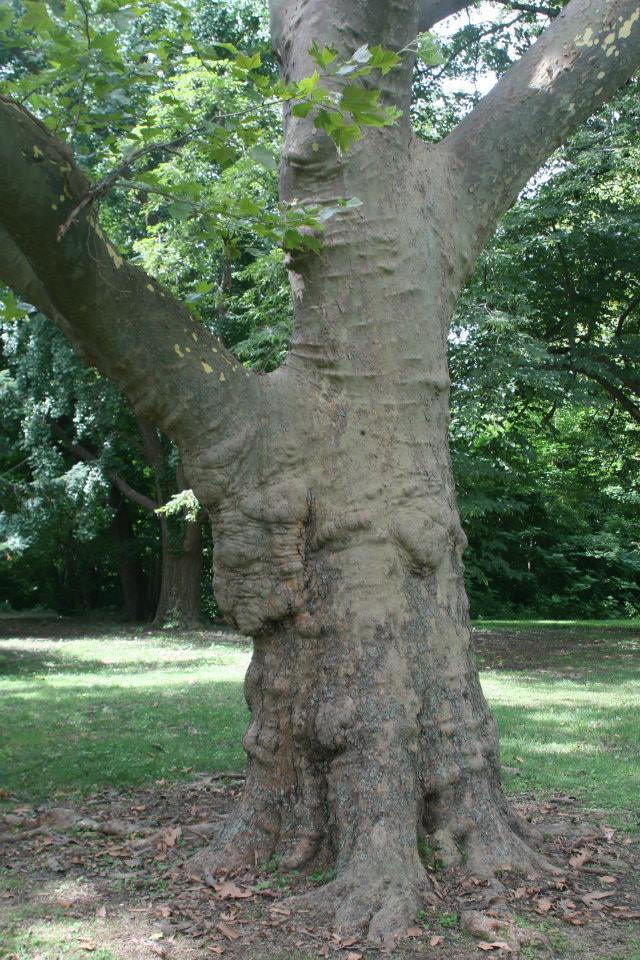
sycamore

This 200-year-old sycamore resides at Bartram’s Garden in Philadelphia


Reverie, with interruption

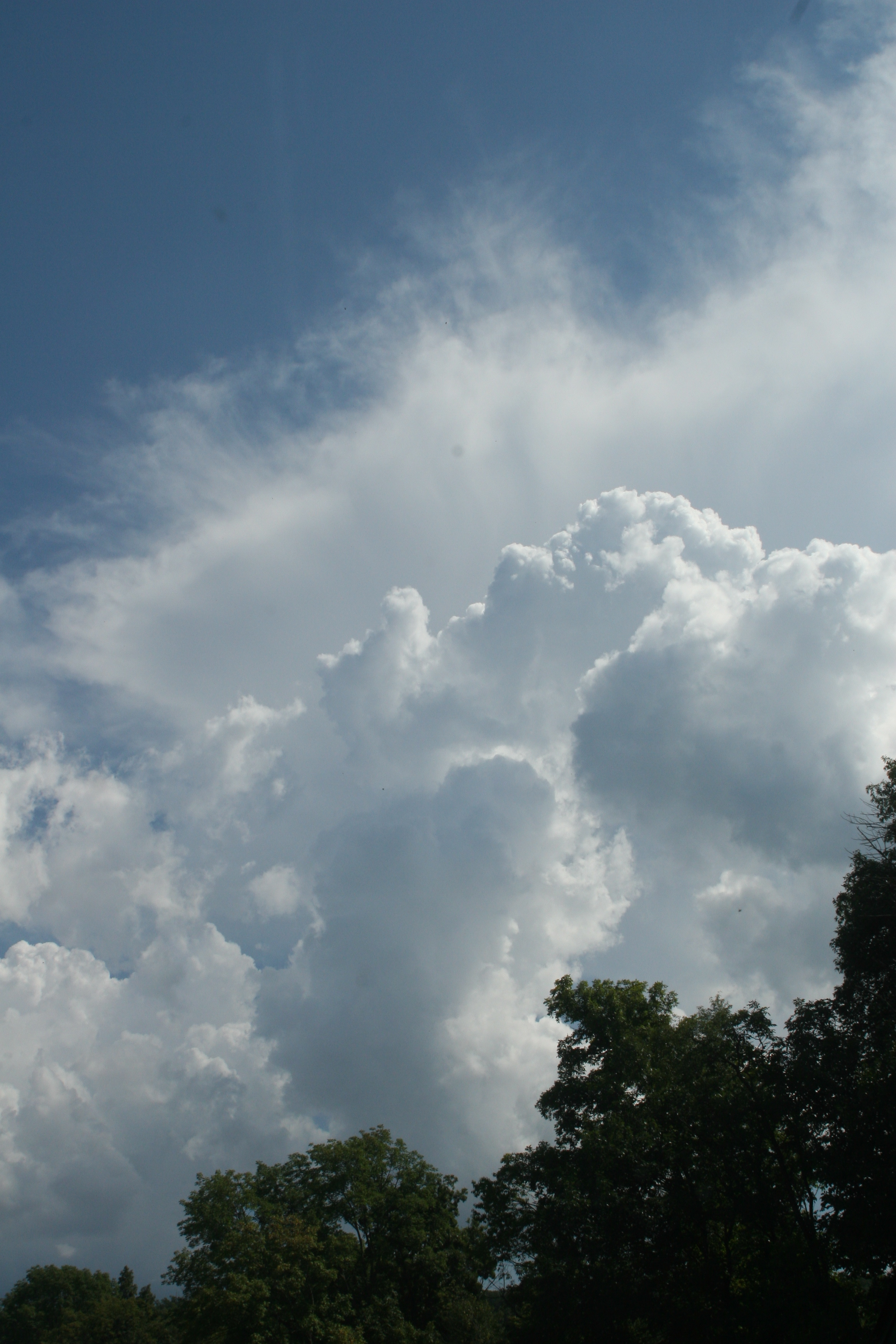
On the first warm, sunny, not-horribly-humid day in a long time, to reward myself for marking up a pile of student essays, I lay in the hammock and looked up at the clouds. The clouds are amazing today, shifting, fast-moving, likely thanks to Hurricane Florence far to the south.

I wanted reverie, but I got spotted lanternflies instead, which interfered with my admiration for the clouds. Dozens of the creatures were aloft on this mild afternoon.

IMG_5605

They are a recent invasive species to our region; their appearance causes concern because they use fruit trees, mast trees, grapes, and hardwoods as host plants when they cannot find their traditional host, ailanthus. We have no ailanthus on our property, but we do have oaks, hickories, maples, beeches, and many scraggly cherry, walnut, and mulberry trees along the hedgerow and into the woodlot. Development in the valley–housing developments, business plazas, parking lots–coupled with stress from climate weirding, has been hard on trees. We already have diseases that have damaged the Pennsylvania ash, hemlocks (PA’s state tree), and dogwoods. I notice weakened bark on many trees. The droughts and the too-much-rain cycles, and unusual, high winds with storm fronts, plus road-widening, contribute to considerable loss of trees.

I lay in my hammock under the trees and worried about the lanternflies. Which accomplished nothing (I think of a James Wright poem at this point…).

What was there not to despair about? So much anxiety surrounds me. Even the damned bugs. If only starlings were to take a liking to spotted lanternflies, I mused.

A butterfly went past. I looked down at the zinnias blossoming their stems off in the garden and felt pleased to count four monarchs there. It has been a good year for monarch butterflies in my yard, and green darners and other dragonflies, and hummingbirds–which used to be quite uncommon visitors here. The little brown bats are returning each dusk, recovering slowly from the decimation of white-nose virus.

The balance may seem off in many ways. But there are restorative moments.

Even if “I have wasted my life.”

monarch.ann e michael

Monarch on tithonia blossom


Clouds & trees

One benefit to living where I do is the way the sky looks in early autumn. Another is the brilliancy of leaves as they change color.

This time of year, even my commute to and from work offers moments of beauty. There are sunrises as I get ready for work, sunsets as I drive home each evening. The skies have been so glorious lately that a friend of mine posts photos on his social media account every day. Autumn arrives, and I wish I were a painter.

Cloud textures: yesterday morning, stippled so densely I could easily imagine ice crystals clustering together in the atmosphere a thousand feet above me. Bouncy puffs, striations, streaks. Today, a more consistent palette of repeated half-rounds. A stream of grey, white, and slate blue overhead, highlighted with thin bands of yellow.

Meanwhile, the trees–first the hickories going golden, then other tints. Today, I noticed the scarlet of a tupelo aflame at the edge of a field and the first big sugar maple shifting to orange. Many of the smaller ornamental trees take on burgundy hues. I can’t describe these landscapes in words! I want words to be pigments. I feel stalled. Maybe I am just making excuses for why I have not been writing poetry lately–(I don’t want to confess to writer’s block, as obviously I am writing!)

10934149_10208044582216651_8508294618826705064_o

Here’s a nice video from Slate that speculates, based on recent science, about why there are more red colors in North American trees than in European trees. Click here!


Love. Poem.

A beloved member of my family will be marrying in June, and I was asked to find a poem apropos to the celebrants and the occasion. I have written two epithalamiums (or epithalamia) and can testify to the difficulty of composing a good poem that is also a marriage poem. Anyway, in this instance, I wanted to find a suitable long-term-love-commitment poem by someone other than myself. Talk about abundance of choice!

Knowing the celebrants’ interests and tastes narrowed things down a bit, and the poem had to be “short & sweet.” The ceremony will be out of doors on a trail in the Blue Ridge Mountains, which made me inclined to look for natural imagery in the poem–but nothing so dense as to distract from the place itself.

What a splendid task! I allowed myself the luxury of looking at poetry books randomly, paging slowly through anthologies, browsing handouts I’ve collected for and from classes over the years. Just flitting from poem to poem over the course of weeks, occasionally marking something that seemed particularly likely…no pressure…

When I came across the poem “Tree Heart/True Heart” by Kay Ryan, I was startled into admiration.

It doesn’t start off like a love poem. It offers little in the opening imagery to suggest romance, or life attachment, or promise.

It is breathtakingly brief, revolves around wordplay and connotations, sounds lovely when read aloud.

The last two lines clinch the “commitment” in the poem; and the three lines preceding that final, spare, achingly-sweet sentence made me gasp when I re-read the poem, trying to figure out how Ryan managed all this in 16 lines, not one of which contains more than five words.

Love is all you needOkay, now you want to read the poem, right?

It was published in The New Yorker on September 26, 2011 (p. 116), and I am certain that I will be violating some sort of copyright if I reproduce it on this blog.

I hope Ms. Ryan forgives me, though if The New Yorker or her publishers find out, I may have to take this post down. It seems likely to me that The New Yorker has bigger fish to try to catch, however, so here goes. And I am putting in a plug for Kay Ryan’s books. Go buy them, preferably not second-hand, because poets make hardly any money from book sales and no money whatsoever from second-hand sales.


Tree Heart/True Heart

by Kay Ryan

The hearts of trees
are serially displaced
pressed annually
outward to a ring.
They aren’t really
what we mean
by hearts, they so
easily acquiesce,
willing to thin and
stretch around some
upstart green. A
real heart does not
give way to spring.
A heart is true.
I say no more springs
without you.

~

My beloveds–who are an ocean apart at present and miserable about it, and who aim to make sure that each has “no more springs/without you” –agreed that this poem suited their intentions, their personalities, and the leafy stretches of the hiking trail.

Thank you, Kay Ryan. Thank you, human beings, whoever it was who invented the arts, and poetry.

Trees & tombs

On a brisk and clear autumn day, I visited Brooklyn’s magnificent and park-like Green-Wood Cemetery. Established in 1838, the burial grounds were planned as a gently-rolling landscape of hills, winding paths, ponds, and specimen trees in what was then rural Long Island. The “History” tab of the National Historic Site’s webpage says:

By 1860, Green-Wood was attracting 500,000 visitors a year, rivaling Niagara Falls as the country’s greatest tourist attraction. Crowds flocked to Green-Wood to enjoy family outings, carriage rides and sculpture viewing in the finest of first generation American landscapes. Green-Wood’s popularity helped inspire the creation of public parks, including New York City’s Central and Prospect Parks.

These days, US citizens feel far less connected to death, and the concept of picnicking among gravesites may seem creepy. The organization devoted to keeping up the cemetery as a historic site (it is, by the way, still an active cemetery) offers tours: visitors can tour the catacombs, visit graves of famous people, take an architectural monument & mausoleum tour, and see the sculptural highlights of the cemetery.

The sculptures are largely figural pieces and tend toward the Gothic sentimentality of the late 19th century: draped urns, weeping maidens wearing Greek chitons, triumphant angels, busts and full-length portraiture, columns and more columns (Corinthian being far and away the favorite). If such monuments appeal to you, Green-Wood is decidedly worth a visit; it is also a favorite among history buffs. A Revolutionary battle was fought on those grounds, and there are some early graves from the Dutch pre-Revolutionary era, not to mention the inherent historical interest of a major city mortuary established in the 1830s.

Here’s a flickr site devoted to images of Green-Wood.

~

While history and art interest me a great deal, what most arrested my attention at Green-Wood were the trees. Seldom do I get to see dozens of 170-year-old oaks, 100-year-old weeping beeches draping their boughs over paths and tombstones, large female gingko trees that drop their smelly orange fruits on the ground, old elms that survived Dutch elm disease, enormous cedars and firs of every description, majestic walnut trees (the woodlot at my house sports only some weedy black walnuts). Three tall, long-armed people embraced the circumference of one of these old oaks…

GreenwoodTree2-26Oct2013

Loving up the trees at Green-Wood.

~

There are hundreds of species of trees at Green-Wood, aptly named; and in fall the colors are handsome. I can imagine the pastel colors of the flowering trees there in spring!

So I think of the place of the dead as a fantastic terrarium of living things encased in city streets, a bubble of micro-environment–470+ acres–wherein thrive trees, a wide variety of birds, ornamental grasses and flowers, shrubs (too many hydrangeas, perhaps), squirrels and, judging by the dug-up divots evident in grassy areas, skunks, opossums, and possibly raccoons.

And yes, I recognize that cemeteries have a reputation for good soil because the plants are “fertilized” by human remains–undeserved reputation in modern times due to sanitation requirements and at Green-Wood, where many of the interred are not even in the ground. Even if and when human decay complements the soil nutrients, the idea doesn’t bother me. I am enough of a scientist, and enough of a Buddhist, to appreciate the biocycle.