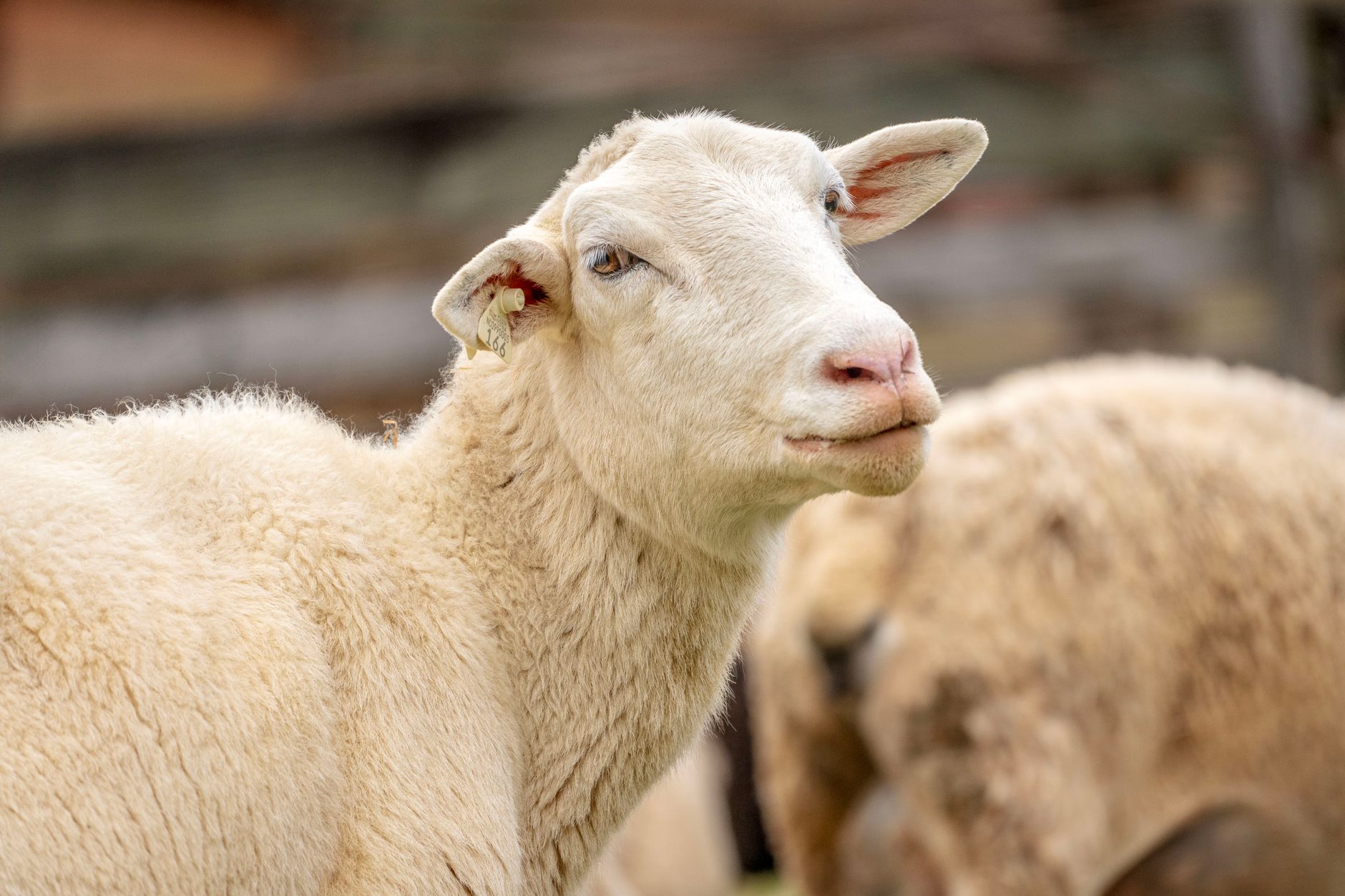
My daughter, a veterinarian, has had a wide range of experiences with animals–working at an equid center in Morocco and on a sheep farm in Scotland, observing the feeding habits of platypuses in Australia, and caring for the health and well-being of small domestic animals at veterinary centers in North Carolina, Portugal, and New Mexico. She was briefly here in Pennsylvania, recently, to participate in my mother’s memorial gathering, and one morning at breakfast I mentioned that I have been buying amazingly good sheep-milk yogurt at our local farmer’s market. “It’s so expensive, though,” I told her, “Ten dollars a quart!”
“I don’t know, that sounds a fair price, actually,” she said. “Have you ever tried to milk a sheep? It isn’t easy!”
Well, no. I hadn’t given sheep-milking a second thought. And now that I’ve looked at a few YouTube videos…let’s just say that sheep-milk yogurt is a splurge for me, but certainly a good value for the price.
It’s little times like these–moments that could be so mundane–that keep me from becoming too blasé. My daughter inadvertently reminded me that I need to stay curious and not take things for granted, that while looking deeper into a topic may complicate my understanding, complexity and depth are good results! Her worldview varies from mine in interesting ways, and I always gain information from her; sometimes, what I learn finds its way into a poem (see my poem “Drought and Blood” in Canary A Literary Journal of the Environmental Crisis). But aside from so-called poetic inspiration, what I cherish are those opportunities to look at experiences, places, and people from another perspective.
That’s why I love reading. I read books about history, geology, the cosmos, physics, biology, botany, philosophy, theology, economics, even entomology. It’s also one of the main purposes that people should read fiction and memoir: to get a view into how someone else thinks, lives, experiences the world.
And, of course, it’s why I enjoy poetry.
~
Here’s an excerpt from James Wright’s poem “Sheep in the Rain.” [You can read the whole poem here.]
Sheep eat everything
All the way down to the roots
And maybe that is why
These explorers of the rain
Seem so relaxed in their browsing.
Someone has freed them only a little while
Into the fields, and they have a good life of it
While it lasts.