Art, story, story, art

Yesterday, I attended a reading by former US Poet Laureate Kay Ryan in a more intimate setting (a luncheon) than I’ve ever been privileged to hear her at in the past. An audience member asked her how she would define art. Alas that I don’t write quickly enough to have taken her words down verbatim, but she offered a lovely answer.

She said that if a person cannot really be happy without doing it, and cannot keep from needing to do it, and if it nourishes or gives back to that person in ways nothing else can–then that “it” is art, in her opinion.

~

I suppose art also ought to speak to others, but I am not sure that is as necessary as art critics think it is.

~

Speaking of critics, and of art, I was impressed with Hilary Mantel’s 1998 novel The Giant, O’Brien for reasons that made a few critics rather lukewarm about it. The author is best known for her amazing historical works, well-researched and full of believably human perspective. O’Brien is a departure in several respects although still historical fiction. I read this book as an ambiguous moral tale, a myth, a story about stories (and art) and a depiction of ways the Enlightenment created significant losses in the midst of its gains. So I was less bothered by the exaggeration of certain personalities or minor plot gaps. O’Brien, a storyteller of the most shamanistic/primitive sort, also possesses a modern (Enlightenment) intellect and an artist’s “intuition.” But he never achieves fame, or the goal of restoring a beloved pub–the place he learned his craft–and dies painfully and slowly, impoverished and nearly abandoned.

As O’Brien nears death, Mantel writes that there comes “a point in fatigue or pain when logic slowly crumbles from the world, where reason’s bricks sieve to crumb. Where content flits from language…and departs.” And her character, the giant–who embodies in his hugeness the epitome of mythical narrative, the kind that sustains us even in dire poverty–eventually comes to the conclusion that the poor among us lose all. Of the poor man, he muses:

Stories cannot save him. When human memory runs out, there is the memory of animals; behind that, the memory of the plants, and behind that the memory of rocks. But the wind and the sea wear the rocks away; and the cell-line runs to its limit, where meaning falls away from it, and it loses knowledge of its own nature. Unless we plead on our knees with history, we are done for, we are lost. We must step sideways, into that country where space plaits and knots, where time folds and twists: where the years pass in a day.

What within us plaits and knots and folds and twists but the brain itself? We pass along our knowledge and, more importantly, our stories. That is done from brain to brain through language and music and art, even as the individual brain comes to the end of its viability and vitality. We step sideways into another person’s brain, just as O’Brien’s listeners memorize his tales, his cadence, his figurative speech. So, in the end, O’Brien is wrong.

~

I attended a funeral today at which the officiant encouraged us to keep the departed alive in our hearts and for the future by telling stories he had told or by relating stories about him to anyone who might listen. I know I have previously written about this idea in conjunction with readings and philosophers and art and literature. The more I encounter it, the truer it seems to me.

The bereaved spouse at this funeral is a person who is losing her own story through senile dementia, though she has some occasional awareness of her memory loss. Her ability to carry on her husband’s narrative is already deeply diminished or perhaps completely gone.

These are among our risks.

~

These words brought to mind my long-time friends, the craft-artists David Ellsworth (turned and other wooden forms) and Wendy Ellsworth (beaded forms). This month, for the first time in their many years together, they have a joint exhibit in the gallery space at Jenkins Arboretum (Devon, PA). The photos below are snapshots Wendy took, and their individual work is best viewed in person or on their studio website. [Contact the artists for permissions, photos, information about workshops and talks.]

Wendy Ellsworth's seaforms, and a necklace

Wendy Ellsworth’s seaforms, and a necklace

Wendy's "Sunset" (with David's turned-wood frame/container)

Wendy’s “Sunset” (with David’s turned-wood frame/container)

David Ellsworth's "Emergence" series

David Ellsworth’s “Emergence” series

I have known Wendy and David for over 25 years, and I can testify that the work each of them does fits Kay Ryan’s description of art. They are artists, and their work nourishes both of them–and nourishes us, the beneficiaries, as well.

~

For today, these are my stories.

www.ellworthstudios.com

Er – sur –

Mary Ruefle writes, in her book of “lectures,” Madness, Rack, & Honey: “I remember being so young I thought all artists were good, kind, loving, exceptionally interesting, and exemplary human beings.”

I was a child like that. It’s good to know there was at least one other. We grow up to know that such artists are far from common. But they do exist.

Each time I learned a “bad” thing about an artist, poet, or writer I loved, I felt a little deflated. Something was being taken away from my idea of the person who made such wonderful work.

Later, I rather empathized with Roland Barthes’ theorizing about the death of the author. Not because I was necessarily post-modern but because sometimes, I wanted the artist-as-person to be erased so that I could go back to loving the art-as-art. This was a juvenile way of thinking about both human beings and about art.

But: the lure of erasure…

~

Ruefle muses about time, about art, literature, and the human being. Her assays to determine what endures among us often feel a bit cryptic or aphoristic at the first encounter. The wisdom in them, and the layeredness–and the awareness of what is “missing” in her texts–evolved in my own mind as I read her book, slowly.

She has used erasure as a means to expression and to beauty, as it happens. Examples of her erasure poems appear on The Poetry Foundation’s website here.

~

The closing epigraph of Madness, Rack, & Honey (is it an epigraph if it falls at the end of the book?) is from Samuel Pepys’ Diary following the Great Fire “…an abundance of pieces of burnt papers were cast by the wind as far as Cranborne; and among others she took up one…which was a little bit of paper that had been printed, whereon there remained no more nor less than these words: “Time, it is done.”

Time.clock

~

For Dave Bonta’s interpretation of erasure poems–based upon Pepys’ diary–see via negativa here.

~

“Exhibit 13,” by Blue Man Group, follows an abundance of pieces of burnt papers cast by the wind, as well.

Brains on literature

Here’s a brief article that references a small study of how the human brain responds to reading poetry:

http://www.exeter.ac.uk/news/featurednews/title_324631_en.html

“Some people say it is impossible to reconcile science and art, but new brain imaging technology means we are now seeing a growing body of evidence about how the brain responds to the experience of art. This was a preliminary study, but it is all part of work that is helping us to make psychological, biological, anatomical sense of art.”

Here’s another short write-up from The New York Times on a somewhat similar topic, research into how reading literary work (specifically fiction, in this experiment) improves social skills–empathy and the ability to interpret other people’s feelings in particular.

http://well.blogs.nytimes.com/2013/10/03/i-know-how-youre-feeling-i-read-chekhov/?_r=2&

The article says that “after reading literary fiction, as opposed to popular fiction or serious nonfiction, people performed better on tests measuring empathy, social perception and emotional intelligence.” The psychologist researchers are from my alma mater, The New School for Social Research, and their work connects intriguingly with theory of mind studies.

What makes literary fiction challenging to read is the same thing that makes it so richly rewarding to the human brain: critical thinking is required, inference, active engagement with the text, the need to recognize and validate other points of view than one’s own and, often, to speculate on motives and meanings:

In literary fiction, like Dostoyevsky, “there is no single, overarching authorial voice,” [David Comer Kidd] said. “Each character presents a different version of reality, and they aren’t necessarily reliable. You have to participate as a reader in this dialectic, which is really something you have to do in real life.”

Interdisciplinary understanding of the importance of the arts to human consciousness, learning, and compassion: Am I surprised?

Virtual, physical, personal

~

Redbud leaf in fall

Through the blogosphere, I’ve met some fascinating and talented people. The virtual connection, although I have learned to value its scope and immediacy, generally seems a bit wanting in connection for me. Even though I tend toward introversion, my favorite way to connect with people remains face-to-face. [Go ahead, call me old-fashioned.]

In the days of listservs and message boards, I first began “meeting” colleagues online. I signed up for the Women’s Poetry listserv (Wom-Po), which is still active today. One of the best things about that list, besides the fact that I learned a great deal about poetry/women’s poetry/teaching poetry/contemporary and historical female poets, is that I met many of my colleagues in person while attending writer’s conferences, readings, and similar events.

What joy for a person like me, who tends to be a bit reserved about meeting new people. For introverts, a virtual introduction and conversational exchange online–even just recognizing a name on the listserv–has made possible a route to social icebreaking at conferences like AWP.

This past Saturday, another virtual connection joined the realm of the physical when I got the chance to meet–in person–artist Deborah Barlow at the opening of her show at Morpeth Contemporary gallery. I’ve seen her artwork on her homepage; but as is often the case, viewing the work in person was revelatory and beautiful. And meeting the artist herself–also revelatory and beautiful!

I recommend her blog, Slow Muse, which has alerted me to many a terrific book on creative thinking, the creative process, and poetry as well as introduced me to several wonderful contemporary artists’ work.

As the seasons undertake the dying-toward-renewal process, I welcome musings and inspirations. The shining, textural depths of Barlow’s paintings offer another way of looking. As do good books and sunny mornings on the back porch.

Poetry reading in Bloomsburg

This is just to say

(a little William Carlos Williams title phrase to acknowledge the natal day of a truly “American” 20th-century poet)

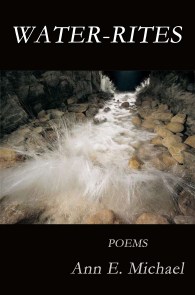
…that tomorrow, September 18th, I will be reading from Water-Rites, and presenting a few newer poems, at Bloomsburg Pennsylvania’s Moose Exchange. The venue is a non-profit cultural arts center in the college town of Bloomsburg PA. More on the event here.

Wednesday evening, there’ll be a full moon over the Susquehanna River, which flooded two years ago this month and stranded many college students (though they were without electricity and water, they were on the hill). The floodwaters inundated the lower part of town, including the main streets and many businesses; the damage to town and the homes of many citizens was devastating. Bloomsburg creative writing professor Jerry Wemple had invited me to read at a poetry festival that very week. The festival was, of course, canceled. Jerry was kind enough to invite me to give a CVPA reading at Moose Exchange this year. Fortunately, the weather for this week is forecast to be quite sunny.

For another WCWilliams moment, click here.

https://i0.wp.com/www.keylimepietree.com/Red_Plums_on_tree.jpg

plums (“so sweet”)

Consciousness & cosmology

"Syntax" by Steve Tobin. Copper, bronze.

“Syntax” by Steve Tobin. Copper, bronze. What can be said about all the things we think make up an “I”?

~

I’ve completed I Am a Strange Loop and Why Does the World Exist? and found, not entirely to my surprise (but to my delight–braiding and synthesis!), that the existential, metaphysical, and cosmological aspects of both authors connect intriguingly. Thomas Nagel, an important “philosopher of mind,” appears as an influence in both of these writers’ books, and Einstein and Plato and Heidegger. Both authors end up citing Derek Parfit’s work, and Holt even interviews him! It turns out that trying to determine the “reason” the world exists at all is not that different from trying to understand what consciousness is made of and where it resides.

After taking up mathematical proofs and several philosophical arguments, as well as neurological science as a basis for the evolution of “mind,” Hofstadter’s book gradually takes apart the mind-body problem that Descartes made so iconic for Western civilization’s thinkers. He keeps returning–and that’s an appropriate word–to the metaphor of looping. He looks at the strange loops of Escher’s drawings and of string theorists’ rolled-up dimensions and alerts us to how crucial the concept of self-reference is to the theory of consciousness.

The need for self-referentiality in a fully “human” consciousness gets him to the idea of “small-souledness” (among, say, such beings as mosquitoes). What portion of our selves makes us able to think about thinking, for example? Is that identity, or consciousness? What’s the difference? Here is where Parfit comes in. Hofstadter writes that Parfit “staunchly resists the idea that the concept of ‘personal identity’ makes sense. To be sure, it makes sense in the everyday world we inhabit…we all more or less take for granted this notion of ‘Cartesian Ego’ in our daily lives; it is built into our common sense, into our languages, and into our cultural backgrounds.”

~

If we care at all about what there may be beyond our everyday lives–and certainly people like Hofstadter, Holt, Bachelard, and me, among others, do care–we need to get “meta” in our meditations, which invariably leads to paradoxes and thorny tangles. Hofstadter’s book also engages with his ‘personal life’ (if, indeed, a personal identity or personal life exists). When his wife died, he found himself engaged in the seemingly unanswerable question of “Where did Carol go?” Did “Doug-and-Carol,” the shared dreams and lives and understandings of two people who knew one another intimately, simply vanish when Carol’s body died? Hofstadter cannot fathom that this shared identity “goes poof” when the body stops. He, after all, still feels connected to the Doug-and-Carol shared consciousness.

It feels real to him. So–what is consciousness? From whence does it emanate, or originate? Is it real, or is it an illusion–is there no such thing as the personal identity we hold so dear that we cannot even imagine ourselves any other way than as an “I”? (Are feelings real?)

~

Jim Holt’s book likewise gets more personal as the chapters progress and as he wrestles with his existential inquiry through texts and interviews. That seems quite appropriate: how can we use language to untangle what language itself makes vague and confusing? (See Tobin’s sculpture “Syntax,” above, for a physical view of loopy entanglement and potential words). Holt’s inquiry initially seems based on the abstract, mathematical, physics of why/how the universe got here; but he ends on the metaphysical and philosophical…whereas Hofstadter entertains the metaphysical from the get-go but employs mathematics, psychology, and brain physiology as well as philosophy. And they encounter similar quandaries, paradoxes, and uncertainties. Both authors essentially come to a similar conclusion about the mystery of existence, though they accept or compromise with their conclusions in slightly different ways. Then again, they are different people who have lived different experiences. Reading both books has been, for me, a valuable experience and one that’s made me examine my own thinking about being.

~

Apropos of these musings, and thanks again to Popova of Brainpickings, here’s a few more words on some contemporary thinkers who have theorized as Holt has (in particular, Lawrence Kraus) in the debate on Something vs. Nothing: “What is Nothing”

~

…And, apropos of nothing in this post, but to lighten the mood, here’s an amusing little blog from The New Yorker about pilcrows & pound signs & ampersands.

Ontologies and inquiries

{ ? }


This week, amidst the whirl of returning students, I have accidentally paired my reading of Douglas Hofstadter’s book I Am a Strange Loop with Jim Holt’s Why Does the World Exist?

How did all of this get started? In the most concrete and specific scenario, I had been slowly savoring Hofstadter–and, let’s face it, trying to “get” the math he occasionally employs–and happened across a copy of Holt’s book, which is a faster read, when I didn’t have Strange Loop to hand. Next thing I know, I’m deep into both texts which, naturally, overlap in several ways. Now, I find myself pondering the beginnings of abstract things like consciousness, which may not be abstract if you think along the lines of E. O. Wilson but which Hofstadter suggests exists as both a top-level abstract “thing” that pushes around its foundational, physical “things” such as synapses, neurons, molecules. And I think about Descartes and the mind-body problem and, oh, while I’m at it, the Big Bang theory and the “what was there before the big bang?” question.

Holt’s book turns to the metaphysical inquiry, “Why is there something instead of nothing?” It’s a question I asked myself when I was about 6 years old. Hofstadter deals mostly with the (perhaps metaphysical) concern: “What is consciousness?” That’s a question I asked a bit later in life, though certainly I asked it before I was in my twenties.

Both authors employ philosophy and math in the service of trying to make sense of these inquiries; and while Holt’s investigation is a bit more physical-cosmological in nature, it may not be necessarily so–lots of the theories floating around out there sound pretty metaphysical to me! Hofstadter employs many analogies, as is his wont (see, in particular, his 1979 book Gödel, Escher, Bach). Hofstadter also gets a bit more into neurology, of course–we are talking about consciousness, after all, and it may reside in our brains–and slightly into the arena of psychology. Holt takes a more journalistic approach, using interviews and readings to cite past and current thinking on the topic of existence. The subtitle of his book is “An Existential Detective Story.”

So far, I enjoy both books, though they differ in significant respects.

Meanwhile, at work I am mainly dealing with adjusting-to-updated-software issues and helping-students-with-advising questions and explaining drop-add and pass-fail and comp-rhet and the difference between Elementary Spanish I and II. Keeps my brain flexible and gets those neurons firing. {Right??}

I haven’t finished reading either book yet. I may have more to say about the synthesis of these two books after I’ve let my brain settle down.

Gopnik enters the English major fray

The New Yorker‘s columnist Adam Gopnik contributes his views about why the English major does or doesn’t matter in the blog accompanying a recent issue. He says, in response to apologists (like me) who contend that English, literature, and the humanities generally contribute to a person’s life experience in subtle, long-term ways:

Well, a humanities major may make an obvious contribution to everyone’s welfare. But the truth is that for every broadly humane, technological-minded guy who contributed one new gadget to our prosperity there are six narrow, on-the-spectrum techno-obsessives who contributed twenty.

Then he points out:

Nor do humanities specialists, let alone English majors, seem to be particularly humane or thoughtful or open-minded people, as the alternative better-people defense insists. No one was better read than the English upper classes who, a hundred years ago, blundered into the catastrophe of the Great War. (They wrote good poetry about it, the ones who survived anyway.) Victorian factory owners read Dickens, but it didn’t make Victorian factories nicer. (What made them nicer was people who read Dickens and Mill and then petitioned Parliament.)

Okay, he’s a bit broad and snarky there–but that’s his style. And nonetheless, Gopnik argues for space in society–if not necessarily in the academy–for the study and discussion and obsession with books and literature. He claims that “the best answer I have ever heard from a literature professor for studying literature came from a wise post-structuralist critic” who said the reason he was a literature professor was because he had “an obsessive relationship with texts.”

I would agree with that reasoning, though I am not a post-structuralist, so far as I know.

I believe that education ought to allow us to follow our passions to whatever logical or surprising ends appear. In light of the huge expense of a university education in the USA, however, perhaps the best question to ask is how to motivate citizens to pursue education individually (see my post on autodidacts). Gopnik calls the estimable Dr. Johnson “the greatest English professor who ever lived,” though he never taught in a university and though his title of “doctor” was honorary, and reminds us that other antecedent writers-on-literature, such as Hazlitt and Sydney Smith, “had to make their living doing something else narrowly related.” Colleges at least offer some employment and a modicum of respect to the humanist interpreters and researchers among us, but we need not be employed by the academy to exercise our obsession with books. That can be done on our own.

Dr. Johnson

Gopnik adds this lovely, wise sentence near the close of his column, and I wish I could convey the value of his idea to every college student I advise: “You choose a major, or a life, not because you see its purpose, which tends to shimmer out of sight like an oasis, but because you like its objects.”

Poems, stories, paintings, sculpture, dance, philosophy, books, books, books…I don’t know my life’s purpose, but I know the “objects” that entrance me.

Paz and poetic image

“The image is the key to the human condition.”

“Poetry is entry into being.”  ~Octavio Paz

All quotes in text below are from Paz, The Bow and the Lyre

~

Octavio Paz says all great works of art arouse in the spectator (or listener) “constellations of images” which “turn all works of art into poems.” In addition, what we find in the poem is something we already have within ourselves; we could not encounter it otherwise. What would that something within ourselves be? What do all of us possess in common, unique as we are? Paz doesn’t opt for a concept such as “soul” or “spirit” to define what all humans possess within ourselves. His answer is more mysterious but I think more accurate… “Poetry is nothing but time, rhythm perpetually creative.”

Some of us may protest we are not “creative.” But creative in this sense doesn’t mean that one has the ability to create art. It means one has the ability to create the imagined sensation, emotion, or context. All of us do this: the human concept of time, for example, takes considerable imagination–yet we all seem to have an understanding of time in our daily lives, even if our individual perceptions, or cultural perceptions, of time may vary a good deal. Give that idea of time, whatever it may be, a rhythm fueled by “rhythm as transformative change,” and perhaps that would be the origin of art. To encounter and be changed can only occur when something unexpected occurs through the experience.

~

“The image shocks because it defies the principle of contradiction: the heavy is the light. When it enunciates the identity of opposites, it attacks the foundations of our thinking. Therefore, the poem does not say what is, but what could be.”

“Since Parmenides our [Western] world has been the world of the clear and trenchant distinction between what is and what is not…Mysticism and poetry have thus lived a subsidiary, clandestine and diminished life. [As a result] man is in exile from the cosmic flux and from himself.”

(Here, I might suggest that Whitman made a significant attempt to bring those distinctions down.)

~books

Heidegger was still alive and writing when Paz was composing these essays, and Paz suggests that Heidegger had been no more able to reconcile the fact that “Western metaphysics ends in a solipsism” than were Husserl or Heraclitus. Paz adds: “Now, as some of his [Heidegger’s] writings show, he has turned to poetry,” and claims that “in losing our way in the world we have become estranged from ourselves. We have to begin again.”

And how to do so–except via image/imagination?

~

Well, we might examine Eastern thought, which “has not suffered this horror of the ‘other,’ of what is and is not at the same time…in the most ancient Upanishad the principle of the identity of opposites is plainly stated… ‘That art Thou.'”

Image as opposition, reconciled and unreconciled, inferred and stated, heavy and light: “of itself, language is an infinite possibility of meanings.”

This may be why writing good how-to instructions is as challenging as writing good poems. Yet according to Paz, “There are many ways to say the same thing in prose; there is only one in poetry.” Which brings us to a lovely seeming-paradox with which I will end this post:

“The poetic experience cannot be reduced to the word and, nevertheless, only the word expresses it. The image reconciles opposites, but this reconciliation cannot be explained by words…thus, the image is a desperate measure against the silence that invades us each time we try to express the terrible experience of that which surrounds us and ourselves. The poem is language in tension.”

(I might add that Emily Dickinson’s work provides excellent examples of the above.)

Proofreading

Every Living Thing–The Life & Times of a Glasgow Vet Student has a cute anecdote regarding the value of careful proofreading and how small mistakes can be inconvenient and costly at the customs line. Who thinks to proofread a passport or visa? Well…

Proofreading is how I began my so-called career many years ago, and the habits I learned follow or perhaps plague me still. For example, I’m currently reading Hilary Mantel’s 1992 novel A Place of Greater Safety and finding the text riddled with typos. The most common error is a missed quotation mark–not surprising because Mantel takes a unique approach to setting  up dialogue. But it’s dismaying to find that a major publisher allowed so many mistakes to slip through, and it interrupts my reading pleasure.

Years ago, I saw Edna O’Brien reading at the 92nd Street Y in New York City. She read from one of her short story collections, and at one point she paused, adjusted her reading glasses, and stated: “Typographical error, Farrar, Straus, Giroux.” Called out on the podium, publishers!

Online sites host the largest number of typos and outright grammatical or mechanical mistakes, but paper texts aren’t as reliably correct as they once were. The New York Times has become quite lax lately; three months ago, I even found a typo in The New Yorker!

Proofreading services

I understand why there are so many more typos these days–there are so many fewer proofreaders. It gets expensive, hiring all those human beings to inspect the small details of every text, and publishers are not making as much money as they once did. How many picky readers like me exist? Probably not enough of us that we could stage a book-buying boycott demanding that Random House hire more proofreaders (people like me could never really stage such a boycott–we’re too addicted to books).

Computers, however, are not yet intelligent enough to catch the shimmery, shifting nuances of the English language and its attendant finery in the shape of punctuation and capitalization, footnoting and italicization. So there will be mistakes, and I guess I can live with that. “To err is human,” and all that. And Mantel is a fine writer.