Head in a book

I am tackling some fairly difficult texts* at the moment and, when I need to find something less academic, have interspersed them with poetry and short fiction. In the latter genre, Ted Chiang‘s work has been a marvelous discovery for me. His speculative fiction derives its plot points from scientific and mythological sources. Though his writing style differs from hers, much about the short stories reminds me of the late Octavia Butler‘s work. “Understand” is a fascinating perspective on intellect vs consciousness, “Tower of Babylon” a lovely mythology that owes something to Borges, Calvino, archeology, the Hebrew Bible, and torus theory.

As to poetry, I’m reading Moira Egan‘s sometimes hilarious and often authentically moving Hot Flash Sonnets. Although “women of a certain age” can easily relate to the apparent topic of the sonnets, these poems appeal to much more than insight into female physiology or stereotyped emotionality/mood swings; they are about desire of many kinds, about taste and sex and grief, aging and joy–moments the world opens up to us and sings (in sonnet form!).

Yes, I know history is going on around me; and here I am with my head in a book.

It’s better than having my head in the sand. I’m learning something!


*Philosophy in the Flesh; Untranslatable: A Philosophical Lexicon.

Untranslatable

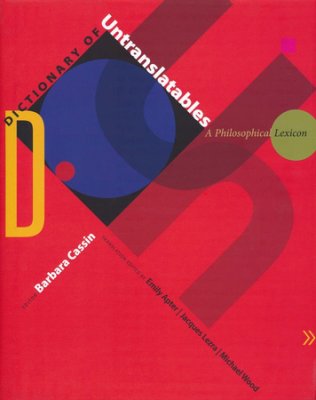
Speaking of difficult books…and I know I told myself to read more poetry (and I am, really, most recently Michael Burkard’s Fictions from the Self)…I am entranced and overawed by Barbara Cassin’s amazing Dictionary of Untranslatables: A Philosophical Lexicon. Here’s a thorough and intelligent review by Michael Kinnucan, going into more depth than I have time to post on this blog. What I want to mention about the text is its beauty and its acknowledgment of ambiguity, a quality that translates (ha!) into every aspect of human existence: our ambiguous relationships with our environments, with other humans, with our foods and our governments, our psyches, our cosmos.

138701

We cannot write about the act of translation without encountering ambiguity. We cannot really address philosophy without acknowledging that differing perspectives [context, culture, era, psychology, and of course, language] pose serious complications to understanding across languages and cultures. And even within a culture! For jargon and specialized terms can make understanding by even the most educated layman very, very difficult indeed.

While Cassin’s tome–and it is a collaborative work, with many brilliant people as contributors–presents itself as a philosophical lexicon, the connections with other disciplines (psychoanalysis, for example, with Freud’s famous coinages, and certainly poetry) are unavoidable. It may be challenging to translate the German Schicksal, a Kantian form of the idea we call in English fate, but in such cases the reader is generally going to be familiar with Kant and perhaps aware that the subtle connotations may vary. Take the word sign, however, and each reader–even those who have linguistics or anthropology or philosophy as a background–brings his or her own connotations to the definition and to the problem of translating what any individual author means by the use of the word.

Maybe this doesn’t sound fascinating to you. I relish it! And who knew (I sure didn’t) that even the word reality is a neologism, “coined by Duns Scotus” in the 13th century?

At 1200 pages of small type, this text is a tool, not a beach read. What a find, though. I have no doubt I will be referring to it for years to come, and that it will keep me wallowing in marvelous ambiguities.


Further shifts

Shifts are necessary now and again. Here are a some I am undergoing.

For example, readers of this blog will notice that the writer’s focus tends to move from interest to interest, month to month, year to year. And yet there’s poetry to consider, always. During the past year, I have read more non-fiction books than poetry books. More history. More memoir. More science. I have been pursuing the consciousness and neurology and physiology texts.

I have learned a great deal from all of this reading, and it is inspiring. I find, however, that it’s taken its toll on my writing poetry.

My shift now: Read more poetry.

~

But what about my love for difficult books?

Well, there is no doubt in my mind that poetry can be difficult. Difficult to write, difficult to read, difficult to understand. Time to go there, further and deeper.

~

~

Another shift: in the spring semester, I will be teaching a more advanced course in writing comp and rhetoric, one that will be more challenging for the students and especially for me. One of the arguments I will be making to them is that they recognize the need for credibility in the sources they use as evidence.

Making that case runs rather counter to the way US society operates. We shall see how well I can make my argument to these young people.

~

One further shift–certainly not the last. There’s my constant inquiry into consciousness…because sentience and human beings–and their brains, and their mind-body problems, and their relationships, and their stories and metaphors and art forms and pains–intrigue me endlessly, I turn to books and art for understanding. I do not expect to learn what consciousness is, where it originates, or how it came to be. But I ask because asking is interesting.

The reading has been enlightening. Philosophy, yes, and neurology and cultural anthropology. Oh, and evolution, religion, and medicine. Not to mention texts on death and dying (and the unanswerable “is that the end of consciousness?”).

My shift here lately has been to read less and to encounter more. I have been volunteering as a hospice companion/caregiver relief assistant, sometimes in the home but most often at the inpatient hospice unit at a nearby hospital.

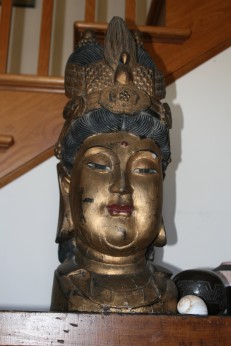
quanyin

There are bodhisattvas among us, and I have met them on the ward floor. This particular shift does not mean I will never read another book on consciousness, but it has reminded me that kindness is a constant act and that kindness is conscious and aware. It does not reside in a book but in the daily world, which is all we have.

~

I have to work on that in my own relationships, the ones that don’t take place on the hospice wing.

~

May I prove resilient to these shifts. The days are incrementally longer now. Time to read poems.


Face to face

alice-heart1 copy

The physical, corporal power of poetry; the need for language and expression to originate in the body–these are concepts that resonate with me as a poet and that make poetry such a difficult art. For how can one be in the body through words? Words remove the physical language of the body which is so important a component of communication. That is why tweets and social media posts and email often work to the detriment of genuine understanding.

What follows are three rather diverse chunks of thinking concerning the corporal and the intellectual.

Ren Powell writes in her blog:

And it made me more certain than ever that the separation of the corporal and the intellect is truly the root of every evil. It’s why all the studies show that getting people to talk face-to-face, breaks down bigotry in a way nothing else ever will. A linguistically relayed concept has to be replaced by a body that we experience in the sensual world.

It brings me to Orr’s phrase to describe poetry: “the eros of language”. I think poetry is necessary because it bridges the gap between the corporal and the intellectual in a way no other writing can. Why we say novels that tell the truth are “poetic”. When we speak poetry, sing it, it becomes corporal. It’s funny that when we sing the word “love”, we are not supposed to sing “luhv”, with its stingy and clenched vowel, but we’re supposed to open the mouth, sing “lahv”- with a wide-open palate. Because it hits us in the gut with its beauty then. Openness.

And counter-wise (which should be a word),  we can infect our minds with the routine that reinforces ugliness: I believe writing or drawing words and images of hate can infect the body.

~~

Reading Ren Powell’s words, I thought immediately of two poems of Gregory Orr‘s, from his book Concerning the Book that Is the Body of the Beloved. Here they are:

How small the eyes of hate.
I’m not making this up
Or being metaphorical.
A man held a gun against
My head and I saw how
Small his eyes were
With what they refused
To take in of the world.
This happened beside
A small highway
In Alabama in 1965.
What history called
The Civil Rights
Movement; what I call
The tiny eyes of hate.

~

How large the eyes of love.
How the pupils dilate
With desire (I’m not
Making this up: science
Has proved it’s true).

Those eyes wide
And glistening: gates
Thrown open. What’s
Inside, free to flow
Out as feeling,
And the whole world
And the Beloved
Welcome to enter.

~~

I just saw the movie “The Arrival,” a science-fiction film based on Ted Chiang’s short story “The Story of Your Life.” Any movie whose main character has a PhD in Linguistics sounds intriguing to me. The narrative uses the Sapir-Whorf hypothesis as a kind of plot point: the theory that language molds culture. An underlying possibility in the movie is that perhaps it is language that gives us consciousness, transforms us into sentience, and–possibly–has the capacity to unite and heal us.

But it needs to be face-to-face, as in the movie, wherein Amy Adams encounters aliens in person, insisting that in order to interpret any new language she must experience the process of “speaking” personally, to judge body language, movements–not just sounds or written “text.” How we communicate teaches us who we are. In order to understand one another truly, we need authentic encounters, not slogans.

We need to bid each stranger as Beloved, “Welcome to enter.”


905668_10209085939849941_7289218723455836950_o

Generation Anxious

In the shorthand of age demographics, I am marginally a Baby Boomer. I think there were earlier tag-names (Jazz Baby, for example) but the Boomer generation began a spate of efforts to define millions of people randomly born within a few years of one another by some generational attribute that caught on with media. I am not sure that I fit the conventional Boomer stereotype, but naturally at least some of the generalizations of that era apply to me. That’s why people use stereotypes. It is an easy way to categorize (thanks, Aristotle).

Of course, each so-determined generation feels certain that the antecedent generations are out of touch and misconstrue the attributes and the attitudes of those younger than they–and they are justified in this conclusion.

Often, though, we understand young people’s circumstances better than they realize because yes times have changed, but people haven’t. Not that much.

~

I do not have any idea for how long the media and demographers will go on calling young people Millennials; but the young adults I meet seem to more anxiety-ridden than millennial, whatever that means (actual millennials are only 16 years old now). They have grown up with parents who worried about keeping them safe in a society obsessed with security after 9/11. My guess is that in the USA, society’s insecurity entered young lives insidiously through toys, media, the internet, parental conversations, games and gaming, you name it. Parents’ main goal–any tribe or nation’s goal–basic to survival instincts, is to keep the offspring safe. That has felt challenging in the last 20 years or so.

I am not blaming parents. I am not blaming young adults.

~

I do observe a tendency away from risk-taking among many young adults and an accompanying fear of the future; among the risk-taking proportion of young adults, I notice that they engage in risks often because they feel there is no future for them.

Far too many of them believe dystopia awaits: climate warming, floods, polluted waters, chaotic capitalist oligarchies as government, spying and infiltration, loss of the ozone layer, terrorists everywhere. They don’t want to believe this is their future, but they are afraid.

And the Baby Boomers, who (according to the legend) were going to march forth and change the world for the better, failed the generations that followed. That’s the current story. (The story will change and develop over the coming years with the evidence of hindsight.)

I get it. I understand the fear and I know how fear dampens motivation and fosters, instead, a muttering resentment under the surface and a pervasive feeling of stress and anxiety. Few of my children’s friends are “secure” in their careers, jobs, housing, health, or finances between the ages of 22 and 30. Most of them have education debt and few have savings.

That’s scary for them. And here’s the thing: when I was their age, I was in the same boat but felt less frightened about my situation. I did not have the feeling that the world was dangerous and things might not work out. I was probably wrong about that…

Maybe ignorance is bliss?

~

My parents’ cohort was dubbed “The Silent Generation.” That implies they accomplished nothing, sat back and served roast beef on Sundays while McCarthy and cronies raked through American society looking for communists.

Maya Angelou, Neil Armstrong, Toni Morrison, Harvey Milk, Stephen Sondheim, and Martin Luther King Jr are among the “Silent Generation.”

So here’s the thing: Nomenclature is not destiny.

~

Anxiety requires learning coping skills, whatever works for the individual; the ability to puzzle things out using critical thinking; a sense of independence; development of self confidence and courage. Those are things we attain with maturity and experience as our guides. Millennials–or whatever you call yourselves–you are getting there. It feels slow. It feels scary.

Your elders may forget to tell you about that part, or perhaps wanted somehow to spare you from the realities. Please forgive us.

To millennials, the anxious generation: You got this. You are more educated than any previous generation, more concerned, possibly more compassionate. You know how to tackle complicated problems–you are merely afraid you will make mistakes. Go ahead and make mistakes.


The business of judgment

“Let us start with…the pleasure of pronouncing an unfavourable verdict. ‘A bad book,’ someone says….and he appears to be saying something objective. His face, however, betrays his enjoyment of his words…We constantly catch friends, strangers, or ourselves at this business of judgement, and the pleasure of an unfavourable verdict is always unmistakable.

“It is a cruel pleasure…there is no mercy in it and no caution and it accords best with its real nature when it is reached without reflection. The passion it conceals is betrayed by its speed. It is quick, unconditional judgements which excite the pleasure visible in the face of their author.

Gavel Clipart 31006.jpg“…It consists in relegating something to an inferior group while presupposing a higher group to which we ourselves belong. We exalt ourselves by abasing others. The existence of two opposing kinds, different in value, is assumed to be natural and inevitable. Whatever the good is, it is there to be contrasted with the bad. We ourselves decide what belongs to each.

“For it is only in appearance that a judge stands between the two camps, on the borderline between good from evil…he invariably reckons himself among the good…the things he judges are quite definite and factual; his vast knowledge of good and bad derives from long practical experience. But judgement is also usurped by those who are not judges, whom no-one has appointed, and no-one in his senses would appoint to such an office. No special knowledge is thought necessary…

“At the root of this process lies the urge to form hostile packs, which, in the end, leads inevitably to actual war packs…It depends entirely upon circumstances whether one or the other of these groups engenders enough inner heat to become a pack and attack the opposing group…”

From Elias Canetti Crowds and Power (1960 Masse & Macht; 1962 English tr. Carol Stewart)

Transcendence & education

I am in the thick of midterm madness and have temporarily abandoned my post as speculative philosophical muser, gardening enthusiast and poet.

However, I maintain my efforts to stay in mindfulness whenever I can. In the car, on my way to work. In the phlebotomist’s chair, waiting for a blood test. At a staff meeting, or with a student–trying to be aware of what I say, and who the person in front of me is, rather than zone out and get anxious about the next thing I have to accomplish before bedtime. The practice, however badly I manage it, rewards me with moments of clarity and observation that help get me through a day and complement the practice of writing poetry.

waterfall

Mindfulness does not come naturally to me; I am a daydreamer by temperament, a tuner-outer. It is far too easy for me to get carried out of the now by thoughts of “what if” or “what’s next,” and if I function in that way, I am not living my life in the present moment. Poets may start out as daydreamers, but if imagining never turns to the practice of writing and revising and reading the work–the daydreamer stays a dreamer, and does not mature into poetry-writing.

~

Among many other things, I am a teacher. I tell my students that English and Philosophy are “friends,” that they share many concepts, and that philosophy and English classes should educate people about The Big Picture. About life. I did not come to mindfulness or a consciousness of the value of the present moment in church or in school or on my own, though. People taught me. I came upon these concepts through philosophy–first, Western philosophy and later, Eastern philosophy.

Here are professors John Kaag and Clancy Martin presenting some of philosophy’s timeless questions (under the lens of Faust, for starters):

Faust knows everything worth knowing. And still, after all his careful bookwork, he arrives at the unsettling realization that none of it has really mattered. His scholarship has done pitifully little to unlock the mystery of human life.

Are we and our students in that same situation? Are we teaching them everything without teaching them anything regarding the big questions that matter most? Is there a curriculum that addresses why we are here? And why we live only to suffer and die?

Good questions.

In their article, Kaag and Martin take the question of life in the present, with its present meaning–if there is one–and propose an even deeper inquiry, one that I sometimes discuss with my colleagues in The Morbid Book Group. The authors write that

[w]hen dying finally delivers us to our inevitable end, we would like to think that we’ve endured this arduous trial for a reason. But that reason cannot, unfortunately, be articulated by many of the academic disciplines that have gained ascendance in our modern colleges. Why not? Why shouldn’t an undergraduate education prepare students not only for a rich life but for a meaningful death?

Then they compose a nice thumbnail sketch outlining some major definitions and explorations in Western thought and then suggest that higher education’s typical intellectual approach to The Big Questions has, to our students’ loss, lacked fullness of the lived experience as a part of its inquiries.

The need to have authentically lived and also to know what to do about dying are knotted together in a way that none of our usual intellectual approaches can adequately untangle. It is related to the strange way that experience is both wholly one’s own and never fully in one’s possession. Experience is, by its very nature, transcendent — it points beyond itself, and it is had and undergone with others.

The authors write, “Who needs transcendence? We suspect that human beings do.” I am certainly in agreement there; exactly how to convey transcendence to students is probably beyond the scope of most college professors, but we can encourage them toward inquisitiveness. We can be mindful about where they are now, and where we are now:

The meaning of life and death is not something we will ever know. They are rather places we are willing or unwilling to go. To feel them, moment by moment, to the end, authentically, thoughtfully, passionately — that is an answer in itself. And for us as educators, to show our students the importance of trying to go to those places — that may be one of the best things we can teach them.

What are we teaching our students about experience and the fullness of the present moment?

“…he not busy being born is busy dying” (“It’s Alright, Ma” Bob Dylan).

~

And even those being born are already dying. What have we got but the moment? I try to be mindful of that.

~

Read the article here.

Insomnia

Screech owls. Yipping foxes. Howling eastern coyotes. Tree frogs. Flying squirrels. The brown crickets, slowing their chirps as the temperature falls. Night sounds that I notice when I have episodes of insomnia.

night

eerie night

All my life, I have experienced insomnia–sometimes to a distracting degree. Now that I have a chronic condition that induces fatigue, insomnia plagues me less frequently; but something about the change of season from summer to autumn tends to arouse the sleepless demon. A colleague speculates that this seasonal insomnia occurs because for most of my life I have had to operate on the school-year’s calendar, September to June instead of January to December. Annually, this has been my transition time. I think she may be correct.

~

One of the most frustrating aspects of insomnia has been my sense that lying in bed unable to sleep is time wasted. We have only so many breaths to take in our lives. Stewing in anxiety, listening to thoughts run heedlessly through my consciousness–such fruitless minutes! I know I should be giving my body complete rest, nestling into proper circadian rhythms, instead of restlessly tossing. Or I should just get up and do something useful (but I’m too sleepy to do anything useful).

I am not a Buddhist; but learning about the practice of tonglen has provided me with a method for insomnia that does not feel wasteful. When I cannot fall asleep, or when I waken in the darkness and cannot get back to sleep again, the mindful breathing and the focus on compassion that tonglen prescribes are enormously helpful. I slow my breath and think about breath; I think about life, and about all sentient beings. In my awareness on the brink of sleep, I send compassion outward with my breaths–outward to all other beings in the cosmos. I repeat in my mind, “May they be free from suffering and the causes of suffering. May they be released from pain and the causes of pain. May they find peace. I send compassion to all sentient beings.”

The practice is akin to prayer, which I learned very young (my father is a “man of the cloth”) in church and at home. From early in my life, however, I encountered problems with prayer because I had problems with the Omnipotent Other Being to whom I was  directing my prayers. In the abbreviated tonglen practice as I practice it, I do not need to direct my thoughts to any one being but toward all beings. [I should note that in actual Buddhist practice, there is considerably more contemplative work in tonglen; a good reference is The Tibetan Book of Living and Dying by Sogyal Rinpoche.]

3792_1148123227559_731121_n

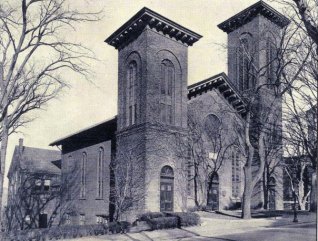
First Presbyterian Church of Yonkers NY, 1964

The benefits are several. Maybe my consciousness does not affect the consciousness of other beings, or in any way affect the suffering they experience. I certainly allow that may be the case. Nonetheless, the practice of thinking kindly toward all other beings works to make me feel happier and kinder; it reminds me of my own and others’ generous spirits. In addition, the practice soothes me both bodily and in my mind. Slow breathing is comforting and relaxing. All kinds of studies show that slow, thoughtful breaths relieve physical stress and mental stress while allowing oxygen to flow freely through the blood. All of that is helpful to the body–and the slow breaths are relaxing enough to get me back to sleep. Which is also, as studies show, quite essential for good health.

~

The night sounds and the changing seasons kindle me to write poems, as well. Sometimes those middle-of-the-night awakenings are charged with inspirations, or snippets of imagery from life or dream.The urge to write differs from the urge to share compassion, but they feel like kinfolk to me. Poetry springs, often, from the feeling of shared struggle.

~

May we make good use of insomnia. May we be free from suffering.

The Protestant in my upbringing says, Amen.


Do we change? Can we?

I have blogged about the Myers-Briggs personality inventory–a tool that may or may not be useful to psychologists, depending on whom you talk to. Because my father used the inventory in his studies of people in groups, he “experimented” with his family, administering the inventory to the five of us. I was 17 years old the first time I took the survey; my type was INFP (introvert, intuitive, feeling, perceptive), heavy on the I and the F. Has that “type” changed over the years? The “brief” version of the test now shows me moving in the last category, still P but slightly more toward J (judgment). That makes sense, as I have had to learn how to keep myself more organized and ready for difficult decisions. After all, I am a grownup now.

The personality type does not indicate, however, what sort of thinker a person is. Certain types may tend to be more “logical” in their approach to problem-solving, and others tending toward the organized or the intuitive, but what do we mean by those terms? For starters, logical. Does that mean one employs rhetoric? That one thinks through every possibility, checking for fallacies or potential outcomes? Or does it mean a person simply has enough metacognition to wait half a second before making a decision?

Furthermore, if personality type can change over time (I’m not sure the evidence convinces me that it can), can a person’s thinking style change over time? Barring, I suppose, drastic challenges to the mind and brain such as stroke, multiple concussion damage, PTSD, chemical substance abuse, or dementia, are we so hard-wired or acculturated in our thinking that we cannot develop new patterns?

There are many studies on such hypotheses; the evidence, interpretations, and conclusions often conflict. Finally, we resort to anecdote. Our stories illustrate our thinking and describe which questions we feel the need to ask.

~ A Story ~
high school.jpg.CROP.rectangle3-large

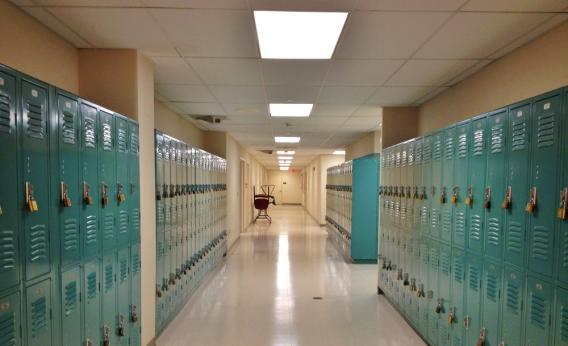
This year, I did the previously-unthinkable: I attended a high school reunion.

We were the Class of 1976, and because our city was directly across the Delaware River from Philadelphia–the Cradle of Liberty! The home of the Liberty Bell and Independence Hall!–the bicentennial year made us somehow special.

Not much else made us special. Our town was a blue-collar suburb of Philadelphia, a place people drove through to get to the real city across the river, a place people drove through to get from Pennsylvania to the shore towns. Our athletics were strong, our school was integrated (about 10%  African-American), people had large families and few scholastic ambitions. Drug use was common among the student population, mostly pills and pot. There were almost 600 students in the class I graduated with, although I was not in attendance for the senior year–that is a different story.

But, my friend Sandy says, “We were scrappy.” She left town for college and medical school, became a doctor, loves her work in an urban area. “No one expected much of us, so we had to do for ourselves,” she adds, “And look where we are! The people here at the reunion made lives for themselves because they didn’t give up.”

It is true that our town did not offer us much in the way of privilege or entitlement, and yet many of us developed a philosophy that kept us at work in the world and alive to its challenges. The majority of the graduates stayed in the Delaware Valley region, but a large minority ventured further. Many of these folks did not head to college immediately, but pursued higher education later on in their lives; many entered military service and received college-level or specialized training education through the armed forces.

ann1975-76?

Does this young woman look logical to you?

I wandered far from the area mentally, emotionally, and physically; but then, I was always an outlier. One friend at the reunion told me that she considered me “a rebel,” a label that astonishes me. I thought of myself as a daydreamer and shy nonconformist, not as a rebel! Another friend thanked me for “always being the logical one” who kept her out of serious trouble. It surprises me to think of my teenage self as philosophical and logical. When one considers the challenges of being an adolescent girl in the USA, however, maybe I was more logical than most.

I find that difficult to believe, but I am willing to ponder it for awhile, adjusting my memories to what my long-ago friends recall and endeavoring a kind of synthesis between the two.

~

The story is inevitably partial, incomplete, possibly ambiguous. Has my thinking changed during the past 40 years? Have my values been challenged so deeply they have morphed significantly? Have I developed a different personality profile type? Are such radical changes even possible among human beings, despite the many transformation stories we read about and hear in our media and promote through our mythologies?

How would I evaluate such alterations even if they had occurred; and who else besides me could do a reasonable assessment of such intimate aspects of my personal, shall we say, consciousness? Friends who have not seen me in 40 years? A psychiatrist? My parents? A philosopher? It seems one would have to create one’s own personal mythology, which–no doubt–many of us do just to get by.

I have so many questions about the human experience. But now I am back in the classroom, visiting among the young for a semester…and who can tell where they will find themselves forty years from now? I hope they will make lives for themselves, and not give up.



Civic gratitude: CNAs

In this media moment of accusations and epithets, I would like to pause and acknowledge some hardworking citizens of the USA.

Caring for the extreme elderly is hard, and I use this blog post to praise Certified Nursing Assistants and home health aides–a largely female workforce that, despite being underpaid and overworked (therefore, on occasion, justifiably terse or grumpy) provides crucial assistance and genuine caring for human beings who can no longer manage full  independence.

The nursing career has become a medical and social science that has sometimes more to do with observations, measurements, communications with physicians, and data entry than with assisting patients through touch, eye contact, and conversation. I have no criticism about the need for scholarship among today’s nursing force; in fact, my job permits me to work with many aspiring nurses as they pursue their studies, and I feel confident in these young people’s abilities. I just want to take a minute to thank CNAs, who do the majority of hands-on, personal helping of patients and at-home clients, especially in highly-populated regions with huge hospital networks.

Many CNAs are from lower-income backgrounds. Or they are recent immigrants. They willingly take on shift work and plenty of manual labor as they provide help for those who need it. They bathe patients, assist with bedpans, clean up when there is no bedpan, turn patients, monitor patients’ comfort levels, rub down fragile skin or sore muscles, all while managing to respect each person they care for as an individual human being. Even when they are ignored or treated like servants, when people (stressed, ill, or deeply anxious people) basically ignore them, don’t learn their names, resent their accents, these workers do their difficult jobs. And they smile at people.

Sometimes that smile is so needed–by a patient or a member of the patient’s family.

Bless you, folks. You are doing the kind of work every compassionate and ethical society needs in some way or another.

NA_Lapel-Pin.jpg