Useful avoidance

Trapped inside with the air conditioner on for over a week, I sat by my bookshelves going through the poetry books in my library. I’m re-reading, assessing which books I truly want to keep because I turn to them often or learn something each time I read them, which books I keep for sentimental reasons (maybe I know the author personally), which ones to keep because they are signed copies, which ones are long out of print and I would never be able to replace them. Some of them remind me strongly of places or eras in my life: I bought this one in a small bookshop in Grand Rapids MI, or this one at Barnes & Noble when it was just one store on a NYC street corner, or these at the storied and much-mourned Gotham Book Mart or St. Mark’s Bookshop. What are good reasons to keep books when I really have to downsize? It’s not an easy task, and the first of many in the process of getting rid of stuff so my kids won’t be stuck doing it. Besides, I enjoy re-reading these books. My children are not as enthusiastic about poetry as I am, so it makes sense that someone who loves the works on the shelves be the one who makes such decisions. It feels good to be surrounded by the words of wonderful writers when the outdoors is brutally hot and humid, and every joint in my body aches.

Surrounding myself with other people’s books also acted as one more way of avoiding my own creative work. Sometimes, though, waiting around and doing nothing on a project ends up bringing clarification or new ideas. It can prove useful. I have been stalled on my in-progress manuscript, so a month or so back I asked someone to take a look at it–and then I got caught up in doing other things. Like getting cataract surgery and having covid, and then it was gardening in full swing under sweltering weather, and then the bookshelves… I wasn’t exactly procrastinating, but neither was I actively working on, or even thinking about, the collection.

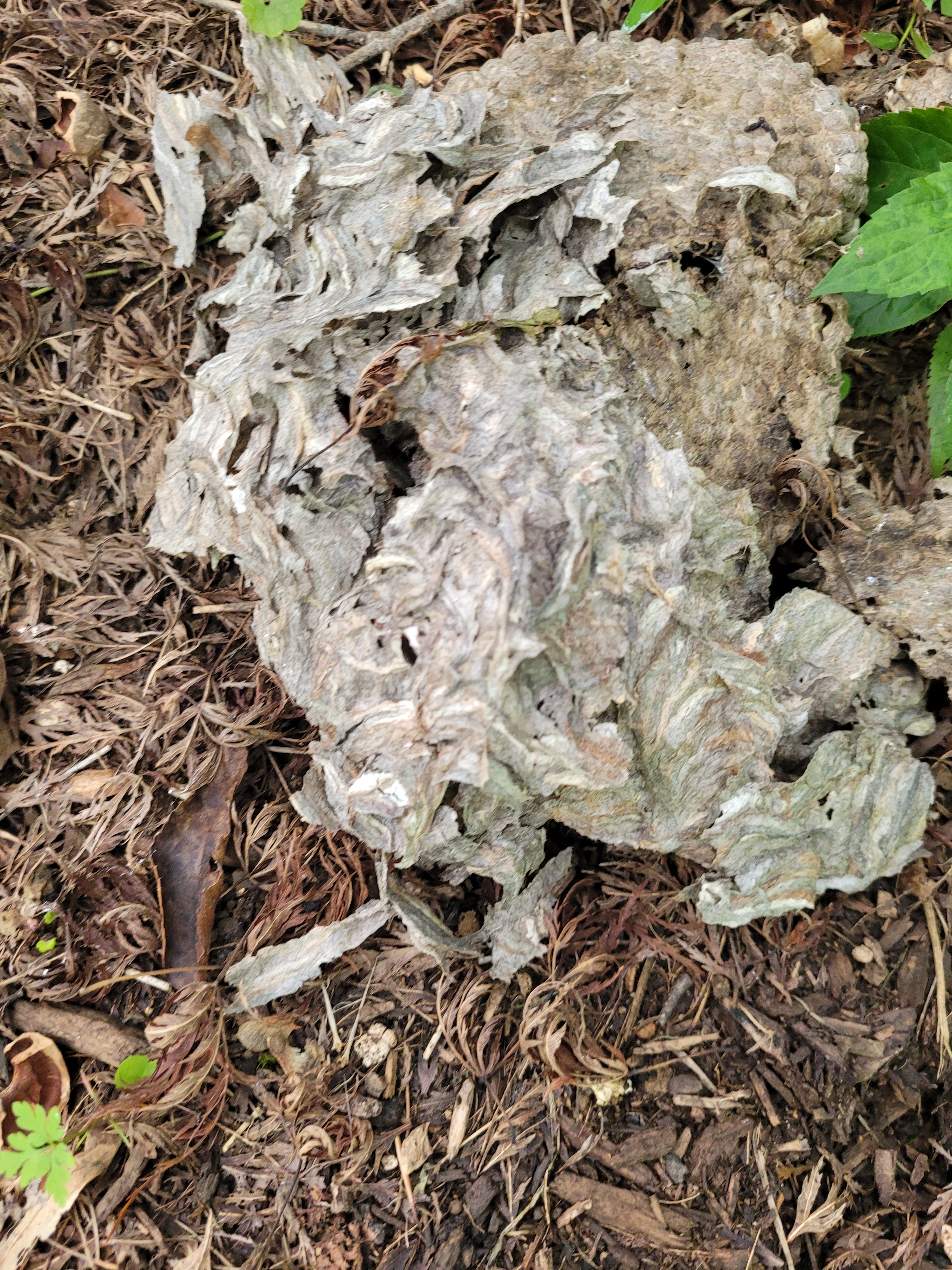
Acquired when I was much younger, and cool bookshops abounded.

And one night recently–during a much-needed rainstorm–I got a brainstorm! I realized I was trying to pack too many topics into what really should be a manuscript more closely focused on how people who love one another vary in their relationships to old age and death, and on how the contemporary social and medical aspects of the aging process pull us in uncomfortable directions, often distancing us from those relationships. So yes, there should be family poems, hospice poems, biblically-influenced poems, and dealing-with-everyday observation poems. Also some poems of hope and love, poems reminding me (and readers) of the need for compassion in all dealings. But the draft had 92 poems in it, far too many; and some were there just because I like them or they’d been published in a good journal. Which are actually not good enough reasons to include a poem in a collection, according to most of the editors I know.

I am back to thinking about the manuscript and digging up potatoes–a nice crop this year–instead of culling the poetry books because, thank goodness, the heat wave’s subsided a bit. But in the process of this non-routine summer I have allowed numerous weeds to flourish and set seed; all the more work for NEXT year’s gardening, but it’s been too hot to deal with said interlopers. I like to believe the weeds and I are reaching a sort of understanding, but it is not really a compromise. All the concessions have been on my part. [Note: weeding a personal library is less physically taxing but not really any easier.]

Sweltering

I do not much care for air conditioning, and I believe it is bad for the environment; yet I admit I’m grateful for it lately, as I reside in one of the many regions of the USA that’s been enduring dangerously high temperatures for more than a week straight. I feel lucky that we’re not struggling with the heat wave–that we can shut up the windows and turn on the AC. We’re also in an earlier-than-usual drought situation though the air feels muggy and humidity has been as high as 98%.

My garden needs water every day; I generally water in the evenings because that is when the garden is in shade. The barn swallows swoop around me as I make sure the tomato and cucumber plants’ roots are getting a deep soaking. While I water, I watch for insects–fireflies, moths, dragonflies. And for bats, which have returned but aren’t as numerous as they once were. It’s pleasant for me that there are fewer mosquitoes and gnats, but I’m concerned about a drop in the number of junebugs and moths, and even (yes) mosquitoes. The heat and drought have taken a toll on all kinds of wildlife.

This morning, a pair of finches dive-bombed a squirrel that was up in the pear tree, chasing it far into the hedgerow. It may have been after the unripe pears, but squirrels also sometimes eat songbird eggs or chicks, especially when the squirrels are nursing kits or when there’s a lack of other food. The deer are so thirsty and desperate for greens that they’ve eaten every last hosta in my landscape, including the ones right up at the house foundation. They are consuming plants they have overlooked before, but I can’t blame them. Since it has been so miserable outside, I haven’t picked black raspberries this year; I’m sure the deer are happy about that. But I do wish they’d eat the poison ivy, wintercreeper, oriental bittersweet, and honeysuckle vines…that would make my landscaping tasks easier!

I’ve kept a garden journal for 30 years. If you have a garden, you don’t need to be an environmental scientist to recognize that the climate is undergoing changes. This is not a political statement but a fact. Everything right now is stressed–including the gardener! The stress enters into my consciousness and, I suppose, into my creative life. My poem drafts of the past week have been a bit on the bleak side.

Here’s a draft of one of the 7-line poems I was working on last week. Suits the weather, I guess.

~


Sweltering

A description accurate for the days past solstice
when even the wind lies sweating in a hammock
unable to rise for a brief turn around the block.
Blackbirds slow their trills, robins shelter in shade,
all the tasks we should tend to we leave undone.
Hours of lethargy seep into skin and set up house,
keeping us damp, achy, sunburned with the blues.

~


Back to the garden

Late spring weather, mild and pleasant; lettuce and spinach ready and quite tasty, strawberries, asparagus–all the early harvest, with mulberries ripening on the trees and tomatoes starting to blossom. I have weeding to do, and it’s a task I don’t mind when the weather cooperates. Later on in summer, when the days get humid, hot, and blazing–then I am no fan of weeding. But on perfect days in early June, weeding is one of those mindless puttering tasks I can attend to while half-daydreaming.

I’m thinking about task-oriented work and creative work as opposed to wage-based work thanks to Jenny Odell’s second book, Saving Time: Discovering a Life beyond the Clock. Weeding’s one of those forms of work one does when it is necessary–the time it takes, and the best time to do it, don’t conform to clock schedules but to environmental ‘schedules,’ which vary. Too rainy? I don’t weed. After the soil has dried a bit and the weeds are sprouting like crazy? Time to weed. Too dry and hot? Not time to weed. Yet if I were a wage-paid groundskeeper and my boss said, “Get weeding today, $14 an hour, don’t waste your time,” I would have to weed, to look busy, to keep busy. Even though it might be a poor time to accomplish that particular task.

I’m no longer on the clock, at least in terms of wage-earning, but that socially-ingrained urge to keep busy and accomplish things and meet deadlines? That’s hard to move away from. Ill with covid, I kept complaining to myself that I wasn’t accomplishing anything. By which I guess I meant housekeeping, gardening, laundry, cooking, submitting work to journals, making plans for summer events, visiting my mother, taking walks, going to the gym…but really, it’s rather strange to think of such things as accomplishments. They’re not even work, per se, just tasks. They don’t have time constraints; doing them only becomes necessary when I run out of clean clothes, or need to eat or harvest spinach before it bolts.

Odell later addresses the sort of care-giving work that can’t really be broken into wage-based tasks, though industries do try that. Nurturing children, caring for livestock, being a teacher, social worker, farmer, artist: sure, some people do wage-work for these jobs, but hourly accountability doesn’t suit such work well, tends to distort the varying needs of the moment and the fallow or less-busy times that are just as crucial to accomplishing “good work” as the more rushed times are.

An artist needs down time. So does a Certified Nursing Assistant. So do farmers and teachers. And parents!

…and gardeners. We have all winter to do less and plan more, and then we have to respond to the weather and the circumstances around us as the circumstances require. Warming trends from climate change, floods or droughts, invasive beetles, viruses, weeds. What cannot be changed must be adapted to; didn’t we learn that from Darwin? If I have a job, as far as the garden goes, it is learning to balance things so that my effects on the earth are sustainable, harming the earth’s balance as little as possible–providing for pollinators and birds and amphibians, and also for my family.

It’s a difficult task and not clock-measurable, but more rewarding than most jobs are.

~

Because I like this song, and Mitchell’s lines about being billion-year-old carbon and getting ourselves back to the garden, here she is:

~

Many amazements

Subscribe to continue reading

Subscribe to get access to the rest of this post and other subscriber-only content.

Work

Ending the year reading new-to-me poetry collections was my plan, though of course family life and all that distracted me quite a bit, in a pleasant way. Maybe I will reframe that as starting the new year with poetry collections. Which is to preface the following, an excerpt from “The Work,” a poem that contains a lovely reflection on what it means to leave one’s job and find one’s work–eg, retirement–in David Mason’s latest (2022) collection, Pacific Light:

~

Once, work was the thing one rose to by the clock,
the place one drove to, the faces one met getting coffee.
Now there are stones to be moved, but will they be moved?

...We are doing the work no other demands in the light
we are given, forgetting what day of the week it is,
the work all other work was a way of putting off.

That’s a useful way of thinking about post-job life, the work that everything else was a way to put off. So now we are poets or writers, artists, gardeners, people who spend time fishing, walking in the woods, hanging around in libraries, caring for grandchildren or pets. In his poem “One Day,” Mason writes “I was always too slow/and now my deadline/nobody knows,//not even the moon…” That concept of a deadline, so ubiquitous in all industries (and academia), churns workers into all kinds of stress. Needless to say, the term has a violent origin–“time limit,” 1920, American English newspaper jargon, from dead (adj.) + line (n.). Perhaps influenced by earlier use (1864) to mean the “do-not-cross” line in Civil War prisons.” [Thank you Etymology Online.] I am happy not to have so many deadlines now. Whatever work I do now, moving stones or writing poems, no other person demands it of me or sets the timing. “Not even the moon.”

Or maybe I’m mistaken, just a bit, because: gardening. I do have to follow the environment’s requirements and timing when it comes to that work. Nature can be a demanding “boss,” but the work rewards me. As does the work of reading and writing poetry. Pacific Light, by the way, is one of those rewarding books.

There & back again, with weeding

I have traveled to the American Southwest and back again, over a fortnight away from the humid valley where my gardens languished toward autumn, pounded by rain, while we were gone. For two weeks, we lived among the terpene-scented (pinene, not cannabis…though we did notice cannabis when in downtown Albuquerque…) environment of the Sandia Mountains, where humidity is “not a thing.” I embraced my beloved family members, not quite often enough to make up for the distance between us, but enough to feel contented for awhile. And we explored some of the northwestern/north-central parts of the state that we haven’t seen before and were awed. I have not yet tired of the geology there. It’s easy to imagine New Mexico as the benthic floor of an ancient sea!

En route home, we encountered flight cancellations and re-routing, which is practically to be expected (our checked bag arrived 20 hours after our arrival in Albuquerque, also not an unsurprising development). I hear many complaints about air travel these days. I may even have added to said complaints. While it may feel almost as inconvenient, unreliable, and uncomfortable as traveling by Conestoga wagon, you must admit it’s much faster–even if it doesn’t seem that way while you’re waiting for the bus to the economy long-term parking lot at 11 pm. If my beloveds had taken Horace Greeley’s advice in the 1850s, I might never have seen them again. So, I am grateful. Even to American Airlines.

~

Upon a (slightly delayed) return, I found that the valley in which we live had experienced considerable rain but mild temperatures; as I expected, the garden weeds were thriving. Some of that is fine with me: annual weeds can go crazy in October and I don’t mind. But the perennial vines, little shrubs, and weedy biennials and perennials? I dig those out in fall, along with the tomato vines, sunflower and corn stalks, and amaranth plants. That has been my job upon my return; and the cooler weather, with soil moist from all the rain, has been a boon. I have to admit that adjusting to the lower elevation and the higher humidity has put some strain on my ol’ body. But we did a good bit of hiking and walking in the Sandias and Bandolier and Jemez, so I was somewhat prepared for the workout.

My beloved doesn’t understand my enthusiasm for “putting the gardens to bed for winter.” It seems like boring, hard work. Yet I don’t clean everything up–I always leave cover for bees and other creatures that need leaf litter and old stems in order to winter over. However, taking down the stalks and cutting back the peonies (etc) feels satisfying to me. I work in the cooler weather and sense the difference in the air. I recognize the annuals are dying and the perennials are going dormant, the trees let go of their coloring leaves; walnuts, oaks, and hickories seem to fling their mast upon the earth with every gust of wind. There’s nothing sad or somber about the changing of seasons. Winter must arrive in order for spring to do its thing. I like to think of daffodils, muscari, and irises huddled quietly in soil and taking much-required rest before the warmth unthaws the earth. I feel the same.

Morning birds

Every year, late March, starting at dawn, the cardinal thumps against our basement window, reminding me of a bored bear I saw long ago in a too-small cage–that repetitious sway and stomp–poor thing. But the bird’s unfettered and the window’s behind a large bush, a spindle tree we planted too close to the house–what’s driving that bird? Territoriality? We think perhaps it sees its reflection, so we’ve tried bird scare tape, opening the window, curtaining. Some years there are nests in that bush, but it’s never been cardinals nesting there. Thunk! Thunk!

My son used to stay up playing League of Legends until 3 am in that room, only to be awakened at 5:45 with irritating regularity by “Morning Bird.” He has left the nest, but the bird or its genetically programmed-to-thunk offspring returns annually. So it must be Spring.

Finally we got some good rain, about 3″, but the feeder stream behind our property lies pretty low and swampy after a mostly snowless winter and a dry autumn. Times have been when that stream flowed four feet deeper, rushing to meet Saucon Creek and head to the Lehigh River basin. I walked there this morning looking for frog eggs and salamanders, found two of the latter in a vernal pool where the skunk cabbage drills up from the swamp. Skunk cabbage doesn’t have much of a reputation for beauty but looks lovely with the sun behind its unfurling leaves.

I’m not a birder and can only identify about 25 birds by sight, fewer by sound. I noted mourning doves, mockingbirds and turkey buzzards, robins and redwings as I headed toward the creek. I have loaded Cornell’s “Merlin” bird app on my phone, though, and spent some quiet time sitting back on my heels in the sunshine while recording birdsong. The field sparrows weren’t in the field as yet, but other sparrows were calling: white-throated, song, and house sparrows (the house sparrows love to hide in the thick English ivy bush near the back of our house). Cardinals, of course, house finches, American crow, bluejay, red-bellied woodpecker, hairy woodpecker, tufted titmouse. Deeper in the woods, the white-breasted nuthatch got noisy, and an Eastern phoebe scolded me quite insistently from a beech tree. I was scouting around the largest beeches to see if I could find any dry beechdrop stems, but likely these trees aren’t quite old enough for beechdrops. I was happy to find some partridge-berry leaves, though; ten days ago, when my husband mowed the meadow, he saw a bobwhite–and left some cover standing for it.

I heard the Carolina wren as “Merlin” identified it, and was interested to note the bird app also recorded the presence of black-capped chickadee, bluebird, and Eastern towhee. It’s a bit early for towhees, but I’ve seen them here in past years, usually in April. And just before this recent rainstorm, I spied a killdeer in the meadow. I feel like an amateur naturalist! Anyway, forsythia are blooming. Even if we get more cold spells, I call Spring as having sprung.

~

By 10 am I was assessing the vegetable patch, where I moved a couple of perennial herbs and tore out as much shotweed as I could find. Some winter weeds can stay in the soil for later season removal, but shotweed flowers early, bolts fast, and sends out thousands of seeds so effectively that winter weeding is essential. I can’t keep it out of my lawn, but I can keep it under control in the garden. Redwings, robins, and woodpeckers kept up their calling while I worked. Good to get sun on my hair and dirt under my nails–feels like the first real spring day.

Autumnal

I have been re-reading Allen Lacy’s charming and informative book The Garden in Autumn. I first read it years ago and enjoyed his writing as much as I appreciated his useful ideas about landscaping with autumn in mind. I treasure books that offer more than information–well-written and inspirational texts which in this case includes attractive photographs, as well. I am outside in the clear, cool weekend days and doing some garden cleanup, but I don’t tidy things up as neatly as I used to: many insects and other small animals need some vegetative cover, and incautious hoeing can disturb nesting bees. I was almost 40 years old before I learned that most bees don’t live in hives and that our precious pollinators of many varieties need winter shelter.

Meanwhile, haiku drafts. Meant to kick myself back into creative writing gear. Practice/Zen practice.

~

So hot!
drinking the last of my morning coffee
with ice...


cicadas whirring.
under my bare feet
	dry grass.


Fall semester
remember to practice 
resting Buddha face


Jays and chickadees call—
louder but not as constant as
crickets in the dew


four cantaloupes
on the vine
I didn’t plant!

~

In the profusion 
of morning glories:
		one gold leaf


good morning, cicadas!
	at least some of us
feel wide awake

~

in the tulip poplar
red squirrel scolds 
a Carolina wren


dew
on crabgrass is 
still dew


farm stand:
fresh eggs for
a dying friend


late summer
six young sparrows—
empty birdfeeder


Three bats flit
at dusk the doe huffs, sneezes—
bedtime for fawns.

I don’t need
the word September
I see the spider’s orb

Volunteers

This evening, a steady rain at last, one I hope continues for hours. It is too late to save my vegetable garden but will help trees, shrubs, flowers as they set seeds, birds as they migrate.

Earlier today, I harvested a few remaining veggies. I cut some zinnias for bouquets and watched as a newly-emerged monarch butterfly unfurled its antennae and proboscis and dried its new wings. As often happens in the late-summer weeks, I pondered what to do for the next year’s garden. A surprising thought took shape: letting the garden go fallow for a year. After all, the patch has been working hard for over two decades now–shouldn’t it get a break?

My thought process then admonished me about weeds. The majority of the weeds that would crop up in a fallow patch well-composted over the years will be non-native plants. Those are what mostly come up in our meadow, though we do have many natives as well. But the meadow isn’t rich soil like the garden is. True, I have nurtured some natives even in the vegetable garden. I grow three varieties of milkweed as well as native asters, rudbeckia, and goldenrod (not to mention the native vine poison ivy, despite my best efforts to eradicate it). The milkweed was, this year, much appreciated and eagerly consumed by monarch caterpillars. Still, if I do nothing in spring but let the patch go fallow, I’m likely to find it has been claimed by white clover, dandelion, purslane, Canadian thistle, mugwort, garlic mustard, Japanese knotweed, Amur honeysuckle, and other common weeds that originated in Europe, the Caucasus, or Asia.

Okay, but I’m a champion at weeding in the springtime. I could pull out many of the invaders just as they are getting started. What if, however, I allowed some sprouts to grow? The volunteers, as gardeners call them, that come up on their own after wintering as seeds in the ground or in the compost–I could let them stay wherever they popped up. In this way, the garden would design itself, instead of me being the designer. It would be a year of surprises! I like that idea. I love a good experiment…why not find out what my garden wants to do, after 25 years of me trying to tell it what to do?

Hasn’t yet taken its first flight!

I can make some good guesses as to what I might find: morning glories, zinnias, some variety of squash, tomatoes of mixed parentage, nicotiana, sunflowers. Basil, possibly; chives and cilantro and dill, almost certainly.

Anything else really would be surprising, but this year I had a cantaloupe volunteer, and its fruit was quite tasty. It gets below freezing here for months in winter, and I have never had lettuce volunteer; however, I haven’t let it go to seed, either. It might survive, as the radishes seem to do.

The more I mull it over, the more I like the idea. I like the experimental aspect of it, and the speculation and the surprise. It means that instead of preparing the soil in spring, all I’ll do is spread the compost out as usual–but not dig it in. I’ll water if the spring is dry, but mostly pay attention to the things that sprout and determine as early as possible whether those are edible or ornamental, or just weedy. The downside is that I’ll get all those marvelous seed catalogs and…will I be able to resist? Also, my spouse will complain. He likes a well-laid-out, well-delineated garden so he knows where he can step and where he shouldn’t, what to water, and what to pull out. He may also object initially to the aesthetics of an unplanned truck patch. But around mid-June, I will be admiring my volunteers. It will be beautiful.

~

Always I find metaphors and analogies between the gardening process and the writing process. The way I put my recent chapbook (Strange Ladies) together was similar to the theory of an all-volunteer garden. I drafted those poems at different times over many years and let them sprout even though they did not seem to fit in with my other writing projects or plans. After awhile, I realized they made their own kind of peculiar and surprising design.

I recognize that experimentation is a big part of my writing process. I love just playing around with words and ideas; when I first started writing more purposefully, my poems were often a bit surreal and strange. Over the decades, I’ve experimented with craft, prompts, natural world imagery, poetic form, philosophical and speculative concepts, and memory. It’s hard for me to say where my style or genre of poetry fits. I experiment, but most of my poems are not “experimental.” Much of my work uses observations of the natural world as major image and motivation, but I am not quite a “nature poet.” It doesn’t really matter how or whether my poetry fits an identifiable description. I weed as I go along, and I let anything that looks interesting (or familiar) show me its stuff.

That’s a natural process that reflects the way I think, the way I experience the world, and the various ways I find to express myself to readers. [Crafting and revising–that’s less spontaneous, though it can have outcomes just as surprising.]

As with my garden idea…wait and see.

Conventional

It’s been a long time since I attended a convention, concert, or any large event. Thanks to covid, longer than usual. This year, I’m braving the Association of Writers & Writing Programs’ annual conference–in person, next week–since it’s being held near me, in Philadelphia, this time. Never one for large crowds or rooms full of strangers, given my natural inclination to internalize or curl up in a corner with a book, I have nevertheless attended AWP in the past and have found it supplies me with creative energy in the form of writers I need to read, intellectual ideas I want to explore, and reasons to keep writing.

~

The conference provides a good place to meet up with fellow writers I know mostly “virtually” via social media or email, and to see folks who live far from me; it also features well-known writers in readings, panels, and conversation–always an excellent experience. I’ve blogged about past conferences (if you’re interested, type “AWP” in the Search form on this page, and a bunch of posts will come up). Attendees do not have to be academics or involved in creative writing programs to attend. I’m excited!

Meanwhile, the month of March does its typical lunge and feint, volt, and passe arriere as it heads toward springtime…I never know what to expect, weather-wise. Today: mild and almost 70 F. I’m hoping we get a string of 50-degree days that permit some garden preparation. But then again, that’s always what I hope for in March.

New in the outdoor garden this week: the first bumblebees have emerged. There’s one in this photo, amid the iris reticulata–

bumblebee, just left of center; iris reticulata

~

My tomato seeds have sprouted in their little seed-starting pots by the sunny window. Gardeners must be optimists. I guess I learned that from my dad.