Depression narratives

I have been an avid and interested reader of books, usually memoirs, describing the authors’ experiences with depression, unmanageable grief, or depressive episodes. There are a number of reasons for my interest, one being that I have an interior depression narrative of my own and the other because of my passion for delving into concepts of consciousness. Consciousness and depression must be intimately linked, of course; a person cannot feel depressed if he or she lacks a reflective sense of self or Mind. Sorrow differs, but some grief is so deep that depression enters in and squeezes the soul dry. Each narrative contains parallels to other narratives, and yet each is as unique as the author. We are “storytelling animals,” and the impetus to tell the story of depression may be to help others or to assist in re-knitting the disjunctions depression creates in consciousness.

For example: This Close to Happy, Darkness Visible, An Unquiet Mind, H is for Hawk, Hyperbole and a Half, The Year of Magical Thinking, The Solace of Open Spaces…even in the relatively brief Chapter 75 of Bruce Springsteen’s memoir Born to Run–there are dozens of such memoirs on my bookshelves, and this list does not even mention the books by poets, psychologists, and philosophers who have explored the human challenges of depression. [I have not yet read Andrew Solomon’s Noonday Demon; but it is on my list.]

Porcelain doll, “Rain,” by Alexandra Koukinova of “Alexandra” Company.

Because I am a writer, these narratives, and the lyric inventions crafted by poets, teach me much about how to explain the un-nameable, to describe–in words–the kind of numb grip that a depressive crash or a monumental grief exerts on a person’s sense of self, or even of language (which fails); the way depression shrinks into nothingness a person’s feeling of shared community/communion/communication with others, even with beloved others. There’s a story there, the story of how the story itself gets subsumed by stasis.

In these cases, metaphor: the person is the story; the story loses its narrative, tapers off, stands still. No longer interesting, expressive, alive.

Unfortunately, I know that feeling. I know how it arrests creativity and savages my ability to write.

~

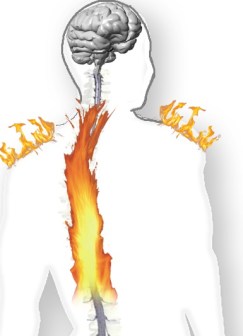
Why do we “get” depressed? What does depression do to the brain? Does the brain itself cause depression? Despite the insights medical researchers have gleaned about neurological networks, cells, synapses, the anatomy of the organ we call “the brain,” there are no answers to these questions; the former can be tracked through scans to some extent, but there is seldom a “before” MRI or PET scan with which to compare “normal” and “depressed” in a unique individual. A New York Times Health & Science article from 2005 puts things pretty succinctly:

” ‘I think that, with some notable exceptions, the community of scientists was excessively optimistic about how quickly imaging would have an impact on psychiatry,’ said Dr. Steven Hyman, a professor of neurobiology at Harvard and the former director of the National Institute of Mental Health. ‘In their enthusiasm, people forgot that the human brain is the most complex object in the history of human inquiry, and it’s not at all easy to see what’s going wrong.’

For one thing, brains are as variable as personalities.”

brainOne of the problems is determining causation: which was first, the disease or a perceived (and possibly inaccurate) difference in brain structure or function? Is it chemical or hereditary, or is it traumatically-induced? Or are we not really seeing a difference in brain structure? Why do medications work for some people but not others? And why and how do medications work, exactly? Twelve years after Carey’s NYT article, psycho-neuro-biologist folks still do not know any definitive facts, though there is slow movement toward progress. [For a quite up-to-date and thorough but readable article about the complexities involved in depression, I recommend Harvard Health Publication’s online pamphlet “What Causes Depression?”]

~

From the standpoint of a person who has had a lifelong relationship with depression, I’m not sure I need a cure at this point. My depression narrative includes taking a pill that seems to help considerably; but that has not been the magic bullet that alleviated a chronic, possibly chemical, condition. What has balanced my conscious mind with my chemistry is at least as likely to be related to support, friendship, talk therapy, cognitive behavioral changes, personal motivation, love, reflection, experience, information, aging, writing, spiritual study, Zen, nature, environment, valuable work, art, and tai chi.

The Nautilus article (cited below–do consider reading it) suggests there may be an “up” side to depression:

In a study of 61 depressed subjects, 4 out of 5 reported at least one upside to their rumination, including self-insight, problem solving, and the prevention of future mistakes.

“It may be best to let depression work its miserable magic, under protective supervision.”

“Most episodes of depression end on their own—something known as spontaneous remission…” says Steven Hollon, a professor of psychology at Vanderbilt University.

The Nautilus article cites several researchers who use the evolutionary model of fitness and bargaining, concepts that Marjorie Grene might caution us away from relying too heavily upon. Drake Baer of The Science of Us, whose article was certainly titled by editors, not scientists, writes “that, in some circumstances, depression may be, in the arc of a life, yielding of insights and personal meaning. All of this is in no way meant to minimize the suffering that depression can cause — but to suggest the uses that it may serve.”

Baer’s article dwells upon the idea that there are structural and cultural concepts at work in the identification of, experience of, and healing of depression; that the “illness” or disease resides in the subjective, non-empirical, non-testable world of human consciousness (interiority). I’m on board with that suggestion. Baer closes by relating depression to katabasis, an ancient Greek word that refers to the inexorable downhill slide, the descent into the underworld, the sinking down into darkness.

Baer writes that “Katabasis leads to catharsis; not coincidentally, there’s a shared theme in the personal narratives of people who reach midlife with a sense of well-being and generativity toward others: redemption.”

My personal depression narrative, just past mid-life (by some reckoning), suggests redemption. Which is to say there’s hope.

~

2011A-rainbow.jpg

Totally cheesy rainbow photo.

See also: http://psycnet.apa.org/journals/rev/116/3/620/

http://nautil.us/issue/45/power/does-depression-have-an-evolutionary-purpose

http://nymag.com/scienceofus/2017/02/a-new-way-to-understand-and-treat-depression.html

Please, if you or someone you know and care about has challenges with depression, read the Harvard article linked in the text at very least; and check out the other links as well. This is as close as I ever get to a public service announcement, but the urgency is explicit.

Problems of moral order

“Authority in the moral sphere is modeled on dominance in the physical sphere. The moral authority of the parent over the child is metaphorically modeled on the physical dominance of the parent over the young child…it is a metaphorical model in which the logic of moral authority makes use of the logic of physical dominance.”   –from Philosophy in the Flesh, George Lakoff & Mark Johnson (p. 301, my italics)

Here is a problem: “folk philosophy” assumes that the moral order is the natural order, a logic much used in the dogma of many Western religions; but Lakoff and Johnson point out how such suppositions lead to “a hierarchy of moral superiority and authority.” Because we are corporeal, physical phenomena in a physical world and our initial human relationships get established through the parent-child model, human beings have a hard time escaping the physical dependence-physical dominance-physical responsibility metaphors, which we incorporate into our languages and philosophies.

There is no reason to refute or escape such metaphors, fundamentally embodied as they are, as long as we are aware of them. For people who accept physical dominance as the natural order without recognizing it as evolutionary and metaphorical, however, the logic that [this metaphor]=Natural Law=Moral Order can be harmful.

And not just to them but to their families, their neighbors, and their societies.

Lakoff & Johnson write, “The consequences of the metaphor of Moral Order are sweeping, momentous, and, we believe, morally repugnant…the Moral Order metaphor gives us a better understanding of what fascism is: Fascism legitimatizes such a moral order and seeks to enforce it through the power of the state” (p. 304).

The authors later note that “the view of moral concepts as metaphoric profoundly calls into question the idea of ‘pure’ moral reason” (p. 330). In other words, pretty much all of Western philosophy since Aristotle. Which makes me contemplate whether that question also suggests there is no “pure” abstract consciousness–whether there is any me (I do not mean Ego here) without the body I inhabit.

content

Then again,  Dürr’s speculation that memories exist as data–a kind of cloud network, as an analogy–and somehow persist, merits some consideration. I find Lakoff persuasive, however. I know he has since added to, altered, and labored on the concepts laid out in this 1999 book.

The foundations and evolutionary development of our families, tribes, and languages create our philosophies; this much seems as certain to me as anything–and thus arrive in our collective consciousness as metaphors, stories, poems.


Metaphor & mind

In a recent New Yorker article about the trial of Charleston church shooter Dylann Roof, Jelani Cobb reports that during the lead prosecutor’s presentation

Roof’s mother sank down on the bench as he delivered his opening statement, which contained details of the crime that had previously been withheld from the press. At a certain point, she slumped over. It seemed for a moment that she had fainted, but she was taken to a hospital, and it was later learned that she had suffered a heart attack. She survived, but did not return for the remainder of the trial.

In her situation, I might have had the same response. How metaphorical: the heart revolts from within–an embodied reaction. When I read about this incident, I thought of cognitive scientist/philosophers George Lakoff and Mark Johnson, who have been pioneering the concept that the mind and body evolved together and cannot be separated through the literal, analytical, categorical approaches of classic Western thought.

Languages the world over use body-based metaphors and gestures that reinforce how our  minds are integrated with and connected to our human bodies–we intuit from the gut; a situation makes our skin crawl; we place hands over hearts to demonstrate love, loyalty, compassion. Medical science confirms what people have long understood, in a “folk physiology” way, for years: emotional and intellectual stress has physical expressions and repercussions.

Lakoff and Johnson have been investigating such universal human phenomena since the 1970s. Their work has implications for a wide range of endeavors from artificial intelligence to brain trauma. In 1999, when Philosophy in the Flesh was published, they said Western philosophy needs to retool its thinking from the ground up, the ground being the body itself.

Reason, they assert, is as embodied as emotion; and their argument that intellectual functioning arises metaphorically through the physiological experiences of the (human) body is persuasive and extensively documented through research, particularly neurological research. Exactly where what we term “consciousness” arises may never be determined, but phenomenology, Taoism, and empirical science converge with what we are learning about synapses, cells, hormones, and the neural network to suggest there may be an answer as to how consciousness emerges; and that answer is likely to be biological.

brain

~

The brain, the heart, the entire bodily system under emotional, mental, psychological duress, the conflicting moods of love, grief, anger, fear, and a chasm of misunderstanding; the terrible awe of disbelief–an embodied self might well collapse, physically, literally, under the metaphorical strain.


Struggling with words

Some of the students I tutor in writing are English learners–advanced English learners, but still on the learning curve. They began speaking and writing English at age 10 or 14 or 16, or perhaps earlier, but in a family whose English defaulted to a “home” language. They often have vocabularies that far exceed my US-born students in scope, but they lack awareness of idiomatic preposition use or skills in standard English syntax.

My background is not in “ESL,” “ELL,” or the instruction of multi-lingual students. I have precious little training in that area, and no experience in translation. I do not even have fluency in any language other than my own; as a result, I have great respect for my students, who often are conversant in two, three, sometimes four languages or dialects. In truth, their language skills far outstrip my own. Yet they arrive at my door seeking help in writing, trying to understand how to write clear, concise sentences in a language they find mysterious and arbitrary in its grammar, its use of punctuation, and its rules about documentation, capitalization, and articles.bkmk-violet

The majority of them are from immigrant families, and they are among my hardest-working students. They take nothing for granted. Their frustration at not getting their ideas across on paper drives them to read more, to look words up in the dictionary (something few of my English-speaking students ever bother to do), to visit the writing tutors, to ask interesting questions about why the noun-count adjective comes before the color or quality adjective and when and why to use a rather than the as a preceding article.

They are excellent critical thinkers, probably because they have to solve problems continually: translating in their heads, figuring out whether a translator app will help them or not, deciphering figures of speech and cultural allusions, and navigating how to get around in the world outside their home base and home language.

Some of them have had to learn to handle stereotyping, ostracizing, bullying, and worse.

I admire their resilience and their youthful enthusiasm, and I recognize their dismay when nothing they try seems to work. The only aspect of their lives I am really privileged to help them with is their writing in English as they struggle with words. The rest they do on their own.

~

So here’s a story.

A student who has lived in the US for four years and who speaks one of the Asian languages regularly meets with me to go over her mathematics essays (these are basically chapter summaries with reflections). Her papers are usually well-structured and demonstrate considerable understanding of some complicated readings, but she does wrestle with article use and past-participle verb use in the various conditional tenses. Every once in awhile, though, she composes a sentence that completely throws me.

In a recent paper, her concluding paragraph contained the phrase “is not anhydrous warehouse confusion.”

[WTF?!] I had to wrap my brain around the possibilities of that one…so she pulled out her cell phone translator and we played around with it a bit: “without water,” a scientific term; I knew that had to mean “dry,” but why hadn’t she come up with the word “dry”? She knows that word. And “warehouse”? “Like store,” she said. [Storage? Dry storage? Confusion?]

After some laughter and some consternation, we realized that she was using a metaphor that means, essentially, dry facts. She wanted to write that mathematics is not just a set of confusing dry facts, as many people think it is. And we discovered that the metaphor in her language was not that different from the metaphor in English. But Google Translate doesn’t realize that!

~

I got home and said to myself: somehow I have to write a poem that contains the phrase anhydrous warehouse😀

~

Translation software, AutoCorrect and GrammarCheck are algorithms. They may be full of information, but they are not smart and they are not human beings. The genuine problem-solver, the best puzzler-outer, is the messy ol’ brain itself: human consciousness.brain


Words for pain

On Wednesday, I spent a long time in conversation with an anxious dear one who was despondent over US election results. I am not the only person who engaged in such dialogues that day, but what stays with me is the way I described the conversation later–to another friend. The phrase I used was “talking her down off a ledge.” It was, thankfully, just a harmless metaphor, an exaggeration (she was not suicidal, merely distressed). Nonetheless, having recently considered the ways we express pain linguistically and how hard it is to express pain of any kind in a manner that conveys anything to other people [see blog on Scarry], I stopped to think about the figure of speech I had employed.

Emotional pain hurts, after all, as much as physical pain. What else might I have said?

I could have said, “I spent 20 minutes calming her down.” Not as vivid, but less violent. Yet isn’t that what poets and writers want–vividness? Some sort of language that elicits visceral response…and the metaphors or war, violence, and harm are the default phrases and symbols to which we turn.spinal-cord-injury-pain

We learn these word-images when we are very young, often before we understand the violent origin of the metaphor. So I wonder whether the connection is as clear as some theorists suspect. But there’s no denying that pain = harming imagery, because pain is harm. Stabbing, throbbing, pounding. That’s pain. Emotionally, too: we feel wounded, we feel broken, damaged, hurt. Anxiety feels painful; stress feels painful– “The stress is killing me!” Pretty clear connections there.

I have been challenging myself to write poems about pain (physical, existential, mental, emotional) and to discover whether I can make the sense of pain come through in words as something other than self- or other-harm; whether I can use non-violent images to convey pain, and to reframe it in the body and in the consciousness.

So far?

Not a lot of success, but some interesting drafts that sound slightly surreal or hallucinatory. There is a bonus here, though, in that I have created a difficult writing prompt and, at the same time, given myself some insights into the connections between mind and body (Descartes, you old rascal) and language.


Interpretation & finesse

A few months back, I heard from an editor who rejected a poem I had submitted. He said that the editors really liked the work, but that the journal generally did not publish “poems about poetry.” The critique was especially surprising to me because I didn’t realize that my poem was about poetry; the editors’ interpretation of my text was different from my own!

It is interesting to re-read one’s own work from the viewpoint of a reader who is not oneself. Actually, that’s an impossible task, but I tried. My interpretation of my poem is that it is a somewhat speculative, perhaps philosophical piece concerning the re-envisioning of the commonplace. Nonetheless, it is not an abstract poem on the surface. My poetry inclines toward physical imagery, often nature-based (no surprise to readers of this blog…). When I distanced myself a bit and tried to imagine what another reader might make of the poem, I could see that there would be a way to interpret the piece metaphorically as a reflection on the writing process.

That’s not what I thought I was writing, but the interpretation works just fine. Who knows, maybe I was kind of writing about writing, and it took a thoughtful critique by some editors to figure that out!

~

Which brings me to the whole topic of interpretation. I am not teaching poetry class this semester, but that does not mean I am not trying to impart to my students an understanding of what it means to interpret a text. The aim of any composition & rhetoric course is to assist students in learning how to express their original thoughts about a topic–any topic–and to ground those thoughts in evidence: in other words, to validate the student’s interpretation.

That process involves analysis, argument, inference, sometimes research, and composition whether the text the student responds to is literary, persuasive, commercial, visual, auditory, performatory, or digital. Critical thinking requires inference and metacognition. These tasks are harder than they seem; most students do not develop those abilities overnight and need a bit of coaching.

Then there are students who are capable of thinking analytical thoughts but are at a loss for how to express them on paper (or on word-processing software). That ability also requires a bit of coaching.

It can be difficult to ascertain whether a student I am tutoring needs help with the thinking or help with the expressing. Too often, early in my career as a writing tutor, I have inferred incorrectly about a student’s difficulties with the written word. Coaching takes finesse. Finesse takes awhile to develop.

Come to think of it, interpretation requires finesse as well. When a critic bludgeons a poem to pieces, the interpretation gets lost in the analysis (and critics can even bludgeon poems that they love).

I am glad that the above-mentioned editor read my poem with considerable care and finesse. He may have decided not to publish it, and he may have interpreted it differently that I would have myself, but he took the time to interpret. It is encouraging to know that my work has been read with such care.


Diversity. Not.

I must admit, it is challenging to read Elizabeth Kolbert‘s book The Sixth Extinction without feeling a bit of dread.

Nonetheless, the book is informative and fascinating–even funny at times–and well worth reading if you are the type who can get beyond your anthropocentric leanings and attempt to view the long-range picture from a scientific, if not exactly neutral, viewpoint. Her main argument is that we are, indeed, in the midst of a 6th mass extinction era and that human beings are “the weed” that most likely is the cause of these numerous extinctions–and not just since the industrial revolution, but eons before that. Humans travel more effectively than almost any life form, and that leads gradually to a loss of diversity. Read the book to find out how that works.

I find interesting parallels with socio-cultural trends in the ecological struggle for and against diversity. Niche-dwelling creatures or societies adapt to some challenging environment and develop or evolve ways to deal with adversity–cold temperatures, constant rain, saline soils, whatever. Nomadism, for example, is a way to adapt to seasonal weather challenges.

When an ‘alien’ enters a niche area, it usually dies off; but if it can adapt, there is hybridism or conquering. Tolerance, it turns out–living peacefully in tandem using the same resources–is not a common evolutionary strategy, though there are examples of symbiotic ecological relationships and, of course, parasitism of the sort that does not quickly kill off the host. Conquering generally means lost diversity.

When a niche organism ventures, accidentally or otherwise (forcibly, sometimes) into a new region as ‘alien,’ the special characteristics of the creature cause it to die or, in some cases, to have to adapt to a different set of circumstances…and diversity gets lost pretty quickly that way. In my region, for example, wetlands have experienced overruns of phragmites.

Does this sound like emigration? War? Forced removal of peoples? Indigenous populations killed off by measles or smallpox? Young people leaving remote areas to try to find work in cities? I see a metaphor here!

While human beings may try to celebrate diversity (which is better than using diversity to identify and exclude or punish “the other”), we probably cannot keep ourselves from becoming, over the centuries, less and less various. A homogeneous world seems, to me, to be a place impoverished through lack of niches and creative adaptation–but that’s what happens when mass extinctions take place: a depletion of kinds in the fossil record.

You might want to read Robert Sullivan’s New York Magazine article for even more recent scientific evidence if you’re not up to reading a whole book, though Kolbert is an engaging writer and I found her book to be a quick read. And below, some graphic illustrations from LiveScience. Fascinating stuff.

Here in the USA, alas, we seem to be helping the extinction of our own kind along by viewing diversity among people as dangerous. Compound this with a society that permits the ownership, hoarding, and use of deadly weapons on others and which cultivates a cultural tone of fear, anxiety, and entitlement, and there is strong evidence that the human weed will continue the slow but decided progress of the Holocene extinction.

~
Chart of extinction events that wiped out most life on Earth.

Source:LiveScience

Drought

I hate droughts. I’m a gardener who lives in a temperate region that, on average, receives about 1,150 mm of precipitation annually (45″). Here we are, in the middle of springtime, blooms on the dogwoods and azaleas, peonies beginning to bust out; and I haven’t heard the welcome noise of rain on the roof for over 5 weeks. Generally, May brings this region 2-4 inches of rain. I miss it, and so do the birds and the deer and the insects and the salamanders and toads…and the few remaining farmers.

I water my vegetable garden daily, but I cannot water the whole lawn, the perennial beds, the hedgerows where the larger trees grow. So the grass becomes crisp. And I worry that a strong wind, or a sudden downpour (please?!), might topple a weak-wooded tree that’s been gasping for nourishment.

Drought is also so metaphorical. It signifies lack. A lack of ideas, a creative drying-up, a kind of writer’s block where words harden into obstacles–those things are droughts of a kind that stop thinkers into stasis. If you don’t move, you end up mired.

Not too distant a stretch from the concrete phenomenon of drought to the existential phenomenon of an artistic or emotional “dry period.”

There are several ways to contend with droughts; some require large-scale changes in industry, agriculture, population centers. On the smaller scale, I practice a version of xeriscaping; after years of experimentation, I have learned which plants hold up best under extremes of dry periods or deer depredation. I am alert as to which seedlings are hardiest, which plants can contain themselves in a sort of dormancy until the rain comes. That means I have to let go of my desire to grow certain species and cultivars no matter how envious I am of the way they flourish in someone else’s garden.

And it’s the same with a droughty period in my creativity. Certain things I let go of; I work instead with what struggles along in the mud cracks, what creeps under the brickwork or waits for the next real rainfall. There’s often surprising beauty in those hardy emotions and ideas that stay around when the going gets tough, the things that manage to find shade or that–like cacti–prefer a drier clime.

Being adaptable is important if one wants to make art, to write poems, to compose. Because life isn’t always going to offer ideal circumstances for the creative or aesthetic effort.

~

I hate droughts not only because they hurt my plantings but because they signal a potential disaster in terms of global climate change, and because thousands of people die for lack of that essential element–water. I recognize, though, that suffering sometimes motivates human beings to make changes, to create new approaches…even to make art.

Life is complicated. We evolve through change.

Meanwhile–let it rain!

Roadkill

As the spring equinox approaches and creatures rouse from dormancy, the number of roadkill incidents spikes. Yesterday as I made a left turn into my driveway, I noticed a groundhog carcass lying in the middle of the street. I was stopped to retrieve my mail anyway, so I figured I should move the body off.

And then it moved–bloodied mouth opening and shutting, one heavily-clawed forepaw shuddering slightly. It wasn’t quite dead.

Poems about road kills sprang to mind. I thought immediately of Stafford’s “Traveling through the Dark” and that moment of swerving, replete with caesuras, in the last couplet; Billy Collins’ “Ave Atque Valealso skittered into my thoughts, that bloated woodchuck waving “hail, Caesar” to the passing vehicles.  As I pulled a plastic bag from my car, one of my own poems resonated–“Burials,” which is in my collection Water-Rites (available through this link and posted below).

I made a glove of the bag and grasped the poor beast by its tail, a precaution: it might have been lively enough to snap at me. Not the case this time. A car running over the body would have put the groundhog more quickly out of its misery, but by daylight drivers tend to avoid road kill; it gets smashed during the night hours. So I left it on the embankment to gasp out its last breath with the birds larking about above it and some damp wintry weeds under its dark body.

This sort of experience feels oddly metaphorical…obviously, not only for me but for people like Stafford and Collins. I am sure one could put together an anthology of very lovely roadkill poems.

~groundhog-day-groundhog

BURIALS

1.
Last week the neighbors’ dogs eviscerated a woodchuck,
left it, stinking, at the perimeter of our woods

which is how we found it, by the smell—
body bloated, partly hairless:

a scientific demonstration on the rapidity
and absoluteness of decay, the brief time it takes;

but today my daughter cannot bear the stray cat’s
road-killed stillness, the soft, domestic body,

the pet, which isn’t hers—she begs to bury it.
The schoolbus arrives with my promise

to give the cat some cover. Under mulberry I scrape
a shallow grave, in thin and gravelly roadside soil,

cover it with fallen leaves, an autumn prayer—
nothing more, because I know burial does not forestall

death’s swell, its stink, desiccation,
absoluteness; I do what I promised,

disguising the body’s inevitable progression
from the eyes of my grieving child.

2.
Shall I cover my gray hairs
with dry leaves, shall I layer
my wrinkled hands beneath clay,
hide my own departure—

or shall I teach my children
to understand the truth of maggots,
which consume equally
the treasured and the stray—

which arrive unasked,
fulfill their contract with the earth,
never seeking recognition
or time, more time?

~

© 2012 Ann E. Michael


Ink art

Last weekend, I went to New York with friends to see the Ink Art exhibit at the Metropolitan Museum of Art. The art, all of which is contemporary (the oldest artist represented was born in 1953), has been installed in the museum’s extensive Asian galleries alongside ceramic, sculptural, religious, and paper works going back centuries.

The rationale behind this juxtaposition, says the museum’s site, is to point up “how China’s ancient pattern of seeking cultural renewal through the reinterpretation of past models remains a viable creative path. Although all of the artists have transformed their sources through new modes of expression, visitors will recognize thematic, aesthetic, or technical attributes in their creations that have meaningful links to China’s artistic past.” That certainly proved true for me; and I cannot decide which was more intriguing, the similarities or the differences.

The young artists in Ink Art employ age-old cultural tropes: the triptych, the scroll, woodblock printing, calligraphy, moody landscapes, ideograms, ink, and repetition. The resonance with Chinese heritage is palpably authentic and is often employed in the service of criticism, mostly criticism aimed at the destruction of cultural icons and of the environment (some of the represented artists are exiles). Mounting the exhibition in the Asian galleries meant that the visitor confronts the historical and the contemporary simultaneously.

In Yang Yongliang’s “View of Tide,” the artist uses digital photography collaging to replicate the mood of an ancient Chinese landscape scroll which, on closer inspection, reveals that the austere and mystical imagery of sea and mountains has been composed of smokestacks, highways, powerlines, and the like. I found this work powerful as commentary and shocking in the best possible way.

Being a word person as well as a visual art appreciator, I was especially drawn to the section of the exhibit called “The Written Word.” The highlight of this section is Xu Bing’s installation “Book from the Sky”. My friends and I–avid readers all–entered this room and felt shivers of recognition and joy at the concept of a room-sized, descending, ascending, wall-to-wall book. (I urge my readers to click on the link for a peek.) The information plaque notes “while the work is inspired by the form and typography of traditional Chinese woodblock publications, faithfully replicating every stylistic detail of traditional Chinese printing, not a single one of its roughly 1,200 characters—each printed with type hand-carved by the artist—is intelligible. Each of these imaginary characters conveys the appearance of legibility but remains defiantly undecipherable.” The paradox and the beauty of the concept are amazing; in addition, I find it oddly thrilling to think of the imagination and the craft and simple hard work Xu Bing put into creating meaningless calligraphic pictograms, cutting them into woodblocks, and repetitively setting up the careful lines in rows on long scrolls.

What emerges when the scrolls are installed on ceiling, walls, and floor manages to be indecipherable but not meaningless. There is in fact much opportunity for meaning in “Book from the Sky,” and for discussion and interpretation and playfulness.

One example: after reading about “Book from the Sky” and taking in the environment for awhile, my friend Mark commented, “Imagine if you were a beginner learning Chinese script, and you encountered this room. You might just spend hours in here trying to figure out whether you could read any of it…I mean, if  you hadn’t read that it was indecipherable. Or even if you had that knowledge, maybe you’d spend a long time here thinking that at least something in all this text meant something you could translate. Wouldn’t that be awfully frustrating?”

Or maybe that’s the point?

Carved type for “Book from the Sky” by Xu Bing

~~

Conceptual metaphor. Art. Thinking. Decipherability; communication. These are large ideas, and crucial ones in the scope of human community. Without art–how can we encounter such metaphors? How would we share them?