Northern stars

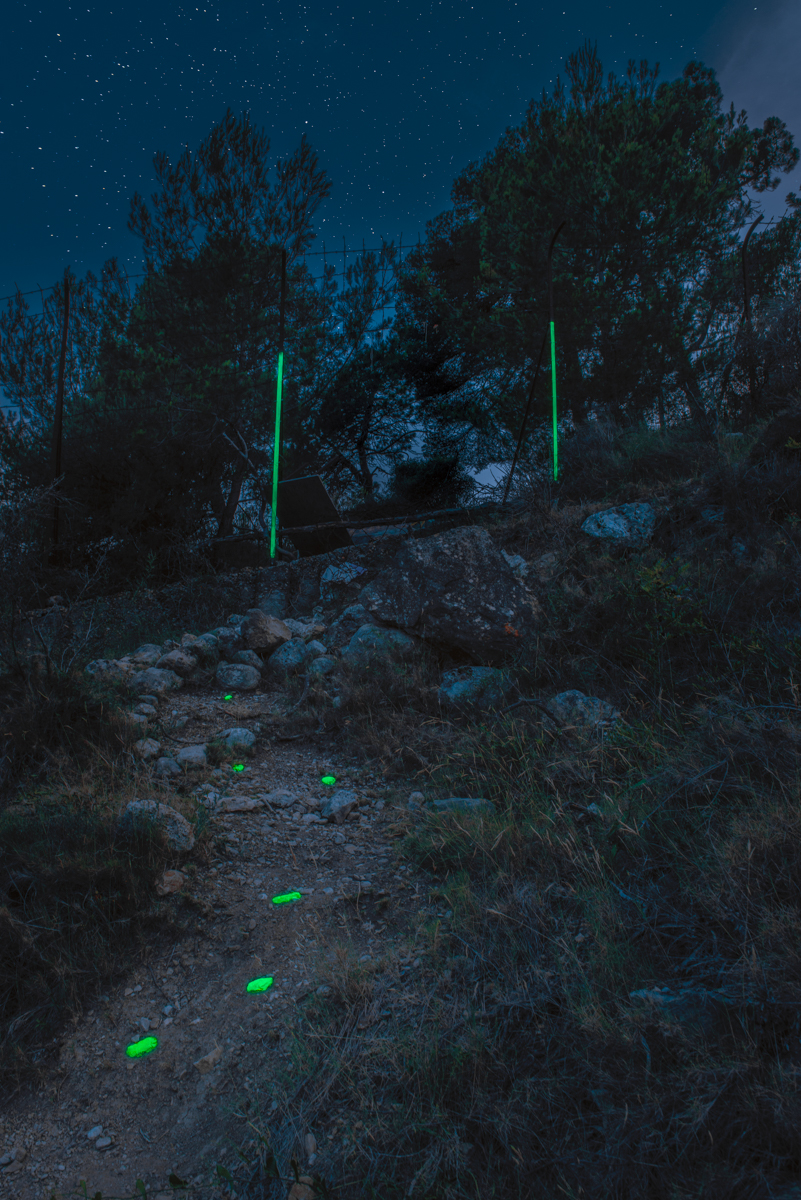
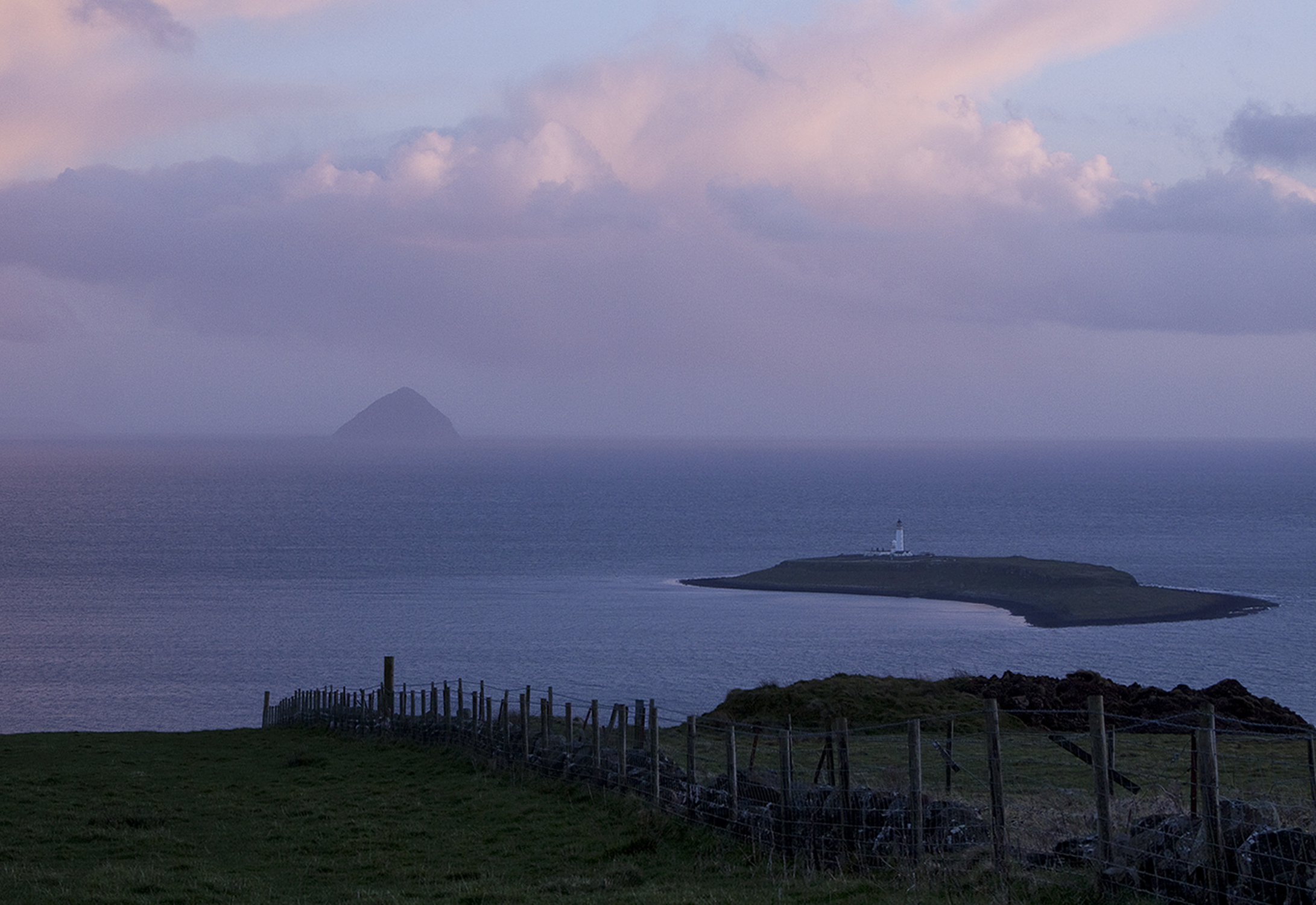
Northern Stars (2023) Celestino Marco Cavalli

~

A phosphorescent path
connecting Italy and France
through glowing stones
that look like stars.
A poetic and political action.

~

https://www.celestinomarcocavalli.xyz/work.html

The installation shown here was created by one of the artists I met while at Joya, Celestino Marco Cavalli. The link above will take you to a description of his project. In brief, it is a series of fluorescent-painted stones that follow a trail refugees travel on their way from the Mediterranean, through Italy, and into France. The website does not include the many photographs Celestino took during his 5-month visit there to document the conditions under which emigrants travel–the trash they leave as they abandon belongings, the graffiti and the notes to others they leave in caves and hollows, the prayers they write, the places they shelter from the sun or rain or cold weather. Do the refugees litter the mountain paths? Yes. Do they do so out of desperation? Also yes.

This installation is innovative, compassionate, and political–also problematic; as always, borders between nations are fraught with concerns about each country’s boundaries, laws, rules and regulations. These days, most immigrants taking this trail (through Italy) have come from the global south, where the climate damage wrought by industrial nations has made living in poverty even harder and fostered political unrest. And the immigrants take huge risks–with no guarantees that they won’t be deported, or preyed upon by criminals who exploit their vulnerable status.

I’ve never been a refugee, an exile, an immigrant. I have met quite a few, though–often very young people, students I encountered at the college where I worked, students from Haiti, Dominican Republic, Turkey, Syria, Lebanon, Mexico, Venezuela, Pakistan, Eritrea, Viet Nam, Kenya…and my husband’s stepmother, who arrived at Ellis Island from Austria between the wars. And a colleague who was stranded at college in the USA when the Ayatollah took power in Iran, and a fellow employee from Cambodia, who lost her entire family except for one brother to the Khmer Rouge. Whenever I hear about the politics of immigration (which is often), I think of them: how hard they work, what they sacrificed to get here, how hopeful they are, how challenging their lives have been and continue to be. And their grief.

The following is a persona poem--"A persona poem is a poem in which the poet speaks through an assumed voice" (Academy of American Poets). Celestino's Northern Stars is my "prompt."

~

Refugees

Because we must hide by day
and travel at night, darkness hinders.
The narrow stony trail offers options:
turned ankles, torn skin, or a precipice
that takes us sliding down the mountain,
an avalanche of self, death’s prospect.
No one arrives eager for exile;
we’re just trying to save ourselves,
our families, a few belongings
we used to think were precious.

The way we take may be steep—
everyone knows that metaphor—
what we never expect is how much
it is an unburdening of all
we thought was necessary,
an education in physical need.
Shoes, for instance, more critical
than underwear. Ancestors emigrated
on callused feet without watches
or water bottles. The least cut could
go septic, a child’s wail could betray us
to predators or enemies. Still true.

One by one we let things go, abandoned
in shallow caves with other people’s
remnants, plastic bags and t-shirts,
books, candlesticks, so much trash after all—
even our skins can barely hold what
we need anymore. We arrive shriven,
numb as feldspar, having walked so long.
May we have water? May we rest, with our
children in our laps, and sing the songs
our parents taught us not so long ago.

Poem-ish thing

I don’t really feel ready to write what’s on my mind today. I do appreciate the cooler weather that means I can mindlessly pull weeds from the perennial beds and the vegetable garden without sweating or sunburn. Here’s a spur-of-moment poem-ish thing to mark, for myself, the place I’m at.

~

All morning, redtails shriek overhead
pleas or threats
or just announcing their presence
they don't much care
how I interpret them.
I don't interpret them.
Listen only for brown crickets,
whirring cicadas that have begun
to wind down late in August.
My father died in an election year
77 days before he could have
cast his vote. I'm reminded of that now,
how distracted I was and how,
though the election mattered,
my father mattered more.
For most of us, what's near the heart
obscures other concerns. Look:
there is dew on the grass,
barn swallows have
already left the garden.
~

Sweltering

I do not much care for air conditioning, and I believe it is bad for the environment; yet I admit I’m grateful for it lately, as I reside in one of the many regions of the USA that’s been enduring dangerously high temperatures for more than a week straight. I feel lucky that we’re not struggling with the heat wave–that we can shut up the windows and turn on the AC. We’re also in an earlier-than-usual drought situation though the air feels muggy and humidity has been as high as 98%.

My garden needs water every day; I generally water in the evenings because that is when the garden is in shade. The barn swallows swoop around me as I make sure the tomato and cucumber plants’ roots are getting a deep soaking. While I water, I watch for insects–fireflies, moths, dragonflies. And for bats, which have returned but aren’t as numerous as they once were. It’s pleasant for me that there are fewer mosquitoes and gnats, but I’m concerned about a drop in the number of junebugs and moths, and even (yes) mosquitoes. The heat and drought have taken a toll on all kinds of wildlife.

This morning, a pair of finches dive-bombed a squirrel that was up in the pear tree, chasing it far into the hedgerow. It may have been after the unripe pears, but squirrels also sometimes eat songbird eggs or chicks, especially when the squirrels are nursing kits or when there’s a lack of other food. The deer are so thirsty and desperate for greens that they’ve eaten every last hosta in my landscape, including the ones right up at the house foundation. They are consuming plants they have overlooked before, but I can’t blame them. Since it has been so miserable outside, I haven’t picked black raspberries this year; I’m sure the deer are happy about that. But I do wish they’d eat the poison ivy, wintercreeper, oriental bittersweet, and honeysuckle vines…that would make my landscaping tasks easier!

I’ve kept a garden journal for 30 years. If you have a garden, you don’t need to be an environmental scientist to recognize that the climate is undergoing changes. This is not a political statement but a fact. Everything right now is stressed–including the gardener! The stress enters into my consciousness and, I suppose, into my creative life. My poem drafts of the past week have been a bit on the bleak side.

Here’s a draft of one of the 7-line poems I was working on last week. Suits the weather, I guess.

~


Sweltering

A description accurate for the days past solstice
when even the wind lies sweating in a hammock
unable to rise for a brief turn around the block.
Blackbirds slow their trills, robins shelter in shade,
all the tasks we should tend to we leave undone.
Hours of lethargy seep into skin and set up house,
keeping us damp, achy, sunburned with the blues.

~


Jewel

Joya’s curator/founder Simon Beckman requests an artist’s statement from the residents, and mine is below. Compared to many of the resident artist statements, mine seems quite brief–artists often have complex conceptual ideas to describe and rely more on images, so their statements (words!) are often lengthier. I’m a writer, but I’m a poet; concise use of words ought to be my metier.

La jolla, and la joya, mean “the jewel” but also–especially the latter spelling–refer (geologically) to a bowl-like valley. The description is both physically and metaphorically apt, and provides context for the poem below my statement.

~~

In wild places, some part of me that’s not domestic surfaces. I experience a rise in my level of awareness regarding my surroundings, an apprehension in the etymological sense of “a seizing upon, laying hold of; understanding” (Etymology Online). In canyons, caverns, riverbeds, forests—yes, in the desert, too—I respond wholly differently from the way I encounter unfamiliar human-made spaces. While at Joya-AiR, I encountered both: new environments that I’m integrating into my inner ecology. New forms of art. That process of integration, an exciting one, will continue long after my residency here has ended.

It has been such a pleasure to interact with artists whose mediums vary from my own. I was the only poet in this group, and the opportunities I’ve had to learn more about the visual arts have been amazing and useful. My first loves were sketching and painting, and although my longtime practice has been writing, imagery has ever been vital to my creative work. I thank them for their generosity of spirit. What artists can offer to one another is an aspect of themselves through their perspectives as well as their mediums and works. This kind of giving and exchange strikes me as quite personal and enriching. It is something we can do for the world, too.

The extensive work that Simon and Donna have been doing here to make the place both welcoming and ecologically sustainable impresses me and confirms my conviction that with creativity, open minds, and persistence, humans can manage to live more cooperatively with the planet and damage it less—even, perhaps, help it to heal itself.

I will keep the images of Cortijada Los Gázquez with me for a long time.

~~

Jewel

…implies what is small, exquisite, bright.
At even higher altitudes, glassy glacial pools
shine at the caldera’s ridges.
Here, the hills’ aridity offers nothing
but shallow canyons where once
a river coursed, twisting around a cavity
anchored by holm oak and Aleppo pines.
The pinsapos sway in late afternoon,
their cones studded with hardy seeds.

Almond and olive trees dot pale clay soil.
No desert is ever gentle—what survives
must be temperamentally suited to the climate—
but what’s cradled in these ancient mountains
seems gentler than most. Night’s stars,
exquisite. Evenings of ruby, amber, amethyst.
Days that define bright. And when rain descends,
however briefly: everything gleams.


[Cortijada Los Gázquez, Vélez Blanco, Spain]


Grieving

I composed this poem during the pandemic not too long after my father died. It’s interesting how one responds to grief. The grieving man in this poem is not my dad; he died, I think, without too much weighing him down. He may have intended to live longer, but he was ready enough. I don’t think he had many regrets, and I know he felt loved.

And the grieving man is not my brother, though it could have been–he had a dog that was a great comfort to him while he mourned our dad, but I don’t think he was as gobsmacked with sorrow the way the person in this poem is; Dad’s death was not a surprise to us. The man in this poem isn’t symbolic, however, much as he may be a creature of my imagination. As the writer of this poem, I sense him as someone quite specific, whose loss was deep and perhaps unexpected–maybe a person whose loved one died from covid-19. A person who, like all of us, needs comfort and compassion; and I suppose this poem implies that the grieving man has someone, perhaps an adult child, who willingly extends that compassion in return: “lean your head/against his shoulder as you used to do/when you were small and aggrieved by/the world’s unfairness, and he sheltered you.”

A year or so later, I returned to the poem to do some revisions. Sheila-Na-Gig published it online and, much to my surprise, nominated it for a 2023 Pushcart Prize (a long shot, but an honor to be nominated). It’s my intention to include it in my next manuscript–the one I am working on now. I’m not holding my breath about when the next collection gets published; could be years. But I decided that this would be the poem to read for the Berks Bards 2024 poem-a-day project on BCTV this April. The link to my reading of this poem is here.

~

Grieving Man

Let him into your house, the grieving man,
blind, nearly, and so frail with sorrows
he cannot hear your comforting words
or move himself from room to room
without assistance. Give him
a careful bed, a friendly dog, a view
of mountains. Let yourselves open yourselves
to what he can give, hampered by limitations:
yours and his.

In a time of no touching, take his hand
in yours. In a time of isolation, lean your head
against his shoulder as you used to do
when you were small and aggrieved by
the world’s unfairness, and he sheltered you.
We turn about and find the unfamiliar.
When did he become the grieving man
and you sorrowful, in pain yourself, aghast
at the supermarket, the oil bill,
the nation?

He savors the soup you’ve made
and strokes the dog’s snow-dampened fur.
He asks whether the juncos still hop
on frost’s thin crust or if winter has
moved on north, a swath of crocuses
blooming in its wake. You rally your resources,
endeavor to describe the current moment
blind as you are and sorrowful, spreading seed
for the sparrows.

~


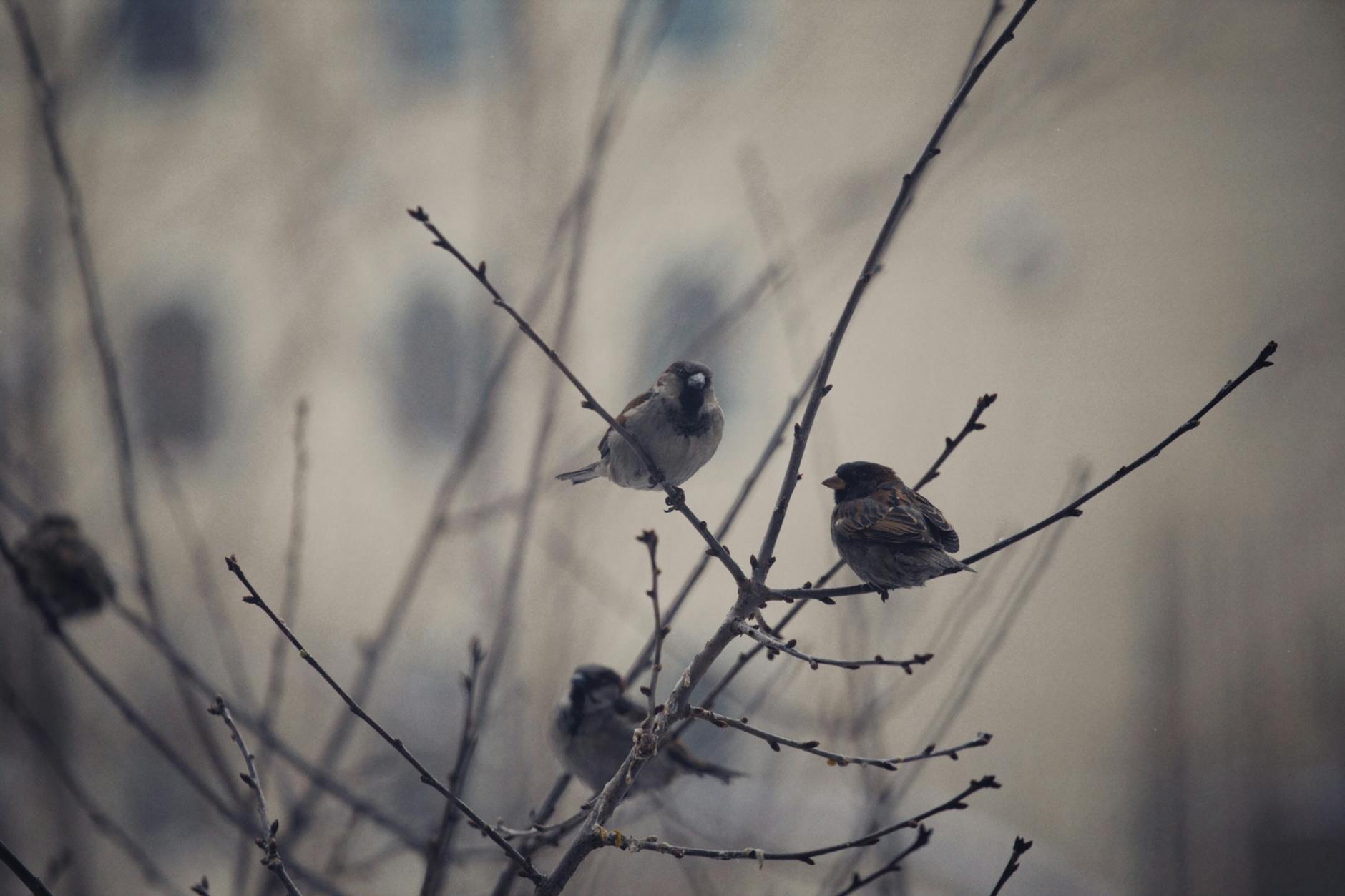
Photo by Alexey Demidov on Pexels.com

Toad night

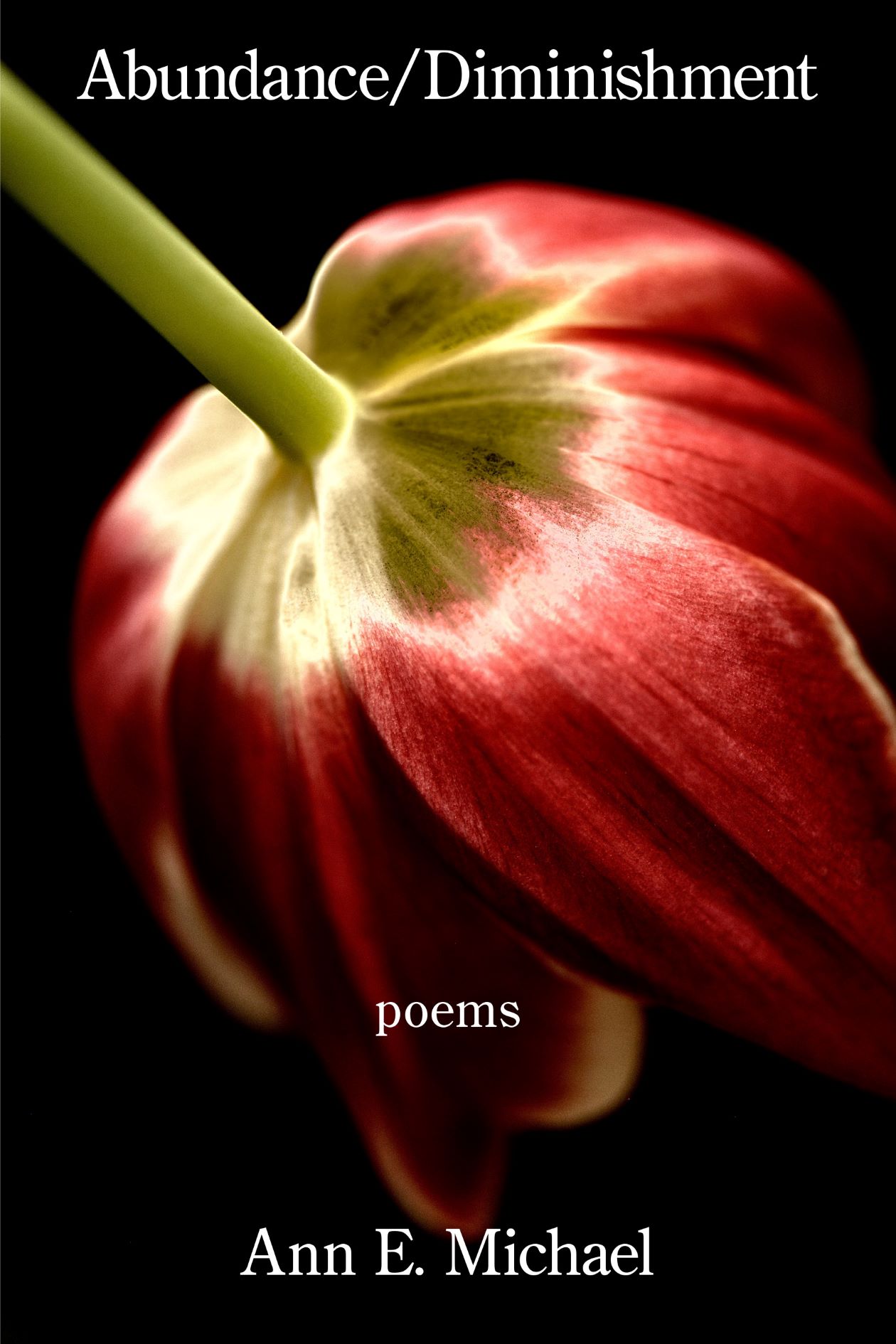
Because April is National Poetry Month, here’s an April poem from my latest book:

~

Toad Night

Soft rain, or
humid fog—mild
and after sundown

when the driveway’s
puddled or
the blacktop’s slick
they emerge.

It must be warm
enough to stir
their dormant
blood, speed
the small hearts &
waken senses in
the porous skin.
In the headlights

they can be
mistaken for
last year’s leaves

tumbling over road
but there is
no breeze.
Their eyes gleam.

Give them time.

You do not need
to rush tonight

with the small
beings of the world
awakening
around you.


lìchūn

As is not uncommon in our region, we have a warm and sunny spate of days that evoke thoughts of spring…often thoughts that are dashed by late-arriving snow and ice storms. The days are an hour longer than they were at the December solstice, and some plants bloom or start to bloom: witch hazel, snowdrops, hellebores, skunk cabbage, winter aconite.

In the Chinese lunar-solar calendar, these weeks mark the start of spring: 立春 lìchūn. (Hence the new year commences, celebrated this year on February 10.)

I love the emergence of new growth in springtime and enjoy looking for buds and leaf-tips, but winter’s crucial to this environment. It plays its role by enforcing dormancy and restful, unperceived rejuvenation. Nonetheless, sometimes I resent the way it teases–knowing that the freezing will return and that mid-March snows are not uncommon here. That has made me think to post my poem “Spring Lies,” which appears in The Red Queen Hypothesis.
~~

Spring Lies

Sun through fog. The leaves of beech trees gleam
low under the tall expressive line of ash and poplar
whose topmost reaches, feathered by the mist,
wait budded but un-leafed. The starlings stop, are
tethered to their twigs for brief collective
breaths and urgent calls that rally all
to action once again—a whir, black-speckled sky,
the poplars barren after the birds’ brawl
moves off. An hour goes by. The meadow’s damp
expanse reveals patches and threads of green.
Here, mud seems harmless: winter has decamped.

Meanwhile, a small town near a river bank
sighs beneath a dank slide, silenced, loses
all but longitude and latitude.

People want to feel the home they choose is
safe but, at best, they stake a compromise—
fire, flood, crime rate, mud. Spring’s temperate. Spring lies.

~

Practice

I have been reading novels, which affects my state of mind, makes me dreamy and distracted, foggy-headed, and full of the conflicts in their plots. Or maybe the weather is what does it–too much lovely late autumn sun and not enough rain, which feels “off” for our region; and once the rain finally arrives, it is a dour and chilly dousing I have to convince myself to feel grateful for. Likely the news cycle has not helped my mood. My nine-year-old self emerges from a distant past, crying, “People are so mean!” My parents can no longer sit down beside me and offer comfort.

Time to switch to the poets. I’m finally getting around to reading Ocean Vuong’s Time Is a Mother, a collection that’s been on my to-read list for far too long. The very first poem, “The Bull,” startled me into reading it twice. “I reached–not the bull–/but the depths. Not an answer but/an entrance the shape of/an animal. Like me.” Enough to jolt me out of my fiction-induced haze, especially on a day like this one when I feel the anxious dreamy child in me more than I wish. The prose poems later in the book intrigue me, as well: a very different prose than is found in most novels.

~

“People are so mean!” –I said that often when I was a child. People were mean to me and mean to each other. The news was full of warfare and protest. Grownups were mean, kids were mean, teachers were mean. I had a few complaints, but I also possessed the clueless narcissism of a child. Needless to say, I was not one of those precocious, old-soul children I sometimes read about in books. My siblings could have pointed out a few examples of my own meanness. And I was too much of a coward to stand up for others who bore even more teasing than I did, or to advocate forcefully to right wrongs. As a result, I always feared that my life has been rife with sins of omission.

I wrote the following poem two years ago. I must have been in a similar frame of mind.

~

In Which I Give Myself a Scolding Concerning Compassion

While pruning the quince with its
	twisted thorny syntax of greenwood
	I reflect on errors, mine,
	in the arena of compassion—
the quality and behavior I value most
	and in which I am deficient.

Empathy I’ve got, but compassion requires
	motivating force toward good
	and needs, in my case, practice.
I haven’t practiced enough. I feel the prick
	of quince or conscience through
	my gloves damp from autumn drizzle, 
disentangle stems’ inventive turns, toss cuttings
	on the ground. I disappoint myself.

Perhaps meditation would avail, yet
	I’m incompetent at meditation
	though my friend in her monastery
	by the frigid bay once told me
everyone is bad at meditation for the first
	ten years or so.

Lopping off twigs and branches I imagine
	her sitting on her cushion while
	icebergs converge in saltwater cove
	a wash of pale gray during the short-day
months while she practices one kind of compassion.

My friend who always stops to help a stranger
	change a tire or rescues a loose dog
	from the side of a highway practices 
another form of compassion.

I lack it—that immediate impulse of outreaching,
	kindness. It strikes me as a flaw, the log
	in my own eye it took me years to see.
	So when the late-season mosquito
lands on my forearm to sup perhaps its last
	nourishment, I refrain from flattening it—

a microscopic act of compassion in a world so needy,
	but perhaps a start.
~


How it’s done

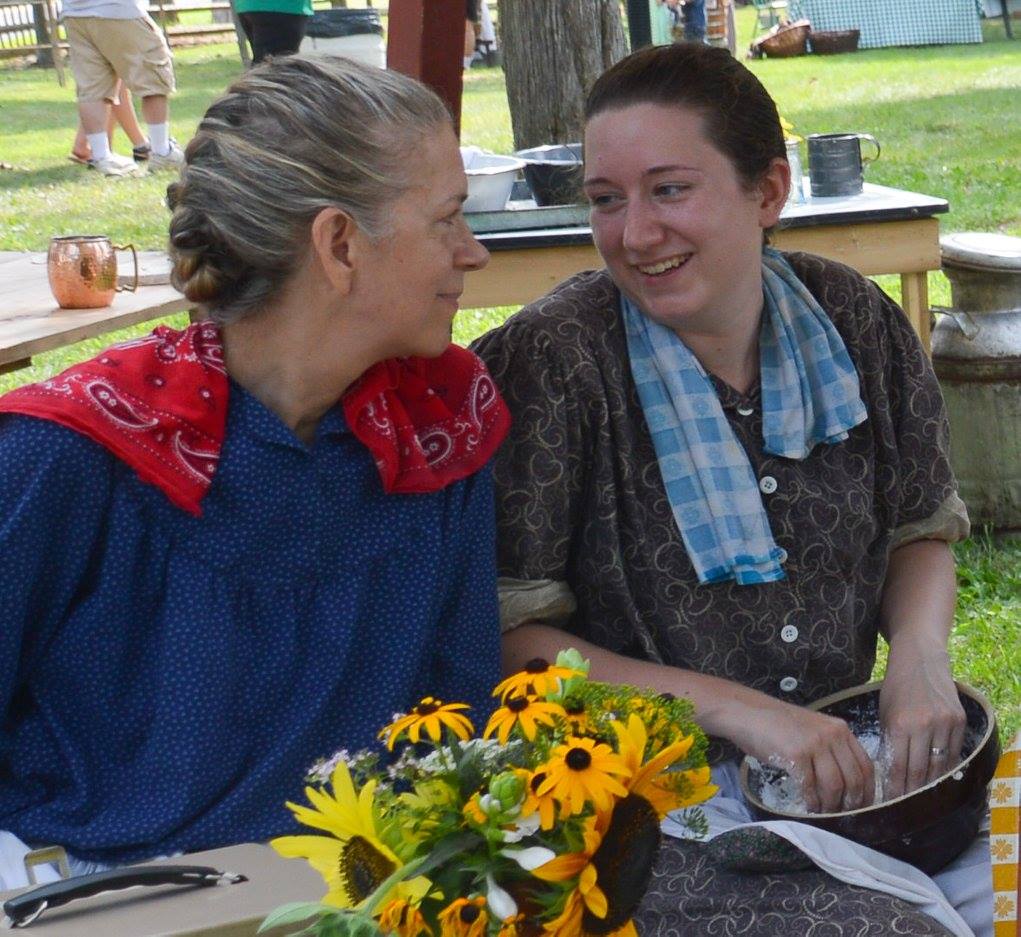
The annual Goschenhoppen Folk Life Festival happens this week–Friday and Saturday–and for the first time ever, neither of our now-grown children can participate. Nonetheless, my husband and I will be at our respective craft demonstrations, showing visitors how people a century or two ago solved the requirements of living in the region before there were highways, diesel shipping lanes, power grids, electric appliances, and cars–but after Europeans displaced indigenous people and started sawing down the forests. We had a taste of pre-power grid life ourselves early this week when a fast-moving storm made us lose electricity for 24 hours.

Visitors to the festival often marvel that they “never knew that’s how it was done.” They buy pickles or jam in a jar in the supermarket and figure it’s all made in a factory somewhere (which is true, today); meat comes packaged, and who thinks about how rope is made, or flour, or candles? One part of the festival demonstration includes butchering. I won’t post a photo (though there is one here), since some people get uncomfortable about it, but if you eat meat it might be worth remembering where it originated. In the late 1990s, I wrote the following poem about it. I may as well post it today! But the image I am adding is instead a nostalgic one of my daughter and me at the potato candy stand in 2016.

~

Hog Butchering Demonstration, or Deconstructing Breakfast
 
Cleaving bone and muscle 
beneath tough hide,
the man with the knife starts his
slow disassembly,
describes cuts of meat,
holds out intestines, uncoiled:
“used for sausage casings”—
removes the bladder
to rinse and inflate—
children’s game, an old-time balloon.
 
The carcass resembles nothing
the audience usually sees
whose meat arrives in cellophane
processed—slices, nuggets.
The children, especially,
have never watched the studious
and useful taking-apart 
of a body, never witnessed
anything dead
but the flattened,
nearly unrecognizable bodies 
of road-killed opossums.
 
No comparison, this 600-pound hog, 
hooked and dangling, its interior 
opened with jigsaw precision.
The man with the knife 
is a revelation.
They stare fascinated
at the butcher’s truth
carving an exact history of
their breakfast bacon.
 
~

Wandering

My mind’s been wandering a great deal lately. This at a time when focus would be quite useful, and yet–I don’t mind a little mental meandering. I think that, akin to daydreaming, a lack of focus can lead to creative thinking. Of course, the downside is that it may also lead to lollygagging and a lack of ambition.

I’ve been thinking about the way contemporary Americans use the word “engagement.” Not as in marriage proposals–that definition hasn’t changed–but in statistics, marketing, self-help, and education. My department at the university has been directed to “foster student engagement.” Our administration wants us to find ways to engage students, but it seems what’s meant by that is simply to attract their attention amid the myriad distractions and attractions of modern life. In my area of the college, where students go to get a little extra assistance in their coursework or their educational plans, we have long been aware that we can’t reach everyone who needs help and that we cannot create enthusiasm or involvement. Apparently, engagement is supposed to lead to motivation. That would be a miracle. Like many young people when I was a young person, today’s young people are often rather undirected. Wandering.

I wonder whether gap years or a required year of community or civil service would benefit people before they march off to college to “become a physical therapist” or whatever it is they think of as a career. Many of them would save on tuition fees, because maybe they are not that keen on academic coursework after all, or because they can go to college with a better idea of what they want to learn (rather than end up attending for 6 years because they changed majors). US society has evolved to push its citizens through large, unwieldy systems that supposedly create clear-thinking individualists who can fit into whatever job market the nation happens to foresee itself needing in future, but there is so much wrong both with that methodology and with that picture in the first place.

I’m with Walt Whitman and the loafing approach to observation and creative thinking, but that probably won’t be sufficient for a nation with a population of 336 million people.

This is not my problem to solve, and I would not be the person elected to solve it. But I ponder this sort of thing.

~

This poem appeared in Schuylkill Valley Journal Online. It’s a persona poem in which I imagine being Walt Whitman as a young child. May we encourage our young people to wonder and wander (and, yes, loaf a little).

Little Walt

When Mother sends me with a bucket to the pump
and it is a rainy day, droplets landing on my face, I open my eyes
trying to see where the rain starts but cannot
because I blink—and why is it that I blink without ever
meaning to?

My Baby Brother wails so loud
I hear him out of doors although the rain is also noisy
splashing the leaves. I can tell the wagons’ wheels are spewing mud
as they clobber past hitched to wet horses who snort at the weather.
The pump handle feels slick and water spurts into my
bucket so that I think of a waterfall in a gully or tumblers
at the sea’s shore where the little fishes get caught in the seining nets.

When the bucket’s full I set it down beside me
and watch water’s surface going plip plip and my own face
under the rain and how it is that I can keep my eyes open looking
into the bucket: behind me in the reflection is the cloud
that is raining all upon the Town.

Mother calls me to the house, You have been loafing.
The bucket, full now and heavy, becomes my chief burden
although a hen scurries beside me, and the ice man hollers
at his little brown donkey and the world around me
is so full of everything!
~
Walt Whitman in mid-life