Pastoral call

When my father put on his collar and his well-shined shoes but it wasn’t a Sunday, we knew he had meetings to attend or visits to parishioners to make and that sometimes, on coming home, he might seem quiet, which was unusual and meant he was turning things over in his mind. I try imagining him as he must have been then, younger than my son is now, counseling people through their griefs and doubts, encouraging the ill, attempting to comfort, confronting so much inequity and pain. What did he know?

Trouble came. His father died young. My little sister was stricken with pneumonia, gasping, feverish, hospitalized. My pregnant mother in such pain she could not climb the stairs to tuck us in at night. And so, with no one near to take me for the day, I was his visitation sidekick, dressed as though for church, carrying paper and pencil and a book I couldn’t yet read. People welcomed us into their homes in formal rooms sun never seemed to reach, seated us on sofas with doilies on the armrests or crocheted throws along the backs, or sometimes in carved wooden armchairs with lion-paw feet. There were often candies in a glass dish on a side table. The women gave my dad coffee and sometimes I got a glass of milk. Once, I had tea in a translucent cup decorated with pastel-colored flowers, and I took two sugar cubes and stirred carefully so as not to spill or make any noise.

Sometimes the parishioner offered me the run of a playroom or nursery–those children now grown, maybe as old as my father–and I rummaged through the old toys and imagined my own stories. It was important to make as little sound as possible, to be a presence invisible to grownups while my father took someone’s hands in his, prayed beside them, or listened to quiet sobbing. Indirectly, I was learning that adults cry, too, and that they were not always invincible, or even in charge.

It seemed a privilege to be with him being with people when they most needed something, Maybe not something he could give or grant them, true. He started to realize that very early in his ministry.

~

In early childhood, once I abandoned the idea of growing up to be a princess, I liked the idea of being an artist or a scientist when I got to be an adult. That hasn’t quite worked out the way I guess I expected, but my ambitions (if that’s what they were) indicate that I had begun the lifelong process of wanting to understand–well, everything, almost! I found the following passage in Rebecca Elson’s book A Responsibility to Awe, and I feel as she does, though in her case she’s talking about observing and studying the Large Magellanic Cloud and its star structures:

There are times when the enterprise seems mechanical, when the constraint to pursue the truth seems to suffocate the imagination, and the mysteries of the Universe seem irrelevant to the lives we humans lead down here. But on the whole, understanding the Universe seems a fundamental step in understanding our origins, and in establishing a perspective with respect to space and time that I find comforting.

Rebecca Elson, “From Stones to Stars”

~

It took my father quite some time to find a perspective on life, faith, and human behavior that comforted him. I do not possess the same perspective, but I believe he would be okay with that.
Astronomy

As a freshman in college, seeking to expand my limited science knowledge, I enrolled in a Physical Astronomy course, an introductory seminar class that taught students how physicists study the cosmos. At any rate, it introduced us to how that was done in the early 1970s. Thanks to computer tech and so many rapid changes in the field (we were using slide rules!!), the discipline has changed in some respects. I was terrible at the math, never having gotten beyond Algebra II in high school, but I had a terrific professor and loved the material. As may be obvious to readers of this blog, the cosmos and all that is in it provides me with endless opportunities for learning, speculation, and reflection.

Rebecca Elson, whose book A Responsibility to Awe I just finished reading, keenly reminds me of how fascinating the study of the universe can be and how little we know of it. Each decade the science and the theories take immense leaps in measurement and exploration, and each leap reveals how many more questions we have yet to ask, let alone answer. Not just inquiries into the galaxies, but also biological and ecological worlds to explore: salmon, eels, oceans, mountains, our own histories and our own mortality. Elson’s area of study centered on galaxy formation–the chemical evolution of stars, and globular clusters. But she started out collecting rocks with her geologist father who was doing fieldwork in Canada, then studied biology. It wasn’t easy to be a young woman studying the sciences in the 1970s, and she felt she was drifting a bit; writing, however, she felt more sure of. In the essay that ends this collection, she states that the atmosphere at Princeton during her post-doctoral study was “a stronghold not just of men, but of theoreticians” who looked down on work which involved “mere” observation, which is what she had painstakingly been doing in her research in Australia and Cambridge. At Princeton, though, she met a group of poets who encouraged her work and who made her stay at the university more comfortable. Good observation skills make a terrific foundation for poets.

~

If the ocean is like the universe
Then waves are stars.

If space is like the ocean
Then matter is the waves
Dictating the rise and fall
of floating things...
  --from "Some Thoughts about the Ocean and the Universe"

She was diagnosed with non-Hodgkins lymphoma when she was 29, died ten years later, and this book is the only example I’ve been able to find of her poetry. But it is revelatory what Elson does with simple language and deep, theoretical concepts as metaphor, topic, or theme. Some of the poems are so brief, yet I find myself thinking about them again and again. Like good haiku, they are not aphoristic–but they linger. Her sense of awe is palpable in these poems; I think that’s what I like most about her poetry.

Evolution

We are survivors of immeasurable events,
Flung upon some reach of land,
Small, wet miracles without instructions,
Only the imperative of change.

~
Salmon Running

Who isn't driven
Up the estuaries
Of another's flesh,
Up rivers of blood,
To spawn close to the heart?

~

A poem titled “OncoMouse, Kitchen Mouse” thanks the laboratory mice whose lives led to the cancer treatments that, for a time, prolonged her life; “Antidotes to Fear of Death” finds her eating the stars, or stirring herself into a young universe. While one late poem is bleak (“There is no poetry to cancer/To the body betraying itself”), another–the last entry in her notebook–observes the flourishing of spring. Much to learn here. Enough admiration that I wish, selfishly, she’d had more time on earth so I could enjoy more of her poems.

~

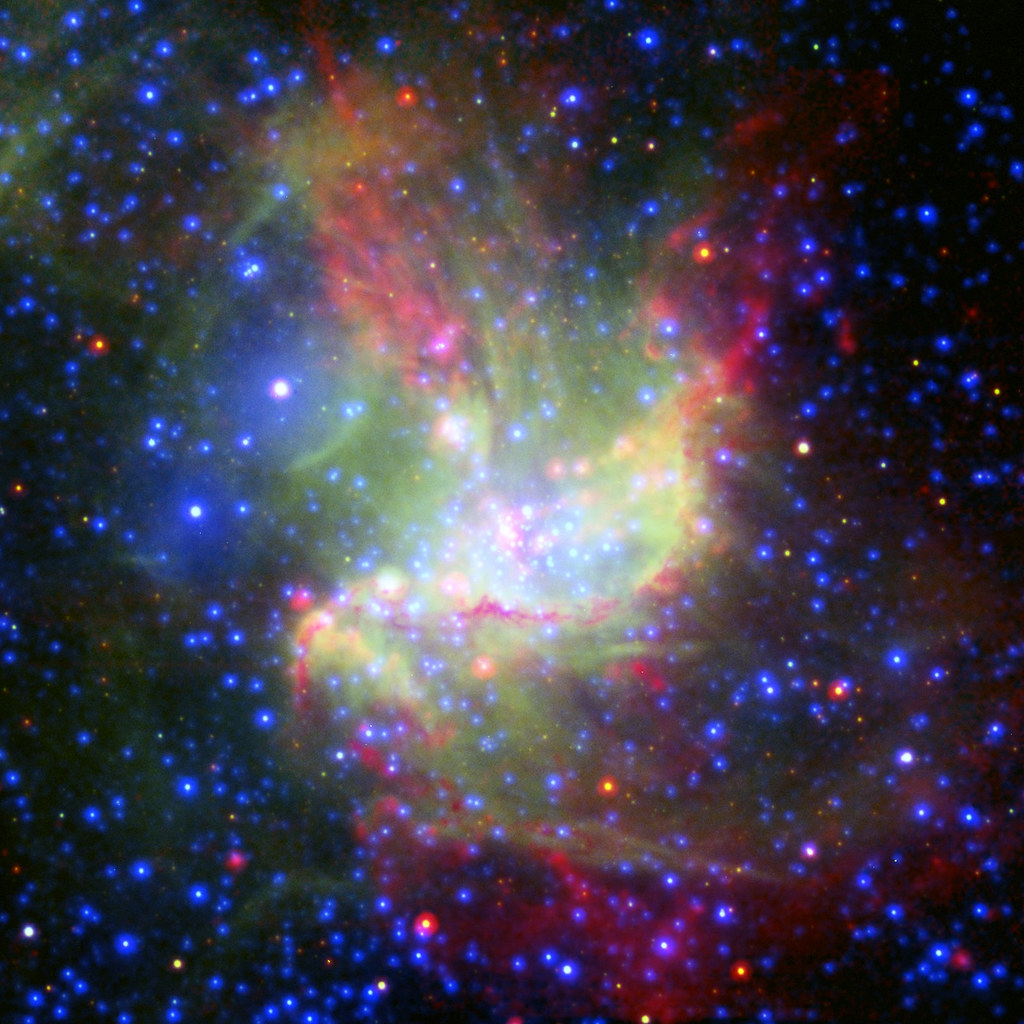
Fledgling Stars in Stellar Nursery by NASA Goddard Photo and Video is licensed under CC-BY 2.0

Morning birds

Every year, late March, starting at dawn, the cardinal thumps against our basement window, reminding me of a bored bear I saw long ago in a too-small cage–that repetitious sway and stomp–poor thing. But the bird’s unfettered and the window’s behind a large bush, a spindle tree we planted too close to the house–what’s driving that bird? Territoriality? We think perhaps it sees its reflection, so we’ve tried bird scare tape, opening the window, curtaining. Some years there are nests in that bush, but it’s never been cardinals nesting there. Thunk! Thunk!

My son used to stay up playing League of Legends until 3 am in that room, only to be awakened at 5:45 with irritating regularity by “Morning Bird.” He has left the nest, but the bird or its genetically programmed-to-thunk offspring returns annually. So it must be Spring.

Finally we got some good rain, about 3″, but the feeder stream behind our property lies pretty low and swampy after a mostly snowless winter and a dry autumn. Times have been when that stream flowed four feet deeper, rushing to meet Saucon Creek and head to the Lehigh River basin. I walked there this morning looking for frog eggs and salamanders, found two of the latter in a vernal pool where the skunk cabbage drills up from the swamp. Skunk cabbage doesn’t have much of a reputation for beauty but looks lovely with the sun behind its unfurling leaves.

I’m not a birder and can only identify about 25 birds by sight, fewer by sound. I noted mourning doves, mockingbirds and turkey buzzards, robins and redwings as I headed toward the creek. I have loaded Cornell’s “Merlin” bird app on my phone, though, and spent some quiet time sitting back on my heels in the sunshine while recording birdsong. The field sparrows weren’t in the field as yet, but other sparrows were calling: white-throated, song, and house sparrows (the house sparrows love to hide in the thick English ivy bush near the back of our house). Cardinals, of course, house finches, American crow, bluejay, red-bellied woodpecker, hairy woodpecker, tufted titmouse. Deeper in the woods, the white-breasted nuthatch got noisy, and an Eastern phoebe scolded me quite insistently from a beech tree. I was scouting around the largest beeches to see if I could find any dry beechdrop stems, but likely these trees aren’t quite old enough for beechdrops. I was happy to find some partridge-berry leaves, though; ten days ago, when my husband mowed the meadow, he saw a bobwhite–and left some cover standing for it.

I heard the Carolina wren as “Merlin” identified it, and was interested to note the bird app also recorded the presence of black-capped chickadee, bluebird, and Eastern towhee. It’s a bit early for towhees, but I’ve seen them here in past years, usually in April. And just before this recent rainstorm, I spied a killdeer in the meadow. I feel like an amateur naturalist! Anyway, forsythia are blooming. Even if we get more cold spells, I call Spring as having sprung.

~

By 10 am I was assessing the vegetable patch, where I moved a couple of perennial herbs and tore out as much shotweed as I could find. Some winter weeds can stay in the soil for later season removal, but shotweed flowers early, bolts fast, and sends out thousands of seeds so effectively that winter weeding is essential. I can’t keep it out of my lawn, but I can keep it under control in the garden. Redwings, robins, and woodpeckers kept up their calling while I worked. Good to get sun on my hair and dirt under my nails–feels like the first real spring day.

Bookish decisions

In the past two weeks, I’ve read two contemporary poetry collections that I didn’t, er…love…or perhaps what I mean is I did not respond to them the way I enjoy responding to poems (and no, I will not be naming titles, though I will be giving these books away). While that is a let-down of sorts, I also started reading naturalist Marcia Bonta‘s Appalachian Autumn–which I do love. The book takes an environmental-diary approach that I have enjoyed in other naturalist writers’ work and which, no doubt, I relate to partly because I am also a near-daily diarist of my own backyard; Bonta has much to teach me, because she has a naturalist’s education and long experience. This is one of four Appalachian Seasons books she’s authored, and maybe I should have started with Spring, since that equinox has just passed. I found myself interested in the story this book tells of her family’s legal struggles with local lumbermen and absentee landlords, however. It’s an experience with which, sadly, my beloveds and I are familiar.

And I also began reading a book of poetry I have found exceptionally compelling–Rebecca Elson’s A Responsibility to Awe. Perhaps more on that in a future post. So books continue to enrich my life. I hope that is always the case, but I’ve seen how changes in human neuroplasticity can affect even the most bookish among us. More reason never to take the joys of reading for granted–and to keep my library card current.

~

In future, I plan to use the library card more than the credit card when it comes to books; but I know I’m weak. Besides, many of the small or indie press poetry books I relish are not easy to find in public library collections. One of my priorities this year is to winnow the home bookshelf stacks, to keep only what I really cannot bear to part with or am sure I will read or refer to again. But how can I be sure? The book lover’s dilemma, isn’t it? Nonetheless, there are definitely texts I can part with if I just take the necessary time to go through the collection. I can donate them to a public library, and even though many of them won’t get curated onto those shelves, at least I will be supporting an institution I value. I have been referring to this process of lightening my bookshelf loads as “culling,” but that word tends to have a negative connotation. I’d like to remind myself of the positive aspects of giving some of my books away: good for me, good for other readers, good for the authors of these books whose work may be discovered by other readers. Less to pack if we ever move, less for my children to deal with when that time comes. Yeah, I’m thinking ahead.

Wandering

My mind’s been wandering a great deal lately. This at a time when focus would be quite useful, and yet–I don’t mind a little mental meandering. I think that, akin to daydreaming, a lack of focus can lead to creative thinking. Of course, the downside is that it may also lead to lollygagging and a lack of ambition.

I’ve been thinking about the way contemporary Americans use the word “engagement.” Not as in marriage proposals–that definition hasn’t changed–but in statistics, marketing, self-help, and education. My department at the university has been directed to “foster student engagement.” Our administration wants us to find ways to engage students, but it seems what’s meant by that is simply to attract their attention amid the myriad distractions and attractions of modern life. In my area of the college, where students go to get a little extra assistance in their coursework or their educational plans, we have long been aware that we can’t reach everyone who needs help and that we cannot create enthusiasm or involvement. Apparently, engagement is supposed to lead to motivation. That would be a miracle. Like many young people when I was a young person, today’s young people are often rather undirected. Wandering.

I wonder whether gap years or a required year of community or civil service would benefit people before they march off to college to “become a physical therapist” or whatever it is they think of as a career. Many of them would save on tuition fees, because maybe they are not that keen on academic coursework after all, or because they can go to college with a better idea of what they want to learn (rather than end up attending for 6 years because they changed majors). US society has evolved to push its citizens through large, unwieldy systems that supposedly create clear-thinking individualists who can fit into whatever job market the nation happens to foresee itself needing in future, but there is so much wrong both with that methodology and with that picture in the first place.

I’m with Walt Whitman and the loafing approach to observation and creative thinking, but that probably won’t be sufficient for a nation with a population of 336 million people.

This is not my problem to solve, and I would not be the person elected to solve it. But I ponder this sort of thing.

~

This poem appeared in Schuylkill Valley Journal Online. It’s a persona poem in which I imagine being Walt Whitman as a young child. May we encourage our young people to wonder and wander (and, yes, loaf a little).

Little Walt

When Mother sends me with a bucket to the pump
and it is a rainy day, droplets landing on my face, I open my eyes
trying to see where the rain starts but cannot
because I blink—and why is it that I blink without ever
meaning to?

My Baby Brother wails so loud
I hear him out of doors although the rain is also noisy
splashing the leaves. I can tell the wagons’ wheels are spewing mud
as they clobber past hitched to wet horses who snort at the weather.
The pump handle feels slick and water spurts into my
bucket so that I think of a waterfall in a gully or tumblers
at the sea’s shore where the little fishes get caught in the seining nets.

When the bucket’s full I set it down beside me
and watch water’s surface going plip plip and my own face
under the rain and how it is that I can keep my eyes open looking
into the bucket: behind me in the reflection is the cloud
that is raining all upon the Town.

Mother calls me to the house, You have been loafing.
The bucket, full now and heavy, becomes my chief burden
although a hen scurries beside me, and the ice man hollers
at his little brown donkey and the world around me
is so full of everything!
~
Walt Whitman in mid-life

Life-shifts

This week marks one of those “big birthdays”–my mother turns 90. The birthday feels bittersweet; for, in many ways, I have been in the process of “losing” my mother since her diagnosis of vascular dementia in 2017.

Or is it that she is losing? Losing cognition, a sense of time, the words to say…anything at all. She has not yet lost a sense of emotional self, though I know that if her body doesn’t give out first, that will eventually occur. I’ve been through this before, with my mother-in-law. Helping people navigate dementia is a challenging task.

Therefore, as I celebrate her birthday, I also celebrate the goodness of the people (nurses, CNAs) who assist her daily at her skilled-nursing apartment, the social worker who visits with her and brings her mail, the acquaintances who smile and greet her even though they know there cannot be conversation (of any meaningful sort). The doctors and nurse practitioners who find ways to communicate with her about how she feels physically. It cannot be easy, even with someone as even-tempered and pleasant as my mother continues to be.

A funny thing about my mom. When she was my age, we used to tease her and my dad about “getting old.” She’d toss our teasing aside by insisting, “You’re not old ’til you’re 90!” Even with a few health issues, she and my father continued to be curious about the world and the people in it, traveling, going to parties, trying new things (cross-country skiing, Thai cuisine, activities with grandchildren). About 8 years ago, when my dad was ill with cancer and meningitis and going in and out of the ICU, Mom said she felt old. We retorted, “But Mom! You’re not old ’til you’re 90!”

Now she really is 90. Bless her good kind heart. ❤

~

February 26th is just another day, another year–and at this point, my mother has very little sense of time. It is likely that my mother’s life-shifts are in the past, and the next shift (there’s no escaping it) will be death; but who can tell? My mother’s ninetieth feels like a huge shift in my life as her daughter, as an adult, as a mother to grown people, and as a writer in the world. Why this is so, I can’t say. It’s certainly something I’ll be reflecting on often in the coming years, and the reflections emerge in my writing. As I work on revising the poems I’ve drafted in the past 5 years, the topics of aging, mortality, aphasia, and memory keep showing up. Things I can consider myself fortunate, perhaps, to be preoccupied with, rather than being forced into confronting a natural disaster (Pakistan, Turkey, Syria, and others) or war (Ukraine, Syria, and other regions).

Here’s part of a poem I’ve been wrestling with lately.

                       ... --I would untangle
my mother's mind if I could be let access to its
recesses, but those stay hidden like the life in hedge
and meadow, in the woody undergrowth,
unknowns twisted together, impenetrable.
...

How fortunate for me that my mother is not far away, is well-housed and safely cared-for, and has had a long, creative, fruitful life to celebrate this weekend. Nonetheless, the grief inheres. The hardest shift? I miss the person she has been all my life until recently. And yet: here she is. Herself, more impenetrable than ever. And loved.

~

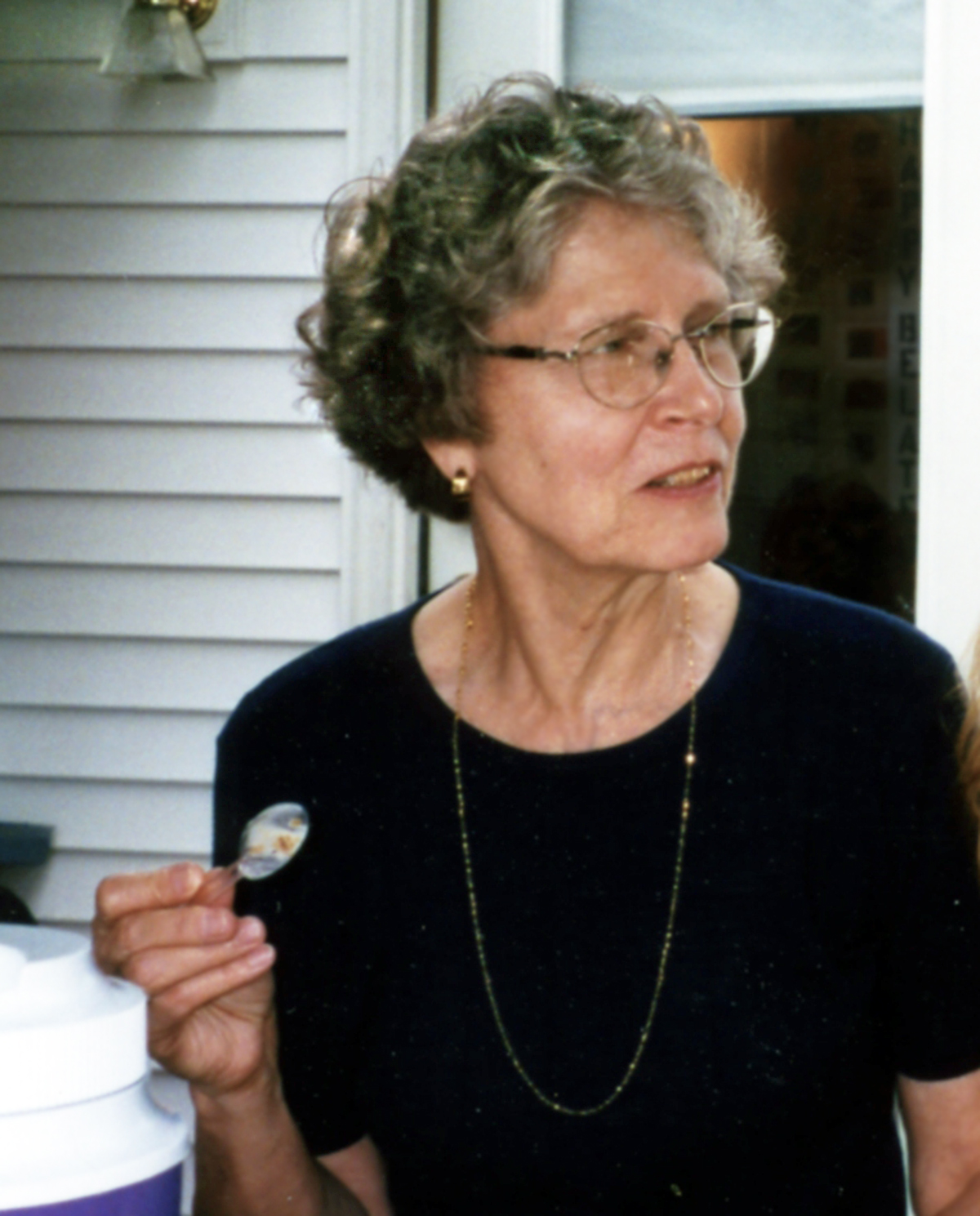
Mom at about my current age–ca. 1998 or ’99.

Reading poetry

I find I’m drafting poems again, though most of them fall on the melancholy side of tonality. It’s odd because I’m not feeling exceptionally melancholy myself. Granted, the news cycle’s enough to make anyone feel a bit low; but my internal weather isn’t so bad, and the end of February has arrived with peculiar mildness this year. Last year, we were still covered in snow at Valentine’s Day. Could still happen–but the snowdrops and the crocuses are open, as are the iris reticulata.

~

Spending time reading contemporary poetry books may be a contributing factor to my flurry of new drafts. In the past two weeks or so, I’ve enjoyed perusals of books by Ocean Vuong, Lynn Levin, Jaan Kaplinski, Cleveland Wall, Kim Addonizio. I’m also reading Ian Haight’s newer (unpublished) translations of some Nansorhon poems, a process accompanied by research into the precepts of Taoism and its heavenly denizens and hierarchies. I need some context if I’m going to get as much out of her Taoist poems as I’d like. Thanks to Ian’s research and translations, I did some study of this poet and her work ten years ago; but I focused more on her family situation and constraints and did not examine the most religiously-influenced poems.

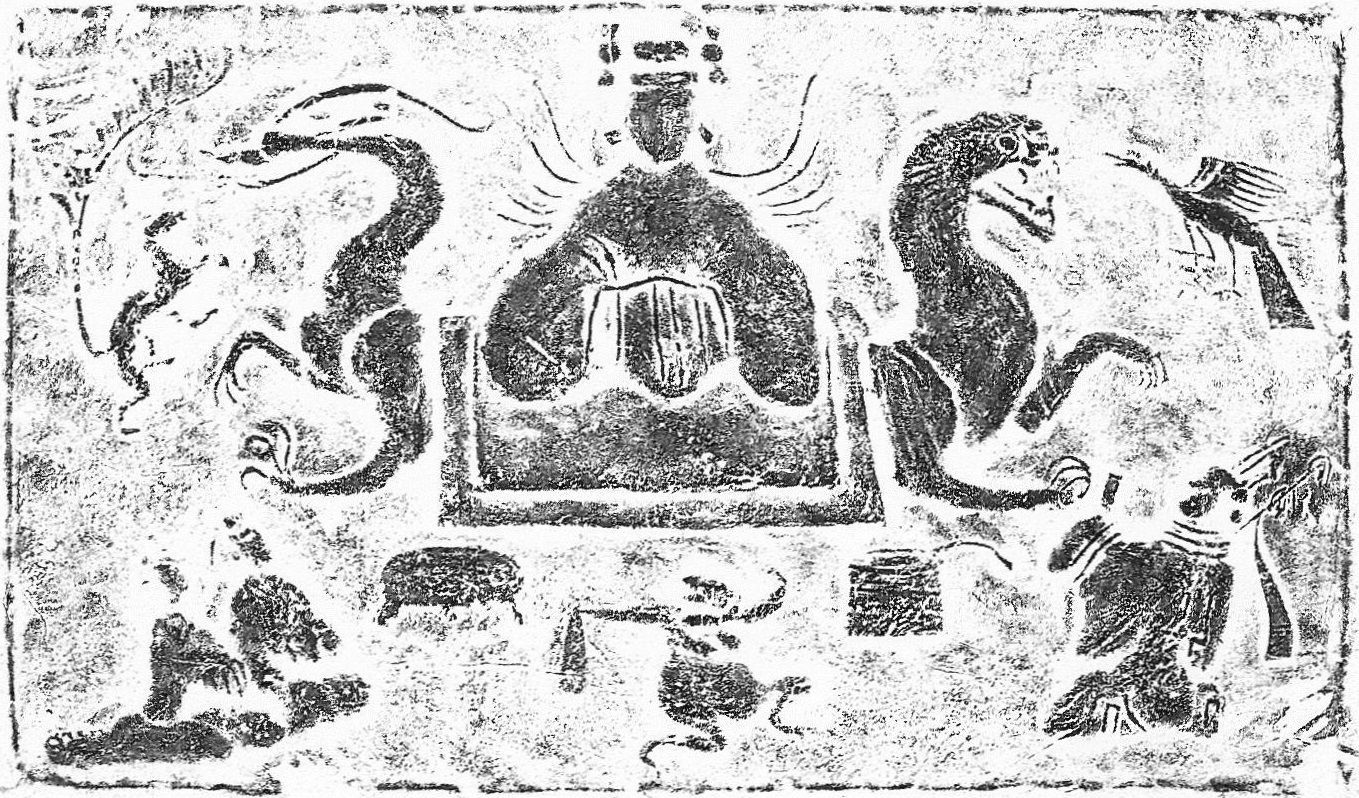
One Taoist goddess whose realms and attributes intrigue me is the Queen of the West, also called Queen Mother of the West, or Xiwangmu 西王母. She’s the mythical source of the peach of immortality and was likely important to Nansorhon as a powerful, much-worshiped female deity. Indeed, she’s invoked in several of the Nansorhon poems.

“Rubbing of a brick relief from the Han period, showing the Queen Mother sitting on her throne. To her right hand, a nine-tailed fox (jiuwei hu 九尾狐) and a dragon are facing each other, and to her left, a three-legged crow (sanzu wu 三足烏) and a tiger are facing each other. Just in front of the Queen Mother, a toad is dancing.” See http://www.chinaknowledge.de/Literature/Religion/personsxiwangmu.html (caption text by Ulrich Theobald, 2010).

~

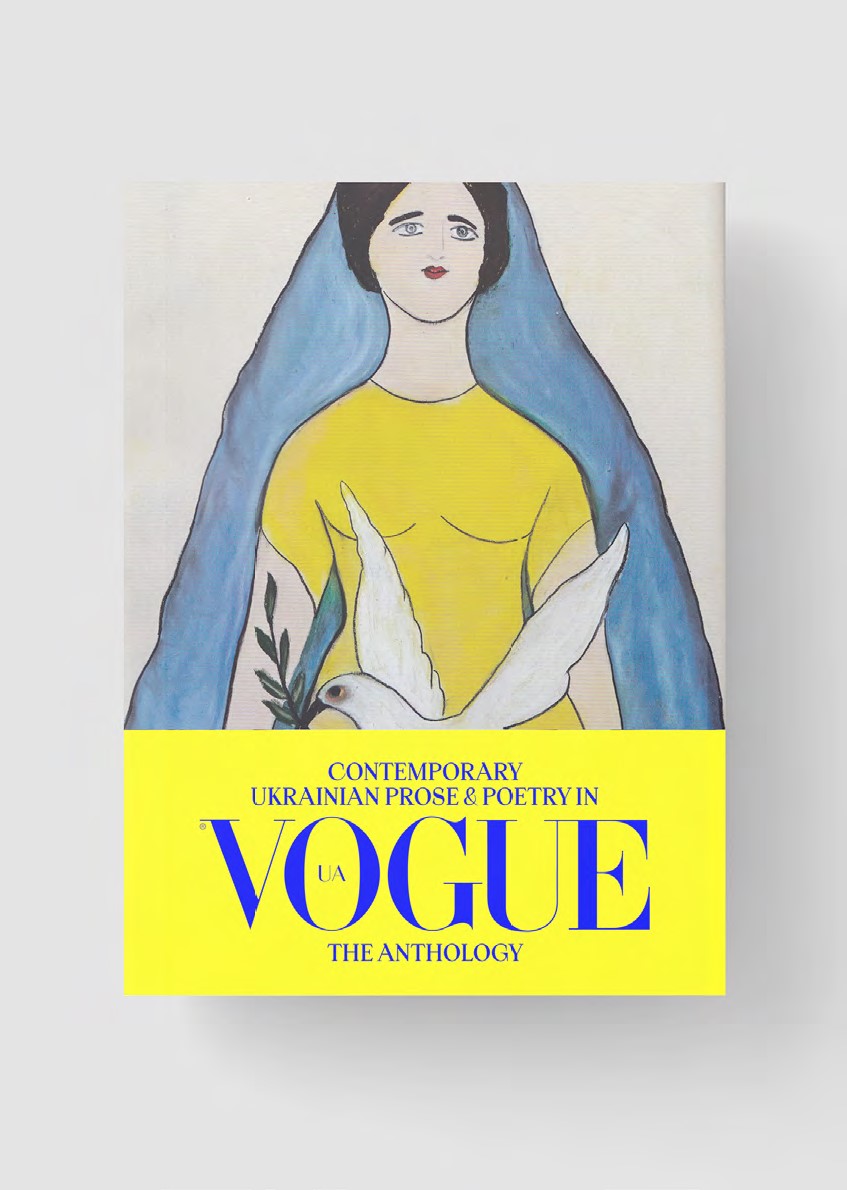
Other translations I’m reading are from Ukrainian. One of my husband’s colleagues is working in exile on Vogue Ukraine, and the magazine plans to publish a print anthology of contemporary Ukrainian writers–as early as next month!–marking the one-year anniversary of the start of the Russian hostilities aimed at Kyiv. She sent me a few selections of the poems and prose that will appear in the book, and I’m impressed by the writing and the breadth and depth of the literature. And also heartbroken.

Vogue UA had been planning its 10-year anniversary celebration when Russia invaded. The magazine rapidly pivoted to online-only, and its editorial team decided to publish a commemorative print book titled, rather significantly, 9 1/2 Years of Vogue Ukraine (and if you are curious, you can purchase it here). Yes, it’s a high-end fashion magazine–not my usual jam. Proceeds support various Ukrainian cultural organizations (museums, libraries) and female veterans.

The forthcoming book, featuring contemporary Ukrainian prose and poetry, will appear on the Vogue UA site in March or April. I’ll keep my readers apprised…from what I have seen so far, the anthology will be well worth reading.

Automatic writing*

A few posts back, I mentioned I would weigh in on artificial intelligence prose generators–“bots”–specifically the much-reported-upon ChatGPT. The media coverage has included everything: hand-wringing, speculations on the extinction of critical thought, predictions about the death of the high school essay or the re-institutions of oral and handwritten exams, not to mention worries about spurious content and job loss among educated citizens, as well as wild enthusiasm for automating tedious writing tasks and excitement about where tech is taking us.

It’s not as new as most people think. AI has been providing customer-service responses and generating basic summary content for news-related websites for awhile; but OpenAI’s open-source platform, which is currently free and for use by anyone (not to mention educating itself as each user inputs prompts and questions) has so rapidly gained “tech adopters” that those of us who teach writing cannot ignore it completely. And we shouldn’t ignore it, but neither should we throw our hands up in surrender and predict the end of the art of writing as we know it.

A recent New York Times article reflects the kind of discourse taking place at the institution where I work. It’s fascinating to me to see how quickly the conversations have evolved in the usually slow-moving environment of academia. I find that at my college, my years of laboring with students who lack strong backgrounds in written expression or confidence in their writing have suddenly attracted the attention of full-time faculty members–they want to know how they can tell if students are using AI assistance to write essays (when said profs have no pedagogical experience in writing) and how to change the wording of their assignments to “fool” the programmed generators, among other pressing questions. These inquiries tend to come tinged with a sense of slippery-slope fallacy: does this mean academia will go to hell in a handbasket?

I refuse to send out a firm forecast, though my intuition says no; instead, academia, and society, will change.

And despite the daily-proven, scientifically-accurate, anecdotally-obvious FACT that change is normal and indeed necessary, most people (and their societies and institutions) fear change. Hence, the media and institutional brou-ha-ha.

Let’s face it, writing can be hard. There will always be people who do not want to do the work of writing from the soul, brain, heart, emotion, experience, dread, you-name-it. Painting is hard, too. But people who don’t want to practice and experiment with visual art can use paint by numbers, clip art, or AI. There will always be a few folks who learn to play an instrument for the joy of it and for the challenge of continually learning new approaches to the process of music making; the rest of us can be audiences, if we like. People who write because they can’t not write? They won’t use bots unless they want to experiment with them: make perverse use of the programs, play with them to see what the human’s skills can do in concert with algorithms, bits, bytes, and data. I know artists who are already collaging with AI-generated art to create new, human-mediated visuals.

I recognize the fear factor here, but I don’t buy into it because I am so curious about what will happen next. I’m interested to see how changes will occur, which changes will make a difference and which ones will just vanish, and whether pedagogy will develop toward, away from, or parallel to AI developments in numerous spheres–to name just three of numerous possibilities. Change is exciting, but it’s also hard. I can’t say I am as excited about adapting my fall semester syllabus to reflect whatever the university decides to do in light of ChatGPT, but since I’ll have to adapt to a new “learning management system” anyway, I may as well accept that “a change is gonna come.”

~

*For the definition of automatic writing, Wikipedia has a fairly complete page.

Photo by Startup Stock Photos on Pexels.com

Book news!

Here’s a bit of glad tidings. My manuscript The Red Queen Hypothesis won the Prairie State Poetry Prize and will be published before the end of 2023–maybe even by the end of this summer! It’s thrilling to have won an award like this.

In fact, I should be jumping up and down with glee that RQH finally will see print, as it has taken me numerous submissions, two acceptances that did not come to fruition, and a considerable number of pauses to reassess the manuscript. But my initial feeling is more of relief than elation. Relief that now I can turn all of my focus to newer work: a manuscript nearly completed and one that I’m just starting to collate and imagine. Well–not all of my focus in those directions. There is the work of promoting the new book, work that I find difficult and challenging because it’s not really in my wheelhouse. Highland Park Poetry is a tiny independent non-profit press and doesn’t have the resources to do much promotion; Jennifer Dotson, Founder & Creative Engine behind the organization, runs several contests, produces a newsletter, and hosts a Facebook page of contributing poets. She also hosts a poetry podcast and at least one reading series…a busy person, working on a small budget. People like her and Larry Robin are the guardian angels of poetry in the USA. Many thanks, Jennifer. I’ll do what I can to promote my book.

There may be reading events in my future this year. If so, I’ll try to post them here as well as my fall-back social media framework, the wretched but still occasionally useful Facebook.

As to new work, grateful to report that it is coming along. I have a small stack of potentially interesting/workable drafts in my file. The month of January wasn’t all dearth and chill and lack of imagery or ideas. Granted, there are days and there are days. I find, though, that I am more patient with myself during low or no-motivation times than I used to be. I kind of hate to rack that up to maturity (oh ye gods! have I become “a mature woman”?)–but age might be a contributor. I feel no compelling reason to push myself past my physical and emotional limits anymore because it isn’t worth the repercussions. Given who I am and the stage of my career and life, there’s no need to prove my worth to anyone, to elevate my status as a “serious writer,” to grind the wheels of ambition to make other people take notice.

I’m an introvert. I don’t really like being noticed. But I do like it when people read what I’ve written, when what I have put into words has a chance to filter into other minds and other emotional frames. It’s entertaining and pleasant to imagine fellow human beings might sit quietly with a book (or screen) and consider, in their own minds, what I have observed or invented. If they don’t like it, that’s okay. At least they are reading. That’s valuable in itself.

Admiration

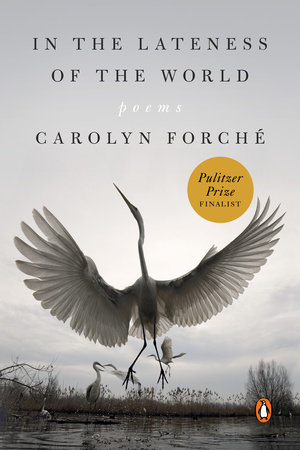
Carolyn Forché has a new collection of her own poetry, which is always cause for joy. She has compiled anthologies and written memoir and essays, but her poetry collections don’t appear frequently–five collections since 1975, averaging one poetry collection a decade. This is not a prolific output in terms of poetry collections compared with some of her peers, but her books are worth waiting for. I suspect that her poems, crafted with such memorable pacing and imagery, which unspool so purposefully–even mindfully, though that term is overused–must take time to consider, revise, or compose. I have to slow my breath just to take them in.

In the Lateness of the World lies on the book pile beside my bed at the moment, and I read about three to four poems at a time. Savoring them, thinking about their implications; despair and concern and grief, and deep love for the world we inhabit and the people who labor through the days. Forché, because of her “poetry of witness,” often gets called a political poet, mostly because she never shies away from confronting, and writing about, the injustices and damages inflicted on people and on the planet–and implicating the perpetrators. But she also avoids ideology. The perpetrators are not easily pegged in her work: all of us can be implicated, and all of us are affected, a network no single person or nation can untangle or resolve. Forché’s poems resonate with a complicated love and a recognition of how much work we must be willing to do.

~

Imagining Forché writing, I ponder my thoughts on revision and why I love doing it but simultaneously procrastinate on getting to it; good revision, in my case, requires a dedicated mindfulness and singular devotion that seems to require large blocks of time. I can compose drafts rapidly–jottings, notes, even entire pieces (unfinished but on track). Revision doesn’t work that way for me. It requires critical thinking. Analysis. Concentration. Mulling. Bouncing the work off others. Re-entering the mind of the moment. Waiting things out. Reading other poets. For example, reading the poems of a writer who seems to take her time on each piece, yet manages to keep the immediacy and gorgeous imagery in each of her poems intact.

How does a poet do that? Talent helps, but talent alone doesn’t get a writer to the fine observations and imaginative layers really good poems possess. That may require mediation, play, solitude, practice, revision, a community of writers, long gestation for some poems, mentorship, nature walks, travel… It’s likely I have not been dedicating enough mental and creative energies to my drafts. Or that I need some new methods.

My excuse is I don’t have time. But enough excuses. This is stuff I love, that I enjoy doing. Why shy from what I love?