Illusions, connections

Reading Proust again returned me to some of my own past reflections on memory and self, the capital-S Self. A decade or so ago I spent considerable time reading in philosophy, physics, and neuroscience in an endeavor to get a grip on human consciousness and, perhaps, behavior. I posted about some of these texts on this here blog, in between writing about poetry, the garden, and my teaching job. Recent coincidences of reading returned me to this topic, “the hard problem of consciousness,” and made me consider how our embodied selves/minds/awareness: use shortcuts to manage the overwhelming inputs of our environments; define who we are using subjective if physically-based perceptions; and fail to see the obvious because of habituation and the apparent need to confirm what we believe we know. Illusions! The Vedic concept of Māyā, Plato’s Theory of Forms…propaganda, Penn & Teller, quantum physics, complexity theory, Marcel Proust, complementarity. I have a lot on my mind.

If it IS on (or in) “my” “mind.” For there’s even some question about that, as proposed by Neil Theise in his book Notes on Complexity. Just as light can be a wave or a particle, depending upon perspective and viewer (see: complementarity), it’s possible that our minds or selves can be individual and separate but also connected and boundary-less. The subtitle of this text is what appealed to me: “A Scientific Theory of Connection, Consciousness, and Being;” so far, I’m enjoying it and finding inspiration.

It’s needed, inspiration. Despite a few plunges into new drafts (see here), I have not been writing much for at least two months, and I miss it. The ideas from physics and neuroscience that intrigue me include potential metaphors and terms such as quenched disorder, endosymbiosis theory, and holarchy. These–along with the hard problem of consciousness–all have some relationship to complexity theory, and Theise does an elegant job of writing about complicated science concepts for the non-expert.

I ran across Notes on Complexity right after finishing Sleights of Mind, a book about the neuroscience behind the sort of illusion we call entertainment magic: sleight of hand, sawing people in two, mentalist “mind-reading,” and other performances; the authors, Susana Martinez-Conde, Stephen Macknik, and Sandra Blakeslee, are trying to discover more about how brains work (or filter, and sometimes don’t work so well) by studying how we get fooled by illusionists. This is a fun book, even more fun for me because one of my Best Beloveds has long been an enthusiast of magic shows and magicians. Martinez-Conde and Macknik are neurologists, so–unlike Theise’s text–this book is very body-mechanics in its basis. Their work reminded me of how amazing the human physiological system is. And it’s entertaining.

Before these non-fiction reads, I was finishing up with Proust who, in his own creative way, was exploring the interiority of the human self and carefully observing human interactions, behaviors, assumptions, prejudices, and aesthetics. Not neuroscience, because there is no science to it, but definitely related to how our brains and bodies process experience. My sense is that poetry works that that way for me: it’s not an abstract stream of thought but something inextricable from bodily experience, maybe even, through the environment in which we exist, something deeply connected to everything, a global being-there.

The way we process experience (and is this consciousness?) is largely what leads us to the arts, to make art or to appreciate it, and to decide what feels compelling, important, beautiful. And it’s not all in our heads.

Revising for the personal

I’ve been working on the poem below for 11 months now, and the process has made me think about the purpose(s) of revision, the why of why artists and writers do it. In the case of this poem, I’m revising for entirely personal reasons. My revisions have little to do with creating a stand-out poem that strangers will read and appreciate; I want to tell a particular story about someone I love in a way that might demonstrate, to that person, compassion and some understanding of his feelings. I believe this is a valid purpose for making art, even if it is subjectively personal–ie, not “universal,” not groundbreaking, not timeless.

Certainly, the classic lyric poem, and many narrative lyrical poems, often are addressed to a particular someone. It seems to me that the classic lyrical poem is less based in context, however, and can therefore be read, aesthetically, as more universal. The narrative poem by nature relates its story in a time or place, using contextual descriptions that can become obscure in different eras or locations.

Such is the poem below; it may benefit from some backstory, which I will supply afterward. But read the poem first and maybe let me know if I’m correct. Maybe it will “work” for other readers, maybe not; but it is something I have been wanting to write for my son for awhile now. And he “gets it,” so my purpose has been achieved. 🙂

~

In the Warship’s Belly

How you hated those five days in harbor,
amid steel and cable, fearful each minute but
constrained from showing it.

You prefer to see shoreline and sky.
Discomfort pervaded every hour you spent
on board, walking through hazards,

noting construction, rewiring, repairs;
how you hated the low-ceilinged passages
through which you half-crawled,

wearing neoprene-soled boots and a hard
hat, as anxiety, hyper-alert, worked its
wormy way through your body.

There were power outages that canceled
light completely for unexpected
seconds deep below decks,

then generators’ earthquake roars would
rumble and shake so every wall threatened,
sparks lit up and light returned—

your breath rapid and near wheezing,
tremulous, you inhaled the stale, acrid
diesel-fumed air pushed by industrial fans

through that beast’s belly, that machine
of men’s work, war’s work. Built to threaten
and combat, it felt nothing like a boat, nothing

like the small wooden dinghy of your heart
that sailed the cove, with your little sister,
one summer years ago.
~

Context: When my son was employed doing navigational software de-bugging for a US Navy contractor, the job required a week on board a military ship that was being retrofitted and overhauled in drydock. The assignment took place during covid. He hated almost every minute of the experience and left the job soon after the on-board stint. Due to non-disclosure agreements and national security stuff, he couldn’t really tell us much about why he was so miserable; but he described the circumstances and gave us some idea of how anxiety-producing the tasks were, given the environment and his temperament (which does lean toward the anxious). He was a grown man and quite responsible for himself, so this poem is really about my feelings for him. When those we love are going through unpleasant things, we feel for them.

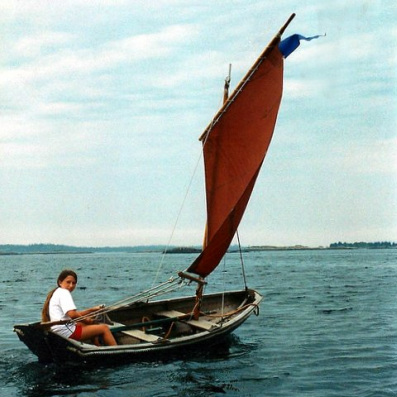
And here is the dinghy, though it is technically a pram–poetic license.

Two falls

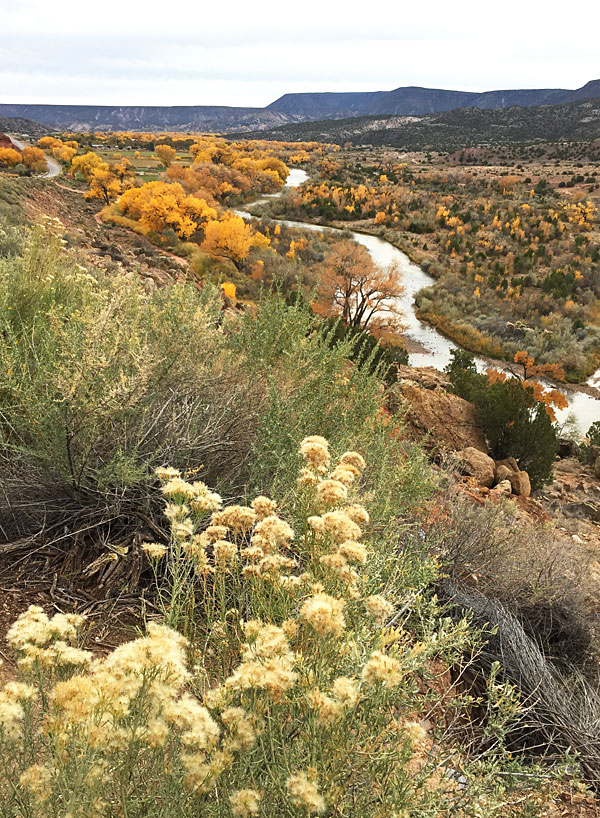
I have experienced two autumns this October: one in New Mexico, one in Pennsylvania. In the American Southwest, high up in the world, the cottonwood trees that hug every available water source were going a brilliant gold while I was there. Any view above a creek or river revealed a winding path of yellow–along the Chama, along the Rio Grande. The tiny-leaved oaks were turning brown-leaved and dropping scads of acorns along the paths. The oranges and reds are mostly there year-round, on the mesas and in the canyons.

It was wonderful to experience a poetry workshop with Anita Skeen and Cindy Hunter Morgan and to learn how books are made by hand, wonderful to draft some poems using color imagery and ekphrasis, wonderful to meet some fascinating people with whom I enjoyed pushing past my/our comfort zones and into art forms we may have been a bit less comfortable with. These are reasons to attend an instructor-led workshop, seminar, or residency. I spent part of last September in New Mexico, but it wasn’t the most spectacular time for autumn coloration–whereas October certainly gleams in northern NM!

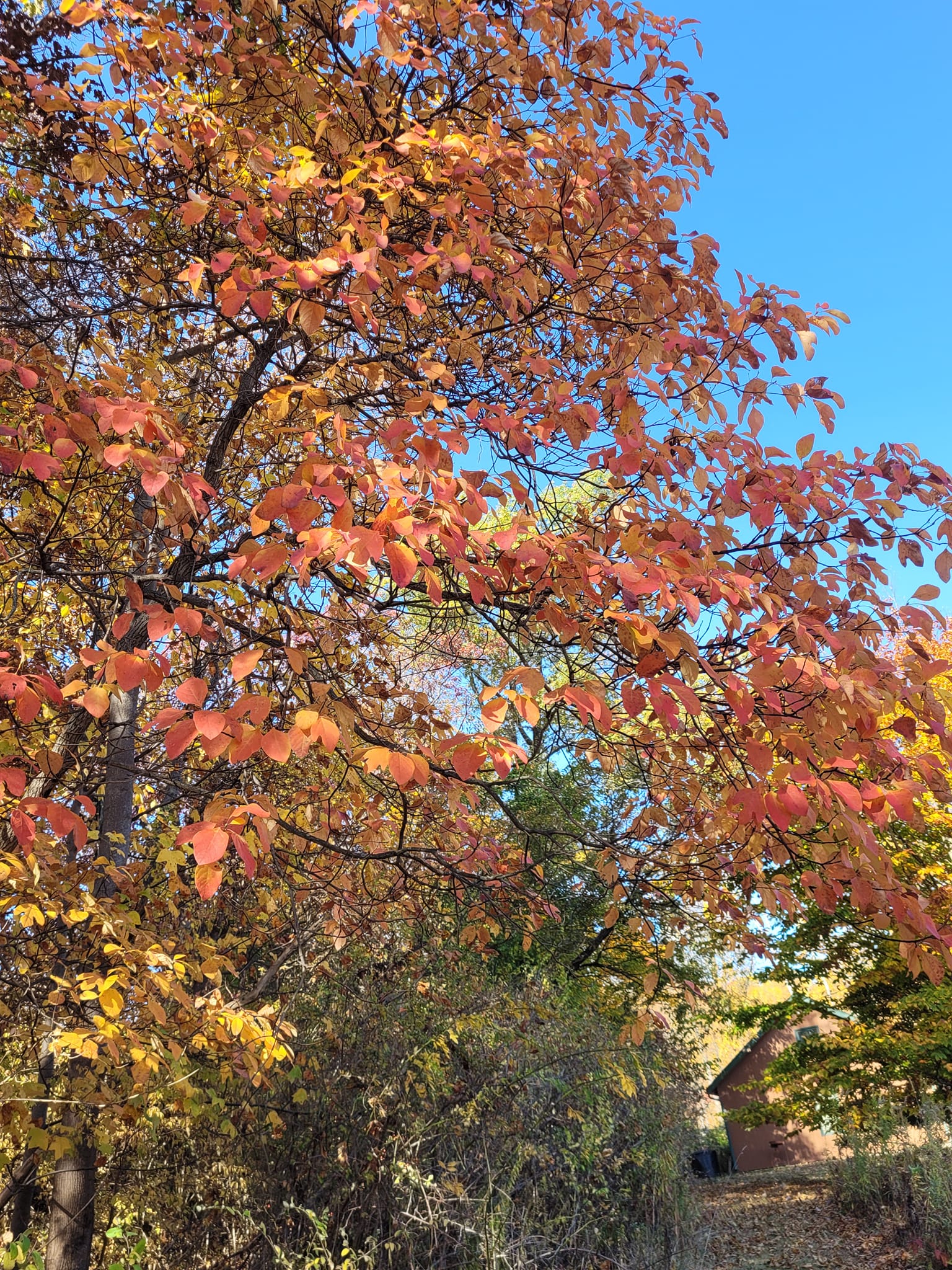
When I returned home, I had missed “peak season” for color in Pennsylvania; my husband said that came a bit early this year because of drought. But it’s still very bright here. The maple leaves haven’t all fallen, most of the tulip trees are still yellow, the hickories haven’t reached peak gold yet, and many of the sassafras are that warm coral color I love so well. The burning bushes? Ours hasn’t dropped its bright fuchsia-maroon leaves. It’s a vivid presence at the corner of the house.

~

Therefore, I have two autumns this year, one sea-level Mid-Altlantic East, and one high-altitude Southwest.

Which strikes me as an abundance of beauty and color. So I am continuing the theme of last week’s workshop. Here’s a new draft of a new poem just for the joy of it. [This fall, those of us in the USA could use a bit of joy.]


I don’t have a title for it yet. Maybe you can help me think of one.

~


The difference between orange leaf color
and orange rock color.
Between the greens of grass and juniper,
the pale dun of meadow’s die-back
and beige sand stretching westward
to the mountains.
Even the clear sky’s blueness
on fair, mild mornings
differs by an almost measurable degree.
Something to do with altitude
and aridity, the science of which
I don’t really understand.
Life’s variations and hues—
striated like cliffs, buttes, mesas,
like hills of maple and hickory in fall—
beautiful and strange.
Even when I close my eyes, color-
memories, all those shades
I can’t define, sift through my skin.
Into blood. Into bone.

Northern stars

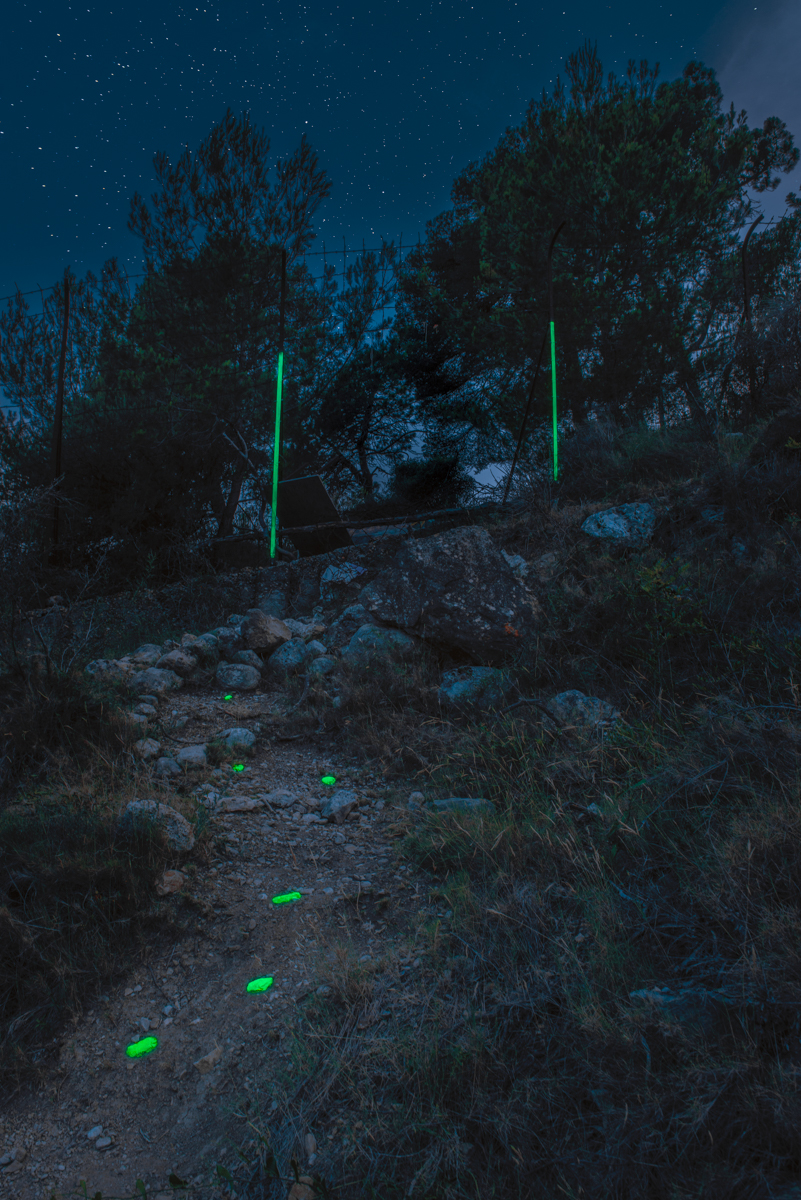
Northern Stars (2023) Celestino Marco Cavalli

~

A phosphorescent path
connecting Italy and France
through glowing stones
that look like stars.
A poetic and political action.

~

https://www.celestinomarcocavalli.xyz/work.html

The installation shown here was created by one of the artists I met while at Joya, Celestino Marco Cavalli. The link above will take you to a description of his project. In brief, it is a series of fluorescent-painted stones that follow a trail refugees travel on their way from the Mediterranean, through Italy, and into France. The website does not include the many photographs Celestino took during his 5-month visit there to document the conditions under which emigrants travel–the trash they leave as they abandon belongings, the graffiti and the notes to others they leave in caves and hollows, the prayers they write, the places they shelter from the sun or rain or cold weather. Do the refugees litter the mountain paths? Yes. Do they do so out of desperation? Also yes.

This installation is innovative, compassionate, and political–also problematic; as always, borders between nations are fraught with concerns about each country’s boundaries, laws, rules and regulations. These days, most immigrants taking this trail (through Italy) have come from the global south, where the climate damage wrought by industrial nations has made living in poverty even harder and fostered political unrest. And the immigrants take huge risks–with no guarantees that they won’t be deported, or preyed upon by criminals who exploit their vulnerable status.

I’ve never been a refugee, an exile, an immigrant. I have met quite a few, though–often very young people, students I encountered at the college where I worked, students from Haiti, Dominican Republic, Turkey, Syria, Lebanon, Mexico, Venezuela, Pakistan, Eritrea, Viet Nam, Kenya…and my husband’s stepmother, who arrived at Ellis Island from Austria between the wars. And a colleague who was stranded at college in the USA when the Ayatollah took power in Iran, and a fellow employee from Cambodia, who lost her entire family except for one brother to the Khmer Rouge. Whenever I hear about the politics of immigration (which is often), I think of them: how hard they work, what they sacrificed to get here, how hopeful they are, how challenging their lives have been and continue to be. And their grief.

The following is a persona poem--"A persona poem is a poem in which the poet speaks through an assumed voice" (Academy of American Poets). Celestino's Northern Stars is my "prompt."

~

Refugees

Because we must hide by day
and travel at night, darkness hinders.
The narrow stony trail offers options:
turned ankles, torn skin, or a precipice
that takes us sliding down the mountain,
an avalanche of self, death’s prospect.
No one arrives eager for exile;
we’re just trying to save ourselves,
our families, a few belongings
we used to think were precious.

The way we take may be steep—
everyone knows that metaphor—
what we never expect is how much
it is an unburdening of all
we thought was necessary,
an education in physical need.
Shoes, for instance, more critical
than underwear. Ancestors emigrated
on callused feet without watches
or water bottles. The least cut could
go septic, a child’s wail could betray us
to predators or enemies. Still true.

One by one we let things go, abandoned
in shallow caves with other people’s
remnants, plastic bags and t-shirts,
books, candlesticks, so much trash after all—
even our skins can barely hold what
we need anymore. We arrive shriven,
numb as feldspar, having walked so long.
May we have water? May we rest, with our
children in our laps, and sing the songs
our parents taught us not so long ago.

In residence

It’s been some time since I was away at a residency with other artists and writers. Conferences, yes, but residencies are different–more intimate in scope, less social-life activity, more one-to-one conversations, and a great many overlaps in interests, inspirations, and approaches. The intensity doesn’t feel at all like the intensity of a large conference such as AWP, where I often feel I must cram my schedule with panels, meet-ups, and attendance at presentations and where the exchanges, while often intellectual, generally require the context of careers and situational details. At a residency, we certainly don’t avoid topics like families and day jobs; but such getting-to-know-you chats are secondary to conversations about art, artists, reading, technical methods, responses to environment, discussions about intent and audience, aesthetic and artistic philosophy.

A residency also offers that key component of creativity: unstructured time (or, time one gets to structure to one’s own liking). I cannot stress enough the value of reflection, contemplation, and woolgathering; the residency I attended in Spain offered this to a degree I haven’t had in quite some time, and I relished it. I took along Olga Tokarczuk’s book Flights, perfect reading for a plane-bus-train trip, and Mark Doty’s Deep Lane, contemplative and fearless poems that urged me to spend the necessary time with my thoughts and my environment.

~

It was interesting to hear about the methods and processes of other participants who were there the week I was. While all of them write in some form, their creative work is visual: Photography, film, digital art (animation, 3D, comics), performance/performative art, painting, multimedia. At first, I felt a bit out of step since what I “produce” is…well, abstract, I guess? And the means a person uses to create poems is mostly invisible; it’s not as though you can see us at work. A person at a desk, sitting on a rock, or lying under a tree doesn’t appear to be in the process of making anything and, except when the written work appears in print/online, the “artwork” isn’t something one can show to others. As I began to converse more with the visual artists, however, once again I experienced the joy of discourse with fellow creatives, no matter their discipline. I certainly have friends who are sculptors, painters, photographers, ceramicists, dancers, musicians, actors, & craftspeople of all stripes–and I don’t feel out of step when talking with them. I suppose it is my initial hesitation around “strangers” that kicks in. Shortly into the residency, we were no longer strangers.

The word la joya is Spanish for “jewel,” and it can also refer to a geographic hollow–a bowl-like area, which is fitting since the cortijo is situated in a sort of high valley surrounded by the mountains of the Parque Nacional de Sierra Nevada. On my last day at Joya-AiR, we held an artist talk to inform one another of our creative work and processes, influences, and possible future directions we imagine our work going in. Some of the other participants will be working there for another week or two! Which would be lovely, but I could not extend my stay at this time. Nonetheless, the residency has been very useful and productive for me. I feel so grateful to the people at Joya and to my Best Beloved for encouraging me to attend.

Volunteers

This evening, a steady rain at last, one I hope continues for hours. It is too late to save my vegetable garden but will help trees, shrubs, flowers as they set seeds, birds as they migrate.

Earlier today, I harvested a few remaining veggies. I cut some zinnias for bouquets and watched as a newly-emerged monarch butterfly unfurled its antennae and proboscis and dried its new wings. As often happens in the late-summer weeks, I pondered what to do for the next year’s garden. A surprising thought took shape: letting the garden go fallow for a year. After all, the patch has been working hard for over two decades now–shouldn’t it get a break?

My thought process then admonished me about weeds. The majority of the weeds that would crop up in a fallow patch well-composted over the years will be non-native plants. Those are what mostly come up in our meadow, though we do have many natives as well. But the meadow isn’t rich soil like the garden is. True, I have nurtured some natives even in the vegetable garden. I grow three varieties of milkweed as well as native asters, rudbeckia, and goldenrod (not to mention the native vine poison ivy, despite my best efforts to eradicate it). The milkweed was, this year, much appreciated and eagerly consumed by monarch caterpillars. Still, if I do nothing in spring but let the patch go fallow, I’m likely to find it has been claimed by white clover, dandelion, purslane, Canadian thistle, mugwort, garlic mustard, Japanese knotweed, Amur honeysuckle, and other common weeds that originated in Europe, the Caucasus, or Asia.

Okay, but I’m a champion at weeding in the springtime. I could pull out many of the invaders just as they are getting started. What if, however, I allowed some sprouts to grow? The volunteers, as gardeners call them, that come up on their own after wintering as seeds in the ground or in the compost–I could let them stay wherever they popped up. In this way, the garden would design itself, instead of me being the designer. It would be a year of surprises! I like that idea. I love a good experiment…why not find out what my garden wants to do, after 25 years of me trying to tell it what to do?

Hasn’t yet taken its first flight!

I can make some good guesses as to what I might find: morning glories, zinnias, some variety of squash, tomatoes of mixed parentage, nicotiana, sunflowers. Basil, possibly; chives and cilantro and dill, almost certainly.

Anything else really would be surprising, but this year I had a cantaloupe volunteer, and its fruit was quite tasty. It gets below freezing here for months in winter, and I have never had lettuce volunteer; however, I haven’t let it go to seed, either. It might survive, as the radishes seem to do.

The more I mull it over, the more I like the idea. I like the experimental aspect of it, and the speculation and the surprise. It means that instead of preparing the soil in spring, all I’ll do is spread the compost out as usual–but not dig it in. I’ll water if the spring is dry, but mostly pay attention to the things that sprout and determine as early as possible whether those are edible or ornamental, or just weedy. The downside is that I’ll get all those marvelous seed catalogs and…will I be able to resist? Also, my spouse will complain. He likes a well-laid-out, well-delineated garden so he knows where he can step and where he shouldn’t, what to water, and what to pull out. He may also object initially to the aesthetics of an unplanned truck patch. But around mid-June, I will be admiring my volunteers. It will be beautiful.

~

Always I find metaphors and analogies between the gardening process and the writing process. The way I put my recent chapbook (Strange Ladies) together was similar to the theory of an all-volunteer garden. I drafted those poems at different times over many years and let them sprout even though they did not seem to fit in with my other writing projects or plans. After awhile, I realized they made their own kind of peculiar and surprising design.

I recognize that experimentation is a big part of my writing process. I love just playing around with words and ideas; when I first started writing more purposefully, my poems were often a bit surreal and strange. Over the decades, I’ve experimented with craft, prompts, natural world imagery, poetic form, philosophical and speculative concepts, and memory. It’s hard for me to say where my style or genre of poetry fits. I experiment, but most of my poems are not “experimental.” Much of my work uses observations of the natural world as major image and motivation, but I am not quite a “nature poet.” It doesn’t really matter how or whether my poetry fits an identifiable description. I weed as I go along, and I let anything that looks interesting (or familiar) show me its stuff.

That’s a natural process that reflects the way I think, the way I experience the world, and the various ways I find to express myself to readers. [Crafting and revising–that’s less spontaneous, though it can have outcomes just as surprising.]

As with my garden idea…wait and see.

Run dry

I think I prefer the lunisolar calendar to the solstice/equinox method of dividing the year into seasons. The Babylonians used it, and if you have that human need to count stuff and divide it into categories for planting and harvesting, the lunisolar calendar makes as much sense and is aesthetically pleasing, too. According to the Chinese calendar, August 23rd marked the “limit of heat.” The heat, and our current drought, may continue well into September; but as the days shorten, at least the nights cool down. The heat gets slightly less oppressive and humid. This coming week (around September 8) marks the 白露 báilù period, when “white dew appears.” I did see dew on the grass this morning.

Well, dew on the weeds. Dew on the clover and crabgrass, because the drought has killed off most of our lawn, and the tall grasses in the meadow do not get dewy. Instead, they are bedecked with spiderwebs. The red-winged blackbirds that perched on the tall grasses in June and July? They took off a little after the swallows did.

The bats, robins, hummingbirds, finches are still in evidence. There’s a distinct late-summer mood in the air, though. It is Labor Day weekend. Summer’s drought has not ended, but the slower pace of the university summer schedule has. Crickets are creaking, the swallows have departed, afternoon shadows grow longer, and the students are back on campus. I am busy.

Meanwhile, three sets of friends have had their elderly, beloved canine companions die. Dry leaves fall from the tulip poplars. Each week, my mother seems to lose a few more words from her lexicon. The jays scream every day at 4 pm.

I have been feeling a bit run dry myself. Like a small stream that needs a thunderstorm or, better still, a few good wet days to replenish it. As in: not writing. Yet I have found Charles Simic’s 1994 The Unemployed Fortune-Teller: Essays and Memoirs quite inspiring, if “inspiring” in this case means nourishment for the mind and heart without actively producing anything in terms of output. The book is part of the University of Michigan’s wonderful, decades-long series Poets on Poetry.

Simic writes, “A poem is an invitation to a voyage.”

Oh, let me never get so busy I cannot go on such voyages!

Why so strange?

This collection did not begin as a collection. If anything, it originated in the poems that stuck out as not belonging anywhere, poems not quite abandoned (in fact, most of them had been published in journals over the decades) but not fitting in with my other work. Which is in itself an odd statement to make, since my “style” has ever been inconsistent; I try many styles and forms when composing poems: short, long, free verse, rhyming, metrical, prose poems, telegraphic, chatty, narrative, lyric, abstract, broken, experimental, et cetera. So what do I mean when I say these poems did not fit?

From the time I began writing poetry “seriously” (with authorial and craft intent), I developed themes, tropes, and images that I have never stopped employing; but sometimes one topic or lyric current would bob to the surface and occupy my thought-flow for days, weeks, or months on end. When that occurs, I may get a collection out of it. Sometimes several collections create a sort of arc or, in some cases, a thread of resonance that results in a longer collection. Or maybe there are stylistic choices that recur, and those poems seem connected.

Then there are those impulses that just show up for one poem and vanish for a long while. Persona poems. Feminist poems. Political poems. Rants. Love poems. Dreamy poems. Surreal pieces. And so on.

For Strange Ladies, I realized that during the past 45 years I’ve written enough oddly interesting straggler poems about/in the voices of/relating to female “characters” of a mythopoetic variety that they might form a coven. Or at very least, a neighborhood. The strangeness of these women comes from their position as outsiders, exiles, shamans, rebels, goddesses, myths, heroines. A chapbook manuscript materialized, and what surprises me most about this collection is that the poems I ended up choosing date all the way back to some of the first poems I ever got into print. At that time (circa 1981), indie-lit mags were photocopied, stapled affairs often using collages of copyright-free art for graphics. My nostalgia about that era led me to go for a retro look on the cover. And yes, I wrote one of these poems in 1979 while living in New York City…but others are as recent as 2019. A span of 40 years, and yet they seem to belong together in their differences.

Here’s what one of Moonstone Press’ anonymous poetry editorial committee members had to say:

“This chapbook is like a chorus of distinct personae over time and myth and family–Hagar, Icarus’s sister, the mother, the grandmother, the daughter, each poem a character sketch, engaging, memorable. I loved lines like: ‘Women shoulder everything’ and ‘gliding brought more joy/ than soaring.’ The poem ‘Witch’ is so tight and mysterious, like a dream. In ‘Heron Heroine,’ I loved this: ‘and she who balances stands often on one leg, /as what’s precarious for others grounds her, toes clawed deep/in mud.’ Themes such as sailing, water, bones are carried through in a nice variety of forms that never got boring or repetitive. The diction is so interesting, nice use of natural terms and details, words like ‘bittern,’ ’tilth’ and ‘binnacle.’ I think my favorite might be ‘I am a Cloud,’ with its powerful ending, ‘Attached to nothing, I dance the wind.’ I vote yes, enthusiastically.”

~

I hope other readers will find this little collection of poems as rewarding, and I’m thrilled to have it out in the world. Link to purchase: https://moonstone-arts-center.square.site/product/michael-ann-e-strange-ladies/370

Living with history

It’s complicated, history. It engages with things I love, such as art, in complex and often contradictory ways. How did a person with such fascist tendencies write such enduring, challenging work? How could such a misogynist womanizer create paintings of surpassing depth and beauty? Why was a person who was so concerned with the welfare of others so neglectful of his or her family?

Alex Ross, writing about classical music in The New Yorker‘s September 21 issue:

“The poietic* and the esthetic should have equal weight when we pick up the pieces of the past. On the one hand, we can be aware that Handel invested in the business of slavery; on the other, we can see a measure of justice when Morris Robinson sings his music in concert…there is no need to reach a final verdict–to judge each artist innocent or guilty. Living with history means living with history’s complexities, contradictions, and failings…Attempts to cleanse the canon of disreputable figures end up replicating the great-man theory in a negative register….Because all art is the product of our grandiose, predatory species, it reveals the worst in our natures as well as the best.”

People are complicated and contradictory. None is perfect. The worst in our natures can be compelling, even inspirational.

Even in history, where it’s famously said the victors write the verdicts, such verdicts can be overturned, the stories made new, retold from different perspectives, satirized. I love that Ross calls humans “grandiose and predatory” but notes our capacity for creating beauty nonetheless. Rings true in my experience, and sounds a lot like what poets do.

—-

*The terms were coined by semiotician Jean-Jacques Nattiez, with poietic referring to the productive process of art (its creation) and esthetic with the receptive process (its impact upon the listener-viewer-reader).

If you are curious, you can see and hear Morris Robinson singing the bass in Shostakovich’s 14th Symphony on YouTube. (I couldn’t find him singing Handel online).

No better place

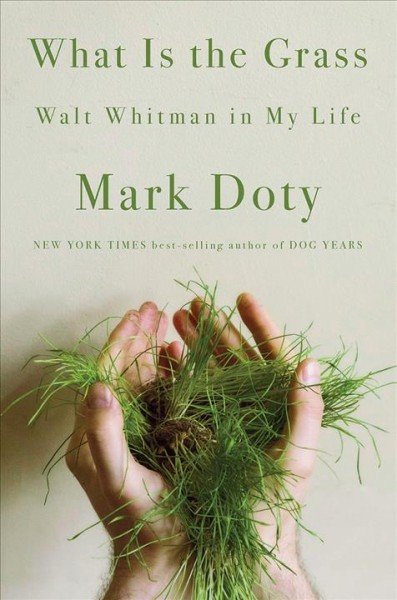
In a time of grief and gravity and gratitude for some wonderfully-lived lives, I happen to find myself reading Mark Doty’s book What Is the Grass? Walt Whitman in My Life.

And I find this paragraph; and for now, I need add nothing more.

The dead are not lost, but in circulation; they are involved in the present, in active participation. Bits of them are streaming through your hand and mine, just as language is circulating through us. Lexicon and materiality forever move onward and outward in the continuous wheeling expansion this world is. This is no mere philosophical proposition on Whitman’s part, not an intellectual understanding but a felt actuality. We are alive forever in the endless circulation of matter. Nothing luckier, stranger, or more beautiful could ever happen. There is no better place.