Language power

In advance of my reading this weekend, Jennifer Dotson of Highland Park Poetry asked a few questions and created the flyer below. I especially like the last question and have more to say about it below.

~

The graffiti on the NJ and NY Palisades sent a thrill through my childish mind and body. I first recall seeing words spray-painted on the cliffs when I was under age five and barely cognizant of letter forms. The view puzzled and frightened me, partly because of the heights (I was acrophobic from a very early age) and partly because I had no idea what those huge, high-up letters signified. When I got to kindergarten and began deciphering letters, the graffiti confused me because it contained signs that weren’t in the alphabet I was learning at school: Ω, Φ, the scary-looking Ψ; θ, Δ, and Σ, which resembled a capital E but clearly wasn’t. Once I could read and still could not understand them, I asked my father what those letters were and why they were up there on the rocks. They reminded me of the embroidered on some of the altar cloths in church, but I didn’t know what that stood for, either.

Frat boys from the colleges painted their Greek symbols on the rocks long before spray paint was invented, my dad said, possibly as part of hazing rituals. By the time I was a child, the 50s-era “greasers” had begun announcing their love for Nancy or Tina through daring feats of rock and bridge painting; then the graffiti era came into full swing after the mid-sixties, and the process got colorful–the Greek symbols vanished, replaced by “tags.” All of which just reinforces the importance of words in the world.

I will never climb up high to write or declaim my own words, as heights continue to terrify me. But I continue to push ideas, words, arguments, pleas, elegies, and gratitude into the world. Writing is the only way I know how to do that. It’ll have to be enough.

Book launch, travel, PR

Highland Park Poetry press has set up a book launch/poetry reading for The Red Queen Hypothesis (and me) with poet Rene Parks and an open mic to follow. This event takes place Saturday, September 9th at 5 pm, at Madame ZuZu’s, 1876 First Street, Highland Park IL. Here’s a link, and here’s another link. It’s a ways to travel from eastern Pennsylvania but a good reason for yours truly to visit a new place, meet new people–including the book’s publisher–and listen to other poets.

Too often, perhaps, I stay around the home front, indulge in my introversion by gardening and reading, and shy away from promoting my work. Lately, it’s been months since I did any submitting. There was my participation in the annual Goschenhoppen Festival, then a short but lovely week in North Carolina, camping and seeing friends. Now, the veggie season is starting to wind down–tomato sauce simmers on the burner–and I will have fewer excuses for why I am not sending out poems.

But my travel for the year is not quite done. In September there’s one more trip away from PA, and after that we can settle into autumn. I have writing plans, so once we return, I need to create a schedule that is flexible enough I can stick to it but framed clearly enough that it feels necessary and not difficult to integrate into my days and weeks. Every one of my writer friends knows how challenging that can be. Wish me luck. There’s a chapbook that’s been languishing in my desk area for quite a long time, but to which I’ve recently returned; there’s a ream of poems under 21 lines that might make up a collection, too. Then there’s the next manuscript, rather grief-heavy at present, that I need to re-think and revise.

Oh, and all those poem drafts I have not looked at in awhile…

Then there will be the next round of promotion, not just for RQH but for a collection for which I just signed a publishing contract! That book may be released as soon as April or May of 2024. We shall see. After the drawn-out publication wait for this last book, I will not be holding my breath. Still–it’s heartening news on the poetry front.

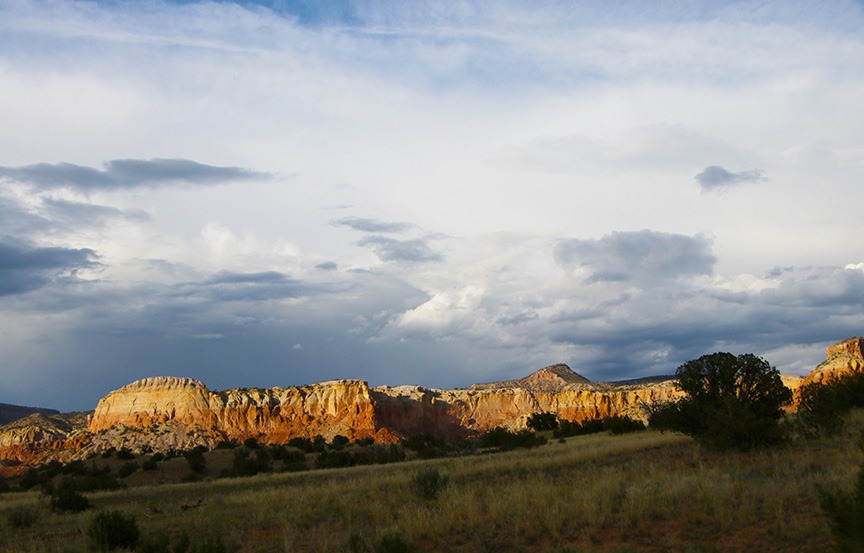
Above, Blue Ridge Mountains in August.

Aft a-gley

Today marked the first day of the Fall semester at the college, but I had no reason to be there. Instead, I enjoyed the surprisingly fine August weather, harvested tomatoes and basil, and began the much-delayed task of weeding our numerous perennial beds. At 4 pm, I rested in the hammock after a walk and spent a few minutes reveling in retirement; though generally I’ve been too busy to find myself in reflective or relaxation mode, it was nice to pretend for awhile.

Yes–I wanted to read books in that hammock, and get to the community pool, and hang out with friends on the patio until the bats came out and the last fireflies gleamed over the meadow. Ah, but Robert Burns nailed it: “The best laid schemes o’ mice an’ men / Gang aft a-gley.” There were so many other things to do.

That said, while I did not do the Sealey Challenge this August, I managed to read several really terrific poetry books–and the month’s not over yet! To keep this post brief, I’ll just mention the book I’m reading now, Jennifer Franklin’s stellar new collection If Some God Shakes Your House. Lots of (mostly) non-rhyming sonnets, a series of memento mori poems, and lyrically linked poems titled “As Antigone–” connect anger, grief, and suggest that anti-authoritarian acts are often more about love than bravery. The speaker keeps denying that bravery’s behind her disobedience, but these poems are brave. I found many of them utterly heart-breaking, so it may not be an “easy read” if you want something cheerful to uplift a low mood. Nonetheless, Franklin’s poems secure hope to love so intensely I could not look away and keep returning to them even before I have finished the book.

I grew up confusing opinion
with oracle. She reminded me
all men are dangerous, each time
I left the house alone….

Jennifer Franklin

It can be difficult to avoid comparing such strong poetry with…well, with what I write. I think that most writers do this occasionally, some more than others. If one is a competitive or ambitious person, analysis and comparisons may be second nature; I have known poets who feel dismayed by their own inadequacy compared to the “greats,” and poets who felt bitterly overlooked because they didn’t get the attention or lauding other writers garnered. Either way is a trap, though. In general, I look to admirable literature as something to enjoy, learn from, admire, and to analyze to figure out how it can be done. If I have ambition, it is the ambition to learn. Oh yeah, the autodidact in me again!

And speaking of ambition, or lack thereof, I am far behind in promoting my book. Next post should contain details of the book launch in the Chicago area (September 9), and perhaps other writing-related newsiness.

Classification

An admission: I’m barely competent at the promotional aspect of The Writing Life and would prefer to hole up in my house and garden and just… write. But writers need readers, and writers benefit by meeting other writers (and readers); and I’ve always been interested in learning new things, even things that are not particularly fun or that I am not naturally adept at. Such as educational learning management systems (ie, “portals”). Such as recording audiofiles of my poems. Such as contacting potential poetry-reading venues or reviewers. Or coming up with clever ways to let people know about my book.

I got a couple of responses from my initial forays, which is lucky. One of these sent me a sort of writer’s questionnaire about my book, and one of the responses I’m supposed to give is to say how I would classify my latest poetry collection. That got me mulling over the whole idea of categorization, classifying, and stereotypes. Genre–that’s easy. It’s poetry. But the sub-category of this book? uh…

~

At the beach earlier this week, we found a much-broken up rock jetty that teemed with creatures. As I sat back on my heels and peered into the mixture of sand-water-rock-mullosk-kelp, I found myself thinking about Aristotle’s immanent realism (epistemology/natural philosophy), ideas he likely nurtured while examining the tide pools of Lesbos. Or I imagine that he may have done so. We humans observe, and then classify or categorize based upon these observations: similarities, differences, various adaptations–in environment, habit, behavior, construction of the being or entity itself.

I think if I had known as a child and young woman that there was a career path called “a naturalist,” I would have pursued it.

~

Unclassifiable doesn’t strike me as much of a selling point. However, there are always art forms that are, to use a current term, intersectional or interdisciplinary, and creations that repurpose, alter, or reimagine the known or customary into something new and intriguing. Fellow blogger and talented poet and novelist Lesley Wheeler‘s books come to mind, as do works by Anne Carson and books from Coffeehouse Press and Tarpaulin Sky (among others).

My poetry is not experimental nor groundbreaking, though it is a little quirky; so here is my recent attempt to classify The Red Queen Hypothesis and Other Poems:

Touching on a range of topics and employing variety in poetic craft—free verse, metrical verse, rhyme, and classic forms—the poems in The Red Queen Hypothesis play with invention, science, and the environment of the everyday.  One example of these juxtapositions is the title poem: a villanelle, based on an evolutionary theory named for an episode in Alice through the Looking Glass, that sums up the corporate rat race. Sometimes tongue-in-cheek, sometimes disturbing, the poems urge readers to observe and to reconsider what is beautiful.

~

I dunno. Does that seem like a remotely interesting description?

(Really not adept at the promotional biz.)

Aristotle, supposedly.
from https://www.nytimes.com/2016/05/27/world/europe/greece-aristotle-tomb.html

Aloft at last

My second full-length poetry collection is finally available. Whew! It took a good bit of patience, some frustration, and considerable persistence to get here, but I believed that this was a manuscript worth plugging away on. And thank you to Highland Park Poetry and to judge Cynthia Gallaher for choosing RQH as a prizewinner.

Persistence doesn’t always pay off, but when it does, we tend to focus on how important it is to keep on keeping on. However, I’m not sure I wholly believe in the process of sticking-to-it no matter what; there are times when you do need to let go of an unattainable goal or the pursuit of a not-terrific idea, and just–well, fail. I have let go of quite a few goals, plans, and previous manuscripts when I honestly evaluated my feelings about them and their possibilities for becoming realized. It’s okay to fail. You learn more from failure than from success. I have gained quite an education that way myself.

But I wanted this book to get into print. I like the poems in it. I like the things I learned as I played with meter and form and (mostly slant) rhyme. It was fun to find a range of topics that managed, one way or another, to work together. Mostly, I wanted an audience, to find out whether readers find it thought-provoking or entertaining or interesting. Also, I was starting to sense that it was getting in the way of my next manuscript. Yes, of course I have the next manuscript…

Do I wish the book had come out four or five years ago? Yes. My first collection, Water-Rites, came out way back in 2012; RQH was supposed to have followed more rapidly on that book’s appearance. Am I glad it has appeared at last? Also yes, very glad!

I am grateful to so many people for this book. And I will be grateful to anyone who buys it, reads it, and doesn’t find it a complete waste of time. Meanwhile, I’m working on getting some readings lined up. I know I will appear at the book launch September 9, 2023 in Highland Park, IL! I’d love to read at other venues, so if you know of one let me know.

And if you have a manuscript you really believe in–keep trying.

Transitions of one kind or another

Transitions require reflection and, quite often, reorganizing–and certainly that seems the case at present. I decided back in April to take a hiatus on submitting while I wound down at my college job, also recognizing that I need to put in some work on promoting my book (the cover should appear on my next post!). Besides, before I can send out poetry again, I need to assess what I have that might actually be worth sending out. It’s possible that much of the pile of not-yet self-evaluated poetry exists in unfinished form. That means further revision. While revising is an enjoyable task for me, at this point I confess to feeling overwhelmed. The first task, then, is one of organizing…which I admit I like a lot less than revision.

It was therefore with considerable resignation I faced the drawers, folders, computer files, and index cards that more or less make up my, uh, creative output. The project is nowhere near complete, but I got some cheer by realizing that I have been writing and revising more than I thought, a little at a time. The pile of papers on the chair pictured to the right is 16 months of revisions.

I would pat myself on the back more heartily if that stack had resulted in several damned fine pieces of poetry, but at least it means I’m doing the work that writers do and that I was doing it even when feeling taxed by situations not entirely within my control. Which is also what writers do. Sometimes you need to give yourself a little boost of validation.

A bigger boost of validation for writers is the publication of a book, and that ought to keep me buoyant for awhile even if I do dislike the promotional aspect of book publication (which falls more and more on the writer these days as the book industry contracts). My publisher says the book should be available in August– “Watch this space” –as advertisers used to urge.

Meanwhile, the anthology of contemporary Ukrainian literature published by Vogue Ukraine is now in print and available; it’s full of passionate creative work and includes some internationally notable writers, the best-known of whom is Oksana Zabuzhko, who wrote a reflection about the appearance of her debut novel 25 years ago; one of the most shattering pieces is an extremely current non-fiction text by Olia Rusina written, diary-form, as the assault began on Kyiv. Info here.

Autobiographical?

Although poems can be anything–philosophies, arguments, histories, internal monologues, passions, information, invention, dreamscapes, jokes, narratives, parodies, you name it–poems sometimes parallel a writer’s individual experiences in the world in a way that would, in prose, be termed memoir. When readers think of poems that are “from the heart,” they usually mean work that authentically describes what appears to be personal acquaintance with environments and behaviors: something autobiographical, or “true.” I have tussled with this perception in some of my own work, for example, my chapbook Barefoot Girls, in which the poems describe fictional experiences that in many cases were not my own but those I heard as a teen; and yet, some of them are memoir-ish.

How to decide what categorizes memoir-ish poetry collections? On the one hand, maybe everything ever written by any poet, since connecting the personal with the so-called universal has long been considered the job of poetry. Even narrative and heroic epics, when they are lasting and successful in their aims, contain some aspects we might call personal (motives and emotional responses to a situation, for example), though the writer’s life and its events may be obscured by centuries.

But memoir is not autobiography; readers should keep that in mind. Maybe it’s Vivian Gornick who said that autobiography is what happened and memoir is how it felt–I’m sure I am misremembering, so don’t quote me on that. In a past interview in the New York Times, Sharon Olds derided her own poems as narratives–even personal narratives–but sidestepped the term autobiography; she still refers to the first-person in her own work as “the speaker.”

…even though her poems have been called
diaries, “I don’t think of it as personal,”
she said. “These are not messages in a
bottle about me,” said Ms. Olds.

“The Examined Life, Without Punctuation” by Dinitia Smith, 1999 (New York Times)

Where does that leave us as readers? I don’t know–and I think it’s okay not to know. That said, I have recently read a number of poetry collections that fall decidedly on the memoir side of the continuum and found them interesting, informative, well-written, at times beautiful and also at times hard to read (i.e., profoundly sad). If you, my reader, are intrigued by the challenge of what is or is not memoir in poetic form and are open to experiencing the circumstances and knowledge of other lives and perspectives that such work offers, here are a few books you might investigate. There are many, many more–this list is just from my more recent perusals. Not one of them is anything like the others.

Edward Hirsch, Gabriel, a poem; Jeannine Hall Gailey, Flare, Corona; Emily Rose Cole, Thunderhead; Daisy Fried, The Year the City Emptied; Sean Hanrahan, Ghost Signs; Lisa DeVuono, This Time Roots, Next Time Wings.

is or isn’t is memoir?

Novels & words

When I was about seven years old, I discovered books offered me a way to immerse myself in adventure and temporarily escape life’s discomforts. Novels, and later, poetry, were the genres I turned to most often. Though I also liked history, science, biographies, and art, there was something about a piece of sustained fiction that enthralled me so deeply I could easily ignore anything around me: the television, my siblings’ bickering, the vacuum cleaner, my parents’ calling me to dinner. In later years, immersed in a book, I risked going late to class or missing my stop on the F train. The only area of my life where I understand what is meant by hyperfocus has been reading.

Then I had children, which changed everything. I remained an inveterate reader, but I found it far easier to get through non-fiction, poetry, essay or short story collections, and literary memoirs than to devote myself to novels. It was simply too easy to get lost in a book of fiction, to wrap myself in those worlds to the detriment of my own. Too easy to become irresponsible to life’s requirements, which were suddenly so many and so urgent. If my situation had been different–let’s say, commuting by train for half an hour or more daily–I might have continued reading a hundred or more novels a year. But I was home in the rur-burbs with two young kids, and I could read only in short spurts throughout the day. Granted, I read a lot of books to my son and daughter, some of which were new to me and most of which were fictional…but a bit below my grade level.

Those children are in their 30s now, but I became so accustomed to the non-fiction genre that only recently have I begun to turn back to my first love, the novel. Granted, I did my reading-all-of-Dickens stint during covid, and I never completely abandoned reading novels; but I got out of the habit. Because my workplace office is now in the library, however, I have been picking up the occasional, usually contemporary, novel that appears on the library’s New Acquisitions display. This is where I found R.F. Kuang’s book Babel, or The Necessity of Violence: An Arcane History of the Oxford Translator’s Revolution. Imagine an alternative Dickensian-era Britain, with the underlying power struggles between education and political power as per Pullman’s His Dark Materials series, and the almost-believable otherworldliness (and creative footnotes) of Susanna Clarke’s fiction…with the late-adolescent outsiders who bond over knowledge that cements the Harry Potter books…and add some genuinely academic background on linguistics and etymology.

That’s about as close as I can describe Babel by means of other books, but what I really enjoyed about the novel is the way it got me thinking about how dismayingly interconnected education and scholarly pursuits are with power structures such as governments, politics, wealth, and colonialism. Kuang deftly shows her readers how the focus on knowledge that her characters love and possess talent for inevitably leads to a narrowness in their perspectives that differs almost dangerously from an uneducated ignorance. They are good young people, but they operate as elites in a fundamentally callous system. The system either corrupts or smothers. The “fun” part of her world construct is that power operates on the use of words: on languages and their etymologies, which are magical enhancements.

But of course, power does hinge on the use of words, doesn’t it?

The question this poses in my mind has something to do with poetry, with the writing of it, the speaking of it, its use of words that are not magic but can carry with them a power to evoke that seems pretty magical at times. Reading this novel was not only entertaining (sad, thrilling, surprising)–it got me, after I’d completed hyperfocusing, to reflect on ideas that twine with the roots of poetry. To me, that’s the best takeaway from any reading experience.

Reading friends’ books

One thing about being a writer is that, after awhile, you meet other writers one way or another: sometimes through social media, Zoom events, or in person at book signings and readings; sometimes through conferences, workshops, or various educational programs; sometimes by finding local writers groups or getting an introduction to someone through a friend. When you meet writers, you get the additional privilege of reading their work. It so happens that lately, many of my writerly friends and colleagues have published books, and I’ve been busy reading them!

First, I want to mention that whenever possible, readers should purchase literary volumes from the writers themselves or from their publishers, or–if it’s an option in your region–from an independent bookseller. I do resort to ABE and Thrift and Amazon when a book has gone out of print or when the publisher prints through Amazon, but I want to remind people that the other sources will support the writers themselves or the independent small bookshops and publishers who launch these books into the world.

Now that my virtuous aside has been accomplished, here are a few of the books-by-friends-&-colleagues I’ve been consuming lately–not all of them newly-published (it takes me awhile to get around to the reading).

~

The near-abstract imagery and the concrete place-names and lyricism in Heather H. Thomas’ 2018 Vortex Street appealed to me on several levels, from the scientific (a repeating pattern of swirling vortices, see “fluid dynamics”) to the particular: my husband grew up in Reading, PA, where some of these poems are suspended in recollection. I’ve also loved reading Grant Clauser’s latest, the 2021 Codhill prize-winner Muddy Dragon on the Road to Heaven, a collection of poems that strikes me as both deeply beautiful and tenderly sad. Poet Lynn Levin has published a terrific book of short stories, House Parties, that remind me of the wry sense of humor and wide-ranging knowledge her poems have while proving she’s also a deft hand at plot and character. Maureen Dunphy’s memoir Divining, A Memoir in Trees, brought to mind parallels with Lesley Wheeler’s memoir in poems, Poetry’s Possible Worlds. In both books, the authors have chosen a locus [an American tree, a contemporary poem] and used the exploration of that “trigger” to draw out something personal. What better way to connect with readers than through something we love and value? Which brings me to a shout-out to Jane Satterfield, whose poetry collection The Badass Brontës isn’t in this photo because I’ve already lent it to someone who’s a Brontë fan.

~

In addition to the above books, I am eagerly awaiting new works from a host of other poet-friends: chapbooks by Beejay Grob (forthcoming from Moonstone Publishing) and Lisa DeVuono, poetry collections from Jerry Wemple, Jeanine Hall Gailey, and others that slip my mind at the moment. My only regret is that I have all this reading to do just as gardening season gets really underway!

Information from poems

I tried to attend a poetry event on Saturday afternoon, but the weather was against me.

The rain came accompanied by lightning strikes, high winds, falling branches, flash-flooded roads, sleet, and a little hail, all in the space of two and a half hours. I left home only to turn around after three miles. The highway was blocked with traffic piled up due to various “storm-related events” (said the weather sites). Actually, I was grateful for the storm, since our region has been unusually dry and even warm for April–my trees, shrubs, meadow, and perennials needed rain. And upon my return, I got back to reading books of poetry. This past week these included collections by Marilyn Chin, Elizabeth Metzger, Grant Clauser, Jennifer Franklin, and Natalie Diaz. Some wonderful work there.

Through these books of poems, I also gleaned lots of interesting information. That’s something many people who claim not to like poetry don’t understand: you can learn about so many things through poetry! Poems contain fascinating facts, intriguing perspectives, tons of social and cultural observations, vocabulary and terms I would not have known about otherwise…poems have been the impetus for me to learn more about astronomy, theology, historical events and people, the geography and topography of the earth and its oceans, the life cycles of insects and plants, how metal shops operate, how to catch fish or tie a fly, what it is like to “live with a disability,” how the process of dying has differed from era to era and place to place, what it is like to reside in a war zone, the traditions of people whose backgrounds differ from my own, and other so-called “non-fictional” information.

Facts, in other words. Poems may inhere in the emotional or intellectual realm in many ways, but they also can–and often do–inform. They contain facts as well as multitudes. If people did not get so hung up on trying to decode a secret meaning behind everything they encounter that appears to be a poem, they might be surprised at how much they could learn from such (usually) brief texts. Yes, it might help to look up a word or a reference or two. That can get a reader started on a whole trail of interesting and valuable knowledge, widening the worldview, changing the perspective.

It may even lead a person to recognize that facts can change depending on point of view. Contemporary science acknowledges this, but most human beings haven’t accepted it yet. Anyway, this points to one reason poetry has often been considered unconventional, subversive, even dangerous or radical: Poems can challenge the status quo of what is accepted, received, unquestioned in society’s knowledge base. Terrifying the authorities by means of information.

Go for it. Read a book of poems.

~

Coming up in May, I’ll be featured once again at GoggleWorks in Reading PA, 6 pm on May 4th…it has been awhile since I was there (2012), and I look forward to it!