Defending the poetry major

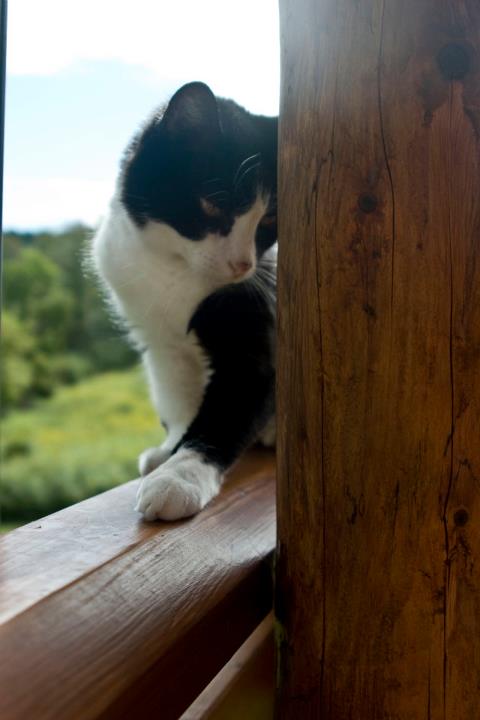
Photo by Annie Abdalla

~

Pity the poor poetry major, long treated with snotty sarcasm as a head-in-the-clouds idealist. “What will you do with that degree?” people ask, shaking their heads at the scholar’s naivete.

Okay, few people dispute that the economy is tough right now. Tough for experienced employees, tough for many small business owners, tough for newly-minted college graduates. I know this first-hand, and I deal most often with the youngest age group I’ve mentioned—undergraduates.

There are hundreds of articles, blogs, and opinion pieces offering tips to students or bemoaning the price of a college degree (and I grant you, the cost is appalling) or telling undergraduates that they need to specialize in certain career areas. The New York Times, for example, ran this article, which warns students away from majoring in such coursework as history, philosophy, and poetry.

Another pop-journalism site suggests that graduates learn “to put your useless degree to use.” Although there are some reasonable, general ideas here, these brief tip-sheets operate under the unlikely premise that we can tell today’s 18-year-old what he or she will need to know in order to be securely employed in, say, 2045.

Mild contrarian that I am, I defend the poetry major. Students have to be diligent to achieve good grades in the poetry track, diligence being just as necessary there as in the so-called hard sciences, which also require analysis (they use more math but require similarly solid logic chops). Poetry is difficult to study; the subject requires keen reading comprehension skills, a good foundation in rhetoric, the ability to analyze, to communicate, and to connect diverse disciplines, cultures, and texts. The same goes for history and philosophy: these are truly challenging areas of study, not good choices for the slacker or the faint of heart.

The people who choose the humanities majors are often accused of living in ivory towers, but that’s a stereotype. Most of them don’t end up in academia. Some of them are entrepreneurs, some are lawyers, some are doctors. Poetry major Ross Martin became a Viacom executive; though that is probably not a terribly common career outcome for poetry folk, humanities majors in general end up in some form of management position 20% of the time, according to research by Georgetown University’s Center on Education and the Workforce.

For a look at the career outcomes, percent employed full-time or part-time, and job earnings for humanities majors, see:

(Link to GU’s CEW on Humanities degree earners)

Yes, it is true that in terms of earnings, the poetry major or history major is unlikely to outperform the person who has a Petroleum Engineering degree. I have to ask, however, given the limited supply of petroleum we’re told exists on earth, where those petroleum engineers will find work in 2045. And job satisfaction—earning enough to get by and feeling satisfied with one’s work and contributions to society—is, while less easily measurable, a byproduct of an excellent education that keeps minds sharp, hearts engaged, and communities intact over the long haul—including during tough times.

The world and technology move rapidly. I typed my undergraduate papers on a manual typewriter and, graduating during the hideous recession of 1979, got jobs that paid like menial labor but allowed me to sit at desks and utilize my spelling, vocabulary, and arts analysis skills, which led to jobs in typesetting that taught me computer skills back in…well, let’s just say “8-inch floppy disk” and leave it at that. Did I have any idea I would be blogging on the cloud using a PC in 2012? No. Have I been able to learn new things by using logic, persistence, research, and creative thinking? Why, yes. Thank you, humanities coursework.

Critics of many stripes claim colleges need to focus more on career development through the creation of specialist tracks. Careerism is a fine concept for a capitalist society, and I have no problem with offering better certification programs for specialists of all kinds; but careerism per se is not what a college education is “for.” A college education serves, when it is effective, to broaden a person’s experiences, deepen a person’s thoughts, and to develop in that person a versatile range of essential critical-thinking and problem-solving skills. Those skills are applicable to many jobs. An excellent gaming programmer I’m acquainted with says his two years of intensive philosophy and literature study helped him enormously when he switched to the technology track: it’s all logic and analysis, and creative thinking is what allows a programmer to excel beyond data-managing. Here’s an article that explains a bit more about the usefulness of the liberal arts education as it pertains to business.

When the job market is tight, we need problem solvers and creative, critical thinkers. It will not matter what these people majored in as undergraduates; what will matter is how flexible they are at responding to the changes around them…or at instituting changes themselves.

Poetry majors can do that for us.

Really.
Feminism

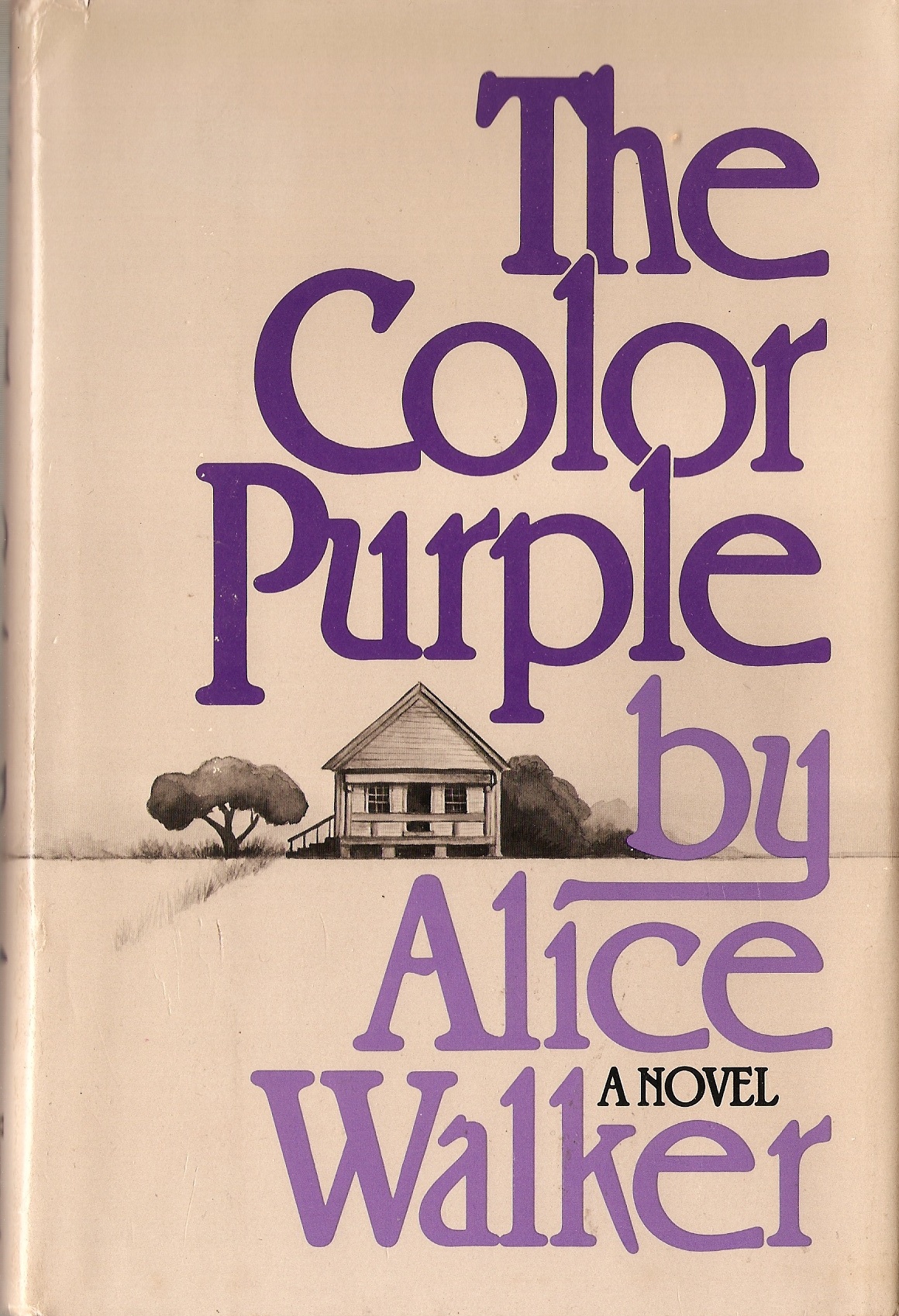
The Color Purple by Alice Walker

I’m thinking about a conversation I had recently with a 21-year-old male student I will call “B.”

B had enrolled in a senior-level humanities class, Contemporary Women’s Literature. He told me he was excited about the texts, which included some books he had wanted to read but hadn’t gotten around to yet, such as The Color Purple. After the first class, however, he felt wary. The reason? “The professor, I’m afraid she’s some kind of a feminist, so maybe I won’t feel comfortable sharing my opinions,” said B, “Like, she seems the kind who’d give me the stink-eye just because I’m a guy.”

“Did she give you the stink-eye in class today?” I asked. (I know the professor, and I know he was wrong about her.)

“No…but she talked about looking at feminism in ‘the most positive light’ as we read the books.”

“And do you have a problem with that?”

B shrugged. “I have four sisters,” he said, “I mean, I’m a guy who respects women so much, I always put the toilet seat down! But I don’t know about looking at books from a feminist perspective…”

I asked him if he could define what “a feminist perspective” means. The short answer is that he didn’t really know, but he hemmed and hawed about “not liking men” and “seeing all masculine stuff as basically bad.”

“So it seems to me your professor was acknowledging that many people have the impression that feminism is somehow a negative thing, and she wanted to make it clear she would be approaching it more positively in terms of social change and literature. Do you think you could be falling into the stereotyping fallacy, B?” I asked.

No, he assured me, he had no sense of male superiority and he felt women were equal to men, should be paid the same wages, could do the same jobs—“but that whole feminist thing,” he added, returning to his earlier vague objection, “I mean, you’re not a feminist, for example—”

Good thing I didn’t have my mouth full of coffee when he said that.

“B, I went to college in the 1970s! I went to liberal arts colleges and took courses in women’s studies in art and literature. How could I not be a feminist?”

He looked taken aback. “But,” he sputtered, “but, you’re reasonable about it…” (“it” being feminism, I gathered).

He was so well-meaning, I almost wanted to take that as a compliment, my being reasonable. How many middle-aged people get called reasonable by 21-year-olds? But, seizing the clichéd “teaching moment,” I asked him from where he might have received ideas of the feminist movement as a legion of self-righteous man-haters and whether this professor’s specific approach to the novels might be a kind of corrective to his or other students’ received notions. After all, I notice that today’s young women often evade being pegged as feminists, even when their values and achievements coincide perfectly with the movement’s aims. He thought about that. And then I had a meeting to attend.

He’s a lovely young man, and I think he will enjoy the class. It may be too much to hope that he felt a bit of perspective shift from our discussion, but one thing’s for sure:

He won’t forget that I’m a feminist! (If merely a reasonable one.)

Reasons and felines

“Like my cat, I often simply do what I want to do.”

This sentence begins Derek Parfit’s book Reasons and Persons, a lengthy series of philosophical arguments examining the validity of the self-interest theory, examinations of hedonistic and altruistic behavior, among others,  as rational responses to life, and why people choose to do what is against their own or their community’s best interests (i.e., behave “irrationally”)–as well as whether irrational behavior is ever justified and why.

At right, my favorite cat, Topsy. He does what he wants to do.

Parfit’s book has been a good refresher course for me in how philosophers actually work, devise their analogies, create and endeavor to solve dilemmas, clarify and limit their claims, etc.

But frankly, my brain hurts. (See Monty Python skit, below).

There are times one simply wants to think less about the things that matter, and that desire may not be rational but is certainly human. So while humans do have the opportunity to be reasoning creatures, they also have the opportunity to be like cats: to do what they want to do.

Or not to do, as the case may be.

At present, I’m assessing student work for final grades. This work is rational and should be carried out as objectively as possible against specific criteria. This work is one of the jobs teachers do, besides the job of endeavoring to impart information and to encourage critical thinking on the part of the students. It’s my job, I get paid to do it, and I take it seriously. Nevertheless, today I find myself tired of being the reasoning person.

And so, because I cannot slink over to the sofa and curl up on a pile of blankets, I am posting this:


Lewis, Buber, Dickinson

“Meeting with God does not come to man in order that he may concern himself with God, but in order that he may confirm that there is meaning in the world. All revelation is summons and sending.”   –Martin Buber, I and Thou

I suppose I ought to know this, but I cannot recall reading about whether C.S. Lewis was influenced by Martin Buber’s work, specifically I and Thou. Some of Lewis’ writing seems to suggest that he agrees with the concept of relation: as Buber describes it, the stepping out to meet Thou as Thou, and the insistence that “Man’s [sic] desire to possess God” keeps said man from true relation with God (a point described in The Great Divorce through the allegorical character of the Episcopal Ghost). God has become an “It” rather than a Thou for the Bishop, though he feels he is a true believer, an error made in lesser ways by other characters such as the Big Man.

Many of the students I tutor are writing their final papers for a Theology class that uses Lewis’ texts as a foundation for the course, which is why I’m feeling a bit conversant with Lewis lately, many long years after reading his fiction and his theological writings. And a random quote (above) that I read on a colleague’s email put me in mind of Buber, whose I and Thou reads, often, like poetry….which got me thinking about Emily Dickinson.

How’s that for a train of thought? Perhaps I need to examine the concatenation step by step.

1) Buber, I and Thou, a work deeply influenced by the author’s immersion in non-Western and Cabbalistic “mysteries” (the idea of the radii and the Centre closely parallels the Hindi conceptualization of Indra’s Net, just to name one example). Buber returns to the Western religious traditions throughout, though he mentions the way of Buddha and others as he examines the ever-present confrontation with the Thou of relational experience.

2) Lewis, The Great Divorce. Students interpret this work as one in which the author outlines his agreements and differences with, among other things, ideas about free will stemming from Socratic/Platonic through Augustinian and more modern concepts of Heaven/Hell. They tend to miss the concepts of what makes union/relation significant in the choice to unite with God, but they “get” the gist of the allegory.

3) Emily Dickinson, who more informally and more frequently uses “you” and “I” to explore these depths, but whose contrarian views on soul and spirituality knit the religious with the genuine in complex and exciting ways through the art of language.

An example, in which she does employ the King James Bible diction:

725

Where Thou art—that—is Home—
Cashmere—or Calvary—the same—
Degree—or Shame—
I scarce esteem Location’s Name—
So I may Come—

What Thou dost—is Delight—
Bondage as Play—be sweet—
Imprisonment—Content—
And Sentence—Sacrament—
Just We two—meet—

Where Thou art not—is Woe—
Tho’ Bands of Spices—row—
What Thou dost not—Despair—
Tho’ Gabriel—praise me—Sire—

—

How similar to Buber, those lines “And Sentence—Sacrament—/Just We two—meet—”

and the idea that “Where Thou art not—is Woe—”

Poetry precedes philosophy more often than not, though philosophy may object.

Mondegreens and malclichés

According to Merriam-Webster, a mondegreen is:
a word or phrase that results from a mishearing of something said or sung [“very close veins” is a mondegreen for “varicose veins”]

A similar slip of the ear resulting in a mishap of the pen (or, more likely, keyboard) has been called “malcliché.” My teaching experience leads me to ascribe the uptick in these peculiar forms of malapropism to AutoCorrect and to a more aurally-based society. We have moved from ancient oral communication to text and back again to what we hear/see rather than what we read. As our media becomes a place where diversity abounds, the conventional structures of English–idioms and phrasings in particular–fall apart a bit as we speak with different speeds, different accents, and under different cultural, regional, rhetorical, and other authorities.

I have been collecting a few from student papers and from conversations I overhear. Yes, I eavesdrop–I’m a writer!

I supply a few here for your amusement and puzzlement, and as inspiration. A few of these phrases are potentially rich in imagery that’s strangely appropriate, such as “burning your britches,” “poor self of steam,” “rake him into the coals,” and “beg to defer.” I have successfully used mondegreens as poem prompts. I do not recommend using them in English comp papers, however, as they result in coffee spills produced by professorial giggles and rampant use of the red pen admonishing “sp” and “clarify!”

armed to the feet
above bored
stuck to me like a leash
all intensive purposes
board to death
buy the same token
queen of the crop
caught me on guard
don’t count your eggs before they hatch
a fool and his money are soon apart
give it a swirl
dead wait
leaving like flies
go out on a tree
grin and bare it
taking his name in vein
one fell sweep
in the nickel of time
hair-brained
last ditch effect
pearls before swans
unnecessary evil
no holds bard
on a role
past the buck
the past of least resistance
sharp as attack
he got just his desserts
what goes around must come down
on tender hooks
preaching to the chair
no ifs, ands, or butts
free rain

Teaching analysis & meaning

My students want to jump to conclusions.

Give them a text, a work of art to view and consider, a billboard, a musical selection…they will make one observation and immediately either evaluate or interpret. I am pleased that young people want to find meaning in so many things–or at least understand that they might be able to find meanings–but I want to tell them to slow down.

It’s tempting to suggest that “kids today” want instant gratification, are spoiled by having instant Google searches on their iPhones, or have no work ethic. I do not think that is true. Perhaps we have not taught our young people how to look, describe, analyze what it is they are noticing. It’s not that they are incapable of these steps; they just do not know that they know them. I think some of my students don’t even realize that they do notice things.

Really, who has not made snap judgments, or interpreted something–a work of art, a remark in passing–without thoughtful analysis? Guilty as charged, in my own case. But I am still learning, and my patience with my own learning process should carry over to my students; at least, I strive for that.

I notice the urge to leap to interpretation most when I am teaching the survey of poetry classes. Students know that poems are supposed to mean, not be (MacLeish got through); but they lack the confidence to explore meaning on their own, in their own ways. They get frustrated and want to find experts to tell them what the poet meant. Delving into their own uncertainties is frightening to them. They’re just out of high school, where they learned that it’s wrong to be “wrong.”

So many good texts out there try to convince students (or other interested, frustrated readers) that there are other ways to be with a poem, to explore, discuss, notice, and find meaning. I read such books to find inspiration for my teaching, for my students, and for myself. When I have time to get back to this post, I’ll begin a list in the comments box below. Meanwhile, if you have suggestions, add them below. I’m always looking for more ideas, more good books, more reasons not to jump to conclusions.

Syntax

“Syntax” by Steve Tobin. Copper, bronze. 

Syntax:
1a: the way in which linguistic elements (as words) are put together to form constituents (as phrases or clauses)

1b: the part of grammar dealing with this

2: a connected or orderly system : harmonious arrangement of parts or elements [i.e. the syntax of classical architecture].

[Thank you Merriam Webster.]

This is one of my favorite sculptures. A harmonious arrangement of parts or elements. Say, perhaps, letters of the alphabet which permit us to code abstract concepts and concrete objects into recognizable patterns, enabling us to share information of many kinds. “Syntax” is constructed of hundreds of cast-bronze letters, joined together in such a way that the overall form is unified and calm while the letters themselves make a chaos (the letters do not join into recognizable words).

Steve says that this piece encompasses all the things human beings who use speech could express in words. Well, maybe most things. And using Romanized alphabets. No Cyrillic letters in here, or ideograms, so far as I can tell…but the potential exists in this sculpture. I like the central hole: it suggests depth, or the kind of gravity that black holes supposedly possess, pulling everything into themselves that passes the liminal boundary–all the things unsaid.

Lately, I’ve been working with my students to help them see the connections between rhetoric and grammar, the logic of these linguistic elements, grammar’s many constituents, which my students tend to see as an unruly rabble or a horde that demands strict rules in a language that no one understands. After a day of words words words, and no time for poetry, I’d like to sit next to this sculpture for 15 minutes and breathe…in silence.

100 Thousand Poets, and change.

 Reading, Pennsylvania has had its ups and downs. Recently, it made the national news for the sad distinction of being the poorest city in the USA. But like many struggling cities, it also has its share of citizens who are devoted to keeping the city not merely afloat and economically viable–a tough task in tough times–but also vibrant culturally. Where rents are cheap, artists can find studio space. Colleges can expand because there’s vacant space for parking garages and buildings ripe for re-tooling. Reading’s been host to quite a few poetry events lately, as a result of the aforesaid artist spaces and college expansions. (See GoggleWorks for one example of studio & performance space: http://www.goggleworks.org).

I spent the day at the Reading venue of the global event “100 Thousand Poets for Change.” On this overcast but mild day, there was a little disorganization at first, not uncommon for new festivals…but the  poets found one another, and before long there was a lively little crowd seated and standing near a performance space for what was billed as a series of featured readings with musical interludes but which became an open reading with music as background. And train sounds as background. And car and crowd sounds, and it didn’t matter because the audience members were paying attention to the readers.

At intervals, I wandered away and bought food from the vendors. Reading has some good ethnic food establishments, judging by the Vietnamese spring rolls and the falafel and such.

I sat on a park bench with my friend Marilyn Hazelton, a tanka poet and practitioner of haiku and haibun, and we discussed the young performance poets and the uses of structure in poetry and in life. We had a moment envying the young for simply being young and energetic, and then we spent a few more moments on what we’ve learned and the value of aging. Both of us are teachers, as are Craig Czury and Heather Thomas, two poets who were instrumental in putting the poetry aspect of today’s gathering together, so we also talked about teaching. Sometimes a quiet talk with a good friend revitalizes me. After our conversation, I felt energized enough to read a few more poems to the crowd. A man my son’s age shouted “Good stuff!”

All in all, a good way to spend the first Saturday of the autumn season.