Cycles & theories

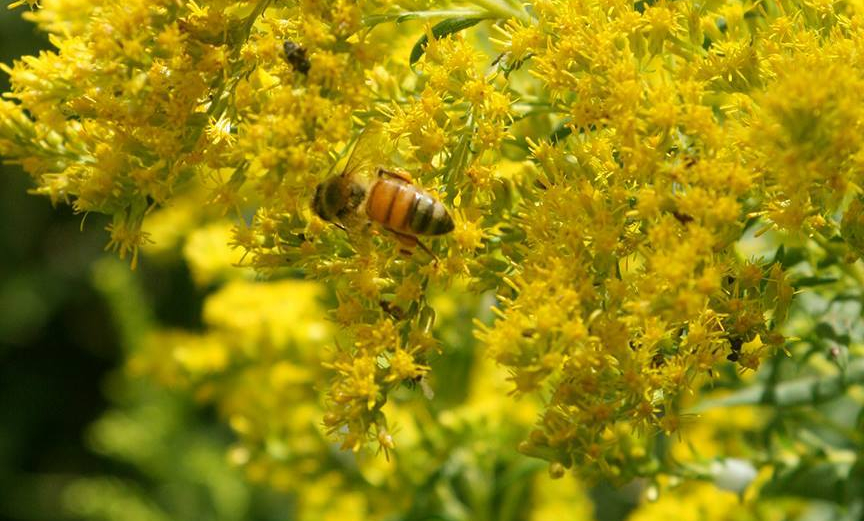
The Chinese lunisolar calendar puts us between 立秋 lìqiū, or start of autumn, and 處暑 chùshǔ, or limit of heat. Certainly the heat here lately has felt limiting, but the term more likely refers to the end of the hottest days of the year. My backyard world fills with haiku imagery for waning summer and impending autumn: katydid and annual cicada calls, birds starting to flock, morning glory and goldenrod, ripe pears, apples beginning to redden, hosts of butterflies. I watch as a hummingbird visits sunflowers, cannas, buddleia, corn tassels, and zinnias. Ripe tomatoes and zucchini weigh heavily on their vines.

Yesterday, a doe nibbled pears while her late-born twin fawns wove between her legs and the Queen Anne’s lace beneath the tree. The air hangs so humid, even the monarch butterfly’s wings seem to droop. A sense of waiting.

And I prepare for the fall semester. Cycles continue: that’s a good thing, isn’t it?

~

Therefore, to engage my intellect when my expressive ability with words seems sparse, I’m reading about theory. Specifically, the theory of the lyric in Western poetics, which turns out to be abstract and scholarly (no surprise, really–theory tends to be scholarly). My guide for this outing is Jonathan Culler’s book Theory of the Lyric. This text manages to be relatively readable despite its terminology; and as the terminology for the lyrical poem encompasses a long history of definitions, rhetoric, explanations, subgenres, and antiquated jargon, the going occasionally gets tough. I’m learning a great deal, however, about poetic experimentation over the centuries.

I now recognize that I have subsumed the idea of lyricism as it came down to American writers through Romanticism (see Hegel). It’s just that the concept of subjectivity in the lyric, and inward-turning emotion and the poet as speaker, has been so pervasive in Western poetics and pedagogy that it seemed a basic premise. Yet it was not always thus, and certainly other cultures employ lyricism differently and view it differently. It’s never an easy task to view from outside what is inherent in one’s own culture, but that’s where books like this one enlighten and challenge.

Besides the theory and historicity of poetry and the task of poetics, however esoteric and abstract, theory texts often elicit from me the urge to move to something more concrete, more creative.

I can only hope.

Fallow me

Blogger/poet/bookmaker Ren Powell recently suggested going fallow for awhile “to see what comes of it.” I tend to go through fallow periods quite accidentally. Used to call them writer’s block, but I don’t view them like that anymore. Fallow strikes me as a more accurate term for a number of reasons, some of them etymological. In current agriculture, a fallow field remains uncultivated purposely, to rest and improve the soil’s fertility. That seems more accurate to my current state of mind than “dry” or “blocked.”

Consider the field left fallow: plenty goes on there. Weed seeds germinate and sprout, annelids and arthropods, insects, and beetles, in their various life stages, multiply and move about. Voles, mice, toads go a-hunting. Bacteria do their thing. It’s not a lifeless place, the fallow plot.

But I haven’t been writing.

The publisher of my next book (The Red Queen Hypothesis) says yes, it’s still on her docket and will see the light of day–and print–next year, but that heartening news has not kicked me into gear on the writing front. And yet, by the time that collection comes out, the newest poem in it will be 6 years old. Some of the poems are almost 20 years old; it will not feel like a “new book” to me! Where, then, to put the newer work? What to do with the two half-completed, partially-revised collections of newer compositions that lie next to my desk and languish on my computer’s hard drive? Where is the motivation to finish the work or to start fresh?

I don’t know the answer to that just yet. But here’s an off-the-cuff haiku I dreamed up this morning that reminds me a bit of Issa’s poems.

~

fallow field
even a bird's dropping 
contains a seed 
painting by Jack FIsher

Reading not writing

But the next best thing to writing is reading. Or maybe it’s the other way around; if I had not loved reading, I would never have started writing.

Stacked beside the bed:

A Book of Psalms (Stephen Mitchell)

The Book of Joy (Archbishop Desmond Tutu, Dalai Lama XIV, Douglas Abrams)

The Book (Keith Houston)

The Darker Fall (Rick Barot)

Theory of the Lyric (Jonathan Culler)

Shifting the Silence (Etel Adnan)

Noise (Kahneman, Sibony, & Sunstein)

Haiku 2021 anthology from Moonstone Arts Center

I love how the first three books all have BOOK in their titles. The Adnan and the Mitchell are re-reads that settle my soul while keeping my mind active and inquisitive. The Book of Joy has been surprisingly helpful to me so far (I am reading it a bit at a time while other things are going on).

Anyway, I can garden. We have had plentiful rain and now I have plentiful beans, basil, zucchini, carrots; numerous tomatoes cluster under leaves, so whenever they ripen we’ll have more splendid organic tasty produce. I will continue to pull out the crabgrass, wild mustard, pigweed, smartweed, etc. Culling, cultivating, collecting sunlight through my vegetables and through my skin (yes, I wear sunscreen–and a hat)…there are worse things in life than an inability to compose poems. And I can read, thank heaven. Reading poetry, and reading about poetry, provides plenty of joy.

One of the practices of joy mentioned in the Dalai Lama’s & Desmond Tutu’s book is gratitude. Fortunately, that practice has never been difficult for me.

under clouds /heat rises from soil /beans grow plump


Constricted

I am forcing myself to write despite my sense that the flow, such as it is, has narrowed. I’m keenly aware that there’s a lot of material beyond the blockage and opening the floodgates may be as unmanageable as the “dry period” is unrewarding. Funny thing about balance. Keeping the seesaw level–no easy task. And as my peers and I progress toward aging, the constriction metaphor applies all too well. Many people I know now walk around with plastic or metal tubes inserted in their interiors to keep vital organs ‘flowing.’ My mother’s brain operates through constricted blood vessels, and now she can barely produce an understandable sentence. My lower back’s accumulating calcium deposits that have narrowed the path my spinal cord takes as it does its daily, necessary work.

Sometimes the flow of anything gets constricted. In our bodies. In the earth’s rivers. In our cities and houses: clogging and backups, plumbing and traffic. We implant stents, dig culverts, widen highways, remove the blockage–once we have determined where it is. There’s the challenge. Where is the rub that keeps us from our dreams? (Hamlet couldn’t figure it out, either).

Normally, I read at least a book a week; lately, just magazine articles, or no reading at all. Very strange for me–and I wonder whether my lack of motivation for reading and my current “dry spell” hinge on sorrow. My workplace has been busy lately, lots of scheduling, many meetings and decisions, not much time for personal reflection. It becomes natural, easy, to do the work of routine and ignore the kind of creative effort that grief requires. In my case, there’s also speculative grief: I know my mother’s dying little by little. We who love her spend as much time as we can with her, lifting our own spirits whenever our visits or gifts of chocolate and flowers and dinners out make her happy. What does she love? Fresh strawberries, for example. I bring them from my garden. She savors them. My day is made.

But I come home sad.

vessels, unconstricted

~

I wrote to a friend recently:

My writing practice has suffered a bit during pandemic but feels also as though underlying changes are in process. Just not much by way of results yet.
Somewhat surprised that my father’s death has affected my practice. Or perhaps it is my mother’s aphasia, frailty, and impending death that’s at work here. Or maybe just the stress of trying to maintain my job and relationships with colleagues and students under pandemic protocols, which has not been easy.
My brain’s been stuffed with things like learning new technology and teaching practices, and that leaves less room for wandering and interconnections and daydreaming. And then I have less energy for the creative work, as well. The garden’s been good, though. I’m not discontented, just feeling the currents of interweaving changes.

~
I suppose those interweaving changes may be a bit knotted, if they are threads, or partially dammed, if they are streams. Maybe why that’s the case does not matter much. What matters more is how to proceed when it seems nothing’s forthcoming–patience, force, ritual, practice, or…change.

You can judge your age by the amount of pain you feel when you come in contact with a new idea.

Pearl S. Buck

Wry words from Ms. Buck. Meanwhile, where are those new ideas? Maybe I just don’t feel up to unblocking the flow just yet. A little apprehensive about the pain.

Perspective(s)

Usually when I spy the red-bellied woodpecker, what I notice is the large red stripe on its…head. Today, the bird was facing me through a nearly-empty birdfeeder, and I perceived the ragged oval of blush-colored down on its underside. I felt a keen admiration for ornithologists who notice such small details. How many times have I seen the red-bellied woodpecker and noticed only its zebra-like striations and its vivid crown? Even those of us who consider ourselves practiced observers of ____ (name your favored area of observation) find we’re not as careful as we imagine we are.

I do not own a powerful telephoto lens for my old digital camera, so I rarely take successful pictures of birds. My noticing tends toward the small and not-fast-moving: flowers, mosses, flora, lichen, fungi, landscapes. I have learned to look mostly at my feet, and occasionally at the clouds. It seems that the limits of my camera and of my vision (terribly, terribly nearsighted) have led to a particular perspective that affects my photos, my botanical interests, and my poetry.

Which is, sometimes, all to the good–but not uniformly. Perspective should be varied; we humans need to imagine that other humans (and non-humans) may witness life from other points of view. This concept is fundamental to psychological understanding and to the much-vaunted and controversial “theory of mind.” It also gives us the pathetic fallacy and anthropomorphism, which expand human ideas about consciousness and offer plangent and resonant metaphors that writers can employ.

All of this came to top of mind today when a student brought in a Philosophy paper concerning Nietzsche’s perspectivism.

Nietzsche opposes philosophers who ignore the fact that individuals have limitations on their theorizing. What makes his idea so thorny is that at the same time he suggests–goes so far as to claim–that perspective (even limited, ideological perspective) is imaginative, is one of our human freedoms. Stanford Encyclopedia of Philosophy says:

“Particularly as knowers, let us not be ungrateful toward such resolute reversals of the familiar perspectives and valuations with which the spirit has raged against itself all too long… : to see differently in this way for once, to want to see differently, is no small discipline and preparation of the intellect for its future “objectivity”—the latter understood not as “disinterested contemplation” (which is a non-concept and absurdity), but rather as the capacity to have one’s Pro and Contra in one’s power, and to shift them in and out, so that one knows how to make precisely the difference in perspectives and affective interpretations useful for knowledge.” (GM III, 12)

This famous passage bluntly rejects the idea, dominant in philosophy at least since Plato, that knowledge essentially involves a form of objectivity that penetrates behind all subjective appearances to reveal the way things really are, independently of any point of view whatsoever.

Hence, we do not know and cannot know the kind of “original” knowledge that reveals how things “really are,” since each of us is possessed of a unique perspective essentially unshareable by others. And hence a conundrum for philosophers (and freshman students of Philosophy).

Wait. How did I travel from woodpeckers to perspectivism, by way of poetry? Note: Poetry has a way of doing that kind of traveling.

A quote from Joy Harjo: “It was the spirit of poetry who reached out and found me as I stood there at the doorway between panic and love.” We often stand at that door–and there are other doors–and, as we stand there, the perspective(s) we choose create decision, and purpose, and are colored by an almost journalistic observation or by an almost spiritual calling. It can be either. Both.

The woodpecker--
head and neck bright as berries--
protects its abdomen
 pink ovaries,
 soft underbelly.

Imagined discourse, new skills

Despite pandemic restrictions, or perhaps because of them, I have been blessed with poetry the past few weeks. I have attended workshops and readings remotely/virtually, and I’ve participated in a few of those as well as giving one in-real-life poetry reading. I signed up to get the Dodge Poetry Festival’s poetry packet & prompts, and those appear daily in my email. Best of all, poems have been showing up in my mind–I started quite a few drafts in April.

Up to my ears in potential manuscripts (I have at least two books I am trying to organize), I’m also waiting rather anxiously to see whether my collection The Red Queen Hypothesis will indeed be published this year as planned. The virus and resulting lockdowns have interfered with so much. The publication of another of my books matters to me, but it remains a small thing in a global perspective, so I try to be patient.

Meanwhile, I thank poet Carol Dorf of Berkeley CA, who has been kind enough to read through one of my manuscripts and offer suggestions. It’s such a necessary step, getting a reader. I recently enjoyed this essay by Alan Shapiro in TriQuarterly, in which the author reflects on his many years of poetry-exchanges (he calls it dialogues) with C.K. Williams. His words reminded me of my friend-in-poetry David Dunn, who was, for close to 20 years, my poetry sounding board, epistolary critic, and nonjudgmental pal who often recognized what I was going for in a poem better than I did. Shapiro says he feels Williams looking over his shoulder as he writes, even after Williams’ death (in 2015). In a section of the essay Shapiro has an imagined (possibly?) conversation with a post-death Williams, conjuring the remarks his friend might have made in life, or after. I have had such dialogues with David, but not recently. It may be time to try again. Or, as Williams told Shapiro before he died, “Find a younger reader.”

As if that were easy.

Anyway, I continue to learn new things, even things I did not feel particularly curious about, such as Zoom teaching [blech!] and Zoom poetry readings and remote workshops and online discourse. Hooray, new skills to practice! Here’s a taped reading in which I read a few poems from Barefoot Girls, The Red Queen Hypothesis, and a couple of newer pieces. I appear at 31:48 on this video: https://www.youtube.com/watch?v=HFfeoTOVahQ

Though I think you should also give a listen to the other poets, who are worth hearing.

Time to weed the lettuce and spinach rows, time to stoop to smell the lily-of-the-valley. And time to have imagined discourses with my Beloveds.

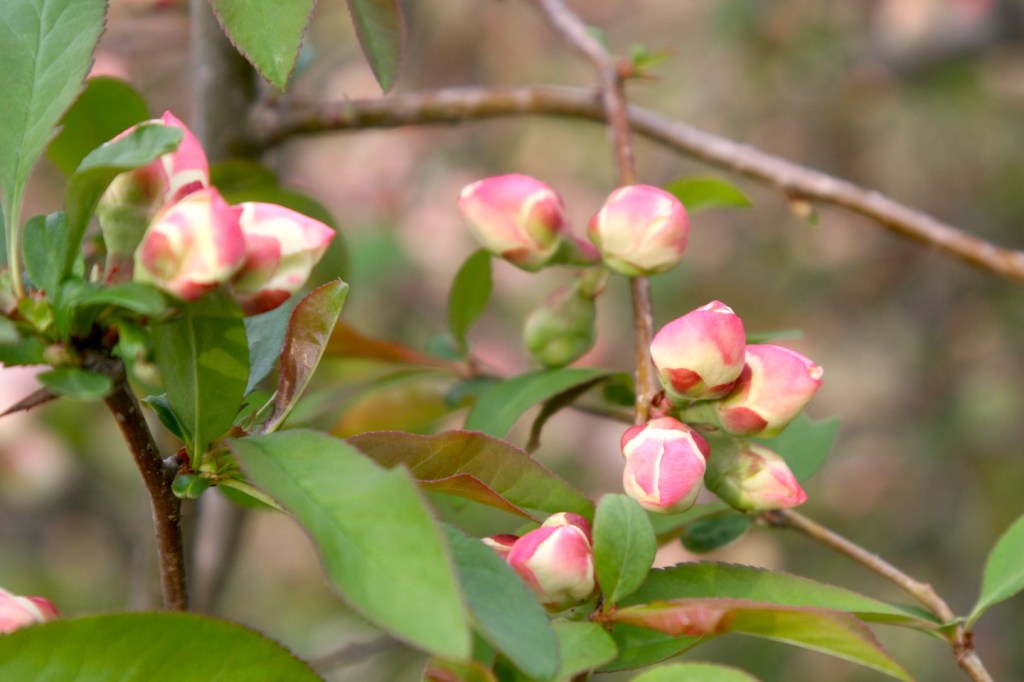
May brings convollaria into bloom

Conferencing, distance

Rather at the last minute, I found out that West Chester University’s Poetry Center was hosting a virtual conference during National Poetry Month. Previous WCU poetry conferences have been in person, and often in June; I used to attend when I had the time and money, since I can drive to West Chester in about an hour. For years, my full-time job has interfered. This time, the fee was low and the panelists and readers were people whose work I enjoy. While I could not attend all of the sessions or enroll in a 3-day workshop, I could at least “zoom in” to many of the events.

I’m glad I did. But before I write about this year’s conference, a brief history of my experience at past WCU Poetry conferences.

Initially, the conference poets focused on formal poetry: writing in forms, meters, and employing rhyme at a time when the major forces in U.S. poetry leaned more toward free verse. Dana Gioia was one of the co-founders, and the conference brought in such writers as Anthony Hecht, David Mason, Rachel Hadas, Marilyn Nelson, Richard Wilbur, Molly Peacock, and Timothy Steele…to name just a few (I haven’t forgotten the others, I just cannot list them all!). If you’re not familiar with them, Google their names and locate some of their poems; their work is considered “formal.” By some. The term itself is rather fraught. I’ll skip that argument for now.

It took considerable bravery on my part to participate in the conference the first time I attended, because I was writing mostly free verse, was not an academic, and was more or less acclimated to being a not-very-ambitious stay-at-home mother. I’d started my MFA program, however, and told my advisor that I wanted to learn the things I’d missed concerning historical patterns of poetry. I loved and grew up with rhymed and metered poems but had no idea how to create them. Hence: the WCU conference, which happened to be near enough that I could get away and back for four days and not have to do too much re-scheduling to accommodate my kids, pets, garden, and spouse.

Frankly, I was intimidated. The poets were all so…accomplished. Most were college professors, many were critics, lots of them had written books–lots of books–and even many of the people attending had won prizes and had significant publications. They were keenly and frighteningly “smart” folks, well-read and well-traveled. But after awhile, I felt more at ease. Sam Gwynn, Molly Peacock, and David Mason were hilarious. Rachel Hadas demonstrated intense and generous listening, and was so kind. And I learned so much (and bought so many books…) that I attended at least four more WCU conferences. Then I got too busy.

The Poetry Center and the conference have changed directorship a few times. For awhile, the late (and wonderful) Kim Bridgford, who later established the Poetry by the Sea Conference, was at the helm; currently, the Center’s guided by Cherise Pollard, who came up with the theme that drove this year’s panels and workshops: The Healing Power of Empathy. Healing and empathy are qualities we need when times are hard and seas are rough. It’s important to remember that healing requires change. It’s a change-state verb. Sometimes those changes feel uncomfortable, painful–and empathy can help, as long as we employ it in an active way (empathy as a change-state).

I managed to draft a sonnet in 15 minutes, thanks to Molly Peacock, and heard some new-to-me voices in poetry, and listened to poets who are deeply engaged in the work and art of poetry discuss their processes, enthuse over their influences, and say what drives their curiosity. I found kindred writers who are, like me, endeavoring to put voice to people with dementia and express the grief we experience as our Best Beloveds lose personality, language, ego-consciousness.

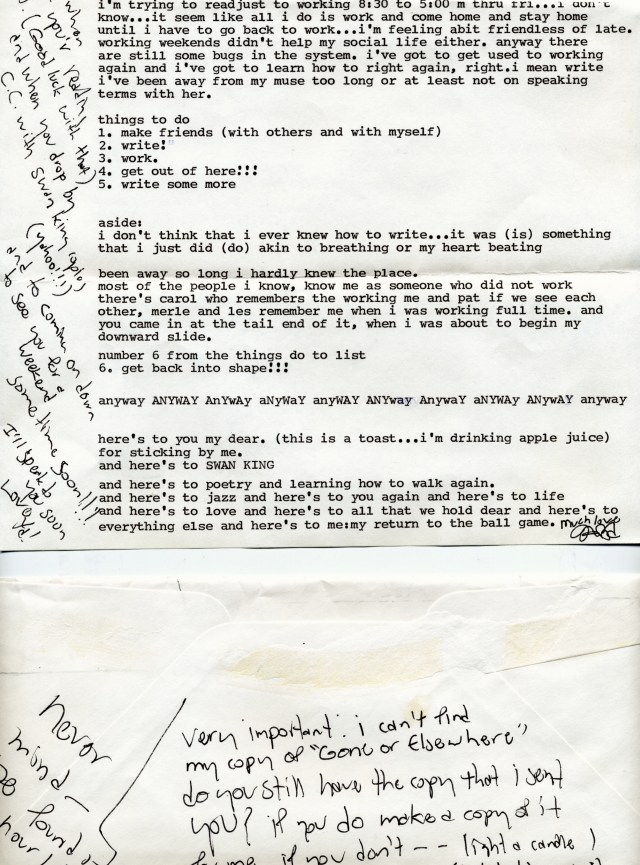
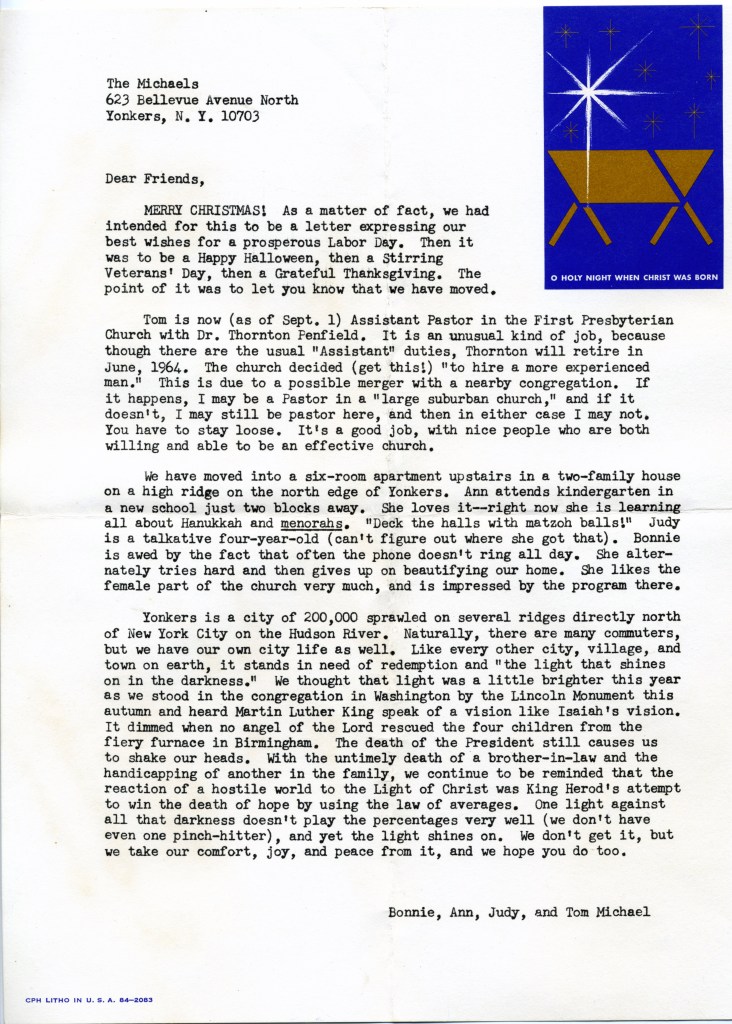
Lesley Wheeler shared the writing prompts her panel put together on her blog, here; she and her four co-panelists (see blog) reflected on feeling across distance, another apropos topic in the current times. It seems we can and do find methods to be human together, even when we are apart. I think of all the letters I wrote when I was in college, and afterward, as I moved around the eastern USA, changed addresses, and tried to keep my friends and family informed as to who I was and what my interests were. In my attic, there are boxes of correspondence written in the days before email. Many of them are now letters from ghosts. Words I will never hear again from living mouths, but a way we kept “in touch” despite, and over, distance. And still do.

Relevance

The virus year has left me questioning the relevance of my poetry practice to the world of literature, such as it is. I have not been sending work to journals. I have not spent much time on revisions nor on going through my work in order to assemble another manuscript (or two).

My father suffered awhile, then died–what can I say? It has been hard to write, especially given the mental challenges of learning a host of new technological platforms and completely redoing my syllabus to adapt to the changed methods of college classroom instruction and tutoring. How does the saying go? “I ain’t as young as I usta be.”

Given that the year has been even more of a media frenzy and social norms chaos than the years preceding it, the word unprecedented has been overtaxed into meaningless syllables; and the word relevance has taken on a sort of socially-annointed value that leaves me certain I have nothing to contribute except more noise. Why bother to write poems? It may be that there are more useful ways I can spend my “senior years.” Reinvent myself as an advocate or mentor in some other field: gardening/environmentalism, education, literacy, hospice care…

Maybe I could just go back to hobbies. Photography, embroidery, sketching and painting, flower arranging, hiking. Or take up some new craft or endeavor. Maybe birding. And am I then somehow engaging in more or less relevant processes?

Garth Greenwell has an essay in a recent Harper‘s, “Making Meaning,” in which he poses questions about the concept of relevance as it relates to art and concludes that he disagrees with “relevance” as a critique criterion, one “that feels entirely foreign…to the real motivations of art.”

If I had a question like that on my mind as I tried to make art, I would never write another word.

Greenwell

These words, to me, are encouraging; while I may not buy into every point of Greenwell’s essay, the fact that someone other than myself (and a better writer than I) wrestles with aspects of relevance confirms my discomfiture as–well, valid? In his case, critics suggesting the less-than-relevance of his fiction are those who think stories about gay men and their sexualities and their stories are too “niche” to be relevant to readers of literature. A far cry from my own form of irrelevance, which is that my poetry is too tame and nature-oriented and dissociated from the suffering, disoriented, unequal, unjust world of human society to be truly relevant to readers. I am no performer, but a writer:

When I consider the subject matter of a work of art, I want to talk; when I consider its form, I want to contemplate.

~

…I do believe in the universal, that some commonness in human experience can be communicated across gulfs of difference, and I believe that art can give us access to it.

Greenwell

The essay is worth reading in its entirety, as some of its assertions deserve discussion. Especially noteworthy is Greenwell’s anecdote about reading and loving Augustine’s Confessions, a text I re-read and still love for many reasons, not one of which is due to religious beliefs. Greenwell says Confessions is still relevant today because of Augustine’s creative and relentless questioning and the ways he expresses his own confusion, “making bewilderment itself a tool for inquiry.” Yes! Among, of course, many other things.

Why do we make art? Maybe just for the challenges it presents, the inward puzzles we invent for ourselves and must solve for ourselves or leave unsolved. I’m looking out my window at snow coming down just now, a wet snow that sits heavily on the pine branches and lends a “clean” look to the surrounding fields and lawns. Relevant takes a prepositional phrase: the snow, the meadows, the hedgerows are relevant to my experience, if to no one else’s; if so, I suppose I compose/make art for myself…and if others find resonance there, the work is done by the reader, or on the reader’s part.

A good definition of art, it seems to me, might be the science of making meaning-making tools.

Greenwell

Complicated distress

My recent reading list borders on the bizarrely unrelated: Helen Macdonald’s essays in Vesper Flights, Malcolm Lowry’s descriptive pastiche of a novel Under the Volcano, and Daniel Defoe’s wandering and curiously relevant A Journal of the Plague Year.

"The best thing for being sad," replied Merlin
..."is to learn something."
                               --T. H. White

Lowry’s book offers a strange escape for those of us preparing for yet another few months of pandemic quarantining. The escape is Mexico, its mountains and villages, its expatriates, world-travelers, drunkards, outsiders. But the characters cannot escape. The Consul cannot be saved from himself, from his tragic upbringing and his betrayals and his alcoholism. The novel’s so sensual and the descriptions so loving that I feel a sense of personal exile everywhere in the text. And I’m learning about Mexican-British politics in the pre-WWII years. It is a sad novel, but a different variety of sadness than the one I carry with me currently.

~

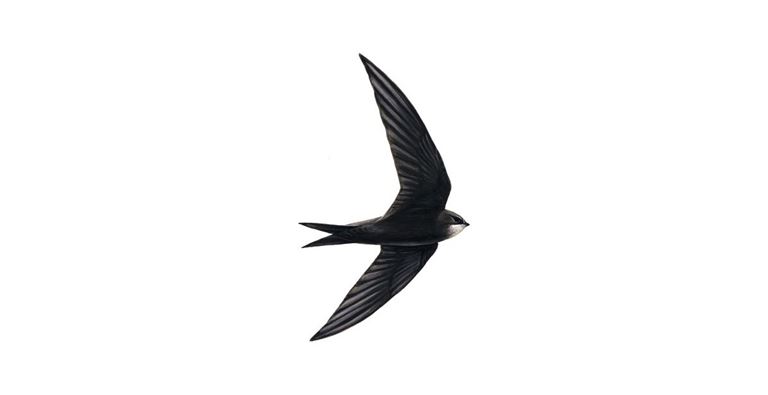
Most birds possess the power of flight, something humans have longed for and envied forever, inventing angels and airplanes to mimic birds. Macdonald’s essay on swifts’ vesper flights describes how the birds rise in flocks up to the top of the convective boundary layer, where the wind flow’s determined not by the landscape but by “the movements of large-scale weather systems.” The Cornell Laboratory of Ornithology (one of my favorite informational sites!) suggests the swifts–not intellectually, but somehow as a group–orient themselves using the many-wrongs principle:

That is, they’re averaging all their individual assessments in order to reach the best navigational decision. If you ‘re in a flock, decisions about what to do next are improved if you exchange information with those around you…Swifts have no voices, but…they can pay attention to what other swifts are doing.”

Helen Macdonald, Vesper Flights

We have voices; and yet we are not, in general, so good as the swifts at paying attention. Perhaps because there are too many voices shouting so loudly that the information gets confused. The sheep-following fashion of thinking goes with whoever’s most noisy, we follow; that way lies error. Paying attention and using a many-wrongs principle means we have to be willing to change course when new information arrives. It requires a certain humility that, let’s face it, most of us lack.

~

While reading Defoe, I am struck by parallels with today’s pandemic. But of course–times change, people don’t. His narrator feels torn–do I leave for the country, or stay in London? Is it wrong to shut people up in plague-touched houses, or safer for the greater number of the population? Is the Mayor making the best choices for the city? When new information about contamination arises, how are the people–as a community–to respond? And what do we do about those people who show total disregard for others? When there are so many responses, for good and ill, to a pandemic of such scope–what choice is best?

What can be said to represent the Misery of these Times, more lively to the Reader, or to give him a more perfect Idea of a complicated Distress?

Defoe, A Journal of the Plague Year

Complicated Distress: a phrase, composed in 1722, relevant today.

Practicing

When I was 15 years old and learning to type on my dad’s old manual typewriter, I decided to write my memories; I was composing memoir before I knew what memoir was, under the influence of fiction (David Copperfield). I lost track long ago of where those pages are, but I do recall that I wrote page after page. What on earth would an adolescent who was raised in loving and non-traumatic circumstances in a middle-class New Jersey suburb have had to say that was worth recording?

I wrote about losing a toy bear, and learning to read; receiving second-hand books with joy, reading voraciously, wondering what it would be like to be an orphan, and feeling terrified of dying. I wrote about the attic of our old house and learning to ride a bicycle. There were other things, too, that I can’t remember now. Generally, mundane and typical 1960s-childhood events–and descriptions galore. It felt important to write down the small details.

Perhaps I should have gone into journalism.

These days I’ve no interest in writing memoir. I have kept a journal since I was ten years old, and that constitutes enough self-indulgent scribbling on its own. I treasure, however, the practice all that writing gave me: practice in constructing sentences, employing vocabulary words, creating metaphors, using punctuation in various ways, expressing abstract ideas and describing concrete objects. Writing, learning to write, critique, and revision have been immensely valuable to me.

I’m not sure who I would be if I hadn’t been constantly writing (and reading). Maybe I’d have been a contemplative.

~~

All of which is to report to my readers, who may be experiencing their own obstacles to their art, that –yes– the writing continues in the face of loss and grief, anxiety, and the work of the body in the world, in the mundane spaces of daily grind and in the wakeful hours, and in the containers of dreamwork and consciousness. Right now, the writing is not “good,” not crafted, aware of itself, ready to speak to others than the self. It is, at present, more akin to what the Buddhists call practice.

Photo by Donald Macauley on Flickr | https://tricy.cl/2DSmsmY

~

Keep working, keep practicing, keep breathing.