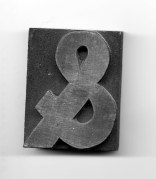
Synthesis & coincidence

&&001“and per se and”

Ah, synthesis! The conjoining and combining of objects, ideas, theories, values and systems, arts, media, experiments, research, disciplines, metaphors, symbols, rhythms, patterns, DNA, et (“&”) cetera.

Synthesis can be planned, hypothesized, purposeful–and it can be spontaneous, unexpected, coincidental. There are times when I feel as though the overlapping and intertwining of experiences seems to have been somehow “planned by the cosmos” (or some higher power); but coincidences occur more often than we think, especially when our consciousness is primed to make connections.

I have primed my own brain, recently, to synthesize thinking about aesthetics, neuroscience, the arts, philosophy and consciousness. So it should not surprise me–though it does!–that the books I have recently been reading connect many threads of my thought, including other recent readings. For example, Martha Reineke’s Intimate Domain: Desire, Trauma, and Mimetic Theory is an exploration of family “romance” in psychoanalytic theory that draws on Freud and Girard; but because Reineke uses Girard’s early writings as her basis, she cites Merleau-Ponty and phenomenology quite often. Furthermore, mirror neurons and the place and operations of consciousness appear in her claims and explorations in this (difficult) text. Mirrors and mimesis, minds and spirits…Gabrielle Starr’s Feeling Beauty, which I’ve mentioned in recent posts, examines the art-body-mind connections in neurological domains and mentions, more than in passing, the phenomenological aspects of the experience we term “art.” Arthur Danto’s The Transfiguration of the Commonplace: A Philosophy of Art (1983, though I read it last month) also wove itself into my thinking as I read Starr’s more current book. In addition (oh, there’s always an “in addition” with synthesis), I am re-reading Csikszentmihalyi’s classic, Flow: The Psychology of Optimal Experience. The states humans experience when we work hard at challenges we enjoy, such as art-making, are deeply connected to our brains and also rooted in our bodies.

So there is a coming-together, a process not unlike chemical bonding, that all of these texts and ideas produce in my mind. This post is one outcome, I suppose. But there will be others.

~

From Carl Sandburg’s “Tentative (First Model) Definitions of Poetry” (1928): “Poetry is the achievement of the synthesis of hyacinths and biscuits.”

387236_10201085579685937_1062169370_n


Books, burning

“Every burned book or house enlightens the world; every suppressed or expunged word reverberates through the earth from side to side.” ~Ralph Waldo Emerson, “Compensation”

I have taken this quote out of context–Emerson wrote this sentence as part of his reflection on compensation: he was questioning the received doctrine of his era that evil-doers flourish on earth and the just do not, therefore Heaven is God’s compensation for the trials of being a Good human being. Emerson did not accept this doctrine out of hand and theorized that, through just laws, people could make compensatory actions operable on the earth. He recognized, too, that sometimes evil people fail to thrive and compassionate, just people manage quite well. The received wisdom was merely received, not wise. Nonetheless, I find “Compensation” essentially dualist. And it is, truly, a sermon.

In the paragraph that contains the above words, Emerson suggests that there is always compensation of some kind for any act, for good or ill, that suppression cannot be maintained–the volcano will surge eventually–that the martyr never dies in vain because from his or her action will arise, in time and through the flaws and the perfections of Nature, some form of (often surprising) compensation. Hmm. Sounds a bit similar to Karma.

~

And I am thinking, again, of books and what they offer. My students tend to consider books as information solely (I do not generally teach the kind of young person who reads novels or philosophy). This is, we have been reminded continually, the Information Age–so that approach to books seems well-founded. Then there are our other means of information-gathering, largely through technological devices. These phones and various screens are mighty distracting and designed to be so. Yes, Fahrenheit 451 was prescient. Does the book-burning in that novel begin a revolution? Not in the predicted ways.

~

More prescient writing (found, by the way, in books): Neil Postman, back in 1985, commenting on the prescience of Orwell’s 1984 and Huxley’s Brave New World in Postman’s must-read cultural criticism, Amusing Ourselves to Death. In his foreword, Postman writes

What Orwell feared were those who would ban books. What Huxley feared was that there would be no reason to ban a book, for there would be no one who wanted to read one. Orwell feared those who would deprive us of information. Huxley feared those who would give us so much that we would be reduced to passivity and egoism. Orwell feared that the truth would be concealed from us. Huxley feared the truth would be drowned in a sea of irrelevance. Orwell feared we would become a captive culture. Huxley feared we would become a trivial culture, preoccupied with some equivalent of the feelies, the orgy porgy, and the centrifugal bumblepuppy. As Huxley remarked in Brave New World Revisited, the civil libertarians and rationalists who are ever on the alert to oppose tyranny “failed to take into account man’s almost infinite appetite for distractions”. In 1984, Huxley added, people are controlled by inflicting pain. In Brave New World, they are controlled by inflicting pleasure. In short, Orwell feared that what we hate will ruin us. Huxley feared that what we love will ruin us.

~

Is there compensation for being drowned in a sea of irrelevance? What might that look like?

~

Perhaps these are a few of the reasons I often need to turn from information to poetry.burning


Maximally bent & broken

bent and broken

bent and broken

The linguist/scholar David Crystal writes that “Poetic language is the domain where linguistic rules are maximally bent and broken.”

The context here (in his book The Stories of English) is an explanation of how historians of language accomplish their sleuthing; Crystal notes carefully the differences between written and spoken versions of the same language, not to mention dialects and artistic expression and diversified diction based upon the intended audience, and uncertainty as to region, origin, and date of the manuscripts and texts under scrutiny. He cautions readers not to take linguistic theories and received stories about language evolution too readily; the story is a multitude of stories, examinable from a variety of disciplines and perspectives. Much of the story is ephemeral, being oral/aural and carried on in dialects. A fascinating puzzle, really, full of lacunae and contradictions…and a reminder that when I am in my teaching role, I should remain mindful that Standard English is something of a misnomer. A living language, as Crystal demonstrates, operates on many levels and evolves concurrently with social, economic, religious, and technological trends.

I fervently agree that poetry offers language new routes of expression, a place to expand, warp, and break rules while managing all the same to convey information. The information may be conveyed in surprising ways, though, non-standard ways: neologisms, compound words, old words used in a new fashion, or as a different part of speech. Poetry is a major arena for this sort of experimentation, though not the only one. Further, I am inclined to follow a non-prescriptivist approach to writing  even though my job at the college is to impart the basic rules of Standard English, a task which (alas) tends to involve judging things as less-than-correct or “in need of improvement” for the sake of clarity and general comprehensibility.

Should I therefore be more tolerant of non-standard use of the apostrophe? I’m not quite ready for that, because the resulting texts are still so frequently confusing. The point of good writing is, most often, to convey information–though that could be argued–

~

Crystal points out that much stereotyping of speech patterns and much arbitrary standardizing (to the degree possible) has been due to our creative writers, and compounded by writers’ love-hate relationships with printers (and, later, editors) who rely upon codification. A widely-literate audience benefits from generalized written standards, he notes–but there’s no need to become “Grammar Nazis” despite human beings’ natural inclination to be conservative and, let’s face it, contentious. He takes a sociological all-embracing stance about English, welcoming changes.

Having read this text, I am of the opinion that ours is another of those linguistically-transformative periods of messy additions and alterations thanks, largely, to technologies and the sciences but also to media and particularly social media. [viz, meme. What an adaptable coinage!] As long as I have been teaching, I have reiterated to my students that I am giving them a code, a tool, Standard Written English; the way they speak or write is not wrong or incorrect. It is simply not clear and standardized enough for academic work. Get the right tool for the job!

~

Crystal lauds Samuel Johnson for his zeal for language and languages and dialects, even as Johnson sought to “stabilize the disorder” of English in the 18th C. The author goes on to insert his view that prescriptive, “correct” approaches to the language “prevented the next ten generations from appreciating the richness of their language’s expressive capabilities, and inculcated an inferiority complex about everyday usage which crushed the linguistic confidence of millions” (not to mention enforced class distinctions even further). I need to remember this balance between clarity and variety. I admit I have been a not infrequent eye-roller at the “sloppy, slangy, abbreviated” English of television, tabloids, Twitter, texting, and my students’ lingo. It is refreshing to think of these annoyances as potentially enriching–rather than degrading–to the language I love to read, speak, and write.

When I read poems, I know there are writers who employ archaic words, dialect words, slang words, colloquial syntax, interrupted syntax, irregular capitalization and punctuation, neologisms, invented compound word-phrases, curses, technology terms, scientific jargon, Latin, Spanish, Spanglish, Chinese, obscure place names, alternate spellings (orthography)…and on and on. Some are looking back; others look ahead. Some are encapsulating the moment–now–in the framework of a verse. They bend and break the language in startling, haunting, beautiful, memorable ways. This they can do because a living language allows them to.

Reading as drug

“…Let us admit that reading with us is just a drug we cannot do without–who of this band does not know the restlessness that attacks him when he has been severed from reading too long, the apprehension and irritability, and the sigh of relief which the sight of a printed page extracts from him?–and so let us be no more vainglorious than the poor slaves of the hypodermic needle or the pint-pot.”  ~ W. Somerset Maugham, “The Book-Bag”

azaleas by Ann E. Michael

In June and July, my situation lets up enough that I am not in my office 40 hours a week and can, for a time, attend to the garden or the hiking trail or avail myself of more time to read. Yesterday, I browsed through the campus library and came away with seven or eight books. How I loved that feeling when I was a child: walking through the stacks, thumbing through card catalogues, picking and choosing, now with deliberation, now with impulse, until I had reached the borrowing limit!

It is, in a way, a kind of addiction, though for the past three decades I have been a bit more studied and less compulsive in my reading habits. A bit. Plants and animals, and the workings and seasons of the garden, are my alternate texts when the printed page is unavailable or my eyes feel tired. Certainly I read on-screen quite often, but that process is not nearly as fulfilling. I have downloaded a book by Deleuze (Difference and Repetition) as a kind of experiment; I’m not at all sure that philosophy will be comfortable to read on screen, but I suspect I might prefer reading philosophy on a computer than reading a novel on a computer.

For me, the worst thing about onscreen reading, as I possess neither laptop nor tablet computer, is the inability to stretch on a lounge chair or curl up on a sofa (or, best of all, in a hammock) while reading. And the pleasant experience of leaf-shadows gently caressing the off-white pages of a paper book, the tone of the paper shifting ever slightly as the light changes, the sensation of dozing off with a book over one’s face when the sun gets hot…book addicts find these aspects as enjoyable as the intellectual response to the material, the words themselves.

Several significant events & celebrations appear on this summer’s horizon, but with any luck I can employ my library cards to good purpose a few more times before the fall semester arrives.


Living metaphor

“There were times when I could not afford to sacrifice the bloom of the present moment to any work, whether of the head or hand.”

~ Thoreau

ann e. michael photo

Socked in by far too many snowstorms,* I’m running out of reading material (haven’t been able to get to the library!). I did get a gift book from a friend and a book in the mail recently, however; blessed relief! As often happens when reading quite different books at the same time, I notice ways they overlap or complement one another.

The gift from a friend is Jon Kabat-Zinn’s Wherever You Go, There You Are, a poetic companion to his 1990 book on mindfulness as healing, Full Catastrophe Living. Kabat-Zinn uses Thoreau’s “bloom of the present moment” as a section head and metaphor for mindfulness practice, and it serves exceedingly well in that capacity. This is not a text to read in one sitting or to move through rapidly–or even chronologically. It offers space for the mind, space for reflection and, indeed, for the kind of ’emptiness’ that waits patiently, observing the present moment. Not the ghastly, desperate emptiness of numbness or depression, but the Zen vessel of the now.

Vessel. Space. Bloom. Each of these metaphorical, analogous, a way of indicating connections between or likenesses to or relationships with. The richness of language and the incredible stickiness of its concepts form the basis of Lakoff and Johnson’s seminal 1980 examination of how human beings use language–specifically metaphor–in the book Metaphors We Live By. A significant section of the first 4 chapters appears here, if you want a taste of how the authors set out their investigation; but I recommend the entire book, the 2003 edition of which contains an insightful afterward by the authors that incorporates some material on neurology and other things not available to them in the 1970s.

~

* From the Express-Times of Easton: “The Lehigh Valley has gotten 66.7 inches of snow so far this season. Meteorologists agree this storm might not push the snowfall totals to break the seasonal record of 75.2 inches from 1993-94, but there’s still a chance to top the total this winter in the first couple weeks of March, they said.”

Autodidact as adult student: Goddard & me

In a previous post, I mentioned my peculiar undergraduate experiences at alternative institutes of higher education (The New School) and how being a book-loving autodidact influenced, perhaps even configured, my approach to education. My favored learning strategies led me to a non-traditional graduate school program, as well. Reflecting upon my higher education, I realize that every institution I attended chose alternatives to standard pedagogy–and I am grateful that such colleges exist. The world needs outliers.

A kind of heaven.

The New School’s pedagogy for the “Freshman Year Program” was seminar-based. That worked very well for me. Classes were small, discussion-centered, predicated on the reading of significant original texts–no textbooks. The professor was not a lecturer but a participant-coach and mentor.

The program was only a year long, however, so I had to transfer. There were a number of experimental college programs in the 1960s and 1970s; without the miracle of internet searching, however, they were not easy to locate. I did not find out about St. John’s College, Reed, or Evergreen, for example. I stumbled instead upon Thomas Jefferson College (now defunct) in Michigan.

I completed my undergraduate studies without ever seeing a syllabus. Yet I read more books than the majority of my standard-pedagogy-educated peers and discussed classic and contemporary texts, science and history and literature, in depth with my peers and with scholars. I wrote a lot and did hands-on projects, independent studies, experiments and interviews. TJC drew criticism for its ‘flakiness’ and ‘lack of oversight,’ (some of which, I can attest, was deserved); however, the former college president “described TJC as perhaps too far from the mainstream, but attracting excellent students, noting that ‘Thomas Jefferson College…was sending a larger percentage to graduate school than the College of Arts and Sciences.'” Yes, but in my case it took awhile to get there.

Much water under the proverbial bridge: suffice it to say that in 2000, I returned to college to pursue a masters degree…and I wanted to learn in the kind of environment that suited my style. There were other factors then, as well: two children, for example, and responsibilities I had not encountered as an undergrad. On the other hand, by 2000 I was an adult and more motivated and disciplined than I could ever have been at age 19.

I chose Goddard College for a number of reasons, foremost its small seminar-style instruction, its mix of workshops and instruction, its focus on readings, annotations, mentoring, and community-building among students and faculty–reaching outward into the world at large. The low-residency format only works if the student is independent and self-directed, which–as a returning, “adult” student–I certainly was. I appreciated the school’s more interdisciplinary approach to the creative writing program. We didn’t have to face off, pegging ourselves as poets or fiction writers. And creative non-fiction was taken seriously as a genre to develop voice, style, and depth…it could be studied and parsed. That endeavor of interdisciplinary arts education is true of a few institutions now but was rather new among MFA programs in the late 1990s.

Another college without core requirements, without syllabi, without standard formats. But, like New School and TJC, Goddard offers excellent professors dedicated to students’ intellectual enrichment and personal transformation, small-group discussions, and narrative evaluations. I knew how to balance life’s responsibilities when I enrolled, and I knew what kind of teaching I’d respond best to. How did I learn that? See above. Suits my philosophical, bookwormish, autodidactic approach to–well, practically everything!

Consciousness & cosmology

"Syntax" by Steve Tobin. Copper, bronze.

“Syntax” by Steve Tobin. Copper, bronze. What can be said about all the things we think make up an “I”?

~

I’ve completed I Am a Strange Loop and Why Does the World Exist? and found, not entirely to my surprise (but to my delight–braiding and synthesis!), that the existential, metaphysical, and cosmological aspects of both authors connect intriguingly. Thomas Nagel, an important “philosopher of mind,” appears as an influence in both of these writers’ books, and Einstein and Plato and Heidegger. Both authors end up citing Derek Parfit’s work, and Holt even interviews him! It turns out that trying to determine the “reason” the world exists at all is not that different from trying to understand what consciousness is made of and where it resides.

After taking up mathematical proofs and several philosophical arguments, as well as neurological science as a basis for the evolution of “mind,” Hofstadter’s book gradually takes apart the mind-body problem that Descartes made so iconic for Western civilization’s thinkers. He keeps returning–and that’s an appropriate word–to the metaphor of looping. He looks at the strange loops of Escher’s drawings and of string theorists’ rolled-up dimensions and alerts us to how crucial the concept of self-reference is to the theory of consciousness.

The need for self-referentiality in a fully “human” consciousness gets him to the idea of “small-souledness” (among, say, such beings as mosquitoes). What portion of our selves makes us able to think about thinking, for example? Is that identity, or consciousness? What’s the difference? Here is where Parfit comes in. Hofstadter writes that Parfit “staunchly resists the idea that the concept of ‘personal identity’ makes sense. To be sure, it makes sense in the everyday world we inhabit…we all more or less take for granted this notion of ‘Cartesian Ego’ in our daily lives; it is built into our common sense, into our languages, and into our cultural backgrounds.”

~

If we care at all about what there may be beyond our everyday lives–and certainly people like Hofstadter, Holt, Bachelard, and me, among others, do care–we need to get “meta” in our meditations, which invariably leads to paradoxes and thorny tangles. Hofstadter’s book also engages with his ‘personal life’ (if, indeed, a personal identity or personal life exists). When his wife died, he found himself engaged in the seemingly unanswerable question of “Where did Carol go?” Did “Doug-and-Carol,” the shared dreams and lives and understandings of two people who knew one another intimately, simply vanish when Carol’s body died? Hofstadter cannot fathom that this shared identity “goes poof” when the body stops. He, after all, still feels connected to the Doug-and-Carol shared consciousness.

It feels real to him. So–what is consciousness? From whence does it emanate, or originate? Is it real, or is it an illusion–is there no such thing as the personal identity we hold so dear that we cannot even imagine ourselves any other way than as an “I”? (Are feelings real?)

~

Jim Holt’s book likewise gets more personal as the chapters progress and as he wrestles with his existential inquiry through texts and interviews. That seems quite appropriate: how can we use language to untangle what language itself makes vague and confusing? (See Tobin’s sculpture “Syntax,” above, for a physical view of loopy entanglement and potential words). Holt’s inquiry initially seems based on the abstract, mathematical, physics of why/how the universe got here; but he ends on the metaphysical and philosophical…whereas Hofstadter entertains the metaphysical from the get-go but employs mathematics, psychology, and brain physiology as well as philosophy. And they encounter similar quandaries, paradoxes, and uncertainties. Both authors essentially come to a similar conclusion about the mystery of existence, though they accept or compromise with their conclusions in slightly different ways. Then again, they are different people who have lived different experiences. Reading both books has been, for me, a valuable experience and one that’s made me examine my own thinking about being.

~

Apropos of these musings, and thanks again to Popova of Brainpickings, here’s a few more words on some contemporary thinkers who have theorized as Holt has (in particular, Lawrence Kraus) in the debate on Something vs. Nothing: “What is Nothing”

~

…And, apropos of nothing in this post, but to lighten the mood, here’s an amusing little blog from The New Yorker about pilcrows & pound signs & ampersands.

Ontologies and inquiries

{ ? }


This week, amidst the whirl of returning students, I have accidentally paired my reading of Douglas Hofstadter’s book I Am a Strange Loop with Jim Holt’s Why Does the World Exist?

How did all of this get started? In the most concrete and specific scenario, I had been slowly savoring Hofstadter–and, let’s face it, trying to “get” the math he occasionally employs–and happened across a copy of Holt’s book, which is a faster read, when I didn’t have Strange Loop to hand. Next thing I know, I’m deep into both texts which, naturally, overlap in several ways. Now, I find myself pondering the beginnings of abstract things like consciousness, which may not be abstract if you think along the lines of E. O. Wilson but which Hofstadter suggests exists as both a top-level abstract “thing” that pushes around its foundational, physical “things” such as synapses, neurons, molecules. And I think about Descartes and the mind-body problem and, oh, while I’m at it, the Big Bang theory and the “what was there before the big bang?” question.

Holt’s book turns to the metaphysical inquiry, “Why is there something instead of nothing?” It’s a question I asked myself when I was about 6 years old. Hofstadter deals mostly with the (perhaps metaphysical) concern: “What is consciousness?” That’s a question I asked a bit later in life, though certainly I asked it before I was in my twenties.

Both authors employ philosophy and math in the service of trying to make sense of these inquiries; and while Holt’s investigation is a bit more physical-cosmological in nature, it may not be necessarily so–lots of the theories floating around out there sound pretty metaphysical to me! Hofstadter employs many analogies, as is his wont (see, in particular, his 1979 book Gödel, Escher, Bach). Hofstadter also gets a bit more into neurology, of course–we are talking about consciousness, after all, and it may reside in our brains–and slightly into the arena of psychology. Holt takes a more journalistic approach, using interviews and readings to cite past and current thinking on the topic of existence. The subtitle of his book is “An Existential Detective Story.”

So far, I enjoy both books, though they differ in significant respects.

Meanwhile, at work I am mainly dealing with adjusting-to-updated-software issues and helping-students-with-advising questions and explaining drop-add and pass-fail and comp-rhet and the difference between Elementary Spanish I and II. Keeps my brain flexible and gets those neurons firing. {Right??}

I haven’t finished reading either book yet. I may have more to say about the synthesis of these two books after I’ve let my brain settle down.

Paz and poetic image

“The image is the key to the human condition.”

“Poetry is entry into being.”  ~Octavio Paz

All quotes in text below are from Paz, The Bow and the Lyre

~

Octavio Paz says all great works of art arouse in the spectator (or listener) “constellations of images” which “turn all works of art into poems.” In addition, what we find in the poem is something we already have within ourselves; we could not encounter it otherwise. What would that something within ourselves be? What do all of us possess in common, unique as we are? Paz doesn’t opt for a concept such as “soul” or “spirit” to define what all humans possess within ourselves. His answer is more mysterious but I think more accurate… “Poetry is nothing but time, rhythm perpetually creative.”

Some of us may protest we are not “creative.” But creative in this sense doesn’t mean that one has the ability to create art. It means one has the ability to create the imagined sensation, emotion, or context. All of us do this: the human concept of time, for example, takes considerable imagination–yet we all seem to have an understanding of time in our daily lives, even if our individual perceptions, or cultural perceptions, of time may vary a good deal. Give that idea of time, whatever it may be, a rhythm fueled by “rhythm as transformative change,” and perhaps that would be the origin of art. To encounter and be changed can only occur when something unexpected occurs through the experience.

~

“The image shocks because it defies the principle of contradiction: the heavy is the light. When it enunciates the identity of opposites, it attacks the foundations of our thinking. Therefore, the poem does not say what is, but what could be.”

“Since Parmenides our [Western] world has been the world of the clear and trenchant distinction between what is and what is not…Mysticism and poetry have thus lived a subsidiary, clandestine and diminished life. [As a result] man is in exile from the cosmic flux and from himself.”

(Here, I might suggest that Whitman made a significant attempt to bring those distinctions down.)

~books

Heidegger was still alive and writing when Paz was composing these essays, and Paz suggests that Heidegger had been no more able to reconcile the fact that “Western metaphysics ends in a solipsism” than were Husserl or Heraclitus. Paz adds: “Now, as some of his [Heidegger’s] writings show, he has turned to poetry,” and claims that “in losing our way in the world we have become estranged from ourselves. We have to begin again.”

And how to do so–except via image/imagination?

~

Well, we might examine Eastern thought, which “has not suffered this horror of the ‘other,’ of what is and is not at the same time…in the most ancient Upanishad the principle of the identity of opposites is plainly stated… ‘That art Thou.'”

Image as opposition, reconciled and unreconciled, inferred and stated, heavy and light: “of itself, language is an infinite possibility of meanings.”

This may be why writing good how-to instructions is as challenging as writing good poems. Yet according to Paz, “There are many ways to say the same thing in prose; there is only one in poetry.” Which brings us to a lovely seeming-paradox with which I will end this post:

“The poetic experience cannot be reduced to the word and, nevertheless, only the word expresses it. The image reconciles opposites, but this reconciliation cannot be explained by words…thus, the image is a desperate measure against the silence that invades us each time we try to express the terrible experience of that which surrounds us and ourselves. The poem is language in tension.”

(I might add that Emily Dickinson’s work provides excellent examples of the above.)

Proofreading

Every Living Thing–The Life & Times of a Glasgow Vet Student has a cute anecdote regarding the value of careful proofreading and how small mistakes can be inconvenient and costly at the customs line. Who thinks to proofread a passport or visa? Well…

Proofreading is how I began my so-called career many years ago, and the habits I learned follow or perhaps plague me still. For example, I’m currently reading Hilary Mantel’s 1992 novel A Place of Greater Safety and finding the text riddled with typos. The most common error is a missed quotation mark–not surprising because Mantel takes a unique approach to setting  up dialogue. But it’s dismaying to find that a major publisher allowed so many mistakes to slip through, and it interrupts my reading pleasure.

Years ago, I saw Edna O’Brien reading at the 92nd Street Y in New York City. She read from one of her short story collections, and at one point she paused, adjusted her reading glasses, and stated: “Typographical error, Farrar, Straus, Giroux.” Called out on the podium, publishers!

Online sites host the largest number of typos and outright grammatical or mechanical mistakes, but paper texts aren’t as reliably correct as they once were. The New York Times has become quite lax lately; three months ago, I even found a typo in The New Yorker!

Proofreading services

I understand why there are so many more typos these days–there are so many fewer proofreaders. It gets expensive, hiring all those human beings to inspect the small details of every text, and publishers are not making as much money as they once did. How many picky readers like me exist? Probably not enough of us that we could stage a book-buying boycott demanding that Random House hire more proofreaders (people like me could never really stage such a boycott–we’re too addicted to books).

Computers, however, are not yet intelligent enough to catch the shimmery, shifting nuances of the English language and its attendant finery in the shape of punctuation and capitalization, footnoting and italicization. So there will be mistakes, and I guess I can live with that. “To err is human,” and all that. And Mantel is a fine writer.