Beatrix Potter, interdisciplinary artist

Beatrix Potter came to mind yesterday when I watched a young rabbit struggle into a fix as it tried to escape from me through the newly-reinforced fencing. It had gotten in at a spot we left open after some hours of work on a hot day yesterday, but it could not locate the open span when I cornered it among my beans.rabbit-014

In “The Tale of Peter Rabbit,” Potter writes: “Peter was most dreadfully frightened; he rushed all over the garden, for he had forgotten the way back to the gate…he ran on four legs and went faster, so that I think he might have got away altogether if he had not unfortunately run into a gooseberry net…”

Very observant description of cornered-bunny behavior. I felt rather sorry for the bunny in my vegetable patch. It had squeezed itself between a gap and then found itself impressed against chicken wire, and for a few seconds there was a mash-up of fur, feet, and fencing in a whir of sheer panic. The rabbit freed itself, however, with an acrobatic twist through a gap, ran back into the garden; and after a few false tries, finally located an unreinforced section of the garden fence and escaped toward the hedgerow.

~

Potter was an admirable writer of engaging prose, a terrific watercolorist and an amateur mycologist whose careful observations of the plants and animals in her Lakes District farm environs still draw admirers to her work. I think of her as a kind of turn-of-the-century interdisciplinary artist, though I cannot imagine she would ever perceive of herself in that light. She might agree that she was an excellent observer of the world–a quality that benefits scientists, artists, writers, journalists, and farmers. If all you think of when you see her name is “children’s books,” go to the Beatrix Potter Society’s website and learn how much you did not know about her.


At sundown

The disintegrating physical and mental situation of an elderly best-beloved recently has led me back (after a brief pause) to readings in neurology and consciousness. It has also led me to reflect on the tasks memory accomplishes for us and how the need to tell a story seems to reside deep in whatever “makes us human.” Many poems, perhaps most of them, are “inspired” by memories and a need to tell. So I will indulge myself by giving a narration here, and perhaps poems will follow later.

paintdaub copy

The best-beloved has been in and out of hospitals, rehabilitation centers, and so-called independent living placement and appears to have developed a very common but not-commonly-talked-about cognitive disarray, or hospital-induced delirium, that medical personnel call “sundowning” when it occurs in Alzheimer’s patients. But my patient does not have Alzheimer’s disease. Her meshing of realities must have been triggered by something else, but the possible factors are many. We may never figure out what it was that pitched her into delusion and lack of compassion, turning her into a person we barely know.

She took good care of her body. At 90, her physical self is in better shape than many people 20 years her junior. Her brain–and hence, her mind–has not stayed as healthy as the rest of her. Several small strokes deep in her brain began to alter not just her gait but her personal focus. Long years of hearing loss no doubt altered how her brain processes input. The reading I have been doing (most recently Carr’s The Shallows, Sacks’ On the Move, and Damasio’s Looking for Spinoza) indicates that the human brain is “plastic” but not necessarily “elastic.” It can modify in response to damage or training, but that does not mean it will spring back to the way it was before. In extreme old age, the process of adaptation slows. The brain becomes less resilient. For reasons no one really understands–a host of possible culprits includes hormones, glutamates, serotonin production, medicines, genetic predispositions, and environmental factors among others (a perfect storm…)–persons who have been sharp and cogent may suddenly experience delusions, often leading to paranoia, confusion, loss of affect, lack of social filters, violent and contrary behavior.

And we ask, “What happened to the soul I love?”

alice-heart1 copy

If we believe in souls, we have faith that somewhere under the changeling is the best-beloved. In flashes, she may return to us. If we believe that the brain is the person, the transition from best-beloved to aggressive complainer is harder to accept. Damasio seems to believe the brain is the person. I find it hard to agree with him fully, though I have been learning a lot about neurology in the process.

Metaphors or analogies for the situation seldom seem, to me, quite to capture the wrenching feeling I have when encountering sundowning. The idea of disintegration seems inappropriate in this case, because she recalls who we are and her mind is not collapsing so much as morphing in unaccountable ways. Threads unraveling? No, not really; the metaphor of a quilt coming undone, maybe, or an intricately-woven tapestry shredded apart–but that’s far too simplistic.

Think of the mind: it encompasses the brain with its regions for motor, somatosensory, auditory, and visual processing; the body, which takes in those physically-produced inputs; memories; thoughts; feelings, which are thoughts spurred by emotions; and a host of complex inter-relationships we cannot even begin to map. Somewhere in all of this is the person, the “self.” At least, as far as we have so far been able to speculate (though not everyone agrees; see my post on Hofstadter & Parfit. Parfit suggests personal identity is an invalid construct).

Perhaps an environmental analogy would suffice, being complex enough for comparison. She is the planet Earth, aging and adaptable, but not endlessly adaptable; her healthy balance has been thrown off by things she may not have had any control over. In whole regions, she becomes inhospitable. Poisoned. Dry. Hot. Overrun with invasives. She seems not to like us anymore, but that is not what’s going on at all. In fact, she’s dying.

Maybe that’s taking the metaphor too far. But in difficult times, one reaches far. There is hope she may recover at least some of her Self, and in the meantime, we have stories in which she plays a role. Mnemosyne–awaken in the consciousness of those who know her. Telling the stories is a step toward letting go.


Diversity of form

“Diversity” is a buzz word among educational institutions these days, and I sometimes get a bit tired of hearing it. Diversity as a buzz word becomes like a dead metaphor; we stop thinking about what it means.

Yet when I am reading about biology or evolution, “diversity” flowers into meaning again.253142_2101392498695_2412222_n

Also, after the reading I recently gave, a thoughtful member of the audience remarked upon how literal and concrete the poems in my first book are–especially compared with some of the more speculative and abstract poems I read in response to the “questioning” theme.

Has my writing become less concrete over the years, I wondered. The response is yes and no. In some respects, my poems convey specific and concrete images and actually-possible events, but a mixing tends to occur between & among the lines. Even in that first book: it is, in fact, about building a house. (Concrete was involved!) As I composed the poems that make up the book, however, I realized how metaphorical the whole idea of house, home, hearth, shelter is. Think of the imagery of a house and ingrained, almost mythical connotations arise. The window. The door. The key. The roof. The rooms (stanza means “room” –even the poem offers shelter).

So back to diversity–there is, in the world of poetry and poetics, diversity of form, just as in biology. There are “set forms” such as the sonnet, which turns out not to be quite as “set” as might be expected (see this entry at The Academy of American Poets and this one by Rachel Richardson at the Poetry Foundation). I love diversity of form and have experimented throughout my life with different strategies of written expression, sometimes sound-based or rhythm-based or image-based or codified by the “rules.” I have also broken the rules just for fun, often to good effect. Free verse, metrical verse, alliteration, allusions, puns…I love them all.

The downside of such play, if this can be considered a downside, is that winging it the way I do–as to formal approaches–means that my collected work does not fit a style. I wonder if that is why my second full-length collection languishes unpublished. It’s entirely possible that the poems in The Red Queen Hypothesis are not very good poems. Critical feedback has suggested that isn’t the problem, though (whew!). The problem may be diversity! Publishers, like most human beings, love to categorize. What does not nestle into categories becomes the odd duck.

http://asymptotia.com/wp-images/2009/10/odd_duck.jpg

odd duck

The reason I chose these poems for this collection, however, has much to do with varieties. The poems deal with the abstract and the biological, the cosmological and the everyday. They stem from a notion that life evolves continuously, making each object and being individual as part of an ever-changing, meshing, chaotic and– paradoxically, but of course!–unified universe. Uni (one). Verse (a pun). The underpinning of The Red Queen Hypothesis is diversity, though that may not be its theme.

So I am not planning to revise the already-much-revised collection; I’ll just persist in sending it out to publishers while hope springs eternal. In the meantime, I have been pondering where the next set of poems is headed. Possibly along the edges. It will be interesting to find out.

Doubt

The prompt of questioning, and recent reading on ethics, have led me to pose for myself a framework for poems that walk between the abstract (ideas, values, philosophies) and the more concrete, pragmatic phenomena in my life (ethics, gardens, weeds, human beings). I find myself thinking again about edges, about fringes, hedgerows, the between-spaces.

That happens to be where doubt arises, too–when we feel in-between, on the edge, and in all likelihood, uncertain.

Fanny Howe, excerpt from “Doubt”

While a whole change in discourse is a sign of conversion, the alteration of a single word only signals a kind of doubt about the value of the surrounding words.

Poets tend to hover over words in this troubled state of mind. What holds them poised in this position is the occasional eruption of happiness.

While we would all like to know if the individual person is a phenomenon either culturally or spiritually conceived and why everyone doesn’t kill everyone else, including themselves, since they can— poets act out the problem with their words.*

Acting out problems and doubts in words. Yes, that directive works for poetry as I understand it. Theater, a related art, allows an acting out of conflicts employing a method that keeps us from killing ourselves and each other. The same may be said for any art; perhaps even our development of a philosophy of aesthetics offers the possibility of acting out.

And there is always room for doubt, as doubt has a way of making room in us and among us. The alteration of a single word–from you to them, from proper to prosper, from hie to high: in student writing, these are generally spelling errors; in the work of a thoughtful poet, they may signal a change in viewpoint, a pun that twists the initial intention, a turn in the poem’s story or rhetoric, a region of ambiguity. Howe wrestles with doubt and celebrates it:

“Doubt is what allows a single gesture to have a heart.”

overgrown

Edges. The meadow’s just beyond.

Any single gesture. The prayer hands, the bow, the outstretched arm, the Mona Lisa’s smile, the inked line, the poem.

The trapeze artist who walks along a genuine edge, balanced.

Doubt may live deep in the center of everything, but it is hidden there. Along the fringe of things, where the meadow and the forest meet, doubts are much more visible and less harmful.

What we learn along the edge we can take with us into the deeps: our doubts and ambiguities go with us, a kind of enrichment we might learn to accept instead of resent, if we are poets. The troubled state of mind persists, but “the occasional eruption of happiness” keeps the balanced hovering possible.

That eruption of happiness? I am familiar with it. Sometimes, when I’m working on a poem, I feel like a kite in an inconstant wind.

~


*Howe, Fanny.  Gone : Poems. Berkeley: University of California Press, 2003. 

The ethicist & the healer

The “Morbid Book Group” recently read John Lantos’ book on ethical issues in Neonatal Intensive Care Units (NICUs), The Lazarus Case. As one of our members is a pediatric physician, one is a NICU nurse, another a hospital social worker, and another a former obstetrics nurse–we had quite a bit at stake when discussing this book, and quite a few different perspectives. Add to the mix my armchair-philosopher and educator point of view and all the questions a non-medical person has to ask to clarify the issues, and we spent the evening in lively and often challenging discussion.

Lantos tells his readers that medical ethics questions are not really answerable. They depend too much on cases, contexts, and–whether we like it or not–economic situations. An example: Until third-party payer systems are dismantled or significantly changed, confirms the doctor in our book group, NICUs will continue to be profit centers in addition to places where terrifyingly premature babies are saved, or not saved, not so much by technology as by individual circumstance over which doctors and nurses have less control than the parents of these neonatal patients may think.

The NICU nurse told us that Lantos’ book made her question her vocation. One of his observations is that NICUs have become the profit-hub of many hospitals in the USA; then, he asks tough ethical questions about “viability” and “pain and suffering.” The nurse says she sees these babies suffering and feels that too often, the suffering is prolonged when the baby is clearly unlikely to survive–prolonged because the parents cannot let go and the technology promises miracles that only occasionally occur. The doctor in our group gave us her point of view, which many of us found a bit too “scientific”–but that’s how doctors are trained, as she reminded us, while acknowledging heartily that doctors need more real-life experience in compassion, listening, and psychology than they receive in med school or as interns.

tulip

These are the sorts of circumstances that lead us to philosophy. Lantos writes: “Moral reflection begins with a particular type of suffering,” when we are faced not with abstract ethical dilemmas but genuine, frightening, life-altering situations. Lantos argues that doctors must not be “passive vessels” dispensing adrenaline, oxygen, delivering technology to a human being whose individuality the physician may not even notice in those crucial moments. He does not deny that there is value in the dissociated emergency response protocol, when the doctor’s training takes over and pulls the person acting away from emotion.

There is a “but,” however. Lantos says there are times when the healer is the medicine, when trust in the doctor, and the doctor’s willingness to take time to listen to the  patient, can “create a moral framework for dealing with the limitations of being human, of getting sick, suffering, weakening, dying,” when it is understood that the patient might die while under the healer’s compassionate care, and there need be no blame.

How do we get our society there?

“We make changes in medicine the way we make changes anywhere,” says our book-group doctor. “All of you are asking me very hard questions. I don’t have answers to all of them, and you may not agree with my answers or my rationale. And that’s great! Medicine needs to be challenged. There is no way for the medical industry–and it is an industry–to grow in a more positive way if patients and their families, ethicists, and even the damned lawyers remind us that behind the technology is always, always, a singular human being…it ain’t just a science. It’s an art.”

Doctors do need to be educated in the humanities, we agreed, and to spend more time learning about culture and psychology through experiences that develop compassion. Patients need to learn to ask more specifically for that kind of response, and to let hospital administrators understand how often it is lacking. Most of all, we need not to shy from asking the Hard Questions, those life-and-death ethics questions. Not for the sake of answers, but for the sake of discourse and understanding.

If you want a breezy article about how to go about the process of talking about what we fear and wonder at, here’s an article from HuffPost. A reply to Lantos’ critique of NICUs from Jonathan Muraskas and Kayhan Parsi is here.


Poetry Month & Simic’s prose

I have read and enjoyed a great deal of Charles Simic‘s poetry over the years. How did I miss his prose?

I just picked up The Life of Images (2015) and find myself delighted indeed. This book makes a wonderful read for National Poetry Month, despite its subtitle “Selected Prose,” because so many of the pieces in this collection are about poetry or act as prose poems–a form Simic is well-known for.

Every other paragraph or so I find myself wanting to write down a glorious sentence, or a quote I should share with my poetry students, or a concise description that fits perfectly, such as Simic’s observation about Buster Keaton‘s persona in his silent movies: “Bedeviled by endless obstacles, Buster is your average slow-thinking fellow, seeking a hidden logic in an illogical world.”

9780062364715.jpg

Being of a philosophical bent myself, I was thrilled to read and then re-read “Notes on Poetry and Philosophy,” with its foundation of Heidegger and Simic’s sly and humorous references to Hegel, Schroedinger, Shakespeare, Dickinson, Whitman and others. That essay is really a series of prose poems that resemble philosophical puzzles and paradoxes.

His essays here often focus on visual art, as well. Movies, paintings, photographs. The image as metaphor.

“The poet is at the mercy of his metaphors. Everything is at the mercy of the poet’s metaphors, even Language, who is their Lord and master.” Ah, yes. One of many paradoxes surrounding the practice and theory of poetry:

“Everything would be simple if we could will our metaphors. We cannot…It took me years to admit that the poem is smarter than I am. Now I go where it wants me to go.”

“Metaphor is a part of the not-knowing aspect of art, and yet I’m firmly convinced that it is the supreme way of searching for truth.”

~

The usual progression of spring unfurls and blossoms around me, a bounty of images, thank goodness, and Simic has me mulling over my metaphors again.


Connected

Jonathan Franzen’s The Corrections revolves in part around a family’s interconnected–and expanding–circles of influence (of harm, mostly, but also of steps toward healing) as the “patriarch” begins to lose his health and independence. It’s a depressingly familiar scenario for many of us who have aged parents. I often hear anecdotes from friends and colleagues about how an elderly parent’s decline tears apart family connections and lately have been living the problem a bit more close at hand.

So I am mulling about how we are interconnected, and also about how we decide to narrate our connections: the stories we tell ourselves, the stories we tell others. That’s the poet/observer in me mulling; but I also want to find out more about the psychological side of the equation, so I recently read Christakis’ and Fowler’s book Connected: The Surprising Power of Our Social Networks and How They Shape Our Lives, which takes a social-science and statistical look at what connects human beings to other human beings. 330px-Broad_chain_closeup

Writers are often our keenest social observers, and as it happens, Hungarian poet and writer Frigyes Karinthy wrote a story (“Chains”) that more or less posited the six degrees of separation theory back in 1929. Franzen’s novels tend to explore how even seemingly-minor disruptive or dysfunctional human relationships create butterfly-effect chaos among those connected to it–even among people not closely connected to the ‘disrupter.’

Christakis and Fowler examine much more than the six-degrees theory, such as how those human connections build themselves into social cascades, cultural norms, support systems, clans, families, political parties, and economic outcomes. On the one hand, these claims seem obvious: of course our relationships are based upon shared connections, and of course those relationships have impacts upon our lives. We know this intuitively, but now scientists want to give us proof.

Stuart Kauffman’s book At Home in the Universe offers “hard science” studies (though based upon theoretical computer- or math-based simulations) in physics and biology that suggest random disturbances, or chaos, can create chain or even lattice-like behavior. He suggests that if molecules or genes behave the way the simulations do, the cosmos may continually undergo a sort of self-organization that leads to forming connections.

Hence: life. Or life as we experience it. In which small differences in initial conditions can be amplified into transformational events that do not affect anyone in exactly the same way.

That’s more or less the butterfly effect, but it could not happen in social situations among human beings if we were not so interconnected or interdependent. Social beings require other social beings as support systems: that’s how humans work (with, naturally, the occasional outlier).

butterflyOur poets, playwrights, and our fiction writers–the narrators of human existence–understand isolation and community in non-scientific but no less valuable and authentic ways. They have been telling us for thousands of years the many ways we are connected.

Maybe what the scientists should do next is read hundreds of years of great literature as evidence of how social networks shape our lives. Science can learn as much from the humanities as the humanities have learned from scientists…

What we, as observant human beings in a chaotic world, intuitively understand.


Landscape, personal place

I’ve been enjoying Rachel Solnit’s prose lately, most recently her book As Eve Said to the Serpent, some of which derives from art criticism but which is also the kind of multidisciplinary approach to observing the relationships between things that intrigues me. What she notices about the environment, about art that engages with or alters place/landscape, and about environmentalists themselves piques my own inquisitiveness and gets me asking questions I might not otherwise have come up with. Place, particularly the personal “environment” that shelters, inspires, or calms me, is something I consider frequently.

31281_1488041725309_1074892_n

[one of my happy places]

Perhaps that’s because I am by nature an introvert; perhaps it has to do with being a poet. The personal aesthetics of place–a room or a landscape–exert significant effects upon my frame of mind and mode of thinking.

Why is that?

Maybe there is an evolutionary reason for the need to find a favorite spot, a hide-away, a happy place. We may still possess that ancient urge for security, the cave or treehouse we can use to hide from predators or from the weather.

And landscape itself can be a secret place, or a sacred place. A wide expanse of openness means it is easier to observe predators prowling in the distance, giving the prey animal time to flee. Or to explore, to survey, to run embracing what is far away and only imaginable.

12841317_10209081894708815_1677238824119852160_o

Neolithic stone circle, Castlerigg, Cumbria, UK

~

C.D. Wright: “What landscape is: not a closed space, not in fact capable of closure. With each survey the corners shift. Distance is the goal; groping the means.”

The morbid book group

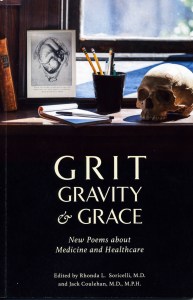
← [FYI, readers, I have a poem in this anthology, which relates to this post.]

~

A little over a year ago, I was invited to participate in a book discussion group that  focuses on texts that offer varying perspectives concerning health, surviving cancer, different cultural views of aging, and dying; books on “dying well,” hospice and palliative care, and on hope and healing; books on chronic pain and on neurology and the medical establishment, on birth traditions, on the history of medicine. We have also read The Tibetan Book of Living and Dying by Sogyal Rinpoche, Still Here by Ram Dass, and discussed books that have topics such as placebo effects, psychology, alternative medicines, the pharmaceutical industry, hospitals, the training and practice of doctors, and the death & dying ‘industries,’ including works by authors with personal and moral perspectives on how to live (and how to die). The people involved have included a pediatric palliative care expert, a NICU nurse, a hospice team spiritual counselor, a minister, a former nurse and massage therapist who’s a tai chi instructor, and others–most of us “of a certain age,” by which euphemism I mean we have been living through the experience of having parents in extreme old age and of having long-time friends who now contend with chronic or potentially fatal illnesses. At least one of us has survived cancer.

For a perspective on how most Americans view a serious study of such topics, I offer my husband’s assessment. He calls this “the morbid book group.”

In fact whenever I mention that I participate in a book group (a popular American activity), people ask me if the group has a theme; I tell them, “The theme is medicine, and wellness, and how we die.” And there’s inevitably a pause, and usually my friend asks, “Isn’t that kind of depressing?”

No. It has not been depressing, in fact. I have gained more than I can say from these books and from our small group discussions: information, perspective, philosophy, insight, dare I say wisdom? Not to mention freedom to talk about those things we tend to evade in polite conversation, the space in which to say “This really sucks” or “This saddens me deeply” or to ask, “What can we do?” The book selections have led to great discussions–and have helped me to forge some new friendships as well as to confront and accept different points of view on controversial issues surrounding health care. And death, yes (hello morbid books!), and grief, and–most of all–compassion.

Difficult books? Challenging reading? Have I ever shied from it? I relish exploring this kind of non-fiction-fact-science-ethics-cultural criticism. Participating in this book group is one of the highlights of my current life experience; it’s up there with my long-running poetry critique group and my MFA years in terms of transformational engagement and exchange of ideas.

Below, a list of some of the books we have read and talked about. Just in case any of my readers wish to begin a morbid book group of their own.

~

Radical Remissions, Kelly A. Turner

Knocking on Heaven’s Door, Katy Butler

Buddha’s Brain, Rick Hanson

Death’s Door, Sandra Gilbert

Living with a Wild God, Barbara Ehrenreich

Still Here, Ram Dass

Being Mortal, Atul Gawande

The Anatomy of Hope, Jerome Groopman

The Tibetan Book of Living and Dying, Sogyal Rinpoche

Birth, Tina Cassidy

The Empathy Exams, Leslie Jamison

Counterclockwise, Ellen Langer

The Pain Chronicles, Melanie Thernstrom

Choosing Civility, P.M. Forni

Healing Spaces, Esther M. Sternberg

Die Wise, Stephen Jenkinson

…& more ahead, as we plumb consciousness, placebos, the medical hierarchy, and compassionate ways of living in the world. By the way, readers–suggestions for further readings are welcome!


The skill of grieving

In a recent post, Sigrun of the blog sub rosa pointed me to Poetry Society of America’s page on Natalie Diaz; I’m even going to post the same paragraph she does, in which Diaz states:

When I write, I bring all of my truths, even the Judas-truths that make me feel like the betrayer whose dirty hands are resting on the table for everyone to see, including God. For me, writing is less a declaration of those truths than it is my interrogation of them. Uncovering the darkness in me that led to some of the poems about my brother also lights up the hard, bright way in which I love him and the small wars I wage to win him back…the truths that have built in me a strength and compassion that help me to survive this world. Truth is that little animal we chase and chase until we suddenly glance over our shoulder and realize it has been chasing us all along.

This passage about “uncovering the darkness” and the hard ways in which we sometimes love–maybe with some people, there is no other way to love–interestingly coincides with my recent reading of Stephen Jenkinson’s Die Wise, a manifesto on how we die and how we might die better (wiser) if we carried our darkness better, as Diaz suggests in the passage above. While I am reading Jenkinson for specific reasons around end-of-life concerns, there’s no doubt that there is often poetry in his philosophy that we need to learn the skill of how to grieve and to learn all that such a skill contains, including its “Judas-truths” and its unflinching confrontation with the ways in which death is a gift to us collectively and individually.

Most of us do not see death as any kind of gift, and Jenkinson admits it can be a challenging perspective; he endeavors to persuade the mostly-American or European reader that each of us and each of our societies or cultures would benefit by reclaiming death as a natural sequence in our being in the world.

Claiming or reclaiming death (you might read here: darkness), says Jenkinson, requires us to face the fact that we have no language for dying, not really. He says “we are taught almost nothing about what language to use or why when we are trained for the job [of tending to the dying].” The Dying, he writes, are “them,” meaning they are “not us.” Which makes them outsiders and invisible and yet all of us die; we are all of us dying–and we work so hard to distance ourselves from the fact.

Poetry is a language that, I think, sometimes guides us toward the hard truths, when poetry is well-made and conflicting and sundered with surprise. Poetry isn’t the language that gets us to dying, exactly; but it can do some of the hard work of teaching us how to grieve.

This is not to say that poets or artists are any better at dying than the rest of us. Sometimes the darkness uncovered in the fiction or poem or painting is true and authentic and deep, but the artist does the grief-working well in art and not so well in life’s physical dying process. Artists who choose suicide may be people who suffer pain and can express it artistically without actually learning the work of grief, which differs from suffering. If we learn that anything that does not last forever is meaningless (an idea drummed into many of us through the concept of “eternal life”), we are apt to feel bereft at every loss and may embrace a kind of horrible existentialism. Sometimes our artists strive to overcome the meaningless through lasting works of art, but their personal desire to be somehow immortal may bog them down as death nears.

We admire this artistic striving, but it is a kind of working against our darkness rather than confronting it with the love Diaz mentions. Jenkinson writes: “Dying isn’t the end of true things…It is one of the true things, that is all.” [My italics.]

However, I do believe that art–particularly the storytelling arts–can offer much in the way of teaching us the physical, on-the-level, hard work of grieving. Really good novels and plays can help teach us if no one in our “real lives” does. Even if we weep at the end of the book and wish the author had chosen a different way of ending it. Good poetry that leaves us excited and confused by complexity or blasted with gut-level sorrowing might be teaching us the ways of grief we aren’t learning from our culture.

When a loved one dies, we often get lost, pushed away from grief through the signing of papers and the bland condolences of marginal friends and the plea to move on with our lives. Good poems can keep us dangling in the now of real grief and force us to figure our way through the losses we incur–losses which do not exclude even our selves. Because “death waters the living.” And so does poetry.

http://www.philamuseum.org/collections/permanent/82820.html

Rain [La Pluie] Vincent van Gogh, 1889. Thanks to the Philadephia Museum of Art