Norway’s Philosopher

I first encountered Arne Naess’ work in 2012 (see this post), and I regret that I failed to follow up by reading more of his “ecosophy T” (deep ecology) and philosophy. I am finally getting around to his very late book Life’s Philosophy, and I love how it speaks to me on many levels. His claim that human emotions can and should be components of human reason makes so much sense that I wonder why so few researchers look into it; some folks on the edges of neuroscience and psychology seem to venture there, but few others. The concept of “relationism” resonates for me, too. It reminds me of the Dali Lama’s teachings that all things in the world are intertwined and valuable, even non-sentient beings.

Relationism, as Naess uses it, acknowledges the vast and impossibly infinite complexity of the universe, more strictly life on earth, and–can I use the word “celebrates”?–the interwoven strands of animal, vegetable, mineral, bacterial, cosmological, emotional, rational aspects of a life in the world: ecology on steroids (he would not have phrased it like that). My urge for balance in my own life makes this philosophy relevant: the opportunities for play and for imagination as well as for seriously abstract concepts, for the importance of emotions as felt in the human body and as interpreted or contained in the human intellect; the necessity of listening to even the tiniest sounds, of savoring the small moments, of not needing to be big or grand or successful but to be mature in how one feels with the world.

The incredible difficulty of saying any of this. Which Naess also acknowledges, saying the difficult job of conveying being felt in the world leads to music, to art, to sitting with the natural and sensing beauty. I might add: Poetry. Though poems are made of words, they often operate through images and felt moments rather than intellectual logic.

The wonderful paradoxes of this book delight me, but then, I always have enjoyed paradoxes. Naess was, indeed, a philosopher, a mathematician, a person who valued logic, reason, and analysis, an analysand himself and briefly a psychological researcher, a mountaineer, a teacher. What to do with the inherently analytical side of himself? Treasure and use it to find wonder! That’s what makes him different from so many thinkers. Wonder. He writes, “To me, the ability to analyze the experiences of the moment is a source of wonder: wonder at human creativity and the result of evolution during hundreds of millions of years. That which happens within us–in our minds and hearts–is so complicated that the psychoanalytical instruction to express everything that occurs to one becomes…and exhortation to to the impossible.”

He opposes Cartesian mind-body separation not just within the body itself (as medical science has proven) but in terms of landscape, natural environment, places. He posits that people need deep thinking about values that move us emotionally just as much as we need to think about rational, pragmatic, socially-pressured values that are based on intellect or the empirical. Place matters, and we need to consider our fundamental place, Earth. Naess’ oppositional stances are, however, never a fight. Instead, discourse, compassion, patience with what is complex. A sound life philosophy requires stillness sometimes, and listening, even–especially–to the “tiny, tiny things,” he urges: “The art of living is to be able to work with small things in a big way.”

How do you feel yourself and the world? is the title of one chapter. I read the question with emphasis on different words and began to realize what a complicated and interesting question it is, though it seems (at first) so simple. Naess says that humans have hewed to the idea that there’s a gap between reason and emotion, and that the gap is an artificial one; a change in perspective, and an understanding that the mind and the body live in a physical world where emotions play a huge role in human communication, might help us to enjoy our lives more–and maybe, while we are at it, treat the earth one which we depend with more love and respect. But we have to feel we are not just ourselves but the world: of it, from it, in it.

mapio.net/pic/tvergastein

Physics, poetry, notes

In a discussion among some of my poetry-reading friends, two readers said they feel “stopped” when they encounter unfamiliar words or terms in a poem. They feel poets should avoid writing work that uses specialized knowledge as metaphor, in imagery, or to establish the poem’s context. Their argument is that when a reader feels stopped by anything in the poem–from an unusual line break or stanza structure to an unfamiliar word–a kind of alienation occurs between reader and text, and that when poets choose to employ the unfamiliar they need to explain somehow/somewhere (notes? prose headings?) to guide the reader. But then they added that referring to notes is, in poetry, distracting.

“Some vocabulary and allusions just make me feel inferior,” one friend says. I don’t think they’ve spent much time with Ezra Pound’s later work but imagine this statement by Sam O’Dell applies: “Now, whether or not Ezra Pound intended to make others feel less intelligent while pulling obscure outside references into his poems and essays is up for debate. The guy seems the type who may have enjoyed making sure others knew he was smarter than they were.” (Read the rest here).

Nerdy autodidact that I am, I rather like those stop-the-reader moments in poems–if there’s a payoff. If I learn something new, and if that thing I have learned enriches the poem’s meaning and also enriches me, then I don’t mind feeling surprised or puzzled or even interrupted. Some poems take more work to read than others, and that’s ok. Some novels prove less easy to read than others, and some movies make the audience-experience fraught, unnerving, or strange. For me, the essential work that artistic endeavor does is open new perspectives, present puzzles, invite inquiry. Make me curious!

Example: Recently I re-encountered the work of poet Daniel Tobin, whose collection From Nothing speculatively examines the life–the interior, intellectual, and spiritual life–of the Belgian priest and cosmological physicist Georges Lemaître. In the process, this series of poems covers war, genocide, the atomic bomb, physics. I haven’t read anything by Tobin since his book The Narrows (2005), and the Lemaître poems take considerably more work to comprehend. That work on the part of the reader is rewarded, I should add, especially a reader with more than a passing interest in cosmology and the cosmos itself. A reader who doesn’t mind a bit of theology or physics or history and quite lengthy notes at the end of the book, and who will actually read said notes. And then refer to her books on the expanding universe theory and Hubble Effect and look up more about Lemaître. [That reader would be me; but Tobin has many readers with all kinds of interests and expectations about poetry.]

In Tobin’s lovely poem “(Origin),” I found the word marver, and while looking up the definition learned that when molten glass is poured onto a slab for cooling, the process is called gathering the glass–and I love that use of the word gather. Maybe it will make its way into one of my poems someday. Even if it does not, I feel happier knowing that little fact.

But most of From Nothing contains allusions to cosmology, to Einstein and Planck, to World War II and conflicts of many other kinds, internal as well as external. I kept being wowed by Tobin’s research into Lemaître and by the poet’s imagination as he plumbs his subject’s complicated world of math, motion, and a conceptual physical universe that could also have room for God. I mostly remembered his earlier work that was so tightly crafted, often rhyming (or employing surprising and delightful assonance). In this collection, I didn’t notice the craft aspect until I went back and did some re-reading. I was too caught up in the complexities of physics and the momentum of the subject’s life-as-scientist/life-as-priest. The lines each have six strong beats, the stanzas are tercets, and there are eight stanzas in each poem. There’s more to the craft than that, but what I like is that–unlike some of Tobin’s earlier work–the craft takes a backseat to the narrative (though I think that’s also true in The Narrows, to some extent.)

Maybe this “difficult” book appeals to me because I like difficult books. Maybe it appeals because it reminds me of my father, a person invested in the world of reason and fascinated by science…who yet believed there can be faith, that god exists. Here’s an excerpt of Tobin’s “(Cinema)”:

You, who chose two ways equally at once, circuit 
the conferences, meetings fueled by enigma, mixing 
with the eminent and their sidereal regard,   

your morning Masses before library and lab.

~

My dad was not a Catholic, but the balance between faith and reason was one he wrestled with, too.


Collecting & creativity

Somehow or another, I completed a chapbook manuscript. The longer collection is coming together, as well. Yet it feels to me as though I have not spent nearly enough time on my creative work. And when I find myself awake at 3 in the morning, it’s not poetry that runs through my mind. Usually those wee-hour thoughts are work-related. I guess that makes me normal.

The next step, once a writer has completed a manuscript, is to have another writer or two review it; I’ve done that, too. So now? I guess I submit the work and find out whether a publisher agrees the poem collection does the job of poetry.

And I get prepared for rejection. Comes with the territory.

Upon reflection, the reason I feel I haven’t been doing creative work is that I am not generating many new poems right now. Some, but not many. But let’s re-think the process of revision: it’s a process of deciding upon the order poems should appear in a book, and which of the poems ought to be there to speak to one another, to resonate with one another (and with the imagined future reader). Hey, I am using my imagination here, and I am doing creative work. If all I ever do is generate new poems, those poems won’t have a chance to go out into the world and endeavor to speak to other humans.

Figuring out how to make that happen is the creative work of revising, editing, rethinking. Imagining the reader. Striking the tone of each individual poem to see whether it adds harmony, or works with a fugue-like trope, or changes the mood to minor, or unleashes a surprise. The book of poems can have an arc or act as a chorale or zigzag about to keep the reader on her toes.

The collection of poetry, when it is not yet a book, presents problems the writer and editor must solve. Problem-solving requires creative thinking–I tell my students this almost every time I see them in class!

Will the manuscripts find homes? That’s a different “problem.” Meanwhile, more new poems, more revisions, maybe more manuscripts ahead…while I await the first frost, while the leaves turn and fall. All part of the cycle.

Being receptive

When my parents moved to a senior-living campus about 10 years ago, one of the hardest aspects of downsizing was what to do with the books. My dad’s bookshelves were full of texts that he found meaningful, valuable, inspirational, informational, necessary; he loved to read. Choosing which books to give away and which to keep was agonizing for him. And then he faced the task again when he and my mother moved to a smaller, assisted-living apartment. That time, he donated many of his books to the facility’s library, so he could “visit” them if he needed them. There remained one large bookcase. Because you can’t live a happy life without books!

Then he died; and my mother, who also loved to read, developed such aphasia that she could no longer decipher sentences. Now, every time I visit, she gestures at the books and urges me to take some of them. It’s hard to explain the response I have to taking home my dad’s books–a mixture of tenderness and discomfort, nostalgia and pain. Sometimes I end up giving the books away, but usually I read them first. Because they are books and deserve to be read, somehow, just by virtue of existing. No–by virtue of their having been significant to my dad. That is why I feel compelled to read them.

I cannot say I got much inspiration from my father’s 1955 copy of a text on caritas by Martin D’Arcy, The Mind and Heart of Love, although I found suggestions about the philosophy of Christian love that my father would certainly have noted {indeed, his penciled checkmarks in the margins confirm it}. Last time I was at my mother’s, I chose to take Karen Armstrong’s 2004 book The Spiral Staircase, a book I appreciate rather more than I did D’Arcy’s. Much of Armstrong’s memoir deals with the frustration she felt as she struggled to find her place and purpose in the world of work. As it turns out, she is a writer, although it took her awhile to discover and admit it. Part of being a writer involves isolation or solitude, which Armstrong equates with silence: “Without the distraction of constant conversation, the words on the page began to speak to my inner self…I was no longer just grabbing concepts and facts from books…but learning to listen to the deeper meaning that lay quietly and ineffably beyond them. Silence became my teacher.” That passage resonates for me. I can recall times when what I learned, and subsequently, what I wrote or composed, emerged from such silence.

But I like most of all what she says in her next paragraph (p. 284).

This, of course, is how we should approach religious discourse. Theology is–or should be–a species of poetry, which read quickly or encountered in a hubbub of noise makes no sense. You have to open yourself to a poem with a quiet, receptive mind, in the same way as you might listen to a difficult piece of music. It is no good trying to listen to a late Beethoven quartet or read a sonnet by Rilke at a party. You have to give it your full attention, wait patiently upon it, and make an empty space for it in your mind.”

It helps if we can give our hearts to poems and books we read, make space for them in our minds, hear what they have to say before rushing in with our own clever ideas and personal perspectives. When writing, the same approach applies. Often I think I know what I have to say, yet the poem on which I’m working proves me wrong. And it helps to be compassionate to the writerly self, which is another thing Armstrong had to learn, as she was far too hard on herself about her thinking and writing.

Her subsequent books, and her recent work, center around compassion, I notice. I have not read them yet, but I plan to. Another thing I notice is that the copy of The Spiral Staircase I brought home from my dad’s bookshelf is inscribed:

Tom and Bonnie    with best wishes     Karen Armstrong

Moment(s)

Very small pear.

~

It was delicious.

After last year’s complete dearth of pears, this year both trees were laden with fruit so that the boughs drooped, making things easier for the deer, who love to eat them. We were happy to share, as I haven’t got time these days to make pear butter or prep fruit for canning. We gave pears to friends, made pear cobbler, ate pears for breakfast, and enjoyed them immensely. And we liked watching a doe and her twin fawns nibbling around and under the trees at dawn and towards dusk.

The summer heat broke at last after the “remnants” of hurricane Ida crashed over us. If those were just remnants, I have deep respect for the people of Louisiana, who felt the initial force. We got 7″ of rain in less than a day, and the flash floods affected many of our friends. My basement office on campus is drying out during the 3-day weekend–our building’s drainage system was not quite up to the task of directing water away from our doors. Now, the brown crickets are noisier than the katydids, the grasshoppers have grown large, the days are shorter. Tomato harvest has slowed, and gardening consists mostly of pulling up weeds and dead plants. It is as though the downpour swept away summer, despite my knowing that the hot days will return. (September can be steamy here in my valley.)

I’m reading A.E. Stallings‘ collection Like and relishing her new takes on traditional poetry forms as well as her facility with establishing a sense of place in the poems. I appreciate her images and thought-provoking ideas, too. Her work does the things that I think poems are supposed to do.

Finally, I have been drafting a few poems, or at least hoping these drafts will turn into poems. I’ve also begun examining some older work for revision and, maybe, collection into another book. But that’s looking perhaps too far ahead. After a challenging couple of years, maybe just living in the moment serves me better.

The taste of fresh pears. The sticky sweetness of fresh local peaches. The smell of basil.

Cycles & theories

The Chinese lunisolar calendar puts us between 立秋 lìqiū, or start of autumn, and 處暑 chùshǔ, or limit of heat. Certainly the heat here lately has felt limiting, but the term more likely refers to the end of the hottest days of the year. My backyard world fills with haiku imagery for waning summer and impending autumn: katydid and annual cicada calls, birds starting to flock, morning glory and goldenrod, ripe pears, apples beginning to redden, hosts of butterflies. I watch as a hummingbird visits sunflowers, cannas, buddleia, corn tassels, and zinnias. Ripe tomatoes and zucchini weigh heavily on their vines.

Yesterday, a doe nibbled pears while her late-born twin fawns wove between her legs and the Queen Anne’s lace beneath the tree. The air hangs so humid, even the monarch butterfly’s wings seem to droop. A sense of waiting.

And I prepare for the fall semester. Cycles continue: that’s a good thing, isn’t it?

~

Therefore, to engage my intellect when my expressive ability with words seems sparse, I’m reading about theory. Specifically, the theory of the lyric in Western poetics, which turns out to be abstract and scholarly (no surprise, really–theory tends to be scholarly). My guide for this outing is Jonathan Culler’s book Theory of the Lyric. This text manages to be relatively readable despite its terminology; and as the terminology for the lyrical poem encompasses a long history of definitions, rhetoric, explanations, subgenres, and antiquated jargon, the going occasionally gets tough. I’m learning a great deal, however, about poetic experimentation over the centuries.

I now recognize that I have subsumed the idea of lyricism as it came down to American writers through Romanticism (see Hegel). It’s just that the concept of subjectivity in the lyric, and inward-turning emotion and the poet as speaker, has been so pervasive in Western poetics and pedagogy that it seemed a basic premise. Yet it was not always thus, and certainly other cultures employ lyricism differently and view it differently. It’s never an easy task to view from outside what is inherent in one’s own culture, but that’s where books like this one enlighten and challenge.

Besides the theory and historicity of poetry and the task of poetics, however esoteric and abstract, theory texts often elicit from me the urge to move to something more concrete, more creative.

I can only hope.

Fallow me

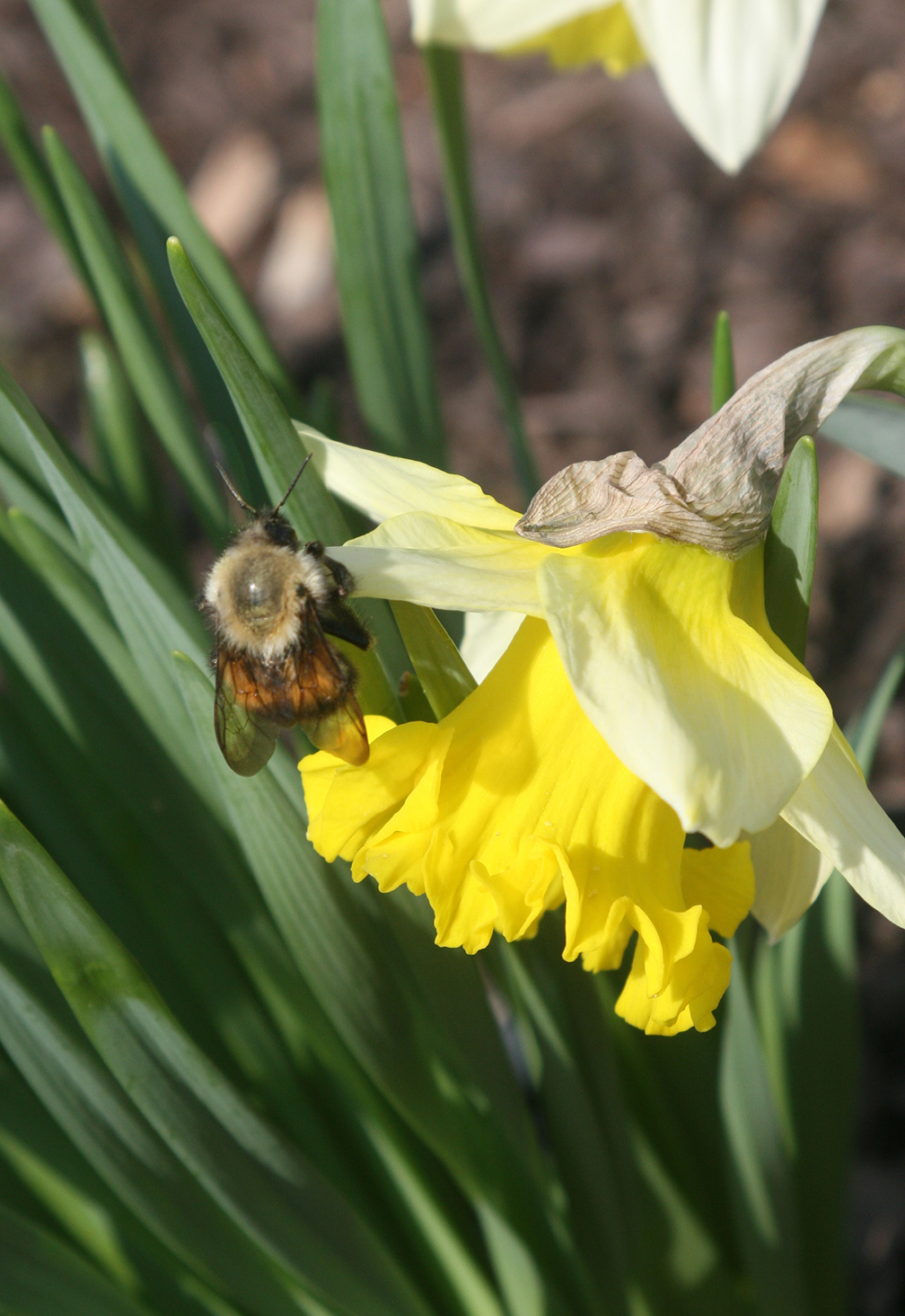
Blogger/poet/bookmaker Ren Powell recently suggested going fallow for awhile “to see what comes of it.” I tend to go through fallow periods quite accidentally. Used to call them writer’s block, but I don’t view them like that anymore. Fallow strikes me as a more accurate term for a number of reasons, some of them etymological. In current agriculture, a fallow field remains uncultivated purposely, to rest and improve the soil’s fertility. That seems more accurate to my current state of mind than “dry” or “blocked.”

Consider the field left fallow: plenty goes on there. Weed seeds germinate and sprout, annelids and arthropods, insects, and beetles, in their various life stages, multiply and move about. Voles, mice, toads go a-hunting. Bacteria do their thing. It’s not a lifeless place, the fallow plot.

But I haven’t been writing.

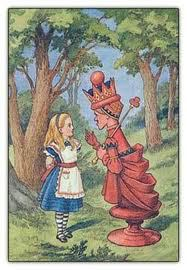
The publisher of my next book (The Red Queen Hypothesis) says yes, it’s still on her docket and will see the light of day–and print–next year, but that heartening news has not kicked me into gear on the writing front. And yet, by the time that collection comes out, the newest poem in it will be 6 years old. Some of the poems are almost 20 years old; it will not feel like a “new book” to me! Where, then, to put the newer work? What to do with the two half-completed, partially-revised collections of newer compositions that lie next to my desk and languish on my computer’s hard drive? Where is the motivation to finish the work or to start fresh?

I don’t know the answer to that just yet. But here’s an off-the-cuff haiku I dreamed up this morning that reminds me a bit of Issa’s poems.

~

fallow field
even a bird's dropping 
contains a seed 
painting by Jack FIsher

For example

Still mulling about how language changes and whether or not I agree with Emerson:

“Language is fossil poetry. As the limestone of the continent consists of infinite masses of the shells of animalcules, so language is made up of images, or tropes, which now, in their secondary use, have long ceased to remind us of their poetic origin.”

Ralph Waldo Emerson

Well, maybe not the tropes’ poetic origin but the words’ cultural origin. Their social origins, because language is inherent in human culture–we must communicate to survive. And if that means language includes words with violent origins or male hierarchical origins or race supremacist origins or nationalistic origins, the words cannot so easily be erased. We use them as they are, regardless of their nasty backgrounds, tropes and metaphors and all. An accretion of meanings alters the words as cultures evolve and change.

That doesn’t mean we should not critique or examine our words.

In a decade or two, terms change. Jargon, technology, politics, culture all exert forces on how we say what we mean. Here’s an example from my own experience as a creative writer. I wrote a poem in 1983 (published in a journal I cannot at the moment recall), a poem about yearning, in which the speaker observes a male-bodied person who dresses as a female. In 1983, the most respectful word to use for such a person was “transvestite.” Hence the title I chose for the poem: “Transvestite on the Long Island Ferry, July.”

Perhaps the person in the poem was not transvestite but transgender (though that was very rare in 1983)–or “gender-fluid.” In my poem, the observer/speaker uses the pronoun “she.” The observer can only speculate and does so on the speaker’s terms. Without the word transvestite in the title, the poem could be more generally understood–as, say, an older speaker watching a young female.

As the writer of this poem, I’m not going to revise its terminology; but I might change the title if I were ever publish it in a collection (this poem, nearly 40 years past its composition, has not appeared in any of my books). Given that, here it is–with a change in title and nothing else. What do readers think?

~~

On the Long Island Ferry, July
 
She leans against the deck rail,
  her red dress an amaryllis
    in a khaki sea.
 
I notice she is unfamiliar with the problem
  of holding a dress down over her backside
    while keeping the wide white sunhat in place—
 
and what to do with the matching bag?
  That kind of awkwardness
    marks her as an amateur.
 
I think, she wants womanliness
  like in the movies—
    La Dolce Vita, maybe—
 
she hasn’t learned, yet, about women.
  I could laugh at her impression,
    but I understand her longing.
 
She stays at the rail, struggling to enjoy flirtation,
  the barfly wind pestering her relentlessly,
    Hey honey, wanna go out?
 
Boozy breezes disarrange her hair,
  grab at her panties,
    try steering her to a quiet corner.
 
But she stays put. I sympathize with her need
  to drink in the restless waters of the Sound,
    feeling new in her body: bright, swirling, real.
 
I watch her from Bridgeport to Long Island
  with a kind of envy, unable to recall
    the last time I longed for anything so completely.


~~

Reading not writing

But the next best thing to writing is reading. Or maybe it’s the other way around; if I had not loved reading, I would never have started writing.

Stacked beside the bed:

A Book of Psalms (Stephen Mitchell)

The Book of Joy (Archbishop Desmond Tutu, Dalai Lama XIV, Douglas Abrams)

The Book (Keith Houston)

The Darker Fall (Rick Barot)

Theory of the Lyric (Jonathan Culler)

Shifting the Silence (Etel Adnan)

Noise (Kahneman, Sibony, & Sunstein)

Haiku 2021 anthology from Moonstone Arts Center

I love how the first three books all have BOOK in their titles. The Adnan and the Mitchell are re-reads that settle my soul while keeping my mind active and inquisitive. The Book of Joy has been surprisingly helpful to me so far (I am reading it a bit at a time while other things are going on).

Anyway, I can garden. We have had plentiful rain and now I have plentiful beans, basil, zucchini, carrots; numerous tomatoes cluster under leaves, so whenever they ripen we’ll have more splendid organic tasty produce. I will continue to pull out the crabgrass, wild mustard, pigweed, smartweed, etc. Culling, cultivating, collecting sunlight through my vegetables and through my skin (yes, I wear sunscreen–and a hat)…there are worse things in life than an inability to compose poems. And I can read, thank heaven. Reading poetry, and reading about poetry, provides plenty of joy.

One of the practices of joy mentioned in the Dalai Lama’s & Desmond Tutu’s book is gratitude. Fortunately, that practice has never been difficult for me.

under clouds /heat rises from soil /beans grow plump


The right words

Due to mini-strokes and constriction of the blood flow in her brain, my mother has developed the same form of cognitive decline that my mother-in-law had: vascular dementia. In both cases, aphasia ravaged their speech as their conditions worsened. My partner’s stepmother also had aphasia due to stroke, so I have now witnessed the condition up close among three women who had very different backgrounds and personalities. As aphasia presents most noticeably as a loss of verbal expression (talk about being at a loss for words!), the condition fascinates me (a person who loves words).

And devastates me. My mother had never been “good at words” the way my father was, but she was a compassionate listener and often could find the right things to say when my glib and witty friends and family members could not. I recall many times when she would ask to talk to me alone and express something she’d been keeping to herself and reflecting upon, waiting until she could “say it the right way.” Now, she can say almost nothing “the right way.” Rain becomes snow; snow becomes green; hat becomes clark; tomato becomes red; table becomes place…and even these are unreliable substitutes, likely to change from one conversation to the next. The pronoun she has vanished from her lexicon. Her vocabulary is little better than a five-year-old’s, and she inadvertently invents words that are essentially meaningless while trying to convey meaning.

She can still read, a little, and slowly. A few months ago, I gave her a book by Eloise Klein Healy, Another Phase. Healy, a well-known poet, was stricken with Wernicke’s aphasia and–with a devoted speech therapist’s help–regained the ability to compose poetry again, though the work she now produces reflects her profoundly-changed expressive abilities. My mother was pleased that she could read the book and that Healy could make poems even with aphasia. And Mom understood the poems–had memorized a few image-lines that she liked. This stunned me–memory’s often wrecked by vascular dementia, or so we are led to believe. But my mother has a good memory. She merely has extremely limited verbal expressiveness–an inability to locate the right word, and a loss of numeracy and literacy. Alas, the result means she cannot make her ideas and thoughts known to others. Isolating.

The pandemic lockdowns at her assisted living campus, my father’s death after 62 years of marriage, her gradual hearing loss, her inability to drive or go shopping–all of these led to further isolation. And isolation, of course, worsens the dementia.

Now that the lockdowns have been lifted, my family members are spending as much time as we can visiting her. One Best Beloved drove her to the church she has been attending by Zoom, now that in-person services have resumed. This past holiday weekend, I picked her up at her apartment and drove her back to my house. Due to my dad’s ill health and the pandemic, it has been over two years since she was here; but for 25 years, she and my father drove here many, many times. It was heartwarming to watch her as she relished returning to a familiar and much-loved place, which also happen to be my house and yard.

She kept saying, “This is so good. This is so, so good!” We’d arranged a mini-gathering for lunch, and there was tasty food and lively conversation all around her. She doesn’t seem to feel frustrated at not being able to join in the dinner chat; I think she was glad just to listen. After awhile, her vocabulary even expanded a bit. She said, “This is fun!” and “This is so great!” in addition to repeating how the day was so good. The joy was palpable.

(I am reading about joy just now, as it happens–a book by Douglas Abrams, Archbishop Desmond Tutu, and the Dalai Lama called The Book of Joy. More on that another time, perhaps.)

After lunch, some dessert, and a brief nap, my beloved mom admitted it was probably time for her to return to her apartment. I drove her home, and the ride back was full of comfort and ease and quiet companionship such as I haven’t felt with my mother during the past couple of difficult years, though it’s been there my whole life. I was helping her out of the car when she said, “That was wonderful. Let’s do that again!” Two sentences in perfect grammar, and a boost in vocabulary from good to wonderful.

“Only connect.” I don’t think E.M. Forster was referring to aphasia or to isolation in Howard’s End, but the phrase suits today’s post. Human connection matters. Indeed, it’s wonderful.