I am forcing myself to write despite my sense that the flow, such as it is, has narrowed. I’m keenly aware that there’s a lot of material beyond the blockage and opening the floodgates may be as unmanageable as the “dry period” is unrewarding. Funny thing about balance. Keeping the seesaw level–no easy task. And as my peers and I progress toward aging, the constriction metaphor applies all too well. Many people I know now walk around with plastic or metal tubes inserted in their interiors to keep vital organs ‘flowing.’ My mother’s brain operates through constricted blood vessels, and now she can barely produce an understandable sentence. My lower back’s accumulating calcium deposits that have narrowed the path my spinal cord takes as it does its daily, necessary work.
Sometimes the flow of anything gets constricted. In our bodies. In the earth’s rivers. In our cities and houses: clogging and backups, plumbing and traffic. We implant stents, dig culverts, widen highways, remove the blockage–once we have determined where it is. There’s the challenge. Where is the rub that keeps us from our dreams? (Hamlet couldn’t figure it out, either).
Normally, I read at least a book a week; lately, just magazine articles, or no reading at all. Very strange for me–and I wonder whether my lack of motivation for reading and my current “dry spell” hinge on sorrow. My workplace has been busy lately, lots of scheduling, many meetings and decisions, not much time for personal reflection. It becomes natural, easy, to do the work of routine and ignore the kind of creative effort that grief requires. In my case, there’s also speculative grief: I know my mother’s dying little by little. We who love her spend as much time as we can with her, lifting our own spirits whenever our visits or gifts of chocolate and flowers and dinners out make her happy. What does she love? Fresh strawberries, for example. I bring them from my garden. She savors them. My day is made.
But I come home sad.

~
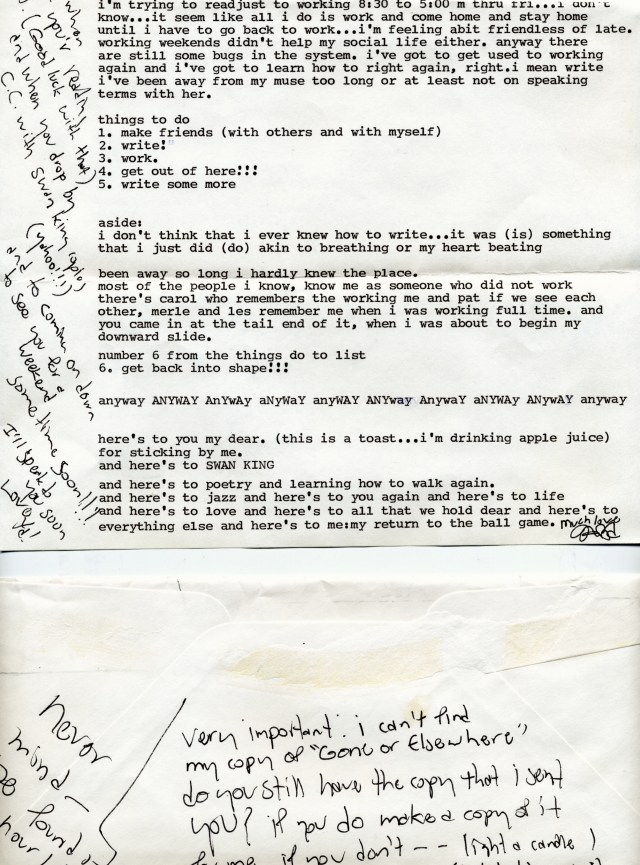
I wrote to a friend recently:
My writing practice has suffered a bit during pandemic but feels also as though underlying changes are in process. Just not much by way of results yet.
Somewhat surprised that my father’s death has affected my practice. Or perhaps it is my mother’s aphasia, frailty, and impending death that’s at work here. Or maybe just the stress of trying to maintain my job and relationships with colleagues and students under pandemic protocols, which has not been easy.
My brain’s been stuffed with things like learning new technology and teaching practices, and that leaves less room for wandering and interconnections and daydreaming. And then I have less energy for the creative work, as well. The garden’s been good, though. I’m not discontented, just feeling the currents of interweaving changes.
~
I suppose those interweaving changes may be a bit knotted, if they are threads, or partially dammed, if they are streams. Maybe why that’s the case does not matter much. What matters more is how to proceed when it seems nothing’s forthcoming–patience, force, ritual, practice, or…change.
You can judge your age by the amount of pain you feel when you come in contact with a new idea.
Pearl S. Buck
Wry words from Ms. Buck. Meanwhile, where are those new ideas? Maybe I just don’t feel up to unblocking the flow just yet. A little apprehensive about the pain.